2027 Most Affordable Online Respiratory Care Therapy Associate's Degree Programs

Co-Founder and Chief Data Scientist
Choosing an online respiratory care therapy associate’s degree is not just a tuition decision. The program you choose can affect whether you qualify for credentialing exams, whether your clinical hours are accepted for state licensure, how quickly you can graduate, and how much debt you take into an entry-level healthcare role. This guide is for students who want an affordable path into respiratory care but need to compare online and hybrid associate programs carefully before applying.
Respiratory therapists work with patients who have breathing, lung, and cardiopulmonary conditions. Because the field is hands-on and regulated, even “online” programs usually combine remote coursework with in-person labs and supervised clinical rotations. In this guide, you will learn what these programs cost, how long they take, which schools offer affordable options, how accreditation works, what financial aid may be available, and how to choose a program that supports licensure and long-term career mobility.
Quick answer: What is the most affordable path to becoming a respiratory therapist?
The most practical low-cost route is usually a CoARC-accredited associate degree in respiratory care or respiratory therapy offered by a community college or public institution with online-supported coursework and local clinical training. Programs listed in this guide range from 59 to 83 required credits, with published costs ranging from $103.06 per credit hour to $836 per credit hour, or, in one case, $2615 per semester. Students should compare total program cost, clinical placement support, accreditation, NBRC exam preparation, and state licensure requirements before enrolling.
What are the benefits of getting a respiratory care therapy associate’s degree?
- It can lead to direct patient-care roles in a growing healthcare field. Graduates may qualify for respiratory therapist roles in hospitals, outpatient settings, long-term care, home care, critical care, neonatal care, and pediatric care, depending on state licensure and employer requirements.
- The earning potential is stronger than many two-year degree paths. Respiratory therapists earn about $70,000 per year on average, with some professionals earning over $100,000 depending on state, employer type, specialization, and experience.
- Online-supported formats can reduce relocation and commuting barriers. Many programs allow students to complete lectures and assignments remotely while completing labs and clinical hours at approved healthcare facilities.
- The degree can be a foundation for advancement. Some graduates later pursue bachelor’s completion programs, leadership roles, specialty credentials, or related healthcare degrees.
What can I expect from a respiratory care therapy associate’s degree?
An online respiratory care therapy associate’s degree is typically a hybrid healthcare program. Students complete academic coursework online, but they still need supervised clinical practice because respiratory therapy requires direct patient care, equipment use, assessment skills, and safety training. Most programs include anatomy, physiology, cardiopulmonary pathophysiology, respiratory pharmacology, mechanical ventilation, patient assessment, neonatal or pediatric care, and clinical practicums.
Programs in this guide require 59 to 83 credit hours. Published tuition ranges from around $189 to $836 per credit, although one listed program publishes a semester-based cost. Students may also need to budget for background checks, immunizations, uniforms, lab fees, clinical travel, textbooks, testing fees, and licensing-related expenses. Online courses may use recorded lectures, virtual simulations, live class meetings, discussion boards, proctored exams, and digital respiratory care case studies.
| Program feature | What it usually means for students |
| Online coursework | Lectures, readings, assignments, exams, and discussions may be completed through a learning platform. |
| In-person labs | Students practice equipment use, ventilation concepts, oxygen therapy, airway care, and emergency response skills. |
| Clinical rotations | Students train in hospitals or healthcare facilities under supervision and must meet placement requirements. |
| Credentialing preparation | Programs should prepare students for NBRC exams and state licensure steps, but students must verify requirements in their state. |
| Capstone or final assessment | Some programs use comprehensive projects, simulations, or clinical evaluations to confirm readiness for practice. |
Where can I work with a respiratory care therapy associate’s degree?
A respiratory care therapy associate’s degree can prepare graduates for employment in healthcare environments where patients need breathing support, cardiopulmonary assessment, pulmonary treatment, oxygen therapy, ventilator management, or rehabilitation services. The United States has more than 132,935 respiratory therapists currently working, and most are employed in patient-care settings.
Respiratory therapists are commonly employed in these sectors:
- Health care (86%): Most respiratory therapists work in hospitals, clinics, long-term care facilities, emergency departments, intensive care units, outpatient centers, and home healthcare settings.
- Professional services (3%): Some work with medical device companies, consulting groups, research teams, product support departments, or clinical education teams.
- Education (3%): Experienced respiratory therapists may teach in community colleges, technical colleges, training programs, or continuing education settings.
- Nonprofits (2%): Public health organizations, disease advocacy groups, and community health programs may hire respiratory care professionals for outreach and education.
- Others (4%): Additional roles may exist in pharmaceutical, manufacturing, government, retail, regulatory, policy, or product-related environments.
How much can I make with a respiratory care therapy associate’s degree?
Respiratory therapists in the United States earn approximately $70,000 per year on average, with a typical salary range between $55,000 and $90,000. Actual pay can differ substantially by state, metro area, employer type, shift schedule, credentials, and specialization. Students should treat salary figures as planning estimates rather than guaranteed outcomes.
- Location: Respiratory therapists in California earn an average of $103,060 annually, while those in Kentucky may earn around $50,300.
- Employment setting: Respiratory therapists in outpatient care centers earn approximately $110,970 per year, while those in general medical and surgical hospitals average $80,030.
- Experience: Entry-level therapists may begin around $45,940, while more experienced professionals can earn up to $89,170.
- Specialization: Respiratory therapists in Neonatal Intensive Care earn about $106,690 annually, while those in Critical Care average $86,000 per year.
- Best online respiratory care therapy associate’s degree programs for 2027
- How the programs are ranked How long does an online respiratory care therapy associate’s degree take?
- Online vs. on-campus respiratory care associate programs
- Average cost of an online respiratory care therapy associate’s degree
- Financial aid options for respiratory care therapy students
- Common admission requirements and prerequisites
- Typical respiratory care associate degree courses
- Why accreditation matters for respiratory care programs
- How programs prepare students for licensure and certification exams
- Respiratory care specializations and focus areas
- How to choose the best respiratory care therapy associate’s degree program
- Career paths for respiratory care associate degree graduates
- Student support services in online respiratory care programs
- Should you continue your education after an associate degree?
- Challenges in online respiratory care therapy programs
- Job market for respiratory care therapy associate degree graduates Common mistakes to avoid Questions to ask before enrolling Key insights
List of the Best Online Respiratory Care Therapy Associate's Degree Programs for 2027
How do we rank the programs?
Research.com evaluates online respiratory care therapy associate’s degree programs using available institutional and program data from sources such as the IPEDS database, Peterson's database, the College Scorecard database, and The National Center for Education Statistics. These sources help compare affordability, institutional information, and student-facing value indicators. To understand the broader ranking process, review Research.com’s methodology page.
Use this list as a starting point, not a final decision. Before applying, confirm the current tuition, fees, clinical placement policies, state authorization rules, licensure eligibility, and accreditation status directly with the school and with your state respiratory care board.
1. Kent State University
Kent State University offers an associate of applied science in respiratory therapy that blends online lecture delivery with required in-person laboratory work. The program is designed to train students to assess, treat, and support patients with breathing and cardiopulmonary conditions while developing practical skills for credentialing exams and healthcare employment.
- Required Credits to Graduate: 65
- Cost: $527 per credit hour
- Accreditation: Commission on Accreditation for Respiratory Care (CoARC)
2. Nebraska Methodist College
Nebraska Methodist College provides an associate of science in respiratory care with classroom learning and clinical experience. Students study cardiopulmonary physiology, disease management, patient assessment, communication, and critical thinking skills used in respiratory care practice.
- Required Credits to Graduate: 83
- Cost: $623 per credit hour
- Accreditation: Commission on Accreditation for Respiratory Care (CoARC)
3. Keiser University
Keiser University offers an online associate of science in respiratory therapy that prepares students to evaluate, treat, and manage patients with cardiopulmonary disorders under physician direction. The curriculum emphasizes patient care, clinical reasoning, professional standards, national certification preparation, and state licensure readiness.
- Required Credits to Graduate: 76
- Cost: $836 per credit hour
- Accreditation: Commission on Accreditation for Respiratory Care (CoARC)
4. University of Saint Francis
The University of Saint Francis offers associate and bachelor of science respiratory therapy options for students pursuing registered respiratory therapist preparation. The programs combine academic coursework, clinical experiences, patient-care training, and professional development for employment in hospitals, clinics, and related healthcare settings.
- Required Credits to Graduate: 72
- Cost: $570 per credit hour
- Accreditation: Commission on Accreditation for Respiratory Care (CoARC)
5. Bowling Green State University
Bowling Green State University offers an associate of applied science in respiratory care technology. Students complete theory-based coursework and clinical rotations across northern Ohio while learning how to assess and manage patients with respiratory and cardiopulmonary disorders.
- Required Credits to Graduate: 69
- Cost: $2615 per semester
- Accreditation: Commission on Accreditation for Respiratory Care (CoARC)
6. East Central College
East Central College offers a respiratory care associate of applied science through the Missouri Health Professions Consortium. This one-plus-one hybrid pathway combines general education with professional respiratory care instruction, laboratory practice, and clinical experience for students preparing for RRT-focused careers.
- Required Credits to Graduate: 72
- Cost: $234 per credit hour
- Accreditation: Commission on Accreditation for Respiratory Care (CoARC)
7. Hawkeye Community College
Hawkeye Community College provides an online respiratory care therapy associate’s degree that combines remote coursework, campus-based labs, and clinical training. Students learn to assess, treat, and manage patients with respiratory and cardiopulmonary conditions and prepare for certification and licensure requirements.
- Required Credits to Graduate: 59
- Cost: $234 per credit hour
- Accreditation: Commission on Accreditation for Respiratory Care (CoARC)
8. Seminole State College
Seminole State College offers a respiratory care associate in science program covering foundational sciences, cardiopulmonary physiology, critical care, pediatric respiratory care, and clinical training through hospitals and extended-care facilities. Graduates are eligible to sit for the certified respiratory therapist and registered respiratory therapist examinations.
- Required Credits to Graduate: 72
- Cost: $234 per credit hour
- Accreditation: Commission on Accreditation for Respiratory Care (CoARC)
9. Valencia College
Valencia College offers a respiratory care associate in science degree built around a two-year curriculum. Students learn therapeutic techniques, respiratory equipment use, and patient-care skills through hands-on experiences at major medical centers, with preparation to assist physicians treating heart, lung, and breathing disorders such as chronic asthma and emphysema.
- Required Credits to Graduate: 76
- Cost: $103.06 per credit hour
- Accreditation: Commission on Accreditation for Respiratory Care (CoARC)
10. Southeast Kentucky Community & Technical College
Southeast Kentucky Community & Technical College offers an associate in applied science in respiratory care with classroom instruction, online-supported courses, and hospital-based clinical experience. The program prepares graduates to sit for National Board for Respiratory Care exams and apply for state licensure.
- Required Credits to Graduate: 72
- Cost: $189 per credit hour
- Accreditation: Commission on Accreditation for Respiratory Care (CoARC)
How long does it take to complete an online respiratory care therapy associate's degree program?
Most online or hybrid respiratory care therapy associate’s degree programs take about two years of full-time study. Programs often require 60 to 71 credit hours, though the schools in this guide range from 59 to 83 credits. Some accelerated formats may be completed in as little as 18 to 21 months, while other programs take up to 24 months depending on sequencing, clinical availability, summer enrollment, and prerequisite completion.
Students should pay close attention to course sequencing. Respiratory care programs often have lockstep clinical cohorts, which means a missed prerequisite or failed clinical course can delay graduation. Part-time enrollment may be possible at some schools, but it can extend the timeline beyond two years.
Students comparing allied health pathways sometimes consider complementary fields such as accredited nutrition education, but respiratory therapy has distinct clinical and licensure requirements that should be reviewed separately.
How does an online respiratory care therapy associate's degree program compare to an on-campus program?
Online and campus-based respiratory care associate programs can lead to similar professional outcomes when both are properly accredited and include approved clinical training. The difference is usually not whether you complete clinical work, but how the academic coursework, lab sessions, faculty access, and scheduling are delivered.
Some students compare respiratory care with unrelated online degrees, including options such as the cheapest master’s in mathematics degree programs online, when weighing cost and career direction. For respiratory therapy specifically, the most important comparison is whether the program meets healthcare credentialing and licensure requirements.
| Aspect | Online or hybrid respiratory care program | Campus-based respiratory care program |
| Flexibility | May offer asynchronous lectures, online assignments, or limited live class requirements. | Usually follows scheduled in-person classes, labs, and campus attendance requirements. |
| Clinical training | Requires approved in-person clinical rotations, often arranged near the student when possible. | Typically uses established local hospital or healthcare partners near the campus. |
| Lab experience | May require intensive campus visits, scheduled lab days, or regional simulation experiences. | Labs are usually integrated into the weekly campus schedule. |
| Cost considerations | Can reduce commuting or relocation costs, but may still include lab, technology, clinical, and travel expenses. | May involve higher transportation, housing, parking, or campus-related costs. |
| Best fit | Students who need schedule flexibility and can stay organized without daily in-person structure. | Students who prefer face-to-face instruction, frequent lab access, and a more structured routine. |
What is the average cost of an online respiratory care therapy associate's degree program?
The full tuition cost for an online respiratory care therapy associate’s degree commonly falls between $14,000 and $30,000, depending on the number of credits required and the school’s per-credit rate. In this guide, published rates range from about $103 per credit hour to more than $800 per credit hour, and most programs require 60 to 80 credits.
Total cost can be higher than tuition alone. Students should review program fees, clinical compliance expenses, immunizations, background checks, uniforms, transportation to clinical sites, lab fees, exam-prep resources, textbooks, equipment, and state licensure-related costs. A lower tuition rate may not always mean the lowest total cost if clinical travel or fees are high.
Students exploring other affordable allied health credentials may also compare programs such as the cheapest online surgical technician programs, but respiratory care students should prioritize CoARC accreditation and licensure alignment over tuition alone.
What are the financial aid options for students enrolling in an online respiratory care therapy associate's degree program?
Students in eligible online respiratory care therapy associate’s degree programs may be able to use grants, scholarships, loans, and institutional aid to reduce out-of-pocket costs. The first step is usually completing the FAFSA and confirming that the school participates in federal student aid programs.
- Federal Pell Grant: This need-based grant supports undergraduate students who have not earned a bachelor’s or professional degree. Award amounts depend on financial need, cost of attendance, and enrollment status.
- State grants and scholarships: Many states provide aid to residents attending qualifying in-state institutions. Rules and award amounts differ by state.
- Institutional scholarships: Colleges may offer merit-based, need-based, healthcare-specific, or program-specific awards.
- Professional organization scholarships: The American Respiratory Care Foundation offers scholarships that award up to $1,000 to students in accredited respiratory care programs.
- Federal student loans: Eligible students may use direct subsidized loans or direct unsubsidized loans. These loans have federal repayment protections, deferment options, and potential forgiveness pathways for qualifying borrowers.
If affordability is your top concern, compare respiratory care programs with broader lists of the cheapest online colleges that accept FAFSA. Always confirm that the specific respiratory care program, not just the institution, is eligible for your intended aid and meets your state’s requirements.
What are the prerequisites for enrolling in an online respiratory care therapy associate's degree program?
Admission requirements vary, but respiratory care associate programs are often selective because clinical seats are limited and students must be ready for science-heavy coursework and patient-facing training. Meeting the minimum requirements does not always guarantee admission.
- Educational background: Applicants typically need a high school diploma or equivalent. Prior college coursework may be considered or required.
- Minimum GPA: Many programs expect a cumulative GPA around 2.5 on a 4.0 scale.
- Prerequisite courses: Schools commonly require anatomy and physiology, English composition, mathematics, and chemistry with a grade of "C" or higher.
- Placement or test scores: Some programs use PERT, ACT, SAT, or placement testing to evaluate college readiness.
- Clinical eligibility requirements: Students may need a criminal background check, drug screening, immunization records, CPR certification, and health documentation for clinical placement.
- Application materials: Programs may ask for transcripts, a program application, personal statements, information sessions, interviews, or proof of completed prerequisites.
Students considering future nursing or women’s health pathways can compare admissions expectations with options such as affordable online WHNP programs, but graduate nursing credentials typically require a different academic and licensure background.
What courses are typically in an online respiratory care therapy associate's degree program?
Respiratory care associate programs combine general education, biomedical science, technical respiratory care courses, labs, and clinical practicums. The goal is to prepare students to assess patients, apply respiratory treatments, operate equipment safely, communicate with healthcare teams, and respond to cardiopulmonary emergencies.
Common respiratory care courses
- Medical Terminology: Builds the healthcare vocabulary students need for charting, communication, and respiratory system concepts.
- Anatomy and Physiology: Covers body systems, with strong emphasis on respiratory and cardiovascular function.
- Cardiopulmonary Pathophysiology: Examines heart and lung diseases, how they develop, and how they affect patient function.
- Respiratory Pharmacology: Introduces respiratory medications, drug actions, delivery methods, and therapeutic uses.
- Pulmonary Disease Management: Focuses on assessment and care planning for chronic respiratory conditions such as COPD and asthma.
- Neonatal and Pediatric Respiratory Care: Covers respiratory assessment, equipment, and treatment techniques for infants and children.
- Clinical Practicums: Places students in supervised healthcare settings where they apply classroom and lab knowledge with real patients.
Common general education courses
- English Composition: Strengthens writing and documentation skills used in patient records and team communication.
- Microbiology: Helps students understand microorganisms, infections, and their relationship to respiratory illness.
- Psychology or Sociology: Introduces behavioral and social factors that influence patient care and health outcomes.
- Chemistry: Provides foundational science knowledge useful for understanding pharmacology and therapy principles.
- Mathematics: Supports dosage calculations, equipment settings, data interpretation, and quantitative reasoning.
Is accreditation essential for online respiratory care therapy associate’s degree programs?
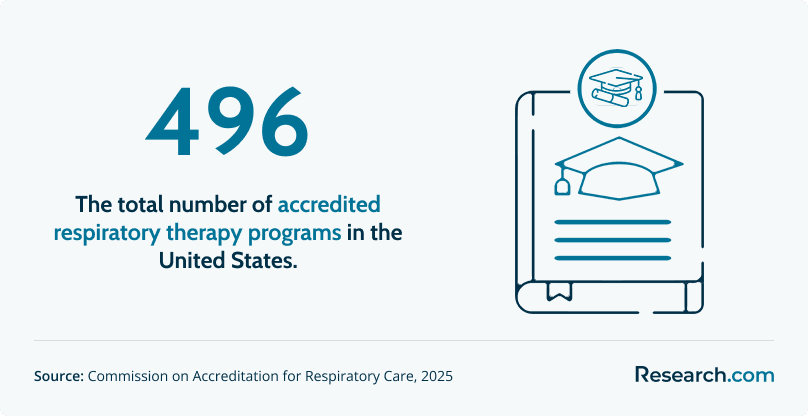
Yes. Accreditation is one of the most important factors when choosing an online respiratory care therapy associate’s degree. Students should verify that the program is accredited by the Commission on Accreditation for Respiratory Care (CoARC), because accreditation is closely tied to program quality, clinical training standards, credentialing eligibility, employer confidence, and state licensure pathways.
Accreditation review evaluates whether a program has appropriate curriculum, faculty qualifications, clinical experiences, assessment methods, and student outcome processes. Do not rely only on a school’s general institutional accreditation. For respiratory therapy, programmatic accreditation is the key credential to confirm. Students comparing long-term healthcare leadership options may also review career guides such as what is the highest paying job in healthcare administration?, but entry into respiratory therapy depends first on meeting clinical education and licensure requirements.
How do online respiratory care therapy programs prepare students for licensure and certification exams?
Online respiratory care therapy programs prepare students for licensure and certification by combining didactic instruction, simulations, lab practice, supervised clinical rotations, and exam-focused review. Strong programs align their coursework with current respiratory care competencies and provide practice assessments for topics such as patient assessment, mechanical ventilation, cardiopulmonary emergencies, pharmacology, airway management, and therapeutic procedures.
Students should ask each school how it supports NBRC exam readiness, whether faculty monitor exam performance outcomes, and how the program handles students who need remediation. If you are researching fast science-based pathways, you may also compare fast track online biology programs, but biology degrees generally do not replace the clinical education required for respiratory therapy licensure.
What types of specializations are available in an online respiratory care therapy associate's degree program?
Associate programs usually prepare students for general respiratory therapy practice first. Specialization often develops through clinical rotations, employer training, continuing education, experience, or later credentials. Still, students may encounter focused coursework or clinical exposure in several areas.
- Critical Care: Focuses on patients with severe respiratory failure or complex cardiopulmonary needs, including ventilator support and advanced airway care. Students comparing RN vs RT degree programs should note that respiratory therapy training is more concentrated on breathing support, pulmonary care, and cardiopulmonary treatment.
- Neonatal and Pediatric Care: Prepares students to understand respiratory care for infants and children using age-appropriate equipment and family-centered care approaches.
- Pulmonary Diagnostics: Introduces lung function testing, diagnostic equipment, and interpretation of respiratory assessment data.
- Sleep Medicine: Covers sleep-related breathing disorders such as sleep apnea, sleep study concepts, and therapies such as CPAP.
- Home Care: Prepares students to support patients outside the hospital through education, equipment management, and chronic condition monitoring.
- Pulmonary Rehabilitation: Emphasizes exercise programs, education, lifestyle support, and long-term management for patients with chronic lung disease.
Students considering a future move into nursing may compare respiratory care with affordable paramedic to RN bridge programs online, especially if they want a broader nursing scope of practice.
How to Choose the Best Respiratory Care Therapy Associate’s Degree Program
The best respiratory care associate program is the one that is accredited, affordable, clinically accessible, aligned with your state’s licensure rules, and realistic for your schedule. Use the steps below before committing to a program.
- Verify CoARC accreditation. Confirm the program’s current status directly with the school and CoARC. A school may be accredited institutionally while a specific respiratory care program has a different status.
- Check licensure alignment in your state. Ask whether graduates meet educational requirements for your state’s respiratory care license and NBRC exams.
- Calculate the full cost. Compare tuition, fees, books, lab expenses, clinical travel, uniforms, background checks, immunizations, testing, and licensing costs.
- Review clinical placement support. Ask whether the school arranges placements, whether students must find their own sites, and how far students typically travel.
- Compare graduation and exam outcomes. Request graduation rates, job placement data, credentialing exam performance, and attrition information.
- Evaluate schedule fit. Determine whether labs, live sessions, clinical shifts, and exams work with your job, family, and transportation situation.
- Ask about student support. Look for tutoring, faculty access, technical support, clinical remediation, career services, and exam-prep resources.
| Question to ask | Why it matters |
| Is the respiratory care program currently CoARC-accredited? | Accreditation affects credentialing, licensure, and employer recognition. |
| Where will I complete labs and clinical rotations? | Online coursework does not eliminate in-person training requirements. |
| What is the total program cost after fees? | Tuition alone can underestimate the real price of attendance. |
| Do graduates qualify for NBRC exams and state licensure? | Program completion must connect to the professional requirements in your state. |
| What happens if I cannot secure a clinical placement? | Clinical delays can extend your timeline and increase costs. |
What career paths are available for online respiratory care therapy associate's degree graduates?
Graduates of accredited respiratory care therapy associate programs may qualify for entry-level respiratory therapist roles after meeting certification and state licensure requirements. With experience, additional credentials, or further education, they may move into specialized clinical, supervisory, education, or rehabilitation roles.
1. Respiratory Therapy Manager
A respiratory therapy manager supervises respiratory care department operations, staffing, budgets, procedures, quality standards, and coordination with other healthcare teams. This path generally requires strong clinical experience, communication skills, leadership ability, and knowledge of respiratory care workflows.
Median salary: $83,955 per year.
2. Critical Care Respiratory Therapist
Critical care respiratory therapists work with patients in intensive care units and other high-acuity settings. They manage ventilators, support airway care, perform diagnostic procedures, and adjust respiratory support based on patient response. Some professionals also build complementary imaging knowledge through diagnostic medical sonography programs, particularly where lung sonography supports assessment.
Median salary: $89,915 per year.
3. Pulmonary Rehabilitation Therapist
Pulmonary rehabilitation therapists help patients with chronic lung disease improve daily functioning and quality of life. They may develop exercise plans, teach breathing strategies, monitor progress, educate patients, and collaborate with physicians, nurses, and other rehabilitation professionals.
Median salary: $89,915 per year.
4. Neonatal Respiratory Therapist
Neonatal respiratory therapists care for newborns with respiratory needs, often in neonatal intensive care units. Their work can include assessment, oxygen therapy, ventilatory support, specialized equipment management, and close coordination with neonatologists and neonatal nurses.
Median salary: $89,915 per year.
5. Pediatric Respiratory Therapist
Pediatric respiratory therapists work with infants, children, and adolescents who have acute or chronic breathing problems. They may serve in pediatric hospitals, emergency departments, outpatient clinics, or specialty practices, supporting conditions such as asthma, pneumonia, or congenital lung issues.
Median salary: $89,915 per year.
What additional student support services are offered by online respiratory care therapy programs?
Strong online respiratory care programs provide more than recorded lectures. Useful support services may include academic advising, faculty office hours, tutoring in science and respiratory care topics, technical support, clinical placement coordination, exam preparation, simulation access, career counseling, and help with licensure paperwork. These services matter because respiratory care programs are academically demanding and clinically structured.
Students comparing broader health pathways may also review options such as the cheapest online public health degree in USA, but public health programs usually prepare students for population health roles rather than bedside respiratory care.
Should I pursue further education after completing an online respiratory care therapy associate’s degree?
Further education can be worthwhile if you want to move into leadership, education, advanced clinical practice, healthcare administration, public health, or broader science-based roles. Many respiratory therapists start with an associate degree, gain licensure and work experience, and later pursue a bachelor’s completion program or a related healthcare degree.
Before enrolling in another degree, ask whether your employer offers tuition assistance, whether your credits will transfer, and whether the next credential clearly supports your career goal. Students who want a stronger life-science foundation may compare options such as an online bachelor degree biology, though biology programs serve different professional outcomes than respiratory therapy licensure programs.
What challenges might I face in an online respiratory care therapy program?
Online respiratory care programs can be flexible, but they are not easy or fully remote. Students must manage science-heavy coursework, skills labs, clinical shifts, patient-care expectations, technology requirements, and strict deadlines. Clinical rotations may involve early mornings, evenings, weekends, travel, immunization requirements, and background checks.
Common challenges include limited local clinical sites, difficulty balancing work with clinical schedules, technology problems during online exams or simulations, and the need for disciplined independent study. Students who want management flexibility later in their careers may explore a healthcare administration online degree, but that path does not substitute for respiratory care clinical training.
What is the job market for graduates with an online respiratory care therapy associate's degree?
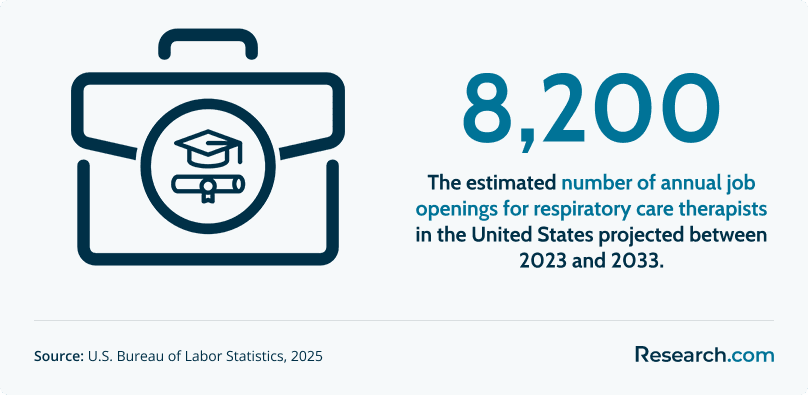
The job outlook for respiratory therapists is favorable. The U.S. Bureau of Labor Statistics projects 13% growth from 2023 to 2033, which is much faster than the average for all occupations. Demand is linked to factors such as an aging population and the continued need to treat respiratory conditions including chronic obstructive pulmonary disease and pneumonia.
Graduates can expect approximately 8,200 job openings annually, with opportunities in hospitals, outpatient care centers, and home healthcare services. Students who later want to connect respiratory care with population health, prevention, or health policy may consider programs such as CEPH accredited MPH programs online.
Common mistakes to avoid when choosing an online respiratory care therapy associate’s degree
| Mistake | Better approach |
| Choosing only by the lowest tuition rate | Compare total cost, fees, clinical travel, exam costs, and licensure expenses. |
| Assuming “online” means no campus or clinical attendance | Ask exactly where and when labs and clinical rotations are required. |
| Ignoring programmatic accreditation | Verify CoARC accreditation before applying or paying deposits. |
| Not checking state licensure rules | Confirm that the program meets requirements in the state where you plan to work. |
| Overlooking clinical placement logistics | Ask whether the school secures placements and how far students usually travel. |
| Assuming salary outcomes are guaranteed | Review local wages, employer demand, shift expectations, and specialization requirements. |
Questions to ask before enrolling
- Is the respiratory care program currently accredited by CoARC?
- Will this program make me eligible for NBRC exams and respiratory care licensure in my state?
- How many credits are required, and are prerequisites included in the published timeline?
- What is the total cost after tuition, fees, books, labs, clinical requirements, and exam-related expenses?
- Where are labs held, and how often must I attend in person?
- Who arranges clinical placements, and what happens if no local site is available?
- What are the program’s graduation, retention, job placement, and exam pass outcomes?
- Can I work while enrolled, or do clinical schedules make that difficult?
- Are transfer credits accepted, and will credits apply to a future bachelor’s degree?
- What academic, technical, and career support services are available to online students?
References:
- Accreditation Committee for Respiratory Care (ACRTE). (n.d.). ASRT with BSRT option. Retrieved from ACRTE.
- American Association for Respiratory Care (AARC). (n.d.). Be an RT. Retrieved from AARC.
- American Association for Respiratory Care (AARC). (n.d.). Quick facts: Respiratory therapists. Retrieved from AARC.
- American Association for Respiratory Care (AARC). (n.d.). Understanding credentials. Retrieved from AARC.
- Children’s Hospital Association. (2024, July). Filling the void in respiratory care. Retrieved from Children’s Hospitals.
- Commission on Accreditation for Respiratory Care (CoARC). (n.d.). Find an accredited program. Retrieved from CoARC.
- Federal Student Aid. (n.d.). Types of aid. Retrieved from StudentAid.gov.
- National Board for Respiratory Care (NBRC). (n.d.). Registered respiratory therapist examination. Retrieved from NBRC.
- National Board for Respiratory Care (NBRC). (n.d.). Resources. Retrieved from NBRC.
- National Institutes of Health (NIH). (n.d.). Clinical Center’s Critical Care Therapy and Respiratory Care Section. Retrieved from NIH.
- O*NET Online. (n.d.). Respiratory therapists summary. Retrieved from O*NET.
- Respiratory Therapy Zone. (n.d.). Respiratory therapist license guide. Retrieved from Respiratory Therapy Zone.
- Standards of Care. (n.d.). Understanding respiratory therapy. Retrieved from Standards of Care.
- U.S. Public Health Service (USPHS). (n.d.). Respiratory therapist. Retrieved from USPHS.
- ZipRecruiter. (n.d.). Critical care respiratory therapist salary. Retrieved from ZipRecruiter.
- ZipRecruiter. (n.d.). Neonatal respiratory therapist salary. Retrieved from ZipRecruiter.
- ZipRecruiter. (n.d.). Pediatric respiratory therapist salary. Retrieved from ZipRecruiter.
- ZipRecruiter. (n.d.). Respiratory therapist pulmonary rehab salary. Retrieved from ZipRecruiter.
- ZipRecruiter. (n.d.). Respiratory therapy manager salary. Retrieved from ZipRecruiter.
- Zippia. (n.d.). Respiratory therapist demographics. Retrieved from Zippia.
- Zippia. (n.d.). Respiratory therapist education. Retrieved from Zippia.
- Zippia. (n.d.). Respiratory therapist trends. Retrieved from Zippia.
Key Insights
- The best affordable respiratory care associate program is not simply the cheapest one; it must be CoARC-accredited, clinically accessible, and aligned with your state’s licensure rules.
- Online respiratory care programs are usually hybrid. Expect remote coursework, but plan for in-person labs, clinical rotations, health documentation, background checks, and travel to approved sites.
- Program costs vary widely, from $103.06 per credit hour to $836 per credit hour among the listed options, so calculate total cost before comparing schools.
- Most students should plan for about two years of full-time study, although some accelerated programs may take 18 to 21 months and others may take up to 24 months.
- Respiratory therapists earn about $70,000 per year on average, but wages vary by location, employer, experience, and specialty.
- The job outlook is strong, with 13% projected growth from 2023 to 2033 and approximately 8,200 job openings annually.
- Before enrolling, ask direct questions about accreditation, NBRC exam preparation, clinical placements, state licensure eligibility, total cost, and graduate outcomes.
Other Things You Should Know About Respiratory Care Therapy Associate’s Degree Programs
In 2027, it's crucial to ensure that online respiratory care therapy associate's degree programs are accredited by Commission on Accreditation for Respiratory Care (CoARC). Accredited programs ensure adherence to educational quality and are pivotal for obtaining licensure and employment.
Graduates from an online respiratory care therapy associate's degree program in 2027 can pursue roles as respiratory therapists, with job opportunities in hospitals, clinics, and nursing facilities. The U.S. Bureau of Labor Statistics anticipates a growth of 19% in this field from 2026 to 2036.
Yes. Accredited respiratory care associate programs require supervised clinical practice in hospitals or clinics, usually completed in person. Students often finish 300 to 600 clinical hours before graduation, and the program must meet CoARC standards if it prepares graduates for the NBRC credentialing exam.