2027 How to Become a Coach/Scout: Education, Salary, and Job Outlook

Co-Founder and Chief Data Scientist
Becoming a coach or scout is not one career path but several: school athletics, youth sports, college programs, professional teams, private training, recruiting services, and independent talent evaluation. The right route depends on the sport, competition level, employer, state requirements, and whether you want to spend more time developing athletes, evaluating prospects, managing programs, or recruiting talent.
This guide explains what aspiring coaches and scouts need to know for 2027: typical credentials, core skills, career progression, salary expectations, internship options, work settings, challenges, and ways to decide whether the profession fits your goals. It is designed for students choosing a major, former athletes considering a sports career, teachers interested in coaching, and early-career professionals trying to move into scouting or athletic leadership.
What are the benefits of becoming a coach/scout?
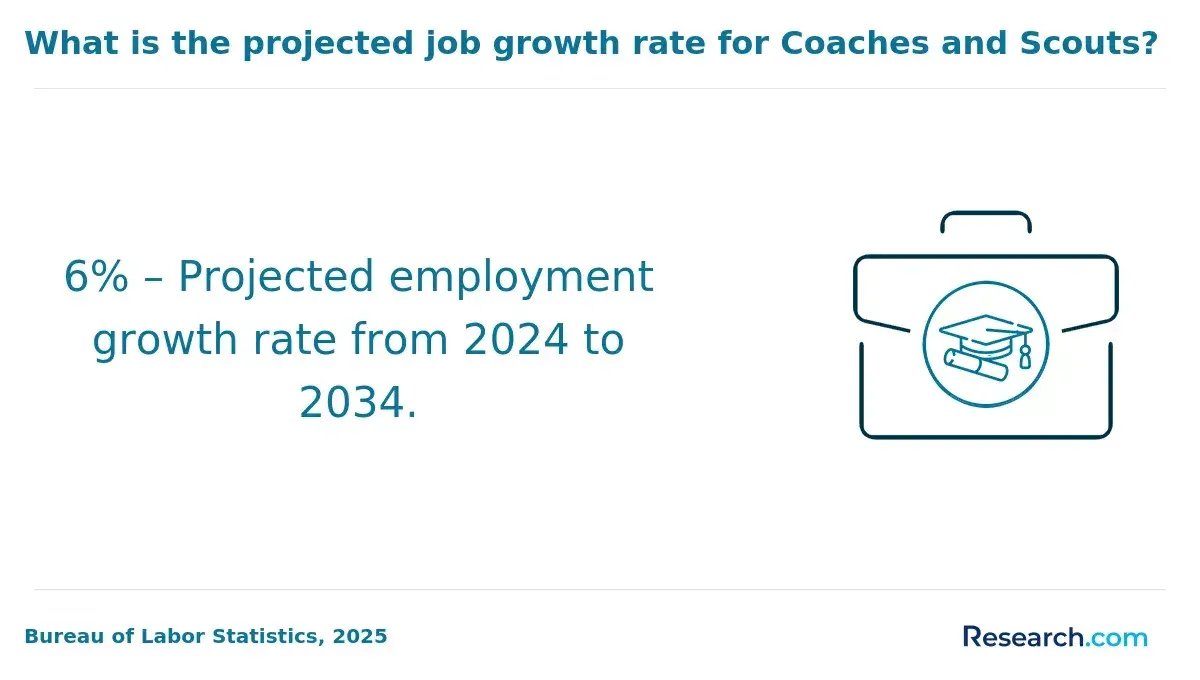
- Employment for coaches and scouts is projected to grow 12% through 2033, reflecting increasing demand in sports organizations and schools.
- The median annual salary for coaches and scouts is approximately $37,000, with experienced professionals earning significantly more in collegiate or professional sports.
- A coaching/scouting career offers personal fulfillment, opportunities for advancement, and engagement with athlete development and sports strategy.
What credentials do you need to become a coach/scout?
The credentials needed to become a coach or scout vary widely by employer and level of competition. A youth sports organization may prioritize sport knowledge, safety training, and communication skills, while a high school, college, or professional organization may expect a degree, coaching certifications, recruiting experience, and a strong network. In most cases, the strongest candidates combine formal education with hands-on experience in the sport.
- Bachelor's degree: Nearly 49% of coaches and scouts hold a bachelor's degree. The major does not always have to be sport-specific, but relevant fields include exercise science, kinesiology, sports medicine, physical education, sports management, education, statistics, and business. A master's degree in sports management, athletic administration, or a related field can strengthen applications for college, administrative, and higher-level coaching roles.
- Playing experience: Competitive playing experience is not always required, but it is often valued, especially for college and professional coaching roles. It can help candidates understand game situations, locker-room dynamics, practice structure, and athlete development. For scouts, playing experience may help with evaluation, but strong observation, reporting, and projection skills can be just as important.
- Teaching license: High school coaching jobs are often tied to teaching positions. Many schools prefer or require coaches who already work as teachers because they are familiar with school policies, student supervision, and academic eligibility requirements.
- State certification: Many state high school athletic associations require coaches to complete certification programs. These commonly include minimum age requirements, CPR and first aid training, concussion awareness, sports safety, ethics, and coaching fundamentals. Requirements differ by state, school district, and sport.
- Sport-specific certifications: Some sports place more weight on governing-body credentials. Tennis, golf, soccer, swimming, strength and conditioning, and specialized youth programs may require or strongly prefer sport-specific certifications.
- Scouting credentials and experience: Scouting positions usually require a bachelor's degree, although prior playing experience is not always mandatory. Employers often look for demonstrated knowledge of talent evaluation, film review, statistical analysis, recruiting rules, report writing, and relationships within the sport.
Students planning early should choose coursework that builds both sport knowledge and employable skills. Majors in exercise science, education, data analytics, communications, business, or sports management can all be useful depending on the target role. Reviewing in-demand college majors can help you compare options and choose a practical academic foundation for a coaching or scouting career.
What skills do you need to have as a coach/scout?
Coaches and scouts need more than enthusiasm for sports. They must evaluate performance accurately, communicate clearly, make decisions under pressure, and earn trust from athletes, families, staff, and administrators. The most valuable skills differ slightly by role: coaches focus more on development and team performance, while scouts focus more on projection, comparison, and reporting.
| Skill | Why it matters | How it shows up on the job |
| Analytical skills | Coaches and scouts must interpret performance, identify patterns, and separate short-term results from long-term potential. | Reviewing game film, comparing athletes, using statistics, identifying weaknesses, and projecting improvement. |
| Communication skills | Feedback must be direct, useful, and appropriate for the audience. | Explaining corrections to athletes, presenting scouting reports, speaking with parents, and aligning with staff. |
| Attention to detail | Small technical, tactical, or behavioral cues can affect performance and evaluation. | Noticing footwork, decision-making, effort level, coachability, mechanics, injury history, or consistency. |
| Strategic thinking | Winning and development require planning, adjustment, and prioritization. | Designing practice plans, adjusting tactics, building rosters, and matching athletes to roles. |
| Networking | Many opportunities come through trusted relationships and reputation. | Building contacts with coaches, athletic directors, club directors, agents, recruiters, and former players. |
| Technical knowledge | Credibility depends on understanding the sport at the appropriate level. | Teaching rules, schemes, drills, position demands, training standards, and evaluation criteria. |
Strong candidates also develop emotional control, cultural awareness, ethical judgment, and administrative discipline. Coaching and scouting often involve sensitive decisions: cutting players, ranking prospects, discussing scholarships, managing injuries, or reporting concerns. Accuracy and professionalism matter as much as sports knowledge.
What is the typical career progression for a coach/scout?
Career progression in coaching and scouting is usually built through experience, reputation, results, and relationships. Advancement is rarely automatic. Many professionals start in part-time, volunteer, seasonal, or assistant roles before moving into positions with more responsibility.
- Entry-level roles: Common starting points include Assistant Coach, Graduate Assistant, Volunteer Coach, Scouting Assistant, Video Assistant, Operations Assistant, or Youth Coach. These roles involve supporting senior staff, running drills, breaking down film, organizing practices, preparing reports, and learning how programs operate. A bachelor's degree and playing, volunteering, or sport-specific experience can help candidates compete for these openings.
- Mid-level roles: Positions such as Head Coach, Position Coach, Recruiting Coordinator, Area Scout, or Lead Scout involve greater accountability. Professionals at this level may manage athletes, lead training plans, recruit prospects, evaluate talent, communicate with families, and influence roster decisions. Advancement typically requires multiple years of experience and a visible record of reliability.
- Senior leadership roles: Roles such as Director of Scouting, Head of Coaching, Athletic Director, Director of Player Personnel, or Program Director require strong leadership, sport-specific expertise, staff management, and proven success. Many professionals in these positions have over ten years of experience and oversee budgets, hiring, recruiting strategy, coaching staffs, or evaluation departments.
- Specialization and adjacent paths: Coaches and scouts may specialize in a sport such as football or baseball, a position group, strength and conditioning, youth development, analytics, recruiting, video analysis, or international scouting. Others move into Sports Management, Athletic Administration, sports media, marketing, compliance, athlete development, or consulting.
A practical career plan should include both short-term experience and long-term positioning. For example, an aspiring college coach may benefit from teaching credentials, graduate assistantships, recruiting exposure, and compliance knowledge. An aspiring scout may need a portfolio of written evaluations, film breakdowns, event coverage, and references from trusted professionals.
How much can you earn as a coach/scout?
Earnings for coaches and scouts vary substantially because the field includes part-time youth roles, school-based jobs, college athletics, private coaching, scouting agencies, and professional sports. Pay depends on employer type, sport, location, competition level, experience, contract structure, and whether the job is full-time, seasonal, or stipend-based.
The median annual wage for coaches and scouts was $45,920. Other reputable data sources show a wider salary range, typically between $33,000 and $51,500 annually.
Hourly earnings usually fall between $13 and $25, with top-tier professionals potentially earning above $50,000 per year. These figures should be read as broad benchmarks rather than guarantees. A high school assistant coach may receive a modest stipend, while a college or professional coach with recruiting responsibility, leadership duties, and a proven record may earn considerably more than many entry-level roles.
| Factor | How it can affect earnings |
| Experience | Entry-level coaches and scouts commonly earn toward the lower end of the range, while experienced professionals with a record of athlete development, winning programs, or accurate evaluations may qualify for better-paying roles. |
| Employer type | Schools, community organizations, colleges, professional teams, private clubs, and scouting firms use different pay models, including salaries, stipends, hourly pay, seasonal contracts, and performance-based arrangements. |
| Sport and competition level | High-profile sports and higher competition levels may offer more opportunities, but they also attract more applicants and often require stronger networks. |
| Education and credentials | A bachelor's degree is common, and additional certifications can support advancement, especially in school, youth, collegiate, or specialized training environments. |
| Location | Geographic region affects pay, travel requirements, cost of living, and the number of teams, schools, clubs, and events nearby. |
Education can influence access to certain positions, particularly in schools and colleges. Shorter credentials may also help professionals add marketable skills in areas such as analytics, athlete safety, strength and conditioning, or sport administration. Compare options carefully, including online certificate programs that can pay well without a degree, but verify whether a credential is recognized by the employers, leagues, or associations you plan to work with.
The coach and scout earnings and job outlook 2025 are shaped by demand across professional sports, collegiate athletics, school programs, youth sports, and community organizations. Because many roles are seasonal or part-time, candidates should evaluate total compensation, benefits, travel costs, schedule demands, and advancement potential before accepting an offer.
What internships can you apply for to gain experience as a coach/scout?
Internships are one of the most practical ways to enter coaching or scouting because they provide direct exposure to athlete evaluation, practice planning, event operations, recruiting rules, and staff expectations. The best internship is not always the most famous one; it is the one that gives you supervised responsibility, useful feedback, and contacts who can vouch for your work.
Sports scouting internships USA can be found with professional teams, recruiting services, combines, youth programs, soccer clubs, nonprofit organizations, and private training companies. When comparing options, look at whether the role is paid, whether it offers college credit, how much evaluation work you will actually do, and whether it includes mentorship from experienced staff.
- Carolina Panthers: Offers paid scouting internships during training camps at $14.75-$19.50 per hour. Interns can observe professional talent evaluation, support football operations, and learn how scouts and personnel staff organize information.
- National Scouting Combine: Operates an extensive unpaid internship program with 10 annual scouting positions. Interns analyze college football conferences and may connect with scouts at collegiate and professional levels.
- USA Sport Group: Provides coaching internships that award college course credits. Interns help develop age-appropriate curricula for children aged 2-19 and may lead coaching sessions under supervision.
- National Scouting Report: Focuses on NCAA-compliant athlete identification and evaluation processes, offering specialized experience in scouting procedures and athlete profiles.
- Phoenix Rising FC: Delivers soccer-specific internships with UEFA Pro-License standard training, emphasizing analysis techniques, tactical understanding, and structured player evaluation.
Before applying, prepare a concise resume, a short statement of coaching or scouting goals, references, and examples of relevant work. For scouting internships, sample player reports or film notes can help. For coaching internships, lesson plans, practice plans, volunteer experience, and safety certifications can strengthen your application.
Some professionals continue into graduate study or advanced credentials after gaining field experience. If you are considering long-term academic or leadership roles, compare program quality, cost, accreditation, and relevance rather than choosing based on convenience alone. Researching affordable online doctoral programs can be useful for those considering advanced academic credentials, but a doctorate is not required for most coaching or scouting jobs.
How can you advance your career as a coach/scout?
Advancement in coaching and scouting depends on competence, visibility, and trust. Employers want people who can improve athletes, evaluate talent accurately, follow rules, manage relationships, and handle pressure. To move up, you need evidence of results and a network that knows your work.
- Continuing education: Stay current through courses, workshops, clinics, graduate study, and league or association training. Advanced roles in collegiate and professional sports often favor candidates who understand modern training methods, athlete development, analytics, recruiting systems, and leadership. Established entities like Major League Baseball and the NFL provide specialized development initiatives that can expose participants to current talent evaluation methods and professional expectations.
- Certification programs: Certifications are especially important in youth, high school, and college athletics, where safety, ethics, CPR, first aid, concussion protocols, and sport-specific standards may be required. The right certification can also signal professionalism, but candidates should confirm that it is recognized by the relevant school, state association, league, or governing body.
- Networking: Coaching and scouting are relationship-driven fields. Attend clinics, showcases, combines, tournaments, conferences, and professional association events. Maintain relationships with former coaches, athletic directors, club administrators, scouts, and athletes. Networking works best when it is based on reliability, preparation, and genuine contribution rather than transactional job requests.
- Mentorship: A strong mentor can help you understand hiring timelines, evaluation standards, program politics, and mistakes to avoid. Formal or informal mentorship can improve your player assessment, communication style, leadership decisions, and career strategy. Funding programs such as the Scott Pioli & Family Fund support diversity by offering financial assistance for training and relationship-building.
To advance faster, document your work. Keep a portfolio that may include practice plans, player development examples, scouting reports, video breakdowns, recruiting calendars, measurable athlete improvements, and references. For coaches, results should include more than wins; athlete retention, improvement, academic support, culture, and safety also matter. For scouts, the quality, clarity, and accuracy of reports are central.
Where can you work as a coach/scout?
Coaches and scouts work in schools, colleges, professional sports, recreation programs, private clubs, scouting services, and independent consulting. The right setting depends on your preferred age group, sport, schedule, income needs, travel tolerance, and long-term goals. Coaching and scouting job opportunities in 2025 span both competitive and community-based environments.
Employment settings for coaches and scouts include:
- Colleges, universities, and professional schools: Representing about 26% of positions, these institutions employ coaches for athletic programs and scouts for recruitment. Examples include well-known universities like the University of Michigan and Stanford University, along with smaller colleges expanding sports programs. Many students preparing for these careers compare institutions, including schools that accept Pell Grants.
- Arts, entertainment, and recreation industry: Comprising approximately 20% of jobs, this sector includes professional sports leagues such as the NFL, NBA, MLB, and NHL, where scouts assess player potential. Private sports clubs, community recreation centers, and nonprofit organizations like the YMCA also hire coaches to lead youth and community programs.
- Elementary and secondary schools: Public and private schools employ about 17% of coaches and scouts. These professionals may also serve as physical education teachers, classroom teachers, extracurricular coaches, or athletic department staff.
- Self-employment: Independent coaches and scouts may provide private lessons, athlete development plans, recruiting guidance, video analysis, or talent evaluation services. This path offers flexibility but requires business skills, marketing, liability awareness, and a strong reputation.
- Scouting agencies and recruiting firms: Specialized firms like National Scouting Report (NSR) deliver scouting services to collegiate programs and individual athletes. These roles may involve athlete profiles, event coverage, compliance awareness, and communication with families.
- Government agencies: Local and regional government agencies sometimes hire coaches for public recreation programs, camps, youth leagues, and community sports initiatives.
Sports scouting careers in professional leagues often require travel to games, camps, tournaments, showcases, and combines. Irregular hours are common, including evenings and weekends. School-based roles may be more predictable during the academic year but can still involve early mornings, late practices, transportation, parent communication, and postseason responsibilities.
What challenges will you encounter as a coach/scout?
Coaching and scouting can be rewarding, but the work is demanding. Professionals must balance performance expectations, athlete welfare, administrative duties, travel, limited resources, and constant evaluation of their own results. Understanding the challenges before entering the field helps you plan realistically.
- Workload demands: Coaches and scouts often work beyond traditional schedules. Practices, games, film review, travel, recruiting, athlete meetings, reports, parent communication, and administrative tasks can intensify during competitive seasons.
- Emotional pressure: Coaches manage expectations from athletes, parents, administrators, fans, and staff. Scouts may face pressure when recommendations affect scholarships, roster spots, contracts, or organizational investments. Conflict resolution and emotional composure are essential.
- Competitive job market: Many applicants have playing experience, degrees, certifications, and strong personal networks. Entry-level roles can be seasonal, low-paid, or volunteer-based, so candidates must be strategic about gaining experience without overextending financially.
- Industry evolution: Sports continue to change through technology, analytics, athlete monitoring, new training methods, and updated rules. Professionals who rely only on outdated methods may lose credibility.
- Regulatory compliance: Coaches in school, youth, and college settings must follow state and federal guidelines, eligibility rules, safety protocols, recruiting restrictions, and ethical standards. Mistakes can affect athletes and jeopardize employment.
- Resource management: Many programs operate with limited budgets, equipment, staff, or facility access. Coaches and scouts may need to prioritize spending, manage travel costs, recruit efficiently, and adapt when institutional support changes.
Common mistakes include accepting a role without understanding the schedule, overlooking certification requirements, underestimating parent communication, failing to document evaluations, or treating networking as a substitute for competence. A sustainable career requires boundaries, preparation, and a clear professional reputation.
What tips do you need to know to excel as a coach/scout?
To excel as a coach or scout, treat the profession as both a craft and a relationship-based career. The people who last tend to be dependable, curious, prepared, and honest in their evaluations. They also understand that credibility grows slowly and can be damaged quickly.
- Build a clear philosophy: Know what you value as a coach or evaluator. Your philosophy should guide how you develop athletes, communicate feedback, evaluate potential, and make difficult decisions.
- Commit to continuous learning: Attend workshops, conferences, clinics, certification programs, and sport-specific training. Study successful programs, but adapt ideas to your athletes and context instead of copying blindly.
- Combine observation with evidence: Scouts should blend traditional evaluation with modern data analytics. Coaches should use performance metrics, film, and athlete feedback to support training decisions.
- Improve your written work: Clear practice plans, scouting reports, development notes, and postgame evaluations make you more valuable. Decision-makers need information they can trust and use quickly.
- Network with purpose: Attend industry events, participate professionally on social media, and build authentic relationships with coaches, athletic directors, scouts, club leaders, and program administrators. Follow up respectfully and offer value when possible.
- Prepare carefully for opportunities: During job searches, research organizations thoroughly. Understand their sport level, recent performance, culture, recruiting area, facilities, and leadership structure. Ask informed questions that show genuine preparation.
- Strengthen your eye for talent: Evaluate more than athletic ability. Consider work ethic, coachability, decision-making, consistency, competitiveness, physical projection, learning capacity, and fit within a system.
- Take strategic risks: Temporary roles, relocation, lower initial pay, or less visible assignments can be worthwhile if they provide real experience, strong mentorship, and credible references. Avoid opportunities that exploit labor without meaningful development.
- Protect your reputation: Be accurate, ethical, punctual, and consistent. Do not overpromise scholarships, playing time, professional opportunities, or outcomes you cannot control.
How do you know if becoming a coach/scout is the right career choice for you?
A coaching or scouting career may be a good fit if you enjoy teaching, evaluating performance, solving competitive problems, and building relationships in sports environments. It may be less suitable if you need a predictable schedule, quick advancement, minimal travel, or a career that separates easily from evenings, weekends, and seasonal demands.
- Passion for athlete development: The strongest coaches and scouts care about helping athletes improve, not just being close to competition. You should enjoy teaching fundamentals, correcting mistakes, giving feedback, and watching long-term progress.
- Personality traits: Effective professionals are often resilient, observant, persuasive, disciplined, and emotionally steady. They must communicate with athletes, parents, administrators, and staff while handling pressure and criticism.
- Experience and education: A background as a player, volunteer, teacher, or team assistant can help you test your interest before committing. A bachelor's degree is common, but professional experience and networking can sometimes outweigh formal education in certain roles. A dual degree program may add flexibility for students who want to combine sports-related study with education, business, analytics, or another field.
- Salary and job outlook: The median annual wage was $53,040 with potential for higher income at collegiate or professional levels. Job growth is expected to be 10% through 2033, much faster than average, though many roles are seasonal or part-time. Compare the income potential with the time, travel, and early-career instability common in the field.
- Work environment: Coaches and scouts often work evenings, weekends, and holidays. They may spend time outdoors, on buses, at tournaments, in film rooms, in gyms, or traveling between events. People who enjoy dynamic, team-oriented settings may find the work energizing.
- Self-reflection: If you are asking, “is a career as a coach or scout right for me,” start by volunteering, assisting with a team, attending clinics, shadowing a coach or scout, or writing practice plans and player evaluations. Real exposure will give you a better answer than interest alone.
A practical test is simple: do you still enjoy the work when no one is watching, the pay is modest, the hours are inconvenient, and the athlete development process is slow? If the answer is yes, coaching or scouting may be worth pursuing seriously.
What Professionals Who Work as a Coach/Scout Say About Their Careers
- Bryson: "Choosing a career as a coach offers incredible job stability, especially in schools and sports clubs where experienced coaches are always in demand. The salary potential grows significantly with experience and specialization, making it a rewarding path both financially and personally. It's a fulfilling way to make a lasting impact on athletes' lives."
- Tripp: "The challenge of scouting lies in identifying raw talent and projecting future performance, which keeps the role dynamic and intellectually stimulating. It's a unique opportunity to shape team rosters and influence competitive outcomes, sharpening one's analytical skills every day. For someone who loves sports and data, this career is extremely satisfying."
- Joshua: "From my experience, pursuing professional development in coaching and scouting can drastically accelerate career growth. Certifications, workshops, and networking within industry circles open doors to higher roles, including management and consultancy positions. It's a profession where continuous learning is both necessary and rewarding."
Other Things You Should Know About Becoming a Coach/Scout
In 2027, aspiring coaches may need certifications like the ASEP Coaching Principles or USA Football Certification. Scouts often require scouting-specific certifications offered by organizations like the PBR or NSCAA, depending on the sport. Requirements vary by sports and organization.
The Bureau of Labor Statistics projects job growth for coaches and scouts to be about 12% from now until 2027. This increase is largely due to expanding sports programs and the rising interest in recreational sports at the high school and collegiate levels.
In 2027, the education requirements to become a coach or scout largely depend on the specific sport and level. Common requirements include a bachelor's degree in sports science, exercise, or a related field. Many positions require previous experience in playing or coaching, and certifications like CPR or sport-specific training can be advantageous.
References
- Common Challenges For Grassroots Coaches - Football DNA https://footballdna.co.uk/common-challenges-for-grassroots-coaches/
- Internships – NATIONAL SCOUTING COMBINE https://nationalscoutingcombine.com/internships/
- Career prospects in the football and sports coaching industry - UCFB https://www.ucfb.ac.uk/your-career/careers-in-football-and-sport/career-prospects-in-the-football-and-sports-coaching-industry/
- Occupation Profile | NC Careers.org https://nccareers.org/occupation-profile/272022/1284
- Coach career development: Who is responsible? - ScienceDirect https://www.sciencedirect.com/science/article/abs/pii/S1441352313000119
- College Scouting Careers | www.nsr-inc.com https://www.nsr-inc.com/careers/
- How To Become A Sports Scout: 6 Key Steps https://blog.jobsinsports.com/2024/06/17/how-to-become-sports-scout/
- How to Become a Coach and Scout: Is It the Right Career for You? https://www.careerfittest.com/how-to-become-a-coach-scout/
- MyMajors Career Profile https://utexas.mymajors.com/career/coaches-and-scouts