2027 How to Become a Licensed Therapist (LPC) in Omaha, NE

Co-Founder and Chief Data Scientist
If you want to become a professional counselor in Omaha, the most important thing to understand is that Nebraska does not use the LPC title in the same way many other states do. People searching for “LPC in Omaha” are usually looking for Nebraska’s mental health counseling licensure pathway, commonly tied to the Licensed Mental Health Practitioner (LMHP) or Licensed Independent Mental Health Practitioner (LIMHP) credential. The path requires graduate education, supervised clinical experience, an approved exam, and a state application through Nebraska’s licensing authority.
This guide explains the practical steps: what degree you need, how supervised hours work, which Omaha-area schools may fit your goals, where students can gain clinical experience, what salaries may look like, how to prepare for exams, and how to decide whether Omaha is the right place to start or grow your counseling career.
Quick answer: How do you become an LPC-style counselor in Omaha?
To become licensed for professional counseling practice in Omaha, you generally need a qualifying master’s or doctoral degree in counseling or a closely related mental health field, supervised post-graduate clinical experience, a passing score on an accepted national counseling exam, and approval from the Nebraska Department of Health and Human Services. Nebraska candidates should review LMHP and LIMHP requirements carefully because job postings may use “LPC,” “therapist,” “mental health practitioner,” or “licensed counselor” differently.
| Step | What it means for Omaha candidates | Why it matters |
| Earn the right graduate degree | Complete a master’s or doctoral program in counseling or a closely related field, preferably from a program aligned with professional counseling standards. | Your coursework and clinical training determine whether you meet Nebraska licensing rules. |
| Complete practicum or internship training | Gain supervised experience during graduate school through approved clinical placements. | This is where students begin applying counseling theory with real clients under supervision. |
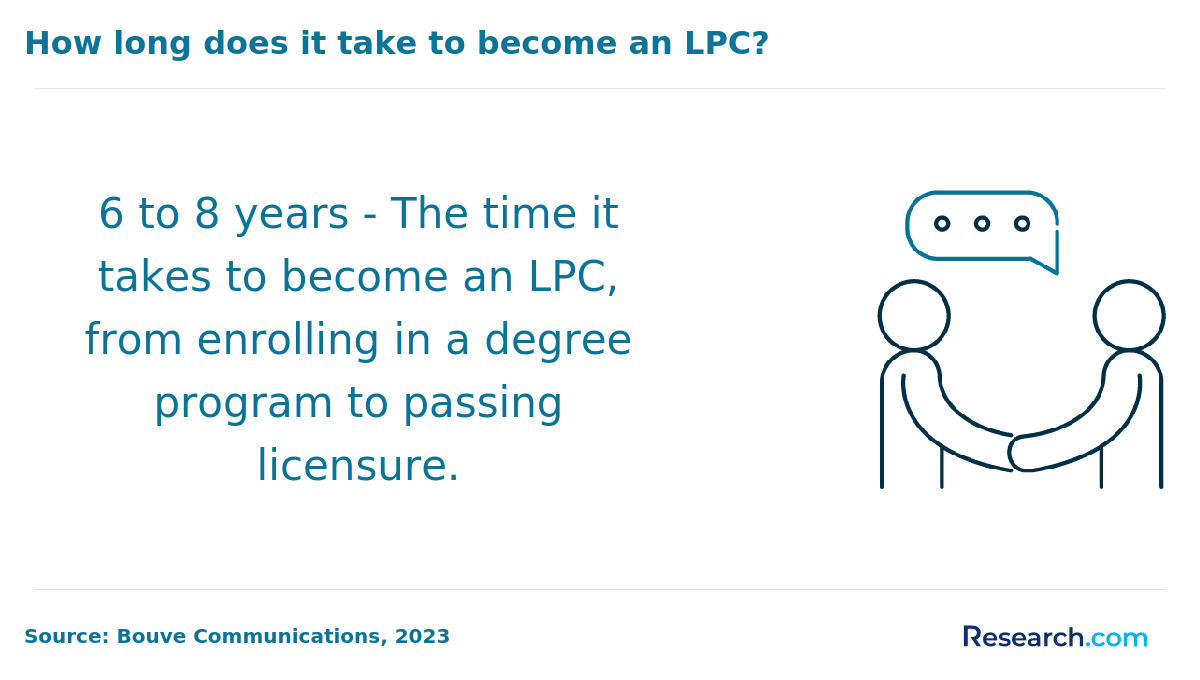
| Accumulate supervised post-degree hours | Nebraska requires at least 3,000 supervised clinical hours over at least two years. | These hours prepare you for independent practice and must be documented correctly. |
| Pass the required exam | Candidates commonly prepare for the National Counselor Examination (NCE) or the National Clinical Mental Health Counseling Examination (NCMHCE), depending on Nebraska requirements. | An accepted exam score is a major licensure checkpoint. |
| Submit the state application | Provide transcripts, supervision verification, exam results, fees, references if required, and background-check materials. | Incomplete documentation can delay licensure. |
Key things to know before choosing this path
- Omaha can be a practical place to train and work because the city has hospitals, nonprofit agencies, university counseling centers, public mental health services, and private practices that use counseling professionals.
- The average salary range cited for LPC-type counselors in Omaha is approximately $50,000 to $60,000 annually, though actual earnings depend on licensure level, setting, specialty, experience, and whether you work for an employer or operate a practice.
- Common employers and clinical settings include Nebraska Medicine, CHI Health, Douglas County Health Department, Heartland Family Service, Behavioral Health Specialists, and University of Nebraska Medical Center-related behavioral health settings.
- What are the educational requirements to become an LPC in Omaha?
- How do you apply for licensure as a counselor in Omaha?
- Which schools in Omaha offer programs for aspiring LPCs?
- Are there internship or practicum opportunities for counseling students in Omaha?
- How much do LPCs make in Omaha?
- What are the supervision requirements for LPCs in Omaha?
- How can substance abuse counseling specialization benefit LPCs in Omaha?
- What advancement opportunities are available for LPCs in Omaha?
- What are the cost considerations for becoming an LPC in Omaha?
- What are the best strategies for LPC licensure exam preparation in Omaha?
- Can LPCs enhance their practice with additional BCBA credentials in Omaha?
- Is Omaha a good place to work as an LPC?
- How competitive is the job market for LPCs in Omaha?
- Are there counseling associations in Omaha?
- Which are the most popular employers of LPCs in Omaha?
- What LPCs in Omaha Say About Their Careers
What are the educational requirements to become an LPC in Omaha?
Omaha candidates should begin with the degree requirement because it shapes every later step in the licensing process. A qualifying graduate program should give you both academic preparation and supervised clinical training. Before enrolling, confirm that the program’s curriculum fits Nebraska’s mental health practice requirements rather than assuming that any psychology or counseling degree will qualify.
- Earn a master’s or doctoral degree in counseling or a closely related field, such as clinical mental health counseling, psychology, or marriage and family therapy.
- Look for a program accredited by the Council for Accreditation of Counseling and Related Educational Programs (CACREP) or another acceptable accrediting body when possible, because accreditation can make curriculum review clearer.
- Expect graduate coursework in counseling theories, lifespan or human development, psychopathology, assessment, ethics, group counseling, multicultural counseling, and clinical practice methods.
- Complete supervised practicum and internship experiences during the program so you graduate with documented direct-client and supervision experience.
- Review Omaha-area options such as University of Nebraska at Omaha, Creighton University, and Bellevue University while checking each program’s current licensure alignment directly with the school and the Nebraska licensing board.
| Program factor | What to check before enrolling | Decision tip |
| Accreditation | Whether the program is CACREP-accredited or otherwise acceptable for Nebraska licensure. | Do not rely only on a school’s marketing language; ask how graduates meet LMHP or LIMHP requirements. |
| Clinical placement support | Whether the school helps students secure practicum and internship sites in Omaha. | A strong placement network can reduce stress during the most time-sensitive part of training. |
| Course content | Whether required courses match Nebraska’s counseling licensure expectations. | Save syllabi and course descriptions because licensing boards may request documentation. |
| Format | Whether the program is campus-based, hybrid, or online, and whether online coursework is accepted for your intended license. | Online flexibility is useful only if the program still satisfies clinical and state requirements. |
| Specialization | Whether the degree supports goals such as substance abuse counseling, family therapy, trauma work, school-based services, or behavioral health. | Choose a concentration that matches the clients and settings where you want to work. |
How do you apply for licensure as a counselor in Omaha?
Counselor licensure in Omaha is handled at the state level, not by the city. Candidates apply through Nebraska’s mental health practice licensing process, which verifies education, supervised experience, exam completion, professional fitness, and required documentation. The application is not just a formality; missing transcripts, incomplete supervision records, or unclear clinical-hour documentation can slow approval.
The general process includes these steps:
- Complete a qualifying graduate degree and keep official transcripts available for the licensing application.
- Finish and document at least 3,000 supervised clinical hours over at least two years under an approved supervisor.
- Prepare for and pass an accepted national counseling exam, such as the National Counselor Examination (NCE) or the National Clinical Mental Health Counseling Examination (NCMHCE), if required for your license pathway.
- Submit the application to the Nebraska Board of Mental Health Practice or the appropriate Nebraska Department of Health and Human Services licensing unit, including required fees and supporting materials.
- Complete any required jurisprudence component or demonstrate knowledge of Nebraska counseling laws, ethical expectations, and scope-of-practice rules if the board requires it.
- Provide supervision verification, professional references when requested, and any required background-check information.
Before submitting materials, compare every item against the state’s current checklist. If you are still deciding whether counseling is the right profession, Research.com’s broader guide to counseling, therapy, and psychology careers can help you compare related roles before committing to a licensure track.
Which schools in Omaha offer programs for aspiring LPCs?
Omaha-area students have several local and nearby options for graduate counseling education. The best choice depends on licensure alignment, clinical placement access, schedule flexibility, cost, faculty expertise, and whether the program’s counseling model fits your career goals.
| School | Program information cited | Best fit considerations |
| University of Nebraska at Omaha | UNO offers a Master of Arts in Counseling program focused on counseling theory, clinical work, and ethical practice. The program is described as CACREP-accredited. | A strong option for students seeking a public university environment and local clinical connections. |
| Creighton University | Creighton offers a Master of Science in Counseling with training in assessment, counseling skills, and multicultural counseling. The program is described as CACREP-accredited. | May appeal to students who want a private university setting and a curriculum connected to professional counseling preparation. |
| Bellevue University | Bellevue University, near Omaha, offers graduate counseling-related programs with an emphasis on applied skills and professional development. The original article notes that these programs are not always CACREP-accredited but may align with Nebraska licensure requirements. | Worth reviewing carefully if you need flexibility, but verify accreditation and licensure eligibility before enrolling. |
Students who want a faith-informed counseling education should still verify clinical rigor, accreditation, and Nebraska licensure alignment. Research.com’s guide to Christian counseling master’s programs can help you compare religiously affiliated options, but the final decision should be based on licensing compatibility, not faith orientation alone.
If you are not sure whether to pursue counseling, psychology, marriage and family therapy, or social work, compare degree types early. The guide to different counseling degree options explains how academic choices can lead to different roles and scopes of practice.
Are there internship or practicum opportunities for counseling students in Omaha?
Yes. Counseling students in Omaha can often complete practicum or internship experiences in nonprofit agencies, university counseling centers, public mental health programs, hospital-affiliated behavioral health settings, and private practices. Availability depends on the school’s placement agreements, supervisor capacity, client populations served, and the student’s readiness for clinical work.
- Heartland Family Service: Students may encounter intake work, group services, case coordination, family support, and community-based behavioral health needs.
- Creighton University Counseling and Psychological Services: Campus counseling settings can expose trainees to individual therapy, group work, crisis response, treatment planning, and student mental health concerns.
- Douglas County Mental Health Center: Public mental health placements may involve intake interviews, treatment planning, team-based care, and work with clients who have complex needs.
When comparing practicum and internship sites, ask more than “How many hours can I get?” You should also ask who supervises you, what kinds of clients you will see, how risk and crisis situations are handled, whether you will receive direct observation or recorded-session feedback, and how the site documents your work for future licensure.
-
: "
One Omaha therapist described her training period as emotionally demanding but formative: “Learning to hold clients’ experiences while keeping up with coursework was hard at first. Good supervision helped me turn that pressure into stronger clinical judgment, empathy, and confidence.”
"
How much do LPCs make in Omaha?
The salary range cited for licensed professional counselors in Omaha is generally between $45,000 and $60,000 annually, with the key-things-to-know section noting an average range of approximately $50,000 to $60,000. These figures should be treated as broad planning estimates, not guaranteed outcomes.
Pay can differ widely based on employer type, licensure status, years of experience, specialty, caseload, insurance billing, and whether the counselor is salaried or self-employed. Early-career counselors and those working in smaller practices may earn near the lower end of the cited range, while experienced clinicians in hospitals, government agencies, larger behavioral health organizations, or specialized roles may have stronger earning potential.
| Work setting | How compensation may work | Trade-off to consider |
| Community mental health or nonprofit agency | Often salaried, with structured supervision and defined caseload expectations. | Good for training and mission-driven work, but pay may be less flexible. |
| Hospital or integrated healthcare system | May offer stable salary, benefits, and interdisciplinary teams. | Can involve higher acuity clients, documentation demands, and coordination with medical providers. |
| Private practice | Income may depend on client volume, payer mix, fees, cancellations, and overhead. | More autonomy, but less predictable income and more business responsibility. |
| University or school-adjacent counseling | May provide structured hours and a defined population. | Roles can be competitive and may require experience with young adults or student mental health. |
Compared with related mental health roles in Omaha, LPC-style counselors may earn competitive wages for master’s-level clinicians, while psychologists often have higher earnings tied to doctoral-level education and a different scope of practice. Salary planning should include loan payments, supervision costs, benefits, and time required to reach independent licensure.
What are the supervision requirements for LPCs in Omaha?
Supervision is the bridge between graduate school and independent counseling practice. Nebraska candidates must complete at least 3,000 supervised clinical hours after earning the required graduate degree, and those hours must span at least two years. This period is where new counselors strengthen assessment, treatment planning, documentation, ethics, crisis response, and professional boundaries.
A supervisor must meet Nebraska’s requirements for approved supervision. Depending on the setting, supervision may come from an experienced licensed mental health professional, such as a qualified counselor or psychologist. Candidates can often complete hours in community mental health agencies, hospitals, clinics, private practices, and other approved behavioral health environments.
Because supervision records can make or break an application, keep a running log from the beginning. Record dates, hours, client-contact activities, supervision meetings, supervisor credentials, and site information. Do not wait until the end of the two-year period to reconstruct your experience.
How can substance abuse counseling specialization benefit LPCs in Omaha?
Substance abuse counseling can strengthen an Omaha counselor’s career options because addiction, co-occurring mental health conditions, family stress, trauma, and relapse prevention often overlap in clinical practice. A counselor with additional preparation in substance use treatment may be better positioned for roles in community agencies, integrated behavioral health, recovery programs, and private practice settings that serve clients with complex needs.
This specialization can be especially useful if you want to work with clients affected by alcohol or drug use, support families, coordinate with medical or legal systems, or use evidence-based interventions tied to motivation, relapse prevention, and behavioral change. To understand the specific pathway, review Research.com’s guide on becoming a substance abuse counselor in Omaha.
What advancement opportunities are available for LPCs in Omaha?
Advancement for Omaha counselors usually comes from a mix of deeper clinical specialization, supervisory responsibility, leadership roles, private practice development, and additional credentials. After gaining experience, LPC-style counselors may move into clinical supervision, program management, trauma-focused practice, substance use treatment, couples and family work, behavioral health consulting, or teaching and training roles.
| Advancement route | When it makes sense | What to plan for |
| Clinical specialization | You want to serve a defined population, such as trauma survivors, couples, families, students, or clients with substance use concerns. | Continuing education, consultation, and supervised experience in the specialty area. |
| Supervision or training | You enjoy mentoring newer clinicians and improving clinical quality. | Supervisor qualifications, ethics training, and strong documentation habits. |
| Private practice | You want more autonomy and are ready for business responsibilities. | Billing, marketing, insurance panels, legal compliance, referral networks, and risk management. |
| Related licensure or credentialing | You want to expand beyond individual counseling into family systems, behavior analysis, or other specialty models. | Additional coursework, exams, supervision, or credential-specific requirements. |
Some counselors broaden their scope by pursuing family-systems training. If that direction interests you, compare the counseling route with Research.com’s guide on how to become a marriage and family therapist in Omaha.
What are the cost considerations for becoming an LPC in Omaha?
The cost of becoming licensed is larger than tuition alone. Omaha candidates should budget for graduate tuition, university fees, books, technology, transportation to clinical sites, exam preparation, exam registration, application fees, background-check expenses, professional liability insurance when required, and continuing education after licensure.
| Cost category | Why it matters | How to reduce risk |
| Graduate tuition and fees | This is usually the largest upfront investment. | Compare total program cost, not just per-credit tuition. |
| Clinical training expenses | Practicum and internship may require commuting, reduced work hours, or unpaid time. | Ask whether placements are paid, unpaid, local, or flexible for working adults. |
| Supervision-related costs | Some supervised employment includes supervision; other arrangements may require separate payment. | Clarify supervision availability before accepting a role. |
| Licensure and exam fees | Applications, exams, and background checks add to the total investment. | Build these costs into your final-year budget. |
| Continuing education | Licensure maintenance requires ongoing professional learning. | Use employer-sponsored training or professional association discounts when available. |
If you are comparing counseling with other public-service or education careers, remember that a lower-cost credential path may lead to a very different occupation. For example, Research.com’s article on the cheapest way to earn a teaching credential in Omaha may be useful for career comparison, but it is not a substitute for mental health counselor licensure.
What are the best strategies for LPC licensure exam preparation in Omaha?
Effective exam preparation starts with knowing which exam applies to your Nebraska licensure pathway. Candidates commonly focus on the NCE or NCMHCE, but you should confirm the accepted exam with the licensing board before paying for prep materials.
- Download or review the official exam content outline so your study plan matches the actual domains tested.
- Build a weekly schedule that covers counseling theories, ethics, diagnosis, assessment, treatment planning, group work, multicultural practice, and crisis response.
- Use practice questions to identify weak areas rather than simply rereading textbooks.
- Join a peer study group if you learn well through case discussion and accountability.
- Ask supervisors or faculty to review clinical reasoning scenarios, especially if you are preparing for an exam that emphasizes case-based decision-making.
- Review Nebraska-specific legal and ethical expectations separately from national exam content.
For a broader view of the professional pathway, see Research.com’s guide on how to become a mental health counselor in Omaha.
Can LPCs enhance their practice with additional BCBA credentials in Omaha?
Some counseling professionals consider Board Certified Behavior Analyst-style training because behavior analysis can complement mental health practice in certain settings, especially when working with behavioral interventions, skill-building, developmental needs, or interdisciplinary care teams. This path is not necessary for every counselor, and it may require a separate academic and credentialing process.
Dual preparation can make sense if your career goals involve behavioral health programs, autism services, school collaboration, parent training, or structured behavior-change interventions. Before pursuing it, compare the additional time, cost, supervision, and scope-of-practice rules. Research.com’s guide to BCBA certification requirements in Omaha explains that pathway in more detail.
Is Omaha a good place to work as an LPC?
Omaha can be a good fit for counselors who want a mid-sized healthcare market, community-based work, and access to hospitals, nonprofit agencies, public programs, and private practices. It may be less ideal for professionals who want the highest possible salaries, a very large metropolitan job market, or highly specialized clinical niches that are more common in bigger cities.
| Potential advantage | What it means in practice |
| Range of clinical settings | Counselors can pursue roles in healthcare systems, nonprofits, county services, universities, and private practices. |
| Manageable cost environment | Omaha may feel more financially workable than larger cities, especially for early-career clinicians building experience. |
| Community-oriented care | Many roles involve collaboration with families, schools, social services, and medical providers. |
| Professional development access | Local universities, associations, and employers may offer training, consultation, and networking opportunities. |
| Possible drawback | What to consider before moving or enrolling |
| Salary limitations | The Omaha salary range may not match pay in larger or higher-cost metropolitan areas. |
| Competition from related professionals | Counselors may compete with psychologists, social workers, marriage and family therapists, and other behavioral health providers. |
| Specialty access outside the city | More rural areas may have fewer specialized mental health resources and supervision options. |
| Stigma and access barriers | Some communities may still be hesitant to seek counseling, which can affect outreach and engagement. |
-
: "
An Omaha therapist summarized the market this way: “The work is meaningful because relationships matter here. Growth can feel slower than in a larger city, but the community connections and steady need for care make the career feel worthwhile.”
"
How competitive is the job market for LPCs in Omaha?
The Omaha job market for licensed counselors is best described as moderately competitive. There are opportunities in mental health agencies, hospitals, schools, community programs, and private practices, but stronger roles usually favor candidates who are fully licensed, clinically reliable, comfortable with documentation, and able to work with high-need clients.
Unlicensed or provisionally licensed candidates may still find supervised roles, but they often have fewer options and less bargaining power. Full licensure can open access to better positions, independent clinical responsibilities, and broader practice settings.
If cost is a major concern while planning your degree, Research.com’s ranking of affordable online master’s in counseling programs may help you identify lower-cost options. Always confirm that any online program meets Nebraska’s licensure requirements before enrolling.
- Licensed candidates usually have stronger job prospects than candidates without independent practice eligibility.
- Experience with crisis work, substance use, trauma, family systems, or integrated care can improve employability.
- Employers often value candidates who can manage documentation, ethics, risk assessment, and collaboration with other providers.
- Networking through supervisors, practicum sites, and professional associations can matter as much as online applications.
Are there counseling associations in Omaha?
Professional associations can help Omaha counselors stay current on ethics, continuing education, supervision, policy changes, and employment opportunities. They are also useful for students who need mentors, practicum contacts, or a better understanding of Nebraska’s counseling community.
- Nebraska Mental Health Counselors Association (NMHCA): This statewide organization supports mental health counselors through professional education, advocacy, networking, and updates relevant to Nebraska practice.
- American Counseling Association (ACA): ACA provides national ethical guidance, publications, professional development, and broader counseling resources that can support clinicians at every career stage.
- Midwest Association for Counselor Education and Supervision (MACES): MACES is especially relevant for counselor educators, supervisors, doctoral students, and clinicians interested in training or supervision roles across the Midwest.
Graduate students comparing degree formats may also find it helpful to understand naming differences between counseling programs. Research.com’s guide to MS versus MA counseling degrees explains how degree structure may differ across schools.
Which are the most popular employers of LPCs in Omaha?
Omaha counselors can find work across private practice groups, nonprofit organizations, hospitals, university-affiliated systems, public health programs, and community agencies. When evaluating employers, look beyond job title. Ask whether the role includes supervision, benefits, productivity expectations, crisis responsibilities, documentation standards, and opportunities for advancement.
- Behavioral Health Specialists: This private practice group may hire counselors for assessments, individual therapy, group counseling, treatment planning, and evidence-based outpatient care.
- Heartland Family Service: This nonprofit setting may employ counselors in family services, trauma-informed care, crisis work, community support, and collaboration with social service providers.
- University of Nebraska Medical Center (UNMC): UNMC-related behavioral health and psychiatric environments may offer opportunities for team-based care, complex cases, training, and integrated mental health services.
- Nebraska Medicine, CHI Health, and Douglas County Health Department: These organizations are also commonly associated with Omaha’s healthcare and public health landscape and may offer behavioral health-related opportunities depending on current openings.
| Question to ask an employer | Why it matters |
| Will this position count toward Nebraska supervised hours? | Provisionally licensed candidates need documentation that fits state requirements. |
| Who provides supervision, and how often? | Good supervision affects both licensure progress and clinical development. |
| What is the expected caseload? | Caseload size affects burnout risk, service quality, and documentation time. |
| What populations will I serve? | Client acuity and specialization should match your training and support level. |
| How are productivity, cancellations, and after-hours crises handled? | These policies shape workload, stress, and compensation stability. |
What LPCs in Omaha Say About Their Careers
-
: "
“Practicing in Omaha has helped me build meaningful relationships with clients from many backgrounds. After graduating from the University of Nebraska Omaha, I came to appreciate how the city’s mix of urban needs and Midwestern community values shapes the counseling relationship. The work challenges me, but local support systems make the impact feel visible.” - Jennifer
"
-
: "
“Omaha has given me room to grow professionally. I work in a downtown nonprofit clinic, and collaborating with other providers has sharpened my clinical thinking. As an early-career therapist, I value the steady need for licensed counselors and the chance to keep building skills.” - Marcus
"
-
: "
“For me, Omaha makes it possible to balance counseling with family life. I graduated from Creighton University and now work in a suburban practice where the pace gives me space to recover between demanding cases. That balance has helped me stay committed to the field over the long term.” - Amina
"
Common mistakes to avoid when becoming an LPC-style counselor in Omaha
| Mistake | Why it causes problems | Better approach |
| Assuming “LPC” means the same thing in every state | Nebraska uses LMHP and LIMHP terminology, and requirements may differ from other states. | Use Nebraska’s licensing language when checking rules and applying for jobs. |
| Choosing a program without confirming licensure fit | A counseling-related degree may not automatically satisfy Nebraska requirements. | Ask the program for written licensure alignment information and verify with the state board. |
| Focusing only on tuition | Exam fees, supervision, commuting, unpaid internship time, and continuing education can raise total cost. | Compare full pathway cost from enrollment through independent licensure. |
| Waiting to track supervised hours | Missing or vague records can delay licensure approval. | Maintain a detailed supervision log from the first day of post-degree clinical work. |
| Assuming online programs are automatically accepted | Licensure boards review curriculum, accreditation, and clinical training requirements. | Confirm Nebraska eligibility before enrolling in any online or out-of-state program. |
| Relying only on rankings | A highly ranked program may still be a poor fit for your schedule, finances, or licensing goals. | Use rankings as one tool, then verify accreditation, placements, outcomes, and cost. |
How to choose the right Omaha counseling pathway
- Start with the license you want. Decide whether your target is LMHP, LIMHP, substance abuse counseling, marriage and family therapy, behavior analysis, or another related credential.
- Work backward from Nebraska requirements. Match degree, coursework, clinical training, exam, supervision, and application requirements before choosing a school.
- Compare programs by licensure fit, not convenience alone. Flexibility matters, but a convenient program that does not meet requirements can cost more in the long run.
- Ask about practicum and internship placement support. Strong placement relationships in Omaha can help you gain relevant experience and build employer connections.
- Plan for the supervised period. The 3,000-hour requirement over at least two years affects income, job choice, supervision needs, and career timeline.
- Evaluate salary against total investment. Use the cited Omaha salary range as a planning guide, then factor in debt, benefits, cost of living, and advancement options.
- Build a professional network early. Faculty, supervisors, classmates, associations, and internship sites often become referral sources, references, or future employers.
Related Articles for Nearby Cities
- 2027 How to Become a Licensed Therapist (LPC) in Lincoln, NE
- 2027 How to Become a Licensed Therapist (LPC) in Kansas City, MO: Counselor License Requirements
- 2027 How to Become a Licensed Therapist (LPC) in Wichita KS: Counselor License Requirements
- 2027 How to Become a Licensed Therapist (LPC) in Minneapolis, MN: Counselor License Requirements
- 2027 How to Become a Licensed Therapist (LPC) in Saint Paul, MN: Counselor License Requirements
- 2027 How to Become a Licensed Therapist (LPC) in Tulsa, OK
- 2027 How to Become a Licensed Therapist (LPC) in St. Louis, MO
- 2027 How to Become a Licensed Therapist (LPC) in Madison, WI
- 2027 How to Become a Licensed Therapist (LPC) in Oklahoma City, OK: Counselor License Requirements
- 2027 How to Become an LPC in Milwaukee, WI: Counselor License Requirements
References:
- Mental Health and Social Work Practice https://dhhs.ne.gov/licensure/pages/mental-health-and-social-work-practice.aspx
- Resources for Clinical Supervisors | Grace Abbott Training and Supervision Academy | University of Nebraska Omaha https://www.unomaha.edu/college-of-public-affairs-and-community-service/grace-abbott-training-and-supervision-academy/supervision/index.php
- Nebraska Counselor and Therapist Licensure Renewal Dates and CE Requirements - https://agentsofchangeprep.com/blog/nebraska-counselor-and-therapist-licensure-renewal-dates-and-ce-requirements/
- Licensure Requirements for Professional Counselors https://www.counseling.org/resources/licensure-requirements
- LPC Supervision Requirements For All 50 States Learn Now | Ethics Demystified https://ethicsdemystified.com/lpc-supervision-requirements/
- Nebraska Counseling License Guide for PLMPH, LMHP, LIMHP Certification in NE https://www.publichealthonline.org/mental-health/nebraska-counseling-license/
- Licensed Provisional Mental Health Practitioner | One Stop License Portal https://onestop.nebraska.gov/licensed-provisional-mental-health-practitioner
- How to Become a Counselor (CPC, LMHP, LIMHP) in Nebraska https://onlinecounselingprograms.com/become-a-counselor/counseling-licensure/how-to-become-a-counselor-in-nebraska/
- Nebraska Professional Counselor Licensure Requirements: Comprehensive Guide https://www.remnantcounselorcollective.com/resources/83184/nebraska-professional-counselor-licensure-requirements-comprehensive-guide
- Become a Counselor in Nebraska (NE): Licensure & Degrees https://www.counselingschools.com/licenses/nebraska
Key Insights
- In Omaha, “LPC” searches usually point to Nebraska’s LMHP or LIMHP counseling licensure pathway, so candidates should use state-specific terminology when checking requirements.
- The core path includes a qualifying graduate degree, practicum or internship experience, at least 3,000 supervised clinical hours over at least two years, an accepted national exam, and a complete state application.
- Program choice matters. Verify accreditation, Nebraska licensure alignment, clinical placement support, and total cost before enrolling.
- Omaha offers multiple counseling work settings, including nonprofit agencies, hospitals, university-related services, public health programs, and private practices.
- The cited Omaha salary range for LPC-type counselors is about $45,000 to $60,000 annually, with an average range noted around $50,000 to $60,000; actual pay depends on setting, experience, specialty, and licensure status.
- Supervision documentation should begin immediately after graduation. Poor records are one of the easiest ways to delay licensure.
- Specializations such as substance abuse counseling, family therapy, trauma work, supervision, or behavior analysis can improve career flexibility, but each may require additional training or credentials.
- The best next step is to compare Nebraska licensing rules with the curriculum and clinical training plan of each school you are considering before you apply.
Other Things You Should Know About How to Become a Licensed Therapist in Omaha
The Nebraska Department of Health and Human Services, through its Credentialing Division, issues LPC licenses. Applicants submit materials to DHHS and must meet Nebraska’s counseling education, supervised experience, and exam requirements before licensure is granted in Omaha or anywhere else in the state.
To become an LPC in Omaha in 2027, you need a master’s degree in counseling or a closely related field. The program must include coursework covering core topics and meet the accreditation standards set by the Nebraska Board of Mental Health Practice.
Yes, in Omaha, NE, aspiring Licensed Professional Counselors must complete 3,000 hours of postgraduate supervised clinical experience. This requirement must be fulfilled under the supervision of an approved licensed mental health professional to gain licensure in 2027.