
2027 How to Become a Mental Health Counselor in Washington

Co-Founder and Chief Data Scientist
Becoming a mental health counselor in Washington is a structured path: you need graduate-level counseling education, supervised clinical experience, national exam passage, and state licensure through the Washington State Department of Health. The decision matters because Washington has both relatively strong access to care and a serious behavioral health workforce need. Mental Health America ranked the state 13th nationally for access to care, yet Washington also reports high rates of mental illness among adults and youths (Reinert et al., 2022).
This guide is for students, career changers, associate counselors, and mental health professionals comparing counseling careers in Washington. It explains the role, education requirements, supervised experience, licensure steps, salary expectations, specializations, job demand, online degree considerations, telehealth trends, and the practical questions to ask before choosing this career path.
Quick answer: How do you become a mental health counselor in Washington?
To become a licensed mental health counselor in Washington, you generally need a qualifying master’s degree in counseling or a closely related field, complete supervised clinical experience, pass the National Clinical Mental Health Counselor Examination (NCMHCE) or National Counselor Examination (NCE), and apply for licensure through the Washington State Department of Health. Candidates typically hold an associate license while completing post-graduate supervised hours before qualifying for full Licensed Mental Health Counselor (LMHC) status.
| Decision factor | What aspiring counselors should know |
| Minimum degree | A master’s degree is the minimum education needed for licensure. |
| Graduate coursework | The degree must include at least 60 semester hours of approved coursework. |
| Supervised experience | Washington requires 3,000 hours of post-graduate supervised experience, including at least 1,200 hours of direct counseling with clients. |
| Exam requirement | Candidates must pass the NCMHCE or NCE, depending on state requirements. |
| Average salary | Mental health counselors in Washington earn an average annual salary of $63,490. |
| Job outlook | Washington projects 23% growth for mental health counselors from 2020 to 2030. |
| Important caution | High demand does not remove the need to verify accreditation, clinical placement support, licensure alignment, and total program cost. |
Key things to know before choosing this path
- Washington’s mental health system needs qualified clinicians, with over 1.5 million residents experiencing mental illness.
- The state’s projected 23% job growth from 2020 to 2030 is much stronger than many career fields, but employment outcomes still depend on location, specialization, supervision access, and employer demand.
- The average annual wage for mental health counselors in Washington is $63,490, with higher earnings possible in some urban or specialized settings.
- Integrated care, telehealth, cultural responsiveness, and coordination with physical health and community services are increasingly important in the state’s behavioral health system.
- Most candidates must first hold an associate credential while completing required supervised clinical experience before they can become fully licensed.
- What does a mental health counselor do in Washington?
- What steps are required to become a mental health counselor in Washington?
- How should Washington students prepare for counseling careers?
- Why does practicum and supervised experience matter?
- Which counseling specializations are available in Washington?
- Is Washington a good state for mental health counselors?
- What are Washington’s LMHC licensure requirements?
- What related mental health careers can professionals pursue?
- How strong is demand for mental health counselors in Washington?
- How do counseling and social work careers differ in Washington?
- What jobs can mental health counseling graduates pursue?
- Can affordable online counseling degrees lead to licensure in Washington?
- How is telehealth changing counseling practice in Washington?
- What continuing education helps Washington counselors grow?
- How should students compare counseling programs in Washington?
- What challenges should counselors expect in Washington?
- What do school counselors contribute to Washington schools?
- How does Washington support mental health awareness in schools?
- What makes substance abuse counseling a distinct specialty?
- What legal and ethical rules affect Washington counselors?
- How can counselors build cultural competence in Washington?
- What practice management issues affect counselors in Washington?
What is the role of a mental health counselor in Washington?
Mental health counselors in Washington assess client concerns, provide therapy, develop treatment plans, document progress, coordinate care, and help clients manage conditions such as anxiety, depression, trauma, relationship distress, and substance use disorders. Their work is especially important in a state where around 32.6% of adults reported symptoms of anxiety or depressive disorder (Kaiser Family Foundation, 2023).
The role looks different depending on where you practice. A counselor in Seattle may work with clients navigating urban stress, workplace burnout, housing insecurity, or culturally complex family systems. A counselor in a rural or remote community may address isolation, limited provider access, transportation barriers, and a narrower referral network. In both settings, counselors need strong clinical judgment, cultural humility, and the ability to connect clients with additional supports when therapy alone is not enough.
| Core responsibility | How it applies in Washington practice |
| Assessment | Identify symptoms, risks, client strengths, support systems, and treatment goals. |
| Therapy | Provide individual, group, couples, or family counseling depending on training, setting, and scope of practice. |
| Treatment planning | Create goals and interventions tailored to the client’s clinical needs, culture, family context, and available resources. |
| Care coordination | Collaborate with physicians, schools, social workers, substance use providers, crisis teams, and community organizations when appropriate. |
| Documentation | Maintain accurate records that support ethical care, insurance billing, continuity of care, and compliance. |
| Client education | Help clients understand coping strategies, warning signs, treatment options, and ways to maintain progress outside sessions. |
Three realities define the state’s counseling landscape:
- Persistent need: Approximately 1 in 5 adults in Washington has experienced a mental illness.
- Diverse client populations: Counselors must be prepared to serve clients from many racial, ethnic, linguistic, socioeconomic, tribal, immigrant, rural, urban, and military-connected communities.
- Greater emphasis on whole-person care: Washington’s behavioral health needs increasingly require counselors to understand social determinants of health, substance use, physical health, and community-based support.
A Seattle-based counselor described the work as both demanding and meaningful: “Each day brings a different person, a different story, and a different way to be useful.” He also emphasized that stigma remains a barrier, even in large cities. “The breakthrough often comes slowly. When a client finally feels safe enough to talk honestly, that is the moment the work starts to change.”
What are the steps to pursue mental health counseling in Washington?
The path to becoming a mental health counselor in Washington is sequential. You build academic preparation first, then complete supervised clinical practice, pass the required exam, and apply for the appropriate state credential.
- Earn a bachelor’s degree. Start with an undergraduate degree in psychology, social work, human services, counseling-related studies, or another field that prepares you for graduate admission. Your major does not automatically make you license-ready, but it can help you build foundational knowledge in human development, research, abnormal psychology, and helping skills.
- Complete a qualifying master’s degree. Washington requires graduate-level preparation in counseling or a closely related discipline. The program should align with state coursework expectations and licensure requirements. The original guidance notes that CACREP-accredited programs are mandatory, so applicants should verify program accreditation and state approval before enrolling.
- Apply for the associate credential when required. Many candidates need a Mental Health Counselor Associate credential while they complete post-graduate supervised experience. This credential allows them to work toward full licensure under approved supervision.
- Complete supervised clinical experience. Washington requires 3,000 hours of post-graduate supervised experience, including at least 1,200 hours of direct counseling with clients. This period is where candidates develop real clinical competence, documentation habits, risk assessment skills, and ethical decision-making.
- Pass the required national exam. Candidates must pass the National Clinical Mental Health Counseling Examination (NCMHCE) or the National Counselor Examination (NCE), as determined by Washington requirements.
- Apply for full licensure. Submit documentation to the Washington State Department of Health, including education, supervised experience, and examination results.
- Consider optional credentials or advanced education. Specialized certifications can help counselors move into focused areas such as trauma, addiction, couples therapy, child and adolescent counseling, or integrated behavioral health.
| Stage | Main goal | Decision point |
| Bachelor’s degree | Build academic foundation for graduate admission | Choose courses and experiences that strengthen counseling graduate applications. |
| Master’s degree | Meet Washington’s academic preparation standards | Confirm accreditation, coursework, practicum support, and licensure alignment before enrolling. |
| Associate licensure | Practice under supervision while completing hours | Find supervisors and employers who understand Washington’s requirements. |
| Supervised experience | Develop clinical competence with real clients | Track hours carefully, especially direct client counseling hours. |
| Exam | Demonstrate professional knowledge and clinical readiness | Prepare early and confirm which exam applies to your situation. |
| Full LMHC license | Practice independently within the licensed scope | Submit complete documentation and stay current with renewal requirements. |
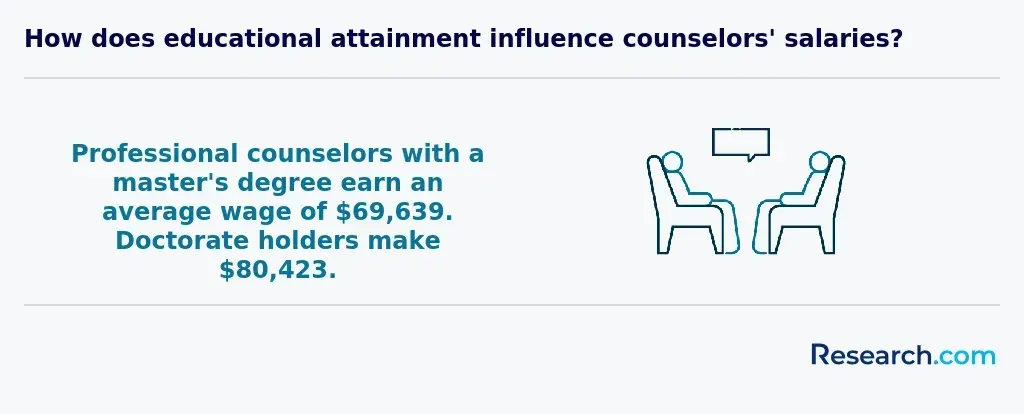
A master’s degree is the baseline credential for licensure. According to the American Counseling Association figures cited in the original article, many counselors with a master’s degree earn around $69,639, while those with doctoral degrees average $80,423 each year. A doctorate is not required for professional counseling licensure, but it can make sense for counselors who want to teach, conduct research, supervise at advanced levels, or compete for senior clinical leadership roles.
How can students in Washington prepare for a career in mental health counseling?
Students can prepare for counseling careers in Washington by choosing the right graduate program, gaining relevant human services experience, learning the state’s licensure rules early, and building professional relationships before graduation. Preparation should start before the master’s program, not after it.
- Verify institutional and program accreditation. Students should prioritize schools with recognized institutional accreditation. The original guidance identifies the Northwest Commission on Colleges and Universities (NWCCU) for regional accreditation and notes the importance of CACREP-accredited counseling programs. Before enrolling, ask the program directly whether it meets Washington LMHC educational requirements.
- Choose coursework that matches your target role. A strong counseling curriculum should cover counseling theory, assessment, ethics, psychopathology, multicultural counseling, group counseling, lifespan development, and clinical skills. Students comparing counseling-adjacent degrees can use resources such as this guide to MS in psychology vs counseling careers to understand how degree choice affects licensure and career options.
- Look for meaningful practicum and internship support. Programs that help students secure supervised placements can reduce stress and improve clinical readiness. Ask where students are placed, who supervises them, and whether placements serve the populations you hope to work with.
- Join professional communities early. Organizations such as the Washington State Mental Health Counselors Association (WSMHCA) can help students learn about supervision, licensure changes, ethics, continuing education, and job openings.
- Use state workforce resources. Washington has initiatives aimed at strengthening behavioral health services. Career fairs, workforce reports, loan repayment programs, and state agency resources can help students identify high-need settings and realistic employment pathways.
Questions to ask before enrolling in a counseling program
| Question | Why it matters |
| Does this program meet Washington LMHC education requirements? | A degree that does not align with state rules can delay licensure or require extra coursework. |
| Is the institution properly accredited? | Accreditation affects licensure eligibility, transfer options, employer trust, and financial aid access. |
| How are practicum and internship placements arranged? | Students need clinical experience, and placement support can be a major difference between programs. |
| What percentage of graduates obtain associate licensure or full licensure? | Programs should be able to discuss graduate outcomes without promising employment or salary guarantees. |
| Can online students complete clinical hours in Washington? | Online coursework may be flexible, but clinical training must still satisfy state expectations. |
| What is the total cost, including fees, books, travel, supervision, and exam costs? | Tuition alone does not show the full financial commitment. |
How important is practicum experience for mental health counselors in Washington?
Practicum and supervised experience are central to counselor preparation because they turn classroom learning into clinical skill. Washington has been considering changes to practicum requirements for behavioral and mental health professionals to reduce barriers for prospective providers. According to the Washington State Department of Health information cited in the original article, the change allows mental health counselors to substitute professional experience for practicum requirements in certain circumstances.
Even when rules change, practical training remains essential. Counseling is not learned by reading theory alone. New clinicians must practice assessment, rapport-building, crisis awareness, documentation, treatment planning, boundary-setting, and ethical consultation in real client settings.
- It builds clinical judgment. Students learn how symptoms, trauma histories, family systems, substance use, culture, and client motivation appear in real sessions.
- It strengthens confidence. Supervised practice gives students room to make mistakes, receive feedback, and improve before independent practice.
- It creates professional connections. Practicum sites often introduce students to supervisors, agencies, hospitals, schools, community clinics, and future employers.
- It can lead to jobs. Some students move from practicum or internship placements into full-time roles, particularly in high-demand areas such as Seattle.
One Washington-trained counselor described practicum as the turning point in her development: “It was where I stopped imagining the work and started doing it. Some sessions left me drained, but the feedback from supervisors and the trust from clients helped me understand what kind of counselor I could become.”
What specializations can mental health counselors in Washington pursue?
Mental health counselors in Washington can work with many client populations, but specialization helps them focus their training, supervision, continuing education, and job search. Students comparing state counseling routes may also find it useful to review related examples such as Indiana counseling degree programs to see how counseling education and licensure planning can vary by location.
| Specialization | Typical focus | Washington salary figure cited |
| Substance Abuse Counseling | Supports clients with alcohol, drug, and addiction-related concerns, including recovery planning and court-mandated treatment contexts. | Approximately $57,973 annually |
| Behavior Disorder Counseling | Helps clients manage disruptive behavior patterns, improve coping skills, and strengthen social functioning. | Around $61,795 annually |
| Licensed Mental Health Counseling (LMHC) | Provides broad clinical mental health services, including assessment, diagnosis-informed care, treatment planning, and therapy. | Average of $79,196 annually |
| Licensed Marriage and Family Therapy (LMFT) | Works with individuals, couples, and families by focusing on relationship systems, communication, parenting, and family conflict. | $69,500 |
How to choose a specialization
- Choose addiction counseling if you want to work in recovery programs, integrated treatment, courts, community agencies, or crisis-adjacent services.
- Choose child, adolescent, or school-connected work if you are comfortable collaborating with families, educators, pediatric providers, and community systems.
- Choose couples and family work if you are interested in relational patterns rather than only individual symptoms.
- Choose general LMHC practice if you want broad flexibility across clinics, private practice, hospitals, telehealth, community mental health, and nonprofit settings.
Is Washington a good place to work as a mental health counselor?
Washington can be a strong state for mental health counselors because demand is high, the state has active behavioral health initiatives, and average wages are above the national average cited in the original article. However, it is not automatically the right fit for everyone. Cost of living, caseload pressure, supervision availability, and burnout risk should be part of the decision.
| Factor | Why it helps | What to watch |
| Salary | Washington mental health counselors earn an average salary of $63,490, compared with the national average of approximately $60,080. | Higher living costs can reduce the practical value of higher wages, especially for early-career counselors. |
| Demand | High need can create opportunities in clinics, schools, nonprofits, hospitals, telehealth, and community agencies. | High demand can also mean heavy caseloads and emotionally intense work. |
| Counseling Compact | Washington has enacted Counseling Compact legislation, allowing eligible licensed counselors to seek practice privileges in other Compact-member states. | Applications for this privilege will open in 2025, so counselors should verify current implementation details before relying on compact mobility. |
| State support | The Health Care Authority (HSA) offers funding, training, and technical assistance to support prevention, intervention, treatment, and recovery services. | Funding and program availability can vary by community, employer, and service population. |
| Work environment | Counselors can serve diverse populations and make a visible community impact. | Work-life balance can be difficult when caseloads are high and client needs are complex. |
Salary should not be the only reason to enter this profession. Counseling requires emotional stamina, ethical maturity, cultural awareness, documentation discipline, and commitment to continuing education. A competitive wage can make the field more sustainable, but the daily work is built around helping people through difficult and sometimes traumatic experiences.
The chart below illustrates the percentile wages of mental health counselors in the U.S.
What are the licensure requirements for mental health counselors in Washington?
Washington’s LMHC requirements are designed to ensure that counselors have enough graduate education, supervised practice, and clinical knowledge to serve clients safely. The basic requirements include a qualifying graduate degree, approved coursework, supervised post-graduate experience, a national examination, and an application through the Washington State Department of Health.
- Graduate degree: Candidates need a master’s degree in counseling or a closely related field, such as psychology.
- Coursework: The program must include at least 60 semester hours of approved coursework, including areas such as counseling theory, psychopathology, and ethics.
- Supervised experience: Candidates must complete 3,000 hours of post-graduate supervised experience, including at least 1,200 hours of direct counseling with clients.
- Examination: Applicants must pass the NCMHCE or NCE.
- State application: Candidates submit education, exam, and supervision documentation to the Washington State Department of Health.
Because licensure rules can change and individual academic histories vary, candidates should confirm requirements directly with the state before enrolling in a program or applying for licensure. For a focused walkthrough, Research.com’s guide on how to become a therapist in Washington explains the licensure process in more detail.
What other career paths are available to mental health professionals in Washington?
Mental health counseling is not the only route into behavioral health work. Professionals who want to support clients may also consider marriage and family therapy, social work, school counseling, substance abuse counseling, psychology-related roles, and case management. The best path depends on the population you want to serve, the type of intervention you want to provide, and the license you are willing to pursue.
For example, professionals interested in relationships, family systems, and couples therapy may want to study how to become a marriage and family therapist in Washington. That route requires a strong understanding of counseling principles plus specialized preparation in family dynamics, relational assessment, and systemic treatment.
| Career direction | Best fit for | Typical distinction |
| Mental Health Counselor | Students who want to provide therapy for emotional, behavioral, and mental health concerns | Focuses heavily on clinical counseling and treatment planning. |
| Marriage and Family Therapist | Professionals interested in couples, families, parenting, communication, and relationship systems | Views mental health concerns through relational and family-system patterns. |
| Social Worker | Students drawn to advocacy, community resources, case management, and social systems | Often combines direct support with resource navigation and systems-level intervention. |
| School Counselor | Professionals who want to work in K-12 education settings | Connects student mental health, academic planning, crisis response, and family-school collaboration. |
| Substance Abuse Counselor | Students focused on addiction, recovery, relapse prevention, and behavioral health integration | Specializes in substance use assessment, treatment, and recovery support. |
What is the demand for mental health counselors in Washington?
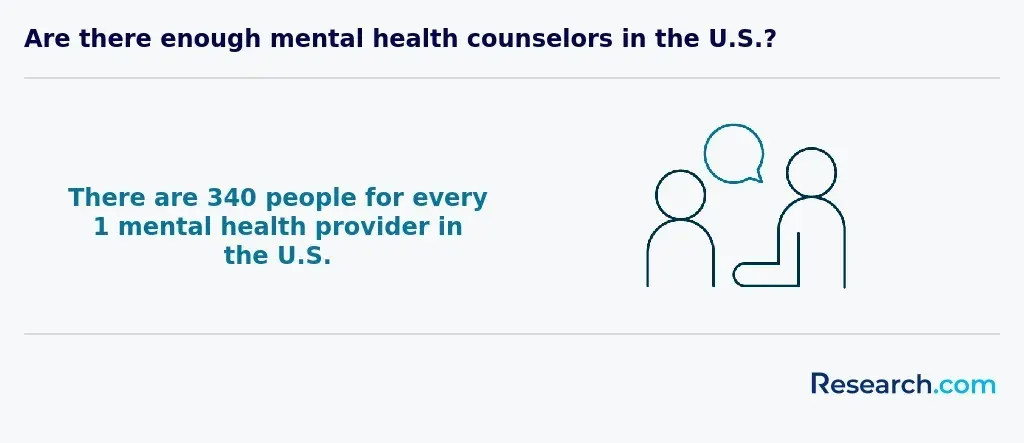
Demand for mental health counselors in Washington is strong. Nationally, there is one mental health provider for every 340 people, while Washington has one provider for every 360 individuals. The state’s projected job outlook for mental health counselors is 23% from 2020 to 2030.
That growth is lower than the 54% Arizona LPC job growth cited in the original comparison, but it still signals substantial demand. The need is driven by increased mental health awareness, provider shortages, and the challenge of serving both urban and underserved communities.
Washington is also facing a behavioral health staffing crisis. The original article notes that 28.2% of the population—around 2.2 million residents—has been identified as underserved (The Olympian, 2024). In response, educational institutions, behavioral health agencies, and local government have considered measures such as admitting more students and offering loan repayment assistance, according to Washington’s Behavioral Health Workforce Advisory Committee (Skillman & Dunlap, 2022).
The state is also working to reduce barriers for qualified out-of-state professionals. Similar licensure portability themes are relevant in other states, including guidance often discussed in New York LPC career advice, especially as compact-related mobility becomes more important.
How do mental health counseling and social work careers compare in Washington?
Mental health counseling and social work overlap, but they are not interchangeable. Counseling is usually the better fit for students who want a therapy-centered role focused on assessment, treatment planning, and clinical intervention. Social work may be the better choice for students who want to combine client support with advocacy, case management, community resources, and systems-level work.
| Comparison point | Mental health counseling | Social work |
| Primary focus | Therapeutic services for mental, emotional, and behavioral concerns | Client support, advocacy, resource coordination, and social service systems |
| Common settings | Clinics, private practice, hospitals, telehealth platforms, community mental health agencies | Hospitals, schools, government agencies, nonprofits, child welfare organizations, community programs |
| Best for students who want to | Spend most of their professional identity around therapy and clinical counseling | Address both individual needs and broader social or environmental barriers |
| Key decision question | Do you want a clinically focused counseling role? | Do you want a broader helping profession with more emphasis on systems and advocacy? |
Students comparing return on investment, job function, and long-term fit can also review whether is being a social worker worth it to understand the trade-offs of the social work route.
What careers are available to Mental Health Counseling Graduates in Washington?
Graduates with clinical mental health counseling preparation can pursue roles in many settings, especially as Washington works to respond to behavioral health needs. Some roles require additional licensure, certification, or specialized supervised experience, so graduates should match each job title with state and employer requirements.
- Social Worker: Supports individuals and families in settings such as hospitals, schools, and agencies, often helping clients access mental health services and community resources.
- Substance Abuse Counselor: Works with clients affected by substance use disorders and supports treatment, recovery planning, relapse prevention, and family education.
- Geriatric Counselor: Helps older adults manage grief, isolation, health-related transitions, family changes, and mental health concerns connected to aging.
- Employee Assistance Program Counselor: Provides short-term support, referrals, and workplace-focused counseling for employees facing personal or professional stressors.
- Military Personnel Counselor: Serves service members, veterans, and families who may be navigating trauma, deployment stress, reintegration, grief, or family strain.
A Washington counselor described the transition after graduation as challenging but worthwhile: “I wanted to work in Seattle, but I quickly realized that passion was not enough. I had to be persistent, build relationships, and stay open to settings I had not considered.” She eventually entered substance abuse counseling and found the work meaningful despite the intensity. “Every day is different, and every client reminds me why preparation matters.”
Are affordable online degree programs a viable pathway for aspiring mental health counselors in Washington?
Affordable online counseling programs can be a viable pathway if they meet Washington’s licensure requirements, provide appropriate clinical placement support, and hold the accreditation needed for state approval. Flexibility alone is not enough. A low-cost program that does not meet licensure standards can become more expensive if students later need additional coursework or supervised training.
Online programs may appeal to working adults, rural students, parents, and career changers who need flexible scheduling. However, students must confirm how the program handles practicum, internship, supervision, state authorization, and Washington-specific licensure alignment. Those comparing costs can start with Research.com’s guide to the cheapest online masters in mental health counseling, then verify each program directly with the school and the Washington State Department of Health.
Online vs. campus counseling programs in Washington: how to decide
| Program format | When it may be a good fit | Risk to check before enrolling |
| Online | You need schedule flexibility, live far from campus, or plan to keep working while studying. | Confirm Washington licensure alignment, practicum placement support, and state authorization. |
| Campus-based | You prefer face-to-face learning, local faculty relationships, and established regional clinical placements. | Compare total cost, commute time, schedule rigidity, and placement competitiveness. |
| Hybrid | You want some in-person skill development with partial online flexibility. | Check residency requirements, travel costs, and whether required campus sessions fit your schedule. |
How is telehealth transforming mental health counseling in Washington?
Telehealth has changed how many Washington clients access counseling by reducing travel barriers and making it easier to maintain care when work schedules, rural distance, mobility limitations, or family responsibilities make in-person appointments difficult. For counselors, telehealth also requires careful attention to privacy, documentation, crisis planning, platform security, and client suitability.
Telehealth is not simply “video therapy.” Counselors need procedures for informed consent, emergency contacts, client location verification, technology failures, and referrals when virtual care is not clinically appropriate. It can also support collaboration with schools and community providers, especially when mental health concerns overlap with educational needs. Professionals interested in school-based mental health roles can compare related pathways such as How long does it take to become a school psychologist in Washington?.
What continuing education opportunities can enhance a counselor’s expertise in Washington?
Continuing education helps counselors stay clinically effective, ethically compliant, and responsive to new client needs. Useful areas include trauma-informed care, suicide risk assessment, substance use treatment, cultural responsiveness, telehealth ethics, documentation, integrated behavioral health, couples and family work, and supervision skills.
Counselors can also broaden their understanding by studying adjacent helping professions. For example, reviewing social worker education requirements in Washington can help counselors understand how social workers approach advocacy, case management, and community resource coordination. That knowledge can improve interdisciplinary collaboration.
Which academic programs in Washington best prepare future counselors?
The best counseling preparation programs are not chosen by reputation alone. Students should look for licensure alignment, supervised clinical training, faculty expertise, student support, affordability, and placement quality. A strong program should make it clear how its curriculum maps to Washington requirements and how students obtain practicum and internship experience.
Students beginning their search may also benefit from reviewing the best psychology schools in Washington, especially if they are still comparing psychology, counseling, and related behavioral health academic routes.
How to compare Washington counseling programs
- Start with licensure fit. Ask whether the program is designed for Washington LMHC eligibility.
- Review accreditation carefully. Do not assume that a counseling-related title automatically qualifies you for licensure.
- Ask about clinical placements. Find out whether students must secure their own sites or receive school support.
- Compare total cost, not just tuition. Include books, fees, travel, technology, supervision, exam fees, and lost work time.
- Look at faculty and specialization options. A program with faculty in your area of interest can improve mentorship and clinical direction.
- Consider your population of interest. If you want to work with veterans, children, rural communities, addiction, or families, ask where students get relevant experience.
What challenges do mental health counselors face in Washington?
Mental health counseling in Washington can be meaningful, but the field comes with structural, financial, and emotional challenges. Prospective counselors should understand these issues before committing to graduate school.
- Behavioral health workforce shortages: Washington continues to experience shortages of behavioral health professionals, which can increase caseload pressure and make services harder to access in some areas.
- Client affordability barriers: Many people struggle to pay for care. Insurance limits, network restrictions, and session caps can affect treatment continuity.
- Licensure complexity: Education, supervision, exam, and application requirements take time to navigate. Regulatory changes can also create uncertainty for students and associate counselors.
- Education debt: Advanced training can be expensive. Even lower-cost options, including the best budget Christian counseling master's degrees, require careful financial planning. According to the Behavioral Health Workforce Advisory Committee figures cited in the original article, mental health counselors and marriage and family therapists have average debt between $12,000 to $500,000 and $88,000 to $201,000 respectively.
- Burnout risk: Counseling work can be emotionally demanding. The original article notes that 46% of health workers experience this, making boundaries, supervision, manageable caseloads, and self-care essential professional practices.
Common mistakes aspiring counselors should avoid
| Mistake | Why it can hurt you | Better approach |
| Choosing a program based only on price | A cheap program may cost more later if it does not meet licensure requirements. | Compare licensure fit, accreditation, placement support, and total cost. |
| Assuming all online counseling degrees qualify for Washington licensure | State requirements vary, and some programs are designed for different jurisdictions. | Ask the program and the Washington State Department of Health before enrolling. |
| Ignoring supervised hour tracking | Poor records can delay full licensure. | Track direct client hours, supervision hours, dates, settings, and supervisor credentials from the beginning. |
| Relying only on rankings | A highly ranked school may not be the best fit for your budget, schedule, or clinical goals. | Use rankings as one input, then evaluate outcomes, support, and licensure alignment. |
| Assuming salary outcomes are guaranteed | Pay varies by setting, location, credentials, experience, and specialization. | Review job postings, speak with local counselors, and compare wages against cost of living. |
| Waiting until graduation to network | Supervision and job searches become harder without professional contacts. | Join professional associations, attend workshops, and build relationships during graduate school. |
The chart below further demonstrates the well-being of health workers in the U.S.
What role do school counselors play in Washington’s education system?
School counselors help students manage academic planning, emotional concerns, social development, crisis situations, peer conflict, and referrals to mental health services when needed. In Washington, their work can be an early point of support for students who might otherwise go without help.
School counselors collaborate with teachers, administrators, parents, community providers, and sometimes outside mental health professionals. Their responsibilities may include individual student support, classroom lessons, crisis response, attendance or behavior interventions, college and career planning, and efforts to reduce stigma around seeking help. Professionals interested in this setting should review how to become a school counselor in Washington to understand the education and credentialing expectations for this role.
How does Washington promote mental health awareness in schools?
Washington promotes school mental health awareness through programs and partnerships that help educators identify concerns earlier and connect students with support. These efforts matter because many mental health conditions first affect learning, attendance, peer relationships, and behavior before a student receives formal care.
- School-based mental health programs: Schools may provide counseling services, support groups, and mental health education.
- Training for educators: Training helps teachers and staff recognize signs of emotional distress and respond appropriately.
- Community partnerships: Collaboration with local organizations expands support for students and families beyond the school building.
The goal is to create school environments where students can ask for help earlier, receive support with less stigma, and stay connected to learning while their mental health needs are addressed.
What distinguishes substance abuse counseling as a specialized field in Washington?
Substance abuse counseling focuses on the relationship between addiction, behavior, mental health, family systems, recovery supports, and relapse risk. In Washington, this work often requires collaboration with medical providers, courts, community agencies, families, and other behavioral health professionals.
Common approaches may include motivational interviewing, cognitive behavioral techniques, recovery planning, psychoeducation, and coordination with integrated care teams. Counselors who want to specialize in this area should review state-specific preparation and credential requirements through resources such as how to become a substance abuse counselor in Washington.
What legal and ethical considerations must mental health counselors address in Washington?
Washington counselors must practice within legal and ethical boundaries that protect clients and the profession. Key areas include confidentiality, informed consent, documentation, professional boundaries, mandatory reporting, scope of practice, supervision, telehealth procedures, and secure handling of client information.
Ethical practice is not a one-time requirement completed during graduate school. Counselors need continuing education and regular consultation because laws, technology, employer policies, and clinical standards evolve. Professionals working across related fields should also understand adjacent licensure expectations, including marriage counselor education requirements in Washington, when collaborating with or referring to other providers.
How can mental health counselors enhance their cultural competency in Washington?
Cultural competency in Washington requires more than awareness. Counselors need to adapt communication, assessment, treatment planning, and referral practices to each client’s cultural identity, language needs, community context, family structure, and lived experience.
- Pursue advanced diversity and inclusion training. Continuing education can help counselors recognize bias, power dynamics, and culturally specific expressions of distress.
- Build community knowledge. Counselors should learn about the communities they serve rather than expecting clients to explain every cultural context.
- Seek culturally informed supervision. Supervision and consultation can help clinicians identify blind spots and improve treatment decisions.
- Use language access appropriately. Multilingual communication, qualified interpreters, and translated materials can improve care when clients prefer or need them.
- Avoid one-size-fits-all interventions. Treatment should respect client values, family roles, spirituality, identity, and community realities.
Students who want to move efficiently through the field while maintaining licensure awareness can also review the quickest path to becoming a counselor in Washington.
What are the key practice management challenges faced by mental health counselors in Washington?
Many counseling challenges are not clinical at first glance, but they still affect care quality. Washington counselors must manage scheduling, records, billing, insurance reimbursement, privacy compliance, telehealth workflows, client communication, risk documentation, and regulatory updates.
Private practice counselors carry additional responsibilities, including business planning, referral development, policies for missed appointments, fee setting, emergency coverage, consultation, and technology selection. Agency-based counselors may face productivity requirements, high caseloads, documentation deadlines, and coordination with multiple service systems. Reviewing state-specific requirements, including the LPC license requirements in Washington, can help counselors keep operations aligned with professional rules.
Here’s What Mental Health Counselors in Washington Have to Say About Their Careers
- “Choosing mental health counseling in Washington has allowed me to do work that feels deeply connected to the needs of my community. The state’s resources and professional networks have helped me support clients through difficult periods and see real progress over time.” - Rhian
- “Practicing here has taught me how varied mental health needs can be. I work with clients facing trauma, anxiety, family stress, and major life transitions, and I have grown because colleagues across the field are willing to collaborate and keep learning.” - Anthony
- “Washington is a powerful place to do this work, not just because of the setting but because so many professionals are committed to mental health advocacy. Watching clients rebuild trust, stability, and hope keeps me committed to the profession.” - Fatima
Related Articles for Nearby States
- 2027 How to Become a Mental Health Counselor in Oregon
- 2027 How to Become a Mental Health Counselor in Idaho
- 2027 How to Become a Mental Health Counselor in Montana
- 2027 How to Become a Mental Health Counselor in California
- 2027 How to Become a Mental Health Counselor in Nevada
- 2027 How to Become a Mental Health Counselor in Utah
- 2027 How to Become a Mental Health Counselor in Wyoming
- 2027 How to Become a Mental Health Counselor in Arizona
- 2027 How to Become a Mental Health Counselor in Colorado
- 2027 How to Become a Mental Health Counselor in New Mexico
Key Insights
- Washington needs counselors, but the path is regulated. A master’s degree, approved coursework, supervised experience, national exam passage, and state licensure are essential.
- Do not choose a program until you verify licensure alignment. Accreditation, practicum support, and Washington-specific requirements matter more than convenience or marketing claims.
- Supervised experience is where clinical readiness develops. The required 3,000 hours, including at least 1,200 direct client counseling hours, should be tracked carefully from the start.
- The job outlook is favorable but not effortless. Washington projects 23% growth from 2020 to 2030, yet counselors must still navigate burnout risk, cost of living, education debt, and high service demand.
- Specialization can improve career focus. Substance abuse counseling, LMHC practice, behavior disorder counseling, marriage and family therapy, school counseling, and geriatric counseling serve different populations and require different preparation.
- Online degrees can work only if they meet state requirements. Flexibility and affordability are valuable, but clinical placement, accreditation, and Washington licensure eligibility must be confirmed.
- Modern counseling in Washington is increasingly integrated. Telehealth, cultural competence, community partnerships, and coordination with physical health, schools, and social services are becoming central to effective practice.
References:
- Dennis, E. (2024, February 13). As demand for behavioral health treatment outpaces supply, Washington lawmakers consider loosening restrictions for practicing psychologists. The Spokesman-Review. https://www.spokesman.com/stories/2024/feb/13/as-demand-for-behavioral-health-treatment-outpaces
- Kaiser Family Foundation. (2023). Mental Health in Washington. https://www.kff.org/statedata/mental-health-and-substance-use-state-fact-sheets/washington
- Reinert, M, Fritze, D., & Nguyen, T. (2022, October). The state of mental health in America 2023. Mental Health America. https://mhanational.org/sites/default/files/2023-State-of-Mental-Health-in-America-Report.pdf
- Skillman, S.M., Dunlap, B. (2022, July). Washington state’s behavioral health workforce: Examination of education and training needs and priorities for future assessment. Center for Health Workforce Studies, University of Washington. https://www.wtb.wa.gov/wp-content/uploads/2022/12/BHWAC-2022-report_FINAL.pdf
- The Olympian. (2024, May 30). Washington ranks #10 in mental health care deserts. https://www.theolympian.com/news/local/article288893520.html
- U.S. Bureau of Labor Statistics. (2024, April 3). May 2023 state occupational employment and wages estimates: Washington. Occupational Employment and Wage Statistics. https://www.bls.gov/oes/current/oes_wa.htm
- Washington State Department of Health. (n.d.). Mental Health Counselor. Retrieved August 2024, from https://doh.wa.gov/licenses-permits-and-certificates/professions-new-renew-or-update/mental-health-counselor
- Washington State Legislature. (n.d.). Chapter 18.225 RCW: Mental Health Counselors, Marriage and Family Therapists, Social Workers. Retrieved August 2024, from https://app.leg.wa.gov/rcw/default.aspx?cite=18.225
Other Things You Should Know About Mental Health Counseling in Washington
Washington requires applicants for mental health counselor licensure to complete a criminal background check through the Washington State Patrol and the FBI. The Department of Health may also review disciplinary history, and applicants must answer character and fitness questions on the license application.
To become a licensed mental health counselor in Washington, you must pass the National Counselor Examination (NCE) and possibly additional state-specific exams, depending on your specialization. These exams assess core competencies essential for providing effective mental health counseling.


