2027 How to Transition From Teacher to School Counselor

Co-Founder and Chief Data Scientist
The US reports a 376:1 student-to-school counselor ratio (NCES, n.d.), which underscores the urgent demand for qualified professionals. Educators increasingly pursue the teacher to school counselor pathway as they respond to growing youth mental health needs and seek opportunities to deliver individualized academic, emotional, and career support beyond the classroom. This transition, which is more than a simple career change, embodies a deliberate shift toward advocacy and guidance.
In this article, I will discuss the essential steps to navigate certification, education, and skill development required for counseling roles. I will also cover timelines, degree requirements, transferable skills, salary expectations, challenges, and professional resources.
What are the benefits of transitioning from a teacher to a school counselor degree?
- Earning a school counselor degree after teaching equips educators with advanced training in counseling methods, allowing them to expand their impact beyond classroom instruction.
- Graduates gain specialized skills in guidance, advocacy, and student support, enabling them to address academic, career, and emotional needs more effectively.
- This transition also opens pathways to certification, leadership opportunities, and meaningful roles that shape student success and well-being across entire school communities.
- What are the essential steps in making a smooth teacher to school counselor career transition? Essential Steps
- What are the requirements to become a school counselor? Requirements
- How does prior classroom experience support the teacher to school counselor certification process? Classroom Experience
- Which new skills are most important for teachers to develop before becoming school counselors? New Skills
- How long does it usually take to complete the transition from teaching to school counseling? Transition Timeframe
- Are there accelerated or alternative programs that help teachers qualify as school counselors faster? Accelerated Programs
- What salary differences should teachers expect when shifting into school counseling roles? What salary differences should teachers expect when shifting into school counseling roles?
- What challenges commonly arise for teachers who change careers to school counseling? What challenges commonly arise for teachers who change careers to school counseling?
- How can teachers highlight their classroom expertise effectively on a school counselor's resume? How can teachers highlight their classroom expertise effectively on a school counselor's resume?
- What professional associations and resources guide educators through the teacher to school counselor journey? What professional associations and resources guide educators through the teacher to school counselor journey?
- What career advancement opportunities can new school counselors pursue? What career advancement opportunities can new school counselors pursue?
What are the essential steps in making a smooth teacher to school counselor career transition?
Moving from teaching into school counseling is not just a job change. It is a shift from leading instruction for a classroom to supporting students’ academic planning, mental health, social development, family concerns, and long-term goals. Teachers often start with a strong advantage because they already understand students, school systems, parent communication, and classroom behavior. However, they still need graduate training, supervised counseling experience, and state certification before they can practice as school counselors.
This guide explains how the teacher to school counselor transition works, what requirements to expect, how long the process usually takes, which skills teachers need to build, and how to compare degree and certification options. It is designed for licensed teachers, career-changing educators, and education professionals who want a practical roadmap before investing time and money in a school counseling program.
Quick answer: How do teachers become school counselors?
Teachers usually become school counselors by completing a master’s degree in school counseling, finishing supervised practicum and internship hours, passing required licensing exams, and applying for state certification through the appropriate education or counseling board. Prior teaching experience helps, but it usually does not replace the degree, fieldwork, or licensure process.
The main steps are:
- Check your state’s school counselor certification rules: Requirements differ by state, including required degrees, exams, background checks, and supervised field hours. Some states may offer reduced or alternative requirements for licensed teachers.
- Choose an approved graduate program: Many teachers pursue a master’s in school counseling. In many cases, students look for CACREP accredited programs because they are designed around nationally recognized counseling standards and may support licensure eligibility.
- Complete practicum and internship training: School counseling programs usually require at least 600 clock hours of combined practicum and internship, with supervised direct service to students.
- Pass required exams: Many states use the Praxis School Guidance & Counseling test or a state-specific assessment to measure knowledge of counseling theory, ethics, diversity, career development, and student support.
- Submit your certification application: After meeting education, fieldwork, exam, and background check requirements, candidates apply to the state department of education or licensure board for authorization to work as school counselors.
Teachers who want to broaden their instructional experience while preparing for counseling roles may also find it useful to review pathways for how to teach online with no experience, especially if they want stronger digital instruction, student engagement, and virtual communication skills.
What are the requirements to become a school counselor?
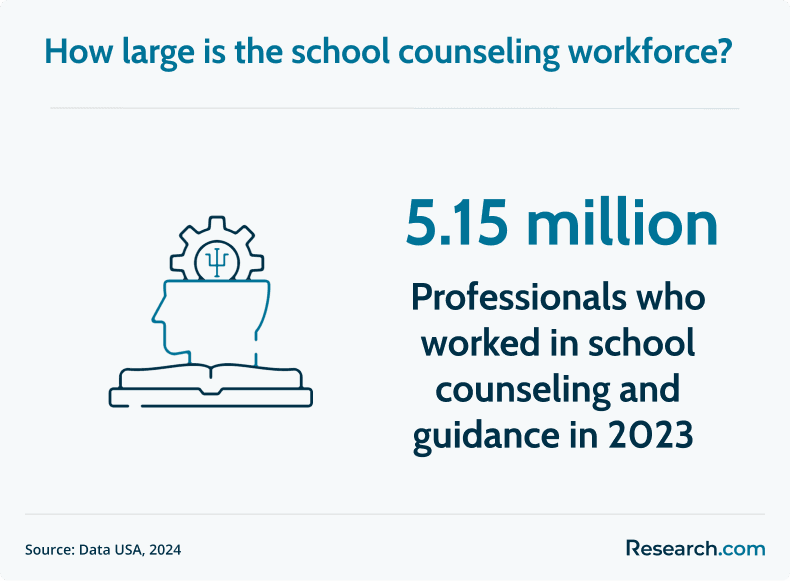
Classroom experience is valuable, but school counseling is a regulated profession. Candidates must meet formal education, field experience, testing, and character requirements before they can serve students in a counseling capacity. With 5.15 million professionals working in school counseling and guidance services in 2023, states use licensure rules to ensure that counselors are trained to address academic, career, social, emotional, and ethical responsibilities in schools.
Most teacher to school counselor candidates should expect the following requirements:
| Requirement | What it usually involves | Why it matters |
| Master’s degree | A graduate degree in school counseling or a closely approved counseling field. Many candidates prefer CACREP-aligned or CACREP-accredited options. Teachers seeking a lower-cost path may compare a cheap masters in school counseling before enrolling. | The degree provides preparation in counseling theory, ethics, assessment, student development, group counseling, crisis response, and college and career readiness. |
| Supervised field experience | Candidates commonly complete 600–700 hours of supervised clinical practice in school counseling settings, including direct work with students and indirect support activities. | Fieldwork shows that candidates can apply counseling skills in real school environments under professional supervision. |
| Licensing or certification exam | Many states require exams such as the Praxis II Professional School Counselor test or a state-approved equivalent. | Testing helps verify knowledge of counseling methods, ethical practice, intervention planning, and professional responsibilities. |
| Background and character review | Typical checks may include FBI fingerprinting, child abuse registry clearance, and criminal history review. | Schools must confirm that professionals working with children meet safety and ethical standards. |
| State-specific coursework | Some states require topics such as crisis intervention, multicultural counseling, career development, or child abuse reporting. | Additional coursework ensures counselors are prepared for local policy, student population needs, and legal obligations. |
Online and hybrid programs can be practical for working teachers, but candidates should verify that the program’s field placement structure, state authorization, and curriculum meet the requirements where they plan to work. A flexible schedule is useful only if the degree leads to the certification the candidate actually needs.
How does prior classroom experience support the teacher to school counselor certification process?
Teaching experience does not automatically qualify someone for school counseling certification, but it can make the transition more strategic. Teachers already know how schools function, how students respond to academic pressure, how families interact with school systems, and how policies affect day-to-day student support. That context can make graduate coursework and supervised practice easier to connect to real situations.
Teachers should not present their background as “counseling experience” unless it was supervised and recognized as such by a program or licensing board. Instead, they should translate classroom experience into counseling-relevant competencies.
| Teaching strength | How it transfers to school counseling | How to describe it professionally |
| Student observation | Teachers notice learning differences, attendance patterns, developmental changes, and behavior shifts that may signal academic or emotional needs. | “Identified student needs through classroom observation, academic data, and behavioral patterns.” |
| Family and staff collaboration | Teachers regularly work with parents, administrators, special education teams, and other educators. | “Collaborated with families and multidisciplinary teams to coordinate student support.” |
| Academic planning knowledge | Teachers understand curriculum expectations, grade-level standards, course sequencing, and student progress monitoring. | “Supported academic goal-setting through knowledge of curriculum benchmarks and student performance data.” |
| Classroom management | Conflict resolution, group facilitation, de-escalation, and behavior support are useful in individual and group counseling settings. | “Used restorative communication and behavior support strategies to improve student engagement.” |
| Student advocacy | Teachers often help students access accommodations, resources, tutoring, enrichment, or social support. | “Advocated for equitable access to academic supports and student services.” |
Teachers comparing counseling-related graduate options may also want to understand how long a master's degree in social work takes, since MSW programs typically range from 2 to 3 years depending on full-time or part-time enrollment and fieldwork requirements.
Which new skills are most important for teachers to develop before becoming school counselors?
The biggest professional adjustment for teachers is moving from instruction-centered support to counseling-centered support. Teachers are trained to manage learning environments and deliver curriculum. School counselors must also address mental health concerns, career readiness, crisis response, ethical documentation, family systems, and referral coordination.
Before entering or while completing a graduate program, teachers should focus on the following skill areas:
- Counseling techniques: Teachers need formal preparation in individual counseling, group counseling, solution-focused strategies, crisis response, and developmentally appropriate communication.
- Mental health awareness: Candidates must learn how to recognize possible signs of depression, anxiety, trauma, self-harm risk, and other concerns. Mental health is a skill 10.05% of school counselors highlight on resumes, which reflects its importance in the role.
- Referral and community resource knowledge: School counselors do not handle every issue alone. Teachers need to learn how to connect students and families with appropriate school, community, and clinical resources. Community resources are identified by 7.91% of counselors as essential.
- Data-informed intervention: Counselors use attendance, behavior, academic performance, and school climate data to identify student needs, plan supports, and evaluate whether interventions are working.
- Cultural competence: Effective counseling requires awareness of culture, language, disability, socioeconomic status, identity, family structure, and community context.
- College and career guidance: Teachers transitioning into counseling must develop stronger knowledge of postsecondary planning, course selection, career exploration, financial aid basics, and graduation pathways.
- Ethics and boundaries: Counselors must understand confidentiality, mandated reporting, documentation standards, dual relationships, and when to refer students for outside care.
Educators interested in early childhood or daycare environments may also benefit from reviewing CDA certification requirements, since that credential focuses on child development, safety, and instructional practice.
The chart below from Zippia identifies key skills associated with school counselor roles.
How long does it usually take to complete the transition from teaching to school counseling?
The move from teacher to school counselor commonly takes two to three years. The exact timeline depends on whether the teacher enrolls full time or part time, whether the program is accelerated, how field placements are scheduled, and how quickly the state processes certification after graduation and exams.
Prior teaching experience can make the learning curve easier, but it usually does not remove the need for graduate coursework, supervised internship hours, or licensing exams.
| Pathway | Typical timeline | Best fit | Important caution |
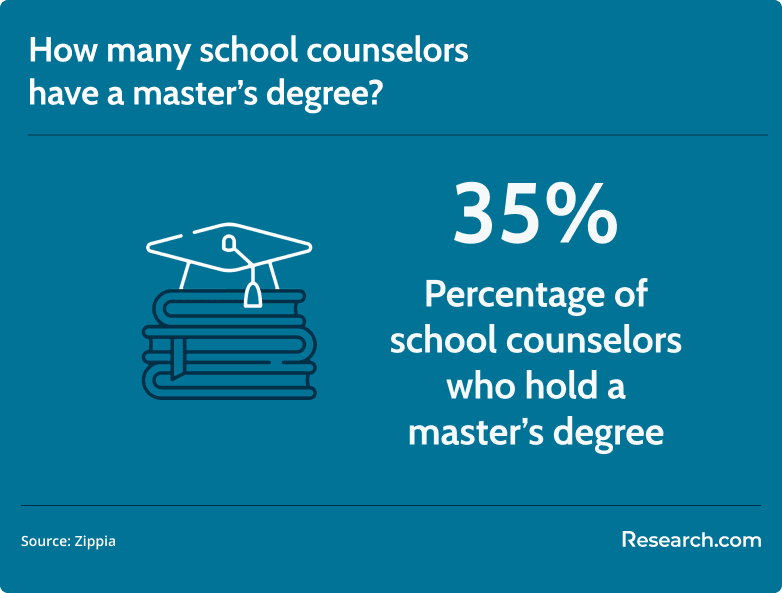
| Full-time master’s program | 2 years | Teachers who can reduce work hours or take a structured, intensive academic load. This pathway aligns with the 35% of school counselors who hold a master’s degree as their highest credential. | Fieldwork may require availability during school hours, which can conflict with full-time teaching. |
| Part-time master’s program | 3+ years | Working teachers who need evening, weekend, online, or slower-paced coursework. | The longer timeline may delay certification and salary changes. |
| Accelerated program | 18 to 24 months | Highly organized candidates who can manage compressed courses and field requirements. | Accelerated does not always mean easier; internship scheduling can still be demanding. |
| Licensing exams and state review | 3 to 6 months | All candidates completing the final certification stage. | Missed deadlines, incomplete transcripts, or background check delays can postpone eligibility. |
| Bridge or teacher-focused route | Varies by state | Experienced teachers in states that recognize prior education credentials or offer alternative pathways. | Rules are state-specific and may not transfer if you move. |
Teachers planning their education timeline may also want to compare this route with how long to get a masters in education, since graduate program length has a direct effect on when they can qualify for school counseling roles.
Are there accelerated or alternative programs that help teachers qualify as school counselors faster?
Some universities and state systems offer routes designed for licensed teachers who want to move into counseling without unnecessary duplication. These options can shorten the process, but candidates should confirm that the program is accepted by the state where they plan to seek certification.
| Option | How it may speed up the transition | Who should consider it |
| Accelerated master’s programs | Some accelerated online school counseling master's programs compress coursework and practical training into as little as 18 to 24 months. | Teachers who can handle a heavy academic schedule and complete fieldwork on time. |
| Alternative certification routes | Some states issue provisional credentials that allow teachers to work in counseling-related roles while completing remaining requirements. | Educators in shortage areas or districts with approved alternative pathways. |
| Bridge programs for teachers | Prior classroom experience may reduce redundant requirements in some states or programs. | Licensed teachers with documented school experience and a clear certification plan. |
| Online intensive programs | Online coursework can reduce commuting time and make year-round enrollment more manageable. | Working teachers who need schedule flexibility but can arrange in-person fieldwork. |
| Dual licensure tracks | Some graduate programs integrate teaching and counseling requirements into a coordinated plan. | Educators who want broader school-based career options. |
Faster programs are not always better. A strong program should provide reliable field placement support, licensure alignment, faculty supervision, and preparation for the actual work of counseling students. Before enrolling, ask the program whether graduates from your state have successfully earned school counselor certification.
What salary differences should teachers expect when shifting into school counseling roles?
Teachers moving into school counseling may see a modest salary increase, but the difference depends heavily on district pay schedules, location, years of experience, graduate credits, collective bargaining agreements, and whether the counselor role is on the same salary scale as teachers. According to Salary.com (2025), the median annual wage for school counselors is $48,054.
Compensation should be evaluated alongside tuition cost, unpaid or reduced-paid internship time, exam fees, and the long-term value of a counseling credential. A lower-cost online counseling degree may improve affordability if it still meets certification requirements.
- Possible pay advantage: School counselors may earn $2,000 to $5,000 more than classroom teachers, reflecting graduate preparation, counseling responsibilities, and licensure expectations.
- Location matters: Districts facing shortages of certified counselors may use stronger starting salaries, signing incentives, or retention efforts to attract qualified applicants.
- District salary schedules matter: Prior teaching years, graduate-level credits, and additional certifications can influence placement on the pay scale.
- Experience level affects earnings: Entry-level school counselors typically earn around $47,729, while experienced counselors or those in lead or specialized positions can go up to $50,352.
- Benefits remain important: Counselors in public school settings often receive benefits similar to teachers, including healthcare, leave policies, and retirement benefits.
The chart below from Salary.com shows mean annual wages of school counselors by level of expertise.
What challenges commonly arise for teachers who change careers to school counseling?
The teacher to school counselor transition can be deeply meaningful, but it can also be difficult. Teachers often expect the role to focus mostly on academic advising, but school counselors may also support students facing trauma, family disruption, anxiety, depression, bullying, grief, academic failure, attendance concerns, and crisis situations.
Common challenges include:
| Challenge | Why it can surprise former teachers | How to prepare |
| Emotional intensity | Counselors may work with sensitive issues such as trauma, depression, and family crises. 20% of youth aged 13 to 18 live with mental health conditions, and 11% experience mood disorders. | Build supervision habits, learn referral protocols, and develop professional boundaries early. |
| Licensure complexity | Each state has its own certification process, required forms, exams, and eligibility rules. | Use the state education department website as the final authority and track every requirement in writing. |
| Role identity shift | Teachers are used to lesson planning and classroom leadership; counselors must work across academic, emotional, social, and career domains. | Observe practicing counselors and ask how they divide time among individual, group, classroom, and administrative duties. |
| Documentation and compliance | Counseling work often requires careful records, data tracking, meeting notes, and policy compliance. | Learn ethical documentation standards and district-specific systems during internship. |
| Workload during transition | Graduate coursework, practicum hours, exam preparation, and current teaching responsibilities can overlap. | Plan finances, request schedule flexibility when possible, and review the realities of school counselor jobs before committing. |
The chart below from NAMI shares information on mental illness among youth aged 13 to 18.
How can teachers highlight their classroom expertise effectively on a school counselor's resume?
A strong school counselor resume should not simply list teaching duties. It should show how classroom experience connects to student advocacy, data use, collaboration, intervention planning, and communication. Hiring teams want evidence that the candidate understands the counselor role, not just the teaching role.
Resume strategies for teachers applying to school counseling roles
- Reframe advocacy work: Describe how you supported individual student needs, accommodations, attendance improvement, academic recovery, or family communication.
- Show collaboration: Include examples of working with parents, administrators, special education teams, intervention teams, and community partners.
- Use data clearly: Mention how you used grades, assessments, attendance, behavior records, or progress monitoring to guide support.
- Include leadership experience: Add committee work, mentoring, student clubs, intervention teams, advisory roles, or school climate initiatives.
- Highlight communication skills: Emphasize conflict resolution, de-escalation, parent meetings, student conferences, and group facilitation.
- Add counseling-specific training: List practicum, internship, crisis response training, ethics coursework, college and career readiness training, and relevant certifications.
Example resume wording
| Instead of writing | Write this instead |
| Managed a classroom of students. | Supported student engagement and behavior through restorative communication, structured routines, and individualized intervention strategies. |
| Met with parents. | Collaborated with families and school staff to address academic progress, attendance concerns, and student support needs. |
| Taught lessons. | Designed developmentally appropriate learning experiences and used performance data to adjust support for diverse learners. |
| Helped struggling students. | Identified at-risk students and coordinated academic and social-emotional supports in partnership with school teams. |
The goal is to make your teaching background legible to counseling supervisors and hiring committees. Your resume should show that you can support students beyond instruction while still bringing valuable school-based experience.
What professional associations and resources guide educators through the teacher to school counselor journey?
Professional organizations can help teachers understand ethical standards, certification expectations, professional development options, and the broader school counseling field. They are especially useful for career changers who need mentoring, conference access, exam resources, and state-specific guidance. Mental Health Literacy notes that only 4% of the total health care budget is spent on mental health, which highlights why school-based support and informed referral practices remain important.
- American School Counselor Association: ASCA is one of the central professional organizations for school counselors and provides standards, professional development, publications, and advocacy resources.
- State school counselor associations: These groups help candidates understand local licensure rules, state conferences, district expectations, and professional networking opportunities.
- National Board for Certified Counselors: NBCC supports counselor certification, ethical standards, exam-related resources, and continuing education.
- Graduate counseling programs: Strong programs may offer practicum placement help, alumni mentoring, licensure advising, and career services for transitioning educators.
- Mental health literacy resources: These resources help school-based professionals recognize youth mental health warning signs, understand referral options, and respond appropriately within their professional role.
What career advancement opportunities can new school counselors pursue?
School counseling can lead to several advancement paths after a counselor gains experience and builds leadership credibility. Some counselors become department chairs, lead counselors, college and career readiness coordinators, student services leaders, intervention program coordinators, or members of school improvement teams. Others move toward district-level counseling leadership, counselor supervision, educational administration, or doctoral-level research and policy work.
Teachers who plan to move beyond direct counseling into leadership, systems improvement, or higher-level education administration may eventually compare doctoral options such as accelerated EdD programs. An EdD is not typically required for entry-level school counseling, but it may support long-term goals in educational leadership, program evaluation, research-informed practice, or district administration.
Is becoming a school counselor worth it for teachers?
For many teachers, school counseling is worth considering if they want to support students more individually, focus on academic and social-emotional barriers, and work across the whole school rather than one classroom. The transition can be especially rewarding for teachers who already find themselves drawn to mentoring, family communication, crisis support, student advocacy, and college or career planning.
However, it may not be the right move for every educator. Teachers who primarily enjoy curriculum design, subject-area instruction, or classroom teaching may find counseling less aligned with their strengths. The role can also involve emotional strain, documentation, scheduling demands, and responsibilities that differ sharply from teaching.
| This path may fit you if... | You may want a different path if... |
| You want to support students’ academic, social, emotional, and career development. | You prefer teaching subject content as your primary professional focus. |
| You are comfortable discussing sensitive issues and following referral protocols. | You do not want to handle crisis-related or mental health-adjacent student concerns. |
| You are willing to complete graduate school, fieldwork, exams, and licensure steps. | You need a faster career change without additional graduate training. |
| You enjoy collaboration with families, teachers, administrators, and outside supports. | You prefer a more independent role with fewer meetings and coordination duties. |
| You can manage documentation, confidentiality, ethical boundaries, and data tracking. | You dislike compliance-heavy work and detailed recordkeeping. |
How should teachers choose a school counseling program?
The best program is not always the fastest or cheapest. Teachers should choose a program that fits their state’s certification requirements, offers strong supervision, supports field placement, and matches their schedule and budget.
Questions to ask before enrolling
- Does this program meet school counselor certification requirements in my state?
- Is the program CACREP-accredited, CACREP-aligned, or otherwise approved by my state?
- How many practicum and internship hours are required?
- Will the program help me find school-based field placements?
- Can I complete fieldwork while working as a teacher?
- What exams do graduates typically take for licensure?
- What are the total costs, including tuition, fees, books, background checks, exams, and travel?
- Are online students eligible for the same advising, supervision, and placement support as campus students?
- What happens if I move to another state before or after graduation?
Common mistakes teachers should avoid during the transition
- Assuming teaching experience replaces counseling requirements: Most states still require a master’s degree, supervised fieldwork, exams, and formal certification.
- Choosing a program before checking state rules: A program can be academically strong but still fail to meet your state’s specific requirements.
- Looking only at tuition: Total cost may include fees, books, travel, internship-related schedule changes, testing, background checks, and lost income.
- Overlooking fieldwork logistics: Internship hours often occur during school hours, which can be difficult for full-time teachers.
- Assuming online always means flexible: Online coursework may be flexible, but field placement, supervision, and synchronous sessions may still have fixed schedules.
- Using the same resume as a teaching application: Counseling resumes need to emphasize advocacy, intervention, collaboration, ethics, data use, and student support.
- Relying only on rankings: Rankings can help with research, but licensure fit, accreditation, placement support, and affordability matter more.
What Teachers Have to Say About Their Transition to School Counseling
- Sam: "Graduate study in school counseling helped me connect what I had seen in the classroom with the theory, ethics, and research behind student support. The coursework was demanding, but the field experiences made the material practical. It felt like a career investment that also strengthened how I served students."
- Mia: "The program gave me a much deeper understanding of child development and student mental health. Working while studying was difficult, but the assignments connected directly to the students I wanted to help more effectively."
- Patrick: "The transition was challenging in the best way. I learned counseling techniques, practiced reflection, and gained confidence through supervised experience. Moving from teaching to counseling became more realistic once I saw how the skills fit together."
Key Insights
- Teachers have a strong starting point, but they still need formal credentials. Classroom experience supports the transition, yet most candidates must complete a master’s degree, supervised fieldwork, exams, and state certification.
- State requirements should guide every decision. Before choosing a program, confirm your state’s rules for accreditation, coursework, internship hours, testing, background checks, and application procedures.
- The usual timeline is two to three years. Full-time, part-time, accelerated, and bridge pathways can change the schedule, but fieldwork and state processing often determine the final timeline.
- School counseling requires new skills beyond teaching. Teachers must develop counseling techniques, mental health awareness, referral knowledge, ethical boundaries, data-informed practice, and college and career guidance skills.
- Salary gains may be modest and location-dependent. Salary.com (2025) reports a median annual wage of $48,054 for school counselors, but district pay schedules, region, credentials, and experience shape actual compensation.
- Program choice affects licensure and return on investment. The right program should be affordable, state-aligned, supportive of field placement, and realistic for a working teacher’s schedule.
- The role is rewarding but emotionally demanding. School counselors support students through academic, social, emotional, and crisis-related concerns, so preparation and supervision are essential.
References:
- DATA USA (n.d.). School Counseling and Guidance Services. Retrieved from https://datausa.io/profile/cip/school-counseling-guidance-services
- Mental Health Literacy (n.d.). Mental Disorders. Retrieved from https://mentalhealthliteracy.org/mental-disorders/
- National Alliance on Mental Illness (n.d.). Mental Health Facts: Children and Teens. Retrieved from https://www.nami.org/NAMI/media/NAMI-Media/Infographics/Children-MH-Facts-NAMI.pdf
- NCES (n.d.). Common Core of Data (CCD), State Nonfiscal Public Elementary/Secondary Education Survey, 2023-24 v.1a. Retrieved from https://nces.ed.gov/ccd/
- Salary.com (2025). School Counselor Salary in the United States. Retrieved from https://www.salary.com/research/salary/benchmark/school-counselor-salary
- Zippia (n.d.). School Counselor Demographics and Statistics in the US. Retrieved from www.zippia.com/school-counselor-jobs/demographics/
Other Things You Should Know About the Teacher to School Counselor Transition
Teachers need a master's degree in school counseling to transition in 2027. Additionally, specific coursework in counseling theory, ethics, and practicum hours are required. State certification exams may also be necessary, depending on the region.
Most states require a school counseling certificate or license issued by the state education department. Candidates usually need a master’s degree in school counseling, a supervised internship, and a passing score on the Praxis School Counselor exam, with renewal every 3 to 5 years.