2027 Fastest Way To Become a Counselor in Michigan

Co-Founder and Chief Data Scientist
Becoming a counselor in Michigan is not a single-step career move. You need the right graduate education, a limited license, supervised clinical experience, exam preparation, and careful paperwork timing. The process can feel slow, especially for career changers or students trying to enter the mental health workforce as quickly as possible.
Michigan currently has 24,210 people employed as counselors, according to the U.S. Bureau of Labor Statistics (BLS), which shows that counseling is already a substantial part of the state’s healthcare, education, rehabilitation, and community services workforce. For 2026, the key question is not whether counseling is meaningful work; it is how to choose the fastest route that still meets Michigan’s licensure standards and prepares you to work safely with clients.
This guide explains the quickest practical path to becoming a licensed counselor in Michigan, what bachelor’s-level roles are available before full licensure, how accelerated and online programs compare, where fast-track students often struggle, and how to evaluate cost, salary, demand, and long-term career value before committing to a program.
Why Michigan Can Be a Strong State for Future Counselors
- Michigan’s counseling workforce is expected to keep expanding as mental health awareness increases and healthcare systems continue adding behavioral health services.
- Counselors in Michigan commonly see average pay around $50,000 to $55,000, with higher earning potential tied to experience, setting, location, licensure level, and specialization.
- The state offers multiple training routes, including campus, hybrid, online, and accelerated options, while telehealth continues to influence how counseling services are delivered.
- Fast answer: What is the quickest way to become a licensed counselor in Michigan?
- What counseling-related jobs can you get in Michigan with a bachelor’s degree?
- Which accelerated counseling degree options are available in Michigan?
- Do online counseling programs help students finish faster?
- What are the main risks of taking an accelerated counseling path?
- How do Michigan employers evaluate fast-track counseling graduates?
- Is substance abuse counseling a smart specialization in Michigan?
- How does counseling education compare with social work education in Michigan?
- Can accelerated or online programs lower the total cost?
- How strong is counselor demand in Michigan?
- What salary can counselors expect in Michigan?
- Is the fast route worth it for Michigan counseling students?
What is the fastest way to become a licensed counselor in Michigan?
Quick answer: The fastest realistic route is to choose a counseling master’s program that aligns with Michigan licensure requirements, complete the degree without delays, apply for the limited license stage immediately after graduation, work full time in a supervised counseling role, complete 3,000 post-degree supervised hours over at least two years, and prepare early for the National Counselor Examination (NCE).
There is no legitimate shortcut around Michigan’s clinical training requirements. The speed comes from avoiding avoidable delays: choosing the wrong program, missing documentation, waiting too long to apply for the limited credential, accepting a job without qualified supervision, or starting exam preparation too late.
A CACREP-accredited counseling program is often the clearest academic route because it is designed around professional counseling standards and reduces the risk that coursework will be questioned during licensure review. Students should still confirm current requirements with the Michigan licensing board before enrolling, especially if they are considering an online, out-of-state, or non-CACREP program.
| Step | Fastest practical move | Delay to avoid |
| Choose a degree | Select a counseling master’s program that clearly supports Michigan licensure preparation. | Enrolling in a psychology, human services, or related program that does not meet counseling license coursework expectations. |
| Plan fieldwork early | Ask when practicum and internship placements begin and whether the school helps secure sites. | Waiting until the final year to look for clinical placements. |
| Apply after graduation | Submit the limited license application as soon as transcripts and required documents are ready. | Letting incomplete forms, missing transcripts, or supervisor documentation slow the process. |
| Accumulate hours | Work in a full-time supervised role that supports consistent clinical hour completion. | Taking a position where supervision is informal, unavailable, or not properly documented. |
| Prepare for the exam | Begin NCE study before the application deadline approaches. | Treating the exam as a final afterthought after years of supervised practice. |
A streamlined Michigan counseling path usually includes these actions:
- Apply for the limited license stage as soon as you are eligible. After finishing the qualifying graduate degree, gather transcripts, application forms, fees, supervision information, and any required documentation before submitting.
- Complete the required supervised experience. Michigan requires 3,000 hours of post-degree supervised counseling experience over a minimum of two years, including at least 100 hours of direct supervision through approved methods.
- Choose jobs that are built for licensure candidates. Community mental health agencies, treatment centers, school-based programs, hospitals, and group practices may be more useful if they already supervise limited-license counselors.
- Prepare for the NCE early. Use a structured study calendar, review content areas regularly, and leave time for practice exams rather than compressing preparation into a few weeks.
- Track every requirement in writing. Keep supervision logs, employment records, course documentation, exam records, and copies of every submission.
Technology may make parts of the process more efficient, especially through online coursework, virtual supervision where permitted, telehealth training, and digital exam preparation tools. However, technology does not remove the need for clinical competence, proper supervision, and state approval.
If you are comparing counseling with related doctoral-level mental health careers, Research.com’s guide to becoming a counseling psychologist can help clarify how the education and licensure expectations differ.
What counseling careers can you pursue in Michigan with only a bachelor’s degree?
A bachelor’s degree alone typically does not qualify someone for independent professional counseling practice in Michigan. Most roles that involve diagnosis, psychotherapy, and independent clinical decision-making require graduate education and licensure. Still, a bachelor’s degree can help you enter behavioral health, gain client-service experience, and test whether counseling is the right long-term path.
Bachelor’s-level positions are especially useful for students who want to build a resume before applying to graduate school or who need paid experience while deciding on a specialization.
| Role | Typical work | Why it helps future counselors |
| Substance abuse counselor assistant or substance use disorder technician | Supports licensed professionals in treatment settings, helps with groups, client intake, recovery support, and documentation. | Builds exposure to addiction treatment, relapse prevention, crisis response, and multidisciplinary care. |
| Behavioral health technician or specialist | Works in clinics, hospitals, residential programs, or community settings to support treatment plans and monitor client progress. | Develops practical skills in observation, de-escalation, boundaries, and client communication. |
| Case manager or health home care coordinator | Connects clients with housing, healthcare, transportation, benefits, education, or other community resources. | Strengthens knowledge of social services, care coordination, and barriers clients face outside the counseling office. |
Students who want to strengthen bachelor’s-level employability may consider credentials such as Certified Alcohol and Drug Counselor (CADC), where appropriate, and should look for supervised roles that expose them to ethical practice, documentation, client confidentiality, and interdisciplinary teamwork.
If your goal is full professional counseling licensure, bachelor’s-level work should be viewed as a stepping stone, not the endpoint. For students who need a flexible next step, comparing online counseling degree programs can help identify graduate options that fit work and family responsibilities.
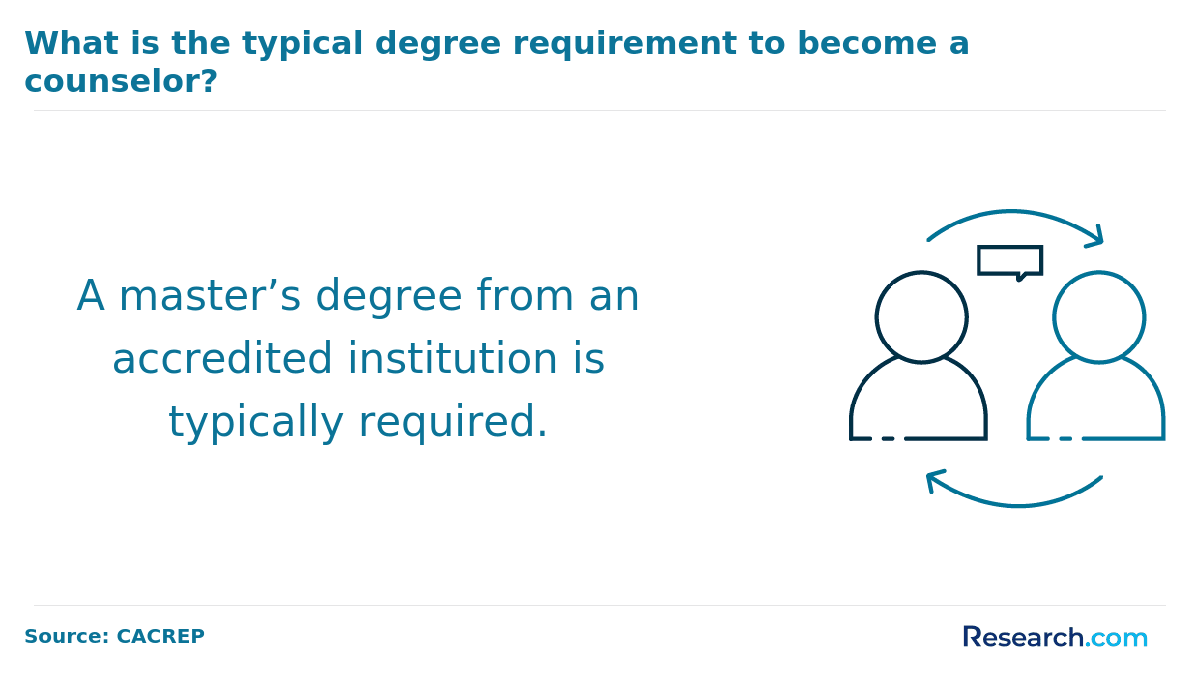
The image below summarizes the most common degree requirement for counselors in the U.S.
Are there accelerated counseling degree programs in Michigan?
Yes. Michigan students can find accelerated pathways that combine undergraduate and graduate planning, allow early graduate credits, or compress the time needed to complete related degrees. These options can be valuable, but students should read the details carefully: not every accelerated psychology or counseling-adjacent program leads to the same license outcome.
The most useful accelerated program is the one that saves time without creating licensure gaps. Before enrolling, ask whether the program is designed for counselor licensure, psychologist limited licensure, case management credentials, or another professional outcome.
| Institution | Accelerated structure | Important details to verify |
| Western Michigan University | WMU offers an accelerated Master of Arts in Counseling Psychology using a “4+1” structure. Eligible undergraduate students in behavioral science or psychology can apply up to 12 graduate credits during bachelor’s study, making it possible to complete both degrees in five years. | The program prepares graduates for limited licensure as psychologists and includes coursework in psychopathology, psychological assessment, counseling theories, and practicum experiences, with in-person and online learning options. |
| Davenport University | Davenport University introduced a 3+2 accelerated master’s pathway in Mental Health Counseling, known as HHCM to MHC, combining undergraduate and graduate coursework so students can finish both degrees in five years. | The curriculum emphasizes case management and therapeutic skill development and prepares students for licensure-related goals and credentials such as Certified Case Manager (CCM) and Human Services-Board Certified Practitioner (HS-BCP). |
| University of Michigan | The University of Michigan offers an Accelerated Master’s Degree Program (AMDP) in Psychology, allowing selected undergraduates to begin graduate coursework and research during senior year. | Admission depends on academic performance and mentor recommendation, and students should confirm how the degree connects to clinical psychology, counseling, or related career plans. |
Cost also matters. Tuition varies, with WMU’s graduate rates around $730 per credit for in-state students and Davenport’s master’s tuition approximately $885 per credit. A faster program can still be expensive if it requires high per-credit tuition, extra fees, unpaid internship time, or reduced work hours.
Michigan’s need for counselors is projected to grow by 14% through 2028, which makes accelerated training appealing for students who are ready for an intense academic and clinical schedule. Still, speed should not outweigh fit. A program that finishes quickly but does not support your intended license can cost more time later.
Students thinking beyond a master’s degree can also review whether an online PhD in counseling can be affordable, especially if their long-term goals include supervision, research, teaching, or advanced clinical leadership.
Are online counseling programs in Michigan faster than traditional ones?
Online counseling programs can be faster for some students, but the format alone does not shorten Michigan’s licensure requirements. You still need qualifying coursework, field experience, supervised post-degree hours, and exam preparation. The advantage of online learning is usually scheduling efficiency, not lower clinical standards.
| Factor | Online counseling program | Campus counseling program |
| Course scheduling | May offer asynchronous coursework, shorter terms, or more flexible pacing. | Often follows fixed class times and traditional semester calendars. |
| Time management | Can reduce commuting time and make it easier to study around work or family obligations. | May provide clearer separation between school, home, and clinical training. |
| Clinical placement | Students may need to take more responsibility for finding approved local sites. | Programs may have established relationships with regional placement sites. |
| Peer and faculty access | Requires intentional networking through virtual meetings, supervision, and professional groups. | Often provides more informal contact before and after class or during campus activities. |
| Best fit | Self-directed students, working adults, rural students, and career changers who need flexibility. | Students who want in-person structure, campus resources, and face-to-face cohort support. |
Online programs may help students move faster when they offer continuous enrollment, year-round courses, or flexible class schedules. They can also reduce commuting, parking, and relocation burdens. For students already working in behavioral health, online coursework may make it easier to keep earning while completing the degree.
The trade-off is that online students must be highly organized. They need to confirm field placement rules early, maintain communication with faculty, document practicum and internship expectations, and make sure their program meets Michigan requirements. A fast online program becomes slow if the student cannot secure approved clinical placements on time.
Telehealth growth also makes online learning more relevant. Students who train in virtual classrooms may become comfortable with digital communication, electronic documentation, and remote professional collaboration, all of which increasingly appear in modern behavioral health settings.
What challenges do fast-track counseling students face?
Accelerated counseling students can save time, but they often face more pressure than students in traditional timelines. Counseling is not only an academic subject; it requires emotional maturity, ethical judgment, clinical self-awareness, and consistent supervision. Compressing the timeline can make those parts harder to develop.
- Intense coursework and clinical demands: A shortened program can mean reading, writing, skills practice, assessment work, practicum preparation, and internship requirements happening at the same time.
- Less time for professional identity growth: Counselors need time to understand their theoretical orientation, personal triggers, ethical boundaries, and preferred client populations.
- Licensure details can be missed: Students must track state rules, including required training such as human trafficking training, while also meeting program deadlines.
- Pre-license work may not count the way students expect: Michigan does not allow supervised hours earned before receiving the Limited Licensed Counselor credential to count toward the required 3,000 hours, so timing matters.
- Mentorship may require extra effort: Fast-track students may have fewer semesters to build relationships with faculty, supervisors, peers, and future referral networks.
Students considering an accelerated path should ask a direct question: “Am I trying to move faster because I am prepared for a demanding schedule, or because I am underestimating the difficulty of clinical training?” The first reason can work. The second can lead to burnout, poor placement performance, or delayed licensure.
The following chart shows another issue many counseling graduates must manage after school: how student debt can affect life after completing a degree.
How do employers in Michigan view fast-track counselors?
Michigan employers generally care less about whether a program was “fast” and more about whether the candidate is properly educated, eligible for licensure, clinically prepared, and ready to work with clients under supervision. An accelerated degree can be viewed positively when it is rigorous and clearly connected to licensure requirements.
- Career changers can stand out: Students coming from teaching, healthcare, social services, corrections, ministry, business, or military backgrounds may bring maturity and transferable communication skills.
- Motivation matters: Completing a condensed program can signal persistence, discipline, and commitment, especially when paired with strong field evaluations.
- Clinical readiness still matters most: Employers may be cautious if a graduate has limited experience in assessment, treatment planning, crisis response, diagnosis, documentation, or ethical decision-making.
- Supervision quality can influence hiring: A candidate who completed meaningful supervised experience in a demanding setting may be more attractive than one who only completed minimum requirements on paper.
- Telehealth and integrated care may reward adaptability: Candidates comfortable with technology, team-based care, and diverse client needs may be competitive in settings that are expanding service models.
Fast-track graduates can strengthen their applications by bringing a clean licensure plan, strong supervisor references, documented clinical experience, and a clear explanation of why their accelerated path did not compromise training quality.
Should I specialize in substance abuse counseling in Michigan?
Substance abuse counseling can be a practical specialization for students who want to work in addiction treatment, recovery support, community behavioral health, corrections, hospitals, residential programs, or integrated care. It may also be a strong fit for students who are interested in relapse prevention, motivational interviewing, trauma-informed care, family systems, and long-term recovery planning.
This path is not for everyone. Addiction counseling can involve crisis situations, co-occurring mental health conditions, documentation demands, court or referral-system coordination, and emotionally difficult client outcomes. Students should look for programs and placements that offer strong supervision rather than choosing the specialization only because it appears to be in demand.
| Choose this specialization if... | Think carefully if... |
| You want to work directly with clients affected by substance use, recovery, relapse, and co-occurring challenges. | You are uncomfortable with crisis work, mandated clients, or complex family and legal dynamics. |
| You are willing to pursue targeted training and relevant certification requirements. | You want a lower-intensity counseling role with predictable sessions and limited case coordination. |
| You value community-based work and interdisciplinary treatment teams. | You have not yet observed addiction treatment settings or spoken with practicing professionals. |
For a step-by-step explanation of this specialty route, review Research.com’s guide on how to become a substance abuse counselor in Michigan.
How do counseling and social work educational pathways differ in Michigan?
Counseling and social work both serve people facing mental health, family, community, and life-stress challenges, but the training emphasis is different. Counseling programs usually focus more directly on therapeutic relationships, counseling theories, human development, assessment, diagnosis, ethics, and clinical intervention. Social work programs often combine clinical practice with systems-level training in advocacy, case management, policy, community resources, and social services.
| Question to ask | Counseling path | Social work path |
| What type of work do I want most? | Individual, group, family, school, addiction, rehabilitation, or mental health counseling. | Clinical social work, case management, policy, advocacy, healthcare coordination, child and family services, or community practice. |
| What training style fits me? | Therapeutic techniques, counseling theory, client assessment, and professional counseling identity. | Person-in-environment perspective, systems, services, policy, social justice, and clinical or macro practice. |
| What should I verify? | Whether the program supports Michigan counseling licensure requirements. | Whether the degree and fieldwork meet Michigan social work licensure expectations. |
Students comparing both options should focus on the work they want to do every day, not just the degree title. For more detail on the social work side, review Research.com’s explanation of Michigan social worker educational requirements.
Are fast-track and online counseling programs in Michigan more affordable?
They can be, but not always. A shorter or online program may reduce total costs by cutting commuting, relocation, campus fees, and time away from work. However, affordability depends on tuition per credit, required credits, fees, internship logistics, transfer policies, books, technology costs, and whether the program helps students avoid delays in licensure.
Some online counseling programs list total tuition between $9,500 and $20,000 for the full course of study, which may be lower than many campus-based options. Students should compare total program cost rather than relying on the advertised tuition headline.
| Cost factor | Why it matters | Question to ask the school |
| Tuition structure | Per-credit pricing can make two programs with similar names cost very different amounts. | What is the total tuition for the entire degree, not just one semester? |
| Fees | Technology, student services, clinical placement, graduation, and program fees can add up. | What mandatory fees are charged to online and campus students? |
| Clinical placement | Travel, unpaid internship time, and placement delays can increase the true cost. | Does the program help locate approved practicum and internship sites in Michigan? |
| Work schedule | Flexible programs may allow students to keep earning while studying. | Can students realistically work while completing practicum or internship? |
| Financial aid | Eligible online students may be able to use the same federal and state grants as traditional students. | Is the program eligible for federal financial aid? |
Fast-track programs may also reduce cost by shortening the time enrolled. But a compressed schedule can limit work hours, which may affect household income. For many students, the most affordable path is not the cheapest tuition; it is the program that balances price, licensure alignment, placement support, completion speed, and the ability to keep working.
Is there a demand for counselors in Michigan?
Yes. Michigan has significant demand for counselors across schools, community mental health, addiction treatment, behavioral health, rehabilitation, and family services. The need is especially visible in school counseling, where approximately 3,700 additional professionals are needed to meet the recommended counselor-to-student ratio of 1-to-250.
That shortage affects more than scheduling. When schools do not have enough counselors, students may have less access to mental health support, academic planning, crisis intervention, career guidance, and college readiness help. The impact can be especially serious in underserved and low-income communities.
Demand also appears in areas such as substance abuse counseling, behavioral disorder treatment, mental health counseling, and marriage and family therapy. Students who want the strongest job prospects should consider where Michigan’s need is highest, which populations they are prepared to serve, and which settings offer supervised roles for limited-license professionals.
If you are searching for a cost-conscious licensure route, Research.com’s ranking of affordable CACREP-accredited online counseling programs can help you compare options that may support a faster and more financially manageable path.
The following chart shows the largest U.S. employers of counselors, which can help students understand where counseling jobs are concentrated.
How much do counselors get paid in Michigan?
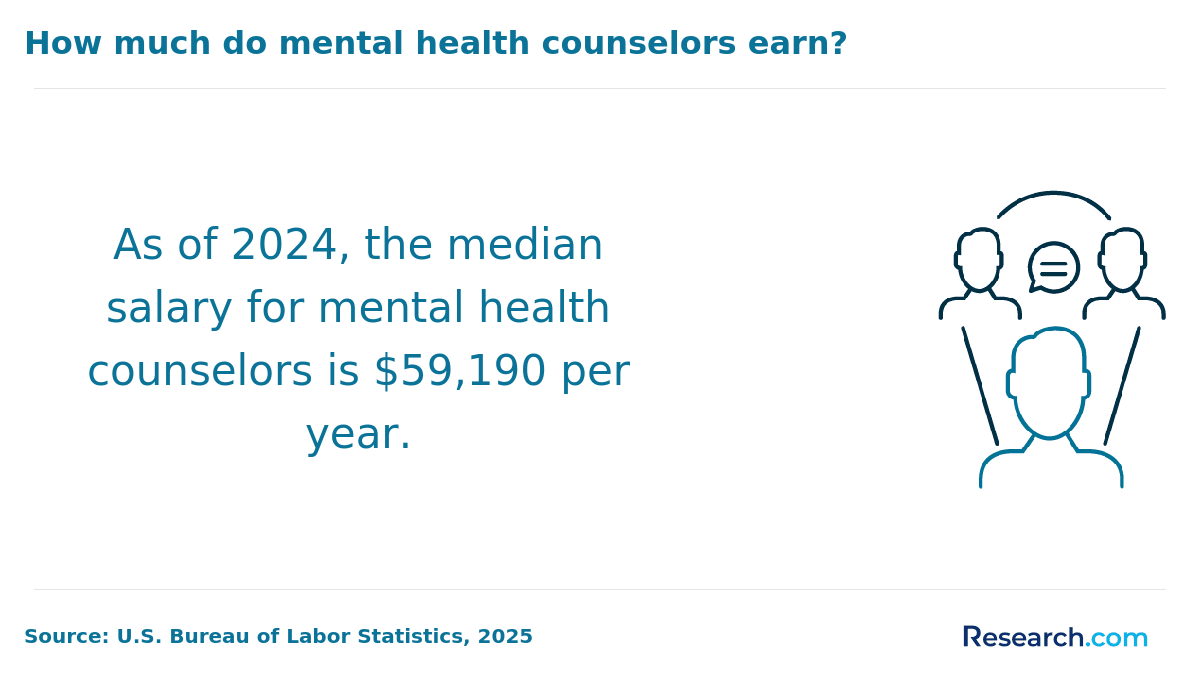
As of mid-2025, the average counselor salary in Michigan, especially for licensed professional counselors, is around $64,944 per year. Most earn between $56,324 and $74,823, placing Michigan slightly below the national average and 38th in counselor pay nationwide.
Pay varies by specialization, work setting, location, licensure level, and experience. A new limited-license counselor working under supervision will usually have different compensation than a fully licensed clinician in private practice, a hospital system, or a specialized treatment setting.
| Counseling area | Michigan salary information stated | What can affect earnings |
| School counseling | School counselors typically earn a median wage of $63,240, with top earners reaching up to $94,440 annually. | District budget, years of experience, education level, contract terms, and location. |
| Mental health counseling and licensed professional counseling | Annual income often ranges from about $48,561 to $83,903. | Licensure level, caseload, setting, specialization, supervision duties, and private practice opportunities. |
| Substance abuse counseling | Substance abuse counselors are often on the lower end of the pay scale, although demand for addiction specialists may support stronger wages over time. | Credential level, treatment setting, grant funding, residential versus outpatient work, and co-occurring disorder experience. |
Geography can also matter. Counselors in urban areas such as Detroit may earn more than $79,000 per year, and total compensation can sometimes exceed $95,000. Benefits, supervision availability, productivity expectations, telehealth policies, and caseload size should be evaluated alongside base pay.
Students comparing graduate programs may also want to understand the difference between an MA in counseling and an MS in counseling, since degree structure, curriculum focus, and career alignment can influence the best path into the profession.
Is taking the fast route to become a counselor in Michigan worth it?
The fast route can be worth it if it helps you begin supervised practice sooner without weakening your clinical preparation. The strongest candidates are not simply the ones who finish coursework quickly; they are the ones who choose a licensure-aligned program, secure appropriate supervision, document requirements carefully, and enter the workforce ready to learn.
Accelerating your path may make sense if you already have relevant human services experience, can handle an intensive academic schedule, have a stable support system, and understand that the 3,000 supervised hours over at least two years remain part of the process. It may not be the best choice if you need more time to build academic confidence, explore specialties, manage work-life balance, or prepare emotionally for clinical practice.
| A fast route may be a good fit if... | A slower route may be safer if... |
| You can study full time or nearly full time without sacrificing required fieldwork quality. | You need to work heavy hours and cannot consistently attend class, supervision, or placement. |
| You already know you want counseling and have researched Michigan licensure requirements. | You are still deciding between counseling, psychology, social work, education, or another helping profession. |
| You have access to reliable supervision and strong placement support. | You would need to find placements alone with little school assistance. |
| You are organized enough to track applications, hours, exam preparation, and deadlines. | You tend to miss administrative details or need more advising support. |
Common mistakes to avoid before choosing a fast-track program
- Choosing speed over licensure fit: A program that finishes quickly is not useful if it does not meet Michigan’s counseling license expectations.
- Looking only at tuition: Fees, books, technology, travel, unpaid fieldwork, and lost wages can change the real price.
- Assuming online means easier: Online counseling programs can be flexible, but practicum, internship, ethics, and supervision requirements remain serious.
- Ignoring placement support: A delayed clinical placement can erase the time saved by an accelerated curriculum.
- Waiting to plan supervision: Post-degree supervised hours are central to the path, so students should ask about supervision-friendly employers before graduation.
- Relying only on rankings: Rankings can help narrow a search, but accreditation, license alignment, cost, clinical support, and student outcomes matter more for this decision.
For many Michigan students, the best route is not the absolute fastest program. It is the fastest responsible path: one that protects licensure eligibility, builds real counseling skill, keeps debt manageable, and positions the student for supervised employment after graduation.
What Counselors in Michigan Say About Their Careers
Taking an accelerated path helped me enter Michigan’s counseling job market sooner, but the biggest advantage was having a clear licensure plan from the beginning. The salary range was important, but the real value came from finding stable supervised work where I could grow with support. Jasmine
Michigan counseling work can look very different depending on whether you serve an urban community, a rural area, a school, or a treatment setting. My fast-track program gave me momentum, but continuing education and supervision were what helped me respond to complex client needs with more confidence. Michael
I appreciated that Michigan offered multiple ways to keep developing after graduation, including specialized workshops and certification-focused training. Moving quickly through school helped me start serving clients earlier, but I still had to be intentional about mentorship and skill-building. Linda
Related Articles for Nearby States
- 2027 Fastest Way To Become a Counselor in Ohio
- 2027 Fastest Way to Become a Counselor in Indiana
- 2027 Fastest Way To Become a Counselor in Wisconsin
- 2027 Fastest Way To Become a Counselor in Illinois
- 2027 Fastest Way To Become a Counselor in Minnesota
- 2027 Fastest Way To Become a Counselor in Pennsylvania
- 2027 Fastest Way to Become a Counselor in Kentucky
- 2027 Fastest Way To Become a Counselor in West Virginia
- 2027 Fastest Way To Become a Counselor in Iowa
- 2027 Fastest Way To Become a Counselor in Missouri
References:
- American Counseling Association. Counseling Workforce Survey, 2024. counseling.org.
- U.S. Bureau of Labor Statistics. Occupational Employment and Wage Statistics: Michigan, 2025. BLS.
- U.S. Bureau of Labor Statistics. Rehabilitation counselors, April 18, 2025. bls.gov.
- U.S. Bureau of Labor Statistics. Substance abuse, behavioral disorder, and mental health counselors, April 18, 2025. BLS.
- Bright Horizons. FastTrack overview. brighthorizons.com.
- Central Michigan University. Seven reasons to pursue a counseling degree. cmich.edu.
- Counseling Psychology. Best Master’s in Counseling Michigan - Online & Affordable Options, 2025. counselingpsychology.org.
- Leffler, N. Expedited counseling psychology master’s program now offered to meet industry demand, Western Michigan University, 2023. wmich.edu.
- MSW Degrees Editorial Team. Most Affordable Online Counseling (LPC) Programs for 2025–2026. mswdegrees.org.
- North Central Michigan College. Fast Track program adds 44 medical professionals to local workforce in its first year. ncmich.edu.
- Salvia, B. V. Accredited Counseling Schools in Michigan: Degrees & state licensure, October 25, 2024. counselingschools.com.
Key Insights
- The fastest responsible route to counseling licensure in Michigan is not a loophole. It is careful planning: the right master’s program, prompt limited-license application, supervised employment, 3,000 required hours, and early NCE preparation.
- A bachelor’s degree can lead to behavioral health support roles, but independent professional counseling generally requires graduate education and licensure.
- Accelerated programs can save time, especially 4+1 or 3+2 models, but students must verify exactly which license or credential the program supports.
- Online counseling programs may be faster for organized students because of flexible scheduling and reduced commuting, but clinical placement and state requirements still determine the real timeline.
- Michigan demand is meaningful, including a school counseling gap of approximately 3,700 professionals needed to meet the 1-to-250 recommended ratio.
- Salary varies widely by specialty, setting, location, and licensure level; the stated Michigan average for licensed professional counselors is around $64,944 as of mid-2025.
- The best fast-track choice is the one that balances speed, accreditation or licensure alignment, supervised experience quality, total cost, and long-term career fit.
Other Things You Should Know About the Fastest Way to Become a Counselor in Michigan
To become a counselor in Michigan, you must complete a master’s degree in counseling or a related field from an accredited institution. Additionally, the program should include at least 48 semester hours or 72 quarter hours of coursework that covers key counseling areas.
The Michigan Department of Licensing and Regulatory Affairs, through the Bureau of Professional Licensing, oversees licensed professional counselors in the state. Applicants must meet education, supervised experience, and exam requirements under Michigan’s counseling rules before they can practice as LPCs.