
2027 How To Become a Bounty Hunter

Co-Founder and Chief Data Scientist
Bounty hunting is a legally complex form of fugitive recovery, not a freelance law enforcement shortcut. The work involves bail contracts, state-specific authority, investigation, physical risk, court deadlines, and potential civil liability. In the United States, there are 38,800 private detectives and investigators, a wider occupational group that can overlap with investigative fugitive recovery work, but bounty hunter rules vary substantially by jurisdiction.
This guide explains how to become a bounty hunter, what bail enforcement agents actually do, where the work is prohibited or restricted, what training and licensing may be required, how payment usually works, and how to decide whether this career is a realistic fit. It is written for people considering bail enforcement, criminal justice students, private investigators, former law enforcement personnel, and anyone comparing bounty hunting with more regulated public safety careers.
Quick Answer: How Do You Become a Bounty Hunter?
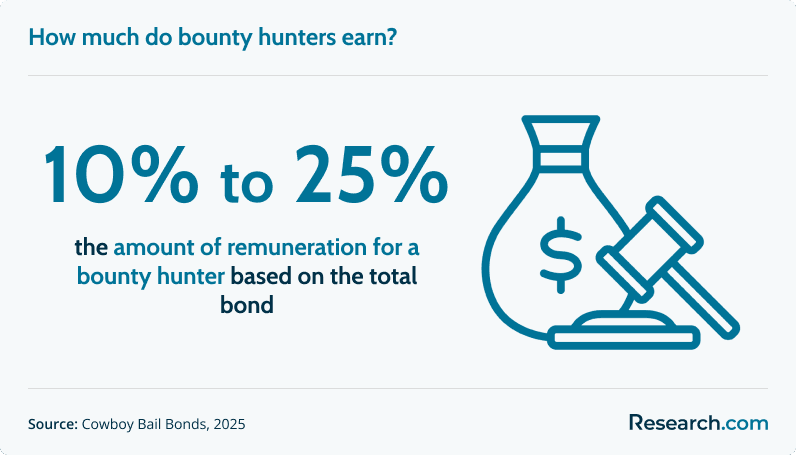
To become a bounty hunter, first verify whether fugitive recovery is legal in the state where you plan to work. Then confirm local requirements for licensing, approved training, background checks, firearms authorization, insurance, and law enforcement notification. A college degree is usually not required, but training in bail law, investigations, surveillance, conflict de-escalation, self-defense, documentation, and use-of-force limits is highly advisable. Many bounty hunters are paid by bail bond agencies and commonly receive 10% to 25% of the total bail bond after a successful recovery.
Key Things You Should Know About Becoming a Bounty Hunter
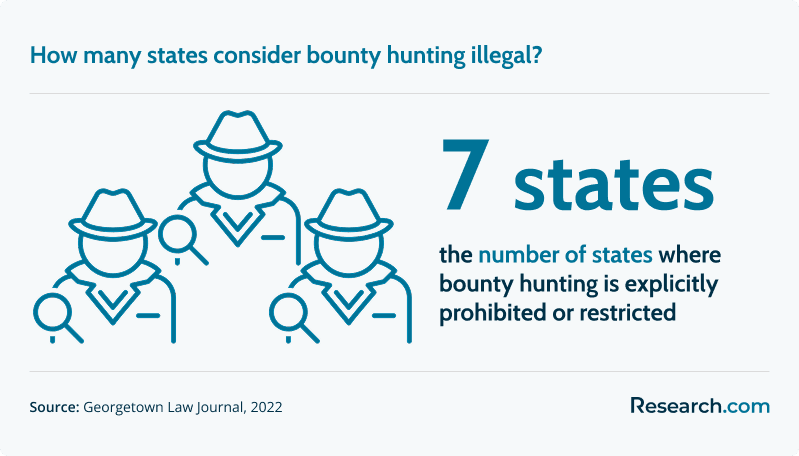
- Your state determines whether this career is possible. Seven jurisdictions, including Oregon and Wisconsin, ban bounty hunting or restrict fugitive recovery so strongly that alternative careers such as private investigation, corrections, or law enforcement may be more practical.
- Income is usually tied to completed cases. Bounty hunters often earn 10% to 25% of the bail bond. A $50,000 bond could result in a $5,000 to $12,500 fee, but only when the recovery succeeds and the contract supports that payment.
- Market conditions differ by location. California, Florida, and Texas have the highest employment levels for private detectives and investigators, which may point to larger markets for related investigative and bail-support work.
- Private investigator wage data is not the same as bounty hunter income. Washington reports an annual mean wage of $78,320 for private investigators, followed by Oregon and New York, but those figures should not be treated as guaranteed bounty hunter earnings, especially where bounty hunting is banned or limited.
- Training rules are uneven. Some states require formal coursework, licensing, background screening, or firearms training. Others impose fewer formal barriers, making legal verification the first essential step.
- What is a bounty hunter, and how does the job work in 2027?
- What states allow bounty hunters to operate?
- What degree or certification do you need to become a bounty hunter?
- How much does it cost to become a bounty hunter?
- What does a bounty hunter do on a typical day?
- How much does a bounty hunter make per year?
- What are the most important skills for bounty hunters?
- How do bounty hunters work with bail bondsmen?
- How dangerous is bounty hunting?
- What are the most common mistakes made by new bounty hunters?
- Should bounty hunters pursue advanced legal education?
- Can specialized legal training enhance bounty hunting outcomes?
- What are the biggest ethical challenges in bounty hunting?
- How can intelligence expertise improve bounty hunting strategies?
- How can I find credible training and certification programs?
- What is the future of bounty hunting as a career?
- How can advanced legal certifications improve bounty hunting outcomes?
- Criminal Justice Degree Online Cost
What is a bounty hunter, and how does the job work in 2027?
A bounty hunter, also known as a bail enforcement agent or fugitive recovery agent, tracks down a defendant who missed a court appearance after being released on bail. The bounty hunter typically works for, or contracts with, a bail bond company that may face financial loss if the defendant is not returned within the required timeframe.
This role is not the same as being a police officer. Bounty hunters do not patrol neighborhoods, respond to general crimes, or carry broad government authority. Their power comes from the bail agreement and the laws of the state where they operate. Readers who want a sworn public safety position with wider enforcement authority should compare this path with becoming a deputy sheriff.
- The work exists because of the bail bond system. When a defendant fails to appear, the bail bond agency may hire a recovery agent to locate and return that person before the bond is forfeited.
- Investigation is central to the job. Bounty hunters use court records, public information, social media, interviews, surveillance, address histories, and contacts with associates to develop leads.
- Legal authority changes by state. California and Texas permit bounty hunting with requirements, while Oregon and Wisconsin are among the states where the work is banned or heavily limited.
- Detention authority has boundaries. Fugitive recovery does not give someone unlimited power to ignore trespassing laws, assault rules, firearms restrictions, identification requirements, or police notification laws.
- Payment is often based on the bond. Industry information states that bounty hunters may earn 10% to 25% of the bail bond, though real earnings depend on contracts, expenses, completed recoveries, and local demand.
| Career Option | Primary Work | Source of Authority | Who It Suits Best |
| Bounty hunter or bail enforcement agent | Locating and returning defendants who failed to appear after bail release | Bail contract terms and state fugitive recovery law | People who can handle legal exposure, fieldwork, unpredictable schedules, and case-based income |
| Private investigator | Collecting information for attorneys, businesses, individuals, insurers, or other clients | State private investigator licensing rules | People who prefer surveillance, records research, interviews, documentation, and civil or corporate investigations |
| Deputy sheriff or police officer | Public law enforcement, patrol, arrests, emergency calls, and community protection | Government law enforcement authority | People seeking formal academy training, public-sector structure, and broader enforcement duties |
Bounty hunting may look appealing because of the possibility of large case fees, but the work carries serious legal and safety risks. The first question is not what equipment to buy. It is whether you are legally allowed to operate and whether you are prepared to accept the liability of detaining another person.
What states allow bounty hunters to operate?
Bounty hunting is permitted in many states, but there is no nationwide bounty hunter license and no single federal rulebook for the profession. Each state decides who may perform fugitive recovery, whether training or licensing is required, when police must be notified, and what restrictions apply to firearms or entry. Legal summaries explain that bounty hunter laws differ widely by state, ranging from limited requirements to strict regulation.
- Many states permit bounty hunting with conditions. Texas, California, and Florida allow the work, but bounty hunters must follow state rules that may include licensing, training, background checks, or other qualifications.
- Some states have fewer formal entry requirements. Alabama and Mississippi are examples where people may operate without a license if they comply with relevant bail enforcement laws. This is much less standardized than federal career pathways such as CIA agent qualifications and job requirements.
- Seven jurisdictions prohibit or sharply limit the profession. Kentucky, Illinois, Oregon, Wisconsin, Maine, Massachusetts, and the District of Columbia either ban bounty hunting or reserve fugitive recovery largely for law enforcement agencies.
- Police notification requirements can control the timing of an arrest. North Carolina and South Carolina are examples of states where bounty hunters must notify local law enforcement before attempting an apprehension.
- Firearms rules are a separate issue. California and New York may require special permits for firearms, and bounty hunters must also understand local use-of-force restrictions.
| State Legal Environment | What It Means | Best First Step |
| Bounty hunting allowed with licensing | You may need approved training, a background check, an application, and proof that you meet state eligibility standards. | Contact the licensing authority and confirm that any training provider is accepted before paying tuition. |
| Bounty hunting allowed with fewer formal rules | Starting may be simpler, but civil liability, criminal law, trespass rules, and force limits still apply. | Study state arrest authority, bail rules, firearms regulations, and documentation requirements before accepting work. |
| Law enforcement notification required | You may be required to contact local police before attempting recovery. | Use a written notification checklist and keep records of every communication. |
| Bounty hunting prohibited or severely restricted | You cannot legally operate as an independent fugitive recovery agent. | Consider private investigation, security, corrections, probation, or law enforcement careers instead. |
The most reliable approach is to verify current rules through your state’s licensing office, department of insurance, department of public safety, attorney general’s office, or another official regulator. Informal advice from forums or training ads can expose you to unlawful detention claims, trespassing allegations, weapons violations, or civil lawsuits.
What degree or certification do you need to become a bounty hunter?
Most bounty hunters are not required to hold a specific college degree. However, “no degree required” does not mean “no preparation required.” Competent bail enforcement agents need practical knowledge of bail law, criminal procedure, surveillance, investigations, report writing, self-defense, de-escalation, and liability management.
- A degree is often optional. Many states emphasize licensing, approved coursework, background checks, and compliance with bail enforcement rules rather than a specific academic major.
- Criminal justice classes can be useful. Coursework in criminal justice, law enforcement, courts, corrections, and public safety can build context. Some students compare flexible options such as an easy online degree when balancing study with work.
- Licensure may still be required. Texas and California are examples of states where bounty hunters must satisfy state-specific requirements before working.
- Legal knowledge is a practical safety tool. A full law degree is usually unnecessary, but study in criminal procedure, bail law, evidence basics, and liability can reduce mistakes. Some learners explore accessible law degree options as part of a broader legal education plan.
- Private certificates are not all equal. Bail recovery, fugitive apprehension, firearms, surveillance, and defensive tactics certificates are most valuable when they match state rules and are respected by local bail bond agencies.
| Education or Training Path | What It Covers | When It Is Useful | Important Limitation |
| State-approved bail enforcement course | Local law, recovery authority, required forms, notification rules, and compliance procedures | Best starting point in states that require training or licensing | Approval may not carry over to another state |
| Criminal justice degree | Courts, policing, corrections, ethics, research methods, and legal foundations | Helpful for people who want broader criminal justice career options | Requires more time and money than a short licensing course |
| Private investigation training | Surveillance, interviewing, records research, field notes, and evidence documentation | Useful if you may also pursue PI work or investigative support roles | Does not automatically grant authority to perform fugitive recovery |
| Firearms and defensive tactics training | Weapon safety, restraint methods, threat assessment, and personal protection | Important when apprehension work or firearm carry is part of the role | Use-of-force law still determines what conduct is legal |
| Legal studies or paralegal coursework | Legal research, court documents, procedure, deadlines, and liability awareness | Valuable for professionals who want stronger documentation and legal analysis skills | Does not replace state licensing, insurance, or legal counsel |
The strongest credential is the one your state accepts and local bail bond agencies recognize. Before enrolling, ask whether the course is approved in your jurisdiction, who teaches it, how much scenario-based practice it includes, and whether it covers civil liability, documentation, and use-of-force boundaries.
How much does it cost to become a bounty hunter?
Startup costs depend on your state’s rules, required training, licensing fees, equipment, insurance, and whether you pursue college coursework. In states with licensing requirements, initial costs can range from $200 to $1,500 for applications, background checks, and required training. Bail enforcement or fugitive recovery courses may cost between $500 and $2,500. Firearms training, when required or voluntarily pursued, may add $100 to $500.
A college degree is not mandatory for most bounty hunters, but some people study criminal justice or legal studies to improve long-term career flexibility. Pursuing the easiest law degree or another legal education route can substantially increase total cost, so it should connect to a larger career plan rather than a single expectation of higher case fees.
| Cost Area | Typical Cost Mentioned | Why It Matters | Decision Tip |
| Licensing, applications, and background checks | $200 to $1,500 | May be required before legal operation in some states | Complete this step before investing in gear or advertising services |
| Bail enforcement or fugitive recovery course | $500 to $2,500 | May satisfy training rules and teach practical recovery procedures | Verify that the course is recognized by your state regulator |
| Firearms training | $100 to $500 | May be necessary if you carry a firearm or work in higher-risk situations | Do not assume a firearm permit authorizes every recovery tactic |
| Equipment and protective gear | Varies | May include restraints, communication tools, body armor, flashlights, and recording equipment | Buy only after confirming legal restrictions and agency expectations |
| Insurance and legal support | Varies | Helps manage the risk of civil claims and operational liability | Budget for risk management, not just visible equipment |
| College coursework | Can significantly increase costs | May support broader work in criminal justice, legal services, or investigations | Compare total tuition, transfer credit rules, accreditation, and career relevance |
The cheapest path is not always the safest. A poorly trained bounty hunter can face legal fees, lost contracts, injury, or criminal exposure that far exceed the cost of proper preparation.
What does a bounty hunter do on a typical day?
A bounty hunter’s workday usually combines research, planning, surveillance, communication, risk assessment, and documentation. Much of the job involves quiet investigative work, followed by brief moments where judgment, restraint, and legal accuracy matter intensely.
- Reviewing the case file. The bounty hunter examines bond documents, court information, known addresses, criminal history indicators, associates, employment details, and previous appearance patterns.
- Developing leads. They research public records, phone numbers, vehicles, online activity, social media, and known contacts to narrow down a likely location.
- Conducting surveillance. When a location appears promising, the bounty hunter may observe the area and evaluate whether contact would be safe and lawful.
- Planning the recovery. Before approaching, they consider who may be present, whether police notification is required, whether weapons are possible, and how to reduce escalation.
- Detaining and transporting the fugitive. If the person is located, the bounty hunter must use legally permitted methods to detain and transfer them to the proper authority.
- Preparing documentation. Reports, receipts, incident notes, communication records, and notification logs help protect the bounty hunter and bail bond agency.
- Maintaining professional relationships. Experienced agents build trust with bail bond companies, attorneys, law enforcement contacts, trainers, and other investigators.
Some people interested in high-pressure fugitive work also look at federal drug enforcement careers. These paths are very different: learning how to become a DEA agent involves federal hiring, academy-style training, and public law enforcement authority, while bounty hunting is private, state-regulated, and usually contract-based.
How much does a bounty hunter make per year?
Bounty hunter income is difficult to predict because many agents are paid per successful recovery rather than through a steady salary. A bounty hunter may earn 10% to 25% of the total bond amount. On a $50,000 bond, that equals $5,000 to $12,500, but net income can be lower after travel, surveillance time, subcontractors, insurance, equipment, and failed leads.
- Yearly income can fluctuate significantly. Depending on case volume and success rate, bounty hunters may earn anywhere from $30,000 to over $100,000 per year.
- Bond size affects potential fees. Larger bonds can generate larger payouts, but they may involve more danger, longer searches, and greater competition.
- The local bail market matters. States with more active bail bond markets may create more opportunities than places with limited or prohibited fugitive recovery.
- Reputation influences referrals. Bail bond agencies prefer recovery agents who are reliable, legally careful, well documented, and safe in the field.
- Income is less stable than many justice-related careers. A structured field such as forensic or criminal psychology may offer clearer career ladders, so readers comparing options may want to review information on criminal psychologist salary and related education paths.
| Income Driver | Effect on Earnings | What to Consider |
| Bond amount | Higher bonds can create higher percentage-based fees | High-value cases can also bring more complexity and risk |
| Recovery success rate | Completed returns generate payment; failed searches may not | Track hours, costs, leads, and completed recoveries carefully |
| State law | Restrictions can limit or eliminate legal opportunities | Do not project income based on states where you cannot legally work |
| Bail bond agency relationships | Trusted agents are more likely to receive referrals | Professionalism, communication, and compliance matter as much as field ability |
| Operating expenses | Fuel, equipment, training, insurance, and legal support reduce take-home pay | Calculate profit after expenses rather than focusing on gross fees |
Bounty hunting can produce large individual payments, but it is not guaranteed income. New entrants should prepare for uneven cash flow and avoid accepting high-risk cases simply because the bond amount looks attractive.
What are the most important skills for bounty hunters?
Successful bounty hunting depends more on judgment, patience, documentation, and legal discipline than on aggression. Physical readiness can matter, but many safe recoveries happen because the agent verified the right person, chose the right time, communicated effectively, and avoided unnecessary force.
- Investigative research. Bounty hunters must read records accurately, connect addresses and associates, confirm identities, and avoid acting on weak assumptions.
- Surveillance. Careful observation helps determine whether the fugitive is present, whether others are nearby, and whether contact is safe.
- Communication and negotiation. Some recoveries are safer when the person is convinced to surrender voluntarily.
- Legal awareness. Knowledge of arrest authority, state lines, trespass limits, firearms laws, notification rules, and documentation standards reduces liability.
- Behavioral insight. Understanding behavior can support threat assessment and de-escalation, similar to how a criminal psychologist examines behavior in legal settings.
- Physical conditioning and defensive tactics. Agents may need stamina, restraint skills, and the ability to protect themselves without using excessive force.
- Stress-based decision-making. Knowing when to pause, withdraw, call law enforcement, or gather more information can prevent a bad situation from becoming a legal disaster.
| Skill Area | Why It Matters | How to Develop It |
| Legal compliance | Helps prevent unlawful detention, trespass, excessive force claims, and civil lawsuits | State-approved training, legal updates, attorney-reviewed procedures |
| Surveillance | Improves location accuracy and operational safety | Private investigation coursework, supervised field practice, documentation drills |
| De-escalation | Lowers the likelihood of injury or resistance | Scenario training, negotiation practice, crisis communication courses |
| Report writing | Creates a record that supports the recovery and protects all parties involved | Templates, case logs, evidence-handling instruction, feedback from experienced agents |
| Defensive tactics | Supports personal safety during physical encounters | Certified self-defense, restraint, and lawful use-of-force training |
The most dependable bounty hunters are not just physically capable. They are careful, documented, legally informed, and calm enough to avoid turning a recovery into a lawsuit, injury, or criminal investigation.
How do bounty hunters work with bail bondsmen?
Bail bondsmen and bounty hunters are linked by financial exposure. When a defendant misses court, the bail bond company may be liable for the bond amount. A bounty hunter is hired to reduce that risk by finding and returning the fugitive.
- The bail bond agency provides the assignment. The case usually includes identifying details, bond paperwork, court data, last known addresses, and known risk factors.
- The bounty hunter investigates before acting. They verify leads, confirm identities, conduct surveillance, and decide whether a lawful recovery is possible.
- The contract defines compensation. A written agreement should state the fee percentage, reimbursable expenses, reporting obligations, and responsibility for operational or legal costs.
- Documentation protects both parties. Accurate records help show compliance with state law, court deadlines, and contract terms.
- Professional behavior affects future referrals. Bail agencies are unlikely to rehire agents who damage property, misidentify people, create legal exposure, or communicate poorly.
| Question to Ask the Bail Bond Agency | Why the Answer Matters |
| What documents give me authority to recover this defendant? | Helps ensure you are not acting without proper authorization. |
| What exact percentage will be paid, and when is payment made? | Shows whether the case is financially worthwhile. |
| Which expenses, if any, are reimbursed? | Helps calculate net income after travel, surveillance, and support costs. |
| Are there known weapons, associates, health issues, or safety concerns? | Supports realistic risk assessment and recovery planning. |
| Does local law enforcement need advance notification? | Reduces the chance of violating state rules or interfering with police activity. |
A bounty hunter should not accept an assignment based only on a verbal promise. Written authority, clear payment terms, and documented procedures are basic safeguards.
How dangerous is bounty hunting?
Bounty hunting can be dangerous because it may involve direct contact with people who are scared, desperate, armed, intoxicated, mentally unstable, or determined to avoid returning to custody. The risk is not only physical. Legal, financial, and reputational harm can be equally serious.
Reliable injury data specific to bounty hunters is limited, so exact risk levels are hard to measure. Related roles such as private investigators can involve confrontation, surveillance hazards, and unpredictable field conditions. Comparisons with unrelated dangerous activities, including big game hunting, cannot precisely measure bounty hunter safety, but they highlight the same point: risk control is essential.
- Violent resistance can occur. A fugitive may run, fight, or involve friends, family members, or bystanders.
- Wrong-person detentions are serious. Misidentification can lead to civil rights claims, criminal allegations, and lasting professional damage.
- Entry onto property is legally sensitive. Even when recovery authority exists, state law and case facts determine what is permitted.
- Firearms create additional liability. Carrying a weapon requires proper authorization, training, and a clear grasp of use-of-force limits.
- Fatigue and pressure can impair judgment. Long surveillance periods, night operations, travel, and bond deadlines can lead to poor decisions.
Readers interested in specialized public safety careers may also compare bounty hunting with evidence-focused roles. This forensic ballistics expert career guide explains a different high-stakes path centered on firearms evidence rather than fugitive apprehension.
What are the most common mistakes made by new bounty hunters?
New bounty hunters often focus on gear, tactics, and excitement before they understand contracts, law, insurance, and documentation. That sequence is risky. Many serious mistakes happen before the first recovery attempt begins.
| Beginner Mistake | Why It Can Be Costly | Better Decision |
| Assuming bounty hunting is legal in every state | Seven states ban or severely restrict the profession. | Confirm current state law before paying for training or taking cases. |
| Picking training only because it is cheap | A low-cost course may not meet licensing rules or teach real-world liability management. | Choose based on state approval, instructor credibility, legal content, and practical exercises. |
| Working without written authority | Verbal instructions may not protect you if the detention is challenged. | Secure case documents, authorization, and payment terms in writing. |
| Ignoring startup and operating expenses | Licensing, fuel, equipment, insurance, legal consultation, and continuing education reduce profit. | Build a realistic budget before relying on bounty hunting as income. |
| Using force too early | Unnecessary force can cause injuries, lawsuits, criminal allegations, and lost contracts. | Train in de-escalation, communication, restraint, and lawful use-of-force decision-making. |
| Failing to compare other careers | Bounty hunting may be unstable, restricted, or unavailable in your state. | Review alternatives such as private investigation, corrections, law enforcement, and the highest paying criminal justice jobs. |
A responsible beginner treats each assignment as a legal operation rather than an adventure. That approach protects the defendant’s rights, the bail agency’s financial interests, and the bounty hunter’s professional future.
Should bounty hunters pursue advanced legal education?
Advanced legal education is not required for most bounty hunters, but it can help professionals who want to reduce liability, understand court processes, improve documentation, supervise investigations, or move into broader legal and criminal justice roles. The more complex the work becomes, the more valuable legal research and procedural knowledge can be.
- It can improve legal interpretation. Courses in criminal procedure, evidence, constitutional law, and legal research can support better field decisions.
- It may increase career flexibility. Legal studies can support work in compliance, investigations, paralegal services, risk management, or public-sector roles.
- It does not replace state authorization. A legal certificate or degree does not automatically permit bounty hunting.
- It must be financially justified. Tuition should be compared with realistic income, career goals, and alternative pathways.
Professionals who want graduate-level legal training without attending traditional law school can compare affordable online master’s in legal studies programs, especially if they plan to work in compliance, investigations, legal operations, or risk management.
Can specialized legal training enhance bounty hunting outcomes?
Specialized legal training can help bounty hunters read court documents more accurately, organize evidence, track deadlines, communicate with bail agencies, and avoid procedural mistakes. Paralegal-style education is particularly relevant because it emphasizes legal research, forms, documentation, and case organization.
For bounty hunters who want legal support skills without a full degree, ABA approved paralegal programs may be worth reviewing. Their value depends on cost, schedule, accreditation, curriculum quality, and whether the program supports the legal tasks you expect to perform.
What are the biggest ethical challenges in bounty hunting?
Bounty hunting creates ethical tension because private payment is connected to the physical recovery of people who still have legal rights. Being paid to return a defendant does not justify intimidation, humiliation, shortcuts, wrongful entry, or unnecessary force.
- Use of force. Ethical recovery requires avoiding the assumption that every encounter should become tactical or physical.
- Due process. Missing court does not erase a defendant’s rights, and careless assumptions can lead to rights violations.
- Financial pressure. A large fee can tempt an agent to take an unsafe or legally questionable shortcut.
- Mistaken identity. Poor verification can harm innocent people and damage professional credibility.
- Effects on bystanders and families. Recoveries often happen at homes, workplaces, or public places where children, relatives, coworkers, or neighbors may be affected.
- Psychological impact. Aggressive apprehension can cause lasting harm, an issue connected to broader concerns examined in forensic psychology.
Ethical bounty hunting requires restraint, careful verification, strong documentation, respect for legal boundaries, and the willingness to walk away when the facts do not support immediate action.
How can intelligence expertise improve bounty hunting strategies?
Intelligence methods can make fugitive recovery more organized and less reactive. Instead of chasing unverified tips, trained investigators build a structured profile of where a fugitive may be, who may assist them, what routines they follow, and what risks may exist during contact.
- Link analysis. Mapping connections among addresses, phone numbers, vehicles, employers, relatives, and associates can reveal useful patterns.
- Open-source intelligence. Public social media, court records, property data, and business records may help confirm or rule out location leads.
- Counter-surveillance awareness. Understanding how people avoid detection can improve planning and reduce wasted effort.
- Risk assessment. Evaluating weapons history, violence indicators, associates, location, and timing helps determine whether to proceed.
- Operational discipline. Intelligence-style planning supports better documentation and reduces impulsive field decisions.
Readers interested in intelligence-focused public safety careers can compare bounty hunting with federal intelligence roles, including guidance on what degree you need to be in the CIA.
How can I find credible training and certification programs?
The best training program depends on your state, experience level, and career goals. A credible course should teach legal compliance and field judgment, not only tactical skills.
| What to Evaluate | Why It Matters | Question to Ask |
| State approval | Some states require approved training before licensing. | Is this course recognized by the agency that regulates bounty hunters in my state? |
| Instructor experience | Qualified instructors can explain both operational realities and legal exposure. | What law enforcement, legal, investigative, or fugitive recovery experience do instructors have? |
| Legal coverage | Legal mistakes can end a career quickly. | Does the course cover arrest authority, trespass, use of force, notification rules, and documentation? |
| Scenario practice | Realistic exercises help build judgment under pressure. | Are students required to complete practical exercises, report-writing tasks, and de-escalation scenarios? |
| Career preparation | New entrants need to understand contracts, insurance, and agency expectations. | Does the program explain how to work professionally with bail bond companies? |
Some professionals pursue more advanced investigative education. For example, online master’s degree in intelligence programs may be useful for people seeking deeper analytical, security, and intelligence training, although that level of education is beyond what most entry-level bounty hunters need.
What is the future of bounty hunting as a career?
The future of bounty hunting depends on state regulation, bail reform debates, and investigative technology. The profession may continue in states that allow private fugitive recovery, but it could face more scrutiny where policymakers question private involvement in apprehension work.
- Regulation may become stricter. Concerns about wrongful detention, excessive force, and inconsistent training may lead to tighter licensing rules.
- Bail reform can change demand. If a jurisdiction reduces reliance on cash bail, the number and type of recovery cases may shift.
- Technology is reshaping investigations. Digital records, social media activity, location clues, and online behavior can help locate people, but agents must understand privacy and lawful-use limits.
- Cyber awareness may become more valuable. Fugitives may use online tools to hide or communicate, making digital investigation knowledge useful. An online cybercrime degree can support broader investigative skills for people planning long-term work in digital investigations.
- Professionalism will matter increasingly. Bail agencies, courts, and law enforcement contacts are more likely to trust recovery agents who are trained, insured, documented, and legally careful.
Aspiring bounty hunters should not assume the field will automatically expand. The safer strategy is to build transferable skills in investigation, legal compliance, documentation, cyber awareness, and risk management so career options remain open if state laws or bail practices change.
How can advanced legal certifications improve bounty hunting outcomes?
Advanced legal certifications can strengthen a bounty hunter’s ability to organize case files, understand procedures, communicate with courts or agencies, conduct legal research, and maintain defensible records. They are especially useful for professionals who want to move from field recovery into investigative management, compliance, legal support, or agency operations.
A short paralegal pathway may work for people who want targeted legal training without completing a full degree. For example, a 14 week paralegal certification program may introduce legal documents and procedures in a condensed format, but students should still evaluate accreditation, cost, quality, schedule, and career relevance before enrolling.
Criminal Justice Degree Online Cost
A criminal justice degree is not required for most bounty hunting roles, but it can provide a broader foundation in courts, policing, corrections, ethics, investigation, public safety, and legal systems. It may also help if you later pursue private investigation, law enforcement, corrections, probation, security management, or legal support work.
Many colleges offer affordable online criminal justice degrees for working adults who need flexible study options. Depending on the institution, online criminal justice degrees can range from under $10,000 to around $25,000 for the full program. Some schools may also offer flat-rate tuition, accelerated formats, credit for prior learning, or credit for law enforcement experience.
| Who May Benefit From a Criminal Justice Degree? | Who May Not Need One? |
| Students who want long-term options in public safety, investigation, or legal-adjacent work | People who only need a state-approved bounty hunter licensing course |
| Working adults planning to move into law enforcement, corrections, or private investigation | People in states where bounty hunting is prohibited and who do not have broader criminal justice goals |
| Professionals who want stronger writing, ethics, legal systems, and reporting skills | People who cannot connect tuition costs to realistic career outcomes |
| Career changers who need a recognized academic credential | People who already meet state requirements and have strong field experience |
Before choosing a program, verify accreditation, total price, transfer credit policies, course relevance, graduation requirements, and whether the degree supports careers beyond bounty hunting.
Practical Steps to Become a Bounty Hunter
- Check state law first. Determine whether bounty hunting is legal, licensed, restricted, or prohibited where you intend to work.
- Find the regulating agency. Rules may be issued by an insurance department, public safety agency, licensing board, or another state authority.
- Complete required coursework. If your jurisdiction requires training, choose a state-approved bail enforcement or fugitive recovery course.
- Finish licensing and background requirements. Submit applications, fees, fingerprints, background checks, and proof of training when required.
- Learn firearms and use-of-force rules. Do not carry or use a weapon unless you are trained, permitted, and legally authorized to do so.
- Develop investigative ability. Practice records research, surveillance, interviewing, identity verification, report writing, and structured risk assessment.
- Arrange insurance and legal guidance. Consider having an attorney or qualified professional review contracts, liability exposure, and documentation procedures.
- Build relationships with reputable bail bond agencies. Seek agencies that value written procedures, legal compliance, and professional communication.
- Begin with lower-risk assignments when possible. Gain experience before taking complex, high-value, or high-danger cases.
- Continue training. Laws, technology, bail practices, and investigative tools change, so ongoing education is part of responsible practice.
Questions to Ask Before Choosing This Career
- Is bounty hunting legal in the state where I want to work?
- Do I need a license, approved course, background check, firearm permit, or police notification process?
- Can I manage irregular income and case-based payment?
- Am I able to handle confrontation without escalating unnecessarily?
- Do I understand the difference between lawful fugitive recovery and unlawful detention?
- Will I document every step of an investigation and recovery attempt?
- Would a more structured path such as law enforcement, corrections, private investigation, or legal support fit me better?
- Can I afford startup expenses, insurance, continuing education, equipment, and legal consultation?
References
- Congress.gov. (2006). H.R.6179 - Bail Bond Fairness Act of 2006. Congress.gov
- Georgetown Law Journal. (2022). Abolishing bounty hunters: A legal and policy analysis. Georgetown Law Journal
- New York Department of State. (n.d.). How to become a bail enforcement agent. New York Department of State
- Office of Justice Programs. (n.d.). Bounty hunters: A look behind the hype. Office of Justice Programs
- U.S. Bureau of Labor Statistics. (2023). Private detectives and investigators: Occupational outlook handbook. U.S. Bureau of Labor Statistics
Key Insights
- State law is the first gatekeeper. Bounty hunting is prohibited or heavily restricted in seven jurisdictions: Oregon, Wisconsin, Kentucky, Illinois, Maine, Massachusetts, and the District of Columbia.
- Payment can be substantial but uncertain. Many bounty hunters earn 10% to 25% of the bail bond, meaning a $50,000 bond may pay $5,000 to $12,500, but expenses, failed searches, contract terms, and risk reduce real earnings.
- Licensing requirements are not uniform. Some states require formal training and background checks, while others have fewer formal barriers. Either way, legal compliance is nonnegotiable.
- The job is mainly investigative. Records research, surveillance, identity verification, planning, communication, and documentation often matter more than physical force.
- Education should match your broader plan. A short approved course may be enough for entry, while criminal justice, intelligence, cybercrime, legal studies, or paralegal training may support longer-term career mobility.
- Risk management determines career survival. A wrongful detention, unlawful entry, excessive force incident, or poorly documented recovery can cost far more than a successful bounty pays.
Other Things You Should Know About How to Become a Bounty Hunter
To become a bounty hunter in 2027, a high school diploma or GED is typically required. Additional courses in criminal justice or law enforcement can be beneficial. Some states may have specific education requirements or certification programs, so check local regulations.
Only if the fugitive recovery agent has lawful authority under the bond contract and the laws of both states. Some states require local police notification, and a few restrict or bar civilian arrest powers, so interstate recovery can create serious legal liability.
In 2027, becoming a bounty hunter generally requires being at least 18 or 21, depending on the state, and having no felony convictions. Many states necessitate completing a certified training program or obtaining a license. Always check specific state regulations as they can vary significantly.
Bounty hunters often need certifications specific to their state, such as a criminal justice certification or a private investigator license. Requirements vary, so check local regulations for 2027 to ensure you meet the legal standards before beginning your career.





