2027 How To Become a Crime Scene Investigator

Co-Founder and Chief Data Scientist
Becoming a crime scene investigator is a practical career choice for people who want to work at the intersection of criminal justice, forensic science, field investigation, and courtroom evidence. The role is not the same as what television dramas often show: CSIs spend much of their time documenting scenes, protecting evidence from contamination, writing detailed reports, coordinating with detectives and labs, and sometimes explaining their work in court.
This guide is for students, career changers, police officers, forensic science graduates, and criminal justice majors who want a realistic roadmap into crime scene investigation. You will learn what CSIs actually do, which degrees and certifications matter, where they work, what training is required, how salaries compare, what challenges to expect, and how to decide whether this path fits your goals.
Quick Answer: How do you become a crime scene investigator?
Most crime scene investigator careers begin with a degree in forensic science, criminology, criminal justice, biology, or a closely related field, followed by hands-on training in evidence collection, crime scene photography, fingerprint processing, documentation, and chain-of-custody procedures. Some agencies hire candidates with an associate degree or high school diploma for technician roles, while many forensic science technician, criminalist, and crime laboratory positions prefer or require a bachelor’s degree. Certification is not always mandatory, but it can improve credibility and help experienced CSIs move into specialized or supervisory roles.
Key Things You Should Know About Becoming a Crime Scene Investigator
- Education requirements vary by agency. Some entry-level technician positions may accept an associate degree, but many roles require a bachelor’s degree in criminology, forensic science, biology, criminal justice, or a related field.
- Classroom study is only part of the preparation. Internships, mock crime scene labs, field training, and supervised evidence-processing experience are essential for learning how real investigations work.
- Crime scene investigators usually earn around $55,000 to $89,000 annually, but pay depends on agency type, location, education level, experience, specialization, and certifications.
- What does a crime scene investigator do?
- How to Become a Crime Scene Investigator in 2027?
- Where do crime scene investigators work?
- What kind of training do crime scene investigators need?
- What are the best CSI certifications to advance your career?
- What are the top skills for crime scene investigators?
- What is the average salary of a crime scene investigator?
- How can continuing education boost your crime scene investigation career?
- What legal and ethical standards govern crime scene investigations?
- Can advanced degrees truly elevate a CSI career?
- How can interdisciplinary certifications enhance your CSI career?
- What role does interdisciplinary legal training play in advancing CSI careers?
- What emerging technologies are enhancing forensic investigations?
- What are the career pathways for a crime scene investigator?
- What is the job outlook for crime scene investigators?
- How do crime scene investigators manage work-related stress?
- What are the biggest challenges crime scene investigators face?
What does a crime scene investigator do?
A crime scene investigator helps turn physical evidence into usable investigative information. According to the International Crime Scene Investigators Association, CSIs assist the lead investigator assigned to a case. Their work can help law enforcement reconstruct events, identify possible suspects, preserve evidence for laboratory analysis, and support prosecutors during legal proceedings.
Although duties differ by agency, most CSI work falls into three broad categories:
- Documenting the scene: CSIs photograph, sketch, measure, record observations, and prepare reports that explain what was found and where it was located. Good documentation allows investigators, attorneys, lab analysts, and courts to understand the scene even after it has been cleared.
- Collecting and preserving evidence: They locate, package, label, and protect fingerprints, biological samples, weapons, fibers, footwear impressions, trace evidence, and other physical materials. They must also maintain the chain of custody so evidence can be tracked from the scene to the lab and, if necessary, to court.
- Working with investigators, labs, and courts: CSIs coordinate with detectives, forensic scientists, medical examiners, pathologists, and attorneys. Depending on the role, they may testify about how evidence was collected, stored, and documented.
Crime scene investigation is one of the more hands-on careers in criminology because it combines scientific procedure with investigative judgment. It suits people who are comfortable with detail-heavy work, strict protocols, unpredictable schedules, and exposure to difficult scenes.
| CSI Task | Why It Matters | What Can Go Wrong If Done Poorly |
| Photographing and mapping a scene | Creates a permanent visual record for investigators and courts | Important context may be lost after the scene is released |
| Packaging evidence correctly | Prevents contamination, loss, or degradation | Evidence may become unreliable or unusable |
| Maintaining chain of custody | Shows who handled evidence and when | Defense teams may challenge admissibility |
| Writing reports | Communicates findings clearly to law enforcement and legal teams | Ambiguous documentation can weaken a case |
How to Become a Crime Scene Investigator in 2027?
There is no single national pathway to becoming a crime scene investigator because hiring standards are set by agencies, jurisdictions, and job classifications. In general, forensic science technician, criminalist, and crime laboratory specialist positions often require a four-year degree, while some crime scene technician roles may accept a high school diploma or GED plus specialized training. Smaller or rural agencies may also consider candidates with basic qualifications if they complete agency-approved training.
A practical route into the field usually includes the following steps:
- Research the requirements in your target jurisdiction. Before choosing a degree, review job postings from local police departments, sheriff’s offices, state agencies, and forensic labs. Requirements can differ significantly between civilian CSI roles and sworn law enforcement roles.
- Earn a relevant credential. Common majors include forensic science, criminology, criminal justice, biology, chemistry, or related sciences. An associate degree may support some entry-level paths, while a bachelor’s degree is often stronger for competitive forensic roles.
- Build hands-on experience. Look for internships, lab assistant roles, volunteer opportunities, mock crime scene coursework, or field placements with police departments, forensic laboratories, or medical examiner offices.
- Consider the sworn officer route if required. Some agencies assign crime scene work to police officers rather than civilian specialists. In that case, candidates may need to complete academy training through pathways such as colleges for police officers or agency-sponsored police training before specializing in CSI duties.
- Pursue certification after gaining experience. Professional credentials can validate your competency in crime scene investigation, photography, latent prints, bloodstain pattern analysis, or related specialties.
- Meet agency or state requirements. Some employers require written exams, practical assessments, background checks, drug screening, physical requirements, or proficiency testing before independent crime scene work.
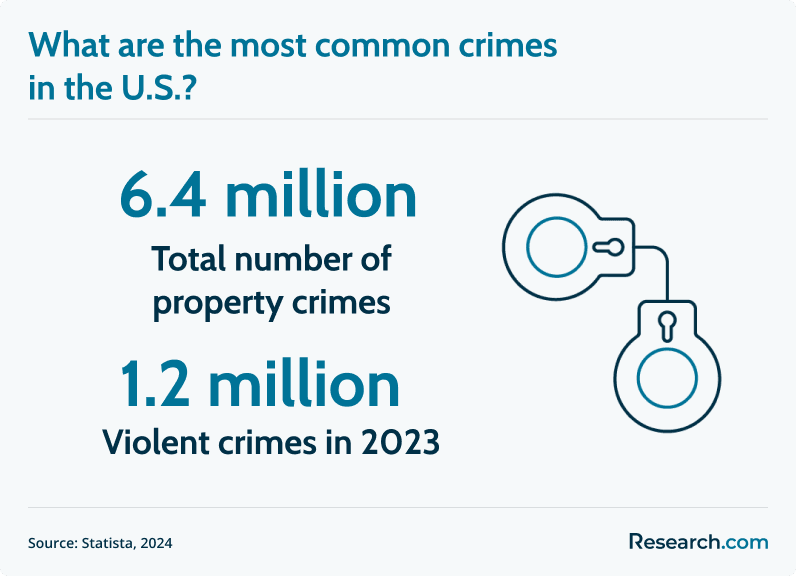
The broader need for skilled evidence professionals is tied to the volume and complexity of criminal cases. In 2023, the U.S. recorded 6,419,149 property crimes and 1,218,467 violent crimes (Statista, 2024). CSIs are not responsible for solving all crimes on their own, but their work helps ensure that evidence is collected accurately and can support investigations when physical evidence is available.
| Path | Best For | Typical Advantage | Important Caution |
| Associate degree plus training | Entry-level technician candidates in agencies that accept two-year credentials | Lower time and cost commitment | May limit access to forensic lab or advanced analyst roles |
| Bachelor’s degree in forensic science or related field | Students seeking stronger eligibility for forensic science technician or criminalist roles | Broader scientific and investigative preparation | Program quality and lab experience matter as much as the degree title |
| Sworn law enforcement route | Candidates interested in policing plus crime scene work | Can lead to internal CSI assignments in some departments | Requires meeting police officer hiring and academy standards |
| Career change from science, lab, or investigation | Adults with biology, chemistry, legal, military, or investigative experience | Transferable technical and documentation skills | May still require forensic-specific training and agency experience |
Where do crime scene investigators work?
Crime scene investigators work wherever evidence must be identified, documented, collected, analyzed, or explained. Some roles are field-based, some are laboratory-based, and others combine scene response with office reporting and court preparation.
- Law enforcement agencies: Local, state, and federal agencies employ CSIs to respond to scenes, document evidence, and coordinate with detectives and forensic laboratories. Advanced investigative positions may favor applicants with a forensic science degree or related science background.
- Forensic laboratories: Lab-based professionals examine submitted evidence using scientific methods. This setting may appeal to candidates who prefer analysis, testing, and technical specialization over frequent field response.
- Private investigation and consulting firms: Some CSIs support criminal defense, insurance investigations, civil litigation, independent scene reconstruction, or expert testimony.
- Educational institutions: Experienced professionals may teach crime scene processing, evidence handling, forensic photography, or criminal justice courses. These roles often require substantial field experience and may require graduate education.
- Architectural, engineering, and related services: Some forensic professionals help analyze fires, structural failures, mechanical breakdowns, workplace incidents, or materials evidence in legal and insurance matters.
The U.S. Bureau of Labor Statistics reported that local and state government agencies employed approximately 15,380 forensic science technicians, including CSIs, in 2023. Many of these roles are full-time, and field-based investigators may be on call for nights, weekends, holidays, or emergency response.
Before choosing this career, ask whether you are comfortable with unpredictable schedules, physically demanding scene work, protective equipment, detailed paperwork, and the possibility of being called out during nonstandard hours.
This chart shows the largest shares of employers of forensic science technicians in the U.S.
What kind of training do crime scene investigators need?
A degree can introduce criminal law, forensic procedures, biology, chemistry, evidence rules, and investigative methods, but CSI competence is developed through practice. Students often begin with a criminal justice, forensic science, or science-based program; some look for accessible options such as the easiest criminal justice degree while planning for additional field training.
The most useful training usually includes:
- Crime scene processing programs: These courses teach scene safety, photography, sketching, note-taking, evidence recognition, packaging, fingerprint lifting, and chain-of-custody procedures. Mock scenes are especially valuable because they force students to practice under realistic conditions.
- Internships and supervised field experience: Internships with police departments, forensic labs, medical examiner offices, or investigative units help students understand case flow, evidence submission, reporting standards, and agency expectations.
- Specialized workshops: Training from organizations such as the International Association for Identification and local police academies can cover forensic photography, bloodstain pattern analysis, latent print development, footwear impressions, and other technical skills.
- Agency field training: New hires often train under experienced investigators before handling scenes independently. This period is critical because it teaches local procedures, documentation expectations, safety protocols, and courtroom readiness.
| Training Area | What You Learn | Why Employers Value It |
| Evidence collection | How to identify, package, label, and preserve physical materials | Reduces contamination and supports admissibility |
| Forensic photography | How to capture accurate images of scenes and evidence | Creates a clear visual record for investigators and courts |
| Latent print processing | How to locate, lift, and document fingerprints | Supports suspect identification and case development |
| Report writing | How to document findings in precise, defensible language | Improves communication with detectives, attorneys, and courts |
| Court testimony preparation | How to explain methods and evidence handling clearly | Helps investigators withstand legal questioning |
What are the best CSI certifications to advance your career?
Certification can help experienced crime scene investigators show that their skills meet recognized professional standards. It is not a substitute for education or field experience, but it can strengthen applications for specialized assignments, leadership roles, courtroom credibility, and advancement.
Important CSI-related certifications include:
- Certified Crime Scene Investigator (CCSI): Offered by the International Association for Identification, this entry-level professional credential is designed for candidates with at least one year of crime scene experience.
- Certified Crime Scene Analyst (CCSA): Also offered by the International Association for Identification, this credential is intended for professionals with several years of experience and stronger command of advanced investigative methods.
- Senior Crime Scene Analyst (SCSA): This advanced credential recognizes experienced CSIs who meet rigorous education and professional experience expectations.
- Specialized forensic certifications: The International Association for Identification also offers credentials in areas such as footwear examination, bloodstain pattern analysis, forensic photography and imaging, fingerprinting, and forensic video.
Specialized credentials are especially useful if you want to focus on a technical discipline. For example, professionals interested in violent crime reconstruction may explore the blood spatter analyst job outlook and the training required for bloodstain pattern interpretation.
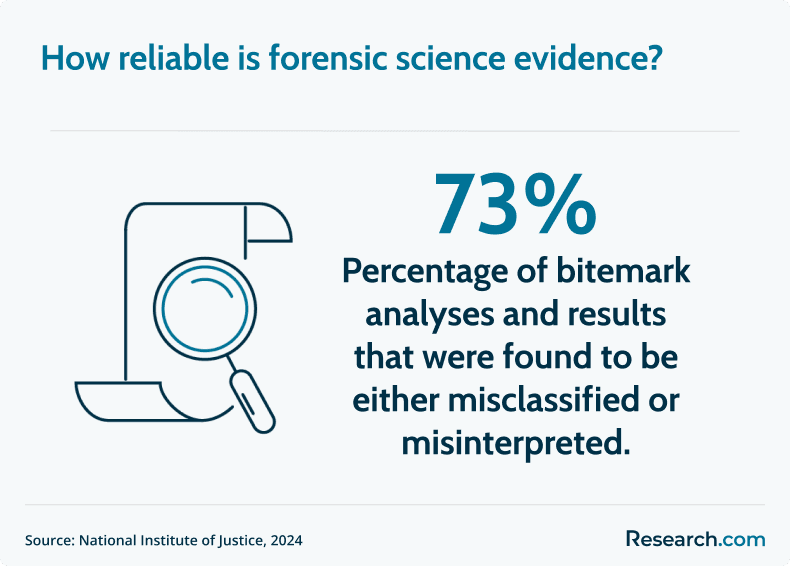
Certification and continuing training also matter because forensic errors can have serious legal consequences. A 2024 National Institute of Justice study found that forensic medicine evidence in pediatric physical abuse cases contained at least one laboratory error in 83% of cases, and 73% of bitemark analyses and results were either classified or interpreted incorrectly.
Those findings do not mean every forensic discipline is unreliable. They do show why CSIs need rigorous training, careful documentation, and a willingness to follow validated methods rather than assumptions.
| Certification Type | When It Makes Sense | Career Value |
| General crime scene certification | After gaining documented field experience | Shows broad competency in scene processing |
| Photography or imaging certification | If your role involves extensive scene documentation | Supports clearer visual evidence and courtroom presentation |
| Fingerprint or latent print certification | If you want to specialize in identification evidence | Can lead to more technical forensic assignments |
| Bloodstain pattern certification | If you work with violent crime scenes | Supports reconstruction-focused investigative work |
What are the top skills for crime scene investigators?
Crime scene investigators need more than curiosity and an interest in criminal justice. The job rewards people who can slow down, follow procedure, notice small details, and communicate clearly under pressure.
- Attention to detail: CSIs must notice evidence that others may overlook and document it accurately before the scene changes.
- Analytical thinking: Investigators must connect physical evidence with possible timelines, locations, movements, and investigative theories without jumping to unsupported conclusions.
- Problem-solving ability: Scenes are rarely ideal. CSIs may need to adapt collection methods because of weather, hazards, limited access, fragile evidence, or scene contamination risks.
- Mathematical reasoning: Measurements, trajectories, patterns, distances, and scale documentation often require basic quantitative accuracy.
- Technology skills: Modern investigations may involve digital imaging, crime mapping, evidence management systems, forensic software, and data-based tools.
- Writing and communication: Reports must be clear, factual, and defensible. CSIs also need to explain their work to detectives, lab personnel, prosecutors, defense attorneys, judges, and juries.
- Composure: The role can involve disturbing scenes, grieving families, high-pressure deadlines, and courtroom scrutiny.
CSI is also one example of what jobs can you get with a degree in criminal justice administration, especially for students who want a role tied directly to investigations rather than policy or administration alone.
What is the average salary of a crime scene investigator?
Crime scene investigator pay depends on job title, agency budget, region, union or civil service classification, education, certifications, shift expectations, and years of experience. According to PayScale, CSIs usually earn $55,470, while senior professionals may earn up to $89,114.
The BLS reports that forensic science technicians, a category that may include CSIs, earn a median annual wage of approximately $63,740. Entry-level positions typically pay around $48,000 per year, while experienced professionals in specialized roles or high-demand areas can earn over $100,000 annually.
Pay can be higher in federal agencies, large metropolitan departments, and specialized forensic units. Candidates with strong science backgrounds may also compete for roles in DNA analysis, toxicology, environmental forensics, or genetics-related forensic work. Those options may overlap with some higher-paying career paths for biology majors, although CSI salaries are never guaranteed.
| Salary Source or Role | Pay Figure Stated | How to Interpret It |
| PayScale crime scene investigator estimate | $55,470 | A general CSI salary estimate that may reflect civilian and agency-specific titles |
| PayScale senior professional estimate | Up to $89,114 | Represents higher-earning experienced professionals |
| BLS forensic science technician median | Approximately $63,740 | A broader occupational category that can include CSI-related roles |
| Entry-level positions | Around $48,000 per year | More likely for new hires or lower-budget jurisdictions |
| Experienced specialized roles | Over $100,000 annually | More likely in specialized, senior, federal, or high-demand settings |
How can continuing education boost your crime scene investigation career?
Continuing education helps CSIs stay current with evidence standards, legal expectations, forensic technology, and specialized methods. It can also make a candidate more competitive for promotion, specialty units, training roles, or supervisory positions.
Good continuing education options include agency-approved workshops, certification preparation courses, forensic photography training, latent print courses, bloodstain pattern training, report-writing seminars, and degree completion programs. For working adults who need flexibility, an accredited option such as a cheap online criminal justice degree may help strengthen academic credentials while allowing continued employment.
What legal and ethical standards govern crime scene investigations?
Crime scene investigation is governed by legal rules, agency policy, scientific standards, and ethical duties. CSIs must respect constitutional protections, follow search and seizure requirements, avoid contamination, document evidence honestly, and maintain chain of custody. Their job is not to prove a preferred theory; it is to preserve and report evidence accurately.
Ethical mistakes can damage a case and a career. A CSI should never exaggerate findings, ignore contradictory evidence, alter documentation, mishandle evidence, or present conclusions beyond their expertise. Professionals who want to understand the broader legal and career context may also compare CSI work with other roles covered in guides to criminal justice degree salary outcomes.
Can advanced degrees truly elevate a CSI career?
An advanced degree is not required for every CSI job, but it can help professionals move into leadership, research, teaching, forensic management, consulting, or specialized analytical roles. A master’s degree or graduate certificate may be most useful when it builds expertise in forensic science, criminal justice leadership, legal studies, data analysis, laboratory management, or a technical forensic specialty.
Graduate study makes the most sense if it aligns with a clear goal. For example, a CSI who wants to supervise a unit may benefit from leadership and administration coursework, while someone preparing for court-heavy expert work may value legal procedure and evidence-focused study. Flexible options such as legal studies online programs may be relevant for investigators who want stronger legal literacy without leaving the workforce.
How can interdisciplinary certifications enhance your CSI career?
Interdisciplinary credentials can strengthen a CSI’s ability to work with attorneys, investigators, analysts, and courts. Legal training, for example, can improve understanding of evidence rules, discovery, courtroom procedure, and documentation expectations. This does not replace forensic certification, but it can make an investigator more effective when preparing reports or testimony.
A program such as the cheapest paralegal certificate may be useful for CSIs who regularly interact with prosecutors, defense attorneys, or legal teams. The best choice depends on whether the credential fills a real skill gap rather than simply adding another line to a resume.
What role does interdisciplinary legal training play in advancing CSI careers?
Legal training can help CSIs understand how their work is challenged in court. Investigators who know how evidence is reviewed, questioned, and admitted are often better prepared to document their procedures and explain technical findings clearly.
For working professionals, accelerated online paralegal certification programs may provide targeted exposure to legal terminology, case preparation, and evidence-related processes. This type of training is most valuable when paired with forensic experience, not used as a replacement for science-based CSI preparation.
What emerging technologies are enhancing forensic investigations?
Technology is changing how CSIs document scenes, manage evidence, and interpret complex data. Digital imaging, 3D scene reconstruction, biometric technologies, enhanced analytics, and AI-driven pattern recognition are becoming increasingly important in forensic workflows.
These tools can improve speed and consistency, but they also create new responsibilities. CSIs must understand tool limitations, validation requirements, data security, and how to explain technology-assisted work in court. Professionals interested in federal investigations or related enforcement careers may also compare CSI preparation with DEA qualifications.
| Technology Trend | How It Supports CSI Work | Skill CSIs Need |
| Digital imaging | Improves visual documentation of scenes and evidence | Photography technique, file management, and accuracy |
| 3D scene reconstruction | Helps recreate spatial relationships and scene layouts | Measurement, mapping, and interpretation skills |
| Biometric tools | Support identification and comparison work | Understanding of reliability, limitations, and documentation |
| AI-driven pattern recognition | Can help review complex data or evidence patterns | Ability to verify outputs and avoid overreliance |
What are the career pathways for a crime scene investigator?
Crime scene investigation can lead to multiple forensic, investigative, and technical specialties. Some professionals remain field CSIs for their entire careers, while others move into lab analysis, digital evidence, photography, supervision, or broader investigative work.
These related pathways include pay estimates from the BLS, PayScale, and ZipRecruiter:
- Forensic Science Technician ($71,540): Collects, examines, and interprets physical evidence, often in laboratory settings involving DNA, fingerprints, trace materials, and other forensic submissions.
- Forensic Photographer ($42,345): Documents scenes, injuries, objects, and evidence through accurate photography used in investigations and court proceedings.
- Bloodstain Pattern Analyst ($65,589): Studies blood patterns to help reconstruct events in violent crime investigations.
- Digital Forensic Analyst ($70,429): Recovers and examines evidence from computers, mobile devices, networks, and digital systems.
- Forensic Accountant ($79,288): Investigates financial crimes such as fraud, embezzlement, and money laundering. Students interested in this route may consider a forensic accounting degree online.
- Fingerprint Analyst ($63,187): Processes, compares, and documents fingerprint evidence for identification and investigative use.
- Forensic Toxicologist ($75,463): Tests biological samples for drugs, alcohol, poisons, and toxins, often in cases involving deaths, impaired driving, or suspected poisoning.
- Criminal Investigator ($95,930): Handles broader investigative duties, including case development, witness interviews, evidence coordination, and collaboration with law enforcement teams.
This chart reveals the average salaries of crime scene investigators and similar careers.
What is the job outlook for crime scene investigators?
The job outlook for crime scene investigators is tied to law enforcement staffing, forensic laboratory capacity, crime trends, retirement and turnover, and demand for reliable physical and digital evidence. CSI work is one of several jobs you can get with a law enforcement degree, especially for students who want evidence-focused investigative work.
The BLS projects a 14% increase in forensic science technician jobs from 2023 to 2033, which is much faster than the average for all occupations. This translates to around 64,940 annual openings throughout the decade.
Many opportunities are expected to come from workers leaving the field, while technological change may also increase the need for people trained in advanced forensic tools, digital evidence, DNA-related processes, and specialized documentation methods. Candidates with certifications, strong science preparation, and practical experience are likely to be more competitive.
This chart reveals the growth projections of employment for forensic science and other professionals in the U.S.
How do crime scene investigators manage work-related stress?
CSI work can be emotionally and physically demanding. Investigators may encounter violent deaths, injured victims, grieving families, hazardous environments, long shifts, and pressure to avoid mistakes. Stress management is not optional; it is part of staying effective and ethical in the role.
Common strategies include structured debriefings, peer support, counseling, resilience training, strong sleep routines, clear boundaries during off-duty time, and access to employee assistance programs. Some professionals also find that broader legal education, such as training through the best online paralegal certificate programs, helps them understand case pressure and courtroom demands more clearly, although mental health support should come from qualified resources.
What are the biggest challenges crime scene investigators face?
Crime scene investigation is meaningful work, but it comes with real trade-offs. Anyone asking, “How do I start a career in crime analysis?” may recognize some overlap: both fields require accuracy, resilience, and comfort working with difficult criminal information.
- Exposure to trauma: CSIs may process violent, fatal, or disturbing scenes. Long-term exposure can affect mental health without proper support.
- Hazardous environments: Scenes may involve biological materials, chemicals, weapons, fire damage, unstable structures, weather hazards, or unsafe locations.
- Evidence integrity pressure: A small mistake in packaging, labeling, documentation, or chain of custody can weaken or compromise evidence.
- Irregular hours: Crime scenes do not follow business schedules. On-call work, nights, weekends, and long shifts are common in many agencies.
- Technology demands: CSIs must keep up with changing forensic tools, digital evidence procedures, and evolving legal expectations.
- Courtroom scrutiny: Investigators may need to defend their methods, notes, and conclusions under questioning from attorneys.
Common mistakes to avoid when preparing for a CSI career
| Mistake | Why It Can Hurt You | Better Approach |
| Choosing a program only because it has “forensic” in the title | The curriculum may not include strong science, lab work, or practical CSI training | Review courses, faculty expertise, labs, internships, and graduate outcomes |
| Ignoring agency-specific requirements | Your degree may not match the jobs in your target city, county, or state | Read actual job postings before enrolling |
| Assuming certification replaces experience | Many respected certifications require documented field experience | Build supervised experience first, then pursue credentials strategically |
| Underestimating report writing | Poor documentation can damage otherwise strong evidence work | Practice concise, factual, court-ready writing |
| Focusing only on salary | Higher pay may come with more stress, callouts, hazards, or courtroom responsibility | Compare schedule, safety, advancement, benefits, and job duties |
| Relying on television portrayals | Real CSI work is slower, more procedural, and more documentation-heavy | Shadow professionals, complete internships, and speak with agency recruiters |
Questions to ask before choosing a CSI program or career path
- Do local employers require a bachelor’s degree, associate degree, police academy training, or a specific science background?
- Does the program include hands-on crime scene processing, forensic photography, evidence handling, and report writing?
- Are internships, field placements, or partnerships with law enforcement agencies available?
- Will the degree support both CSI roles and related options such as forensic science technician, digital forensics, fingerprint analysis, or laboratory work?
- Does the program prepare students for certification requirements after they gain experience?
- Can you handle on-call work, trauma exposure, hazardous scenes, and courtroom testimony?
- What are the total costs, including tuition, fees, books, commuting, equipment, and lost work time?
Key Insights
- Crime scene investigation is evidence-focused work that requires accuracy, patience, documentation skill, and respect for legal procedure.
- Many CSI-related roles favor a bachelor’s degree in forensic science, criminology, criminal justice, biology, or another relevant field, although some technician roles may accept lower credentials plus training.
- Hands-on preparation is essential. Internships, mock scenes, field training, and agency-supervised practice often matter as much as classroom learning.
- Certification can improve credibility and advancement potential, especially after you have documented crime scene experience.
- Salary varies widely. PayScale reports CSIs usually earn $55,470, while senior professionals may earn up to $89,114; BLS data for forensic science technicians provides another comparison point.
- The BLS projects 14% growth for forensic science technician jobs from 2023 to 2033, with around 64,940 annual openings throughout the decade.
- The best candidates prepare for the less visible parts of the job: report writing, chain of custody, courtroom questioning, irregular hours, stress management, and continuous learning.
References:
- PayScale. (2025a, January 24). Average Crime Scene Investigator (CSI) Salary. Retrieved March 14, 2025, from https://www.payscale.com/research/US/Job=Crime_Scene_Investigator_(CSI)/Salary
- PayScale. (2025b, May 8). Average Senior Crime Analyst Salary. Retrieved March 14, 2025, from https://www.payscale.com/research/US/Job=Senior_Crime_Analyst/Salary
- Statista. (2024, September). Number of committed crimes in the United States in 2023, by type of crime. https://www.statista.com/statistics/202714/number-of-committed-crimes-in-the-us-by-type-of-crime
- U.S. Bureau of Labor Statistics. (2024a, April 3). Occupational Employment and Wages, May 2023: Forensic Science Technicians. Occupational Employment and Wage Statistics. https://www.bls.gov/ooh/field-of-degree/business/business-field-of-degree.htm
- U.S. Bureau of Labor Statistics. (2024b, August 29). Occupational projections, 2023–33, and worker characteristics, 2023 (Numbers in thousands). Employment Projections. https://www.bls.gov/emp/tables/occupational-projections-and-characteristics.htm
- ZipRecruiter. (2025, March 10). Fingerprint Analyst Salary. Retrieved March 14, 2025, from https://www.ziprecruiter.com/Salaries/Fingerprint-Analyst-Salary#Yearly
Other Things You Should Know About Becoming a Crime Scene Investigator
Yes. Most agencies prefer a bachelor’s degree in forensic science, criminal justice, biology, or chemistry. Many entry-level CSI jobs also require 1 to 2 years of related laboratory, law-enforcement, or evidence-collection experience before full assignment to crime scene work.
To become a crime scene investigator in 2026, you typically need a bachelor's degree in forensic science or a related field, along with on-the-job training. Some positions may require certifications or specialized courses in forensic analysis. Ensure you meet the legal and ethical standards for investigative work.