2027 What is Criminal Justice Administration? Salary & Career Paths

Co-Founder and Chief Data Scientist
Choosing a criminal justice administration career can be confusing because the field is broader than police work. Students, working adults, military veterans, and current justice professionals may all ask the same question: which role offers the right mix of purpose, stability, advancement, and realistic entry requirements?
Criminal justice administration focuses on how justice organizations are led, funded, staffed, evaluated, and improved. It includes law enforcement leadership, court operations, corrections management, policy analysis, community programs, and federal agency work. This guide explains what the field involves, what jobs may be available, how pay can differ by role and location, what education is typically useful, and how to decide whether this path fits your goals.
Quick Answer: Is Criminal Justice Administration a Good Career Path?
Criminal justice administration can be a strong career direction for people who want to work in public safety, justice operations, policy, corrections, courts, or agency leadership. It is usually best for candidates who are comfortable with rules, ethical decision-making, public accountability, documentation, conflict, and pressure. A degree is not the only route into the field, but a criminal justice, criminology, public administration, or related degree can make it easier to qualify for supervisory, analytical, and management roles.
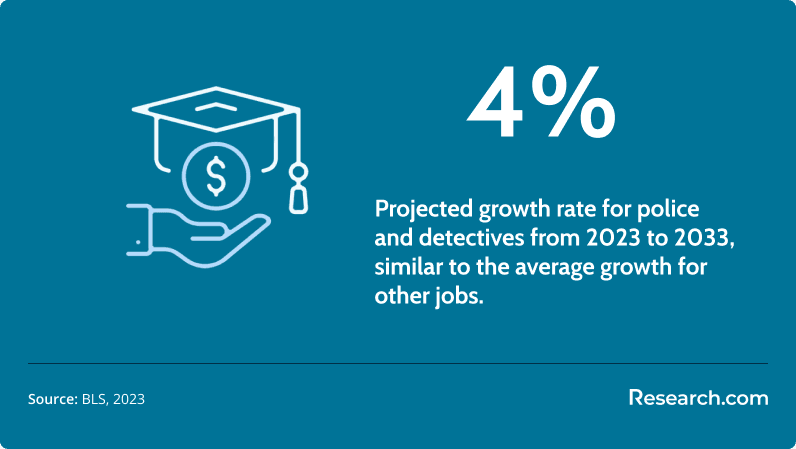
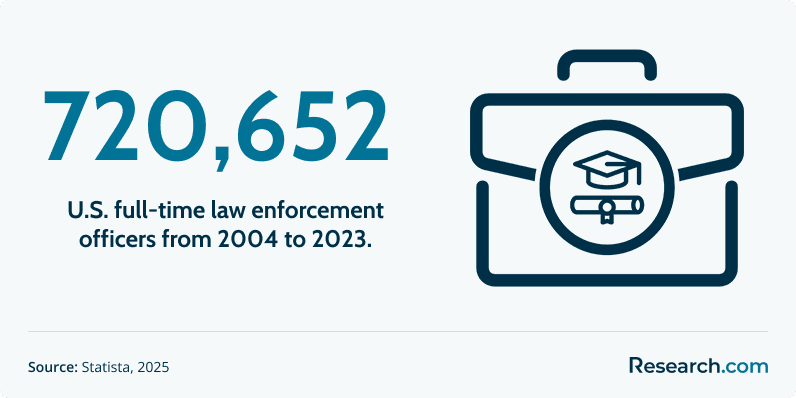
The field has a large employment base: there are 720,652 full-time law enforcement officers in the U.S. Pay varies sharply by employer, region, rank, overtime policies, and whether the role is local, state, federal, or administrative. Police and detective jobs are projected to grow by 4%, which is in line with the average for all occupations.
Key Things You Should Know About Criminal Justice Administration
- The field is larger than patrol and investigation. Criminal justice administration includes management of law enforcement agencies, correctional systems, court operations, public safety programs, compliance processes, budgets, and policy implementation.
- Compensation depends heavily on role and jurisdiction. Senior leaders in large agencies may earn very high salaries. For example, police chiefs in major cities can earn upwards of $450,000, while the Commodity Futures Trading Commission (CFTC) has reported a median salary of nearly $248,000.
- A degree can broaden your options. Graduates may pursue work in law enforcement, corrections, courts, public administration, federal agencies, and policy-oriented roles. The market is generally steady, though turnover and hiring needs vary by region and agency type.
- Advancement usually requires both education and experience. Leadership positions often favor candidates who combine field knowledge, supervisory experience, advanced education such as a Master of Criminal Justice, and leadership development opportunities such as the John B. Pickett Fellowship.
- The work involves serious ethical and operational challenges. Administrators may deal with public trust concerns, budget pressure, case delays, staffing shortages, pre-trial detention issues, and the responsible use of technology.
- What criminal justice administration means
- Criminal justice administration salary expectations for 2027
- Jobs you can pursue with a criminal justice administration degree
- How to begin a criminal justice administration career
- How advancement works in criminal justice administration
- Skills and qualifications that matter most
- How online education may support advancement
- How graduate education can strengthen leadership opportunities
- When vocational training can help
- Major challenges facing justice administrators
- Certifications that may support career growth
- How accelerated master’s programs may shorten the education timeline
- How administrators influence community relations
- Trends shaping the future of criminal justice administration
- How to decide if this career fits you
- How to find affordable education options
What is criminal justice administration?
Criminal justice administration is the leadership and operational side of the justice system. Instead of focusing only on patrol, investigation, or direct supervision of offenders, this field looks at how police departments, courts, correctional agencies, public safety offices, and related organizations are managed.
Administrators may oversee staffing, budgets, training, compliance, policies, technology systems, community programs, case processing, facility operations, and performance goals. They may also evaluate whether procedures are fair, efficient, legal, and aligned with public expectations.
This work often overlaps with law enforcement, criminology, public administration, emergency management, homeland security, social services, and the legal system. Many professionals first build experience through criminology degree jobs, corrections, policing, court services, investigations, or legal support before moving into supervisory or administrative roles.
| Area of Criminal Justice Administration | What Administrators Typically Handle | Example Roles |
| Law enforcement management | Department policies, staffing, operations, community priorities, internal accountability, and public safety strategy | Police chief, command staff, agency administrator |
| Court administration | Case flow, scheduling, records, courtroom staffing, technology systems, and procedural efficiency | Court administrator, court operations manager |
| Corrections administration | Facility management, rehabilitation programs, security procedures, staffing, and population management | Correctional facility director, corrections manager |
| Policy and public administration | Program evaluation, budgeting, compliance, public safety planning, and justice reform initiatives | Policy analyst, public safety administrator |
| Federal agency work | Regulatory enforcement, investigations support, national security-related operations, and specialized policy implementation | Federal law enforcement administrator, agency analyst |
Real examples show the scope of the field. A police chief may set department policy and manage public accountability. A court administrator may improve case processing and reduce delays. A corrections leader may coordinate prison operations and rehabilitation programs. With 720,652 full-time law enforcement officers in the U.S., administrative leadership plays an important role in maintaining consistency, training, resource use, and public trust across large systems.
How much do criminal justice administration jobs pay for 2027?
Pay in criminal justice administration is not uniform. A front-line role, a local supervisory position, a large-city executive job, and a specialized federal agency position can have very different compensation structures. Salary may also be affected by overtime, union contracts, cost of living, agency budgets, pensions, hazard pay, and seniority rules.
Some senior law enforcement executives earn substantial salaries. Jim McDonnell, the newly appointed Los Angeles Police Chief, has a base pay of $450,000. In Fairfield, Connecticut, police officers’ total earnings have been significantly increased by overtime and extra-duty assignments. Federal employment can also be competitive; the Commodity Futures Trading Commission (CFTC) reported a median salary of nearly $248,000, reflecting the need to compete for specialized talent.
For readers considering court-based work, the bailiff career path may be a practical way to enter the justice system, learn courtroom operations, and build experience that can support later advancement.
| Pay Factor | Why It Matters | What to Check Before Choosing a Role |
| Employer type | Local, state, federal, and court employers use different pay scales and promotion systems. | Review public salary schedules, civil service rules, and benefits documents. |
| Location | Large cities and high-cost regions may pay more, but expenses may also be higher. | Compare salary with housing, commuting, taxes, and pension rules. |
| Rank or responsibility level | Supervisory and executive positions usually require experience and may involve greater public accountability. | Ask what experience, exams, degrees, or certifications are required for promotion. |
| Overtime and extra-duty work | Total earnings may exceed base salary in some agencies. | Do not assume overtime is guaranteed; check agency policies and workload patterns. |
| Benefits and retirement | Public sector roles often include health insurance and retirement plans that can significantly affect total compensation. | Compare pension vesting, retirement age, health coverage, and leave benefits. |
Benefits can be a major part of the total compensation package. Federal law enforcement officers, for example, often receive broad benefits that may include health insurance and retirement plans. When comparing offers, look at base pay, overtime expectations, retirement value, healthcare costs, promotion potential, and long-term job demands.
What jobs can you get with a criminal justice administration degree?
A criminal justice administration degree can lead to several career directions, but the right option depends on your interests, physical requirements, tolerance for shift work, willingness to work under public scrutiny, and long-term leadership goals.
- Law enforcement: Graduates may begin as police officers, deputies, detectives, or agency staff and later move into supervisory or command roles. Some of the highest paying criminology jobs are found in leadership, federal law enforcement, and specialized public safety positions.
- Corrections: Options may include probation and parole work, correctional treatment, facility management, reentry programs, and rehabilitation-focused administration.
- Court operations: Court administrators and related staff help keep legal proceedings organized, timely, documented, and compliant with required procedures.
- Federal agencies: Graduates may pursue administrative, enforcement, analysis, security, or policy-related roles depending on agency requirements.
- Public sector administration: State, local, and federal agencies may hire graduates for program coordination, public safety planning, compliance, and justice policy implementation.
| Career Direction | Best Fit For | Common Entry Points | Possible Advancement |
| Law enforcement leadership | People who want operational responsibility, field experience, and public safety leadership | Police officer, deputy, investigator, agency staff | Sergeant, lieutenant, captain, police chief |
| Corrections administration | People interested in facility operations, supervision, rehabilitation, and reentry | Correctional officer, probation officer, treatment specialist | Program manager, warden, correctional facility director |
| Court administration | People who are detail-oriented and interested in legal procedure, records, and case processing | Court clerk, bailiff, legal support staff | Court supervisor, court operations manager, court administrator |
| Policy and analysis | People who prefer research, program evaluation, budgeting, and reform work | Program assistant, analyst, agency coordinator | Policy analyst, public safety manager, agency administrator |
| Federal agency work | People interested in national-level enforcement, regulation, security, or specialized investigations support | Agency assistant, analyst, officer, investigator | Senior analyst, supervisor, federal agency administrator |
The job market for criminal justice professionals remains steady overall, but hiring conditions are not the same everywhere. Local budgets, retirements, public safety priorities, union agreements, and agency morale can all affect openings and turnover. Police and detective jobs are projected to grow by 4%, which means candidates should still compare regions and agencies carefully rather than assuming all markets offer the same opportunity.
How to Start a Career in Criminal Justice Administration
The best starting point depends on whether you are a high school student, current college student, military veteran, working adult, or justice professional seeking promotion. The steps below can help you build a realistic path.
- Choose an education level that matches your goal. Many administrative pathways begin with a bachelor’s degree in criminal justice, criminology, public administration, homeland security, psychology, sociology, or a related field. Working adults often compare the easiest criminal justice degree online options because flexible programs can make it easier to study while employed. Senior roles may prefer or require a graduate degree, such as a Master of Criminal Justice.
- Build practical experience early. Internships, field placements, ride-alongs, court observation, public defender office exposure, corrections internships, and community justice programs can help you understand the work before committing to a long-term path.
- Use fellowships and structured programs when available. Programs such as Partners for Justice can place early-career professionals in public defender offices, giving them direct exposure to justice processes and client-centered legal support.
- Attend career events and agency open houses. Criminal justice programs and open houses can help you meet practitioners, ask about hiring standards, and understand what employers actually value.
- Volunteer in relevant settings. Legal aid groups, youth programs, victim services organizations, reentry programs, and community justice initiatives can help you build credibility and clarify your interests.
- Find mentors who understand advancement. Mentorship through opportunities such as the John B. Pickett Fellowship can support law enforcement practitioners who want advanced education and leadership preparation.
Questions to Ask Before Enrolling in a Criminal Justice Administration Program
- Is the school properly accredited?
- Does the curriculum include leadership, ethics, law, budgeting, policy, corrections, courts, and research methods?
- Are internships, field placements, or agency partnerships available?
- Will credits transfer if you later change schools or pursue a master’s degree?
- Does the program meet requirements for the roles or agencies you are targeting?
- What career support is available for working adults, veterans, and first-generation college students?
- What is the total cost after fees, books, technology charges, and lost work time?
What are the career advancement opportunities in criminal justice administration?
Advancement in criminal justice administration usually depends on a combination of experience, credibility, formal education, agency rules, exam performance, leadership ability, and professional reputation. The path is rarely instant. Many professionals spend several years learning front-line operations before taking on broader administrative responsibilities.
- Develop operational experience. Roles such as probation officer, correctional treatment specialist, law enforcement officer, court staff member, or program coordinator can help you understand how policies work in real settings.
- Earn credentials that support your target role. Advanced degrees can strengthen knowledge of policy, research, ethics, budgeting, and management. Professionals who want to limit debt often compare the cheapest criminal justice degree online options before enrolling.
- Pursue leadership training. Programs such as the John B. Pickett Fellowship can help prepare practitioners for higher-level responsibility and executive decision-making.
| Career Stage | Main Goal | Useful Actions | Potential Next Step |
| Entry level | Understand the system and build a record of reliability | Complete a relevant degree, seek internships, apply for agency roles, document performance | Officer, court staff, corrections staff, program assistant |
| Early career | Gain specialized experience and professional credibility | Take on projects, complete training, learn reporting systems, seek mentorship | Senior officer, specialist, analyst, team lead |
| Midcareer | Move into supervision, program management, or policy work | Earn certifications, consider graduate study, develop budgeting and personnel skills | Supervisor, program manager, lieutenant, operations manager |
| Senior level | Lead agencies, divisions, facilities, or major initiatives | Build executive leadership skills, manage public accountability, oversee budgets and reforms | Police chief, correctional facility director, federal agency administrator |
Common leadership destinations include police chief, correctional facility director, and federal agency administrator. Promotion timelines vary by agency policy, civil service rules, openings, individual performance, and education requirements. Continuous professional development, ethical conduct, and strong communication with stakeholders can make a major difference.
What skills and qualifications are essential to excel in criminal justice administration?
Strong criminal justice administrators combine technical knowledge with judgment, communication, and discipline. They need to understand law, policy, budgeting, personnel management, records, compliance, public accountability, and the ethical limits of government power. They also need to manage conflict, explain decisions clearly, and use data without losing sight of civil rights and community impact.
Useful qualifications may include an accredited degree, internships, agency training, supervisory experience, research and writing ability, and role-specific certifications. Courses in policy analysis, criminal law, ethics, public administration, statistics, technology systems, and organizational leadership are especially relevant. Students exploring broader career outcomes can review What can I do with a criminal justice degree? for related options.
| Skill Area | Why It Matters | How to Build It |
| Ethical judgment | Administrators make decisions that affect rights, safety, fairness, and public trust. | Study ethics, due process, civil rights, and accountability practices. |
| Leadership | Supervisors must guide teams through pressure, change, emergencies, and scrutiny. | Seek mentorship, lead projects, complete management training, and request feedback. |
| Communication | Reports, testimony, policies, public meetings, and interagency coordination require clarity. | Practice professional writing, briefing, conflict resolution, and public speaking. |
| Data and technology literacy | Agencies increasingly rely on case management systems, analytics, and digital evidence tools. | Take courses in research methods, information systems, cybersecurity basics, and analytics. |
| Budget and resource management | Administrative roles often involve staffing, grants, equipment, overtime, and program costs. | Study public budgeting, procurement, grant writing, and performance measurement. |
How can online education boost career advancement in criminal justice administration?
Online education can be useful for working adults, shift workers, military learners, parents, and current justice professionals who cannot attend a campus program regularly. A well-designed online criminal justice administration program can cover leadership, policy, ethics, corrections, courts, law enforcement management, research, budgeting, and technology while allowing students to continue working.
Flexibility should not be the only factor. Students should verify accreditation, faculty experience, transfer policies, internship options, advising quality, and whether online courses are accepted for their intended career path. Learners balancing employment and school may also compare the best online colleges for working adults to find programs built around nontraditional schedules.
How can advanced education elevate success in criminal justice administration?
Graduate education can help professionals move beyond front-line knowledge into strategy, policy design, organizational leadership, research evaluation, fiscal management, and reform planning. A master’s program may be especially useful for candidates pursuing agency leadership, policy analysis, higher-level corrections management, emergency management, or administrative roles that require advanced decision-making.
However, a graduate degree is not automatically worth the cost for every student. Before enrolling, compare tuition, employer tuition assistance, promotion requirements, salary potential, and whether your target agency values the credential. Professionals weighing the broader value of graduate study can also review the highest paying master's degrees to understand how advanced education compares across fields.
Can vocational training enhance leadership prospects in criminal justice administration?
Vocational and technical training can strengthen a criminal justice career when it adds practical expertise that agencies need. Training in forensic technology, security systems, emergency response, records systems, cyber tools, logistics, or facility operations may complement a degree or help a professional move into a specialized unit.
This route can make sense for students who want hands-on preparation, lower-cost credentials, or a faster way to enter a related field before completing a degree. It may not replace a bachelor’s or master’s degree for many administrative roles, but it can add operational credibility. Readers comparing non-degree career routes can review the trade school careers list.
What are the biggest challenges in criminal justice administration?
Criminal justice administration is important because the system must protect public safety while also respecting rights, using public funds responsibly, and maintaining trust. These goals can conflict, especially when agencies face staffing shortages, public criticism, limited budgets, high caseloads, or new technology risks.
- Ethical pressure: Administrators must support fair treatment, impartial procedures, transparency, and timely justice. In Tasmania, defendants had to make an average of 16.7 court appearances before resolution, raising concerns about delay and fairness.
- Budget limitations: Funding problems can affect staffing, training, technology, facility conditions, and case processing. In New York City, shortages of judges and court officers have contributed to major case backlogs, delaying trials and affecting due process.
- Technology implementation: New tools can improve data access and case management, but they require training, oversight, privacy safeguards, and careful rollout. Tasmania’s Justice Connect case management system is intended to improve efficiency, but successful implementation depends on planning and user adoption.
- Public trust and political pressure: Community confidence affects policy support and agency legitimacy. In San Francisco, changes in prosecution priorities under different district attorneys have fueled public debate over reform and enforcement.
- Need for procedural reform: Case backlogs, pre-trial detention practices, and trial delays can create pressure on defendants and weaken confidence in the system. New York City’s pre-trial detention and trial delay concerns show why process improvement is central to administrative work.
These issues also show why specialized justice careers require strong screening and clear standards. For example, understanding CIA officer job requirements can help readers see how integrity, analytical judgment, confidentiality, and legal compliance shape sensitive public service roles.
Common Mistakes to Avoid
- Choosing a school without checking accreditation. Accreditation can affect transfer credits, graduate admission, employer recognition, and financial aid eligibility.
- Looking only at tuition. Fees, books, commuting, lost wages, technology charges, and time to completion can change the real cost.
- Assuming every criminal justice job has the same requirements. Police, corrections, court, federal, and policy roles may require different exams, background checks, physical standards, education levels, or experience.
- Ignoring the emotional demands of the field. Public safety work can involve stress, trauma exposure, conflict, and irregular hours.
- Relying only on rankings or advertisements. Program fit, local employer connections, internships, affordability, and support services often matter more than marketing claims.
- Assuming salary outcomes are guaranteed. Pay depends on employer, location, rank, overtime, budget conditions, and promotion rules.
What professional certifications can boost career advancement in criminal justice administration?
Certifications can help professionals demonstrate focused expertise in leadership, policy, investigations support, technology, corrections, security, compliance, or management. They are most useful when they align with a specific role or promotion path rather than serving as a general resume add-on.
Before paying for a certification, ask whether employers in your target area recognize it, whether it requires continuing education, and whether it builds skills not already covered by your degree. To compare credentials with broader labor-market value, review what are some certifications that pay well.
How can accelerated master's programs streamline career advancement in criminal justice administration?
Accelerated master’s programs can help experienced professionals complete graduate study more quickly, especially when they already know they need an advanced credential for leadership, policy, or administrative roles. These programs often require disciplined time management because courses may move quickly and assignments can be intensive.
Fast completion should not come at the expense of quality. Compare accreditation, curriculum depth, faculty experience, capstone or applied project options, total cost, and employer recognition. Professionals considering a shorter graduate timeline can explore one year masters programs online as one possible route.
What role does criminal justice administration play in community relations?
Criminal justice administrators influence how communities experience the justice system. Their decisions shape training, complaint procedures, outreach, diversion programs, rehabilitation efforts, data transparency, and how agencies respond to public concerns. People interested in the legal operations side may also consider paralegal certification programs, which can support work connected to case management and legal services.
Building Trust through Community Policing
Administrators can support community policing by setting expectations for respectful engagement, assigning resources to neighborhood concerns, and measuring whether programs actually improve safety and trust. In Southeast Texas, programs such as reVision SETX use mentoring and support for at-risk youth to help prevent juvenile crime and strengthen community connections.
Addressing Racial Bias
Administrators may implement training, review policies, improve data collection, and support restorative justice practices to reduce bias and increase fairness. These efforts require more than one-time instruction; agencies need ongoing evaluation, transparent processes, and community involvement.
Rehabilitation and Recidivism Reduction
Rehabilitation programs can help people reenter the community and reduce repeat offending. In Maryland, the Department of Juvenile Services launched reforms that emphasize community-based support and electronic monitoring for youth offenders.
Impact of Justice Reform Policies
Justice reform can change how schools, courts, and agencies respond to harm. In Connecticut, some schools are moving from traditional disciplinary measures toward restorative practices that focus on discussion, accountability, and repairing harm. This approach has reduced suspensions and improved staff-student relationships.
What future trends are shaping criminal justice administration?
Criminal justice administration is changing as agencies adopt new technology, respond to reform pressures, manage public trust concerns, and rethink how to prevent harm. Students preparing for the field should understand both operational tools and ethical limits. Choosing one of the best degrees for law enforcement, such as criminal justice, criminology, or homeland security, can help build a foundation for these changes.
- Artificial intelligence and automation: AI tools can help with data review, pattern recognition, and investigative support. VALCRI, for example, assists investigators in reviewing large databases. Administrators must ensure these tools are monitored for bias, accuracy, privacy, and appropriate human oversight.
- Big data and crime prevention: Predictive analytics may help agencies identify patterns and allocate resources, but they also raise concerns about transparency, civil liberties, and whether historical data reflects biased practices.
- New policy and legal expectations: AI regulation discussions increasingly focus on transparency and accountability, including whether people should be told when AI is used in important decisions.
- Technology and civil rights tension: Administrators must balance efficiency with due process, privacy, public trust, and the need for explainable decision-making.
- Community-based strategies: Agencies are increasingly expected to coordinate with schools, social services, public health organizations, and neighborhood groups rather than relying only on enforcement.
How to Prepare for These Trends
- Take coursework in data ethics, technology, public policy, and research methods.
- Learn how case management systems and digital evidence workflows operate.
- Study constitutional limits, privacy rules, and civil rights protections.
- Build communication skills for explaining technology and policy choices to the public.
- Seek internships or projects that involve program evaluation, community engagement, or justice technology.
Is a criminal justice administration career right for you?
This career path can be meaningful, but it is not a good fit for everyone. It works best for people who can handle accountability, conflict, documentation, rules, public scrutiny, and decisions that may affect safety, freedom, and community trust.
| You May Be a Good Fit If... | You May Want Another Path If... |
| You are comfortable making decisions under pressure. | You strongly prefer low-stress work with limited conflict. |
| You care about fairness, ethics, and public service. | You are not interested in rules, documentation, or accountability. |
| You can communicate with diverse groups, including staff, officials, and community members. | You dislike public-facing work or high-stakes communication. |
| You are willing to gain experience before moving into leadership. | You expect immediate management authority without field knowledge. |
| You can adapt to policy changes, emergencies, and evolving technology. | You want a role with little change or public pressure. |
- Personality fit: Effective administrators are often ethical, calm under pressure, organized, adaptable, and capable of leading teams through complex situations.
- Stress and schedule realities: Some jobs involve emergencies, shift work, public criticism, trauma exposure, or unpredictable hours. Other administrative roles may offer more regular schedules, but responsibility can still be high.
- Pros and cons: The field can offer purpose, public service, leadership potential, and multiple career pathways. It can also involve burnout risk, political pressure, difficult decisions, and exposure to traumatic events.
- Mental health considerations: Policing and related justice work can create cumulative stress. Reports of PTSD and inadequate support among former detectives show why mental health resources matter for both front-line and administrative professionals.
Many students pursue criminal justice degrees online because they need to balance school with work, family, military service, or current agency responsibilities. Before committing, compare your personal strengths, risk tolerance, long-term goals, and willingness to work within a highly accountable public system.
How can you access affordable education for criminal justice administration?
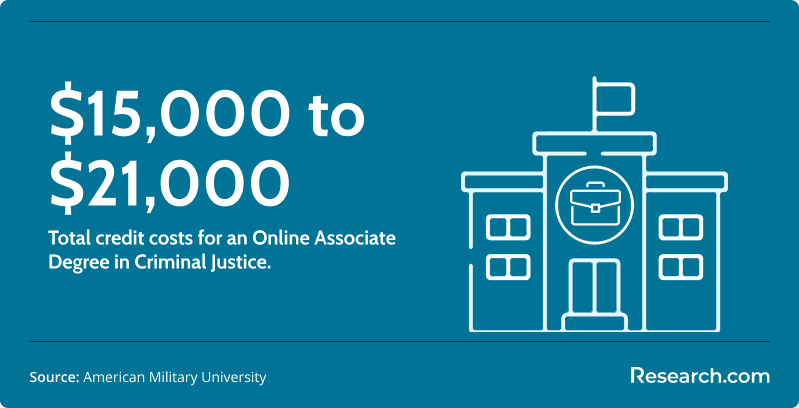
Affordable education starts with total-cost analysis, not just advertised tuition. Students should compare accreditation, transfer credit, employer tuition assistance, financial aid, course format, graduation requirements, and how well the program supports their intended career path.
Cost-conscious learners often consider options such as the cheapest online bachelor degree, but price should be evaluated alongside quality, flexibility, student support, and relevance to criminal justice administration. A low-cost program is most valuable when it helps you finish, transfer credits if needed, qualify for your target roles, and avoid unnecessary debt.
Practical Ways to Reduce Education Costs
- Start at a community college if credits transfer cleanly into a bachelor’s program.
- Ask whether prior military, law enforcement, corrections, or professional training can count for credit.
- Compare public in-state options with private online programs after all fees are included.
- Use employer tuition reimbursement if available.
- Apply for grants, scholarships, and agency-sponsored training opportunities.
- Avoid taking courses that will not apply to your degree or career goal.
- Check whether part-time enrollment affects financial aid eligibility or time to completion.
What Graduates Say About Criminal Justice Administration
-
: "
My Criminal Justice Administration degree helped me move beyond an entry-level role and understand how leadership decisions affect daily operations. Learning about policy, management, and ethics made me better prepared for complex situations. — Ethan
"
-
: "
The program showed me how the justice system works outside of traditional law enforcement. I now work in corrections, where I focus on rehabilitation programs and use my policy background every day. — Isolde
"
-
: "
The most useful part of the degree was its flexibility. It prepared me for public policy, security management, and court administration, and it gave me a stronger framework for handling pressure strategically. — Cassie
"
Key Insights
- Criminal justice administration is the management, policy, and leadership side of public safety, courts, corrections, and related agencies.
- The field can lead to roles in law enforcement leadership, court operations, corrections management, public administration, federal agencies, and policy work.
- There are 720,652 full-time law enforcement officers in the U.S., and administrators help guide the systems that train, supervise, fund, and hold agencies accountable.
- Salary varies widely. Senior roles in large cities and specialized federal agencies can pay substantially more than entry-level or local positions, but compensation depends on location, rank, overtime, benefits, and employer type.
- Police and detective jobs are projected to grow by 4%, but candidates should still research local hiring conditions, agency morale, and promotion rules.
- A degree can improve access to administrative and leadership roles, but experience, ethics, communication, and credibility are equally important.
- Online and accelerated programs can help working adults advance, but students should verify accreditation, total cost, transfer policies, and employer recognition before enrolling.
- The strongest candidates prepare for future issues such as AI, data ethics, community trust, reform pressure, civil rights, and technology oversight.
- This career is best for people who want public service and leadership, can handle pressure, and are committed to fairness, accountability, and continuous improvement.
References:
- Office of Homeland Security Statistics. Law enforcement overview and data. https://ohss.dhs.gov/topics/law-enforcement
- Warner Pacific University. Brassea, A. (2025, January 14). Criminal justice career pathways. https://www.warnerpacific.edu/blog/careers-in-criminal-justice/
- U.S. Bureau of Labor Statistics. Police and Detectives, Occupational Outlook Handbook. https://www.bls.gov/ooh/protective-service/police-and-detectives.htm
- Statista. (2024a, July 5). Number of U.S. state and local law enforcement agencies 2020. https://www.statista.com/statistics/751889/state-and-local-police-agencies-in-the-us-by-type/
- Bureau of Justice Statistics. Census of State and Local Law Enforcement Agencies, 2018: Statistical Tables. https://bjs.ojp.gov/library/publications/census-state-and-local-law-enforcement-agencies-2018-statistical-tables
- USAFacts. (2021, April 28). Police departments, funding, statistics, and data. https://usafacts.org/articles/police-departments-explained/
- AP News. Ding, J. (2024, November 9). New Los Angeles police chief compensation report. https://apnews.com/article/police-chief-los-angeles-salary-us-53a3bff42b81486b75c251025339b2d3
- CT Insider. Wardwell, J. (2025, February 4). Fairfield police pay and overtime report. https://www.ctinsider.com/fairfield/article/fairfield-employees-town-schools-paid-salary-2024-20047434.php
- Barron's. Hamilton, A. (2024, December 5). Federal agency salary comparison. https://www.barrons.com/articles/highest-paying-civilian-federal-government-jobs-8f3a385d
- Texas Department of Criminal Justice. Basic eligibility for parole officers. https://www.tdcj.texas.gov/divisions/hr/hr-home/poeligibility.html
- United States Courts. Probation and pretrial services officers and officer assistants. https://www.uscourts.gov/about-federal-courts/probation-and-pretrial-services/officers-and-officer-assistants
- The Telegraph. Suttles, D. (2025, March 4). Criminal justice open house at Lewis and Clark Community College. https://www.thetelegraph.com/news/article/alton-illinois-upcoming-events-wednesday-20199964.php
- Maryville University Online. (2023, October 11). Criminal justice job growth and career advancement. https://online.maryville.edu/online-bachelors-degrees/criminal-justice/careers/criminal-justice-job-growth/
- National University. Prestianni, T. (2024, November 22). Criminal justice statistics for 2025. https://www.nu.edu/blog/criminal-justice-statistics/
- Herald Sun. Report on Tasmania justice delays and defendant appearances. https://www.heraldsun.com.au/news/tasmania/legal-limbo-tasmanian-justice-sector-mulls-united-solution-to-defendants-dilemma/news-story/0bc47378f961c638366002243aad660f
- Center on Juvenile and Criminal Justice. Analysis of law enforcement spending and crime-solving outcomes. https://www.cjcj.org/reports-publications/report/more-law-enforcement-spending-accompanies-worse-not-improved-crime-solving
- Northwest Career College. Myers, L., Myers, L., & Lp, I. (2024, October 29). Key issues in the criminal justice field. https://www.northwestcareercollege.edu/blog/4-important-issues-to-tackle-in-criminal-justice-field/
- National Network for Safe Communities. (2025, February 7). Group Violence Intervention strategy overview. https://nnscommunities.org/strategies/group-violence-intervention/
- AP News. (2024, October 1). Maryland juvenile justice reforms and commission launch. https://apnews.com/article/maryland-juvenile-justice-reform-76ae4c98354e442ba7b2603940f041d4
- CT Insider. Delany III, H. (2025, March 12). Opinion on AI regulation and disclosure. https://www.ctinsider.com/opinion/article/delany-ct-ai-regulation-20214217.php
- The Sentencing Project. Porter, N. D. (2024, December 20). Criminal legal reform trends in 2024. https://www.sentencingproject.org/newsletter/top-trends-in-criminal-legal-reform-2024/
- Park University. (2024, June 25). Innovations in criminal justice administration. https://www.park.edu/blog/innovations-in-criminal-justice-administration-a-look-ahead/
- American Military University. Sadulski, J. (2024, September 13). Artificial intelligence in crime detection. https://www.amu.apus.edu/area-of-study/information-technology/resources/artificial-intelligence-in-crime-detection/
- MastersInAI.org. (2024, March 20). AI use in criminal justice. https://www.mastersinai.org/industries/criminal-justice/
- AP News. Patel, L., & Galo, M. (2024, October 8). Cumulative stress of policing and public safety consequences. https://apnews.com/article/police-lethal-restraint-stress-12cbfbac3f683fe6f43850463e56177c
- Statista. (2024c, November 14). Number of U.S. law enforcement officers from 2004-2023. https://www.statista.com/statistics/191694/number-of-law-enforcement-officers-in-the-us/
Other Things You Should Know About Criminal Justice Administration
A bachelor's degree in criminal justice or a related field is typically required for entry-level roles in criminal justice administration in 2027. Some positions may prefer or require a master's degree, which can offer advanced knowledge and more career opportunities.
Most criminal justice administration jobs require a criminal history check, fingerprinting, and sometimes a credit review before hiring. Positions in courts, corrections, and law enforcement agencies may also require drug screening and verification of prior employment, with final clearance set by the employer or governing agency.