
2027 Speech Pathology Degree Careers Ranked by Salary, Growth, and Work-Life Balance

Co-Founder and Chief Data Scientist

Reviewed by Rhea Paul, PhD
SLP Education & Research Expert
A speech pathology degree can lead to several career directions, but the best choice is not always the highest-paying one. Students, recent graduates, and working professionals often have to compare income, long-term demand, clinical setting, schedule control, and the type of patients or clients they want to serve.
That trade-off matters because speech pathology careers can look very different in practice. Some roles offer median salaries above $97,870, while nearly 20% of speech pathology positions forecast growth rates exceeding the national average. At the same time, a school-based role, hospital position, telepractice job, or private practice pathway may create very different daily workloads and stress levels.
This guide evaluates speech pathology degree careers across three practical dimensions: salary, career growth outlook, and work-life balance. It is designed to help readers compare common career paths, understand where each role is strongest, and choose a direction that fits both professional goals and personal life priorities.
Key Things to Know About Speech Pathology Degree Careers Ranked by Salary, Growth, and Work-Life Balance
- Speech pathology careers ranked highly in salary show median wages around $97,870 annually—outperforming many allied health professions.
- Job growth for speech pathologists is projected at 17% by 2035—much faster than the average—indicating robust demand across healthcare and education.
- Work-life balance varies—school-based roles often offer predictable hours, while clinical settings may involve irregular schedules, influencing long-term career sustainability.
How Are Speech Pathology Degree Careers Evaluated and Ranked Across Salary, Growth, and Work-Life Balance?
Speech pathology careers should be evaluated with more than a salary list. A high-paying role may involve variable hours, heavy documentation, or emotionally demanding cases, while a lower-paying role may offer steadier schedules, public benefits, or better long-term satisfaction. A useful ranking weighs compensation, demand, and day-to-day sustainability together.
This article uses three core criteria to compare speech pathology degree career paths:
- Salary: Salary is measured using median wages from the U.S. Bureau of Labor Statistics (BLS) Occupational Employment and Wage Statistics where applicable. This helps show the midpoint of earnings rather than only the highest or lowest reported pay.
- Growth: Growth is assessed through BLS ten-year projections and related labor market indicators. This dimension helps identify which roles are likely to offer stronger job security, hiring demand, and advancement opportunities.
- Work-Life Balance: Work-life balance is evaluated through factors such as schedule predictability, workload, stress level, flexibility, paid time off, and employee satisfaction patterns from sources including the American Time Use Survey, Glassdoor employee reviews, and other workforce satisfaction surveys.
These three measures are intentionally balanced. Salary matters, but it does not fully answer whether a career is sustainable. Growth matters, but rapid hiring demand may also mean heavier caseloads. Work-life balance matters, but the best schedule may not always come with the strongest compensation.
The ranking is therefore a decision tool, not a universal verdict. A professional who values maximum earnings may rank medical or private practice roles highest. Someone who prioritizes schedule stability may prefer school-based practice or telepractice. Someone interested in complex clinical cases may accept less predictability in exchange for specialized healthcare experience.
The sections below compare five major career categories: clinical speech-language pathologist, audiologist, pediatric speech therapist, rehabilitation specialist, and educational speech pathologist. Readers considering broader healthcare education investments can also compare adjacent pathways through resources such as the PharmD degree database.
Which Speech Pathology Degree Career Paths Offer the Highest Starting and Mid-Career Salaries?
The highest-earning speech pathology career paths are usually found in medical settings, private practice, consulting, and advanced academic or research roles. School-based positions may start lower, but they can become financially competitive when benefits, union-negotiated pay scales, predictable schedules, and leadership opportunities are considered.
Starting salary and mid-career salary depend on setting, region, caseload, credentials, and whether the professional is an employee, contractor, consultant, or owner. The strongest financial path is not always the same for every graduate.
| Career path | Typical salary pattern | Best fit for |
| Medical Speech Pathologists | Medical speech pathologists in hospitals or specialized rehab centers rank among the highest earners for speech pathology degree career salaries in the United States. Entry-level salaries often exceed $65,000 annually. | Professionals comfortable with medically complex cases, interdisciplinary teams, and less predictable clinical demands. |
| Educational Speech Pathologists | Those working in public school systems generally start near $50,000. Mid-career salaries can reach $75,000 or more in districts emphasizing certifications or leadership, driven by education funding and union-negotiated pay scales. | Graduates who value stable schedules, student-focused work, and public-sector benefits. |
| Private Practice and Consultant Speech Pathologists | Salaries vary widely, typically between $55,000 and $70,000 for entry-level clinicians, depending on client base and local market demand. Experienced consultants or clinic owners often surpass $100,000 by leveraging entrepreneurial skills and expanding services such as corporate training or teletherapy. | Professionals who want autonomy, business ownership potential, and higher upside with more financial risk. |
| Research and Academic Speech Pathologists | Starting salaries usually range from $55,000 to $60,000, with mid-career earnings reaching $90,000 or more, especially with grants or administrative roles. | Clinicians interested in teaching, research, grants, program leadership, or university-based work. |
For salary-focused readers, the main question is whether they prefer a predictable employee pathway or a higher-variance pathway with greater upside. Medical and private practice roles may offer stronger earnings, but school and academic roles can provide stability, benefits, and clearer advancement structures.
Prospective students comparing tuition and expected income across healthcare fields may also find it useful to review the cost of RN to BSN programs as another example of weighing educational investment against career returns.
What Do the Bureau of Labor Statistics Job Growth Projections Reveal About the Future of Speech Pathology Degree Careers?
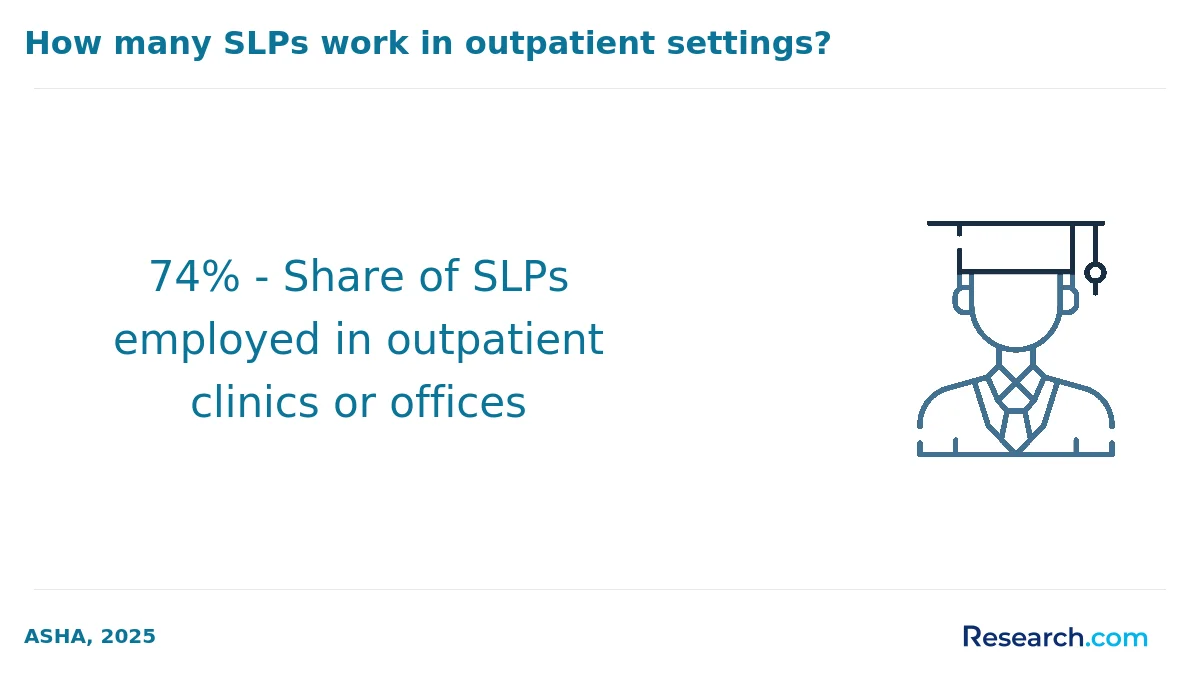
Bureau of Labor Statistics job growth projections show that demand for speech pathology professionals is not evenly distributed across all settings. The strongest opportunities are tied to aging populations, early childhood intervention, telepractice, and outpatient or community-based care. Some traditional clinical roles remain stable, while administrative and research-focused roles may require more deliberate specialization.
The BLS projects varying growth rates across speech pathology career paths over the next decade, with some roles expanding faster than the national average of about 5%. These projections are useful because they help graduates avoid relying only on current job openings and instead evaluate where demand is likely to persist.
- Rapid Growth: Roles serving pediatric and geriatric populations are expanding at rates often exceeding 15%, fueled by an aging public and rising awareness of age-related speech and swallowing disorders.
- Technological Adoption: Careers that incorporate telepractice and digital evaluation tools are growing quickly as remote therapy expands access for underserved or rural communities.
- Early Childhood Intervention: Increased funding and policies supporting early developmental and language delay programs drive demand for specialists in young children, resulting in growth surpassing many other areas in the field.
- Stable Growth: Clinical or hospital-based speech pathology roles tend to grow near the average pace. These positions remain essential, but some expansion is shifting toward outpatient and community settings.
- Challenges and Adaptation: Some administrative or research-focused roles show flat or declining growth, which means professionals in these areas may need to specialize further, build grant-writing or leadership skills, or adopt emerging technologies.
- Regional Variations: National projections can hide local differences. Economic conditions, healthcare infrastructure, school funding, and population trends all affect how many positions are available in a specific area.
Growth projections should be used alongside personal fit. A fast-growing specialty may be attractive, but it may also involve heavier caseloads, travel between sites, or additional training. A slower-growing role may still be a smart choice if it offers stable employment in a strong local market.
A professional who completed a speech pathology degree described the program as "intense but rewarding" because of the challenge of balancing rigorous coursework with clinical hours. He emphasized the importance of adapting to emerging technologies and exploring several specializations to remain competitive.
Reflecting on his job search, he noted that targeting regions where demand matched his interests gave him an advantage. His experience shows why BLS projections are most useful when combined with local research, clinical strengths, and willingness to adjust as the field changes.
How Is Work-Life Balance Defined and Measured Across Speech Pathology Degree Career Paths?
Work-life balance in speech pathology is best understood as a combination of schedule control, workload, emotional intensity, documentation demands, and flexibility. A role can have standard full-time hours and still feel stressful if caseloads are high or administrative expectations are unrealistic. Conversely, a busy role may feel manageable when staffing, supervision, and boundaries are strong.
Work-life balance is assessed using measurable factors such as average weekly hours, schedule reliability, access to remote or hybrid work, paid time off policies, and employee satisfaction ratings from sources like Glassdoor, Indeed, and Payscale. These metrics provide a more practical view of how speech pathology degree career paths differ across the US.
For roles including clinical speech-language pathologists, school-based practitioners, and healthcare specialists, composite profiles drawn from the Bureau of Labor Statistics American Time Use Survey, industry reports, and employer feedback highlight several important distinctions:
- Hours Worked: Clinical positions average 35-40 hours per week, while school-based roles often follow the academic calendar with occasional seasonal workload changes.
- Schedule Predictability: School practitioners typically have consistent, predictable hours, whereas hospital-based professionals may face variable schedules or shift work.
- Remote Work: Telepractice and hybrid options are increasingly available, especially in private practice, outpatient care, and some education-related services.
- Paid Time Off: Public school employees generally have more generous PTO compared to private-sector counterparts, although policies vary by district and employer.
- Satisfaction: Higher work-life balance satisfaction tends to occur among school-based pathologists and private practitioners, while early-career workers often report heavier workloads and stress.
Work-life balance varies by setting, employer, and career stage. Hospital environments may expose early-career professionals to more urgent cases and complex documentation. Public schools may offer steadier calendars but can involve large caseloads and meetings. Private practice can provide autonomy, but business operations and client acquisition can add pressure.
Professionals should treat work-life balance as something they can evaluate and negotiate. Before accepting a job, ask about caseload size, documentation time, supervision, productivity expectations, travel requirements, schedule flexibility, and after-hours communication norms.
Those considering specialized education can review accredited self-paced online courses when planning a pathway that supports their preferred pace, schedule, and long-term work-life goals.
Which Speech Pathology Career Paths Rank Highest When Salary, Growth, and Work-Life Balance Are Weighted Together?
When salary, growth, and work-life balance are weighted together, the strongest speech pathology career paths are usually those that provide solid earnings, steady demand, and a sustainable schedule. The highest-paying role is not always the highest-ranked overall, especially if it requires irregular hours or higher stress.
A balanced ranking gives equal weight to income potential, job outlook, and quality of life. This approach is especially useful for recent graduates who want career stability without creating a burnout-prone path early in their professional lives.
- Clinical Speech-Language Pathologist: This path offers moderate-to-high salary, steady demand in healthcare and education, and generally favorable schedules, making it a well-rounded option.
- School-Based Speech Pathologist: Salaries may be slightly lower, but steady educational funding, predictable hours, and school calendar alignment make this one of the strongest work-life balance options.
- Medical Speech Pathologist: This role commands higher pay and strong growth because of aging populations needing rehabilitation, though work hours are often less flexible.
- Research Speech Pathologist: Earnings are generally lower than some clinical or private practice roles, but growth in academia and technology-related work can pair with flexible, intellectually engaging schedules.
- Private Practice Speech Pathologist: This path has potential for top earnings depending on clientele, referral networks, and business model. Growth depends on local market conditions, but autonomy can improve lifestyle satisfaction.
- Early Intervention Specialist: This role often has modest salary compared with some medical specialties, but rapid growth connected to developmental disorder awareness and community-based work can create a strong overall fit.
- Telepractice Speech Pathologist: Telepractice is emerging as a high-ranking option because of competitive pay, fast career growth driven by technology, and strong flexibility from remote work.
Changing the weighting changes the outcome. If salary is the top priority, medical and private practice roles move higher. If schedule predictability is the top priority, school-based and telepractice careers become more attractive. If long-term specialization matters most, clinical, medical, and research pathways may offer more room to develop expertise.
A speech pathology professional who built her career after graduation said the decision was initially overwhelming: "Balancing what I wanted financially with the lifestyle I desired took time." She spent her early years shadowing different specialists to understand the realities behind the numbers.
She later reflected, "Ultimately, I settled on a role that offered both career stability and personal time, which aligns closely with the composite ranking's insights." Her experience reinforces the value of comparing salary, growth, and balance together rather than treating them as separate decisions.
How Does Specialization Within Speech Pathology Fields Affect Salary, Career Growth, and Work-Life Balance Outcomes?
Specialization can improve salary potential and career mobility in speech pathology, but it can also narrow the types of roles available. The best specialty is one that matches a professional's clinical interests, tolerance for complexity, preferred setting, and desired schedule.
Focused expertise may lead to stronger referrals, advanced clinical responsibilities, leadership roles, or premium private practice services. However, specialties involving medically fragile patients, complex cases, or extensive team coordination may bring heavier workloads.
- Pediatric Speech Pathology: This specialty is a strong fit for professionals interested in child development, language acquisition, and family-centered care. Prospects are solid as early intervention gains prominence. Compensation is moderate initially, with growth tied to experience and qualifications.
- Medical Speech Pathology: Focused on hospitals, skilled nursing rehabilitation, and medically complex care, this path commands above-average salaries. It can also be fast-paced and less flexible, especially when patients require urgent evaluation or coordination with larger care teams.
- Adult Neurogenic Speech Pathology: This field addresses impairments from strokes or brain injuries and benefits from rising demand due to an aging population. Salary ranges from moderate to high depending on setting, though work-life balance can be strained by complex cases and multidisciplinary coordination.
- Fluency and Voice Disorders: Specialists in this area often serve niche markets and may command premium fees in private practice or specialty clinics. Growth is moderate, but predictable hours can contribute to a favorable lifestyle balance.
- Augmentative and Alternative Communication (AAC): AAC is a technology-driven area that is expanding as communication tools evolve. Salaries are competitive, and flexible schedules are common, particularly in education or outpatient services.
Specialization typically requires targeted graduate courses, clinical placements, internships, and certifications. These choices can influence a career early, so students should use clinical experiences to test whether a specialty is genuinely appealing in practice, not just in coursework.
Data from the U.S. Bureau of Labor Statistics projects roughly 17% employment growth in medical and neurogenic speech pathology roles through 2035-outpacing general health occupations. That outlook makes medical and neurogenic specialization attractive, but the higher demand should be weighed against case intensity and workplace expectations.
Specialists can earn more and build stronger professional identities, but generalists can also advance by developing leadership, supervision, program management, and interdisciplinary skills. Long-term success often comes from combining depth in one area with enough versatility to adapt as employer needs change.
How Does Geographic Location Shape Salary, Job Growth, and Work-Life Balance for Speech Pathology Graduates?
Location affects speech pathology careers in three major ways: pay levels, hiring demand, and quality of life. A higher salary in a high-cost city may not produce better financial outcomes than a moderate salary in a lower-cost region. Commute time, licensure requirements, employer mix, and access to telehealth opportunities also matter.
Geographic location plays a crucial role in shaping median salaries, job growth, and work-life balance for Speech Pathology graduates because regional economies and local labor demand vary significantly.
- Northeast: This region commands some of the highest median salaries, especially in metropolitan hubs like Boston and New York City. Employment growth remains steady but moderate compared to emerging areas. High living costs often offset elevated salaries, reducing net purchasing power.
- Southeast: Strong employment growth is driven by expanding healthcare networks and educational institutions. Median salaries tend to be lower than the Northeast but are often balanced by a more affordable cost of living.
- Midwest: Known for affordable housing and moderate salaries, the Midwest provides promising job growth across urban and rural settings. Chicago offers competitive pay, but smaller towns often yield stronger financial outcomes when total costs are considered.
- Southwest: Growing demand in education and healthcare sectors, particularly in Phoenix and Dallas, supports mid-tier salaries and affordable living. The region may support work-life balance through manageable traffic and a rise in telehealth roles that allow flexible work arrangements.
- West: Tech-driven metros like San Francisco and Seattle offer top salaries nationwide. Despite steep living expenses, remote and hybrid work options can help professionals maintain high earnings while living in less costly suburbs or smaller cities.
Remote and hybrid roles have begun to weaken the traditional link between salary and location for some Speech Pathology specializations. Professionals may be able to work with employers or clients in higher-paying markets while living in more affordable areas, though licensure, payer rules, and employer policies must be reviewed carefully.
A smart geographic strategy looks beyond advertised salary. Graduates should compare cost of living, job density, commute burden, state licensure rules, school district funding, healthcare network growth, and family or community priorities. The best region is the one where compensation, opportunity, and daily life are all sustainable.
How Do Public Sector and Private Sector Speech Pathology Careers Compare Across All Three Ranking Dimensions?
Public and private sector speech pathology careers differ in more than salary. Public roles often provide stronger schedule predictability and benefits, while private roles may offer higher earnings potential, more varied practice settings, and greater flexibility in how services are delivered.
Public sector speech pathology roles generally pay lower base salaries than private sector positions at entry, mid, and senior stages-about 10-15% less for entry-level and up to 20-25% less at higher levels, based on BLS Quarterly Census of Employment and Wages and Office of Personnel Management data. However, defined-benefit pensions, stronger health insurance, and loan forgiveness eligibility can narrow the total compensation gap and improve long-term financial security.
| Dimension | Public sector | Private sector |
| Salary | Often lower in base pay, but benefits, pensions, and loan forgiveness eligibility can improve total value. | Often stronger earnings potential, especially in outpatient clinics, private rehab centers, consulting, telepractice, and ownership models. |
| Growth | Hiring is concentrated in education, veterans' health, eldercare, and agencies serving children with developmental disabilities. | Growth is strongest in outpatient clinics, private rehab centers, and telepractice companies. |
| Work-Life Balance | Typically more predictable schedules, generous leave policies, and stronger parental and sick leave protections. | Highly variable; some roles offer flexible hours and telepractice, while others involve unpredictable caseloads or overtime demands. |
Speech pathology hiring growth in the public sector is supported by education mandates, veterans' health services, eldercare needs, and programs for children with developmental disabilities. These roles may be less exposed to short-term market swings, but they can be affected by budgets, staffing shortages, and policy changes.
Private sector growth is strongest in outpatient clinics, private rehab centers, and telepractice companies. These settings can be attractive for professionals who want specialized services, entrepreneurial options, or flexible delivery models. The trade-off is that private roles can be more sensitive to reimbursement rules, client volume, and employer productivity expectations.
Work-life balance must be evaluated job by job. A public school role may offer a predictable calendar but a heavy caseload. A private telepractice role may offer flexibility but require strong self-management. Students and professionals comparing healthcare education options may also consider how an online masters nutrition program could complement interdisciplinary health expertise.
What Role Do Advanced Degrees and Certifications Play in Improving Salary, Growth, and Balance for Speech Pathology Professionals?
Advanced degrees and certifications can improve salary, career access, and professional credibility in speech pathology, but they should be chosen strategically. More education can create opportunities in clinical leadership, specialty practice, academia, research, and supervision, yet it also requires time, tuition, and sustained clinical commitment.
Data from the National Association of Colleges and Employers (NACE) and the Bureau of Labor Statistics (BLS) reveal distinct salary premiums linked to higher educational credentials, while professional associations clarify which career opportunities each credential unlocks.
- Master's Degree: Generally required for entry into clinical speech pathology roles, a master's degree increases average salary by about 15-25% compared to bachelor's holders. It typically requires 2 years of graduate study with moderate tuition costs.
- Doctorate (Clinical or Research-Based): Achieving a doctoral degree offers a 30-40% salary premium over master's holders but demands an additional 3-5 years and considerable investment. It grants access to senior leadership, academic posts, and specialized research roles rarely attainable without this credential.
- Professional Certifications (e.g., CCC-SLP): The Certificate of Clinical Competence in Speech-Language Pathology (CCC-SLP) enhances earning potential by approximately 10-20%. It involves supervised clinical hours and examinations rather than extended formal education.
- Career Growth vs. Balance: Advanced credentials can accelerate progression, but they may also increase responsibility and stress, especially in management or research roles. In some cases, senior expertise can improve autonomy and allow more control over schedule and caseload.
Before enrolling in an advanced program, professionals should ask whether the credential is required, preferred, or only marginally helpful for their target role. A clinician aiming for school-based practice may make different choices than someone pursuing medical specialization, private practice ownership, or faculty positions.
Students comparing graduate routes in the field may also evaluate an online slp program if they need a pathway that fits existing work, family, or location constraints.
For professionals weighing educational commitments across healthcare fields, exploring options like a 1 year PMHNP program can also illustrate how certification and advancement pathways differ by discipline and time investment.
How Do Remote and Hybrid Work Arrangements Affect the Salary, Growth, and Work-Life Balance Rankings for Speech Pathology Careers?
Remote and hybrid work have changed the way some speech pathology careers are ranked. Telepractice can improve flexibility, reduce commute time, and expand access to clients, but it is not equally available in every setting. Hospitals, many schools, and roles requiring hands-on assessment or direct team coordination may still require in-person work.
Remote and hybrid work options vary widely across major speech pathology roles. Approximately 30% of speech-language pathologists working in private practice or telehealth have fully remote opportunities, according to the 2023 Owl Labs State of Remote Work report and LinkedIn Workforce Insights. Conversely, clinical positions in hospitals and schools typically require on-site presence because of direct patient care needs, a trend confirmed by the BLS American Time Use Survey.
Roles permitting remote work generally maintain salaries similar to their in-person counterparts. In some telepractice settings, professionals benefit from geographic arbitrage-earning pay aligned with costly urban markets while living in more affordable areas. This can increase effective income even when nominal salary is unchanged.
Some traditional employers may offer slightly lower salaries for remote positions, often because of perceived differences in responsibility, overtime availability, or service delivery structure. Overall, these salary gaps are narrowing as telehealth becomes more mainstream and employers refine remote clinical workflows.
Career growth for remote speech pathologists depends heavily on employer culture. In private practice and telehealth organizations where remote work is standard, advancement and specialization opportunities can remain strong. In institutional settings, remote professionals may need to be more intentional about visibility, mentorship, documentation quality, and leadership participation.
Remote arrangements can improve work-life balance by eliminating commuting, allowing more schedule control, and increasing autonomy. They can also create problems when boundaries blur, technology fails, or clinicians feel pressure to remain constantly available. The best remote fit usually requires a dedicated workspace, strong self-management, reliable technology, and clear expectations with the employer.
Which Speech Pathology Degree Careers Offer the Best Work-Life Balance Without Significantly Sacrificing Salary or Growth?
The best work-life balance options in speech pathology are usually school-based practice, outpatient clinic work, and telepractice. These roles can provide competitive pay and steady demand while offering more predictable schedules or greater control over how services are delivered.
Certain speech pathology career paths strike a strong equilibrium between salary, growth potential, and work-life balance, supported by data from employee surveys, PayScale's Work-Life Balance Index, and government labor statistics. These roles combine meaningful clinical work with schedules that may be more sustainable over a long career.
- School-Based Speech Pathologists: Employed mainly by public and private educational institutions, these professionals benefit from fixed work hours aligned with school calendars, often including lengthy breaks during summers and holidays. The main trade-off is that caseload size and documentation demands can vary significantly by district.
- Outpatient Clinic Therapists: Working in specialized therapy clinics or healthcare settings, these professionals frequently have greater autonomy over caseload and may have options for part-time or flexible work schedules. They may also avoid some of the shift demands common in hospital environments.
- Telepractice Speech Pathologists: Telepractice practitioners provide services through digital platforms and often enjoy location flexibility and more control over scheduling. Income varies by employer and patient volume, but the potential for improved work-life integration is significant.
Work-life balance is personal and employer-dependent. A supportive manager, realistic caseload, protected documentation time, and clear communication expectations can matter more than the job title itself. Conversely, even a flexible role can become unsustainable if productivity requirements are excessive.
Notably, about 65% of speech pathologists report improved balance when flexible scheduling is available, underscoring a broad shift toward more adaptable work environments. Graduates who want balance without giving up growth should evaluate flexibility, supervision, benefits, and advancement pathways before accepting an offer.
What Graduates Say About the Speech Pathology Degree Careers Ranked by Salary, Growth, and Work-Life Balance
- Jourdan: "Completing my speech pathology degree opened my eyes to the real value of long-term career growth in this field-there are so many opportunities to advance professionally over time. The salary may start modestly, but with experience and specialization, it becomes quite rewarding. Plus, the day-to-day work-life balance is better than I expected-I can manage my hours and still have quality personal time."
- Romeo: "I've found that speech pathology really strikes a unique balance between meaningful work and financial stability. Knowing that my efforts can directly improve someone's communication skills motivates me every day-this degree's salary scale is respectable for the healthcare sector. As I reflect, the career's steady growth and manageable workloads make it a sustainable long-term option."
- Nina: "From a professional standpoint, ranking speech pathology careers by salary revealed that specialized therapists command competitive wages, which is a strong incentive. I was also struck by how the profession encourages continuous learning and advancement-it's a field with clear upward mobility. What I truly appreciate is the reasonable day-to-day work-life balance, which helps prevent burnout in demanding healthcare roles."
Other Things You Should Know About Speech Pathology Degrees
Obtaining certifications like the Certificate of Clinical Competence in Speech-Language Pathology (CCC-SLP) from ASHA can enhance a speech pathologist's career. This credential is respected in the field and may lead to higher salaries, increased job opportunities, and better work-life balance in 2027.
Early career choices-such as specializing in high-demand areas like pediatric or geriatric care or working in underserved regions-can enhance salary and job stability. Pursuing certifications and advanced degrees upfront also opens doors to higher-paying and leadership positions. Selecting employers with supportive work environments and opportunities for professional development helps maintain a sustainable work-life balance throughout a speech pathology career.
Most U.S. speech-language pathologists need a state license and the ASHA Certificate of Clinical Competence in Speech-Language Pathology (CCC-SLP). The CCC-SLP requires a master's degree, a supervised clinical fellowship, and passing the Praxis Speech-Language Pathology exam. State rules add additional requirements.
References
- U.S. Bureau of Labor Statistics - Speech-Language Pathologists https://www.bls.gov/ooh/healthcare/speech-language-pathologists.htm
- ASHA EdFind - Accredited Speech-Language Pathology Programs https://find.asha.org/ed/
- Audiology and Speech-Language Pathology Interstate Compact https://aslpcompact.com/compact-map/
- University of Nebraska at Kearney - Speech-Language Pathology, Master of Science in Education (Online Track) https://www.unk.edu/online/degrees-programs/speech-language-pathology-online.php
- Emerson College - Master of Science (M.S.) in Communication Disorders (Speech@Emerson, online) https://speech.emerson.edu/
- New York University - Online MS, Communicative Sciences and Disorders (Speech@NYU) https://steinhardt.nyu.edu/degree/online-ms-communicative-sciences-and-disorders
- University of North Carolina at Greensboro - Speech-Language Pathology, M.A. (Online) https://csd.uncg.edu/graduate/masters-of-arts-online/
- California State University-East Bay - Online Master of Science in Speech-Language Pathology https://ce.csueastbay.edu/programs/speech-language-pathology/


