
2027 Which Industries Offer the Best Career Paths for Speech Pathology Degree Graduates?

Co-Founder and Chief Data Scientist

Reviewed by Rhea Paul, PhD
SLP Education & Research Expert
Choosing an industry is one of the most important career decisions a speech pathology graduate will make. The setting you enter can affect your starting salary, schedule, supervision, caseload, licensure requirements, advancement options, and long-term earning ceiling. Healthcare employs over 70% of speech pathologists, but that does not automatically make it the best fit for every graduate.
Some graduates prioritize clinical complexity and higher compensation. Others want school-year schedules, public-sector benefits, remote work, or mission-driven service. This guide compares the major industries hiring speech pathology professionals so you can weigh pay, stability, flexibility, growth, and credential requirements before committing to a career path.
Key Things to Know About the Industries That Offer the Best Career Paths for Speech Pathology Degree Graduates
- Healthcare settings-especially hospitals and rehabilitation centers-offer the highest compensation and strong job stability, with median wages around $80,000 and clear advancement to specialized clinical roles.
- Educational institutions provide consistent employment and mission-driven culture-though salaries are generally lower, opportunities for leadership and tenure track positions support long-term professional growth.
- Private practice and telehealth sectors allow flexible work environments-growing rapidly post-pandemic-combining competitive remuneration with entrepreneurial advancement, though demanding licensure and business skills.
Which Industries Offer the Highest Starting Salaries for Speech Pathology Degree Graduates?
The highest starting salaries for speech pathology graduates are usually found in settings where cases are medically complex, staffing shortages are persistent, or employers compete for specialized clinical skills. Starting pay can vary by state, employer type, reimbursement model, union contract, and whether the role requires hospital credentialing, school certification, or telepractice coverage across multiple jurisdictions.
- Healthcare facilities: Hospitals, acute care units, and rehabilitation hospitals often offer strong entry-level compensation because speech pathologists support patients recovering from stroke, traumatic brain injury, surgery, swallowing disorders, and other high-risk conditions. The 24/7 care model and interdisciplinary expectations can justify higher pay, but the work may involve weekends, productivity targets, and emotionally demanding cases.
- Home healthcare services: Home health can pay well because employers must recruit clinicians who can work independently, travel between patients, document carefully, and manage medically fragile clients. The trade-off is that compensation may depend on visit volume, mileage policies, documentation time, and geographic coverage.
- Skilled nursing and residential care: These employers need clinicians who can manage swallowing, cognition, communication, and neurodegenerative conditions in long-term care populations. Starting pay may be attractive, but graduates should ask about caseload expectations, supervision, productivity standards, and whether the facility supports ethical discharge planning.
- Private practice and outpatient clinics: Pay varies widely. Some clinics offer strong starting salaries in high-demand markets, while others offer lower base pay with incentives tied to patient volume. Graduates should examine cancellation policies, benefits, mentorship, documentation load, and whether compensation is salaried, hourly, or fee-for-service.
- Federal government and military settings: Federal agencies and military healthcare systems can offer stable compensation, formal pay structures, and strong benefits. These jobs may be competitive and may require extensive credential verification, background checks, or experience with veterans and service members.
- Educational services: Schools may not always lead in starting salary, but shortage districts, specialized programs, and hard-to-staff regions can be competitive. The value of school roles also depends on benefits, pension eligibility, school-year scheduling, union protections, and caseload limits.
- Research and development organizations: These roles are less common but can pay well when speech pathology expertise is needed for clinical trials, assistive technology, diagnostics, or communication science research. Candidates may need research experience, data skills, or advanced specialization.
Graduates should not choose an industry based on salary alone. A higher starting offer may come with heavier productivity demands, less mentorship, or limited advancement. A lower starting salary may be balanced by strong benefits, predictable raises, loan forgiveness eligibility, or clearer leadership pathways.
If your long-term plan includes moving beyond speech pathology into another advanced clinical pathway, comparing options such as a 1 year DNP program online can help you understand how different healthcare credentials affect future earning potential.
What Are the Fastest-Growing Industries Actively Hiring Speech Pathology Graduates Today?
The fastest-growing opportunities for speech pathology graduates are concentrated in industries shaped by aging demographics, disability-service mandates, outpatient care growth, and telehealth adoption. The strongest hiring markets are not necessarily the most glamorous; they are the settings where speech-language services are essential, reimbursable, or legally required.
- Healthcare services: Healthcare remains the largest demand center for speech pathologists. Hospitals, rehabilitation facilities, long-term care providers, and outpatient medical groups need clinicians for stroke recovery, dementia-related communication needs, swallowing disorders, voice disorders, and neurologic rehabilitation. These roles can offer strong clinical growth, but they may require comfort with medically complex patients and fast-paced documentation.
- Education: Public and private schools continue to hire because speech-language services are tied to student access, disability evaluation, and individualized support under the Individuals with Disabilities Education Act (IDEA). Demand is especially steady in early intervention, special education, bilingual services, and districts with persistent shortages.
- Outpatient and private clinics: Clinics are expanding as families and adults seek therapy outside hospitals and schools. These employers may focus on pediatric speech and language delays, autism support, voice therapy, fluency, accent modification, feeding, or adult rehabilitation. Growth can be strong, but graduates should evaluate mentorship quality and productivity expectations before accepting a role.
- Telehealth and digital health platforms: Telepractice has become a durable part of the profession, especially for clients in rural and underserved communities. Graduates who are comfortable with remote assessment tools, parent coaching, digital documentation, and virtual engagement may find wider geographic opportunity.
- Government and Veterans Affairs programs: Public agencies and veterans' healthcare programs need speech pathologists for rehabilitation, disability services, and long-term support. Hiring may move more slowly than in private clinics, but roles can offer stability, structured benefits, and complex clinical experience.
The best growth sector depends on your priorities. Healthcare may offer the broadest clinical exposure, schools may offer the most predictable demand, outpatient clinics may support specialization, and telehealth may provide the most location flexibility. Before choosing, compare supervision, caseload mix, documentation systems, reimbursement pressure, and advancement options.
Graduates considering related healthcare careers can also review online nurse practitioner programs to understand how adjacent clinical fields structure training, licensure, and career mobility.
How Does Industry Choice Affect Long-Term Earning Potential for Speech Pathology Professionals?
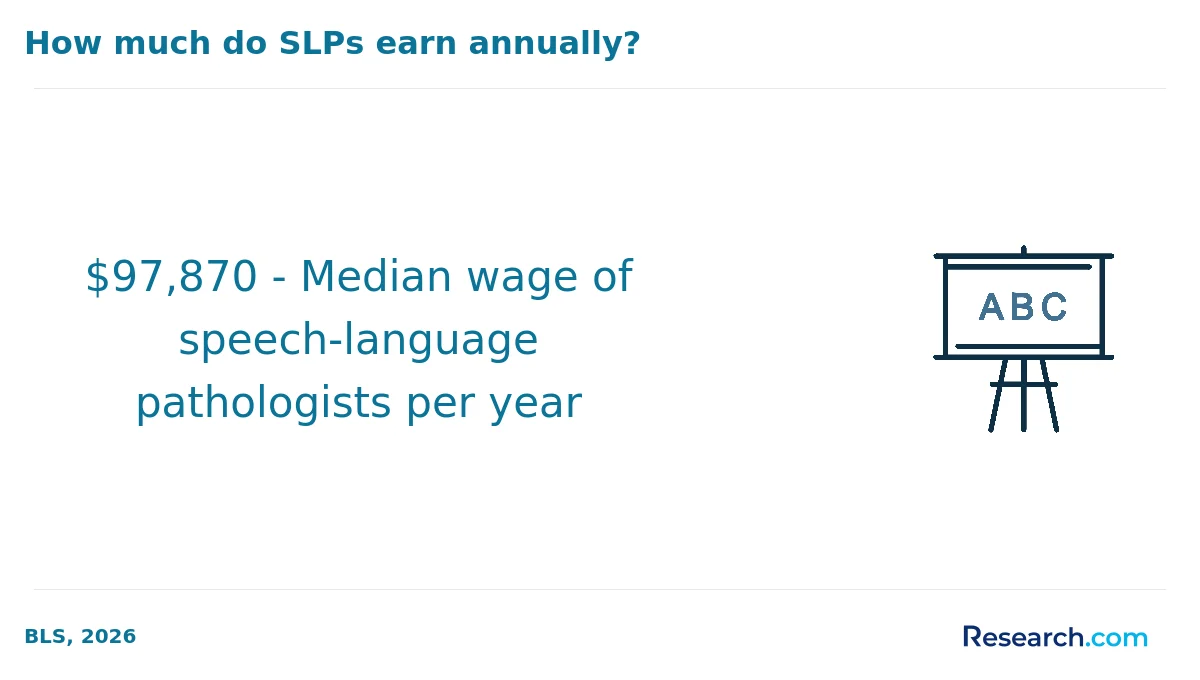
Industry choice affects long-term earnings because each setting has a different compensation ceiling. Two speech pathology graduates may start with similar salaries but end up with very different income trajectories depending on whether their employer offers specialization pay, leadership roles, productivity incentives, ownership opportunities, or fixed salary schedules.
Salary growth: Private healthcare, specialized rehabilitation, and some outpatient settings may provide larger raises over time, especially when clinicians develop expertise in high-demand areas. In some industries, salaries may double or even triple within 10 to 15 years. Public education and government roles often provide more predictable increases, but pay scales can be narrower and less responsive to individual productivity.
Performance incentives: Private clinics, hospital networks, and some corporate employers may offer bonuses, productivity pay, profit-sharing, or management incentives. These can raise total compensation, but graduates should read the details carefully. Incentives tied to visit volume can increase pressure and may not be worth it if documentation time is unpaid or caseload quality suffers.
Advancement opportunities: Long-term earning potential improves when an industry has clear paths into lead clinician, clinical supervisor, program manager, clinic director, compliance, product development, research, or executive roles. A setting with modest starting pay but a strong leadership ladder may outperform a higher-paying entry role with little room to advance.
Licensing and credentialing: Industries that require advanced credentialing can create barriers to entry, but they may also reward expertise. Employers that pay for continuing education, specialty certification, supervision, and conference attendance can improve both clinical competence and future earning power.
Work environment flexibility: Telepractice, consulting, part-time private practice, and contract work may allow clinicians to build multiple income streams. Flexibility can also reduce commuting and relocation costs, which affects real take-home value even when base salary is unchanged.
A speech pathology professional described the decision this way: "Early in my job search, I focused mainly on starting salary, but I quickly realized that industry choice shaped where I could go financially over time. I initially struggled navigating credential requirements in different sectors and felt uncertain about which path offered real growth." He later found that private healthcare settings gave him more room to increase earnings through bonuses and advancement. "Understanding the pay trajectory changed how I approached negotiations and professional development," he said. "It wasn't just about that first paycheck but building a career that rewarded growth and flexibility."
Which Industries Provide the Most Stable and Recession-Proof Careers for Speech Pathology Graduates?
The most stable industries for speech pathology graduates are those where services remain necessary during economic downturns: healthcare, public education, government programs, and veterans' healthcare. These settings are less dependent on discretionary spending because they serve medical, developmental, disability, and rehabilitation needs.
Healthcare has historically shown resilience during disruptions such as the 2008 financial crisis and the 2020 COVID-19 disruption. Hospitals, rehabilitation centers, outpatient medical groups, and long-term care facilities still need speech pathology services for recovery, communication, swallowing, cognition, and safety. Employment of speech pathologists in healthcare grew by over 17% from 2025 to 2035, underscoring demand despite economic challenges.
Government agencies and veterans' healthcare facilities also tend to offer strong stability. These employers often provide formal benefits, structured advancement, and steady demand for clinicians who can support disability rehabilitation and complex patient needs. Hiring can be slower and more bureaucratic, but job security can be a major advantage.
Educational institutions are another stable option because schools must provide required services to eligible students. Public and private schools benefit from legally mandated special education supports, including services connected to the Individuals with Disabilities Education Act. The trade-off is that caseloads can be high, documentation can be heavy, and salaries may be tied to district schedules rather than individual performance.
- Most stable sectors: Healthcare, public education, government agencies, and veterans' healthcare programs.
- Higher-risk sectors: Small private practices, grant-dependent nonprofits, and some startups may be more exposed to layoffs, payer changes, or hiring freezes.
- Key trade-off: Stable employers may offer stronger benefits and job security but slower salary growth.
- Licensing factor: Stable sectors often require strict credential maintenance, continuing education, and formal verification.
- Remote work factor: Government and healthcare employers increasingly support some flexible work arrangements, though medically complex roles may remain in person.
Graduates who want a durable career path should compare not only pay, but also funding source, payer mix, caseload stability, benefits, union protections, and whether the employer has survived prior downturns without significant staff reductions. Those exploring efficient education routes into stable fields can also review accelerated college programs.
What Role Does the Private Sector Play in Shaping Career Paths for Speech Pathology Degree Holders?
The private sector gives speech pathology graduates access to career paths that may be faster-moving, more specialized, and more entrepreneurial than traditional public roles. It includes hospitals, rehabilitation companies, private clinics, teletherapy platforms, education technology firms, health technology companies, and corporate wellness programs.
- Healthcare employers: Organizations such as Mayo Clinic and HCA Healthcare hire speech pathologists for patient care, rehabilitation, clinical quality, and program development. These settings may offer strong supervision and advancement, but they can also involve productivity expectations, weekend coverage, and complex documentation.
- Technology companies: Companies such as Nuance Communications and Talkspace may use speech pathology expertise in speech recognition, teletherapy, product design, clinical content, user experience, or communication tools. These roles can be innovative, but they may require comfort with rapid change and business metrics.
- Private education and ed-tech: Private schools and companies such as Kaplan and Renaissance Learning may employ speech pathologists for direct services, curriculum support, assessment tools, or specialized learning products. These jobs can appeal to clinicians who want to influence how students receive language and communication support.
- Corporate wellness and insurance-related employers: Companies such as Cigna and Aetna may involve speech pathology expertise in care coordination, wellness initiatives, utilization review, or employee health programs. These roles may be less traditional but can offer business exposure and performance-based advancement.
- Private practice ownership: Private practice can provide the greatest autonomy and income upside, but it also requires business skills. Owners must handle marketing, billing, compliance, staffing, payer contracts, scheduling, taxes, and risk management.
Compared with public employers, private-sector organizations often reward initiative more quickly. Promotions may come through clinical specialization, revenue growth, supervisory responsibilities, or product leadership rather than seniority alone. The risk is that private roles may be more sensitive to reimbursement changes, client volume, investor priorities, or business performance.
One speech pathology professional described the move into the private sector as both exciting and demanding. She noted that changing roles, shifting company priorities, and different workplace cultures required flexibility. "You really have to be proactive about your growth-it's a world where your initiative influences how quickly you advance," she reflected. Her experience highlights the central private-sector trade-off: more room to shape your career, but more responsibility for managing your own trajectory.
How Do Public Sector and Government Agencies Compare to Private Employers for Speech Pathology Graduates?
Public-sector and government employers generally offer more structure, stability, and benefits, while private employers often offer more compensation flexibility, faster advancement, and broader role variety. The better choice depends on your debt level, risk tolerance, desired schedule, and long-term career goals.
Career structure: Federal, state, and local government roles often follow formal civil service systems with defined grades, job titles, and promotion criteria. Employers such as the Department of Veterans Affairs, public health departments, and local school districts may provide clearer rules for advancement, though movement can be slower than in private companies.
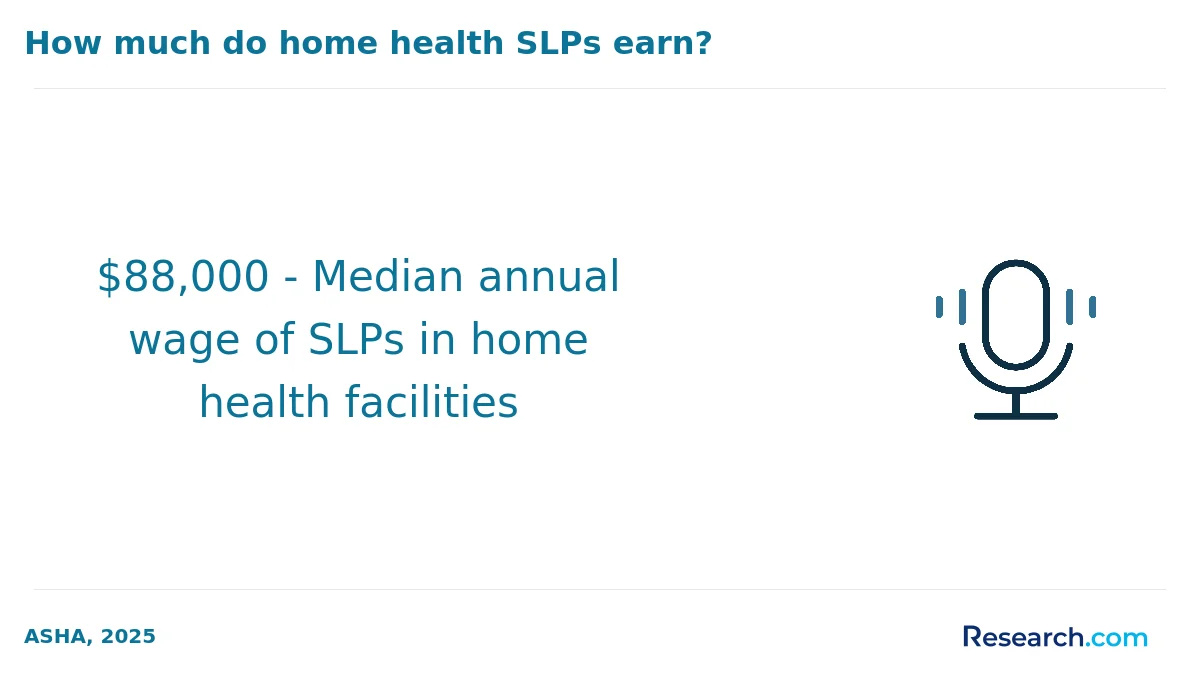
Compensation model: Public-sector salaries are usually tied to established pay schedules, such as the General Schedule (GS), district salary lanes, or agency classifications. This creates predictability but can limit rapid income growth. Private employers, including hospitals, clinics, and teletherapy companies, may offer higher starting pay, productivity bonuses, or negotiation room.
Advancement opportunities: Government roles often reward tenure, credentials, and formal review milestones. Private-sector employers may promote more quickly when clinicians build a specialty, supervise others, improve operations, or help grow revenue. However, private advancement can be less predictable and more dependent on business performance.
Benefits and loan considerations: Public-sector jobs may provide strong health insurance, paid leave, retirement benefits, pension access, and potential eligibility for student loan forgiveness. These benefits can be especially valuable for graduates with significant education debt, even when base pay is lower than private-sector offers.
Workplace trade-offs: Public roles can involve bureaucracy, slow hiring, strict credential review, and limited salary negotiation. Private roles may offer more autonomy but can include productivity pressure, variable benefits, less job security, and changing employer priorities.
Statistical insight: Data from the U.S. Bureau of Labor Statistics (2023) reveals that nearly 30% of speech-language pathologists work within government entities, indicating consistent demand from public education systems and veterans' healthcare programs.
Which Industries Offer the Clearest Leadership and Advancement Pathways for Speech Pathology Professionals?
The clearest leadership pathways for speech pathology professionals are usually found in large healthcare systems, school districts, government agencies, rehabilitation organizations, and technology companies with defined clinical, operational, or product teams. These employers have enough organizational layers to support promotion from clinician to supervisor, manager, director, or policy-level role.
- Healthcare systems: Large hospital networks and rehabilitation centers may promote clinicians into lead therapist, clinical supervisor, department manager, clinical director, or executive rehabilitation roles. Nearly 40% of speech pathology professionals in this sector reach management roles within 12 years-surpassing averages for allied health professions. Advancement often depends on clinical outcomes, interdisciplinary leadership, compliance knowledge, and specialty expertise.
- Education: Schools can provide a defined path from school-based speech pathologist to lead SLP, special education coordinator, program director, or district administrator. Graduate degrees in educational leadership or administration can strengthen candidacy for district-level roles.
- Corporate and technology sectors: Assistive communication companies, telepractice platforms, app developers, and health technology firms may create pathways into product management, clinical training, quality assurance, customer success, business development, or innovation leadership. These roles may reward clinicians who can translate therapy expertise into scalable tools.
- Government and military services: Federal and state agencies often provide structured hierarchies that can lead to regional program director, policy advisor, training coordinator, or administrative leadership positions. Graduate study in public administration, health policy, or management may be useful for these tracks.
- Private practice: The leadership path is less formal but potentially direct. Clinicians can become owners, partners, clinical directors, or consultants. The key requirement is not only clinical skill, but also business competence.
Graduates should evaluate a sector's advancement pathway before accepting an entry-level role. Ask how promotions are determined, whether leadership positions exist locally, how supervision is assigned, whether continuing education is funded, and what credentials current leaders hold. A job with a clear path over ten to fifteen years may be more valuable than a role with a slightly higher starting salary but no promotion ladder.
What Emerging and Technology-Driven Industries Are Creating New Demand for Speech Pathology Skills?
Technology-driven industries are creating new roles for speech pathology graduates beyond hospitals, schools, and clinics. These jobs often combine clinical knowledge with product development, telehealth delivery, artificial intelligence, assistive communication, data interpretation, or research. They can be attractive for graduates who want innovation, remote work, and interdisciplinary collaboration, but they may be less predictable than traditional clinical roles.
- Artificial intelligence: AI-powered communication tools, voice recognition systems, virtual assistants, and therapy applications may need speech and language expertise to improve accuracy, accessibility, and clinical relevance. Speech pathology professionals with exposure to data analysis, linguistics, or human-computer interaction may be especially competitive.
- Digital health: Telepractice platforms, remote monitoring tools, and app-based therapy programs rely on clinicians who understand assessment, treatment planning, documentation, privacy, and patient engagement. Graduates should understand telehealth regulations and the limits of virtual care, especially for clients who need hands-on evaluation.
- Biotechnology: Neural interfaces, brain-computer communication, and assistive technologies can create research and clinical trial roles for speech pathology professionals. These positions may require comfort with neuroanatomy, research protocols, interdisciplinary teams, and emerging evidence.
- Advanced manufacturing: Custom assistive communication devices, 3D-printed supports, and adaptive hardware benefit from speech pathology input. Clinicians can help engineers understand usability, articulation, access needs, and real-world client barriers.
- Clean energy and occupational health: The connection is indirect, but some employers invest in workplace health technologies and prevention programs where hearing, voice, and communication expertise may be relevant in noisy or high-risk environments.
Graduates interested in these sectors should build skills that complement clinical training: telehealth delivery, health informatics, product testing, accessibility standards, research literacy, data fundamentals, and cross-functional communication. They should also assess risk carefully. Emerging industries can offer exciting work, but roles may shift quickly because of funding changes, regulation, reimbursement, or technology adoption.
For graduates comparing adjacent technical healthcare paths, reviewing sonography programs online can provide context on how other health professions connect training, technology, and employment demand.
How Do Nonprofit and Mission-Driven Organizations Compare as Career Options for Speech Pathology Graduates?
Nonprofit and mission-driven organizations can be a strong fit for speech pathology graduates who want to serve communities with limited access to care. These employers may include community clinics, early childhood programs, disability organizations, advocacy groups, social enterprises, and agencies serving low-income, rural, or multilingual populations.
The main advantage is mission alignment. Clinicians often work closely with families, educators, social workers, interpreters, medical providers, and community partners. The work can be deeply meaningful, especially when services reach clients who might otherwise go without evaluation or therapy.
The main trade-off is compensation. Nonprofit roles are generally lower-paying than private healthcare, corporate, or some school positions. However, the total value of the job may include health insurance, retirement benefits, flexible schedules, meaningful caseloads, and eligibility for certain loan relief programs.
- Financial incentives: Public Service Loan Forgiveness (PSLF) can be important for eligible full-time employees of qualifying organizations. Graduates may receive federal student loan forgiveness after 10 years if they meet program requirements. Some state-specific loan repayment initiatives may also support mission-driven work.
- Advancement opportunities: Promotion pathways can be less formal than in hospitals or school districts. In smaller nonprofits, advancement may depend on funding, grant cycles, and organizational growth. However, clinicians may gain broader experience in program design, outreach, supervision, and advocacy.
- Workplace culture: Mission-driven workplaces often emphasize collaboration, community relationships, and values-based service. This can improve job satisfaction, but graduates should watch for burnout if staffing levels are low or emotional demands are high.
- Professional development: Training support varies widely. Some nonprofits fund continuing education and certifications; others expect clinicians to seek grants, low-cost training, or employer partnerships.
- Remote work and flexibility: Telepractice can help nonprofits reach clients across wider geographic areas, though some services still require in-person family coaching, school coordination, or community-based support.
Graduates should ask nonprofit employers about funding stability, supervision, productivity expectations, interpreter access, caseload size, benefits, and continuing education support. Those who want to expand interdisciplinary service may also consider related credentials, such as an online accredited nutrition degree, when it aligns with their population and career goals.
Which Industries Support the Most Remote and Flexible Work Arrangements for Speech Pathology Degree Holders?
The industries with the most remote and flexible work arrangements are telehealth platforms, private practice, some outpatient clinics, education providers using hybrid service models, and digital health companies. About 40% of speech-language pathology jobs now offer flexible or remote work options, reflecting the profession's broader adoption of telepractice.
Telehealth and digital health: These settings offer the most direct path to remote work. Clinicians may provide therapy, parent coaching, assessments, documentation, care coordination, or platform-based services. Graduates should confirm whether the employer provides technology, training, scheduling support, and licensure guidance.
Education: Schools and educational service agencies may use remote or hybrid speech therapy to support students in rural or underserved areas. These roles can offer predictable schedules, but clinicians may need to coordinate closely with on-site staff, teachers, and families.
Private practice: Independent clinicians may have the greatest schedule control, especially if they build a telepractice model. However, flexibility comes with business responsibilities, including billing, marketing, privacy compliance, documentation, and managing cancellations.
Outpatient clinics: Some clinics offer hybrid schedules for clients who are appropriate for virtual therapy. The amount of flexibility depends on payer rules, client age, diagnosis, technology access, and clinical judgment.
Some settings remain less flexible because in-person evaluation or treatment is central to the role:
- Hospitals and rehabilitation centers: Many acute and inpatient roles require bedside evaluation, swallowing assessment, team rounds, and direct patient care.
- Early intervention programs: In-person observation and family coaching may be important for infants, toddlers, and young children, although hybrid models may still be used.
- Skilled nursing facilities: Many clients require direct assessment, safety monitoring, and coordination with on-site nursing and rehabilitation teams.
Remote work can allow graduates to live in lower-cost regions while accessing broader job markets, but it also raises practical issues. Before accepting a remote role, verify state licensure requirements, supervision arrangements, malpractice coverage, privacy standards, equipment support, and whether unpaid administrative time is expected. Job postings for telepractice roles in speech-language pathology have risen by 25% annually, highlighting the growing acceptance of remote work in the profession.
How Do Industry-Specific Licensing and Certification Requirements Affect Speech Pathology Career Entry?
Licensing and certification requirements can determine which speech pathology jobs you qualify for, how quickly you can start work, and whether you can practice across state lines. Most graduates should expect credentialing to be a central part of career entry, not a final administrative step.
Licensing requirements: Most states require speech pathologists to hold a state license. This typically involves completing a master's degree, finishing a supervised clinical fellowship, and passing the Praxis exam administered by the Educational Testing Service. Prospective students comparing accredited graduate routes can review online slp masters programs as part of their planning.
Certification credentials: The Certificate of Clinical Competence in Speech-Language Pathology (CCC-SLP), issued by the American Speech-Language-Hearing Association (ASHA), is often preferred or required, especially in healthcare and education. Holding the credential can strengthen employability, support mobility, and improve access to leadership or specialized clinical roles.
Industry regulatory barriers:
- Healthcare: Hospitals and medical facilities may require state licensure, CCC-SLP certification, facility credentialing, background checks, immunization records, continuing education, and payer-specific documentation compliance.
- Education: Public school roles may require additional state-issued teaching certifications, school service credentials, or endorsements. These requirements can include extra exams, renewals, and state-specific documentation.
- Private practice and telehealth: Entry may appear simpler, but clinicians must hold valid licenses where clients are located. Telepractice can become complicated when clients live in multiple states with different rules.
Continuing education: Ongoing professional development is required across sectors to maintain licensure and certifications. Employers that fund continuing education can reduce out-of-pocket costs and help clinicians stay competitive.
Career differentiation: Specialty training in pediatric feeding disorders, neurogenic communication, voice, fluency, bilingual assessment, autism support, or assistive technology can improve job prospects and advancement potential.
Verification advice: Requirements change, and they vary by state and employer. Graduates should verify rules directly with state licensing boards, ASHA, school credentialing agencies, and prospective employers before accepting a position or serving clients in a new jurisdiction.
Employment of speech-language pathologists is projected to grow 17% from 2025 to 2035, which makes credential readiness especially important for entering the market without delays.
What Graduates Say About the Industries That Offer the Best Career Paths for Speech Pathology Degree Graduates
Graduate experiences show that there is no single best industry for every speech pathology professional. The right path depends on whether you value pay, stability, mission, flexibility, clinical complexity, or advancement most.
- Kayden: "Working in the healthcare sector has shown me that compensation for speech pathology graduates is truly competitive, especially in hospital settings where specialized skills are highly valued. What I love most, though, is the workplace culture-colleagues are supportive and passionate, which makes challenging days easier to navigate. This field offers a unique blend of financial reward and emotional fulfillment that's hard to find elsewhere."
- Cannon: "Reflecting on my career path, I find the stability in educational institutions for speech pathology professionals incredibly reassuring-there's a consistent demand that keeps job security high. Additionally, advancement opportunities are tangible, with clear routes to leadership roles if you're willing to pursue further certifications. It's a profession where dedication translates into both personal growth and professional longevity."
- Nolan: "From my experience, speech pathology careers in outpatient clinics stand out due to excellent advancement opportunities-you can move from clinician roles to specialized therapy or management with relative ease. The workplace culture fosters collaboration, ensuring you never feel isolated while dealing with complex cases. Plus, compensation here reflects your growing expertise, encouraging continuous development within the field."
Other Things You Should Know About Speech Pathology Degrees
Educational settings-such as public and private schools-are known for providing excellent work-life balance for speech pathology graduates, largely due to predictable schedules and extended holiday breaks. Healthcare industries, including outpatient clinics and rehabilitation centers, often offer flexible hours and part-time options, contributing to higher job satisfaction. However, roles in acute hospital environments may involve longer or irregular hours, which can affect work-life balance negatively.
In 2027, geographic location continues to play a crucial role in industry opportunities for speech pathology graduates. Urban areas tend to offer more diverse opportunities, while rural locations may provide unique challenges but can offer vital services where they are most needed. Coastal regions often have higher concentrations of specialized practices and research opportunities.
The healthcare industry-especially hospitals and rehabilitation facilities-tends to invest heavily in ongoing training and certification opportunities for speech pathology professionals. Educational institutions also frequently support continuing education, often requiring professional development for licensure renewal. Private practice settings may vary widely in investment, depending largely on organizational size and resources.
Graduates should consider alignment between their values-such as service to underserved populations or research involvement-and the mission of potential employers. Career goals related to advancement, specialization, or work environment also matter; for example, those seeking leadership roles might prefer healthcare systems with clear promotion paths, while those valuing direct client interaction might lean toward schools or private practices. Assessing licensing requirements and flexibility for remote work can further inform the best industry fit.
References
- U.S. Bureau of Labor Statistics - Speech-Language Pathologists https://www.bls.gov/ooh/healthcare/speech-language-pathologists.htm
- ASHA EdFind - Accredited Speech-Language Pathology Programs https://find.asha.org/ed/
- ETS Praxis - Speech-Language Pathology (5331) https://praxis.ets.org/test/speech-language-pathology-5331.html
- Idaho State University - Master of Science in Speech-Language Pathology (Online/Distance Education) https://www.isu.edu/slp/programs-offered/slp-graduate-program/
- Pennsylvania Western University - Master of Science in Speech-Language Pathology https://online.pennwest.edu/programs/speech-language-pathology-grad/index.php
- New England Institute of Technology - Master of Science in Speech Language Pathology https://www.neit.edu/academics/graduate-degrees/speech-language-pathology-ms
- New York University - Online MS, Communicative Sciences and Disorders (Speech@NYU) https://steinhardt.nyu.edu/degree/online-ms-communicative-sciences-and-disorders
- Abilene Christian University - Master of Science in Speech-Language Pathology (Online) https://acu.edu/academics/graduate/master-of-science-in-speech-language-pathology/


