
2027 Which Speech Pathology Degree Careers Offer the Best Return Without Graduate School?

Co-Founder and Chief Data Scientist

Reviewed by Rhea Paul, PhD
SLP Education & Research Expert
A bachelor's degree in speech pathology can lead to meaningful work in communication support, rehabilitation, education, healthcare operations, and assistive technology. It usually does not qualify you to practice independently as a licensed speech-language pathologist, but it can still provide a strong early-career return if you choose roles carefully and avoid assuming that every opportunity requires graduate school.
The core decision is practical: should you enter the workforce after the bachelor's degree, or should you invest more time and tuition in a master's program? With rising tuition costs and increasing student debt, that question matters. According to the U.S. Bureau of Labor Statistics, roles in related speech pathology fields that require only a bachelor's degree can still expect job growth above 7% through 2031.
This guide explains which speech pathology-related careers may offer the best return without graduate school, where salaries tend to be stronger, what skills and certifications can improve your marketability, and when a graduate degree becomes worth the cost.
Key Benefits of Speech Pathology Degree Careers That Offer the Best Return Without Graduate School
- Strong earning potential with accelerated salary growth in entry-level speech pathology roles enhances long-term returns, often outperforming similar bachelor's level health professions.
- Consistent job demand and expanding care needs ensure stable employment and upward mobility, reinforcing financial security over decades.
- Accessible entry requirements without graduate degrees enable earlier workforce entry, reducing education costs and increasing cumulative earnings potential significantly.
Which Speech Pathology Careers Offer the Best Return Without Graduate School?
The best return without graduate school usually comes from roles that use communication-disorders knowledge but do not require independent clinical licensure. For bachelor's degree holders, ROI depends on three factors: starting pay, job stability, and whether the role builds experience that can lead to better positions later.
The U.S. Bureau of Labor Statistics reports that many communication disorder roles with only a bachelor's degree offer competitive wages and consistent demand. The strongest options tend to be in schools, rehabilitation settings, healthcare support, documentation, and technology-adjacent work.
- Speech-language pathology assistants: These professionals work under licensed speech-language pathologists and help carry out therapy-related activities, prepare materials, document progress, and support clients. This is one of the most direct ways to use a speech pathology bachelor's degree without immediately pursuing graduate school. Requirements vary by state and employer, so candidates should confirm supervision, registration, or certification rules before applying.
- Rehabilitation technicians: Rehabilitation technicians support therapy teams by preparing treatment areas, helping patients complete exercises, tracking documentation, and coordinating care tasks. The role can be a practical entry point for graduates who want healthcare experience and exposure to interdisciplinary therapy teams.
- Communication aides in educational settings: Schools may employ aides who help students with communication needs under professional supervision. These roles can be especially useful for graduates interested in child development, special education, and school-based services.
- Medical transcriptionists specialized in speech disorders: Graduates with strong terminology knowledge and careful writing skills may work in healthcare documentation, including speech pathology records. This path can suit candidates who prefer detail-oriented work and may offer stable or remote options depending on employer needs.
The best speech pathology job options without advanced degrees are typically not the same as licensed speech-language pathologist jobs. They are support, coordination, documentation, technology, and program roles that let you apply communication knowledge while building experience. Students who later decide to expand into broader healthcare leadership can also compare related paths such as DNP online programs, but that is a different professional route and should be evaluated separately.
What Are the Highest-Paying Speech Pathology Jobs Without a Master's Degree?
The highest-paying roles for speech pathology bachelor's graduates are often not traditional clinical speech-language pathology positions. Instead, stronger salaries may come from management, rehabilitation support, technology, healthcare operations, and specialized communication roles. According to the U.S. Bureau of Labor Statistics, professionals with relevant bachelor's degrees can earn between $40,000 and $75,000 annually depending on specialization.
- Speech-language pathology assistants: These professionals assist licensed speech-language pathologists by implementing therapy plans and supporting direct services. Their annual salaries commonly range from $45,000 to $60,000. This path is attractive because it keeps graduates close to the speech pathology field while avoiding the immediate cost of graduate school.
- Rehabilitation specialists: Rehabilitation specialists who work with patients recovering from speech and communication impairments earn between $50,000 and $70,000 per year. Pay can improve when the role involves care coordination, patient education, specialized populations, or strong documentation responsibilities.
- Medical and health services managers: In outpatient facilities or specialty speech pathology clinics, managers with bachelor's degrees can expect salaries from $60,000 to $75,000. These roles focus less on providing therapy and more on scheduling, compliance, staffing, patient flow, records, and operations.
- Human factors specialists: Human factors specialists use communication and user-experience knowledge to improve technology design, including tools related to speech, accessibility, or communication devices. These specialists typically earn between $65,000 and $80,000 annually, particularly in tech environments focused on communication products and usability.
For salary-focused graduates, the key trade-off is scope. Direct therapy support roles may align more closely with the degree, while management or technology roles may pay more but require additional business, data, compliance, or product skills.
Which Industries Offer High Salaries Without Graduate School?
Industry choice can matter as much as job title. Data from the U.S. Bureau of Labor Statistics shows wage variations exceeding 20% among industries for similar roles, which means two graduates with similar skills may see different earnings depending on where they work.
- Healthcare and rehabilitation: Rehabilitation centers, outpatient clinics, hospitals, and therapy practices may offer salaries between $50,000 and $70,000 annually. These settings value patient support, documentation accuracy, scheduling reliability, and familiarity with therapy workflows.
- Educational services: Schools and educational programs employ speech pathology graduates in support, coordination, and student-service roles. Annual compensation in these settings generally ranges from $45,000 to $65,000. The advantages may include predictable schedules and mission-driven work, while advancement may depend on district budgets and credential requirements.
- Technology and communication: Companies developing speech recognition software, assistive technology, communication platforms, and accessibility tools may value speech pathology knowledge. Starting salaries around $55,000 are possible in this sector, with growth tied to technical ability, product knowledge, and experience.
- Corporate training and compliance: Some businesses use communication specialists to support employee training, accessibility, workplace accommodations, and communication standards. Salaries here can range from $50,000 to $75,000, particularly when the role combines communication expertise with compliance or organizational training.
A speech pathology degree graduate described the shift into corporate training as challenging at first: “I wasn't sure where my degree would fit outside of clinical settings.” He said the transition required patience, adaptability, and learning workplace training systems on the job. Over time, the broader industry exposure helped him improve his salary and confidence. His main lesson was straightforward: “Industry versatility and willingness to learn can open doors just as effectively as further education.”
What Entry-Level Speech Pathology Jobs Have the Best Growth Potential?
Entry-level roles with the best growth potential do more than provide a first paycheck. They help you build supervised experience, documentation skills, client-facing confidence, and familiarity with schools or healthcare systems. The U.S. Bureau of Labor Statistics projects therapy support roles to increase by about 17% from 2025 to 2035, highlighting strong early-career growth potential.
- Speech-language pathology assistant: This role offers direct exposure to therapy planning, service delivery, screenings, materials preparation, and progress documentation under licensed supervision. It is often the strongest entry-level fit for graduates who may later consider a master's degree.
- Rehabilitation aide: Rehabilitation aides work with therapy teams in medical and outpatient settings. The job can build practical knowledge of patient care, safety procedures, interdisciplinary teamwork, and clinical operations.
- Early intervention specialist: These specialists support children with developmental delays and often work closely with families, educators, and service coordinators. The role can lead to program coordination, family-support leadership, or specialized work in child development services.
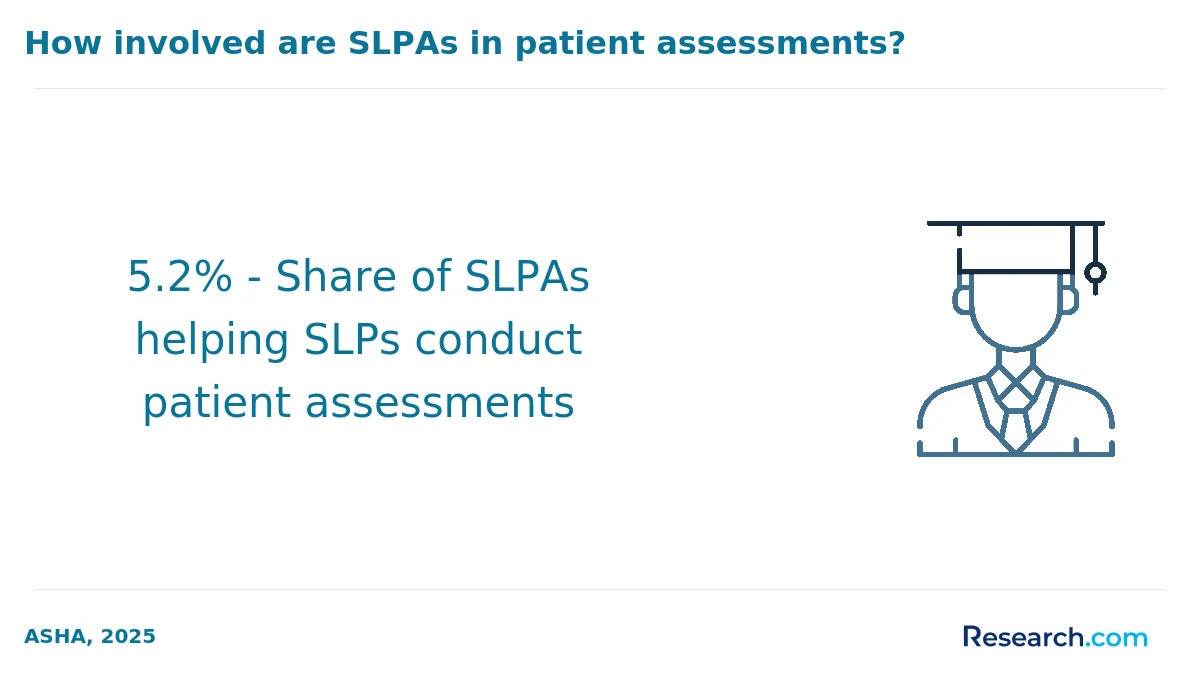
- Communication disorder technician: Technicians may assist with assessments, therapy preparation, data collection, and session support under supervision. The role can be useful for graduates interested in clinical coordination, research support, or specialized therapy environments.
- Educational assistant for speech development: In schools, these assistants help implement communication strategies and support students with speech and language needs. This experience can translate into roles in special education support, instructional services, or school program administration.
To judge growth potential, ask whether the job offers supervision, measurable skill development, exposure to licensed professionals, and a path to higher responsibility. Candidates who want to combine healthcare service with management may also compare healthcare administration majors as a separate route toward operations-focused roles.
What Skills Increase Salary Without a Master's Degree?
A bachelor's degree can get you considered for entry-level roles, but skills often determine who advances. A 2023 study reveals that 67% of employers now focus more on skills than formal education when considering pay raises and promotions. For speech pathology graduates, the most valuable skills are those that improve client support, documentation quality, workflow efficiency, and communication across teams.
- Effective communication: Employers value professionals who can explain information clearly to clients, families, teachers, clinicians, and administrators. Strong writing matters as much as speaking because records, reports, and care notes affect service quality.
- Data management: Accurate documentation, progress tracking, and comfort with electronic health records can make a candidate more reliable and promotable. Supervisors notice employees who can turn client data into useful updates and organized reports.
- Technical savvy: Familiarity with speech therapy platforms, teletherapy tools, assistive technologies, and digital communication systems can expand the types of roles available. This is especially important in schools, clinics, and technology companies.
- Critical thinking: Support roles still require judgment. Employees who can identify problems, adjust within their scope, ask appropriate questions, and support individualized plans often become trusted team members.
- Multilingualism: Speaking multiple languages can improve service access for diverse clients and families. In some workplaces, multilingual ability can strengthen hiring prospects and support higher compensation.
One professional said that improving her technology and documentation skills changed her career trajectory. At first, electronic records and telepractice software felt overwhelming. She sought informal training, practiced consistently, and became the person supervisors trusted with accurate documentation and digital workflows. That practical credibility, she said, had a direct effect on her pay increases.
What Certifications Can Replace a Master's Degree in Speech Pathology Fields?
Certifications can strengthen your resume, but they do not fully replace a master's degree when a job legally requires graduate education, licensure, or independent clinical authority. Their best use is to verify specific skills, improve employability in assistant or support roles, and help you move into specialized areas. Data suggests that certified individuals can earn up to 15% more than their non-certified counterparts.
- Certified Speech-Language Pathology Assistant (CSLPA): This certification signals practical readiness to support licensed speech-language pathologists. It may improve prospects in schools, clinics, and rehabilitation settings, depending on state and employer requirements.
- Assistive Technology Professional (ATP): ATP certification is useful for professionals working with augmentative and alternative communication (AAC) devices and other assistive tools. It can support roles in rehabilitation, accessibility, education, and communication technology.
- Certificate of Clinical Competence in Speech-Language Pathology Assistant (CCC-SLPA): This credential is presented as a way to demonstrate ethical standards and industry knowledge. Because credential names and eligibility rules can vary, candidates should verify current requirements with the relevant professional organization or licensing authority before planning around it.
- Board Certified Behavior Analyst (BCBA): BCBA certification can be valuable for professionals working with behavioral support needs, including children with autism. It connects communication support with behavior analysis, although it has its own education, supervision, and examination requirements.
The safest way to evaluate a certification is to compare it with actual job postings in your target state or industry. If employers regularly list it as preferred or required, it may improve ROI. If it is rarely mentioned, it may be less valuable than experience, technology skills, or supervised assistant work.
Can Experience Replace a Graduate Degree for Career Growth?
Experience can replace a graduate degree for some forms of career growth, especially in support, coordination, technology, documentation, training, and operations roles. Employers often promote workers who are dependable, skilled with clients, accurate with records, and able to solve problems without constant oversight. In these settings, performance can matter more than another credential.
Experience is especially valuable when it gives you evidence of results. Examples include supporting larger caseloads, improving documentation workflows, helping implement assistive technology, training new aides, coordinating services, or working with specialized populations. Those accomplishments can strengthen applications for senior assistant, lead technician, program coordinator, or administrative roles.
However, experience has limits. It generally cannot substitute for a graduate degree when a role requires licensure, independent diagnosis, treatment planning, or formal speech-language pathologist status. Regulatory bodies, school systems, healthcare employers, and insurers may enforce education and certification requirements that work history cannot override.
The practical answer is this: experience can help you grow within non-licensed or supervised career tracks, but it cannot remove legal or credential barriers for licensed speech-language pathology practice.
What Are the Downsides of Not Pursuing a Graduate Degree?
Stopping at the bachelor's degree can reduce debt and help you enter the workforce sooner, but it also narrows your long-term options. Over 85% of practicing speech-language pathologists hold graduate degrees, highlighting a strong correlation between advanced education and career advancement.
- Slower career progression: Many specialized, senior, and supervisory clinical roles require graduate credentials. Without them, advancement may depend more heavily on employer-specific ladders, administrative openings, or a move into adjacent fields.
- Narrower scope of practice: Bachelor's-level workers are typically limited to support roles and may need supervision. They may not be authorized to diagnose, design full treatment plans, or practice independently as speech-language pathologists.
- Competitive hiring disadvantages: In healthcare and education settings, employers may prefer or require master's-prepared candidates for higher-level roles. Bachelor's degree holders may compete well for assistant or aide roles but face barriers for licensed positions.
- Salary disparities: Speech pathologists with graduate degrees generally earn 20% to 40% more than those with only bachelor's education. Avoiding graduate school can improve short-term ROI, but it may reduce long-term earning potential if your goal is licensed practice.
- Restricted certification and licensure: Many licenses and advanced credentials require graduate education plus supervised clinical hours. Experience, short courses, or certificates usually cannot replace those requirements.
The downside is not that a bachelor's degree lacks value. The issue is fit. If your career goal is assistant work, rehabilitation support, school services, documentation, technology, or healthcare operations, stopping at the bachelor's level may be reasonable. If your goal is independent speech-language pathology practice, graduate school is usually the expected pathway.
For readers comparing advanced healthcare credentials outside speech pathology, a PhD nursing program represents a different doctoral path and should be evaluated according to its own licensing, research, and career requirements.
How Can You Maximize ROI With a Speech Pathology Degree?
Return on investment (ROI) in education compares the cost and time of earning a degree with the career value it produces. For speech pathology bachelor's degree holders, the median annual wage for speech-language pathology assistants is approximately $62,000, illustrating potential earnings without graduate school. Maximizing ROI means choosing roles, skills, and industries that increase employability without adding unnecessary debt.
- Target high-demand roles: Focus on settings where communication support is consistently needed, including healthcare, rehabilitation, schools, and services for aging populations. Demand can improve job stability and make early experience easier to build.
- Gain practical experience early: Internships, assistant positions, volunteer work, and supervised service roles can make your resume stronger than coursework alone. Experience also helps you decide whether graduate school is worth pursuing later.
- Develop complementary skills: Assistive technology, bilingual communication, electronic documentation, data analysis, and scheduling systems can help you stand out. These skills are often less expensive to build than a graduate degree and can support salary growth.
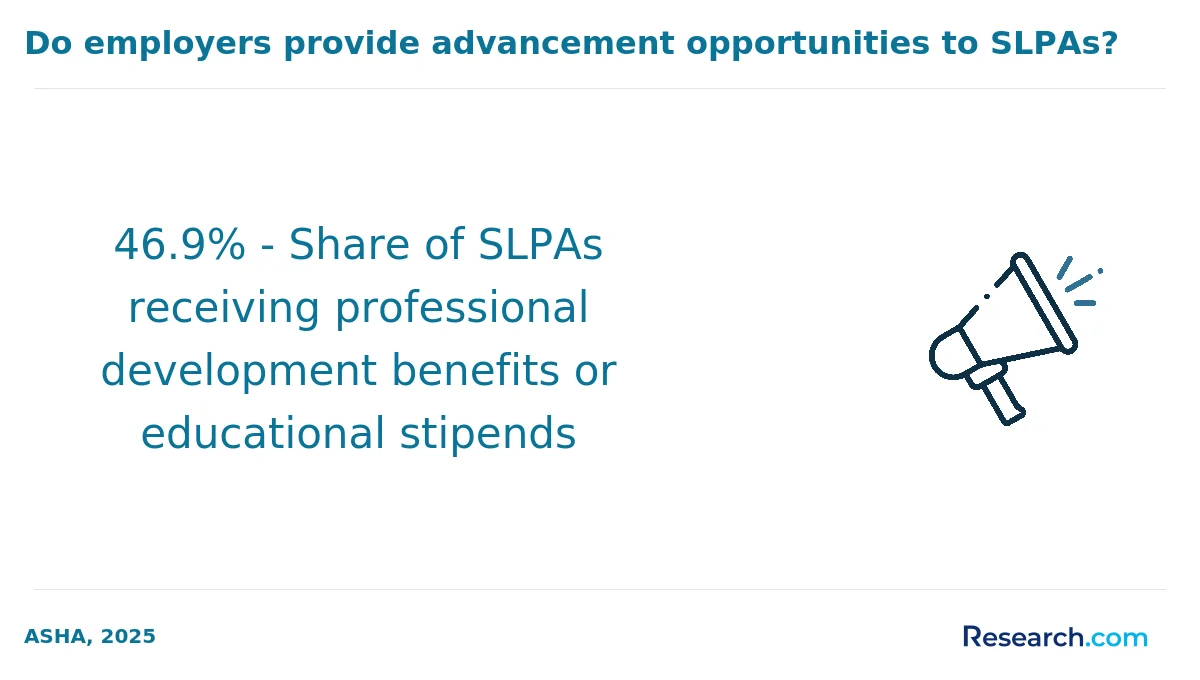
- Pursue advancement opportunities: Look for employers that offer lead assistant roles, training responsibilities, program coordination, or internal promotion. A slightly lower starting salary may be worthwhile if the workplace provides a clearer path upward.
- Network strategically: Build connections with speech-language pathologists, school administrators, rehabilitation managers, and technology professionals. Referrals and insider knowledge can help you find roles that are not obvious from job boards alone.
If graduate school remains a possibility but cost is the main concern, compare program prices, delivery formats, and clinical requirements carefully; lists of the cheapest online slp master's programs can help you evaluate whether the long-term return justifies the investment.
Graduates interested in healthcare administration related to speech pathology may also compare CAHME accredited online MHA programs as a separate route toward management and operations roles.
When Is Graduate School Worth It for Speech Pathology Careers?
Graduate school is worth considering when your target role requires it, when the salary increase justifies the cost, or when you want independent clinical authority. Individuals with a master's degree in speech pathology typically earn about 20% more annually than those without, but the financial case depends on tuition, lost work time, financial aid, program quality, and your intended career setting.
A graduate degree becomes especially important if you want to become a licensed speech-language pathologist, work in advanced clinical roles, supervise services, specialize in complex disorders, conduct research, teach at higher levels, or qualify for roles where state or national licensure is required. In those cases, experience alone usually cannot substitute for the credential.
Graduate school may be less urgent if you are satisfied with assistant, aide, documentation, rehabilitation support, technology, or operations roles. In that case, it may be smarter to work first, build savings, clarify your goals, and apply later only if the master's degree clearly supports the career you want.
Students comparing broader healthcare graduate options sometimes look at paths such as online PMHNP programs, but those programs prepare graduates for a different profession. Compare licensure rules, clinical requirements, cost, and career outcomes before treating any graduate pathway as interchangeable.
What Graduates Say About Speech Pathology Degree Careers That Offer the Best Return Without Graduate School
- : "Choosing not to pursue a graduate degree in speech pathology was daunting, but focusing on practical experience early made the decision feel more realistic. I used internships and certifications to build skills and stayed connected with professionals who could explain which roles had room to grow. That hands-on approach helped me find rewarding opportunities without taking on the extra time and expense of graduate school. —Kayden"
- : "Looking back, I realized that the degree was only the starting point. I kept learning through workshops, specialty courses, and job-based training, then aimed my career toward administrative and educational support roles. Skipping graduate school allowed me to enter the workforce sooner and apply what I had learned in a practical setting every day. —Cannon"
- : "My path in speech pathology has been fulfilling even without graduate school. I focused on communication skills, cultural awareness, and understanding client needs, which helped me stand out in support roles. Certifications and alternative career routes gave me room to keep growing while staying connected to the field. —Nolan"
Other Things You Should Know About Speech Pathology Degrees
Yes, individuals with a bachelor's degree in speech pathology can find opportunities in settings like rehabilitation centers, early childhood education, and special education support roles. These industries often employ speech pathology assistants or aides who support licensed clinicians. However, roles may have limitations concerning autonomy and scope of practice without graduate credentials.
Gaining hands-on experience through internships, volunteer work, or entry-level positions in clinical or educational environments enhances employability. Practical exposure to communication disorders and therapy methods can make candidates more competitive. Experience also aids in understanding interdisciplinary collaboration and strengthens practical skill sets.
Strong communication skills are essential given the focus on assisting clients with speech and language challenges. Effective listening, empathy, and clear verbal and written communication facilitate better client rapport and teamwork with healthcare or educational professionals. These skills often distinguish successful practitioners at all education levels.
References
- U.S. Bureau of Labor Statistics - Speech-Language Pathologists https://www.bls.gov/ooh/healthcare/speech-language-pathologists.htm
- ASHA EdFind - Accredited Speech-Language Pathology Programs https://find.asha.org/ed/
- ETS Praxis - Speech-Language Pathology (5331) https://praxis.ets.org/test/speech-language-pathology-5331.html
- Ithaca College - Online Master of Science in Speech-Language Pathology https://slponline.ithaca.edu/programs/masters-speech-language-pathology-online
- University of North Carolina at Greensboro - Speech-Language Pathology, M.A. (Online) https://csd.uncg.edu/graduate/masters-of-arts-online/
- Nova Southeastern University - SLP Program - Master of Science in Speech-Language Pathology https://osteopathic.nova.edu/degrees/masters/speech-language-pathology/index.html
- University of Nebraska at Kearney - Speech-Language Pathology, Master of Science in Education (Online Track) https://www.unk.edu/online/degrees-programs/speech-language-pathology-online.php
- Delaware Valley University - Master of Science in Speech-Language Pathology (M.S.) https://delval.edu/programs/graduate-programs/speech-language-pathology


