
2027 Fastest Online Master’s Programs in Educational Leadership

Co-Founder and Chief Data Scientist
Choosing an online master’s in educational leadership is usually a career decision, not just an academic one. Most applicants are working educators who want to move into roles such as principal, assistant principal, instructional coordinator, district leader, higher education administrator, or training manager. The right program can help you build leadership skills, meet licensure or certification requirements where applicable, and position yourself for roles with broader responsibility.
This guide explains what online master’s in educational leadership programs typically include, how long they take, what they cost, how online and campus formats compare, and which career paths may be available after graduation. It also highlights practical questions to ask before enrolling, especially around accreditation, state principal certification, internships, affordability, and return on investment.
Quick answer: Is an online master’s in educational leadership worth it?
An online master’s in educational leadership can be worth it for licensed or experienced educators who want to qualify for administrative, curriculum leadership, or school management positions. The degree is especially useful when the program aligns with your state’s principal certification requirements and includes supervised field experience.
The salary difference between teaching and administration can be meaningful. Preschool, elementary, middle, secondary, and special education teachers in the United States had a median annual wage of $61,960 in May 2024. By comparison, education administrators for kindergarten through secondary school had a median annual wage of $104,070 in the same period, according to the U.S. Bureau of Labor Statistics (2025). However, a higher salary is not automatic. Outcomes depend on your location, experience, licensure status, employer type, and available leadership openings.
What are the main benefits of completing an online master’s program in educational leadership?
- It can prepare educators for leadership roles. Graduates may pursue positions such as elementary school principal, middle school principal, high school principal, postsecondary education administrator, instructional coordinator, or training and development manager.
- It can support advancement into higher-paying education roles. In May 2024, elementary, middle, and high school principals in the US had a median annual wage of $104,070 (US BLS, 2025).
- It lets working educators study with more flexibility. Online programs often combine leadership theory, school improvement, data use, legal issues, and technology-supported learning in a format designed for professionals already working in education.
What can I expect from online master’s programs in educational leadership?
An online master’s in educational leadership is designed to help educators move from classroom-focused work into broader leadership responsibilities. Programs usually cover school administration, instructional leadership, education law, ethics, finance, personnel management, curriculum supervision, and data-informed decision-making.
Most programs are not limited to reading assignments and lectures. Students often participate in online discussions, case analyses, group projects, leadership simulations, and applied assignments tied to real school or district problems. Many programs also require an internship, practicum, field experience, or capstone project so students can apply leadership concepts in an educational setting.
Because many students are full-time teachers or education professionals, online programs commonly offer asynchronous coursework, evening live sessions, multiple start dates, or part-time pacing. Still, the work can be demanding. Students should expect graduate-level writing, collaboration with peers, and regular interaction with faculty or site mentors.
| What to evaluate | Why it matters | What to ask before enrolling |
| Licensure alignment | Some roles, especially principal positions, require state-approved preparation and exams. | Does this program meet principal certification requirements in my state? |
| Field experience | Leadership internships help students apply coursework in real school environments. | How many practicum or internship hours are required, and where can I complete them? |
| Program format | Online programs vary in structure, live attendance requirements, and workload. | Are courses asynchronous, synchronous, or a mix of both? |
| Faculty and advising | Strong mentoring can help students plan certification, internships, and career moves. | Will I have an advisor who understands school leadership licensure? |
Where can I work with an online master’s in educational leadership?
Graduates may work in public schools, private schools, colleges, universities, junior colleges, district offices, education agencies, nonprofit education organizations, or workplace learning departments. The best fit depends on your specialization and whether your program leads to principal certification or another administrative credential.
In 2023, around 316,600 elementary, middle, and high school principals were employed in the United States (US BLS, 2025). Their largest employment settings were:
- Local Elementary and Secondary Schools: 75%
- Private Elementary and Secondary Schools: 20%
Postsecondary education administration is another path. About 216,400 postsecondary education administrators worked across the country in 2023. The largest employer categories were (US BLS, 2025):
- Private Colleges, Universities, and Professional Schools: 41%
- State Colleges, Universities, and Professional Schools: 39%
- Local Junior Colleges: 6%
- State Junior Colleges: 5%
How much can I make with an online master’s in educational leadership?
Salary potential is one reason many educators consider educational leadership programs. Education administrators for kindergarten through secondary school in the United States had a median annual wage of $104,070 in May 2024. That figure has a relative percentage difference of nearly 51% compared with the $61,960 median annual wage of preschool, elementary, middle, secondary, and special education teachers during the same period (US BLS, 2025).
Education administrators also earned more than the $49,500 median annual wage for all U.S. occupations in May 2024 (US BLS, 2025). Even so, students should evaluate salary data carefully. A master’s degree may improve eligibility for administrative roles, but pay varies by district, state, school type, union agreements, years of experience, and whether the position is in K-12 or higher education.
| Role or category | Median annual wage | Source timing |
| Preschool, elementary, middle, secondary, and special education teachers | $61,960 | May 2024 |
| Education administrators for kindergarten through secondary school | $104,070 | May 2024 |
| All U.S. occupations | $49,500 | May 2024 |
- List of Accelerated Online Master’s Degree Programs in Educational Leadership for 2027
- How long does it take to complete an online master’s in educational leadership?
- How does an online master’s in educational leadership compare to an on-campus program?
- What is the average cost of an online master’s in educational leadership?
- What are the financial aid options for students enrolling in an online master’s in educational leadership?
- What are the prerequisites for enrolling in an online master’s in educational leadership?
- What courses are typically in an online master’s in educational leadership?
- How does program accreditation influence the quality of online master’s in educational leadership?
- What types of specializations are available in online master’s in educational leadership?
- How do you choose the best online master’s in educational leadership?
- What is the return on investment for an online master’s in educational leadership?
- What career paths are available to graduates of online master’s in educational leadership?
- What is the job market like for graduates of online master’s in educational leadership?
- Is pursuing a doctoral degree in educational leadership a strategic next step?
- What are the challenges of pursuing an online master’s in educational leadership?
List of Accelerated Online Master’s Degree Programs in Educational Leadership for 2027
The programs below are examples of online master’s in educational leadership options in the US. They were selected using the research methodology established by our team, which draws on recent information from the IPEDS database, Peterson's database, the College Scorecard database, and the National Center for Education Statistics. Use this list as a starting point, then verify tuition, certification alignment, field requirements, and admission policies directly with each school.
| School | Online program | Time to complete | Credits | Cost information | Accreditation |
| Fitchburg State University | Master of Education in Education Leadership and Management | 1 year | 33 credits | $12,705 | New England Commission of Higher Education (NECHE) |
| Southeastern Oklahoma State University | Master of Education in Educational Leadership | 1 year | 30 credits | $9,540 | Council for the Accreditation of Educator Preparation (CAEP) |
| Arkansas State University | Master of Science in Education in Educational Leadership | 20 months | 33 credits | $11,220 | CAEP |
| American Public University System | Master of Education in Educational Leadership | At least 1 year | 36 credits | $455 per credit | Higher Learning Commission (HLC) |
| Tarleton State University | Master of Education in Educational Administration | At least 1.5 years | 30 to 33 credits | $509.27 per credit (Resident); $775.37 per credit (Non-resident) | Southern Association of Colleges and Schools Commission on Colleges (SACSCOC) |
1. Fitchburg State University
Fitchburg State University, a public university in Massachusetts, offers an online non-licensure Master of Education in Education Leadership and Management. The 11-course curriculum includes topics such as educational law for administrators, using data to improve student learning, and school, family, and community partnerships.
- Program Length: 1 year
- Areas of Concentration: Education Leadership and Management
- Program Cost: $12,705
- Required Credits to Graduate: 33 credits
- Accreditation: New England Commission of Higher Education (NECHE)
2. Southeastern Oklahoma State University
Southeastern Oklahoma State University provides an online Master of Education in Educational Leadership for educators who want to build on their teaching foundation and move toward school leadership. The program is designed to qualify graduates to take the Oklahoma principal certification examination.
- Program Length: 1 year
- Area of Concentration: Educational Leadership
- Program Cost: $9,540
- Required Credits to Graduate: 30 credits
- Accreditation: Council for the Accreditation of Educator Preparation (CAEP)
3. Arkansas State University
Arkansas State University offers an online Master of Science in Education in Educational Leadership. Coursework addresses school and community relations, planning and resource allocation, ethical leadership, curriculum management, and leading school improvement.
- Program Length: 20 months
- Areas of Concentration: Elementary School Curriculum; Secondary School Curriculum
- Program Cost: $11,220
- Required Credits to Graduate: 33 credits
- Accreditation: CAEP
4. American Public University System
The American Public University System offers an online Master of Education in Educational Leadership with coursework in personnel recruitment, mentoring, and management. Students study subjects such as teaching and communication perspectives, personnel and human resource management, and emerging issues and trends in education leadership.
- Program Length: At least 1 year
- Areas of Concentration: K-12 Athletic Administration; K-12 Professional Administration; K-12 Virtual School Administration
- Cost per Credit: $455
- Required Credits to Graduate: 36 credits
- Accreditation: Higher Learning Commission (HLC)
5. Tarleton State University
Tarleton State University offers an online Master of Education in Educational Administration. Its EC-12 leadership principal certification concentration prepares students for the TExES Principal Exam, while the superintendent certification concentration gives students opportunities to work with scholar-practitioners.
- Program Length: At least 1.5 years
- Areas of Concentration: EC–12 Leadership Principal Certification; Higher Education Leadership; Educational Technology Leadership
- Cost per Credit: $509.27 (Resident); $775.37 (Non-resident)
- Required Credits to Graduate: 30 to 33 credits
- Accreditation: Southern Association of Colleges and Schools Commission on Colleges (SACSCOC)
How long does it take to complete a fast-track online master’s in educational leadership?
If you are asking, “What is a MED degree, and how long will it take?” the short answer is that an M.Ed. is a graduate credential focused on advanced education practice, leadership, administration, or teaching specialization. Online master’s programs in educational leadership commonly take between 1.5 and 3 years, depending on the institution, enrollment pace, transfer policies, and whether the program includes certification fieldwork.
Accelerated online M.Ed. programs in educational leadership may be completed in as little as 12 to 18 months. These faster formats usually require year-round enrollment, heavier course loads, or full-time study. They can work well for educators with predictable schedules and strong time-management skills, but they may be difficult for students balancing teaching, family responsibilities, and certification field hours.
Most programs require between 30 and 40 credit hours. Requirements can include core leadership courses, electives, a capstone project, an internship, or another supervised practical component. Online programs may also offer several start dates per year, which can reduce waiting time before the next term begins.
| Program pace | Typical completion window | Best for | Main trade-off |
| Accelerated full-time | 12 to 18 months | Students who can manage intensive coursework and steady enrollment | Less flexibility and a heavier weekly workload |
| Standard online pace | 1.5 to 3 years | Working educators who need balance | Longer time before graduation and potential promotion eligibility |
| Part-time pacing | Varies by program | Students with demanding teaching, family, or administrative responsibilities | May delay completion and certification steps |
How does an online master’s in educational leadership compare to an on-campus program?
Online and on-campus educational leadership programs can cover similar academic content, but the learning experience differs. The right format depends on your schedule, need for in-person mentoring, preferred learning style, and whether you can complete field experiences near your workplace.
| Factor | Online master’s in educational leadership | On-campus master’s in educational leadership |
| Class format | Courses may be asynchronous, live online, or hybrid. | Classes usually meet in person on a set campus schedule. |
| Flexibility | Often better for full-time teachers and working professionals. | May be less flexible but can provide a more structured routine. |
| Networking | Depends on virtual cohorts, discussion boards, faculty access, and internship placements. | May offer more face-to-face interaction with peers, faculty, and local school leaders. |
| Field experience | Often completed in the student’s local school or district, if approved. | May be arranged through campus partnerships or nearby districts. |
| Best fit | Educators who need to keep working while studying. | Students who prefer in-person instruction and campus resources. |
Students comparing leadership degrees with teaching-focused graduate options may also want to review accelerated master of arts in teaching programs online. A Master of Arts in Teaching typically focuses more on classroom instruction and teacher preparation, while educational leadership programs are generally designed for administrative and supervisory responsibilities.
For educators looking at other flexible graduate pathways, an affordable master's in adult education online may be more relevant if the goal is adult learning, workforce education, or training rather than K-12 school administration.
What is the average cost of an accelerated online master’s in educational leadership?
The cost of an accelerated online master’s in educational leadership depends on tuition rate, number of required credits, residency status, fees, books, technology expenses, and certification-related costs. Students searching for the cheapest online educational leadership programs should compare total program cost rather than tuition per credit alone.
- Public or private status: Public universities may charge lower rates for residents, while private institutions may use one online tuition rate for all students.
- Credit requirements: A lower per-credit cost can still become expensive if the program requires more credits.
- Fees and materials: Technology fees, assessment fees, textbooks, background checks, exam preparation, and licensure paperwork can increase the final bill.
- Time in school: Accelerated programs may reduce time to completion, but they may also limit how much you can work while enrolled.
The chart below visualizes the cost of online master’s in educational leadership programs using current tuition data from the featured academic institutions.
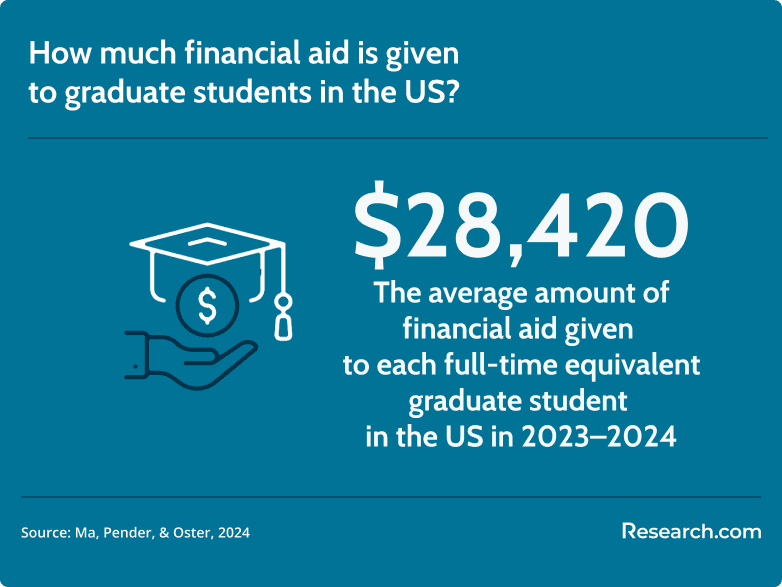
What are the financial aid options for students enrolling in an online master’s in educational leadership?
Students in online master’s in educational leadership programs may be able to use scholarships, grants, employer tuition assistance, payment plans, or federal student aid if the school and program meet eligibility rules. Aid availability varies, so students should confirm whether the program is eligible before applying. Educators comparing multiple education-related options may also review accelerated online physical education degrees if their career goals are tied to physical education instruction or leadership.
Federal TEACH Grant
The Federal TEACH Grant, offered by the US Department of Education, provides up to $4,000 per student per year. Recipients must be completing, or planning to complete, coursework for a teaching career. Eligible graduate students must also serve as a full-time teacher for four elementary or secondary school years at a school or educational service agency (ESA) that serves low-income students.
James Madison Graduate Fellowships
The James Madison Memorial Fellowship Foundation provides educational assistance totaling $24,000 to qualified individuals. The foundation aims to award one fellowship per state each year. Applicants must meet these eligibility requirements:
- Be a US citizen
- Be a teacher, or plan to become a teacher, of American history, American government, or civics at the secondary level
- Have a bachelor’s degree or plan to earn one before August 31 of the application year
Minority Teacher Education Scholarship
The Minority Teacher Education Scholarship (MTES) is offered by the Florida Fund for Minority Teachers, Inc. (FFMT). Applicants must be Florida residents enrolled as upper-division undergraduate or graduate students in teacher education programs at participating institutions. Qualified students receive an annual scholarship of $4,000 during their junior or senior years.
Other cost-reduction strategies
- Ask your district about tuition reimbursement. Some school systems help pay for graduate study when the degree supports workforce needs.
- Compare total cost of attendance. Include fees, books, travel for any campus requirements, and certification exam expenses.
- Check transfer or prior-credit rules. Some programs accept previous graduate credits, while others do not.
- Apply early for scholarships. Deadlines may occur months before the term starts.
What are the prerequisites for enrolling in an online master’s in educational leadership?
Admission requirements vary by university and by whether the program leads to principal certification. Applicants considering related education technology or design options, such as an accelerated master's degree in instructional design and technology online, should pay close attention to whether the program is designed for licensed teachers, school administrators, corporate learning professionals, or another audience.
- Bachelor’s Degree: Programs generally require a bachelor’s degree in education or a related field from an accredited institution.
- Teaching License or Certification: Many educational leadership programs, especially those tied to principal preparation, require an active teaching license or certification.
- Professional Experience: Many programs expect applicants to have 1 to 3 years of teaching or education experience so they can connect leadership coursework to real school settings.
- Letters of Recommendation: Applicants are often asked to submit two or three recommendations from supervisors, faculty members, or professional colleagues who can speak to leadership potential.
- Statement of Purpose: A personal statement usually explains why the applicant wants to pursue educational leadership and how the degree fits their career goals.
Questions to ask admissions before applying
- Does the program require a current teaching license?
- Does the degree lead to principal certification, or is it a non-licensure program?
- Can fieldwork be completed in my current school or district?
- Are GRE or other entrance exams required?
- Will out-of-state students meet certification requirements in their home state?
What courses are typically in an online master’s in educational leadership?
Online educational leadership programs usually focus on the knowledge needed to manage schools, supervise instruction, support teachers, use data, understand policy, and improve learning conditions. Students interested in technology-heavy leadership roles may also compare an accelerated master’s degree in technology education online.
- School Law and Ethics: Students examine legal responsibilities, student rights, educator liability, policy development, and ethical decision-making in schools.
- Educational Leadership and Administration: This course introduces leadership models, strategic planning, organizational behavior, and school management practices.
- Curriculum Development and Instructional Leadership: Students learn how curricula are designed, implemented, monitored, and evaluated to improve instruction.
- Organizational Management in Education: Coursework may cover budgeting, resource planning, staff supervision, school operations, and leadership communication.
- Research Methods in Education: Students develop skills for interpreting data, evaluating programs, reviewing research, and using evidence to guide school improvement.
For educators whose main interest is digital learning strategy, an affordable masters in ed tech online may be a better match than a principal-focused educational leadership program. Ed tech programs often emphasize instructional design, digital tools, online learning systems, and technology integration.
How does program accreditation influence the quality of online master’s in educational leadership?
Accreditation is one of the most important checks before enrolling. Institutional accreditation helps confirm that a college or university meets recognized academic and administrative standards. Programmatic accreditation or state approval can also matter when a degree is intended to prepare students for school leadership licensure.
For educational leadership students, accreditation can affect financial aid eligibility, transfer credit, employer recognition, and whether the program is accepted by a state licensing agency. Before enrolling, verify both the institution’s accreditation and the program’s approval status for your intended credential. Educators considering advanced leadership beyond the master’s level can also compare specialized doctoral options, including fast online EdD pathways.
| Accreditation or approval issue | Why it matters | What to verify |
| Institutional accreditation | Supports degree recognition and may affect aid eligibility. | Is the college or university accredited by a recognized agency? |
| Educator preparation approval | May be required for principal or administrator certification. | Is the program approved for the credential I need? |
| State authorization | Online programs may not serve students in every state or may not meet every state’s licensure rules. | Does the program meet requirements where I plan to work? |
| Field placement approval | Certification programs often require supervised leadership practice. | Can I complete my internship locally, and who approves the site? |
What types of specializations are available in online master’s in educational leadership?
Specializations help students align the degree with a specific leadership goal. Some tracks are built for K-12 principal preparation, while others focus on higher education, curriculum leadership, athletic administration, virtual schools, or education technology.
- Principal or School Administration: This path is intended for educators pursuing assistant principal, principal, or similar school leadership roles. Coursework typically addresses school operations, staff supervision, student outcomes, legal compliance, and community engagement.
- Higher Education Leadership: This concentration is designed for students who want to work in colleges and universities. Topics may include student services, postsecondary policy, academic administration, institutional planning, and enrollment-related operations.
- Curriculum and Instruction Leadership: This option fits educators who want to lead curriculum design, instructional improvement, assessment initiatives, or professional development without necessarily becoming a principal.
| Specialization | Best for | Possible career direction |
| Principal or School Administration | Licensed teachers seeking building-level leadership | Assistant principal, principal, school administrator |
| Higher Education Leadership | Professionals interested in colleges or universities | Postsecondary education administrator, student services leader |
| Curriculum and Instruction Leadership | Educators focused on instructional quality and curriculum systems | Instructional coordinator, curriculum leader |
The chart below visualizes employment levels of educational leaders in the US in 2023, based on 2025 data from the US BLS.
How do you choose the best online master’s in educational leadership?
The best online master’s in educational leadership is the one that matches your career goal, state requirements, budget, schedule, and preferred learning format. A highly ranked or fast program is not automatically the best choice if it does not meet your certification needs or if the total cost is unrealistic.
- Start with your target role. If you want to become a principal, prioritize programs aligned with principal licensure. If you want curriculum work, look for instructional leadership or curriculum-focused coursework.
- Confirm accreditation and state approval. Do not assume that an online program approved in one state meets requirements elsewhere.
- Review fieldwork expectations. Ask where internships occur, who supervises them, and whether they can be completed at your current workplace.
- Compare total cost. Include tuition, fees, course materials, certification exams, travel, and time away from work.
- Evaluate student support. Strong online programs provide advising, technical help, career support, faculty access, and clear communication about deadlines.
- Check schedule fit. Accelerated programs may be attractive, but the pace must be realistic during the school year.
Because there are many online education degree programs, students should compare program outcomes, curriculum design, licensure alignment, and affordability rather than relying on one factor alone.
Common mistakes to avoid when choosing a program
| Mistake | Why it can hurt you | Better approach |
| Choosing only the cheapest tuition | Low tuition may not include fees, certification costs, or adequate support. | Compare total cost and student services. |
| Ignoring state licensure rules | A degree may not qualify you for principal certification where you work. | Confirm requirements with the program and your state licensing agency. |
| Assuming online means easier | Online graduate programs still require substantial reading, writing, projects, and fieldwork. | Ask for a sample course schedule and weekly workload estimate. |
| Overlooking internship logistics | Fieldwork can be difficult if your school or district does not approve the placement. | Clarify placement procedures before enrolling. |
| Relying only on rankings | A program can be well known but still mismatched for your goals. | Use rankings as one input, not the final decision. |
What is the return on investment for an online master’s in educational leadership?
Return on investment depends on how much you pay, how quickly you finish, whether the degree helps you qualify for leadership roles, and whether those roles are available in your region. The median wage comparison between teachers and K-12 education administrators shows why many educators evaluate this degree, but the financial payoff depends on moving into a role that actually uses the credential.
Students should calculate ROI using a realistic scenario: total tuition and fees, loan interest if applicable, certification exam costs, possible salary movement, and the time it may take to secure an administrative position. Nonfinancial returns also matter. The degree may expand your influence, prepare you to lead school improvement, strengthen your professional network, and open paths into district or higher education leadership.
If you are comparing graduate education options across fields, market value can vary widely by profession. For example, Research.com also provides information on speech pathology online programs, which serve a different licensure and career pathway than educational leadership.
How to estimate your personal ROI
- Identify your target job. Decide whether you are pursuing principal licensure, curriculum leadership, higher education administration, or another role.
- Calculate the full program cost. Add tuition, fees, books, technology requirements, travel, exam costs, and potential lost income.
- Check salary ranges in your district or state. Local salary schedules may be more useful than national medians for personal planning.
- Confirm credential requirements. Make sure the degree satisfies the qualifications for your intended role.
- Estimate timeline to promotion. A degree may improve eligibility, but hiring cycles and openings can affect when returns begin.
What career paths are available to graduates of online master’s in educational leadership?
Graduates can pursue leadership roles in K-12 schools, colleges, universities, district offices, curriculum departments, and education-related organizations. The exact path depends on prior teaching experience, licensure, specialization, and employer requirements.
Instructional Coordinators
Instructional coordinators develop curriculum standards, support teachers, evaluate instructional materials, and analyze the effectiveness of teaching strategies. In May 2024, instructional coordinators working in the US had a median annual wage of $74,720 (US BLS, 2025).
Elementary, Middle, and High School Principals
Principals manage daily school operations, supervise staff, oversee budgets, support school climate, enforce policies, and lead improvement efforts. In May 2024, these educational leaders had a median annual wage of $104,070 (US BLS, 2025).
Students pursuing this route should carefully review school principal certification requirements. Requirements vary by state and may include a teaching license, professional experience, state exams, supervised administrative practice, and completion of an approved educational leadership program.
Postsecondary Education Administrators
Postsecondary education administrators work in colleges and universities in areas such as admissions, student services, academic departments, registrar operations, or institutional administration. In May 2024, postsecondary education administrators employed in the US had a median annual wage of $103,960 (US BLS, 2025).
| Career path | Typical focus | Median annual wage |
| Instructional Coordinators | Curriculum standards, teacher support, instructional improvement | $74,720 |
| Elementary, Middle, and High School Principals | School operations, staff leadership, budgets, student environment | $104,070 |
| Postsecondary Education Administrators | College or university administration, student services, academic operations | $103,960 |
The chart below visualizes median annual wages of educational leaders in the US in May 2024, according to 2025 data from the US BLS.
What is the job market like for graduates of online master’s in educational leadership?
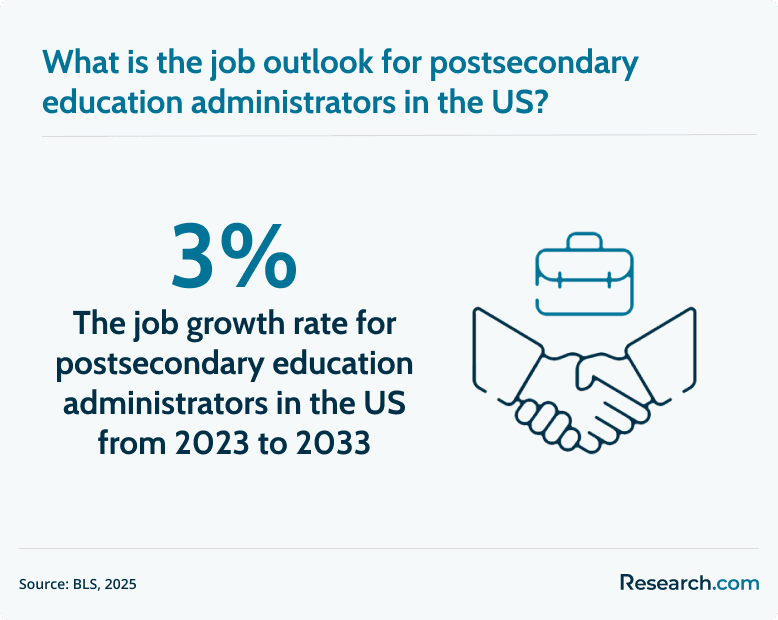
The labor market for educational leadership roles is mixed rather than uniformly fast-growing. Postsecondary education administrators are projected to see 3% employment growth from 2023 to 2033, with an average of 15,200 job openings each year.
Instructional coordinators are projected to have 2% employment growth over the same period, with about 20,100 openings per year. Elementary, middle, and high school principals are projected to decline slightly by 1%, although about 20,800 annual openings are still expected.
These figures suggest that leadership opportunities will continue to exist, especially through replacement needs, but competition may vary by region and role. Graduates should strengthen their candidacy through leadership experience, measurable school improvement work, strong references, certification readiness, and evidence of data-informed decision-making.
Current trends affecting educational leadership careers
- Data-informed decision-making: School leaders are increasingly expected to use assessment, attendance, staffing, and performance data to guide improvement efforts.
- Technology-supported instruction: Leaders need enough digital fluency to evaluate online tools, support teachers, and manage virtual or blended learning environments.
- Accountability and compliance: School administrators must understand education law, student services requirements, safety policies, and reporting obligations.
- Staff development and retention: Leadership roles often require mentoring teachers, managing teams, and supporting professional learning.
Is pursuing a doctoral degree in educational leadership a strategic next step?
A doctorate in educational leadership can make sense for professionals who want to move beyond school-level administration into senior district leadership, higher education leadership, policy work, consulting, research, or executive roles. A master’s degree usually focuses on applied leadership and administrative preparation, while doctoral study typically adds advanced research, systems thinking, policy analysis, and strategic organizational change.
However, a doctorate is not necessary for every education leader. Before enrolling, ask whether the credential is required for your target role, whether the cost is manageable, and whether you want a research-oriented or practice-oriented doctoral experience. Professionals looking for flexible and lower-cost options can review cheap online doctoral programs in educational leadership as part of a broader comparison.
What are the challenges of pursuing an online master’s in educational leadership?
Online study can be convenient, but it is not without challenges. Students need strong self-management, reliable technology, consistent time for reading and writing, and the initiative to build relationships with faculty, classmates, and field mentors.
- Less in-person contact: Online students may need to be more intentional about asking for feedback, seeking mentorship, and networking.
- Fieldwork coordination: Internships or practicums can require approval from both the university and a school or district site.
- Technology dependence: Reliable internet, video meeting access, and comfort with learning platforms are essential.
- Workload pressure: Teachers pursuing accelerated programs may find the combination of classroom duties, graduate coursework, and leadership fieldwork demanding.
- Quality variation: Students must verify accreditation, curriculum depth, licensure alignment, and faculty support before enrolling.
Students who want to improve study efficiency may benefit from comparing how other accelerated online programs structure workload and pacing, including accelerated online philosophy programs. The subject differs, but the time-management challenge of compressed online study can be similar.
Who should choose an online master’s in educational leadership?
This degree is a strong fit for educators who want to lead schools, supervise instruction, manage teams, guide curriculum, or move into higher education administration. It is especially practical for working teachers who need online flexibility and already have the professional experience required for leadership preparation.
- Licensed teachers preparing for principal or assistant principal roles
- Educators interested in curriculum leadership or instructional coordination
- School professionals who want to move into district-level responsibilities
- Higher education staff seeking advancement in student services or academic administration
- Educators who want leadership training without leaving their current job
Who should consider a different graduate program?
An online master’s in educational leadership may not be the best option for every education professional. If your goal is initial teacher licensure, classroom specialization, counseling, education technology, speech-language pathology, or research-heavy academic work, another graduate path may be more appropriate.
| If your goal is... | Consider instead... | Why |
| Becoming a classroom teacher | MAT or initial licensure program | Educational leadership programs usually assume prior teaching experience. |
| Designing digital courses or training systems | Instructional design or educational technology | These programs focus more directly on learning technology and course design. |
| Working in adult learning or workforce education | Adult education | Adult education programs are often better aligned with non-K-12 learners. |
| Moving into senior policy, research, or executive leadership | EdD or PhD pathway | Doctoral programs offer deeper preparation in research and systems-level leadership. |
Key Insights
- An online master’s in educational leadership is most valuable when it clearly matches your target role, especially if you need principal certification or another state-recognized credential.
- Salary potential can be higher in administration: K-12 education administrators had a median annual wage of $104,070 in May 2024, compared with $61,960 for preschool, elementary, middle, secondary, and special education teachers.
- Accelerated programs can take as little as 12 to 18 months, but faster completion usually means heavier course loads and less scheduling flexibility.
- Accreditation, state approval, and field experience requirements should be verified before enrollment. Do not assume every online program meets licensure rules in every state.
- Cost comparisons should include total tuition, fees, books, technology costs, exam preparation, and any internship-related expenses.
- The job market varies by role: postsecondary education administrators are projected to grow by 3% from 2023 to 2033, instructional coordinators by 2%, while elementary, middle, and high school principals are projected to decline slightly by 1%.
- The best program is not always the fastest or cheapest. It is the one that fits your certification needs, schedule, budget, career goal, and capacity to complete online graduate work successfully.
References:
- Ma, J., Pender, M., & Oster, M. (2024). Trends in College Pricing and Student Aid 2024. CollegeBoard. https://research.collegeboard.org/media/pdf/Trends-in-College-Pricing-and-Student-Aid-2024-ADA.pdf
- US Bureau of Labor Statistics. (2025, April 18). Elementary, Middle, and High School Principals. Occupational Outlook Handbook. https://www.bls.gov/ooh/management/elementary-middle-and-high-school-principals.htm
- US Bureau of Labor Statistics. (2025, April 18). Instructional Coordinators. Occupational Outlook Handbook. https://www.bls.gov/ooh/education-training-and-library/instructional-coordinators.htm
- US Bureau of Labor Statistics. (2025). Occupational Employment and Wage Statistics, Industry: Cross-industry, Private, Federal, State, and Local Government. Occupational Employment and Wage Statistics Query System. https://data.bls.gov/oes/#/industry/000000
- US Bureau of Labor Statistics. (2025, April 18). Postsecondary Education Administrators. Occupational Outlook Handbook. https://www.bls.gov/ooh/management/postsecondary-education-administrators.htm
Other Things You Need to Know about Online Master’s Degree Programs in Educational Leadership
Yes, many accelerated online master’s programs in educational leadership waive the GRE entirely, especially for applicants with a regionally accredited bachelor’s degree and a minimum GPA of 2.75 to 3.0. Some schools also accept a professional resume, recommendation letters, and a statement of purpose instead.
Requirements for enrolling in the fastest online Master's programs in Educational Leadership for 2027 typically include a bachelor’s degree from an accredited institution, a minimum GPA (often around 3.0), letters of recommendation, a personal statement, and sometimes teaching or educational experience. GRE scores may be required by some programs. Always check specific program requirements for detailed admission criteria.





