2027 Fastest Online Master’s in Instructional Design Degree Programs

Co-Founder and Chief Data Scientist
Choosing the fastest online master’s in instructional design is mainly a time, cost, and career-fit decision. The right program can help teachers, trainers, curriculum specialists, HR professionals, and career changers build graduate-level skills in learning design without spending two full years in school. The wrong program can leave you with weak portfolio work, limited employer recognition, or a schedule that is too compressed to manage well.
Instructional designers create learning experiences for schools, universities, companies, government agencies, nonprofits, and education technology organizations. They analyze learner needs, design curriculum and training materials, select digital tools, build assessments, and evaluate whether instruction actually works. In 2024, the U.S. employed around 210,850 instructional coordinators, and demand remains tied to online learning, workforce upskilling, accessibility expectations, and the growing use of learning technologies (US BLS, 2024).
This guide explains what to expect from accelerated online master’s in instructional design programs, how fast they can be completed, what they cost, which schools offer some of the shortest options, and how to evaluate whether this degree makes sense for your goals. It also covers admissions, accreditation, certifications, common courses, career paths, salaries, job outlook, and practical ways to reduce both time and cost.
Quick answer: Is a fast online master’s in instructional design worth it?
A fast online master’s in instructional design can be worth it if you already have professional experience and want to move into curriculum design, e-learning development, corporate training, learning technology, or educational leadership support. The fastest programs listed here can be completed in as short as 10 months to 18 months, depending on the school, course load, and format.
- Best fit: Working educators, corporate trainers, HR professionals, learning and development staff, curriculum writers, and career changers who can handle intensive graduate coursework.
- Main advantage: Accelerated online formats may let students finish in as short as 12 months while continuing to work.
- Career use: Graduates can apply instructional design skills in K–12 education, higher education, corporate learning, government training, nonprofits, and EdTech.
- Salary context: Instructional designers and coordinators earn around $77,000 yearly, with some professionals earning more than $100,000.
- What to check first: Accreditation, total cost, portfolio requirements, transfer credit policy, course pacing, faculty support, and whether the curriculum matches your target industry.
What can I expect from accelerated online master’s in instructional design degree programs?
An online master’s in instructional design teaches students how to plan, build, deliver, and evaluate learning experiences. Programs usually combine learning theory, curriculum planning, assessment design, instructional technology, multimedia development, accessibility, and project management. The goal is not only to understand how people learn but also to produce usable learning products such as online modules, training plans, course maps, assessments, job aids, and portfolio projects.
Accelerated programs cover similar graduate-level content as traditional programs but compress the timeline through shorter terms, year-round enrollment, heavier course loads, or competency-based pacing. That speed can be valuable, but it also requires strong time management and the ability to complete design projects quickly.
| Program feature | What it means for students | Decision point |
| Six- to eight-week courses | Students move through one topic quickly and may complete more terms per year. | Works best if you can keep up with weekly readings, projects, and deadlines. |
| Asynchronous coursework | Lectures, assignments, and discussions can often be completed around work or family obligations. | Helpful for working adults, but it requires self-direction. |
| Portfolio-based assignments | Students create samples that can be shown to employers. | Look for programs with real deliverables, not only exams or discussion posts. |
| Technology-focused curriculum | Courses may include learning management systems, multimedia tools, assessment platforms, and e-learning development. | Choose a program aligned with your target setting, such as K–12, higher education, or corporate learning. |
| Capstone or applied project | Students solve an instructional problem or complete a final design project. | A strong capstone can strengthen your job search portfolio. |
Where can I work with an online master’s in instructional design?
Instructional design is used anywhere people need structured learning. Graduates may work in formal education, workplace training, public-sector learning, or digital content development. The work setting matters because the tools, learner audience, compliance requirements, and career titles can vary widely.
- K–12 education: Instructional designers help teachers and school leaders improve curriculum, create digital resources, support technology use, and align learning materials with student needs. This is the leading employment sector for instructional designers, with over 100,000 professionals working in the field in 2024.
- Higher education: Around 32,000 designers work with faculty in colleges, universities, and professional schools to develop online courses, multimedia lessons, hybrid classes, and interactive learning modules.
- Corporate training: Businesses hire instructional designers to build onboarding programs, compliance training, leadership development, sales enablement modules, product education, and e-learning courses.
- Government and nonprofits: These organizations use instructional designers for public education campaigns, workforce development, internal training, community programs, and large-scale learning initiatives.
- Other settings: Museums, libraries, consulting firms, software companies, and EdTech organizations may hire designers to create educational content, user training, learning apps, or informal learning experiences.
How much can I make with an online master’s in instructional design?
According to the U.S. Bureau of Labor Statistics (BLS), instructional designers and coordinators earn an annual average salary of $77,600. Reported wages range from $46,560 at the 10th percentile to $115,410 at the 90th percentile. Those figures should be treated as labor-market context, not a guaranteed outcome for any degree program.
Pay depends on several factors. Entry-level professionals usually earn closer to the lower end of the range, while experienced designers, managers, consultants, and specialists with strong technical portfolios may command higher wages. A master’s degree can help, but employers also evaluate practical skills, industry knowledge, tool fluency, communication ability, and evidence of completed instructional design work.
Industry also influences earnings. Instructional coordinators in Management, Scientific, and Technical Consulting Services earn the highest average wages at $124,130. Professionals in the Federal Executive Branch and Accounting and Payroll Services also report average earnings exceeding $100,000 annually.
Location matters as well. The District of Columbia, California, Connecticut, Maryland, and Washington report average salaries well above the national median. Higher wages in these areas may reflect cost of living, government hiring, technology concentration, and demand for specialized training expertise.
| Factor | How it can affect salary |
| Experience level | New designers may start lower, while senior designers, managers, and consultants may earn substantially more. |
| Industry | Consulting, federal roles, technology-driven employers, and corporate learning teams may offer higher pay than some public education roles. |
| Portfolio quality | Employers often want to see examples of course design, e-learning modules, assessments, and multimedia learning assets. |
| Credentials | A master’s degree, certifications, teaching credentials, or project management training may improve competitiveness for selected roles. |
| Location | States and metro areas with higher living costs or specialized employer demand may offer higher average wages. |
- Fastest Online Master's in Instructional Design Degree Programs for 2027
- How long does it take to complete an accelerated online master’s in instructional design degree program?
- What is the average cost of an accelerated online master’s in instructional design degree program?
- How flexible are accelerated online master’s in instructional design degree programs?
- Can I get into an instructional design program with a non-education background?
- Which certifications pair well with an accelerated online master’s in instructional design?
- Are accelerated online master’s in instructional design programs accredited and recognized?
- What courses are included in an accelerated online master’s in instructional design degree program?
- What are the most common specializations in online master’s in instructional design degree programs?
- How can you manage the financial investment of your accelerated online master’s in instructional design degree?
- How can students speed up the completion of an online master’s in instructional design degree program?
- How do these programs cultivate professional networking and mentorship?
- What career paths are available for graduates of accelerated online master’s in instructional design degree programs?
- Do employers value accelerated online master’s in instructional design degrees?
- What is the job market for graduates with an accelerated online master’s in instructional design?
Fastest Online Master’s in Instructional Design Degree Programs for 2027
How do we rank schools?
A fast program is not automatically a strong program. Research.com’s team developed this ranking through a structured methodology that considers factors relevant to graduate students comparing online degree options.
To improve accuracy and transparency, program information was reviewed using trusted higher education sources, including the Integrated Postsecondary Education Data System, Peterson’s database and its Distance Learning Licensed Data Set, College Scorecard, and the National Center for Education Statistics (NCES).
| Rank | School | Program length | Credits | Listed cost | Accreditation |
| 1 | Western Governors University | 10 months | 32 | $4,325 per six-month term | Northwest Commission on Colleges and Universities (NWCCU) |
| 2 | University of Texas Rio Grande Valley | 10 months | 30 | $458.33 per credit hour | Southern Association of Colleges and Schools Commission on Colleges (SACSCOC) |
| 3 | National University | 11 months | 45 quarter credits | $10,313 per year | WASC Senior College and University Commission (WSCUC) |
| 4 | Grand View University | 12 months | 33 | $450 per credit hour | Higher Learning Commission (HLC) |
| 5 | Purdue Global | 12 months | 45 quarter credits | $420 per credit hour | HLC |
| 6 | Tiffin University | 12 months | 30 | $630 per credit hour | HLC |
| 7 | Grand Canyon University | 15–18 months | 32 | $615 per credit hour | HLC |
| 8 | University of Cincinnati Online | 12–20 months | 30 | $746 resident, $761 non-resident per credit hour | HLC |
| 9 | University of Alabama | 18 months | 30 | $480 per credit hour | SACSCOC |
| 10 | Walden University | 18 months | 45 quarter credits | $640 per credit hour | HLC |
1. Western Governors University
Western Governors University offers an online MEd in Education Technology and Instructional Design with options focused on K–12 and adult learners. Students complete 12 courses, including learning design, facilitating e-learning experiences, and a capstone. The program uses a self-paced, competency-based model, meaning students progress by demonstrating mastery through assessments rather than following a fixed weekly class schedule.
- Program Length: 10 months
- Tracks/Concentrations: K–12; Adult Learner
- Cost per Six-Month Term: $4,325
- Required Credits to Graduate: 32
- Accreditation: Northwest Commission on Colleges and Universities (NWCCU)
2. University of Texas Rio Grande Valley
The University of Texas Rio Grande Valley provides an online MEd in Curriculum and Instruction with specializations in high-demand teaching areas. The program is designed for educators who want to strengthen curriculum planning, instructional practice, and subject-specific expertise. Seven-week modules allow students to move quickly while applying both theory and practice to educational settings.
- Program Length: 10 months
- Tracks/Concentrations: Mathematics Education; English; Elementary Math and Science Education
- Cost per Credit Hour: $458.33
- Required Credits to Graduate: 30
- Accreditation: Southern Association of Colleges and Schools Commission on Colleges (SACSCOC)
3. National University
National University offers an MS in Learning Experience Design and Instructional Technology that emphasizes technology-supported instruction. Students study how to use multimedia, simulations, and virtual environments to meet instructional goals. The curriculum is built for learners who want practical preparation for roles in technology coordination, virtual instruction, and learning experience design.
- Program Length: 11 months
- Tracks/Concentrations: Educational Technology
- Cost per Year: $10,313
- Required Credits to Graduate: 45 quarter credits
- Accreditation: WASC Senior College and University Commission (WSCUC)
4. Grand View University
Grand View University offers an online MS in Instructional Design that brings together education, psychology, communication, and technology. Students learn to design learning experiences for varied audiences while developing skills in assessment, collaboration, facilitation, and instructional technology. The program also gives students the opportunity to earn four certificates in areas tied to instructional design foundations, learning assessments, facilitation, and technology.
- Program Length: 12 months
- Tracks/Concentrations: Instructional Design Foundations; Learning Assessments; Instructional Design Facilitation; Instructional Design Technology
- Cost per Credit Hour: $450
- Required Credits to Graduate: 33
- Accreditation: Higher Learning Commission (HLC)
5. Purdue Global
Purdue Global offers an online MS in Instructional Design and Technology with an adult learning concentration. This option may appeal to students targeting corporate, nonprofit, military, or workforce training roles. Students complete nine courses and typically spend about 15 hours per week on coursework. Topics include instructional development, technology integration, program evaluation, project management, and learner-centered design.
- Program Length: 12 months
- Tracks/Concentrations: Adult Learning
- Cost per Credit Hour: $420
- Required Credits to Graduate: 45 quarter credits
- Accreditation: HLC
6. Tiffin University
Tiffin University offers an online MEd in Instructional Design for students who want to create inclusive learning experiences in schools, colleges, or workplace training environments. The program includes hands-on projects and opportunities to collaborate with instructional design professionals. Coursework addresses Universal Design for Learning, accessibility, critical design, and ethics, with attention to materials that serve learners from varied backgrounds.
- Program Length: 12 months
- Tracks/Concentrations: Instructional Design
- Cost per Credit Hour: $630
- Required Credits to Graduate: 30
- Accreditation: HLC
7. Grand Canyon University
Grand Canyon University offers an online MS in Instructional Design focused on learning and training programs for education and professional settings. Students study curriculum design, instructional strategies, technology integration, evaluation methods, and interventions intended to improve learning outcomes. The program is designed to develop skills that can transfer across schools, organizations, and training environments.
- Program Length: 15–18 months
- Tracks/Concentrations: Instructional Design
- Cost per Credit Hour: $615
- Required Credits to Graduate: 32
- Accreditation: HLC
8. University of Cincinnati Online
The University of Cincinnati Online offers a MEd in Instructional Design and Technology that prepares students to create, evaluate, and improve technology-supported learning materials. The curriculum draws from cognitive science, education, design, and computer science. Students may complete optional field experiences and build a professional portfolio through a final capstone. Coursework includes multimedia development, online assessment design, and blended learning strategies.
- Program Length: 12–20 months
- Tracks/Concentrations: Teaching Concentration
- Cost per Credit Hour: $746 (resident), $761 (non-resident)
- Required Credits to Graduate: 30
- Accreditation: HLC
9. University of Alabama
The University of Alabama offers an online MA in Instructional Technology for students interested in learning solutions for business, healthcare, government, and education. The curriculum covers instructional design, mobile and game-based learning, project management, and current educational technology trends. Students complete a portfolio and may gain applied experience through an internship.
- Program Length: 18 months
- Tracks/Concentrations: Instructional Technology
- Cost per Credit Hour: $480
- Required Credits to Graduate: 30
- Accreditation: SACSCOC
10. Walden University
Walden University offers an online MS in Instructional Design and Technology centered on personalized, engaging learning experiences. Students examine how people learn and how multimedia can support instruction for different audiences. The program includes a capstone in which students address a real instructional challenge while developing a professional portfolio.
- Program Length: 18 months
- Tracks/Concentrations: General; Online Teaching and Learning; Training and Performance Improvement
- Cost per Credit Hour: $640
- Required Credits to Graduate: 45 quarter credits
- Accreditation: HLC
How long does it take to complete an accelerated online master’s in instructional design degree program?
Most accelerated online master’s in instructional design programs take about 12 to 18 months, although some options listed in this guide can be completed in 10 months or 11 months. By comparison, many traditional master’s programs take up to two years. Students comparing education pathways may also look at related options such as accelerated online alternative teacher certification programs, but those usually serve a different goal: teacher credential preparation rather than instructional design specialization.
Shorter completion times usually come from compressed academic calendars. Instead of a standard 15-week semester, accelerated programs often use six- to eight-week terms, multiple annual start dates, and year-round course availability. Some programs allow students to take two or more courses per term, while competency-based programs may let experienced learners advance after proving mastery.
| Completion pace | Typical student profile | Trade-off |
| 10 to 12 months | Students with strong time management, relevant experience, and the ability to handle intensive workloads. | Fastest route, but less margin for missed deadlines or heavy work demands. |
| 12 to 18 months | Working professionals who want speed but need a more manageable schedule. | Balanced option for many adult learners. |
| 18 months or longer | Students with full-time work, caregiving responsibilities, or limited weekly study time. | Slower, but often more sustainable. |
The fastest option is not always the best option. Choose a timeline you can complete without sacrificing portfolio quality, networking, internship opportunities, or your current job performance.
What is the average cost of an accelerated online master’s in instructional design degree program?
The cost of an accelerated online master’s in instructional design depends on institution type, tuition model, residency status, credit requirements, fees, and whether credits transfer. As a broader graduate-cost benchmark, public universities charge around $9,560, while private institutions may cost approximately $31,930 (Ma et al., 2024). Students comparing other fast graduate options, such as an accelerated online master of business law, should evaluate total program cost rather than headline tuition alone.
Online tuition may be charged by credit, term, course, or academic year. Some schools use flat tuition for all online students regardless of residency, while others charge different rates for residents and non-residents. Discounts may be available for military students, educators, or employees of partner organizations. Transfer credits, when accepted, can reduce both cost and time.
Do not focus only on tuition. Online students may also pay technology fees, course material fees, graduation fees, subscription costs, software costs, or proctoring fees. These charges can affect the true price of the degree.
| Cost item | Why it matters | Question to ask |
| Tuition rate | This is usually the largest cost, but rates may be listed by credit, term, or year. | What is the full tuition for the entire degree? |
| Required credits | A lower per-credit price may still cost more if the program requires more credits. | How many credits or quarter credits are required to graduate? |
| Fees | Technology, online learning, and course fees can add to the total bill. | What mandatory fees are not included in tuition? |
| Transfer credits | Approved prior coursework can reduce time and cost. | How many credits can transfer, and what is the approval process? |
| Employer support | Tuition assistance or reimbursement can lower out-of-pocket expense. | Does my employer pay for graduate study related to training, education, or HR? |
Some learners may also compare this degree with cheap online EdD programs. That comparison can be useful, but the degrees serve different purposes. A master’s in instructional design usually focuses on designing learning experiences and training solutions, while an EdD is typically longer and more leadership-oriented.
How flexible are accelerated online master’s in instructional design degree programs?
Accelerated online instructional design programs are often built for adults who cannot attend campus during traditional hours. Their flexibility can resemble short-format professional training options, such as shortest CompTIA Security online training programs, in the sense that learning is compressed into focused terms. However, a master’s degree is still graduate education, so the workload is deeper and more sustained.
Students balancing work, family, or classroom duties should examine how flexibility actually works in each program. “Online” does not always mean fully self-paced, and “accelerated” does not always mean easier.
- Shorter academic terms: Six- to eight-week courses let students move quickly, but each week may include significant reading, discussion, design work, and project deadlines.
- Asynchronous learning: Many programs allow students to access lectures and assignments at any time, which helps those working full time or managing unpredictable schedules.
- Interaction and collaboration: Online programs may still include discussion boards, group projects, video meetings, peer reviews, and instructor feedback.
- Student support: Advising, technical help, library access, writing support, and career services can be especially important in a fast-paced format.
This flexibility can be helpful for educators managing demanding roles, including those with middle school teacher responsibilities. Still, students should be realistic about weekly time demands before enrolling.
CareerOneStop reports that 43% of instructional coordinators hold master’s degrees (CareerOneStop, 2022). For professionals who need that graduate credential but cannot step away from work, an online accelerated route can be a practical way to build qualifications while remaining employed.
Can I get into an instructional design program with a non-education background?
Yes. Many online master’s in instructional design programs accept students from fields outside traditional education. A teaching background can be useful, but instructional design also draws on communication, technology, project management, UX thinking, media production, HR, training, and subject-matter expertise. Applicants who have created training materials, led onboarding, written documentation, managed learning projects, or supported classroom instruction may already have relevant experience. Even reviewing a teaching assistant job description can show how learner support, classroom communication, and instructional preparation connect to this field.
Typical admissions requirements may include:
- Bachelor’s degree and transcripts: Most programs require a regionally accredited undergraduate degree, often in any field, along with official transcripts.
- Minimum GPA: Many programs expect a GPA between 2.75 and 3.0, although applicants with lower GPAs may be considered through conditional or probationary admission.
- Resume or CV: Programs may ask for a record of professional, volunteer, teaching, training, content creation, technology, or project experience.
- Letters of recommendation: One to three recommendations from professors, supervisors, or colleagues may be required.
- Statement of purpose: Applicants usually explain why they want to study instructional design and how the degree fits their career goals.
Career changers should use the application to connect past experience to instructional design. For example, a marketing professional might highlight audience analysis and content strategy. An HR specialist might emphasize training, onboarding, and performance improvement. A software trainer might discuss documentation, user education, and platform learning.
Workforce learning trends also support this broader applicant pool. LinkedIn reports that 42% of leading companies in career development collaborate with HR to identify critical workforce skills, while 48% outline career paths that include targeted skill sets and recommended training (LinkedIn, 2025). That focus on skills-based development creates opportunities for instructional designers who can connect learning theory with workplace performance needs.
Which certifications pair well with an accelerated online master’s in instructional design?
A master’s degree can provide academic depth, while certifications can show targeted expertise in tools, project management, talent development, or educational technology. This is similar to how learners comparing the shortest online cybersecurity bachelor's degree programs may also consider industry certifications to signal applied skills.
Useful certification options include:
- Certified Professional in Talent Development: Offered by the Association for Talent Development, the CPTD certification focuses on advanced talent development skills, including instructional design, training delivery, performance improvement, and learning technologies.
- Project Management Professional: The PMP credential from the Project Management Institute can help instructional designers who manage timelines, stakeholders, budgets, vendors, and complex learning projects.
- Google Educator Certification Level 1 and 2: These credentials may be useful for designers working in K–12 or higher education environments that rely on Google Workspace tools for instruction and collaboration.
Tool fluency is also important. Many instructional design roles ask for experience with authoring tools, learning management systems, graphic design tools, video editing software, and collaboration platforms. Increasingly, AI literacy is part of that skill set. With six in 10 teachers using AI in their work (Ash, 2025), instructional designers who understand responsible AI use may be better prepared to support content creation, personalization, feedback, and assessment workflows.
For example, a designer might combine AI-supported drafting with Canva for visual assets, Adobe Premiere for video editing, and WordPress for web-based learning resources. The goal should be effective and ethical learning design, not using technology simply because it is available.
These credentials differ from school leadership requirements. Professionals researching what are the qualifications to be a principal should expect separate administrative credentials and state licensure in many cases. For instructional design, however, certifications can add practical depth to a graduate degree, especially in corporate learning, EdTech, higher education, and curriculum design roles.
This chart displays the share of teachers who use AI as well as the tasks that they use it for.
Are accelerated online master’s in instructional design programs accredited and recognized?
Accreditation is one of the first quality checks students should make. An accredited institution has been reviewed by a recognized accrediting body for academic quality, governance, student support, and institutional standards. For graduate students, accreditation can affect financial aid eligibility, credit transfer, employer recognition, and future doctoral study options.
Most students should look for institutional accreditation from a recognized regional accreditor, such as NWCCU, SACSCOC, WSCUC, or HLC, all of which appear among the programs listed in this guide. Specialized accreditation may also matter in some education-related fields, especially if the degree is tied to teacher licensure or school administration. Instructional design degrees are often not licensure programs, so students should verify whether the program meets any state-specific requirements if they plan to work in a regulated K–12 role.
Recognition also depends on program quality. Employers may look at whether the program includes applied projects, capstone work, faculty feedback, modern learning technologies, accessibility training, and a strong portfolio. Students comparing accelerated doctorates may review the fastest EdD program, but a master’s in instructional design is usually the more direct credential for hands-on learning design roles.
What courses are included in an accelerated online master’s in instructional design degree program?
Course titles vary by university, but most online master’s in instructional design programs combine learning theory, design practice, research, technology, assessment, and project-based work. These courses can support students from education backgrounds as well as those exploring adjacent paths, including readers asking what do you need to be a substitute teacher.
| Common course area | What students learn | Why it matters professionally |
| Teaching and Learning Concepts | Learning theories, instructional models, learner motivation, and audience analysis. | Helps designers choose strategies that fit the learner, context, and objective. |
| Research Methods in Education | Quantitative, qualitative, and mixed-method research approaches. | Supports evidence-based design and program evaluation. |
| Assessment of Learning | Formative and summative assessments, rubrics, alignment, and outcome measurement. | Shows whether instruction is achieving its goals. |
| Issues and Trends in Instructional Design | Accessibility, ethics, educational technology, learner engagement, and changing instructional practices. | Prepares students to design responsibly in evolving learning environments. |
| Project Management for Instructional Designers | Planning, scheduling, stakeholder communication, production workflows, and implementation. | Instructional designers often manage complex projects with multiple contributors. |
| Strategic Communication for Instructional Designers | Client communication, presentation skills, needs analysis conversations, and stakeholder alignment. | Designers must explain recommendations clearly to faculty, executives, clients, or subject-matter experts. |
The strongest programs connect these courses to portfolio artifacts. Before enrolling, ask whether you will graduate with examples of learning modules, assessment plans, course maps, training outlines, multimedia assets, and evaluation reports.
What are the most common specializations in online master’s in instructional design degree programs?
Specializations help students align graduate study with the environment where they want to work. A K–12-focused curriculum may not prepare students in the same way as a corporate training or e-learning development track, so this choice matters.
- K–12 Education: This concentration emphasizes curriculum development, standards alignment, assessment, classroom technology, and digital learning materials for elementary and secondary schools.
- Adult Learning and Workforce Development: This path focuses on how adults learn in workplace, continuing education, military, nonprofit, or professional training settings.
- Higher Education Instructional Design: Students prepare to support college faculty with online, hybrid, and technology-enhanced courses.
- E-Learning Design and Development: This specialization centers on online courses, multimedia learning, interactivity, user experience, and learning management systems.
- Instructional Technology: Students focus on selecting, integrating, and evaluating digital tools used to deliver and assess instruction.
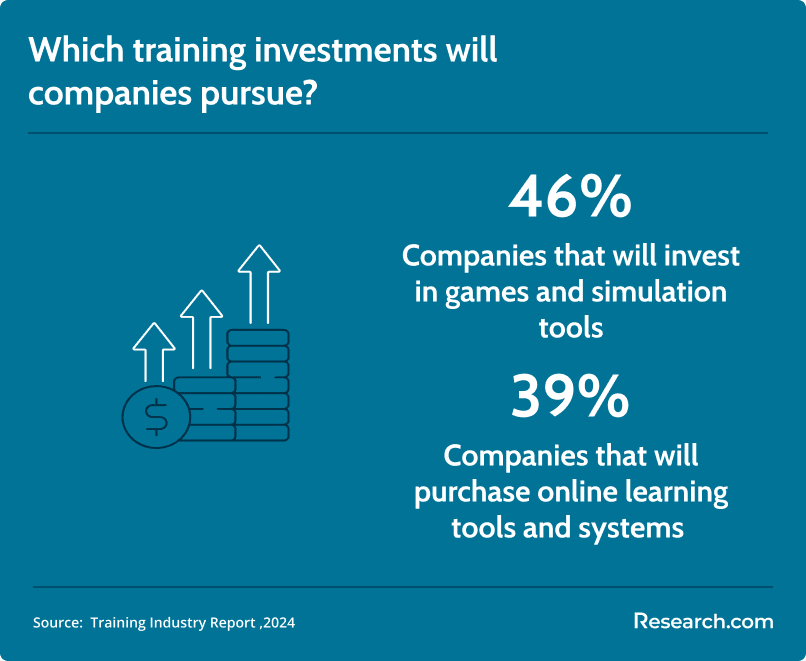
Corporate learning is an especially important area to watch. According to Training Magazine, 46% of companies plan to invest in games and simulation products, while 39% intend to allocate part of their training budgets to online learning tools and systems. These investments point to continued demand for designers who can create engaging digital, simulated, and technology-supported training experiences.
| Choose this specialization if you want to work in... | Best-fit specialization |
| School districts or K–12 curriculum departments | K–12 Education |
| Corporate learning, HR training, or workforce development | Adult Learning and Workforce Development |
| Colleges, universities, or academic technology teams | Higher Education Instructional Design |
| Online course production or digital learning companies | E-Learning Design and Development |
| Learning systems, technology integration, or EdTech roles | Instructional Technology |
How can you manage the financial investment of your accelerated online master’s in instructional design degree?
Managing the cost of an accelerated online master’s starts with calculating the full price and then identifying ways to reduce out-of-pocket spending. Tuition is only one part of the decision. Students should also consider fees, books or digital materials, software, lost income if they reduce work hours, loan repayment, and the realistic career value of the degree.
Start by comparing total program cost, not just the cost per credit. Then ask each school about scholarships, graduate assistantships, employer partnerships, military benefits, educator discounts, payment plans, and tuition reimbursement. If you already work in education, HR, training, or technology, your employer may see the degree as directly relevant to organizational needs.
Students comparing costs across learning-related fields may also review the cheapest MLIS online degree, but the better question is which credential aligns with the work you want to do. A lower-cost degree is not a better value if it does not support your target career path.
Questions to ask before committing financially
- What is the total cost of the degree from start to finish?
- Are online fees, course materials, software, or graduation fees included in the published cost?
- Can I transfer credits or receive credit for prior graduate coursework?
- Does the program qualify for federal financial aid?
- Does my employer offer tuition assistance or reimbursement?
- Will I graduate with portfolio work that can support a job search or promotion?
- How do graduates commonly use the degree in their careers?
How can students speed up the completion of an online master’s in instructional design degree program?
Students can often finish faster by choosing the right format before enrolling and making strategic scheduling decisions after admission. Speed should not come at the expense of learning quality, but careful planning can reduce unnecessary delays.
- Select a short-term calendar: Programs with six- to eight-week courses allow students to complete more terms in a year.
- Enroll year-round: Taking summer and winter courses can shorten the overall timeline.
- Take more than one course per term: If allowed, doubling up can accelerate progress, but only if your work and family schedule can support it.
- Transfer eligible credits: Submit prior graduate coursework early so approved credits are counted before you build your course plan.
- Consider competency-based learning: If you already know some material, a mastery-based program may let you move faster.
- Map the full degree with an advisor: Course sequencing matters, especially when prerequisites or capstones are involved.
- Protect weekly study time: Accelerated courses move quickly. Block time for readings, design work, discussion posts, revisions, and group projects.
The best acceleration strategy is realistic. Students who overload their schedules may finish slower if they need to withdraw, repeat courses, or submit weaker portfolio work.
Common mistakes to avoid when choosing a fast program
| Mistake | Why it creates problems | Better approach |
| Choosing only the shortest timeline | A 10-month program may be too intense for some working adults. | Compare workload, support, and portfolio expectations alongside speed. |
| Ignoring accreditation | Unaccredited programs may limit aid, transfer, and employer recognition. | Verify institutional accreditation before applying. |
| Looking only at tuition per credit | Fees and credit requirements can change the total price. | Request the full estimated program cost. |
| Assuming online means self-paced | Many online courses still have fixed deadlines and group work. | Ask about synchronous sessions, weekly deadlines, and pacing rules. |
| Overlooking the portfolio | Employers often want evidence of applied design skills. | Choose programs with capstones, design projects, or field experiences. |
| Assuming licensure outcomes | Instructional design degrees may not lead to teacher or administrator licensure. | Confirm licensure status with the school and state agency if that matters. |
How do these programs cultivate professional networking and mentorship?
Online programs can support networking, but students should not assume it happens automatically. Strong accelerated programs create structured opportunities to interact with faculty, peers, alumni, instructional design professionals, and career services staff. These connections can help students refine portfolios, learn about job titles, understand employer expectations, and identify career openings.
Useful networking features may include cohort discussions, virtual workshops, guest lectures, peer critiques, career advising, alumni panels, LinkedIn groups, faculty mentorship, and capstone feedback from professionals. Students should ask whether mentorship is formal or informal and whether career services are available to online graduate students.
Some students also broaden their academic background through other disciplines. For example, the fastest bachelor degree in philosophy online may appeal to learners interested in critical thinking, argumentation, and ethics, although it serves a different educational purpose than a graduate instructional design credential.
What career paths are available for graduates of accelerated online master’s in instructional design degree programs?
Graduates can pursue roles that involve designing learning, improving instruction, managing training, implementing technology, or leading education-related projects. Job titles vary by sector. In schools, roles may emphasize curriculum and teacher support. In companies, roles may focus on workforce training, onboarding, performance improvement, and digital learning products.
| Career path | Reported annual income | Typical responsibilities |
| Educational Technology Specialists | $60,000 | Support digital tools, learning platforms, and technology integration for instructors or staff. |
| Training and Development Specialists | $73,760 | Create and deliver employee training, onboarding, upskilling, and compliance education. |
| Corporate Learning Consultants | $76,736 | Advise organizations on learning strategy and design large-scale training initiatives. |
| E-Learning Developers | $79,957 | Build online courses, simulations, interactive modules, and multimedia learning assets. |
| School District Administrators | $87,873 | Oversee educational programs, instructional policies, staff support, and district-wide learning improvement. |
| Project Management Specialists | $108,100 | Plan, coordinate, and complete organizational projects, including curriculum or technology implementation projects. |
| Postsecondary Education Administrators | $124,450 | Manage academic programs, student services, faculty support, policy implementation, and program evaluation. |
| HR Managers | $160,480 | Oversee staff development, onboarding, training strategy, and performance improvement initiatives. |
HR managers may supervise training teams or instructional designers, and the HR officer salary varies depending on location and experience. Students targeting management roles should build skills not only in instructional design but also in leadership, budgeting, workforce planning, and analytics.
This chart displays the annual incomes of instructional designers and related careers.
Do employers value accelerated online master’s in instructional design degrees?
Employers can value accelerated online master’s degrees when they come from accredited institutions and produce graduates with practical, job-ready skills. The accelerated format itself is usually less important than the program’s quality, relevance, and evidence of applied learning.
Hiring managers may view graduates positively if they can show strong time management, self-discipline, collaboration, communication, and the ability to complete projects under deadlines. Those strengths align well with instructional design work, where designers often juggle subject-matter experts, deadlines, technology constraints, and stakeholder feedback.
However, a degree alone is rarely enough. Employers often ask for portfolios, writing samples, e-learning examples, LMS experience, video or multimedia work, needs analysis examples, and assessment design experience. Certifications, internships, capstones, and real work samples can make the degree more persuasive.
Students who eventually want senior educational leadership roles may compare graduate options such as the cheapest online doctoral programs for educational leadership. For most instructional design roles, though, an accredited master’s plus a strong portfolio is often the more directly relevant combination.
What is the job market for graduates with an accelerated online master’s in instructional design?
The job market for instructional design graduates is stable, with stronger opportunities in some adjacent roles than in others. The BLS projects 1.8% employment growth for instructional coordinators from 2023 to 2033. Even with modest growth, the field is expected to generate around 20,100 new job openings annually, reflecting ongoing replacement needs and steady demand.
Graduates may also pursue training and development careers, where projected growth is 11.5%. Demand in this area is supported by e-learning expansion, workforce upskilling, compliance training, digital transformation, and organizations’ need to help employees learn new tools and processes.
Sector conditions matter. Public education hiring can be affected by budget constraints and changing district priorities. Corporate, healthcare, government, and technology-driven organizations may continue investing in learning solutions to improve productivity, compliance, performance, and employee development.
The most competitive candidates will combine graduate education with a clear portfolio, digital design skills, accessibility awareness, project management ability, and adaptability with emerging technologies, including AI-supported learning tools.
In the chart below, I've outlined the projected career growth for instructional designers.
Key Insights
- The fastest programs are not always the best fit. Some online master’s in instructional design programs can be completed in 10 months to 18 months, but students should compare workload, support, portfolio requirements, and cost before choosing the shortest path.
- Accreditation is nonnegotiable. Accreditation can affect financial aid, employer recognition, transfer options, and future academic opportunities.
- Portfolio quality matters as much as the degree title. Employers often want proof that candidates can design courses, training modules, assessments, multimedia assets, and learning solutions.
- Instructional design is broader than teaching. Graduates may work in K–12 education, higher education, corporate training, government, nonprofits, EdTech, consulting, and HR-related learning roles.
- Salary depends heavily on role, industry, location, and experience. Instructional designers and coordinators earn an annual average salary of $77,600, but reported wages range from $46,560 to $115,410.
- Career changers can be strong applicants. Experience in training, communication, HR, technology, project management, content development, or learner support can transfer well into instructional design.
- AI and digital learning tools are changing employer expectations. Designers who understand responsible AI use, accessibility, multimedia, and learning systems may be better positioned for modern roles.
- Before enrolling, ask practical questions. Confirm total cost, weekly workload, transfer credit policy, capstone structure, career services, faculty access, and whether the curriculum aligns with your intended work setting.
References:
- CareerOneStop. (2022). Instructional Coordinators. Retrieved July 4, 2025, from https://www.careeronestop.org/Toolkit/Careers/Occupations/occupation-profile.aspx?keyword=Instructional%20Coordinators&location=UNITED%20STATES&onetcode=25903100
- LinkedIn. (2025). Workplace Learning Report 2025: The rise of career champions. https://learning.linkedin.com/resources/workplace-learning-report
- Ma, J., Pender, M., & Oster, M. (2024). Trends in College Pricing and Student Aid 2024. https://research.collegeboard.org/trends/college-pricing
- PayScale. (2025, June 4). Average Educational Technology Specialist Salary. Retrieved July 4, 2025, from https://www.payscale.com/research/US/Job=Educational_Technology_Specialist/Salary
- U.S. Bureau of Labor Statistics. (2024). Instructional Coordinators [Interactive data]. May 2024 OEWS Profiles, Occupational Employment and Wage Statistics (OEWS) Profiles. Retrieved July 4, 2025, from https://data.bls.gov/oesprofile
- U.S. Bureau of Labor Statistics. (2025b, April 18). Occupational projections, 2023–33, and worker characteristics, 2023 (Numbers in thousands). Employment Projections. https://www.bls.gov/emp/tables/occupational-projections-and-characteristics.htm
- ZipRecruiter. (2025, June 27). School District Administrator Salary. Retrieved July 4, 2025, from https://www.ziprecruiter.com/Salaries/School-District-Administrator-Salary
Other Things You Should Know About Online Master's in Instructional Design Degree Programs
Fast-track online master’s in instructional design programs usually require 30 to 36 credit hours. Some accelerated tracks use eight-week terms and allow full-time students to finish in about 12 to 18 months, especially when they accept transfer credits or prior graduate coursework.
The quickest completion time for online Master’s in Instructional Design programs in 2027 typically ranges from 12 to 18 months, depending on the university and your enrollment status as full-time or part-time.