2027 Best Online Master’s in Instructional Design Degree Programs

Co-Founder and Chief Data Scientist
Choosing the right online master’s program in instructional design can be overwhelming. With hundreds of options available, it’s easy to feel lost comparing tuition costs, course formats, accreditation status, and career outcomes. Some programs lack hands-on experience, while others don’t offer strong support for remote students. The sheer volume of conflicting information can make it hard to move forward with confidence.
According to the U.S. Bureau of Labor Statistics, jobs for instructional coordinators—which include instructional designers—are projected to grow 2% through 2032, creating a steady demand for qualified professionals.
This guide highlights the best online master’s in instructional design degree programs for 2027, compiled through expert career planning insights. It’s designed to help readers make clear, confident decisions about their education and future.
What are the benefits of getting an online master's in instructional design?
- Qualifies graduates for roles such as instructional designer, eLearning developer, curriculum specialist, and training manager across education, corporate, and nonprofit sectors
- Median annual salary for instructional designers and coordinators is $74,720, according to the U.S. Bureau of Labor Statistics
- Online programs offer flexible scheduling, allowing working professionals to gain advanced skills without pausing their careers or relocating
What can I expect from an online master's in instructional design?
An online master’s in instructional design combines theory and practice to prepare students for real-world challenges in learning design. The core curriculum often includes courses in instructional theory, eLearning technology, curriculum development, and learning assessment. Most programs also require a capstone project or thesis, and some include optional or required internship hours to build hands-on experience.
Tuition can range from $12,000 to $35,000, depending on the school and program length. Online classes are typically delivered through a learning management system (LMS), with a mix of asynchronous modules, interactive assignments, and occasional live sessions. This format offers the flexibility to learn on your own schedule while still engaging with faculty and peers.
Where can I work with an online master's in instructional design?
An online master’s in instructional design opens doors to diverse career paths across multiple industries. Graduates often work in corporate training departments, designing employee learning systems. Others find roles in government agencies, healthcare institutions, or nonprofit organizations where they develop educational programs and resources.
The degree also provides opportunities in K–12 and higher education, as well as in tech companies building digital learning tools. Some graduates pursue freelance or consulting work, or even launch their own instructional design businesses.
According to Lightcast data, instructional design roles are projected to see over 10,000 annual job openings in the U.S. The degree equips professionals with adaptable skills in problem-solving, communication, and technology—skills valued in virtually every sector.
How much can I make with an online master's in instructional design?
An online master’s in instructional design can lead to strong earning potential. In the U.S., instructional designers earn an average salary of around $75,000 per year. Entry-level professionals typically start at $60,000 to $70,000, while those with 5 to 10 years of experience can earn between $90,000 and $120,000 annually.
Salaries vary by industry—corporate training and tech tend to offer higher pay than education or nonprofits. Location also plays a role, with metro areas offering more competitive rates. Advanced degrees and certifications in tools like Articulate, Adobe Captivate, or project management can further boost salary growth. With experience and specialization, instructional designers can move into leadership or consulting roles with six-figure incomes.
- List of the Best Online Master's in Instructional Design Degree Programs for 2027 List of Programs
- How long does it take to complete an online master's in instructional design degree program? Program Length
- How does an online master's in instructional design degree program compare to an on-campus program? How does an online master's in instructional design degree program compare to an on-campus program?
- What is the average cost of an online master's in instructional design degree program? Cost
- What are the financial aid options for students enrolling in an online master's in instructional design degree program? What are the financial aid options for students enrolling in an online master's in instructional design degree program?
- What are the prerequisites for enrolling in an online master's in instructional design degree program? What are the prerequisites for enrolling in an online master's in instructional design degree program?
- What courses are typically in an online master's in instructional design degree program? What courses are typically in an online master's in instructional design degree program?
- What types of specializations are available in an online master's in instructional design degree program? Specializations
- How to Choose the Best Online Master's in Instructional Design Degree Program How to Choose the Best Online Master's in Instructional Design Degree Program
- What career paths are available for graduates of an online master's in instructional design degree program? Career Paths
- What are the emerging trends shaping online instructional design education? What are the emerging trends shaping online instructional design education?
- How can you verify the accreditation and quality of an online master's in instructional design program? How can you verify the accreditation and quality of an online master's in instructional design program?
- What is the job market like for graduates of an online master's in instructional design degree program? What is the job market like for graduates of an online master's in instructional design degree program?
- Can additional credentials strengthen my career in instructional design? Can additional credentials strengthen my career in instructional design?
Best Online Master's in Instructional Design Degree Programs for 2027
Choosing an online master’s in instructional design is not just about finding a convenient graduate program. It is a decision about how you want to build expertise in learning design, educational technology, training systems, assessment, and digital course development. The right program can help teachers move into instructional technology, corporate trainers advance into learning and development roles, and working professionals build a portfolio for eLearning, curriculum design, or learning experience design jobs.
This guide explains how online master’s in instructional design programs work, how long they take, what they cost, what courses and specializations to expect, and how to compare programs without relying only on rankings. It also covers accreditation, financial aid, career paths, job market expectations, and common mistakes to avoid before enrolling.
Quick answer: What is the best online master’s in instructional design?
The best online master’s in instructional design is the one that matches your career goal, budget, schedule, and preferred learning format. A strong program should come from an accredited institution, include practical design projects, teach current learning technologies, and help you graduate with a portfolio that demonstrates your ability to build effective learning experiences.
For students comparing programs, Research.com evaluates online master’s in instructional design options using transparent data sources, including IPEDS, Peterson's, the College Scorecard, and the National Center for Education Statistics. These sources help ground program comparisons in verifiable education data. You can review the broader ranking process on Research.com’s methodology page.
Featured online master’s in instructional design programs
| School and Program | Best Fit | Required Credits to Graduate | Cost | Accreditation |
| Florida State University – M.S. in Instructional Systems and Learning Technologies | Students who want studio-based coursework, applied design projects, and preparation for education or workplace learning roles. | 36 | ~$444–$1,076 per credit (in-state/out-of-state) | Southern Association of Colleges and Schools Commission on Colleges (SACSCOC) |
| Indiana University – M.S.Ed. in Instructional Systems Technology | Learners seeking a blend of instructional theory, development, evaluation, studio work, and internship-style practice. | 36 | ~$520 (in-state) or ~$623 (out-of-state) per credit | Higher Learning Commission (HLC) |
| Penn State – M.Ed. in Learning, Design, and Technology | Professionals interested in flexible online study, digital learning systems, instructional theory, and eLearning leadership. | 30 | ~$1,017 per credit | Middle States Commission on Higher Education (MSCHE) |
| UGA – M.Ed. in Learning, Design, and Technology | Students who prefer cohort-based online learning, collaborative coursework, project management, and instructional development. | 36 | Not specified | Southern Association of Colleges and Schools Commission on Colleges (SACSCOC) |
| UMGC – M.S. in Learning Design and Technology | Learners interested in personalized learning, instructional media, design thinking, and learning analytics. | 36 | ~$659 per credit (out-of-state) | Middle States Commission on Higher Education (MSCHE) |
| Grand View University – M.S. in Instructional Design | Students who want stackable credentials, a capstone, and a portfolio-centered path through design, analytics, theory, and technology. | 33 | Not specified | Higher Learning Commission (HLC) |
| UA – M.A. in Instructional Technology | Educators and training professionals who want a shorter program with topics such as mobile learning, game-based education, tools-based electives, and portfolio development. | 30 | Not specified | Southern Association of Colleges and Schools Commission on Colleges (SACSCOC) |
| University of Mount Union – M.Ed. in Instructional Design and Technology | Students seeking accelerated seven-week courses, leadership content, media design, and a capstone that applies skills to a practical project. | 30 | ~$610 per credit | Higher Learning Commission (HLC) |
| WGU – M.Ed. in Education Technology and Instructional Design | Self-directed learners who want a competency-based model, term-based tuition, and the option to move quickly through familiar material. | ~30–36 credits (12 courses) | $4,950 per six-month term | Northwest Commission on Colleges and Universities; CAEP for education programs |
| ACE – M.Ed. in Instructional Design and Educational Technology | Educators and career changers looking for a practical online program with learning theory, emerging technologies, AI, gamification, and an ePortfolio. | 34 | $9,976 total ($235 per credit plus fees) | Higher Learning Commission (HLC) |
How to use this list
Do not choose a program only because it appears on a list. Start by identifying your target role: K–12 instructional technology, higher education course design, corporate learning and development, eLearning production, learning analytics, or consulting. Then compare each program’s curriculum, tuition structure, capstone requirements, technology tools, faculty experience, and portfolio support.
How long does it take to complete an online master's in instructional design degree program?
Most online master’s in instructional design programs take 1.5 to 2 years for part-time students. Students who enroll full time may finish in 12 to 16 months, depending on credit load, course sequencing, and whether the school offers accelerated terms. As with flexible graduate options such as online master of divinity programs, completion time depends heavily on how the program is structured.
Program format matters. Self-paced and competency-based programs may let students move faster when they already understand the material and can complete assessments quickly. Cohort-based programs typically require students to follow a set schedule with fixed start dates, group projects, and term-by-term progression.
| Enrollment Format | Typical Timeline | Who It Works Best For |
| Part-time schedule | 18 to 24 months | Working adults balancing graduate school with employment, family, or teaching responsibilities. |
| Full-time schedule | 12 to 16 months | Students who can handle a heavier academic workload and want to finish quickly. |
| Accelerated or self-paced programs | As few as 10 months | Highly organized learners with prior experience in education, training, technology, or design. |
Capstones, internships, and portfolio projects can affect your timeline, especially when they require coordination with an employer, school, or client. If you are comparing several career-focused graduate degrees, including options outside education such as programs discussed in guides on what you can do with a master of legal studies, pay attention to whether the schedule fits your current workload rather than only looking at the shortest advertised completion time.
Online learning is now a major part of higher education. Recent national data shows that over 53.3% of students at four-year institutions were enrolled in distance education courses in 2023. For graduate students, that flexibility can make it easier to keep working while building new professional skills.
How does an online master's in instructional design degree program compare to an on-campus program?
An online master’s in instructional design can cover the same academic content as an on-campus program, especially when both options are offered by the same accredited institution. Students usually study learning theory, instructional models, digital tools, assessment, research, and project-based design. The main difference is not what you study, but how you participate.
Online programs are often better for professionals who need schedule flexibility. Many courses are asynchronous, although some programs include live sessions, team-based work, or scheduled presentations. Campus programs may be a stronger fit for students who want face-to-face networking, access to physical labs, or a more structured weekly routine.
This format decision is similar to the choices students make in other specialized fields. For example, someone researching what forensic psychologists do may also need to weigh online convenience against in-person learning, supervised experiences, or local networking opportunities.
| Factor | Online Master’s in Instructional Design | On-Campus Master’s in Instructional Design |
| Course content | Often comparable to campus-based coursework, with digital delivery and online collaboration. | Typically includes similar theory, research, design, and project requirements. |
| Flexibility | Best for students who need to study around work, family, or teaching schedules. | Best for students who prefer fixed class times and in-person accountability. |
| Networking | Usually built through discussion boards, virtual meetings, group projects, and online alumni networks. | Often easier through campus events, informal conversations, and direct faculty interaction. |
| Technology practice | Students naturally use online learning platforms, collaboration tools, and remote design workflows. | Students may still use digital tools, but the learning environment is less fully online. |
| Best choice when... | You want to keep working and build skills for remote or digital learning roles. | You learn best in person and can regularly commute or relocate. |
What is the average cost of an online master's in instructional design degree program?
The average cost of an online master’s in instructional design commonly falls between $12,000 and $35,000 in total tuition. The amount you pay depends on the institution, residency status, tuition model, required credits, fees, and whether the school is public or private.
Many programs charge by the credit, often between $400 and $1,000 per credit. Since most programs require around 30 to 36 credits, the per-credit rate has a major effect on total cost. Competency-based programs such as Western Governors University use a flat-rate tuition model per term, which may benefit students who can complete coursework quickly.
Cost should be compared with career goals, not considered in isolation. This is especially important for educators comparing graduate options across fields, such as those evaluating elementary vs secondary education degree paths, where job responsibilities and salary expectations can differ by setting and level.
Costs to check beyond tuition
- Technology fees, online course fees, or student service fees
- Books, digital materials, and paid course resources
- Software licenses for authoring tools, multimedia design, analytics, or accessibility testing
- Graduation, portfolio, internship, or capstone-related fees
- Travel costs if the program has any residency, orientation, or in-person requirement
Online programs may reduce commuting, parking, and relocation expenses, but they are not automatically cheaper. Always compare the total program cost, not just the advertised per-credit tuition.
What are the financial aid options for students enrolling in an online master's in instructional design degree program?
Students in accredited online master’s in instructional design programs may qualify for many of the same financial aid options available to campus-based graduate students. Before borrowing, compare grants, scholarships, employer support, and military benefits. Educators who are also considering advanced non-doctoral credentials may want to compare this degree with options explained in Research.com’s guide to education specialist degrees.
| Aid Option | How It Can Help | What to Check Before Relying on It |
| Federal Student Aid | Graduate students can complete the FAFSA to determine eligibility for federal loans and, in some cases, grants. | Confirm that the school is accredited and eligible to participate in federal student aid programs. |
| Scholarships and Grants | Universities, education associations, private foundations, and employers may offer awards for graduate students or education-related fields. | Review deadlines, renewal rules, minimum GPA requirements, and whether awards apply to online students. |
| Employer Tuition Assistance | Organizations may reimburse tuition when the degree supports instructional design, training, education technology, or workforce development work. | Ask whether reimbursement is paid before or after course completion and whether you must stay with the employer for a set period. |
| Graduate Assistantships | Some institutions offer part-time academic or administrative roles that include tuition support. | Online students should verify availability because assistantships are less common in fully online programs. |
| Military and Veteran Benefits | Active-duty service members, veterans, and eligible family members may use GI Bill or related education benefits. | Confirm program approval, enrollment status rules, and how benefits apply to online graduate tuition. |
Contact the financial aid office before enrolling. Ask for a full cost estimate, not just tuition, and request written information about scholarship deadlines, payment plans, employer billing, and refund policies.
What are the prerequisites for enrolling in an online master's in instructional design degree program?
Admission requirements vary by institution, but most online master’s in instructional design programs look for applicants who can succeed in graduate-level coursework involving education, technology, communication, research, and design. A teaching background can help, but it is not always required. Professionals from communication, training, media, psychology, business, healthcare, and technology may also enter the field.
Instructional design also overlaps with interactive media and digital storytelling. Students interested in the technology side of the field may find useful parallels in Research.com’s video game designer career guide, especially when thinking about learner engagement, simulation, and user experience.
Common admission requirements
- Bachelor’s degree: Applicants usually need a bachelor’s degree from an accredited institution. Many programs accept a range of majors, though education, communication, psychology, or a related field may be preferred.
- Minimum GPA: Schools commonly require a minimum undergraduate GPA of 2.5 to 3.0.
- Official transcripts: Applicants generally submit transcripts from each college or university previously attended.
- Letters of recommendation: Some programs request one to three academic or professional references.
- Statement of purpose or essay: Applicants may need to explain why they want to study instructional design and how the degree supports their goals.
- Resume or CV: Programs often ask for a resume showing teaching, training, technology, communication, leadership, or related experience.
Some schools may also prefer applicants with basic digital tool experience, teaching experience, or workplace training exposure. If you are changing careers, use the statement of purpose to connect your previous experience to instructional design work.
What courses are typically in an online master's in instructional design degree program?
Online master’s in instructional design programs teach students how to plan, build, test, and improve learning experiences. Coursework usually combines learning theory with practical production skills, so students understand both why an instructional strategy works and how to implement it in real courses, trainings, or digital platforms. The goal is to help students design effective learning experiences that are clear, measurable, accessible, and engaging.
| Course Area | What Students Learn | Why It Matters Professionally |
| Foundations of Instructional Design | Learning theories, instructional design models, learner analysis, and the development of the field. | Provides the framework for making design decisions instead of relying on guesswork. |
| Learning Technologies | Learning management systems, authoring tools, multimedia tools, and online collaboration platforms. | Builds the technical fluency needed for digital course and training development. |
| Instructional Strategies and Assessment | Lesson design, learning objectives, assessments, rubrics, feedback, and outcome measurement. | Helps designers connect activities and assessments to specific learner outcomes. |
| eLearning Development | Interactive learning content, multimedia assets, and tools such as Articulate, Captivate, or Adobe Creative Suite. | Supports portfolio development and prepares students for production-oriented roles. |
| Project Management for Instructional Design | Scope, timelines, budgets, stakeholders, review cycles, and implementation planning. | Prepares graduates to manage real-world learning projects across teams. |
| Research in Education | Data collection, evaluation methods, evidence-based practice, and analysis of learning outcomes. | Helps designers show whether a course, training, or intervention is working. |
| Capstone or Portfolio Project | A final applied project, portfolio, or design solution based on course learning. | Gives graduates work samples to show employers or clients. |
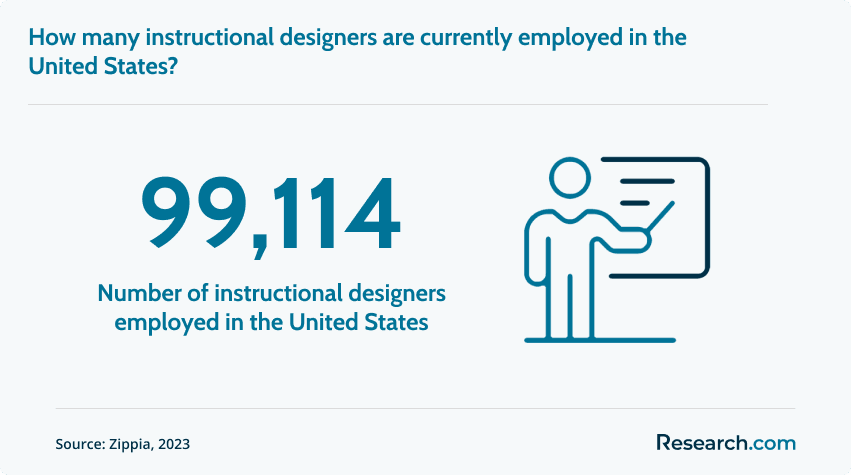
Programs may also offer electives in gamification, mobile learning, accessibility, learning analytics, user experience design, or multimedia production. Over 99,114 instructional designers are currently employed in the United States, reflecting the field’s presence across corporate, higher education, government, and other learning environments.
What types of specializations are available in an online master's in instructional design degree program?
Specializations help students aim their degree toward a specific workplace or type of design work. Some programs offer formal concentrations, while others provide electives, certificates, or project choices that function like a specialization. This is similar to how career-specific graduate pathways, such as direct entry MSN for non nurses online programs, organize coursework around targeted professional outcomes.
The need for better learning systems is also connected to how educators spend their time. According to recent data, teachers work an average of 50 hours per week—but only 49% of that time involves direct interaction with students. Other time is spent on preparation (10.5 hours), evaluation and feedback (6.5 hours), administration (5.0 hours), and professional development (3.0 hours). Instructional designers can help improve course materials, training systems, digital resources, and workflow-supported learning tools that address these demands.
| Specialization | Focus | Good Fit For |
| eLearning and Multimedia Design | Interactive modules, video, animation, authoring tools, and online course production. | Students who want production-heavy roles building digital learning content. |
| Corporate Training and Development | Employee onboarding, compliance training, performance support, and organizational learning. | Professionals targeting learning and development roles in business or government. |
| Educational Technology | Technology integration in K–12, higher education, and online learning environments. | Educators who want to support faculty, teachers, or institutions with digital instruction. |
| Learning Analytics | Using learner data, metrics, and evaluation methods to improve instructional effectiveness. | Students interested in evidence-based design, reporting, assessment, and improvement. |
| Instructional Design for Higher Education | College course design, online program support, faculty development, and curriculum alignment. | Students who want to work with universities, online programs, or academic departments. |
| User Experience (UX) Design for Learning | Learner-centered interfaces, usability, accessibility, navigation, and digital experience design. | Students interested in the intersection of instructional design and product experience. |
Before choosing a specialization, review actual course descriptions and sample projects. A title alone may not tell you whether the program teaches hands-on software development, strategy, research, analytics, or leadership.
How to Choose the Best Online Master's in Instructional Design Degree Program
The best program is the one that fits your professional direction and gives you evidence of skill by graduation. That means looking beyond brand recognition and asking whether the curriculum, faculty, projects, technology requirements, and cost structure support the job you want. This decision process applies across online creative and technical programs, including options such as the fastest online digital photography degree programs, where portfolio quality and practical experience also matter.
Program selection checklist
- Confirm accreditation: Choose an institution with recognized accreditation so your degree is more likely to qualify for financial aid, employer reimbursement, and transfer or doctoral study consideration.
- Match the curriculum to your target role: Corporate training, K–12 technology integration, higher education course design, and eLearning development may require different coursework.
- Look for portfolio-building assignments: Employers often want to see design samples, not just a transcript.
- Review faculty background: Instructors with practical instructional design, learning technology, training, or curriculum experience can add applied insight.
- Compare flexibility honestly: Self-paced programs reward independent learners, while cohort-based programs may provide more structure and peer interaction.
- Ask about capstones, internships, or client projects: Applied experience can make the degree more useful in a job search.
- Calculate the full cost: Include tuition, fees, software, books, and any travel or residency requirements.
- Evaluate career support: Look for portfolio reviews, resume support, alumni access, interview preparation, or employer connections.
Questions to ask before enrolling
| Question | Why It Matters |
| Is the institution accredited, and by whom? | Accreditation affects financial aid, employer recognition, and academic credibility. |
| What software and tools will I learn? | Tool exposure can affect your readiness for eLearning development and digital training roles. |
| Will I graduate with a portfolio? | A portfolio helps employers evaluate your design process and finished work. |
| Are courses asynchronous, synchronous, or mixed? | The delivery format determines whether the program can fit your schedule. |
| Are there required internships, practicums, or capstones? | Applied requirements can strengthen experience but may affect completion time. |
| What career outcomes do graduates pursue? | Graduate roles can reveal whether the program aligns with your goals. |
| What is the total estimated cost? | Tuition alone may not include fees, software, materials, or other required expenses. |
Common mistakes to avoid
- Choosing a program without verifying institutional accreditation.
- Comparing only tuition while ignoring fees, software, and time-to-completion.
- Assuming every online program is self-paced.
- Enrolling without checking whether the curriculum includes portfolio-ready work.
- Choosing a specialization before understanding the jobs it supports.
- Relying only on rankings instead of reviewing course requirements and career fit.
- Assuming a master’s degree alone guarantees a specific salary or job title.
What career paths are available for graduates of an online master's in instructional design degree program?
Graduates of online master’s in instructional design programs can work in education, business, healthcare, technology, government, nonprofit organizations, and consulting. The degree is useful because many organizations need people who can translate information into structured learning experiences. Like an online counseling psychology degree, this credential can lead to different career settings depending on a student’s specialization, experience, and professional goals.
| Career Area | Possible Roles | Typical Work |
| Education and Academia | Instructional designer, curriculum specialist, educational technology specialist | Design online courses, support faculty, align curriculum with standards, evaluate learning outcomes, and improve digital instruction. |
| Corporate and Workplace Training | Learning and development specialist, training manager, instructional systems designer | Create onboarding, compliance, sales training, leadership programs, and performance-support materials tied to business goals. |
| Technology and Digital Learning | Learning experience designer, eLearning developer, learning product specialist | Build interactive courses, simulations, mobile learning, platform content, or learner-centered digital experiences. |
| Consulting and Freelance Work | Independent instructional designer, training consultant, eLearning contractor | Help organizations diagnose training needs, improve learning systems, and solve training challenges through custom learning solutions. |
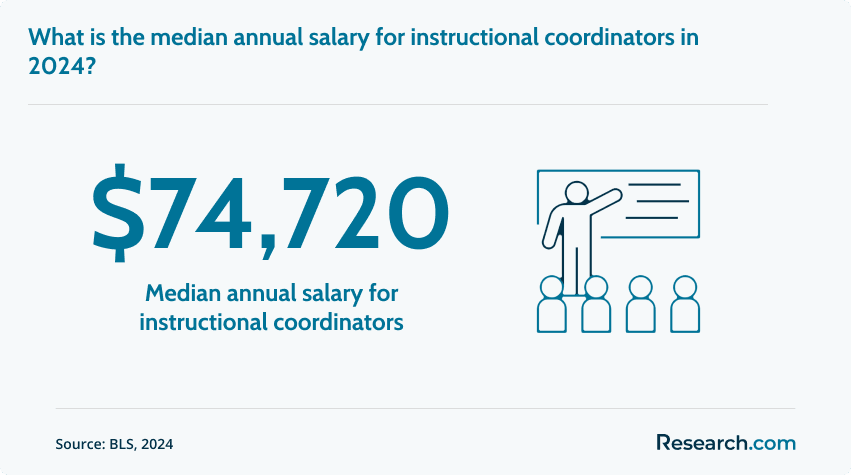
According to the Bureau of Labor Statistics, the median annual salary for instructional coordinators reached $74,720 in 2024. This figure can be a useful benchmark, but individual earnings vary by role, employer, location, sector, experience, and technical skill level.
What are the emerging trends shaping online instructional design education?
Instructional design education is changing as organizations adopt more digital, data-informed, and flexible learning models. Students entering online master’s programs should expect more emphasis on AI-supported workflows, adaptive learning, accessibility, multimedia learning, competency-based assessment, micro-credentials, and collaboration across education, design, technology, and analytics teams.
Artificial intelligence is especially important because it can support content drafting, feedback, personalization, tutoring tools, and learning analytics. At the same time, instructional designers still need judgment, ethics, accessibility knowledge, assessment skills, and the ability to evaluate whether technology actually improves learning. Professionals who want to move into senior academic or education leadership roles may later compare this degree with advanced options such as the fastest online doctorate in education.
How can you verify the accreditation and quality of an online master's in instructional design program?
Accreditation is one of the first quality checks students should complete. It helps verify that an institution meets recognized academic standards and may affect federal financial aid eligibility, employer reimbursement, transfer credit, and future doctoral admission. Do not rely only on a school’s marketing page. Confirm the institution’s accreditation through official accreditation databases or recognized accrediting agencies.
Quality also goes beyond accreditation. Review curriculum depth, faculty qualifications, student support, portfolio requirements, technology access, alumni outcomes, and whether the program teaches current instructional design tools and research-based practice. Students comparing online education broadly may also find useful contrast in programs outside the field, such as online anthropology degrees, where program quality depends on different learning outcomes and academic expectations.
Accreditation and quality review checklist
- Verify the accreditor and make sure the institution’s status is current.
- Check whether the program qualifies for federal financial aid if you plan to use it.
- Review course descriptions for applied instructional design, learning technology, assessment, and research content.
- Ask whether students create portfolio artifacts throughout the program.
- Look for transparent tuition, fee, and completion-time information.
- Contact admissions or program staff with specific questions before applying.
What is the job market like for graduates of an online master's in instructional design degree program?
The job market for instructional design graduates includes schools, colleges, healthcare organizations, technology companies, finance, government agencies, nonprofits, and corporate learning departments. Employers often look for candidates who understand adult learning theory, learning management systems, online course design, assessment, accessibility, and tools such as Articulate or Adobe Captivate. In that sense, the degree is part of a broader shift toward technology-supported professional training, similar to how a data analytics online bootcamp prepares learners for roles shaped by digital tools and applied technical skills.
Remote and hybrid opportunities are common in instructional design, but the field can be competitive. A graduate degree may help, yet many employers also expect work samples, software fluency, communication skills, and the ability to manage stakeholders. Students who graduate with a polished portfolio and practical project experience may be better prepared to show what they can do.
Recent employment data shows that 36% of instructional coordinators are employed by local elementary and secondary schools, while colleges and universities (state and private combined) account for another 17%. Government and private educational support services each employ around 7–8% of professionals in this field. These figures show that education remains a major employer, while opportunities also exist beyond traditional classrooms.
How to improve your job readiness while enrolled
- Build a portfolio with samples such as a storyboard, eLearning module, assessment plan, training needs analysis, and course evaluation report.
- Learn at least one major authoring tool and one learning management system.
- Practice writing measurable learning objectives and aligning assessments to outcomes.
- Document your design process, not just the final product.
- Seek projects with real users, clients, departments, or community partners when possible.
- Follow accessibility and usability principles from the beginning of each project.
Here’s What Graduates Have to Say about Online Master's in Instructional Design Degree Programs
- Jim: "Studying online let me keep my full-time job while staying present for my family. The assignments were practical enough that I could use new ideas at work immediately, and the experience made me much more confident with digital learning tools."
- Carmen: "The courses felt connected to the real eLearning field, not just theory. I valued the collaboration with classmates, and the project work pushed me to solve design problems in a more creative and strategic way."
- Jessa: "I used the online master’s to move from classroom teaching into corporate training. The mix of research, design, and technology helped me see myself as a candidate for leadership roles I had not considered before."
Can additional credentials strengthen my career in instructional design?
Additional credentials can help instructional designers specialize, especially in areas such as accessibility, learning analytics, project management, UX design, multimedia development, library and information science, or workplace training. A master’s degree can provide the foundation, but certificates, software credentials, and interdisciplinary education may help you stand out for specific roles.
For example, students interested in digital content organization, educational resources, research support, or information systems may find that an affordable MLIS online degree builds complementary skills for curriculum development, digital collections, and learning resource management.
References:
- National Center for Education Statistics. (2023). Trend generator: Percentage of students enrolled in distance education courses. NCES.
- U.S. Bureau of Labor Statistics. (2024). Instructional coordinators. Occupational Outlook Handbook. U.S. Bureau of Labor Statistics.
- U.S. Department of Education. (2023). Artificial intelligence and the future of teaching and learning: Insights and recommendations. U.S. Department of Education.
- Zippia. (2023). Instructional designer demographics and statistics in the US. Zippia.
Key Insights
- An online master’s in instructional design is best for students who want to design, evaluate, and improve learning experiences in education, corporate training, technology, healthcare, government, or consulting.
- Most programs require around 30 to 36 credits and commonly take 1.5 to 2 years part time, though full-time, accelerated, and competency-based options can shorten the timeline.
- Total tuition commonly ranges from $12,000 to $35,000, but students should compare fees, software costs, capstone expenses, and completion time before deciding.
- Accreditation, curriculum fit, hands-on projects, faculty experience, and portfolio support are more important than choosing a program based only on name recognition.
- Career readiness depends on more than earning the degree. A strong portfolio, tool fluency, accessibility awareness, project management skills, and real-world design examples can make a major difference in the job search.
- AI, adaptive learning, analytics, micro-credentials, and UX-focused design are shaping the field, so students should choose programs that teach both current tools and sound instructional decision-making.
Other Things You Should Know About Online Master's in Instructional Design Degree Programs
The best online master's programs in instructional design for 2027 typically cover subjects such as learning theories, curriculum design, digital learning technologies, instructional strategies, and assessment methods. These courses equip students with the skills to develop effective educational materials and programs tailored to various learning environments.
Yes, many programs require a capstone, thesis, or portfolio project before graduation. Common formats include a 3- to 6-credit culminating experience completed in the final term, often reviewed by faculty and tied to a real instructional design problem or workplace case.
Typical admission requirements include a bachelor's degree, a minimum GPA of 3.0, GRE scores (though some programs waive this), and professional experience in education or design. Additionally, applicants may need to submit letters of recommendation and a statement of purpose.