
2027 Best Online Master’s in Adult Education Programs

Co-Founder and Chief Data Scientist
Choosing an online master’s in adult education is usually a career decision, not just an academic one. You may want to teach adults, design training programs, move into higher education administration, support workforce development, or build learning programs inside companies, nonprofits, community colleges, or public agencies. The right program should help you understand how adults learn, how to design instruction for real-world learners, and how to measure whether education actually improves skills and opportunities.
The need is easy to understand. The U.S. Census Bureau reported that 36.2% of Americans had only a high school diploma or less, a level of attainment often associated with fewer career options, lower wages, and reduced mobility. Adult educators, workforce trainers, ESL instructors, instructional coordinators, and career development professionals help close that gap by making learning accessible to people who are already balancing work, family, and other responsibilities.
This guide explains what an online master’s in adult education covers, how much it can cost, which programs stand out, what jobs graduates may pursue, and how to decide whether this path fits your goals. It also compares degree types, online versus campus formats, specializations, financing options, and related education pathways such as online masters in teaching programs.
Quick Answer: What Is an Online Master’s in Adult Education?
An online master’s in adult education is a graduate degree for professionals who want to teach, train, advise, or lead learning programs for adult learners. It commonly prepares graduates for roles in continuing education, corporate training, workforce development, community colleges, ESL instruction, instructional design, career counseling, and education program administration. Most programs require 30 to 39 credits, often take about two years, and may offer fully online, hybrid, or flexible formats for working adults.
The degree is most useful for people who want to work with adult learners rather than children in traditional K–12 classrooms. It can also be a strong fit for professionals already working in human resources, higher education, nonprofit training, healthcare education, or community-based education who want stronger credentials and more formal preparation.
Online Masters in Adult Education Program Table of Contents
- What is a Masters in Adult Education Program?
- Cost of an Online Masters in Adult Education Program
- 2027 Best Online Masters in Adult Education Programs
- Masters in Adult Education Jobs
- Types of Masters in Adult Education Programs
- Masters in Adult Education Program Requirements
- What to Look for in an Online Masters in Adult Education Program
- How Can You Evaluate the Success of Online Education Master's Programs?
- How Do Online Masters in Adult Education Programs Compare to Traditional Programs?
- How Can a Masters in Adult Education Propel You into Leadership Roles?
- What challenges might you face in online masters in adult education programs?
- How Can an Accelerated Bachelor's Degree in Education Fast-Track Your Career in Adult Education?
- Can adult education pave the way for careers in library science?
- Specializations to Explore in Online Masters in Adult Education Programs
- What are the key emerging trends shaping the future of adult education?
- What advanced career opportunities are available with a doctorate in education?
- How to Start Your Journey Towards a Doctorate in Education
- How Can I Finance My Online Masters in Adult Education?
- What complementary certifications can enhance your career in adult education?
What is a Masters in Adult Education Program?
A master’s in adult education is a graduate program focused on how adults learn, why they return to education, and how instructors and organizations can design learning experiences that respect adult responsibilities, prior knowledge, career goals, and life experience. While related programs may emphasize K–12 teaching, a degree in adult education usually centers on workforce learning, continuing education, higher education, community education, training, literacy, ESL, and professional development.
Students typically study adult learning theory, instructional design, program planning, curriculum development, assessment, educational technology, diversity and inclusion, leadership, and evaluation. If you are comparing adjacent fields, a masters in curriculum and instruction may be a better fit if your main goal is curriculum leadership across school or institutional settings.
Adult education is broad. One graduate may design onboarding programs for employees, another may teach literacy courses at a community center, and another may coordinate continuing education for healthcare workers. Adult learners often bring different motivations than younger students: career advancement, job loss, immigration, credential requirements, personal enrichment, or a need to complete unfinished education. A strong master’s program teaches you how to design instruction around those realities instead of relying on one-size-fits-all classroom methods.
Graduates may continue into doctoral study, earn an adult education certificate, or move directly into professional roles. Common employers include community colleges, universities, nonprofit organizations, workforce agencies, government departments, libraries, healthcare systems, and private companies. Related graduate options include an educational psychology masters, a masters in coaching online, or a library science program online for students whose interests overlap with learning behavior, coaching, or information services.
| Adult education setting | What professionals often do | Best fit for students who want to |
| Community colleges | Teach, advise, or support adult and returning students | Work directly with learners pursuing credentials, transfer, or career training |
| Corporate learning and development | Create employee training, leadership programs, and performance support | Apply education skills in business or human resources environments |
| Nonprofits and community organizations | Run literacy, ESL, workforce readiness, or public education programs | Support access, equity, and community-based learning |
| Higher education administration | Coordinate programs, advise students, assess outcomes, or support adult learner services | Move into academic program leadership or student support roles |
| Government and workforce agencies | Develop training initiatives tied to employment, reskilling, or public service | Connect education programs with workforce and policy goals |
Cost of an Online Masters in Adult Education Program
Cost is one of the most important variables when comparing online adult education master’s programs because tuition differences can be substantial. According to the Education Data Initiative, a master’s degree in education has an average cost of $44,640. Online programs can be more manageable for working students because they may reduce relocation, commuting, and schedule-related costs, but online does not automatically mean inexpensive.
When estimating total cost, look beyond advertised tuition. Fees, technology charges, books, residency requirements, travel for any in-person components, portfolio costs, and the number of required credits can change the real price of the degree.
How Much Does it Cost to Get a Masters in Adult Education?
Students comparing programs similar to a masters in higher education online may see tuition ranging from $270 to $1,500 per credit. Many adult education master’s programs require 30 to 36 credits, though some exceed that range. Among the programs highlighted in this guide, North Carolina State University lists the lowest estimated cost per credit at $554, while Texas A&M University lists the highest at $1,071 per credit.
| Cost factor | Why it matters | What to ask before enrolling |
| Per-credit tuition | The listed rate is the starting point for estimating total tuition | Is the rate different for in-state, out-of-state, or online students? |
| Required credits | A lower per-credit rate can still become expensive if the program requires more credits | How many credits are required for the degree and chosen concentration? |
| Fees | Online, technology, graduation, portfolio, and student service fees can add up | What mandatory fees apply each term? |
| Fieldwork or residency | Some programs may require supervised experience or campus visits | Are there in-person requirements, and who pays travel costs? |
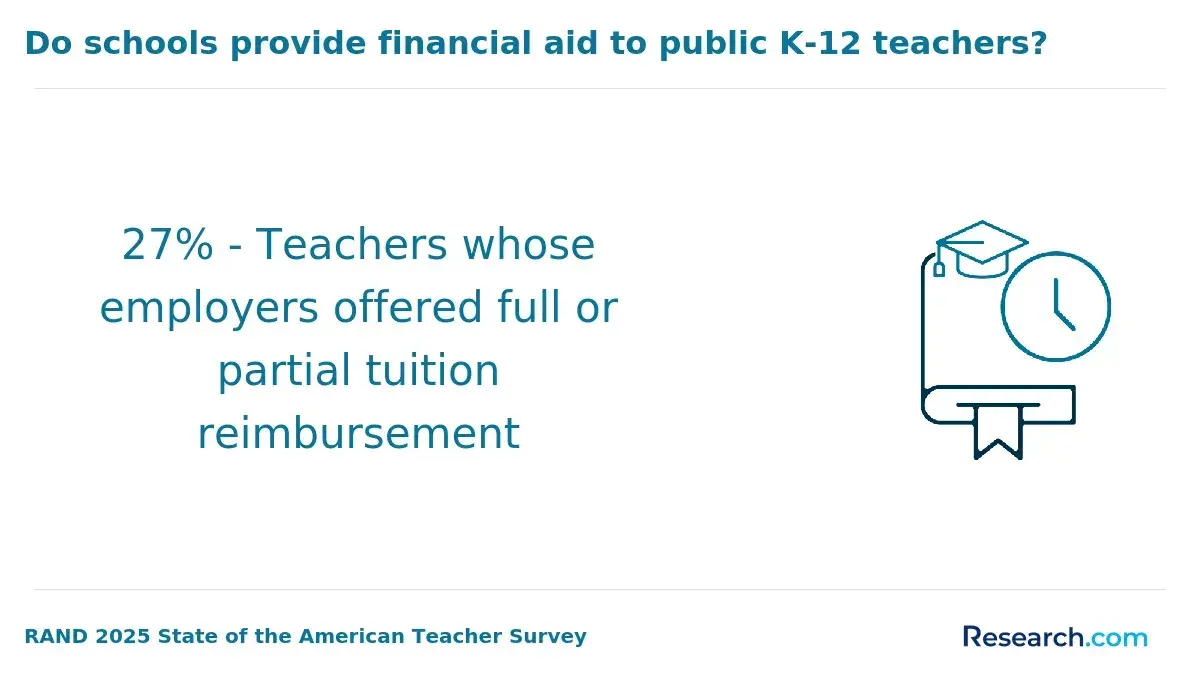
| Employer support | Tuition assistance can change your out-of-pocket cost and ROI | Does my employer reimburse graduate credits or require a work commitment afterward? |
2027 Best Online Masters in Adult Education Programs
Research.com reviewed current public information to identify online master’s in adult education programs that combine academic quality, accessibility, student support, and career relevance. This list is intended as a decision tool, not a guarantee of outcomes. Your best program depends on your professional goal, budget, preferred format, state requirements if applicable, and whether you want a teaching, research, leadership, or training-focused curriculum. Students interested in subject-specific educator preparation may also want to compare online science education programs.
| School | Program focus | Credits | Estimated cost per credit | Best for |
| Texas A&M University | Workforce, Adult, & Lifelong Education | 37 | $1,071 | Students seeking a workforce and lifelong learning emphasis |
| North Carolina State University | Adult and Continuing Professional Education, Community College Teaching, Health Professions Education | 36-39 | $554 | Students who want multiple specialization options at the lowest listed per-credit cost |
| University of Georgia | Learning, Leadership, and Organization Development | 33 | $629 | Mid-career professionals aiming for organizational development or leadership roles |
| Michigan State University | Higher, Adult, and Lifelong Education | 30 | $789 | Students who want a flexible higher and adult education curriculum |
| James Madison University | Adult Education/Human Resource Development | 39 | $858 | Students interested in HR development, learning technology, and applied training design |
Texas A&M University
Texas A&M University offers an MS in Educational Human Resource Development with a Workforce, Adult, & Lifelong Education (WALE) focus. The program emphasizes adult learning, workforce education, reflective practice, critical thinking, student-centered instruction, and social justice in educational environments.
This option is designed for students who want to teach, lead, or administer learning programs for adults across organizational, workforce, and educational settings. Students may choose online or face-to-face study, which makes the program more adaptable for different schedules.
A professional portfolio is part of the graduation process. For students pursuing education, workforce development, or HR roles, that portfolio can help show evidence of applied skills, academic growth, and professional preparation.
Program Length: Two years
Tracks/concentrations: Workforce, Adult, & Lifelong Education
Estimated Cost per Credit: $1,071
Required Credits to Graduate: 37
Accreditation: Southern Association of Colleges and Schools Commission on Colleges (SACSCOC)
North Carolina State University
North Carolina State University offers both an MEd and an MS in Adult & Continuing Professional Education. The programs are available fully online or in a hybrid format and serve both new and experienced professionals.
The MEd is the more practice-oriented option. Coursework addresses adult learner characteristics, teaching and learning, demographics, diversity, research-informed practice, and technology. It is well suited to students who want teaching, instructional, or program support roles with adult learners.
The MS places more weight on research and may be a stronger choice for students who plan to pursue further graduate study, conduct research, or work in evaluation-focused roles. It still includes opportunities to connect theory with professional practice.
NCSU also offers related lifelong learning tracks. Students interested in college-level instruction may consider the Community College Teaching specialization. Those targeting corporate learning environments can review the MEd in Training and Development. Healthcare professionals who want to improve staff training or patient education may consider the MEd in Health Professions Education.
Program Length: Two years
Tracks/concentrations: Adult and Continuing Professional Education, Community College Teaching, Health Professions Education
Estimated Cost per Credit: $554
Required Credits to Graduate: 36-39
Accreditation: Southern Association of Colleges and Schools Commission on Colleges (SACSCOC)
University of Georgia
The University of Georgia offers an online master’s degree in Learning, Leadership, and Organization Development (LLOD). The program is built for mid-career professionals who want to strengthen their ability to lead learning, development, and change initiatives in organizations. It may also support advancement into educational leadership positions.
The curriculum develops interpersonal communication, teamwork, organizational analysis, critical thinking, and change leadership. Its LLOD Guiding Framework connects theory with applied practice in adult learning, talent management, coaching, group problem solving, team development, customized training, and organizational development.
Program Length: Two years
Tracks/concentrations: Learning, Leadership, and Organization Development
Estimated Cost per Credit: $629
Required Credits to Graduate: 33
Accreditation: Southern Association of Colleges and Schools Commission on Colleges (SACSCOC)
Michigan State University
Michigan State University’s Higher, Adult, and Lifelong Education (HALE) MA is designed for professionals who want a flexible online program focused on learning beyond traditional school settings.
The HALE curriculum encourages students to understand diverse learners, reflect on their own professional development, and connect adult learning theory to practical educational environments. Students complete two core courses, eight electives, and a final portfolio that demonstrates how they apply program learning to professional practice.
Program Length: Two years
Tracks/concentrations: Higher, Adult, and Lifelong Education
Estimated Cost per Credit: $789
Required Credits to Graduate: 30
Accreditation: Higher Learning Commission (HLC)
James Madison University
James Madison University offers an MS Ed in Adult Education/Human Resource Development. The program focuses on designing, delivering, and evaluating adult learning programs, including technology-supported instruction. Students may study online or through a blended online and face-to-face format.
The curriculum is especially relevant for students who want to connect adult education with HR development. Its summer study abroad option adds exposure to global competence and visual communication, which can be useful for professionals designing learning programs for diverse workplaces.
Program Length: Two years
Tracks/concentrations: Adult Education/Human Resource Development
Estimated Cost per Credit: $858
Required Credits to Graduate: 39
Accreditation: Southern Association of Colleges and Schools Commission on Colleges (SACSCOC)
Is a Masters in Adult Education Worth It?
A master’s in adult education can be worth it if your career goal clearly depends on advanced preparation in teaching adults, instructional design, training leadership, workforce education, ESL, community college instruction, or program administration. It is less likely to be worth the cost if you only want a general credential without a defined job target or if a shorter certificate would meet your employer’s requirements.
The social value of the field is significant. U.S. Bureau of Labor Statistics data show that workers with less than a high school diploma typically have the lowest wages across educational attainment levels and experience a 4.2% to 6.2% unemployment rate. BLS research also shows that employment and earnings tend to improve with each additional level of education. Adult educators contribute to that improvement by helping learners build literacy, language, technical, academic, and career skills.
From a career perspective, the degree should be evaluated through ROI: total cost, time to completion, whether your employer values the credential, whether the program includes applied projects or fieldwork, and whether graduates move into the roles you want. If your goal is broader education work, adjacent careers in educational psychology roles, coaching, counseling, instructional design, or higher education administration may also be worth comparing.
Masters in Adult Education Jobs
Are Masters in Adult Education Program Graduates in High Demand?
Demand depends heavily on the specific role. The BLS projects slower-than-average growth for education and library occupations overall, with about 890,300 job opportunities throughout the decade. That broad figure includes many different occupations, so students should avoid assuming that every adult education job market is equally strong.
Some roles face weaker projections. Employment for adult education and ESL teachers is expected to decline by 13.7% through 2034, and employment for postsecondary career and technical education teachers is projected to rise by only 0.7%. Other related roles look more favorable: instructional coordinator employment is projected to increase by 1.3%, and career counselor employment is projected to grow by 3.5%.
The practical takeaway is that adult education graduates should build transferable skills. Instructional design, program evaluation, digital learning, data use, advising, curriculum development, and workforce training skills can help graduates move across sectors if one occupational category is contracting.
What Jobs Can You Get with a Masters in Adult Education?
| Role | What the job involves | Average salary | Good fit for graduates who like |
| Adult Literacy Specialist | Developing or delivering reading, writing, numeracy, and basic skills support through community programs, nonprofits, or learning centers | $61,912 | Community education, direct learner support, and access-focused work |
| Career Consultant | Helping clients clarify goals, identify skills, compare education options, and plan career transitions | $50,463 | Advising, coaching, workforce development, and one-on-one guidance |
| Continuing Education Instructor | Creating and teaching courses for adults who want new credentials, professional skills, or personal enrichment | $50,196 | Teaching, curriculum design, and practical course delivery |
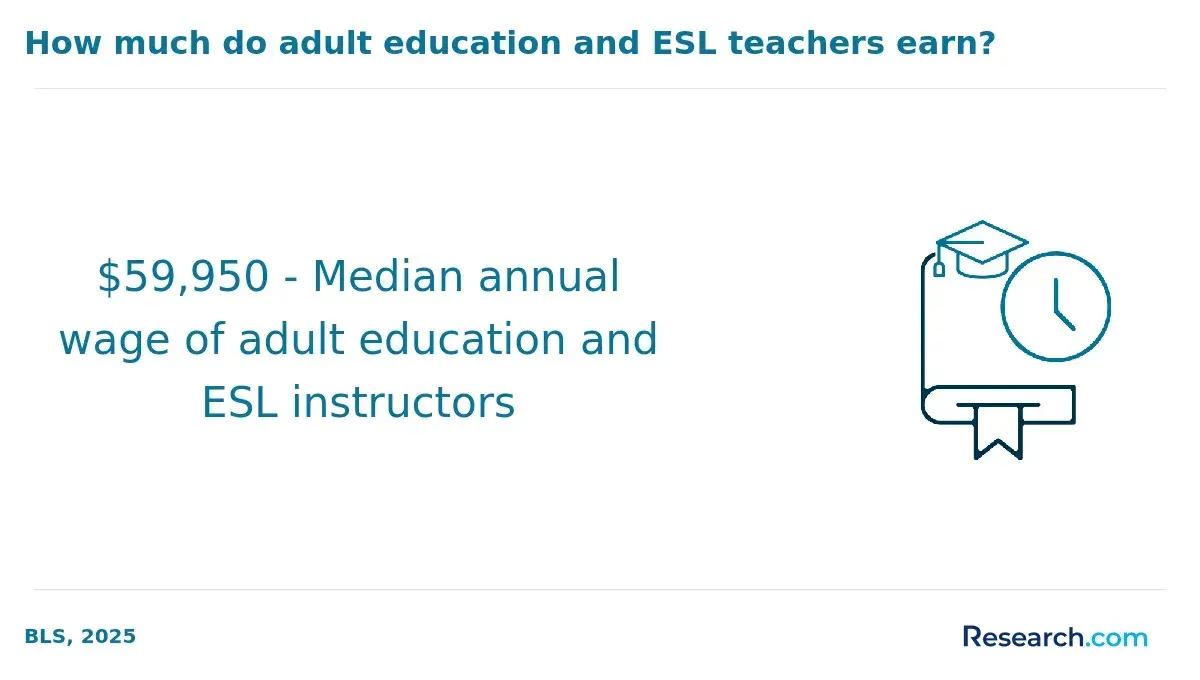
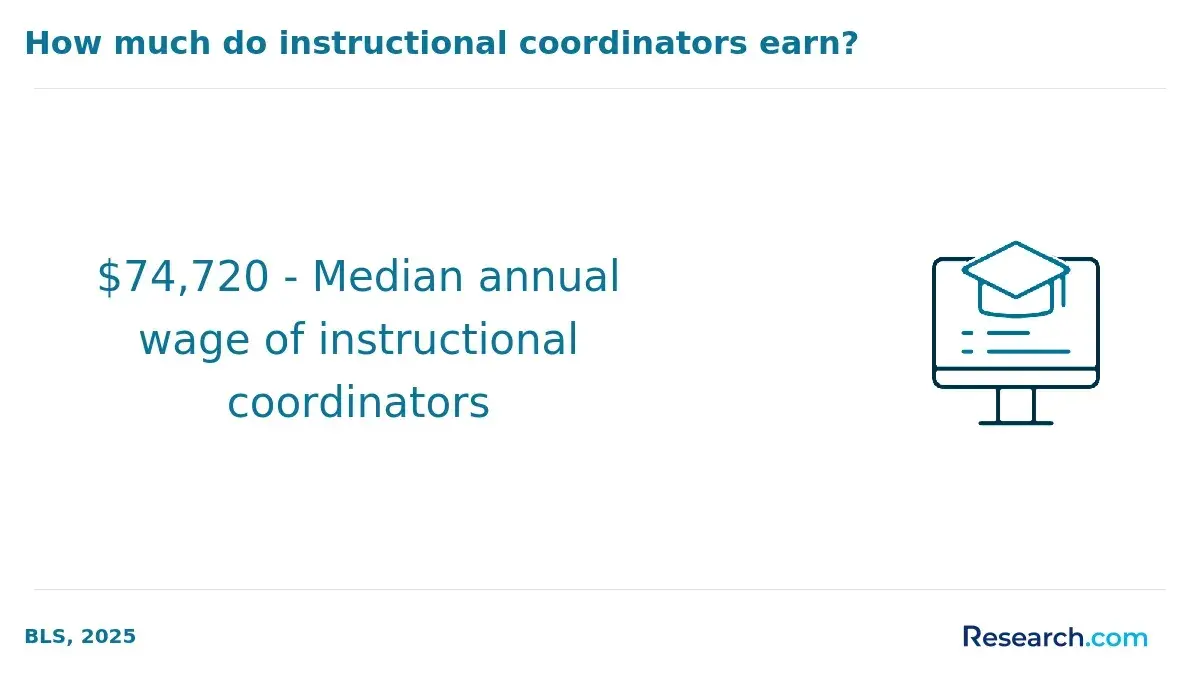
| Instructional Coordinator | Designing, reviewing, and coordinating curricula; supporting instructors; and aligning learning materials with goals and standards | $74,720 | Curriculum leadership, assessment, and education quality improvement |
| ESL Tutor | Supporting adult English language learners in speaking, reading, writing, grammar, and communication skills | $59,950 | Language learning, cultural exchange, and small-group or individual teaching |
Adult Literacy Specialist
Adult literacy specialists support learners who need help with foundational reading, writing, and numeracy skills. They often work for nonprofits, community centers, public programs, or adult learning organizations and may design lessons, assess learner progress, and connect students with additional support services.
Average salary: $61,912
Career Consultant
Career consultants help adults make informed decisions about education, training, and employment. They may assess skills and interests, recommend credentials, assist with career changes, and help clients understand labor market options.
Average salary: $50,463
Continuing Education Instructor
Continuing education instructors teach adults who are returning to school, upgrading job skills, meeting professional requirements, or exploring new interests. Their work often includes curriculum planning, lesson delivery, assessment, and feedback.
Average salary: $50,196
Instructional Coordinator
Instructional coordinators plan and improve curricula, support instructors, review learning materials, and help ensure that programs meet learning objectives. In adult education settings, they may work across academic, workforce, nonprofit, or corporate training programs.
Average salary: $74,720
ESL Tutor
ESL tutors help adult English language learners develop communication, grammar, reading, and writing skills. They may work individually with students or teach small groups while also supporting cultural adjustment and practical language use.
Average salary: $59,950
What Kind of Salary Can I Earn with a Masters in Adult Education?
BLS data cited for the education and library sector show a median annual salary of $81,600, though earnings vary widely by role, employer, geography, experience, and credential level. Salaries in the field range from $29,000 to $88,000 annually.
Higher-paying education and training roles often require graduate-level preparation. Instructional coordinators, for example, earn a median of $74,720 and generally require a master’s degree. Postsecondary teachers earn a median of $81,600 a year and typically require a doctorate.
A master’s degree can strengthen qualifications, but it does not guarantee a specific salary. Before enrolling, compare the program’s total cost with the roles you are actually targeting, not just the highest-paying jobs in the broader field.
Types of Masters in Adult Education Programs
What Kinds of Masters in Adult Education Programs Are There?
Adult education master’s degrees may share similar courses, but the degree type can signal a different emphasis. The best choice depends on whether you want to teach, lead programs, conduct research, evaluate learning, or work in organizational training.
| Degree type | Typical focus | Time to complete | Possible entry-level jobs |
| Master of Education in Adult Education (MEdAE) | Applied teaching, curriculum, instructional design, and adult learner support | One to two years | Corporate Trainer, Curriculum Developer, Continuing Education Instructor |
| Master of Science in Adult Education (MSAE) | Research methods, data analysis, program evaluation, and evidence-based practice | One to two years | Research Analyst, Program Evaluator, Learning and Development Manager |
| Master of Arts in Adult Education (MAAE) | Theory, interdisciplinary study, adult learning psychology, sociology, and policy | One to two years | Career Consultant, Community College Instructor, Policy Analyst |
Master of Education in Adult Education (MEdAE)
Time to complete: One to two years
The MEdAE is usually the most practice-oriented option. It focuses on instruction, curriculum development, assessment, program planning, and strategies for teaching adults in academic, workplace, or community environments.
Entry-level jobs: Corporate Trainer, Curriculum Developer, Continuing Education Instructor
Master of Science in Adult Education (MSAE)
Time to complete: One to two years
The MSAE generally places more emphasis on research, statistics, data use, and evaluation. It can be a strong fit for students interested in analyzing adult learning programs, preparing for doctoral study, or working in policy and evaluation roles.
Entry-level jobs: Research Analyst, Program Evaluator, Learning and Development Manager
Master of Arts in Adult Education (MAAE)
Time to complete: One to two years
The MAAE often takes a broader and more interdisciplinary approach. Students may examine adult learning through education theory, psychology, sociology, human development, instructional design, and policy.
Entry-level jobs: Career Consultant, Community College Instructor, Policy Analyst
Masters in Adult Education Program Requirements
Admission Requirements
- Bachelor’s degree. Applicants generally need a bachelor’s degree from an accredited college or university before they can enter a graduate adult education program.
- Letters of recommendation. Many programs request recommendations from supervisors, professors, or professional colleagues who can speak to your readiness for graduate study and your potential as an educator or training professional.
- Statement of purpose. A personal statement usually explains why you want to study adult education, what career goals you have, and how the program fits your professional plans.
- Work experience. Some programs prefer or require experience in teaching, training, advising, instructional design, HR development, or a related field.
Skill Requirements
- Communication skills. Adult educators must explain complex ideas clearly, facilitate discussion, write effective materials, and adapt messages for learners with different education levels, goals, and backgrounds.
- Instructional design. Graduate students should learn how to build courses, workshops, assessments, and learning activities around adult learners’ needs, motivations, and constraints.
- Digital literacy. Online and technology-supported learning are now central to adult education. In a survey of higher education leaders, 11% said they plan to add more than 10 new online programs in the next three years. Adult educators need confidence with learning management systems, online collaboration tools, digital content, and accessible course design.
- Cultural sensitivity. Adult learners may differ by age, language, culture, education history, disability, work experience, and life circumstances. Effective educators design inclusive environments where those differences are acknowledged and supported.
What to Look for in an Online Masters in Adult Education Program
The strongest online master’s program is not always the highest-ranked or the most expensive. It is the one that matches your career target, budget, learning style, and credential needs. Use the factors below to compare programs before applying.
- Accreditation. Confirm that the institution is properly accredited. For educator preparation, the Council for the Accreditation of Educator Preparation (CAEP) is a widely recognized national accreditor, and regional institutional accreditation is also important. Accreditation can affect credit transfer, employer recognition, and financial aid eligibility.
- Relevant curriculum. Review required courses, electives, and concentration options. A student targeting corporate training should not choose a program built mainly around community college instruction unless the curriculum still supports that goal.
- Field experience or applied projects. Internships, practicum experiences, portfolios, consulting projects, or workplace-based assignments can help you convert theory into job-ready evidence. Some fully online programs limit fieldwork, so ask how students gain practical experience.
- Student support. Online students need reliable academic advising, technical help, library access, writing support, career services, and faculty availability. Support quality matters most when you are studying while working full time.
- Flexibility. Check whether courses are asynchronous, synchronous, accelerated, part-time, or cohort-based. A rigid schedule can be difficult for adult learners with jobs and caregiving responsibilities.
- Career outcomes. Ask where graduates work, which roles they obtain, and whether the program has employer connections, alumni networks, or portfolio review opportunities.
Questions to Ask Before Choosing a Program
| Question | Why it matters |
| Is the institution accredited? | Accreditation affects credibility, aid eligibility, transfer options, and employer recognition. |
| Does the curriculum match my target job? | Adult education covers many sectors, so specialization fit is critical. |
| Are courses asynchronous or scheduled live? | Format determines whether the program can realistically fit around work and family obligations. |
| Will I complete a portfolio, practicum, internship, or capstone? | Applied work can help you demonstrate skills to employers. |
| What is the full cost, including fees? | Sticker tuition rarely tells the whole financial story. |
| What support do online students receive? | Advising, library access, technology help, and career services can affect persistence and outcomes. |
How Can You Evaluate the Success of Online Education Master's Programs?
Evaluate an online education master’s program by looking at measurable outcomes and the quality of the learning experience. Useful indicators include graduation rates, retention, student satisfaction, employment outcomes, alumni career paths, faculty qualifications, curriculum review practices, accreditation status, and the strength of student support services.
Independent rankings and public outcome reports can help, but they should not replace your own fit analysis. Compare the program’s goals with your intended role, review whether courses produce portfolio-ready work, and ask whether graduates advance into positions similar to the ones you want. Cost also matters. Guides to online education master's programs can help you benchmark affordability in related fields.
How Do Online Masters in Adult Education Programs Compare to Traditional Programs?
Online and campus-based adult education master’s programs can both be academically rigorous when they are offered by accredited institutions and supported by qualified faculty. The main differences are format, scheduling, networking style, access to campus resources, and the level of self-direction required.
| Format | Advantages | Trade-offs | Best for |
| Online | Flexible location, easier for working adults, often compatible with part-time study | Requires strong self-management and may offer less in-person networking | Professionals who need to keep working while studying |
| Campus-based | Face-to-face interaction, campus facilities, local networking, easier informal faculty access | Less flexible and may require relocation or commuting | Students who want an immersive campus experience |
| Hybrid | Combines online flexibility with some in-person connection | May still require travel or scheduled campus attendance | Students near campus who want a blended experience |
Many online programs now use advanced learning platforms, virtual collaboration tools, digital portfolios, and online discussion formats to build community and support applied learning. If you are exploring subject-specific education pathways, an online math education degree can provide a useful comparison point for how online educator preparation is structured in another discipline.
How Can a Masters in Adult Education Propel You into Leadership Roles?
A master’s in adult education can support leadership growth by combining instructional expertise with program design, evaluation, communication, and organizational change skills. Graduates may move into roles such as training manager, instructional coordinator, program director, higher education administrator, workforce development leader, or learning and development specialist.
The degree is especially useful for leadership when it includes applied projects, supervised experience, data-informed decision-making, and opportunities to manage or design programs. Students who want senior leadership, policy, or executive-level roles may later compare doctoral options, including best online doctorate in organizational leadership pathways.
What challenges might you face in online masters in adult education programs?
Online graduate study can be convenient, but it is not effortless. Common challenges include managing self-paced work, staying engaged without regular in-person meetings, navigating technology, balancing employment with coursework, and building relationships with faculty and peers from a distance.
Successful students usually create a weekly study schedule, participate actively in discussions, contact faculty early when problems arise, and use advising, library, writing, and technical support. These habits also mirror the self-directed learning skills adult educators teach in their own work. Students who complete the degree with strong applied skills may pursue a range of jobs with masters in education.
How Can an Accelerated Bachelor's Degree in Education Fast-Track Your Career in Adult Education?
An accelerated bachelor's degree in education can help students reach graduate-level preparation sooner by compressing undergraduate timelines or offering flexible online pathways. For aspiring adult educators, an accelerated bachelor’s program may provide a faster foundation in learning theory, pedagogy, assessment, and classroom or training methods before entering a master’s program.
This route can be useful for career changers who already know they want to work in teaching, training, or education support. However, students should still check accreditation, transfer policies, graduate admission requirements, and whether the bachelor’s curriculum aligns with adult education rather than only K–12 teaching.
Can adult education pave the way for careers in library science?
Adult education and library science overlap more than many students expect. Libraries often serve as community learning hubs, offering information literacy programs, digital skills workshops, job search support, ESL resources, public lectures, and lifelong learning services.
Adult education training can help library professionals design stronger workshops, teach diverse community members, evaluate learning outcomes, and support patrons who need help using digital tools or finding reliable information. Students interested in this intersection can explore careers with library science degree to compare library and information science pathways.
Specializations to Explore in Online Masters in Adult Education Programs
Specializations help turn a broad adult education degree into a clearer career pathway. Before choosing one, identify the setting where you want to work, the learners you want to serve, and the type of work you want to do each day.
- Corporate Training and Development: Focuses on employee learning, performance improvement, leadership training, onboarding, and organizational growth. This track is often a strong fit for students interested in HR development or learning and development roles.
- Higher Education Leadership: Prepares students for adult learner services, academic advising, program coordination, administration, and policy work in colleges and universities.
- Instructional Design and Technology: Emphasizes online course development, digital learning tools, multimedia instruction, accessibility, and learning management systems. Students comparing broader educator preparation options may also review accredited online teaching degree programs.
- Community and Continuing Education: Centers on lifelong learning, public outreach, adult basic education, nonprofit education, community college programs, and continuing education initiatives.
- Workforce Education and Development: Connects adult learning with career readiness, technical training, reskilling, vocational education, and industry partnerships.
- Literacy and ESL Education: Prepares educators to support adult learners developing literacy skills or English language proficiency in community, nonprofit, or adult education settings.
The best specialization is the one that gives you evidence of competence for your intended role. For example, a future corporate trainer should prioritize needs assessment, learning technology, facilitation, and evaluation. A future community college instructor may care more about adult learning theory, curriculum, assessment, and student support.
What are the key emerging trends shaping the future of adult education?
Adult education is changing as learners, employers, and institutions adjust to new technologies, changing workforce needs, and more flexible credential models. These trends affect what master’s students should learn and what employers may expect from graduates.
- Technology-supported learning: Online platforms, mobile tools, learning management systems, and digital collaboration spaces are now central to many adult learning environments. Educators need to design courses that are accessible, engaging, and practical for learners with limited time.
- Soft skills and lifelong learning: Employers continue to value communication, problem-solving, adaptability, and critical thinking alongside technical skills. Adult education programs increasingly combine career skills with broader professional competencies.
- Learning analytics and personalization: Data can help instructors identify where learners struggle, adjust instruction, and evaluate whether programs are meeting goals. Educators need to use data ethically and effectively without reducing learners to metrics.
- Micro-credentials and digital badges: Shorter, stackable credentials appeal to adults who need targeted upskilling without committing immediately to a full degree. Adult educators may be asked to design, assess, or manage these credential pathways.
- Inclusive program design: Adult learners vary widely in age, language, culture, work history, ability, and educational background. Programs are placing more emphasis on culturally responsive teaching, accessibility, flexible scheduling, and learner support.
What advanced career opportunities are available with a doctorate in education?
A doctorate in education, often an Ed.D., can help experienced educators move into senior leadership, policy, research-informed practice, and organizational change roles. Possible positions include academic dean, chief learning officer, education policy analyst, senior instructional design consultant, senior training leader, or executive-level administrator.
Doctoral study is usually best for professionals who already have substantial education or training experience and want broader influence over systems, policy, institutional strategy, or large-scale program design. Students concerned about cost can compare cheapest online EdD programs before committing to a doctoral path.
How to Start Your Journey Towards a Doctorate in Education
Most Ed.D. students begin with an undergraduate degree and then build experience through teaching, training, advising, administration, or program leadership. A master’s in adult education can be a direct stepping stone because it develops graduate-level knowledge of learning theory, research, leadership, and program evaluation.
Students still early in their education journey may start with an undergraduate education pathway. For example, an affordable early childhood education degree online can provide an accessible entry point into the broader education field, though students should later choose graduate coursework that matches adult learning if that becomes their focus.
How Can I Finance My Online Masters in Adult Education?
Financing an online master’s degree should begin before you apply. Compare total program cost, not only per-credit tuition, and estimate how much you can cover through savings, employer benefits, scholarships, grants, federal aid, institutional aid, and loans.
- Complete financial aid forms early. Federal and institutional aid timelines can affect your options.
- Ask your employer about tuition assistance. Training, HR, education, healthcare, and government employers may support graduate study if it relates to your role.
- Look for scholarships tied to education, workforce development, ESL, literacy, or public service. Smaller awards can still reduce borrowing.
- Choose a realistic pace. Part-time study may reduce short-term financial pressure, while full-time study may help you finish sooner.
- Compare related affordable programs. If your goals overlap with information services, reviewing the most affordable master of library science online options may help you decide which graduate path offers the better fit.
What complementary certifications can enhance your career in adult education?
Certifications can strengthen an adult education career when they add a concrete skill employers recognize. Useful areas may include instructional design, e-learning development, learning management systems, digital accessibility, ESL instruction, coaching, program evaluation, HR development, cultural competency, or workforce training.
Some educators also benefit from knowledge of family systems, child development, or caregiving contexts because many adult learners are parents or caregivers. An online child development master's degree may be relevant for professionals designing family literacy programs, parent education, community education, or learner support services.
Common Mistakes to Avoid When Choosing an Online Masters in Adult Education
| Mistake | Why it can hurt you | Better approach |
| Choosing based only on ranking | A highly ranked program may not match your career goal or budget | Compare curriculum, cost, format, specialization, and outcomes |
| Ignoring accreditation | Accreditation can affect financial aid, transferability, and employer confidence | Verify institutional accreditation before applying |
| Looking only at tuition | Fees, credits, books, and travel can change total cost | Calculate full program cost from start to finish |
| Assuming all online programs are flexible | Some online courses require live attendance or fixed cohorts | Ask about asynchronous courses, pacing, and required meeting times |
| Choosing a specialization too late | Your electives and projects may not support your target role | Identify your preferred career path before selecting courses |
| Assuming salary outcomes are guaranteed | Pay depends on role, employer, location, experience, and credentials | Use salary data as a planning tool, not a promise |
How to Choose the Right Online Master’s in Adult Education
- Define your target role. Decide whether you want to teach, train employees, design online learning, advise students, work in workforce development, lead programs, or prepare for doctoral study.
- Match the curriculum to that role. Look for courses and projects in the skills your target employers need, such as instructional design, ESL, evaluation, digital learning, leadership, or adult literacy.
- Verify accreditation and institutional credibility. Check the school’s accreditation status and whether the credential is recognized in your field.
- Calculate total cost. Include tuition, fees, books, technology, travel, and time away from work if relevant.
- Ask about applied learning. Portfolios, capstones, practicums, workplace projects, and internships can make the degree more useful in a job search.
- Review student support. Online learners should have access to advising, technical help, library services, writing support, and career resources.
- Compare alternatives. Depending on your goal, a certificate, HR credential, instructional design certificate, education doctorate, library science degree, or special education online degree may be a better fit.
Begin a Fulfilling and Impactful Career with a Masters in Adult Education
A master’s in adult education can be a strong credential for professionals who want to help adults gain literacy, language, technical, academic, career, or leadership skills. The degree is flexible because adult learning happens in many places: colleges, companies, community programs, libraries, healthcare systems, workforce agencies, and nonprofits.
The best online programs are not simply convenient. They should offer credible accreditation, a curriculum aligned with your goals, meaningful applied work, strong faculty engagement, and clear career relevance. Whether you choose instructional design, workforce education, community college teaching, ESL, leadership, or research, the most important decision is to connect the degree to a specific professional outcome before you enroll.
Key Insights
- An online master’s in adult education is best for professionals who want to teach, train, advise, or lead learning programs for adults. It is especially relevant for roles in continuing education, workforce development, community colleges, corporate training, ESL, instructional design, and higher education support.
- Program fit matters more than prestige alone. Compare accreditation, curriculum, specialization options, applied projects, flexibility, student support, and total cost before relying on rankings.
- Costs vary widely. Education Data Initiative reports an average cost of $44,640 for a master’s degree in education, while programs in this guide list estimated per-credit costs from $554 to $1,071.
- Career demand is uneven. BLS projections show slower overall growth for education and library occupations, with declines in some adult education roles but better prospects in areas such as instructional coordination and career counseling.
- Transferable skills improve career resilience. Digital learning, instructional design, program evaluation, advising, curriculum development, cultural responsiveness, and data-informed decision-making can help graduates work across sectors.
- The degree is worth it when it supports a clear career plan. Before enrolling, identify the job you want, estimate ROI, ask about graduate outcomes, and make sure the program gives you evidence of applied expertise.
References:
- Hanson, M. (2024, November 23). Average Cost of a Master’s Degree. Education Data Initiative. https://educationdata.org/average-cost-of-a-masters-degree
- Simunich, B., Garrett, R., Fredericksen, E. E., & Gay, K. (2025). CHLOE 10 | Meeting the Moment: Navigating Growth, Competition, and AI in Online Higher Education, 2025. Quality Matters. https://qualitymatters.org/qa-resources/resource-center/articles-resources/CHLOE-10-report-2025
- U.S. Bureau of Labor Statistics. (2025, May). Education pays, 2024. https://www.bls.gov/careeroutlook/2025/data-on-display/education-pays.htm
- U.S. Bureau of Labor Statistics. (2025, August 28). Occupational projections, 2024–2034, and worker characteristics. Retrieved February 2026, from https://www.bls.gov/emp/tables/occupational-projections-and-characteristics.htm
Other Things You Should Know About Online Master’s in Adult Education Programs
In 2027, the cost of an online master’s in adult education program varies widely. Public institutions can charge between $10,000 to $25,000, while private schools may range from $20,000 to $50,000 or more. Factors like residency status, program length, and specific school policies also impact tuition.
Admission requirements generally include a bachelor’s degree from an accredited institution, letters of recommendation, a statement of purpose, and sometimes relevant work experience in teaching or instructional design. Some programs may also require standardized test scores such as the GRE.
Yes, many 2027 online master's in adult education programs offer scholarships. Eligibility often depends on academic performance or financial need. Check specific program websites for deadlines and application requirements, as these vary by institution.
In 2027, online master's in adult education programs require reliable internet access, a computer with updated operating systems, and often specific software like Microsoft Office. Some courses may need a microphone or webcam for participation in virtual classes or discussions.
Many 30- to 36-credit online master’s in adult education programs require either a capstone project or a thesis near the end of the degree. Some schools also require a practicum or field-based project, especially for students in workforce training or adult literacy tracks.
An online master's in adult education typically takes 1.5 to 3 years to complete. The duration depends on the program structure, whether you enroll part-time or full-time, and the school's specific requirements. Some accelerated programs might be completed faster, while part-time schedules extend the timeline.


