2027 Best Online Master’s in Coaching Programs

Co-Founder and Chief Data Scientist
Choosing an online master’s in coaching is not just a question of convenience. It is a decision about whether graduate-level training will help you become a better coach, qualify for more advanced roles, build credibility with employers or clients, and justify the cost of tuition. The field is broad: some graduates work in school athletics, college sports, executive coaching, career development, wellness, leadership training, or private consulting.
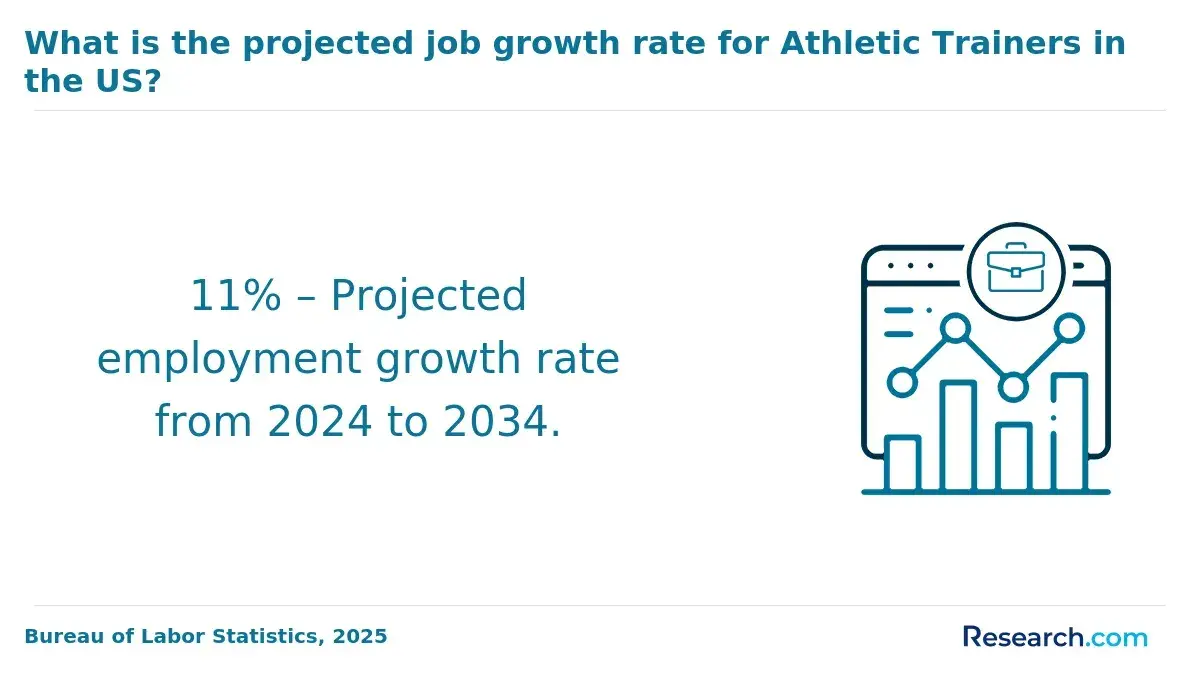
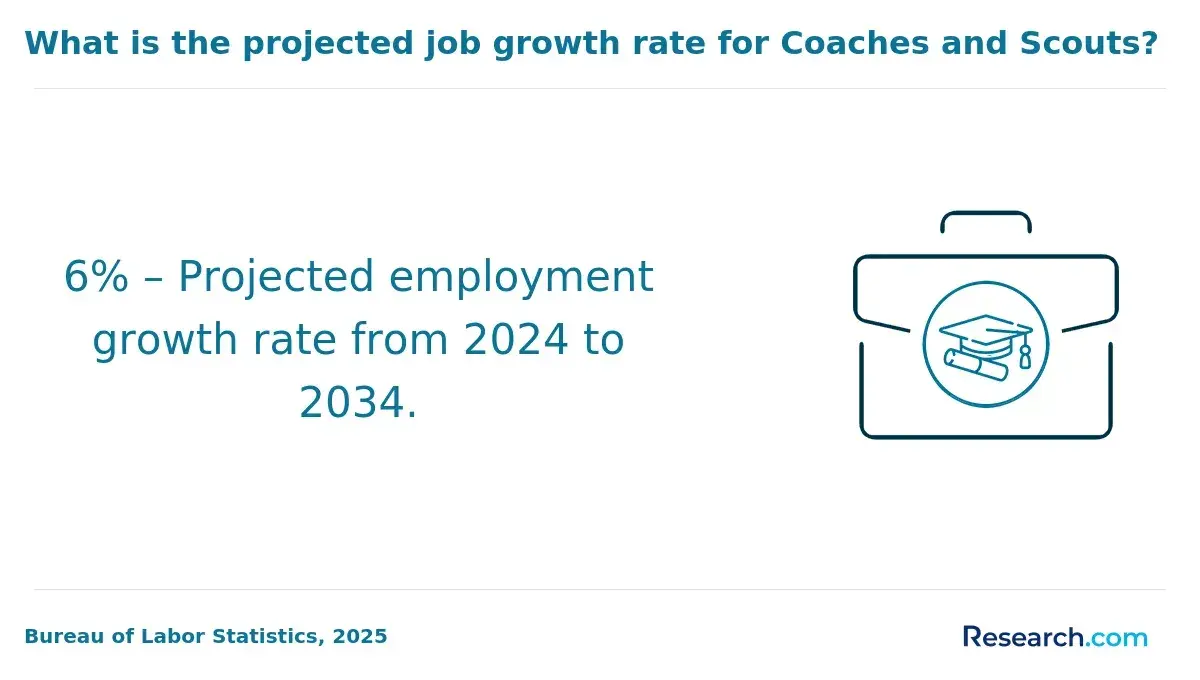
The labor market gives this decision real context. In 2024, employment for coaches and scouts totaled approximately 306,500 nationwide, and coaches in spectator sports earned a higher median annual wage of about $45,920. At the same time, coaching has expanded beyond traditional team sports into organizational performance, career development, and personal growth. This guide explains what online master’s in coaching programs include, how much they may cost, what careers they can support, and how to compare programs before enrolling.
Quick Answer: What Is an Online Master’s in Coaching?
An online master’s in coaching is a graduate degree designed for professionals who want advanced training in coaching theory, leadership, communication, ethics, performance development, and applied coaching practice. It can be useful for current coaches, educators, athletic professionals, career advisors, leadership consultants, and professionals who want to move into coaching-focused roles. Tuition commonly ranges from $15,000 to $60,000 or more for the full program, depending on the school, program length, residency requirements, and financial aid availability.
The degree is most worthwhile when it aligns with a clear career goal: advancing in athletic coaching, developing a private coaching practice, moving into leadership development, or strengthening coaching skills for education or organizational roles. It is less useful if you need a specific state teaching license, counseling license, athletic trainer credential, or sport-specific certification that the program does not provide.
Online Master’s in Coaching Table of Contents
- What to expect in an online master’s in coaching program
- Online master’s in coaching cost and return on investment
- Common courses in coaching master’s programs
- Admission requirements for online coaching degrees
- Technology requirements for online coaching students
- Career paths with a master’s in coaching
- How to choose an online master’s in coaching program
- Should coaching professionals consider doctoral study?
- Can coaching education support education-related careers?
- Do online coaching programs offer career support?
- Advanced academic options for experienced coaches
- Networking and industry connections in online coaching programs
- Online versus campus-based coaching master’s programs
- 2027 online master’s in coaching programs to consider
- Using coaching education with alternative teacher certification
- Technology trends in online coaching education
- Accelerated online master’s in coaching options
- Why leadership development matters in coaching programs
- Strategies for succeeding in an online coaching master’s program
What to Expect from an Online Master’s in Coaching Program
An online master’s in coaching usually combines theory, applied skill-building, leadership development, ethics, and performance improvement. Depending on the school, the degree may focus on athletic coaching, sport coaching, performance coaching, coaching and fitness leadership, executive coaching, or a related education-based coaching track.
The International Coaching Federation reported that in 2025, the estimated number of coach practitioners reached 122,974—54% higher than the global estimate six years prior. That growth helps explain why many graduate programs now emphasize evidence-based practice, coach-client relationships, professional standards, and measurable development outcomes rather than relying only on personal experience or sport-specific knowledge.
Most programs train students to use coaching models, assessment tools, goal-setting frameworks, feedback methods, communication strategies, and performance evaluation techniques. In athletic coaching programs, students may also study safety, sport psychology, training design, team culture, athlete motivation, and legal responsibilities. In broader coaching programs, coursework may include organizational psychology, leadership development, career coaching, and behavior change.
Online does not always mean fully self-paced. Many programs include live sessions, discussion boards, recorded lectures, peer coaching, case analysis, simulations, supervised practice, or field-based assignments. Before enrolling, confirm whether the program requires internships, practicums, synchronous meetings, campus visits, or current access to a coaching environment.
| Program feature | What it usually means for students | Why it matters |
| Coaching theory | Study of coaching models, behavior change, motivation, and development frameworks | Helps students move beyond intuition and use structured coaching methods |
| Applied practice | Simulations, peer coaching, supervised sessions, or field assignments | Builds the real-time communication and feedback skills coaches need |
| Ethics and standards | Training in boundaries, confidentiality, professional conduct, and responsibility | Protects clients, athletes, organizations, and the coach’s credibility |
| Leadership training | Courses in motivation, conflict resolution, team culture, and decision-making | Prepares graduates for roles that require influence, not just instruction |
| Online learning tools | Learning management systems, video conferencing, digital assignments, and collaboration platforms | Determines how interactive and manageable the online experience will be |
Is a Master’s in Coaching Worth It?
A master’s in coaching can be worth it if the program strengthens your credibility, improves your coaching practice, expands your professional network, or helps you qualify for positions that prefer graduate training. It can also be valuable for professionals who want to formalize experience they already have in athletics, education, human resources, leadership development, or career advising.
Coaching can also be personally meaningful work. One coaching survey found that 78% of coaching clients identified career-related challenges as the leading reason they sought coaching, while 60% pointed to personal life concerns as part of their motivation. For professionals who enjoy helping people clarify goals, improve performance, and make decisions, graduate training can provide a stronger framework for doing that work responsibly.
The degree is not automatically worth the price for every student. It may be a poor investment if you enroll without knowing your target role, choose an unaccredited institution, assume the degree guarantees clients, or need a credential the program does not provide. If your goal is education-related work with children and families, compare coaching programs with related pathways such as master’s programs in child development before deciding.
| A master’s in coaching may make sense if... | You may want another path if... |
| You already coach and want stronger academic training | You need a state-issued teaching, counseling, or clinical license |
| You want to move into athletic leadership, performance coaching, or executive coaching | You are looking for a quick credential with minimal coursework |
| Your employer values graduate education for promotion or salary advancement | You do not have a clear plan for using the degree professionally |
| You want supervised practice, feedback, and a professional network | You only need sport-specific certification from a governing body |
Projected Annual Job Openings for Key Sports Occupations

How Much Does an Online Master’s in Coaching Cost?
The total cost of an online master’s in coaching depends on tuition, fees, program length, residency requirements, textbooks, technology costs, and whether the school charges different rates for in-state and out-of-state students. Institutional reputation and program structure can also affect the final price.
Tuition for online master’s degree programs typically ranges from $15,000 to $60,000 or more for the entire program. As with other online degrees, including an online software engineering degree, the posted tuition is only part of the financial picture. Students should also review fees, required equipment, travel, course materials, and whether financial aid, scholarships, employer tuition support, or payment plans are available.
| Cost factor | What to check before enrolling |
| Tuition model | Confirm whether the school charges per credit, per course, per term, or a flat program rate. |
| Program length | Shorter programs may reduce time away from career advancement, but intensive formats can be harder to manage. |
| Residency or practicum requirements | Ask whether any in-person attendance, field placement, or supervised coaching site is required. |
| Financial aid | Check eligibility for federal aid, institutional scholarships, employer reimbursement, or graduate assistantships. |
| Return on investment | Compare total cost with realistic career goals, local job markets, and whether your target employers value the degree. |
How Much Can You Earn with a Master’s in Coaching?
Earnings vary widely because “coaching” covers many roles, industries, and business models. Experience, specialization, geography, employer type, client base, sport level, and reputation all affect compensation. According to a professional coaching industry report, active coach practitioners generated an estimated annual income from coaching of $5.34 billion in 2025.
Many coaches operate as independent practitioners, consultants, or small-business owners. In that model, income depends on client volume, retention, niche, marketing, and pricing. The overall average fee per one-hour coaching session in 2024 was $272 U.S. dollars, but individual rates can be much lower or much higher depending on specialization and market.
Executive coaching, organizational leadership coaching, and elite sports coaching often have higher earning potential than entry-level or part-time coaching roles. However, a master’s degree alone does not guarantee high fees. Clients and employers usually look for a combination of training, results, reputation, references, and relevant experience.
Courses Commonly Found in Online Master’s in Coaching Programs
Course titles differ by university, but most online coaching master’s programs cover coaching foundations, applied techniques, ethics, leadership, psychology, communication, and performance development. Some programs also include electives or concentrations in sport coaching, fitness leadership, executive coaching, wellness coaching, or education-based coaching.
Beyond sport strategy and technical instruction, coaches have expressed interest in more training on relationship building (26%), performance anxiety (26%), and motivational techniques (26%). That demand shows why strong coaching programs typically include interpersonal and psychological skill development, not just tactics and training plans.
- Coaching Theory and Practice. Students examine coaching models, professional competencies, coaching philosophies, and the differences between mentoring, advising, training, and coaching.
- Human Behavior and Psychology. Coursework introduces motivation, learning, behavior change, emotion, and decision-making so coaches can better understand how people respond to challenge and feedback.
- Coaching Skills and Techniques. Students practice active listening, questioning, observation, goal setting, feedback, and session structure through exercises, simulations, or supervised coaching activities.
- Leadership and Professional Development. This area focuses on self-awareness, ethical influence, emotional intelligence, conflict management, and personal leadership style.
- Communication and Relationship Building. Students learn how to build trust, maintain boundaries, adapt communication, and support productive coach-client or coach-athlete relationships.
- Ethical and Professional Standards in Coaching. Ethics training covers confidentiality, scope of practice, dual relationships, documentation, referral decisions, and professional responsibility. These topics are important in coaching and in adjacent fields such as information systems careers, where professional standards and role boundaries also matter.
| Course area | Skills developed | Useful for |
| Sport and performance psychology | Motivation, confidence, anxiety management, focus | Athletic coaches, performance coaches, team leaders |
| Program design | Planning, assessment, progression, safety | Sport coaches, fitness leaders, youth program directors |
| Organizational coaching | Leadership development, change management, team dynamics | Executive coaches, HR professionals, consultants |
| Research and evaluation | Data interpretation, evidence-based practice, outcome measurement | Coaches who want to assess impact and improve methods |
| Practicum or capstone | Applied coaching, reflection, portfolio development | Students who need demonstrable experience for employers or clients |
Admission Requirements for an Online Master’s in Coaching
Admissions requirements vary by school and concentration, but most online master’s in coaching programs evaluate academic readiness, professional experience, communication ability, and fit with the program’s coaching focus.
- Bachelor’s degree. Most programs require a bachelor’s degree from an accredited institution. A related major in psychology, education, counseling, kinesiology, exercise science, sport management, or social science may be helpful, though not always required. Among professional coaches, 99% reported completing some coach-specific training.
- Relevant experience. Some programs prefer or require experience in coaching, teaching, counseling, athletics, leadership, training, or human development. Applicants from other academic backgrounds, including those who completed an online bachelor’s degree in computer science, may still be competitive if they can show relevant leadership or coaching experience.
- Minimum GPA. Many schools set a minimum GPA requirement, often around a 3.0 on a 4.0 scale.
- Letters of recommendation. Programs may ask for academic or professional references who can discuss your work ethic, leadership, communication skills, and readiness for graduate study.
- Statement of purpose. This essay usually explains why you want to study coaching, what population you want to serve, and how the degree fits your career goals.
- Resume or curriculum vitae. Applicants typically submit a current resume listing education, work history, coaching experience, certifications, volunteer roles, and relevant achievements.
| Application item | How to strengthen it |
| Statement of purpose | Connect your experience to a specific coaching population, such as athletes, executives, students, or career changers. |
| Resume | Highlight leadership, mentoring, training, athletic, teaching, or counseling-related responsibilities. |
| Recommendations | Choose people who can describe your communication skills, professionalism, and ability to support others’ development. |
| Interview, if required | Be prepared to explain your coaching philosophy and why online graduate study fits your schedule. |
Technology Requirements for Online Master’s in Coaching Students
Online coaching programs depend heavily on live discussion, video-based practice, group work, document sharing, and digital feedback. Before enrolling, confirm the school’s technical standards and make sure your equipment can support both coursework and virtual coaching practice.
Computer requirements: A reliable laptop or desktop is essential. Programs may expect an updated operating system such as Windows 10 or macOS Catalina or newer, at least 8GB RAM, and enough processing power to run video conferencing, learning platforms, and virtual simulations without frequent lag.
Internet connection: A stable high-speed connection is necessary for live classes, video meetings, assignment uploads, and streaming course materials. A minimum speed of 10 Mbps is commonly recommended for video participation, while 20 Mbps or higher is better for higher-quality sessions.
Webcam and microphone: Because coaching relies on communication, many programs require video interaction. A clear webcam and dependable microphone, or a headset with a built-in microphone, can improve peer coaching sessions, presentations, and faculty meetings.
Software and applications:
- Learning management system. Students may use Blackboard, Canvas, Moodle, or a similar platform for lectures, readings, grades, assignments, and discussion boards.
- Video conferencing tools. Zoom, Microsoft Teams, and Google Meet are commonly used for live classes, coaching demonstrations, and group work.
- Document and presentation tools. Microsoft Office or Google Workspace is often needed for papers, presentations, shared notes, and collaborative projects.
Mobile access: Mobile apps can help students check deadlines, review materials, respond to discussions, and communicate with classmates, but mobile access should not replace a full computer for writing, video practice, or major assignments.
Technical support: Many universities provide 24/7 technical support for online students. Save help desk contact information before classes begin so technology problems do not derail live sessions or assignment deadlines.
What Can You Do with an Online Master’s in Coaching?
A coaching master’s degree can support several career directions, but outcomes depend on your prior experience, professional network, specialization, location, and whether you pursue additional credentials. Coaches often work across multiple settings over time. For example, 25% reported coaching in a park and recreation agency setting at some point in their career—35% developmental, 59% recreational, 68% competitive, and 82% collegiate. Readers exploring developmental coaching may also want to understand what life coaching involves and how it differs from sport or performance coaching.
| Role | Typical focus | Annual median salary listed |
| Executive coach | Leadership, decision-making, performance, communication, and professional development for senior leaders | $153,033 |
| Performance coach | Athletic, professional, or personal performance improvement through structured coaching methods | $75,229 |
| Leadership coach | Organizational culture, employee development, team effectiveness, and leadership behavior | $114,649 |
| Career coach | Career exploration, job search strategy, resumes, interviews, networking, and professional transitions | $80,000 |
| Business coach | Entrepreneurship, business strategy, owner development, accountability, and leadership growth | $88,213 |
Executive Coach
Executive coaches support senior leaders and high-level managers as they improve leadership behavior, decision-making, communication, and strategic effectiveness. Harvard Business Review has discussed the value of leaders who can use coaching as part of leadership practice. Executive coaching often requires substantial professional experience in addition to graduate study.
Annual median salary: $153,033
Performance Coach
Performance coaches help athletes, teams, professionals, or clients improve execution, consistency, focus, and measurable outcomes. Graduates who specialize in sports or performance coaching may pursue roles in athletic programs, private training organizations, or elite sports settings.
Annual median salary: $75,229
Leadership Coach
Leadership coaches and organizational development consultants work with organizations to improve leadership capacity, culture, team effectiveness, and employee engagement. As organizations place more attention on leadership training trends, coaches with graduate education and practical experience may find opportunities in consulting, HR, and talent development.
Annual median salary: $114,649
Career Coach
Career coaches help clients identify strengths, clarify professional goals, prepare application materials, build networks, and manage career transitions. Research has also examined how coaching can support career advancement strategies in the workplace.
Annual median salary: $80,000
Business Coach
Business coaches advise entrepreneurs, founders, and business owners on leadership, planning, accountability, growth, and personal effectiveness. Income can vary significantly because many business coaches operate independently and must build their own client base.
Annual median salary: $88,213
How to Choose an Online Master’s in Coaching Program
A strong online coaching program should match your career goals, provide credible instruction, and give you meaningful opportunities to practice. Coaching also requires credibility with the people you serve. Among athletes, 38% report having a female coach, while 53% of coaches now receive pay for their work, up from 38%. Those figures reflect a profession that is both broadening and becoming more formalized.
- Check accreditation. Confirm that the institution is accredited by a recognized accrediting agency. If the program claims coaching-specific accreditation or alignment, verify it directly. Programs may reference organizations such as the National Committee for Accreditation of Coaching Education (NCACE).
- Match the curriculum to your goal. A sport coaching program may not be ideal for someone who wants executive coaching, and a leadership coaching program may not provide the sport science or athlete safety training needed for athletic settings.
- Evaluate applied learning. Look for practicums, supervised coaching, case work, peer coaching, capstones, or field assignments. Coaching is a performance skill; reading alone is not enough.
- Review faculty experience. Strong programs use instructors with relevant coaching, research, athletic, organizational, or leadership experience.
- Study the online format. Ask whether courses are asynchronous, synchronous, or blended. Make sure the schedule fits your work and coaching responsibilities.
- Compare total cost and support. Tuition matters, but so do scholarships, employer reimbursement, advising, career services, technology support, and alumni access.
Questions to Ask Before You Enroll
- Is the university institutionally accredited?
- Does the program prepare students for my intended coaching setting?
- Are there supervised coaching experiences, practicums, or field-based assignments?
- Will I need access to athletes, clients, teams, or a workplace coaching environment?
- Are courses live, self-paced, or a mix of both?
- What is the total cost after fees, books, technology, and any residency requirements?
- Does the program help students build a coaching portfolio?
- What career services are available to online students?
- Does the degree meet any requirements for my employer, school district, athletic association, or professional organization?
Common Mistakes to Avoid
| Mistake | Why it causes problems | Better approach |
| Choosing based only on tuition | A cheaper program may offer limited practice, weak support, or poor alignment with your goals. | Compare cost together with curriculum, faculty, accreditation, practicum options, and career services. |
| Assuming online programs are all self-paced | Some require live sessions, group meetings, or scheduled coaching demonstrations. | Ask for a sample weekly schedule before applying. |
| Ignoring accreditation | An unrecognized institution can reduce employer confidence and limit future study options. | Verify institutional accreditation through official sources. |
| Confusing coaching with counseling or therapy | A coaching degree usually does not qualify graduates for clinical mental health practice. | Confirm scope of practice and licensure requirements for your intended role. |
| Expecting the degree to guarantee clients | Private coaching requires marketing, referrals, reputation, and business development. | Choose a program that helps with portfolio building, networking, and professional positioning. |
Should You Pursue a Doctoral Degree to Strengthen a Coaching Career?
A doctoral degree may be useful if your long-term goals involve research, university teaching, senior consulting, program evaluation, organizational leadership, or advanced study of human behavior. It is usually not necessary for most applied coaching roles, especially if your work centers on athletic teams, private coaching, or workplace development.
Professionals who want deeper training in behavioral science, psychological theory, and research methods may compare coaching graduate programs with an online doctorate in psychology. Before committing to doctoral study, ask whether the degree supports a specific career move and whether the time, cost, and research requirements fit your goals.
Can Coaching Education Expand Career Options in Education?
Coaching skills transfer well to educational environments because teachers, advisors, administrators, and mentors often need to motivate learners, communicate clearly, guide behavior, and support growth. A master’s in coaching may help educators strengthen leadership, student engagement, team culture, and mentoring practices.
However, coaching graduate study is not the same as teacher licensure. If you want to work in a classroom, school administration, or curriculum role, confirm the credential requirements in your state or school system. Readers comparing education pathways can review career options connected to teaching degrees to see how coaching skills might complement education-focused roles.
Do Online Coaching Programs Provide Career Support?
Career support can make a major difference in the value of an online coaching master’s program. Strong programs may offer advising, faculty mentorship, internship guidance, alumni networking, resume support, mock interviews, coaching portfolio development, and virtual career events.
Students interested in education leadership or advanced academic administration may also compare coaching programs with accelerated or lower-cost EdD options. The best choice depends on whether you want to coach individuals and teams directly, lead educational systems, conduct research, or move into administrative leadership.
What Advanced Academic Opportunities Can Further Elevate a Coaching Career?
Experienced coaches who want to move into research, executive development, higher education, or organizational consulting may benefit from advanced study beyond the master’s level. Doctoral work can provide deeper training in organizational behavior, systems thinking, leadership theory, change management, research design, and evidence-based decision-making.
If your coaching practice is increasingly focused on leadership systems, workplace transformation, or executive development, a PhD in organizational leadership may be worth comparing with coaching-specific graduate programs. The better option depends on whether you want to deepen applied coaching skills or prepare for research-heavy and strategic leadership roles.
How Do Online Coaching Programs Build Networking and Industry Connections?
Online coaching programs can support networking when they intentionally connect students with faculty, alumni, employers, professional associations, and working coaches. Look for programs that include mentorship, live seminars, coaching labs, peer cohorts, alumni groups, career workshops, and applied projects.
Networking is especially important for private coaching, consulting, and leadership development roles because many opportunities come through referrals and reputation. If you are comparing several online graduate options across fields, including information-focused programs such as the most affordable online MLIS degree programs, evaluate how each program helps online students build professional relationships rather than simply complete coursework.
Online Master’s in Coaching vs. On-Campus Programs
Online master’s in coaching programs are often better for working professionals who need schedule flexibility, live far from campus, or want to keep coaching while studying. Campus programs may be better for students who want face-to-face interaction, direct access to athletic facilities, in-person assistantships, or local internship networks.
| Format | Best for | Potential drawbacks |
| Online master’s in coaching | Working coaches, educators, career changers, and students who need geographic flexibility | May require strong self-discipline and proactive networking |
| On-campus master’s in coaching | Students who want in-person mentoring, campus athletics exposure, and face-to-face collaboration | May be less flexible for full-time workers or students outside the region |
| Hybrid program | Students who want online convenience with occasional in-person intensives | Travel costs and scheduling requirements can add complexity |
Program quality matters more than delivery format. Review curriculum, faculty, applied practice, accreditation, student support, and career outcomes. Professionals who plan to continue into higher education leadership or research roles may also compare coaching graduate programs with online doctorate programs in higher education.
2027 Online Master’s in Coaching Programs to Consider
In 2024, 85% of clients prioritise working with certified coaches. Graduate education is not the same as certification, but it can strengthen a coach’s knowledge base, credibility, and ability to use structured methods. The programs below are examples of online master’s options reviewed for coaching education foundations, program structure, and alignment with research-informed coaching practice, including concepts discussed in coaching research studies.
1. Ball State University
Ball State University offers a master’s degree in athletic coaching designed for graduate students who want advanced preparation in coaching education. The program is taught by faculty with national and international coaching experience.
The program is fully online and has no residency requirement, making it a practical option for coaches who want to continue working while completing graduate study. Its curriculum is based on the National Association for Sport and Physical Education (NASPE) National Standards for Sports Coaches and emphasizes the eight domains of coaching used to develop athletes and teams.
2. West Virginia University MS in Sport Coaching
The online MS in Sport Coaching at West Virginia University was developed with input from industry leaders connected to organizations such as the University of Illinois Division of Intercollegiate Athletics, West Virginia University Athletics, and USA Hockey.
The program’s faculty are involved in coaching and coach development across levels, from local youth settings to national and international teams. That practitioner connection can help students relate coursework to current challenges in the sport industry.
3. University of Northern Colorado Master of Arts in Sport Coaching
The University of Northern Colorado offers a master’s program in sport coaching that combines online coursework, professional coaching standards, field experience, and action research.
The program is designed for adults who already hold full-time or part-time coaching roles. Students study communication, motivation, psychology, training, safety, ethics, and law while developing strategies for becoming stronger educators, mentors, and advocates for athletes.
4. University of the Cumberlands Master in Coaching and Fitness Leadership
The Master of Science in Coaching and Fitness Leadership at the University of the Cumberlands is built for students who want to coach individual or team sports at amateur, collegiate, or professional levels.
The program emphasizes practical use of academic concepts. Students study coaching, fitness, leadership, management, exercise physiology, and strategies for helping athletes pursue individual and team goals.
5. SUNY College at Brockport Online Master’s Degree in Physical Education
SUNY College at Brockport offers an online graduate pathway connected to physical education and coaching-related advancement. The program is designed to strengthen leadership skills and prepare graduates for expanded opportunities in coaching, health education, and physical education.
The master of education in physical education and teacher education includes study in curriculum development, behavior management, diversity, best practices, and emerging trends in physical education.
Can a Master’s in Coaching Complement Alternative Teacher Certification?
A coaching master’s can pair well with alternative teacher certification when your goal is to work in schools, athletics, student development, or physical education. Coaching coursework can strengthen communication, motivation, leadership, team culture, and student engagement skills.
Still, the degree itself may not satisfy teacher certification rules. If you plan to enter the classroom through a nontraditional pathway, compare coaching programs with affordable alternative teacher certification programs and confirm state-specific requirements before enrolling.
Is an Online Master’s in Coaching the Right Path for You?
Coaching has a long intellectual history, and research has traced the beginnings of coaching to the development of sophisticated language. Modern coaching now blends communication, psychology, performance development, ethical practice, and leadership.
An online master’s in coaching is a strong option if you want graduate training while continuing to coach, teach, consult, or work full time. It may also complement education-related goals, including pathways such as an online secondary education degree or work connected to an associate degree in child development. If you are comparing other graduate education options, Research.com’s guide to online master’s in ESL programs may also be useful.
Technology Trends in Online Coaching Programs
Technology is changing how coaching students learn, practice, and receive feedback. Online programs increasingly use digital tools to support realistic coaching scenarios, collaboration, performance review, and flexible access to coursework. Before choosing a program, ask how technology is used instructionally, not just whether classes are delivered online.
- Virtual reality and augmented reality. Some programs may use immersive tools to simulate coaching situations, practice decision-making, or recreate performance environments in a controlled setting.
- Interactive learning platforms. Canvas, Blackboard, Moodle, and similar systems allow students to access lectures, submit assignments, join discussions, and receive feedback.
- Digital communication tools. Zoom, Microsoft Teams, and Google Meet help students practice coaching conversations, participate in live classes, and build relationships with peers and faculty.
- Performance tracking software. Coaching students may learn how to analyze performance data, document progress, and use digital tools to support athlete or client development.
- Mobile learning applications. Mobile access can help students stay organized, review course materials, and respond to updates while balancing work and study.
- Digital ethics and literacy. Programs should address privacy, data security, boundaries in virtual coaching, recording permissions, and ethical use of digital tools.
Students comparing online learning formats more broadly can review Research.com’s discussion of whether online degrees are worth it in the current education and employment landscape.
Can You Complete an Online Master’s in Coaching Faster?
Many online master’s in coaching programs follow a two-year structure, but some schools offer accelerated formats. Accelerated programs may allow students to finish in 12 to 18 months by compressing coursework into shorter terms or heavier course loads.
Accelerated programs may work well if:
- You can handle a faster academic pace while balancing work and personal responsibilities.
- You already have coaching experience or a related academic background.
- You want to move quickly into a new role, promotion track, or coaching specialization.
They may be harder if:
- You need more time to absorb theory and practice skills.
- You work irregular hours or coach during demanding seasons.
- You need flexibility for family, travel, or fieldwork obligations.
Not every university offers an accelerated coaching option. Students who want to compare faster graduate formats can review Research.com’s guide to one-year online master’s degree programs.
Why Leadership Development Matters in Coaching Education
Good coaching requires more than knowledge of drills, tactics, or models. Coaches must lead people through challenge, build trust, communicate expectations, manage conflict, and create conditions for growth. That is why leadership development is a central part of many online coaching master’s programs.
Leadership coursework often covers motivation, communication, ethical decision-making, conflict resolution, team development, emotional intelligence, and adaptive leadership. For students comparing flexible programs while working full time, lists of the best online degrees for working adults can help frame questions about schedule, support, and affordability.
Strong programs also give students ways to practice leadership through case studies, role-playing, mentoring, supervised coaching, and reflective assignments. These experiences help graduates apply leadership skills in sports, schools, corporate training, nonprofit programs, and private coaching practices.
Strategies for Succeeding in an Online Coaching Master’s Program
Online coaching students succeed when they treat the program as both academic study and professional skill training. The goal is not just to complete assignments; it is to become more effective in real coaching situations.
- Build a weekly study schedule before classes begin. Include time for readings, live sessions, discussion posts, assignments, and coaching practice.
- Participate actively in virtual sessions. Coaching skill improves through feedback, observation, and practice, so passive attendance limits the value of the program.
- Create a coaching portfolio. Save coaching philosophy statements, session plans, assessment tools, case reflections, capstone work, and supervised practice documentation.
- Seek feedback early. Ask faculty and peers to evaluate your listening, questioning, feedback style, and ethical decision-making.
- Connect coursework to your current role. Apply theories and models to athletes, clients, students, or teams you already support when appropriate and ethical.
- Study related leadership pathways. If your interests expand into education leadership, compare coaching graduate study with options such as the most affordable online doctoral programs in educational leadership.
Key Insights
- An online master’s in coaching is best for professionals with a clear use case. It can support athletic coaching, leadership development, performance coaching, career coaching, business coaching, and education-related roles, but it should match a specific career goal.
- Cost varies significantly. Tuition commonly ranges from $15,000 to $60,000 or more for the full program, so students should compare total cost, financial aid, time to completion, and likely career value.
- Applied practice is essential. The strongest programs include coaching simulations, supervised work, practicums, capstones, peer coaching, or field-based assignments.
- Accreditation and fit matter more than rankings alone. Verify institutional accreditation and review whether the curriculum matches your intended coaching setting.
- Technology is part of modern coaching education. Online students need reliable equipment, strong internet, video tools, and comfort with digital collaboration and performance-tracking platforms.
- The degree does not replace licensure or certification when those are required. Confirm state, employer, athletic association, or professional organization requirements before enrolling.
- Career outcomes depend on more than the diploma. Experience, specialization, client results, professional network, and credibility strongly influence opportunities and earnings.
References:
- Aspen Institute (2025). State of Play 2025.
- Bureau of Labor Statistics (2024). Coaches and Scouts
- Bureau of Labor Statistics (2025). Coaches and Scouts
- International Coaching Federation (n.d.). ICF Global Coaching Snapshots
- International Coaching Federation (n.d.). ICF Global Coaching Study
- Zippia (2025). Coach education requirements
Other Things You Should Know About Online Master’s in Coaching Programs
No certification exam is universally required after completing an online master's in coaching program in 2027. However, some programs may prepare you for specific certifications like the International Coach Federation (ICF) credential, depending on the curriculum and concentrations offered.
In 2027, online master's in coaching programs typically focus on developing leadership, communication, and strategic planning skills. Students often gain experience in performance analysis, team management, and motivational techniques, equipping them to effectively coach individuals and teams in various contexts.
Typical admission requirements for an online master’s in coaching program include a bachelor’s degree from an accredited institution, relevant work experience, a minimum GPA (usually around 3.0), letters of recommendation, a statement of purpose, and a resume or CV. Some programs may have additional requirements such as interviews or specific prerequisite courses.
With a master’s in coaching degree, you can pursue various career opportunities, including executive coach, performance coach, leadership coach, career coach, and business coach. These roles are available in diverse settings such as sports organizations, corporations, educational institutions, and private coaching practices.
Yes, accreditation is important for an online master’s in coaching program as it ensures that the program meets certain quality standards and that your degree will be recognized by employers and other institutions. Look for programs accredited by recognized bodies such as the National Committee for Accreditation of Coaching Education (NCACE).
Yes, many online master’s in coaching programs are designed to accommodate working professionals. These programs offer flexible schedules, allowing you to balance your studies with your professional and personal commitments. Some programs are fully online, while others may require occasional in-person sessions.
The typical duration for completing an online master’s in coaching program in 2027 is usually 1 to 2 years, depending on whether you enroll part-time or full-time. Some accelerated programs can be completed in as little as one year.
Yes. Many accredited online master’s in coaching programs require supervised coaching practice, often 50 to 100 hours, plus observed sessions or a practicum. Programs tied to the International Coaching Federation align coursework with 60 to 125 training hours and may help graduates qualify for ACC or PCC credentials.