
2027 What Degree Should I Get to Become an Entrepreneur?

Co-Founder and Chief Data Scientist
Choosing a degree as an aspiring entrepreneur is not about finding a single “required” credential. It is about deciding which education path will help you build, fund, launch, and manage the kind of business you want to create. Some founders learn by doing, while others use college to gain financial discipline, technical expertise, industry credibility, and access to mentors or investors.
The decision matters because entrepreneurship is both common and competitive. The U.S. has 6.1 million employer firms, and 99.7% of them are small businesses. A degree will not guarantee a successful company, but the right program can reduce avoidable mistakes, strengthen your business model, and help you understand markets before you risk your own money. This guide explains the best degrees for entrepreneurs, when a business degree is worth it, which non-business majors can be useful, and how to compare college with faster alternative learning paths.
Quick Answer: Do You Need a Degree to Become an Entrepreneur?
No degree is legally required to become an entrepreneur. You can start a business without college. However, a degree can be useful if you need structured training in finance, marketing, operations, technology, leadership, or a regulated industry. According to Zippia, 62% of entrepreneurs hold a bachelor’s degree, which suggests that many founders use higher education as preparation even though it is not mandatory.
| Entrepreneurial Goal | Degree Path That Often Fits | Why It Can Help |
| Start a general small business | Business administration or entrepreneurship | Builds broad skills in management, finance, marketing, and operations. |
| Launch a tech company | Computer science, information systems, cybersecurity, or engineering | Provides technical knowledge needed to build, evaluate, and scale digital products. |
| Raise outside capital | Finance, business, economics, or technology-related programs | Strengthens financial modeling, market analysis, and investor communication. |
| Build a healthcare, biotech, or wellness company | Health sciences or a related technical field | Helps founders understand industry rules, patient needs, research, and compliance issues. |
| Create a brand, agency, or media business | Marketing, communications, graphic design, creative writing, or media studies | Supports customer research, storytelling, branding, content, and campaign execution. |
Key Things You Should Know About Entrepreneurs Getting a Degree
- A degree is optional, but common among founders. Although there is no universal degree requirement for entrepreneurs, 62% of entrepreneurs hold a bachelor's degree.
- Graduate business training may support startup durability. MBA-founded startups have been reported to survive beyond three years at higher rates than the average startup, which has a 10-40% chance of lasting that long.
- College can be valuable for relationships, not just coursework. Classmates, professors, alumni, incubators, and pitch competitions can connect founders with collaborators, mentors, early customers, and funding sources.
- Business, finance, and technology backgrounds can help with funding conversations. Startup funding reached $10.1 billion across 416 deals in 2024, and investors often look for founders who can explain markets, numbers, and product execution clearly.
- Founders must keep learning after graduation. By 2030, 39% of key job skills are expected to change, so entrepreneurs should plan for continuous upskilling regardless of their degree choice.
- Best degrees for entrepreneurs in 2027
- Is a business degree worth it for entrepreneurs?
- Can a non-business degree help you become an entrepreneur?
- Most valuable skills entrepreneurs need
- Should you earn a degree or start your business now?
- Online business administration degrees as a lower-cost option
- Advanced finance education for founders
- Doctorate in Business Administration for entrepreneurs
- Accelerated online programs for entrepreneurial skills
- How college networking and mentorship support founders
- Online bachelor’s degrees in finance for entrepreneurs
- Affordable master’s degrees and entrepreneurial ROI
- Accelerated project management programs for startup execution
- How degree choice can affect funding opportunities
- Best alternative education paths for entrepreneurs
- How international entrepreneurs approach education
- Executive MBA options for business owners
What is the best degree for becoming an entrepreneur for 2027?
The best degree for an entrepreneur depends on the type of business you want to build. A business administration degree is often the most flexible option because it covers management, accounting, finance, marketing, and organizational strategy. However, founders in technical, healthcare, design, media, or engineering fields may benefit more from a degree tied directly to their industry.
A practical way to choose is to ask: “What skill will create the biggest advantage for my business?” If you need to build software, a computer science background may matter more than a general business major. If you want to buy, operate, or grow a local company, business administration may be more useful. If your challenge is raising capital, pricing services, or forecasting cash flow, finance or economics can be especially relevant.
Business and management degrees
- Business administration – A broad business administration program is useful for future founders who want training across leadership, operations, accounting, finance, marketing, and business planning. It fits students who are still exploring industries or want a versatile foundation.
- Entrepreneurship – An entrepreneurship major usually focuses more directly on idea validation, venture creation, innovation, business models, pitch development, and startup growth. It works best for students who already know they want to build companies rather than follow a traditional corporate path.
- Finance – A finance degree can be valuable for founders who expect to manage complex cash flow, attract investors, analyze risk, price products, or make investment decisions. It is especially useful for capital-intensive businesses and ventures that require strong financial planning.
Industry-specific degrees
- Computer science – This path fits founders who want to create software, apps, platforms, artificial intelligence tools, cybersecurity products, or data-driven businesses. It can also help nontechnical founders better evaluate product feasibility and engineering talent.
- Engineering – Engineering programs support entrepreneurs building physical products, manufacturing systems, robotics, energy solutions, devices, or technical services. They are especially useful when the business depends on product development and problem-solving under constraints.
- Health sciences – Health-related degrees can help entrepreneurs understand patient care, medical research, healthcare systems, wellness markets, and policy issues. They can be useful for founders entering healthcare, biotechnology, therapy, fitness, diagnostics, or related fields.
Marketing and creative degrees
- Marketing – A marketing degree can prepare founders to research customers, position products, build brands, run digital campaigns, manage sales funnels, and measure demand. This is helpful for any founder who must acquire customers without wasting limited startup funds.
- Graphic design – Design training can help entrepreneurs create visual identities, product interfaces, advertising assets, packaging, and brand experiences. It is especially useful for creative agencies, direct-to-consumer brands, media ventures, and digital products.
Social science and strategy-focused degrees
- Economics – Economics helps founders understand markets, incentives, pricing, competition, consumer behavior, and business cycles. It is useful for entrepreneurs who want a data-informed view of opportunity and risk.
- Psychology – Psychology can support leadership, hiring, sales, user experience, negotiation, motivation, and customer engagement. Founders who understand behavior often communicate better with teams, buyers, and stakeholders.
The best degree to become an entrepreneur is the one that closes your biggest knowledge gap while giving you access to relevant people and practical projects. Formal education is not the only path, but it can provide credibility, structure, and a network. This is similar to how people compare structured educational routes in other careers, such as when researching how to become a neurologist, even though entrepreneurship has fewer formal entry rules.
| Degree | Best For | Main Advantage | Possible Limitation |
| Business administration | General founders, small business owners, future managers | Wide coverage of core business functions | May not provide deep technical or industry expertise |
| Entrepreneurship | Students focused on launching ventures | Startup-specific coursework and pitch practice | Quality varies widely by school and access to incubators |
| Finance | Founders raising capital or managing complex budgets | Strong preparation in funding, risk, forecasting, and valuation | Less emphasis on product, marketing, or operations |
| Computer science | Technology founders | Ability to build or evaluate technical products | May require added business training |
| Marketing | Brand, ecommerce, agency, and consumer product founders | Customer acquisition and positioning skills | May need stronger accounting and finance preparation |
| Engineering | Product, hardware, manufacturing, energy, and robotics founders | Technical problem-solving and product development | Business operations may need separate study |
Is a business degree worth it for entrepreneurs?
A business degree can be worth it for entrepreneurs who want a structured way to learn how companies operate. It is most useful when the program includes applied projects, accounting, finance, marketing analytics, operations, leadership, and access to mentors or entrepreneurship resources. It is less valuable if the program is expensive, mostly theoretical, weakly connected to employers or founders, or unrelated to your intended business.
The biggest benefit of a business degree is that it teaches founders to think beyond the idea. A company needs customers, cash flow, systems, legal awareness, pricing discipline, hiring processes, and measurable goals. Many first-time entrepreneurs fail not because the idea is bad, but because they underestimate execution. Coursework, case studies, internships, and incubator experiences can help students practice these decisions before real money is on the line.
Graduate-level business education can also be useful for entrepreneurs who already have work experience or are preparing to scale. According to the Financial Times, startups founded by MBA graduates have a higher survival rate after three years than the average startup, which has a 10-40% chance of lasting that long. That does not mean an MBA guarantees success, but it suggests that structured business training, networks, and planning discipline may help some founders.
Students who need flexibility can compare online options, including an AACSB online MBA, especially if they want to keep working while developing a business. Accreditation, total cost, faculty experience, startup resources, and alumni network quality should matter more than convenience alone.
| A Business Degree May Be Worth It If... | You May Not Need One Right Now If... |
| You need formal training in accounting, finance, management, or marketing. | You already have strong business experience and a validated opportunity. |
| You want access to mentors, alumni, incubators, and pitch competitions. | Your business requires immediate market testing more than classroom learning. |
| You plan to raise capital and need stronger financial communication skills. | The program cost would consume money needed to launch or sustain the company. |
| You are entering a competitive industry where credentials improve credibility. | You can learn the missing skills through targeted courses, advising, or a mentor. |
Can a non-business degree help you become an entrepreneur?
Yes. A non-business degree can be a strong foundation for entrepreneurship when it gives you expertise that customers, investors, or partners value. Many companies are built around technical knowledge, creative work, professional services, scientific research, or deep understanding of a specific audience. In those cases, business knowledge can be added later through courses, mentors, work experience, or graduate study.
STEM degrees can support product and technology ventures
Engineering, computer science, data, and other STEM fields help founders solve technical problems, build products, evaluate feasibility, and communicate with technical teams. These degrees are especially useful in software, hardware, artificial intelligence, cybersecurity, manufacturing, robotics, and other innovation-heavy markets.
Liberal arts and social science degrees can improve strategy and communication
Economics, communications, political science, and related fields can help entrepreneurs interpret markets, present ideas clearly, negotiate, understand institutions, and build persuasive narratives. These skills are valuable in consulting, policy, media, education, community ventures, and customer-facing businesses.
Psychology can strengthen leadership and customer insight
A psychology background can help founders understand motivation, decision-making, team dynamics, behavior change, and customer trust. These insights can improve hiring, sales, user experience, employee management, and brand positioning.
Technology degrees can protect and scale digital businesses
Information systems and cybersecurity degrees can be useful for entrepreneurs building online platforms, managing sensitive data, or operating digital infrastructure. Founders who want both technology and business strategy may consider an online MBA information systems program that connects IT decisions with organizational goals.
Creative degrees can help founders build brands people remember
Graphic design, media studies, fine arts, and writing-focused programs can help entrepreneurs develop visual identity, storytelling, content, campaigns, and product experiences. Students who want to strengthen brand voice, messaging, and content strategy can explore online degrees in creative writing as one possible route.
Whatever your major, entrepreneurship requires the ability to keep learning. By 2030, 39% of key job market skills are expected to change, so founders should treat any degree as a starting point rather than a final qualification.
What are the most valuable skills for entrepreneurs?
The most valuable entrepreneurial skills combine business judgment, people skills, technical awareness, and resilience. A founder does not have to master everything alone, but they must understand enough to make decisions, hire wisely, and recognize when the company is drifting off course.
- Financial management – Founders need to understand revenue, expenses, cash flow, margins, debt, taxes, pricing, and runway so they can make decisions before money becomes a crisis.
- Marketing and sales – Entrepreneurs must know how to identify customers, communicate value, build trust, close sales, and retain buyers through branding, digital marketing, outreach, and service quality.
- Problem-solving – Business ownership involves constant uncertainty. Founders need to test assumptions, diagnose bottlenecks, and adjust when products, customers, or costs behave differently than expected.
- Networking and communication – Investors, customers, suppliers, employees, advisors, and partners all respond to clear communication. Strong relationships can open doors that advertising or cold outreach cannot.
- Adaptability – Markets, technologies, regulations, and customer expectations shift. Entrepreneurs must be willing to revise offers, change channels, update skills, and sometimes abandon weak ideas.
- Leadership and team management – As the business grows, the founder’s role shifts from doing everything to setting priorities, hiring, coaching, and building culture. An online master’s in management and leadership can be useful for professionals who want structured leadership development.
- Time management – Entrepreneurs face competing demands from customers, operations, marketing, finances, and employees. Prioritization matters because not every urgent task creates business value.
- Technical fluency – Depending on the company, founders may need knowledge of coding, analytics, automation, product design, cybersecurity, digital tools, or industry-specific systems.
| Skill | How to Build It | How It Shows Up in a Startup |
| Cash flow management | Accounting courses, finance classes, small business advising | Knowing when to hire, borrow, cut costs, or change pricing |
| Customer discovery | Marketing research, interviews, sales practice | Testing whether people will actually pay for the product |
| Leadership | Team projects, management training, mentorship | Keeping employees aligned when priorities change |
| Data analysis | Analytics courses, spreadsheets, business intelligence tools | Tracking performance instead of relying on instinct alone |
| Negotiation | Role-play, communications courses, real sales experience | Working with vendors, investors, landlords, clients, and partners |
Should you get a degree or start a business right away?
You should consider earning a degree first if you need time to build skills, explore industries, develop a network, or reduce the risk of costly business mistakes. You may consider starting right away if you already have a validated idea, relevant experience, access to customers, and enough financial cushion to absorb early uncertainty.
Higher education is common among business leaders. Among Fortune 500 CEOs, only 5.8% had no college education at all. That figure does not prove that a degree causes entrepreneurial success, but it does show that formal education remains common in high-level business leadership.
A degree can help founders understand finance, marketing, operations, hiring, and communication before they have to make those decisions under pressure. College can also create a structured environment for internships, applied projects, mentoring, and professional networks. Similar to top ranked online master’s in communication disorders programs, the strongest programs combine academic preparation with practical experience rather than relying only on lectures.
Still, some opportunities move quickly. In industries where customer discovery and speed matter more than credentials, delaying for a degree may not be the best first move. Many entrepreneurs choose a hybrid path: enroll part time, take online courses, work in the industry, and test the business in stages.
| Path | Best Fit | Main Benefit | Main Risk |
| Earn a degree first | Students who need business fundamentals, industry exposure, or time to mature an idea | Structured learning, feedback, credentials, and network access | Cost and delayed market entry |
| Start the business immediately | Founders with a validated idea, customers, experience, and funding access | Fast learning from real market feedback | Higher chance of avoidable operational or financial mistakes |
| Study while building | Working adults, online learners, and cautious founders | Combines education with real-world testing | Heavy workload and slower progress in both areas |
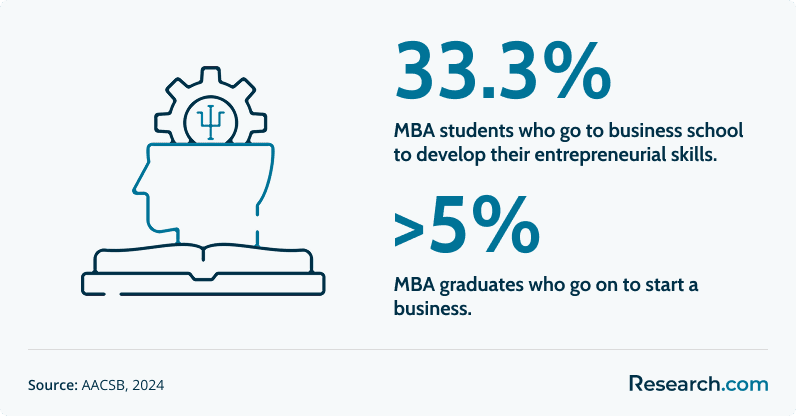
Can online business administration degrees offer a cost-effective alternative for entrepreneurs?
Online business administration programs can be a practical option for entrepreneurs who need flexibility and want to control education costs. A well-designed online program can teach accounting, management, marketing, operations, and business law while allowing students to keep working or testing a venture. Prospective students comparing affordability can review options such as the cheapest online business administration degree, but price should not be the only factor. Accreditation, transfer credit rules, course relevance, faculty support, and access to networking or career resources all affect the real value of the degree.
Can advanced finance education accelerate entrepreneurial success?
Advanced finance study can help founders make better decisions about capital, risk, pricing, forecasting, valuation, and investment. This is especially useful for entrepreneurs seeking outside funding, managing inventory-heavy operations, buying a business, or planning for scale. Flexible options such as finance masters programs online may fit founders who want stronger analytical skills without stepping away from business activity. The best choice is a program that uses practical financial modeling, case analysis, and market-based decision-making rather than theory alone.
Is a Doctorate in Business Administration (DBA) Worth Pursuing for Entrepreneurs?
A Doctorate in Business Administration is usually not necessary for a first-time founder, but it may be useful for experienced entrepreneurs, consultants, executives, educators, or business owners who want advanced research skills and strategic credibility. DBA programs often emphasize evidence-based management, applied research, organizational analysis, and complex decision-making. Entrepreneurs considering cheap online DBA programs should compare total cost, dissertation or applied project expectations, faculty expertise, accreditation, and whether the program supports their business goals. For most early-stage founders, a shorter business, finance, or project management credential may deliver a faster return.
Can an accelerated online program sharpen entrepreneurial acumen?
Accelerated online programs can help founders build business skills quickly when they already know what they need to improve. A shorter program may cover strategy, leadership, operations, finance, or innovation in a compressed format, which can be useful for entrepreneurs who cannot pause work for a traditional schedule. An online MBA one year program may appeal to learners who want a faster graduate business path. Before enrolling, students should confirm the workload, accreditation, networking access, faculty support, and whether the accelerated pace allows enough time to apply concepts to real business problems.
How do networking and mentorship in college help entrepreneurs?
Networking and mentorship are among the strongest reasons to consider college as an entrepreneur. A founder may be able to learn marketing or accounting independently, but it is harder to recreate a concentrated environment of peers, professors, alumni, advisors, startup clubs, competitions, and incubator programs.
- Peer connections – Classmates can become co-founders, employees, collaborators, early users, or referral sources. A strong student network can continue to matter long after graduation.
- Faculty and alumni guidance – Professors may help students refine ideas, understand industries, and avoid weak assumptions, while alumni can offer mentorship, introductions, referrals, or funding insight.
- Business clubs and competitions – Entrepreneurship clubs, pitch contests, student consulting groups, and incubators give students a lower-risk place to test ideas and receive feedback.
- Mentorship access – A mentor can help a founder think through pricing, hiring, product-market fit, partnerships, operations, and fundraising before mistakes become expensive.
The value of networking depends on participation. Simply enrolling is not enough. Students who attend events, ask for feedback, join projects, and maintain relationships are more likely to benefit from the network a school provides.
Is an online bachelor's degree in finance a strategic asset for entrepreneurs?
An online bachelor’s degree in finance can help entrepreneurs understand financial statements, capital structure, risk, investment decisions, budgeting, and forecasting. These skills matter when a founder needs to decide whether a business can afford hiring, inventory, advertising, debt, or expansion. Students comparing this route can review an online bachelor's degree finance program to understand how online study may fit work and startup responsibilities. The degree is most useful when paired with practical experience, accounting fluency, and market research.
Is an affordable master’s degree a smart investment for entrepreneurial success?
An affordable master’s degree can be a smart investment if it gives the entrepreneur skills that directly improve decision-making, credibility, or business performance. Cost matters because every dollar spent on tuition is money that cannot be used for product development, hiring, marketing, or cash reserves. Founders comparing options such as the cheapest master in economics online should look beyond tuition and ask whether the curriculum supports pricing, market analysis, forecasting, policy understanding, or strategic planning. The right program should strengthen the business case, not simply add another credential.
Can accelerated project management programs boost startup efficiency?
Project management training can be valuable for entrepreneurs who struggle with deadlines, resource allocation, team coordination, scope changes, or execution. Startups often fail to move from idea to delivery because priorities are unclear or responsibilities shift too often. A project management degree online can help founders learn planning, risk management, scheduling, workflow control, and stakeholder communication. Accelerated options may be useful when the founder needs practical systems quickly, but the program should still include realistic projects and tools that can be applied immediately.
How much does your degree choice affect funding opportunities?
Your degree can influence funding opportunities, but it is only one part of the investor’s decision. Investors and lenders are more likely to care about the business model, market size, founder credibility, traction, financial assumptions, team strength, and ability to execute. A degree in business, finance, technology, or a relevant industry can help because it signals preparation and improves the founder’s ability to explain the opportunity clearly.
Funding trends also vary by sector. Investors and venture capital firms often pay close attention to founders in business, finance, and technology because those fields align with high-growth markets. In 2024, total funding reached $10.1 billion across 416 deals, an 8.3% increase year-over-year despite a monthly decline. That funding environment rewards founders who can present a credible plan, defend assumptions, and show why their company can grow.
Other degrees can still support fundraising when they strengthen communication, customer insight, or industry credibility. For example, an accelerated communications degree can help a founder improve storytelling, investor presentations, public relations, branding, and stakeholder communication. In fundraising, the ability to explain the business clearly can be as important as the major printed on a diploma.
| Funding Question | Why It Matters |
| Can you explain how the business makes money? | Investors need to understand the revenue model and path to sustainability. |
| Do you understand the customer and market? | Market knowledge helps prove there is real demand, not just an interesting idea. |
| Can you manage and forecast cash flow? | Weak financial planning can make even a growing company unstable. |
| Do you have the technical or industry background to execute? | Relevant expertise can reduce perceived risk for investors and lenders. |
| Can you communicate with confidence and evidence? | A strong pitch must connect data, strategy, team capability, and realistic milestones. |
What are the best alternative education paths for entrepreneurs?
Entrepreneurs do not have to rely only on traditional degrees. Many founders combine short courses, bootcamps, books, mentors, apprenticeships, accelerators, and real-world testing. Alternative education works best when it is focused on a specific skill gap, such as customer discovery, bookkeeping, coding, sales, analytics, or digital marketing.
- Online courses and bootcamps – Platforms such as Coursera, Udemy, and edX offer entrepreneurship, marketing, finance, coding, analytics, and management courses. Bootcamps can be useful when a founder needs a defined technical or digital skill quickly.
- Entrepreneurship books – Books such as The Lean Startup by Eric Ries and Zero to One by Peter Thiel can introduce founders to experimentation, innovation, market positioning, and startup thinking.
- Apprenticeships and internships – Working with an experienced entrepreneur or in a small business can teach practical lessons about customers, hiring, pricing, operations, and cash flow that may not appear in textbooks.
- Accelerator programs – Startup accelerators such as Y Combinator and Techstars can provide mentorship, feedback, funding opportunities, and investor access in a compressed format.
- Free or low-cost learning resources – MIT OpenCourseWare, Khan Academy, and government-supported small business development centers can help founders learn basic business skills without a large tuition commitment.
Alternative routes are especially useful for self-directed learners, working adults, and founders who need to test an idea quickly. They can also support professionals who turn specialized expertise into a business. For example, someone researching what does an LMFT do may eventually build a counseling-related practice or consultancy around licensed professional services.
| Alternative Path | Best Use | Watch Out For |
| Online course | Learning a narrow skill such as bookkeeping, SEO, analytics, or sales | Low accountability if you do not apply the material |
| Bootcamp | Building technical or digital skills quickly | Quality and employer recognition vary |
| Accelerator | Getting mentorship, feedback, and investor exposure | Competitive admission and possible equity trade-offs |
| Apprenticeship or internship | Learning how businesses operate day to day | May not cover formal finance or strategy concepts |
| Books and free resources | Low-cost foundational learning | Requires discipline and careful source selection |
How do international entrepreneurs approach education differently?
Entrepreneurship education looks different across countries because startup ecosystems, cultural expectations, government support, capital access, and labor markets vary. In some places, founders lean heavily on university programs and MBAs. In others, apprenticeships, family businesses, technical training, or government-backed startup programs carry more weight.
Countries with strong startup ecosystems often connect education with industry needs. Switzerland, the UK, Hong Kong, and Singapore have high startup success rates, ranging from 30% to 35%, and often emphasize innovation hubs, business-friendly policies, specialized programs, and global networks. Germany and Estonia, with a 25% success rate, place strong emphasis on technical education and engineering preparation for founders.
Studying entrepreneurship abroad can expose students to global markets, different funding systems, international customers, and cross-border partnerships. The U.S., Canada, and Singapore are examples of countries known for business education and startup networks, though the U.S. has a lower-than-expected startup success rate of 20%.
International founders should also consider practical issues: visa rules, post-study work options, local investor access, language, regulatory requirements, and whether the degree is recognized in the market where they plan to operate. The best education path is not always the most prestigious one; it is the one aligned with the founder’s target market and business model.
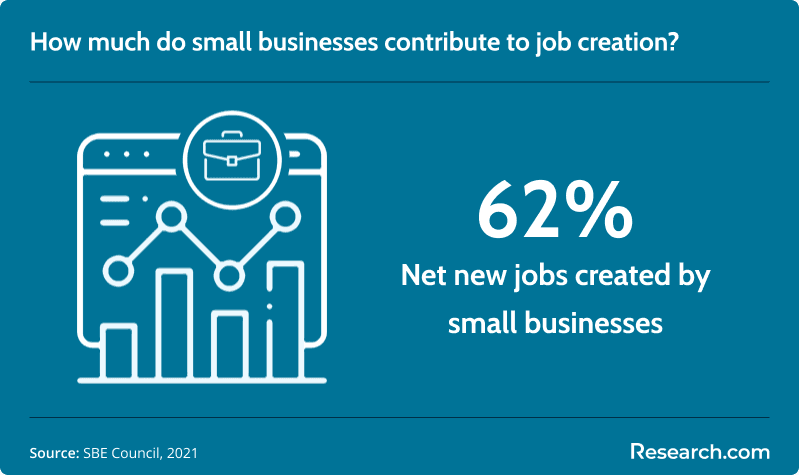
How can an executive MBA enhance entrepreneurial growth?
An executive MBA can help experienced entrepreneurs and business owners refine strategy, leadership, finance, operations, and growth planning while continuing to work. It is usually designed for professionals who already have substantial experience, so the classroom discussion may include senior managers, executives, and founders from different industries. That peer network can be one of the program’s strongest advantages.
For entrepreneurs, the value of an executive MBA depends on timing. It may be useful when the business is ready to scale, enter new markets, professionalize operations, or raise more complex financing. It may be less useful for someone still validating a basic idea. Founders comparing flexible options can explore the best affordable executive MBA programs available online, while paying close attention to total cost, cohort quality, faculty experience, accreditation, schedule demands, and applied business projects.
Common Mistakes Entrepreneurs Make When Choosing an Education Path
- Choosing a degree only because it sounds entrepreneurial. A program title matters less than the curriculum, faculty, projects, alumni network, and connection to your intended industry.
- Ignoring accreditation and program quality. Accreditation and institutional reputation can affect credit transfer, graduate school options, employer trust, and perceived value.
- Looking only at tuition. Total cost includes fees, books, technology, travel, time away from work, and lost business opportunities.
- Assuming a degree guarantees funding or revenue. Investors and customers care about execution, demand, numbers, and trust. A credential can help, but it does not replace traction.
- Choosing a general business degree when the venture needs technical expertise. A tech, healthcare, engineering, or finance-heavy startup may require deeper specialized preparation.
- Skipping hands-on experience. Entrepreneurship cannot be learned only through reading. Internships, freelancing, sales work, customer interviews, and small experiments are essential.
- Overcommitting to school before testing the idea. If the business can be validated cheaply, market feedback may be more urgent than another semester of planning.
Questions to Ask Before Choosing a Degree for Entrepreneurship
- What kind of business do I want to build, and what knowledge does that industry require?
- Do I need broad business skills, technical expertise, creative ability, leadership development, or financial training most urgently?
- Does the program offer internships, incubators, pitch competitions, consulting projects, or access to local businesses?
- How strong is the alumni network for founders and small business owners?
- Can I afford the program without weakening my ability to launch or sustain a business?
- Will the schedule allow me to work, freelance, test ideas, or keep my current company running?
- Are there transfer credits, scholarships, employer benefits, or affordable online options that reduce cost?
- Does the curriculum teach practical tools such as financial modeling, customer research, analytics, project management, and digital marketing?
Here’s What Entrepreneurs Think About Getting a Degree
-
: "
My bachelor’s program gave me the confidence to start my first company because I understood the basics of finance and marketing before I launched. Those lessons helped me avoid expensive early mistakes, and the people I met in college eventually connected me with investors and business partners. – Sylvia
"
-
: "
Studying entrepreneurship as an undergraduate helped me practice the kind of problem-solving I later needed as a founder. Case studies, faculty feedback, and applied projects gave me a foundation I still rely on when weighing risk and opportunity. – Jamieson
"
-
: "
My bachelor’s degree taught me more than course content. It trained me to think strategically, adapt when plans changed, and lead teams. Internships and alumni relationships created opportunities I would not have found on my own. – Anthony
"
Key Insights
- You do not need a degree to become an entrepreneur, but the right degree can reduce risk. College can teach finance, marketing, operations, leadership, and industry knowledge before you make high-stakes decisions with your own capital.
- Business administration is the most flexible degree, but it is not always the best one. Tech founders may benefit more from computer science, product founders from engineering, healthcare entrepreneurs from health sciences, and brand builders from marketing or design.
- Degree value depends on application. Programs with internships, incubators, case studies, pitch competitions, mentors, and alumni access are usually more useful than programs built only around theory.
- Funding is influenced by credibility, not credentials alone. A degree in business, finance, or technology can help with investor confidence, but founders still need traction, clear numbers, market understanding, and a strong team.
- Alternative education can be enough for many founders. Online courses, bootcamps, accelerators, apprenticeships, and small business development resources can fill targeted skill gaps faster and at lower cost than a full degree.
- The best choice is based on timing and business model. Earn a degree first if you need preparation and a network; start now if the opportunity is validated and time-sensitive; combine both if you can study while testing the business.
References:
- Are College-Dropout billionaire entrepreneurs really that common? (2018, April 5). Entrepreneur. https://www.entrepreneur.com/leadership/are-college-dropout-billionaire-entrepreneurs-really-that/311472
- Chowdhury, R. (2025, February 13). The January 2025 US Venture Capital Funding Report. https://www.alleywatch.com/2025/02/us-venture-capital-statistics-january-2025/
- Entrepreneur Demographics and Statistics [2025]: Number of entrepreneurs in the US. (2025, January 8). https://www.zippia.com/entrepreneur-jobs/demographics/
- Future of Jobs Report 2025: The jobs of the future – and the skills you need to get them. (2025, January). World Economic Forum. Retrieved February 27, 2025, from https://www.weforum.org/stories/2025/01/future-of-jobs-report-2025-jobs-of-the-future-and-the-skills-you-need-to-get-them/
- Harland, N. (2024, September 16). Should MBAs rethink their idea of entrepreneurship? | AACSB. https://www.aacsb.edu/insights/articles/2024/04/should-mbas-rethink-their-idea-of-entrepreneurship
- SBE Council. (2022, May 7). Facts & Data on Small Business and Entrepreneurship - Small Business & Entrepreneurship Council. Small Business & Entrepreneurship Council. https://sbecouncil.org/about-us/facts-and-data/
Other Things You Should Know about Entrepreneurs Getting a Degree
Finance, accounting, and business analytics are the most useful concentrations for startup fundraising. They build skills in cash-flow forecasting, valuation, and investor reporting. Many entrepreneurship programs pair these with a capstone or practicum, usually worth 3 to 6 credit hours, so students can build a fundable business plan.
In 2026, online degrees in business administration and project management are among the most affordable options for aspiring entrepreneurs. These programs often cost less than traditional in-person degrees and provide flexibility, making them a budget-friendly choice for those looking to balance education with other commitments.


