2027 Easiest Real Estate Courses & Degree Programs

Co-Founder and Chief Data Scientist
A real estate degree is not the only way to enter the industry, but it can help you move beyond basic sales licensing into property management, finance, development, appraisal, investment analysis, and brokerage leadership. That matters in 2026 because the real estate field is still shaped by affordability concerns, inventory constraints, digital platforms, AI-assisted market analysis, and changing demand for residential and commercial space.
Recent market signals also show why timing matters. The National Association of REALTORS® reported that existing-home sales increased 9.3% in December 2024 compared with one year earlier. A recovering market can create opportunities, but students should still choose their education path carefully because real estate income, licensing rules, and job stability vary widely by role and location.
This guide explains what real estate degree programs cover, which programs may be easier to complete, how online and campus options compare, what costs and financial aid to expect, and how to decide whether a degree is worth it for your career goals.
Quick Answer: Is a Real Estate Degree a Good Choice?
A real estate degree can be worth considering if you want broader career options than residential sales alone. It can prepare you for licensed real estate work, property management, brokerage, appraisal, real estate finance, development, consulting, and corporate real estate roles. However, a degree is not required for every real estate career. If your only goal is to become a licensed agent quickly, state-approved pre-licensing courses may be faster and less expensive.
| Best fit | Why it may work | What to check first |
| Future real estate agents or brokers | A degree can strengthen business, finance, law, and market analysis skills while supporting licensure preparation. | Confirm that the program aligns with your state’s licensing requirements. |
| Career changers | Online and flexible programs can help adults study while working. | Compare transfer credit policies, course length, and total cost. |
| Students interested in finance, investment, or development | A degree may offer stronger preparation for analytical and management roles. | Look for courses in valuation, real estate finance, development, and market research. |
| Students who only want the fastest path to sales licensure | A degree may be more education than required for entry-level sales work. | Compare degree costs with state-approved pre-licensing courses. |
What are the benefits of getting a Real Estate degree?
- More career options: A real estate degree can support paths such as agent, broker, property manager, mortgage adviser, appraiser, analyst, developer, and consultant. Graduates may work in residential real estate, commercial real estate, banks, investment firms, government agencies, and property management companies.
- Stronger earning potential in specialized roles: Real estate earnings vary by job, market, experience, and commission structure. Existing data cited in this guide shows annual median salaries ranging from $54,000 up to $150,000 depending on the role and specialization.
- Flexible study formats: Many online real estate programs allow students to continue working while completing coursework. Some offer self-paced or accelerated courses, which can help working adults and career changers move through a program more efficiently.
What can I expect from a Real Estate degree?
A real estate degree teaches the business, legal, financial, and operational side of property transactions and real estate markets. Students usually study how properties are bought, sold, financed, valued, leased, developed, and managed.
- You can expect coursework that introduces residential and commercial real estate, property law, finance, valuation, brokerage practices, market analysis, and management.
- Programs often connect classroom concepts to practical situations such as evaluating a property, preparing a market report, analyzing a development deal, or understanding a purchase contract.
- Some programs include internships, case studies, simulations, or capstone projects that help students practice real-world decision-making.
- Online, hybrid, and campus-based options are available, making it possible to choose a format that fits your work schedule, location, and preferred learning style.
- A degree can also help students prepare for state licensing exams, but licensure rules are set by each state and should be checked before enrolling.
Where can I work with a Real Estate degree?
Real estate graduates can work in more settings than traditional home sales. Brokerage firms hire agents and brokers to help clients buy, sell, and rent property. Property management companies need professionals who can manage residential communities, office buildings, retail centers, and industrial spaces. Development firms may hire graduates to support planning, site selection, financing, construction coordination, and project analysis.
Real estate knowledge is also useful in banking, insurance, investment, asset management, mortgage lending, corporate real estate, government, and nonprofit housing organizations. For example, a graduate may become a mortgage loan officer, real estate analyst, asset manager, tax assessor, housing program specialist, or community development coordinator.
The best workplace depends on your strengths. Strong communicators may prefer sales or leasing. Detail-oriented students may fit appraisal, compliance, or property management. Students who enjoy finance and data may be better suited for investment analysis, lending, or development.
How much can I make with a Real Estate degree?
Real estate compensation depends heavily on location, specialization, licensing status, experience, employer type, and whether a role is salary-based, commission-based, or a mix of both. According to the U.S. Bureau of Labor Statistics (BLS), real estate sales agents earned a median annual wage of $54,300 as of May 2023. Real estate brokers, who usually have more advanced licenses and broader responsibilities, had a median annual wage of $63,060 in 2023.
Some specialized real estate roles report much higher earnings. Real estate agents working in residential building construction can earn an average annual salary of $110,350, while professionals in management and consulting services can earn $150,870 per year.
Location can also change earning potential. Based on BLS data, the following were the top-paying states for real estate sales agents and their annual mean wages as of May 2023:
- New York - $112,080
- Vermont - $100,750
- Connecticut - $84,810
- New Jersey - $82,490
- Alaska - 81,720
Students should treat salary data as a benchmark, not a guarantee. Commission income can fluctuate with housing inventory, interest rates, local demand, client volume, and personal sales performance.
- Easiest Real Estate Programs for 2027
- How long does a Real Estate degree take?
- Online vs. on-campus Real Estate degree programs
- Average cost of a Real Estate degree
- Financial aid for Real Estate students
- Admissions requirements for Real Estate programs
- Common Real Estate courses
- Real Estate degree specializations
- How to choose the right Real Estate program
- Skills needed for Real Estate careers
- Fast-track Real Estate degree options
- Real Estate degree ROI
- Professional certifications for Real Estate careers
- Why accreditation matters
- Career paths for Real Estate graduates
- How working adults can study Real Estate online
- Real Estate job market outlook
- Hands-on learning and career growth
- Advanced degrees in Real Estate
- Certifications and career advancement
- Additional credential considerations
List of the Easiest Real Estate Programs for 2027
How do we rank schools?
Students looking for an easier path into real estate often want flexible scheduling, manageable admissions requirements, affordable tuition, transfer credit options, licensure preparation, and strong student support. To identify accessible real estate programs, we considered factors such as learning format, course structure, curriculum relevance, transfer policies, pass-rate indicators when available, and support resources that may help students move into the field with fewer barriers.
Research.com uses information from credible education data sources, including the College Scorecard database, the IPEDS database, the National Center for Education Statistics (NCES), and Peterson’s database, including the Distance Learning Licensed Data Set. You can review the Research.com ranking methodology here.
| Program | Format | Credits | Why it may be easier to complete |
| American Public University Online Associate of Arts in Real Estate Studies | Online | 60 credits | Monthly starts, eight- to 16-week courses, no application fee, and up to 45 transfer credits accepted. |
| Columbia College Associate in Real Estate Management | Online, with some in-person options | 60 credits | Flexible delivery and transfer equivalency credits for eligible licensed agents or brokers. |
| Lorain County Community College Associate of Applied Business in Real Estate | Online and in person | 60 credits | Designed around Ohio pre-licensure education and practical business coursework. |
| University of North Texas BBA in Real Estate | On campus | 120 credits | Established business school, real estate alumni support, scholarships, and licensing preparation through coursework. |
| Liberty University BSBA – Real Estate Finance | 100% online | 120 credits | Eight-week courses, no set log-in times, up to 90 transfer credits, and a 2.0 overall GPA graduation requirement. |
1. American Public University Online Associate of Arts (AA) in Real Estate Studies
American Public University (APU), part of the American Public University System (APUS), offers an online AA in Real Estate Studies built for students who want a flexible and affordable introduction to the field. Courses begin monthly and run eight to 16 weeks, which can help students start sooner and plan around work or family obligations. APU also removes several upfront barriers by not charging for entrance exams, transfer credit evaluations, or applications.
- Program Length: Approximately one to two years
- Tracks/concentrations: AA in Real Estate Studies
- Cost per Credit: $350 per credit
- Required Credits to Graduate: 60 credits (accepts up to 45 transfer credits)
- Accreditation: Accreditation Council for Business Schools and Programs (ACBSP)
2. Columbia College Associate in Real Estate Management
Columbia College (CC) in Missouri, founded in 1851, offers an associate program in real estate management with online availability and selected in-person options at nationwide locations or the main Columbia, Missouri campus. The college identifies itself as an exclusive educational partner of the National Association of REALTORS®, which may appeal to students focused on licensure and professional credibility. Columbia College also offers certificate and bachelor’s real estate options for students who want to continue beyond the associate level.
- Program Length: Approximately two years
- Tracks/concentrations: Associate in Real Estate Management
- Cost per Credit: $375 per credit hour
- Required Credits to Graduate: 60 credits (Licensed real estate agents or brokers can receive three transfer equivalency credits for their state-issued, validated licenses)
- Accreditation: Accreditation Council for Business Schools and Programs (ACBSP)
3. Lorain County Community College Associate of Applied Business (AAB) in Real Estate
Lorain County Community College (LCCC) in Ohio offers an AAB in Real Estate online and in person. The program is especially relevant for students who want to meet educational requirements for real estate salesperson or broker licensure in Ohio and in states with license reciprocity. Its curriculum includes four real estate courses for pre-licensure requirements plus business-focused subjects such as microcomputer applications, economics, entrepreneurship, social media marketing, and human resources management.
- Program Length: Two years
- Tracks/concentrations: AAB in Real Estate
- Cost per Credit: $164.03 per credit hour for Lorain County residents, $189.21 per credit hour for out-of-county residents, $340.78 per credit hour for out-of-state learners
- Required Credits to Graduate: 60 credits
- Accreditation: Ohio Department of Commerce Division of Real Estate and Professional Licensing (REPL), Higher Learning Commission (HLC), member of the National Council for State Authorization Reciprocity Agreements (NC-SARA)
4. University of North Texas Real Estate Bachelor of Business Administration (BBA)
University of North Texas (UNT) offers an on-campus BBA in Real Estate through the G. Brint Ryan College of Business. The program is designed for students who want a broader four-year business education with a real estate focus. Students can prepare for areas such as appraisal, commercial and residential brokerage, finance and mortgage, investments, leasing, and residential property management. UNT also has a Real Estate Alumni Group and scholarship opportunities for eligible students.
- Program Length: Four years
- Tracks/concentrations: BBA in Real Estate
- Cost per Credit: UNT provides an estimate of $12,092 for tuition and fees per semester for 15 credits
- Required Credits to Graduate: 120 credits
- Accreditation: Association to Advance Collegiate Schools of Business (AACSB)
5. Liberty University Bachelor of Science in Business Administration (BSBA) – Real Estate Finance
Liberty University (LU) offers a 100% online BSBA in data analysis and real estate finance. The program may appeal to students who want a business degree with finance, valuation, leadership, and real estate law coursework. Courses run in eight-week sessions and do not require set log-in times. Liberty also accepts up to 75% of the degree total in transfer credits, which can shorten the time to completion for eligible students.
- Program Length: Four years
- Tracks/concentrations: BSBA in Data Analysis - Real Estate Finance
- Cost per Credit: $390 per credit for full-time students, $455 per credit for part-time enrollees, and $250 per credit for military
- Required Credits to Graduate: 120 credits (accepts up to 90 transfer credits)
- Accreditation: Accreditation Council for Business Schools and Programs (ACBSP)
How long does it take to complete a Real Estate degree program?
Completion time depends on the credential level, enrollment status, transfer credits, course format, and whether the program includes internship or capstone requirements.
| Degree level | Typical full-time timeline | Best for |
| Associate degree | About two years | Students seeking entry-level preparation, pre-licensure support, or an affordable first credential. |
| Bachelor’s degree | Usually four years | Students who want broader business, finance, development, or management preparation. |
| Master’s degree | One to two years full time, often longer part time | Professionals targeting leadership, development, investment, or specialized analytical roles. |
| Real estate degree online | Varies by pace and transfer credits | Working adults, career changers, and students who need schedule flexibility. |
Do all real estate professionals need a degree?
No. A college degree is not required for every real estate job, especially for students whose immediate goal is to become a licensed sales agent. Many people enter the field by completing state-approved pre-licensing courses and passing the required licensing exam.
However, real estate agents, brokers, and realtors must hold a state-issued license to practice legally in the United States. Each state sets its own education, examination, application, renewal, and continuing education rules through its real estate commission or licensing authority.
Practicing without the proper license can lead to fines and legal penalties. Students should verify requirements in the state where they intend to work before choosing any course or degree program.
A degree can still be useful because it develops broader knowledge in business, finance, law, communication, and analytics. The National Association of REALTORS® Member Profile report notes that 52% of all realtors have a bachelor’s degree or higher.
The chart below shows educational background among real estate agents and brokers using Zippia data.
How does an online Real Estate degree compare to an on-campus program?
Online and campus-based real estate programs can lead to similar academic outcomes, but the experience is different. The right choice depends on your schedule, budget, learning style, and need for local networking.
| Factor | Online Real Estate degree | On-campus Real Estate degree |
| Schedule | Often more flexible, with asynchronous classes or shorter course sessions. | Usually follows fixed class times and campus attendance requirements. |
| Networking | Requires more effort to build relationships through virtual events, internships, and local associations. | Offers easier face-to-face access to classmates, faculty, campus events, and local employers. |
| Cost structure | May reduce commuting, housing, or relocation costs. | May include additional campus-based living and transportation expenses. |
| Learning experience | Works well for self-directed students comfortable with digital tools. | Works well for students who prefer in-person discussion and structured routines. |
| Licensure fit | Must be checked carefully because online programs may not meet every state’s requirements. | May be more closely connected to local licensing rules, especially at regional schools. |
Flexibility and convenience
- Online real estate programs are often better for students balancing work, family, or an existing career because coursework can be completed from home and, in some cases, at flexible times.
- Many online programs use recorded lectures, discussion boards, virtual simulations, and digital property analysis tools.
- Campus programs can be less flexible because students must attend classes at scheduled times and locations.
Networking and resources
- Campus programs usually make it easier to meet professors, classmates, alumni, brokers, developers, and local employers in person.
- Online programs may be more convenient but require students to be intentional about finding internships, mentors, and professional association events.
- Both formats can be valuable if the curriculum is strong, the institution is accredited, and the program supports your target state or career path.
Current market trends for real estate schools in the U.S. indicate that much real estate training is still delivered in person, while demand for flexible remote education is increasing. As a result, many schools now offer online, hybrid, and in-person real estate courses.
What is the average cost of a Real Estate degree program?
The cost of a real estate degree varies by school type, degree level, residency status, program length, transfer credits, and whether you study online or on campus.
College Board Research reported in its 2024 college pricing data that average tuition and fees at a public two-year in-district institution were $4,050 for one academic year.
For bachelor’s programs, College Board’s 2024 data showed tuition and fees of $8,990 at a public four-year institution and $43,650 at a private nonprofit four-year institution per academic year.
Real estate program tuition can also change based on residency. Lorain County Community College, for example, charges different per-credit tuition for Lorain County residents, out-of-county Ohio residents, and out-of-state learners in its associate real estate program.
Students should calculate the full cost of attendance, not tuition alone. Fees, books, supplies, housing, food, transportation, licensing exam costs, and personal expenses can materially change the total price.
The University of North Texas estimates a total cost of attendance of about $26,000 up to $30,000 for full-time undergraduate students, including students in the BBA Real Estate program. This includes tuition and fees, housing and food ($7,500 up to $11,000), books and supplies ($1,120), transportation ($2,200 up to $2,900), and personal expenses ($1,900 up to $2,800 plus).
Some institutions reduce student costs in specific ways. American Public University provides books, supplies, and materials at no cost. Columbia College offers the regular undergraduate tuition rate of $375 per credit hour at only $250 per credit hour for current military members, spouses, dependents, and installation employees. Spouses and dependents of installation employees receive a discounted rate of $318.75 per credit hour.
What are the financial aid options for students enrolling in a Real Estate degree program?
Real estate students may qualify for federal aid, state aid, institutional scholarships, employer tuition assistance, military education benefits, private scholarships, and real estate-specific awards. The best strategy is to combine general aid with scholarships connected to real estate, property management, finance, development, or urban planning.
- Real estate-specific scholarships: Industry groups and foundations may offer awards for students studying real estate. Examples include scholarships from the Certified Commercial Investment Member (CCIM) Institute Foundation Scholarships and the Institute of Real Estate Management (IREM) Foundation Scholarships for students interested in asset management, property management, commercial real estate, or investment real estate.
- Industry grants: Real estate associations and corporate sponsors may support students focused on real estate markets, housing, urban development, land use, or finance. Examples include funding opportunities connected to the Mortgage Bankers Association (MBA) and the Urban Land Institute (ULI).
- State programs: Some states offer scholarships, reimbursement programs, or workforce-related aid for students pursuing fields connected to housing, planning, and development needs.
- Employer sponsorship: Real estate firms, property management companies, banks, and development firms may offer tuition assistance to employees seeking additional credentials.
- Paid internships and work-study: Some programs connect students with paid field placements, work-study roles, or stipends that reduce costs while building experience.
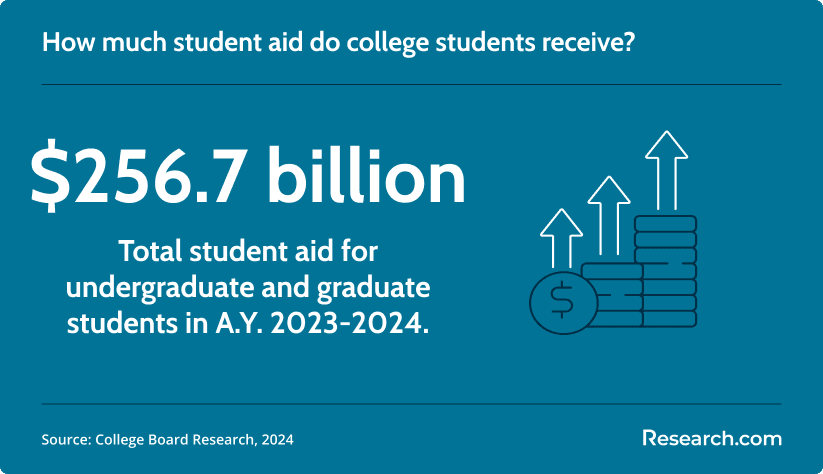
The College Board Research Trends in Student Aid 2024 report found that undergraduate and graduate students received $256.7 billion in student aid in 2023-2024 through grants, federal loans, federal work-study, and federal education tax benefits.
The same report showed that 52% of grants during that period came from institutional grants. For that reason, students should ask each school about scholarships, grants, tuition discounts, and aid available specifically through the institution.
What are the prerequisites for enrolling in a Real Estate degree program?
Admissions requirements depend on the school, degree level, transfer status, and whether the applicant is entering as a first-year student, adult learner, or graduate student.
Associate Degree in Real Estate
- High school diploma or GED: Most community colleges require proof that applicants completed high school or an equivalent credential.
- Placement readiness: Some colleges use placement tests or prior coursework to determine readiness for college-level math, reading, and writing.
Bachelor’s Degree in Real Estate
- High school diploma or equivalent: Applicants typically need completed secondary education.
- Standardized test scores: Some universities may request SAT or ACT scores, although test-optional policies vary by institution.
- Foundational coursework: Students may need general education or lower-division courses in math, economics, business, or communication before advanced real estate classes.
Master’s Degree in Real Estate
- Bachelor’s degree: Graduate programs commonly require a bachelor’s degree in real estate, business, finance, economics, or a related field.
- Professional background: Many master’s programs prefer applicants who already have experience in real estate, finance, planning, construction, or a related industry.
- GRE or GMAT scores: Some programs require these exams, while others waive them or make them optional.
Online programs may offer more flexible admissions processes for working professionals, but applicants may still need transcripts, personal statements, letters of recommendation, resumes, and application fees. Before applying, compare deadlines and required documents so you have enough time to request transcripts, confirm transfer credits, and prepare application materials.
What courses are typically in a Real Estate degree program?
Real estate curricula usually combine business fundamentals with property-specific coursework. A strong program should help students understand both individual transactions and larger market forces.
Core Real Estate Courses
- Principles of Real Estate: Introduces property types, market participants, brokerage practices, and transaction steps.
- Real Estate Law: Covers contracts, ownership rights, zoning, agency relationships, disclosures, and legal responsibilities.
- Real Estate Finance: Examines mortgages, lending, investment analysis, capital markets, and financial decision-making.
- Real Estate Appraisal: Teaches valuation approaches used for residential, commercial, lending, tax, and investment purposes.
- Real Estate Economics: Explores supply and demand, market cycles, housing trends, land use, and the connection between real estate and the broader economy.
Specialized Real Estate Courses
- Property Management: Focuses on leasing, maintenance, tenant relations, budgeting, and operations for residential, commercial, or industrial properties.
- Urban Planning and Development: Introduces land use, zoning, urban design, infrastructure, community development, and sustainability.
- Commercial Real Estate: Covers leasing, investment, valuation, and management of office, retail, industrial, and mixed-use assets.
- Real Estate Investment Analysis: Teaches risk assessment, cash flow analysis, return calculations, portfolio strategy, and market research.
- Sustainable Real Estate Practices: Examines green building, energy-efficient management, environmental considerations, and sustainable development.
Programs that include internships, case studies, simulations, or capstone projects can be especially useful because they help students apply course concepts before entering the job market.
What types of specializations are available in Real Estate degree programs?
Specializations help students target a specific segment of the industry. Choosing the right concentration can make coursework more relevant and help employers understand your focus.
| Specialization | What it focuses on | Good fit for students interested in |
| Real Estate Development | Planning, financing, building, and delivering residential, commercial, or mixed-use projects. | Development firms, construction-adjacent roles, project coordination, and land use. |
| Property Management | Leasing, maintenance, budgeting, tenant relations, and operations. | Apartment communities, commercial buildings, retail centers, and industrial properties. |
| Real Estate Finance and Investment | Valuation, risk, debt, equity, portfolio strategy, and investment analysis. | Analyst roles, lenders, investment firms, and institutional real estate. |
| Commercial Real Estate | Sales, leasing, management, and analysis of office, retail, warehouse, and industrial assets. | Commercial brokerage, leasing, asset management, and market research. |
| Real Estate Appraisal | Property valuation for sales, lending, investment, insurance, or tax purposes. | Appraisal firms, financial institutions, assessors, and valuation consulting. |
| Urban Planning and Sustainability | Zoning, land use, development policy, transportation, and environmental planning. | Government agencies, planning firms, nonprofits, and sustainable development. |
| Residential Real Estate | Home sales, leasing, client representation, marketing, and local housing markets. | Residential brokerage, rental housing, and client-facing sales roles. |
| Real Estate Technology (PropTech) | Digital tools, data analytics, virtual tours, property platforms, and technology-enabled management. | Tech-driven brokerages, property management software, analytics, and operations. |
| International Real Estate | Cross-border property transactions, global markets, and international regulations. | Global investment, relocation services, multinational firms, and international development. |
| Real Estate Marketing | Digital promotion, branding, listings, advertising, and property campaign strategy. | Brokerages, developers, property brands, and marketing teams. |
How to choose the best Real Estate degree program?
The best real estate program is not always the cheapest or highest ranked. It is the one that fits your target role, state licensing needs, schedule, budget, and preferred learning format.
- Confirm accreditation: Choose an accredited institution, especially if you want federal financial aid, transfer options, graduate school eligibility, or employer recognition. Students comparing online programs can start with guidance on accredited online degrees.
- Check state licensing alignment: If you plan to become an agent or broker, ask whether the courses meet your state’s pre-licensing education requirements.
- Review the curriculum: Look for real estate law, finance, valuation, market analysis, property management, and practical projects. If you may pursue broader business education later, compare transfer pathways and related options such as an accelerated business degree.
- Compare format and flexibility: Decide whether online, hybrid, or campus learning fits your work schedule and learning style.
- Ask about internships: Programs connected to local brokers, developers, lenders, and property management companies can help students gain experience before graduation.
- Calculate total cost: Include tuition, fees, books, supplies, housing, transportation, licensing exam costs, and lost work time.
- Evaluate transfer credit policies: Generous transfer policies can shorten completion time and reduce cost.
Each student should rank priorities before applying. For one student, the top factor may be lowest tuition. For another, it may be online flexibility, state licensure preparation, internship access, or a pathway into commercial real estate finance.
The Online College Students Report 2024 from Education Dynamics found that 98% of respondents enrolled in online programs for career-focused reasons. In the same report, 42% said they pursued online study because they wanted to start a new career and earn more money. The chart below provides additional detail.
What essential skills are needed to excel in a real estate career?
A degree can teach the foundation, but long-term success in real estate depends on both technical and people-centered skills. Professionals need to read market data, understand financing, evaluate property value, communicate clearly, negotiate effectively, and manage relationships with clients, lenders, tenants, investors, inspectors, attorneys, and local officials.
- Market research: Knowing how to compare properties, track demand, and interpret local trends helps professionals advise clients and investors.
- Financial literacy: Real estate work often involves mortgages, cash flow, return estimates, financing terms, and investment risk.
- Negotiation: Agents, brokers, property managers, and developers must balance competing interests while protecting client or employer goals.
- Communication: Real estate transactions are complex, so professionals must explain contracts, timelines, risks, and next steps clearly.
- Digital fluency: Property platforms, analytics tools, customer relationship management systems, virtual tours, and AI-supported research are increasingly part of daily work.
Students who want to build skills quickly may compare shorter credential pathways, including an accelerated associates degree, if it matches their career and licensing goals.
Can I Fast-Track My Real Estate Degree?
Yes, some students can shorten their real estate degree timeline through transfer credits, accelerated sessions, year-round enrollment, competency-based options, or prior learning credit. Fast-track programs can be useful for working adults and career changers, but speed should not come at the expense of accreditation, licensing preparation, or skill development.
Before choosing an accelerated pathway, ask whether the school is accredited, whether the courses satisfy your state’s licensing rules, how many credits can transfer, and whether the shorter format still includes practical assignments or internship opportunities. Students comparing faster options can review accelerated school programs to understand how compressed degree formats work.
Is a Real Estate Degree Worth the Investment?
A real estate degree is most likely to be worth it when it helps you reach roles that require stronger business, finance, management, valuation, or development skills. It may be less necessary if your immediate goal is only to qualify for a state sales agent exam as quickly and cheaply as possible.
| A degree may be worth it if... | A lower-cost licensing course may be enough if... |
| You want long-term options in brokerage leadership, finance, development, appraisal, property management, or consulting. | You only want to meet minimum requirements to sit for a sales agent licensing exam. |
| You need a credential that can support advancement or graduate study. | You already have a degree in business, finance, communications, or another useful field. |
| You benefit from structured learning, faculty support, and internships. | You are comfortable studying independently and only need state-approved pre-licensing education. |
| You can reduce cost through transfer credits, employer assistance, military discounts, or scholarships. | The degree would require significant borrowing without a clear career plan. |
Students evaluating return on investment should compare total program cost, time to completion, licensing requirements, likely entry roles, local market demand, and opportunity cost. Some students may improve ROI by choosing accelerated degree programs online that reduce time away from the workforce.
What professional certifications can enhance a real estate career?
Professional certifications can help real estate graduates signal specialized expertise beyond a degree. They are especially useful in commercial investment, property management, valuation, sustainability, and brokerage specialties. Certifications can also expand professional networks and show employers or clients that you are committed to continuing education.
Before paying for a credential, check whether it is recognized in your target niche, whether it requires experience, and whether it supports your state licensing or advancement goals. Students exploring broader credential options can compare the best online degrees to get alongside certification pathways.
Is Accreditation Important for Real Estate Degree Programs?
Yes. Accreditation helps verify that a college or university meets recognized academic standards. It can affect credit transfer, graduate school admission, employer confidence, and access to financial aid. It is especially important for online students because not every remote program has the same level of recognition.
Students should verify institutional accreditation directly through the school and relevant accrediting bodies before enrolling. If affordability and federal aid eligibility are major concerns, it may also help to compare options among the cheapest online colleges that accept FAFSA.
What career paths are available for graduates of Real Estate degree programs?
Real estate degrees can lead to sales, management, finance, consulting, appraisal, development, and planning roles. Some positions require state licensure, while others depend more on business, finance, analytical, or technical skills.
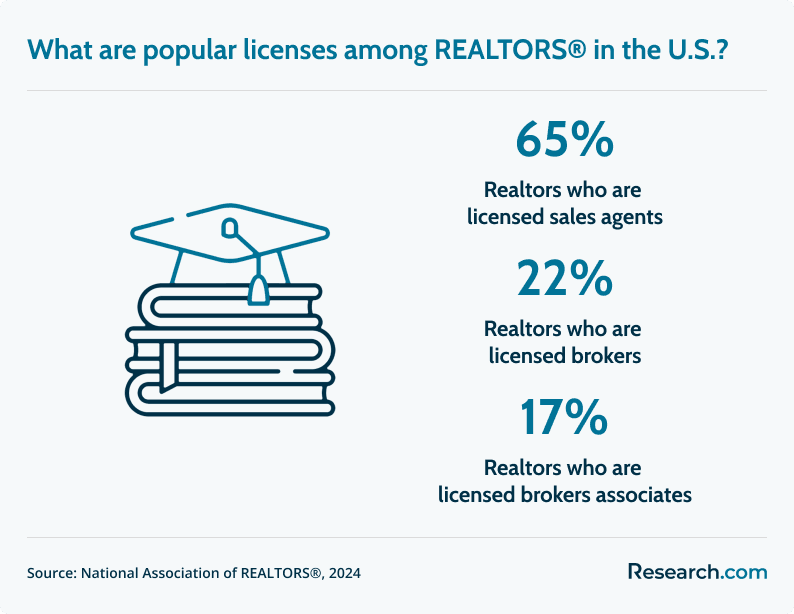
- Real Estate Agent/Broker: Agents help clients buy, sell, and rent property. Brokers typically have additional licensing and may supervise agents. NAR reports that 65% of realtors are licensed sales agents and 22% are licensed brokers.
- Real Estate Investment Analyst: Analysts evaluate property deals, conduct market research, build financial models, and support investment decisions. Students interested in this path may also consider a traditional or accelerated finance degree.
- Property Manager: Property managers oversee leasing, operations, maintenance, budgets, and tenant relations for residential, commercial, or industrial properties.
- Real Estate Appraiser: Appraisers estimate property value for lending, sales, refinancing, investment, insurance, or tax purposes. State licensing rules vary.
- Real Estate Developer: Developers coordinate land acquisition, financing, approvals, construction, leasing, and sale or operation of real estate projects. Students interested in this area may also benefit from experience in construction or one of the easiest construction management programs.
- Commercial Real Estate Specialist: These professionals work with office buildings, retail centers, warehouses, industrial properties, and other commercial assets.
- Urban Planner: Urban planners work on land use, zoning, housing, infrastructure, transportation, and community development. Advanced roles may require a master’s-level urban planning online degree or a related graduate credential.
- Mortgage Broker/Loan Officer: These professionals help borrowers secure property financing through banks, lenders, or mortgage firms. Licensing or certification may be required in many states.
- Real Estate Analyst/Consultant: Consultants advise investors, developers, lenders, and firms on market conditions, valuations, risk, and strategy.
- Real Estate Marketing Specialist: Marketing specialists promote properties, brokerages, developments, or real estate brands through advertising, content, listings, social media, and digital campaigns.
How can working professionals effectively pursue a Real Estate degree online?
Working adults should choose online real estate programs with flexible scheduling, responsive instructors, practical assignments, and clear student support. Asynchronous coursework, short sessions, and transfer-friendly policies can make it easier to keep a job while studying.
- Choose a program with courses you can complete around your work schedule.
- Ask whether the school offers evening advising, virtual tutoring, online library access, and career services.
- Confirm whether internships or local field experiences can be completed near your home.
- Use professional associations, brokerage events, and alumni networks to build contacts outside the virtual classroom.
- Compare affordability carefully, including tuition, fees, textbooks, and technology costs.
Students balancing employment and school may find useful comparisons among the cheapest online schools for job holders.
What is the job market for graduates with a Real Estate degree?
The real estate job market includes residential brokerage, commercial leasing, property management, appraisal, mortgage finance, investment analysis, development, and planning. Demand is influenced by housing supply, interest rates, affordability, population movement, construction activity, investor sentiment, and commercial space needs.
According to Statista, 2.5 million people in the U.S. were employed in the real estate sector in 2024. Even with slower projected growth in 2023-2033, employment opportunities remain available across multiple real estate occupations.
O*Net OnLine projects 36,400 annual job openings for real estate sales agents and 9,600 annual job openings for real estate brokers until 2033.
- Residential real estate: Homebuying, selling, and renting continue to create demand for agents, brokers, and property managers, although local markets can vary significantly. NAR predicts 4.5 million sales of existing homes in 2025.
- Commercial real estate: Demand can be strong in markets with development activity, but office space needs have shifted because of remote and hybrid work trends. A CBRE Group, Inc. survey found that 70% of commercial real estate investors plan to buy more assets in 2025 than they did the previous year.
- Finance and investment: Investors, lenders, and institutions continue to need professionals who can evaluate property values, financing options, risk, and returns.
- Development and urban planning: Population growth, infrastructure needs, housing demand, and redevelopment projects create opportunities for professionals with planning, development, and project skills.
Real estate graduates may see different opportunities depending on region. Some emerging markets for 2025 include Dallas, Orlando, Miami, Boston, Greensboro, and Denver.
Emerging real estate trends such as AI, sustainability, and smart buildings are also influencing hiring in property technology, green real estate, and eco-conscious development.
The chart below uses current O*NET OnLine data to show projected annual job openings for selected real estate occupations in 2023-2033.
How Do Hands-On Experiences Enhance Career Growth in Real Estate?
Hands-on experience helps students translate theory into job-ready skills. Real estate is highly practical: professionals must read market data, communicate with clients, review contracts, coordinate inspections, estimate value, and solve problems under time pressure. Internships, mentorships, simulations, site visits, and capstone projects make those skills easier to develop.
Students should prioritize programs that connect them with brokers, property managers, lenders, developers, appraisers, or local planning agencies. Practical experience can also clarify which real estate path fits best before graduation. Students who want additional applied credentials can compare high paying certification programs that align with real estate specializations.
Common Mistakes to Avoid When Choosing a Real Estate Degree
- Choosing a program without checking accreditation: This can affect financial aid, transfer credits, graduate study, and employer recognition.
- Assuming every program meets licensure rules: State requirements differ, and online programs may not automatically satisfy the state where you plan to work.
- Looking only at tuition: Fees, books, supplies, transportation, housing, licensing exams, and lost work time can change the real cost.
- Ignoring transfer credit policies: A school that accepts more prior credits can save time and money.
- Relying only on rankings: A ranked program may still be a poor fit if it lacks your specialization, schedule format, or state licensing alignment.
- Assuming salary outcomes are guaranteed: Real estate income depends on local markets, experience, specialization, employer type, and commission performance.
- Skipping networking: Real estate careers often grow through referrals, internships, mentors, alumni, and professional associations.
Questions to Ask Before Enrolling
| Question | Why it matters |
| Is the institution accredited? | Accreditation can affect aid eligibility, transfer credits, and employer trust. |
| Does the program meet licensing requirements in my state? | Licensure rules are state-specific, and the wrong program may not qualify you for your intended exam. |
| How many transfer credits can I use? | Transfer credits can reduce both time and total cost. |
| Are internships, fieldwork, or capstone projects included? | Practical experience can improve job readiness and networking. |
| What are the full costs beyond tuition? | Fees, books, supplies, housing, transportation, and licensing costs can add up. |
| Does the curriculum match my target career? | Sales, appraisal, finance, development, and property management require different skill sets. |
| What career support is available? | Advising, employer partnerships, alumni connections, and job boards can help with career entry. |
Here’s What Graduates Have to Say About Their Real Estate Degree
- "Studying real estate gave me a stronger grasp of valuation, market behavior, and investment planning. Because my program was online, I could keep working while finishing my courses and begin building experience before graduation." – Whitney
- "My real estate program helped me see career options in property management and development that I had not considered before. The online format let me study on my own schedule, and the practical coursework made the transition into the field much smoother." - Chase
- "Completing the degree online gave me the flexibility I needed for family responsibilities while still preparing for a real estate career. The classes were demanding, but they gave me the confidence to pursue agent work." - Rory
Key Insights
- A real estate degree is not mandatory for every real estate career, but it can be valuable for students who want more than basic sales licensure.
- All real estate agents, brokers, and realtors must hold a valid state license to practice legally in the U.S.; always confirm state requirements before enrolling.
- Online real estate programs can work well for adults and career changers, but students must be proactive about networking, internships, and licensure verification.
- Cost varies widely by institution type, residency status, transfer credits, and program format, so students should calculate total cost of attendance rather than tuition alone.
- Real estate salaries vary significantly. BLS data shows a median annual wage of $54,300 for real estate sales agents and $63,060 for real estate brokers as of May 2023.
- O*Net OnLine projects 36,400 annual job openings for real estate sales agents and 9,600 annual job openings for real estate brokers until 2033.
- AI, sustainability, smart buildings, and property technology are changing employer expectations and creating opportunities for graduates with digital, analytical, and finance skills.
- The best program is the one that matches your state licensing needs, career target, budget, schedule, accreditation requirements, and preferred learning format.
Can an advanced degree accelerate my real estate career?
An advanced degree can help professionals move toward leadership, investment, development, finance, consulting, and planning roles. A specialized master’s program may deepen analytical skills, expand professional networks, and prepare graduates to manage complex projects or evaluate higher-value real estate decisions.
This path is usually most useful for professionals who already know their target niche or want to move into senior roles. Working professionals who need a shorter graduate timeline can review options such as a one year online masters.
Should I Invest in Professional Certifications to Boost My Real Estate Career?
Professional certifications can be worthwhile when they support a clear specialization, such as commercial investment, property management, valuation, sustainability, or brokerage leadership. They are less useful when chosen only for resume decoration without a connection to your target role.
Before investing, compare cost, renewal requirements, employer recognition, required experience, and whether the credential helps you meet emerging market expectations. Students and professionals comparing credential options can explore high paying certifications.
References:
- American Public University. Cost of Attendance. https://www.apu.apus.edu/tuition-and-financing/policies/cost-of-attendance/
- Aslanian, C.B. & Fischer, S. (2024). Online College Students Report 2024. EducationDynamics. https://insights.educationdynamics.com/rs/183-YME-928/images/EDDY-Online-College-Students-2024.pdf
- CBRE Group, Inc. (January 2025). 2025 U.S. Investor Intentions Survey: Investment Activity Poised for Growth. https://www.cbre.com/insights/briefs/2025-us-investor-intentions-survey
- Ma, J. et al. (October 2024). Trends in College Pricing and Student Aid 2024. College Board. https://research.collegeboard.org/media/pdf/Trends-in-College-Pricing-and-Student-Aid-2024-ADA.pdf
- National Association of REALTORS® (July 2024). 26% of REALTORS® Said Lack of Inventory and Housing Affordability Prevented Clients from Buying Homes in 2023 as Existing-Home Sales Fell to Lowest Level Since 1995. https://www.nar.realtor/newsroom/26-of-realtorsr-said-lack-of-inventory-and-housing-affordability-prevented-clients-from-buying-homes
- National Association of REALTORS® (December 2024). Housing Hot Spots for 2025: Top Markets Amid Stabilizing Rates. https://www.nar.realtor/sites/default/files/2024-12/housing-hot-spots-for-2025-top-markets-amid-stabilizing-rates-report-12-12-2024.pdf
- National Association of REALTORS® (January 2025). Existing-Home Sales Ascended 2.2% in December. https://www.nar.realtor/newsroom/existing-home-sales-ascended-2-2-in-december
- O*NET OnLine. O*NET OnLine Help. https://www.onetonline.org Data Retrieved on January 28, 2024
- Statista (November 2024). U.S. number of employees 2024, by industry. https://www.statista.com/statistics/978479/number-employees-united-states-industry
- University of North Texas. Undergraduate Cost of Attendance. https://financialaid.unt.edu/undergraduate.html
- U.S. Bureau of Labor Statistics (April 2024). Occupational Employment and Wages, May 2023, 41-9022 Real Estate Sales Agents. https://www.bls.gov/oes/2023/may/oes419022.htm
- U.S. Bureau of Labor Statistics (August 2024). Real Estate Brokers and Sales Agents. https://www.bls.gov/ooh/sales/real-estate-brokers-and-sales-agents.htm
- Zippia Team (January 2025). Real Estate Agent Education Requirements. Zippia. https://www.zippia.com/real-estate-agent-jobs/education/
- Zippia Team (January 2025). Real Estate Broker Education Requirements. Zippia. https://www.zippia.com/real-estate-broker-jobs/education/
Other Things You Need to Know About Real Estate Degrees
In 2027, the most accessible real estate courses are typically online programs offered by accredited institutions such as Kaplan Real Estate Education and Real Estate Express. These courses are designed with a user-friendly interface, flexible schedules, and comprehensive content to support diverse learning styles.
In 2027, the cost of real estate programs does not necessarily reflect their difficulty level. Some affordable programs offer comprehensive, easy-to-understand content, while more expensive courses may offer advanced or specialized knowledge. It's essential to review course content, format, and student reviews to assess difficulty.