
2027 How to Become a Licensed Pharmacist in Omaha, NE: License Requirements

Co-Founder and Chief Data Scientist
If you want to become a licensed pharmacist in Omaha, NE, the main decision is not just where to study. You need to understand the full pathway: pharmacy prerequisites, a Doctor of Pharmacy degree, supervised experience, national and Nebraska law exams, state licensing, and the local job market you will enter after graduation.
This guide is for high school students, college students, career changers, pharmacy technicians, and out-of-state or internationally educated pharmacists who are considering pharmacy practice in Omaha. It explains the education and licensure steps, local program options, expected timeline, salary information, demand, career paths, continuing education, and common mistakes to avoid before investing years and significant tuition into this profession.
Quick answer: How do you become a licensed pharmacist in Omaha, NE?
To become a licensed pharmacist in Omaha, NE, you generally need to complete prerequisite college coursework, earn a Doctor of Pharmacy (PharmD) from an ACPE-accredited program, complete Nebraska’s required supervised experience, pass the NAPLEX, pass Nebraska’s MPJE, submit required documentation to the Nebraska Board of Pharmacy, and complete background check requirements. Most students should plan for at least 2 years of pre-pharmacy coursework, 4 years in a PharmD program, and several months for exam preparation, application processing, and licensing steps.
Key Points About Becoming a Licensed Pharmacist in Omaha, NE
- You need a Doctor of Pharmacy degree, passing scores on the North American Pharmacist Licensure Examination (NAPLEX), and a passing score on Nebraska’s MPJE to qualify for pharmacist licensure.
- Salary figures cited for Omaha pharmacists vary by source and role, with licensed pharmacists often discussed around $125,000 annually and a listed median annual wage of $133,510 in the data referenced below.
- Omaha can be a practical location for pharmacy training and employment because the city has major healthcare employers, clinical training sites, retail pharmacy roles, and opportunities in hospital, long-term care, and specialty practice settings.
| Decision point | What it means for you | Why it matters |
| Degree requirement | Plan for a PharmD from an ACPE-accredited program. | Nebraska licensure depends on meeting professional pharmacy education standards. |
| Licensing exams | Prepare for both the NAPLEX and Nebraska MPJE. | The NAPLEX tests pharmacy practice knowledge; the MPJE focuses on law and regulation. |
| Supervised experience | Complete at least 1,500 internship hours. | Hands-on practice is required before independent licensure. |
| Local fit | Compare Omaha’s hospitals, clinics, retail pharmacies, and long-term care settings. | Your first job setting can shape your specialization, schedule, and advancement path. |
- What education do you need to become a pharmacist in Omaha?
- Which Omaha schools can help you prepare for pharmacy licensure?
- What skills do Omaha pharmacists need?
- What are Nebraska’s pharmacist licensure requirements?
- What steps are involved in the licensing process?
- How long does the full path usually take?
- Can you use a Nebraska pharmacist license in another state?
- How much do licensed pharmacists earn in Omaha?
- Is there demand for pharmacists in Omaha?
- Is Omaha a good city for pharmacists?
- How can pharmacists continue learning and advance?
- How can pharmacists move into behavioral health support? Continuing education options Omaha career fit
- What alternative careers can licensed pharmacists consider? Omaha employment context
- How can pharmacists collaborate with nurse practitioners?
- How do healthcare policy changes affect pharmacists? Additional considerations
What are the educational requirements to become a licensed pharmacist in Omaha, NE?
The educational route to pharmacist licensure in Omaha starts with college-level science preparation and ends with a professional pharmacy degree. Nebraska follows the standard U.S. pathway: future pharmacists must complete a PharmD program that prepares them for clinical practice, medication safety, patient counseling, pharmacy law, and supervised practice.
The main educational requirements include:
- High school preparation or equivalent: Students should build a strong base in chemistry, biology, mathematics, communication, and health sciences before starting college coursework.
- Pre-pharmacy coursework: Most applicants complete prerequisite college classes before entering a PharmD program. Common subjects include general chemistry, organic chemistry, biology, anatomy, physiology, microbiology, statistics, and writing.
- Admission to an ACPE-accredited PharmD program: Accreditation matters because Nebraska licensure depends on completing a professional pharmacy curriculum that meets national standards.
- Clinical rotations and experiential training: PharmD students complete supervised practice in approved pharmacy settings, including hospitals, community pharmacies, ambulatory care, and other clinical environments.
Most PharmD programs are designed around four years of professional study. Some students complete prerequisite coursework in about 2 years, while others earn a bachelor’s degree before applying. If schedule flexibility is important, compare ACPE-accredited campus and distance options carefully; Research.com’s guide to the best online PharmD schools can help you understand how online or hybrid pharmacy programs are structured.
| Education stage | Typical focus | Decision tip |
| High school or GED preparation | Science, math, communication, and study habits | Take rigorous science classes early if available. |
| Pre-pharmacy coursework | College prerequisites required for PharmD admission | Confirm each pharmacy school’s exact prerequisites before enrolling. |
| PharmD program | Pharmacology, therapeutics, law, patient care, and clinical practice | Choose an ACPE-accredited program that supports Nebraska licensure preparation. |
| Experiential training | Supervised practice in real pharmacy settings | Look for rotations aligned with your target career path, such as hospital, retail, or specialty pharmacy. |
Are there schools in Omaha, NE that offer pharmacy programs?
Yes. Omaha has pharmacy education and pre-pharmacy options that can support students preparing for pharmacist licensure. The strongest option for a professional PharmD pathway in Omaha is the University of Nebraska Medical Center, while other local institutions can help students complete foundational coursework before entering a pharmacy program.
| School or pathway | What it offers | Best for |
| University of Nebraska Medical Center (UNMC) PharmD program | A Doctor of Pharmacy program in Omaha with coursework in pharmacology, medicinal chemistry, patient care, and clinical practice. In-state tuition is approximately $30,000 per year, with higher rates for out-of-state students. | Students who want to complete professional pharmacy training in Omaha and prepare directly for Nebraska licensure. |
| Creighton University | Pre-pharmacy and health sciences coursework that can help students build the academic foundation needed for professional pharmacy study. | Students who want a strong local undergraduate or pre-professional health sciences environment before applying to pharmacy school. |
When comparing Omaha pharmacy pathways, do not focus only on location. Ask whether the program is accredited, whether its curriculum aligns with Nebraska Board of Pharmacy expectations, where students complete rotations, what support is available for NAPLEX and MPJE preparation, and how much debt you may take on relative to likely earnings.
Students who are comparing healthcare roles may also want to review the average pharmacy technician salary. Working as a pharmacy technician can be a useful way to gain exposure to the field before committing to a PharmD, although it does not replace the education required to become a pharmacist.
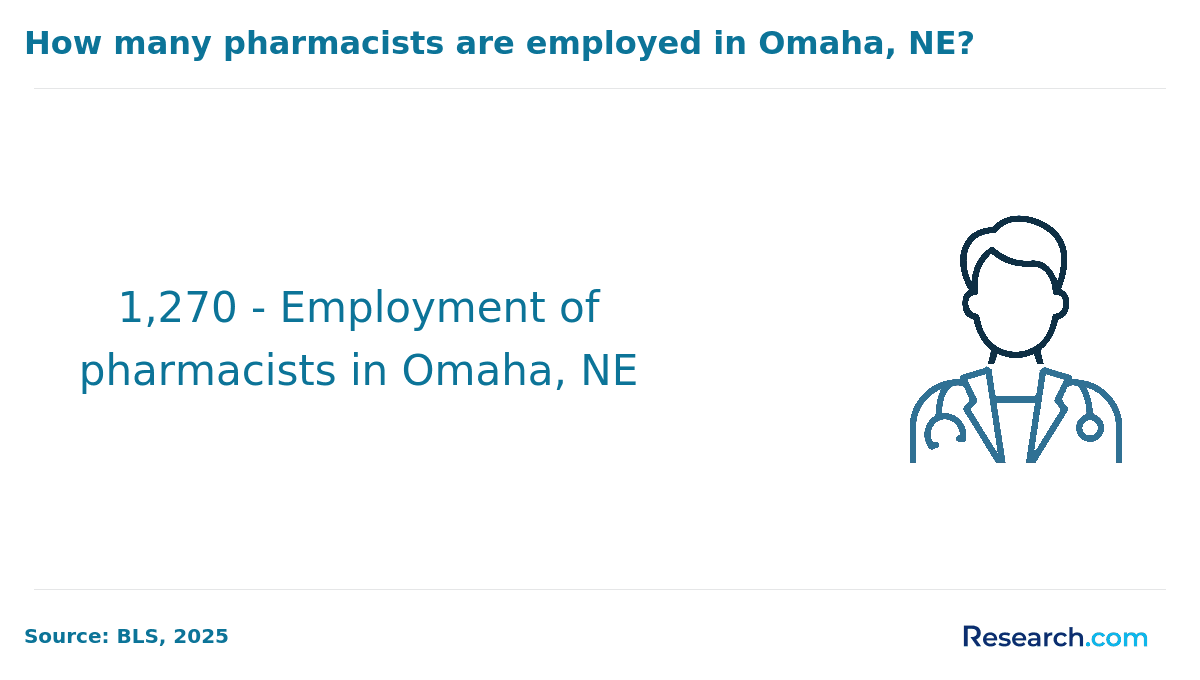
The employment base in Omaha is also relevant. The article’s cited labor data notes approximately 1,270 pharmacists employed in Omaha, which gives students a realistic sense of the size of the local market. A smaller market can still offer strong opportunities, but students should be intentional about networking, rotations, residencies, and specialty experience.
What skills do you need to become a licensed pharmacist in Omaha, NE?
Pharmacists need far more than memorized drug facts. In Omaha’s hospitals, clinics, long-term care facilities, and community pharmacies, pharmacists are expected to combine clinical judgment, accuracy, legal compliance, technology use, and patient communication.
| Skill | How it is used in practice | Why employers care |
| Pharmaceutical calculations | Calculating doses, concentrations, infusion rates, and compounding quantities | Medication errors can have serious patient safety consequences. |
| Medication therapy management | Reviewing medication lists, identifying interactions, improving adherence, and recommending therapy changes | Patients with chronic conditions often take multiple medications that require careful monitoring. |
| Knowledge of Nebraska pharmacy law | Following rules for dispensing, controlled substances, recordkeeping, immunizations, and pharmacy operations | Legal compliance protects patients, employers, and the pharmacist’s license. |
| Patient counseling | Explaining medication use, side effects, storage, missed doses, and safety concerns | Clear counseling can improve adherence and reduce preventable harm. |
| Technology proficiency | Using electronic health records, pharmacy management systems, inventory tools, and verification workflows | Modern pharmacy practice depends on accurate digital documentation. |
| Attention to detail | Verifying prescriptions, checking allergies, reviewing duplicate therapies, and confirming patient identity | Small oversights can create major clinical risks. |
| Team-based communication | Working with physicians, nurses, nurse practitioners, social workers, and insurance teams | Pharmacists increasingly support coordinated care rather than isolated dispensing. |
Students can build these skills through pharmacy technician experience, undergraduate science labs, shadowing, internships, simulation labs, clinical rotations, and professional pharmacy organizations. The earlier you test your interest in patient-facing work, the easier it is to decide whether pharmacy practice is the right fit.
What are the requirements for pharmacist licensure in Omaha, NE?
Omaha pharmacists are licensed through Nebraska, not through the city. That means you must meet the Nebraska Board of Pharmacy’s requirements before practicing independently in Omaha or elsewhere in the state.
- Professional education: Complete the required pharmacy education pathway, typically a Doctor of Pharmacy degree from an ACPE-accredited program.
- Supervised experience: Complete at least 1,500 internship hours under appropriate supervision.
- NAPLEX: Pass the North American Pharmacist Licensure Examination, which evaluates pharmacy practice knowledge and clinical readiness.
- Nebraska MPJE: Pass the Multistate Pharmacy Jurisprudence Examination for Nebraska, which tests knowledge of pharmacy law and regulations.
- Background check and fingerprinting: Complete the required screening process as part of licensure review.
- Application and documentation: Submit required forms, fees, transcripts, experience verification, exam results, and any other materials requested by the state board.
If you are still exploring healthcare careers and want a broader view of credentialing expectations, Research.com’s guide on how to qualify for healthcare jobs can help you compare education, certification, and licensing requirements across roles.
The degree distribution data referenced in this article shows that 55% of pharmacists hold a bachelor’s degree and 27% hold a doctorate. For Nebraska licensure planning, the important distinction is that the current professional route centers on the PharmD. A prior bachelor’s degree may help with preparation, but it does not substitute for the professional pharmacy degree required for licensure.
What is the licensing process for licensed pharmacists in Omaha, NE?
The licensing process is a sequence of education, supervised practice, testing, and state review. Students should track requirements early because delays in transcripts, intern hour documentation, background checks, or exam scheduling can postpone the start of employment.
- Complete your pharmacy education. Finish the required PharmD curriculum and make sure your school can provide official documentation to the licensing authority.
- Document supervised experience. Verify that your internship hours meet Nebraska’s requirement of at least 1,500 hours and that they are properly recorded.
- Apply to the Nebraska Board of Pharmacy. Submit the licensure application, fees, identity materials, transcripts, and required supporting documents.
- Complete fingerprinting and background check steps. Start this early if possible because processing time can vary.
- Pass the NAPLEX. Use a study plan that covers therapeutics, calculations, patient safety, drug information, and pharmacy practice.
- Pass Nebraska’s MPJE. Study Nebraska-specific pharmacy law, controlled substance rules, dispensing requirements, and professional responsibilities.
- Wait for board verification and license issuance. Do not assume you can begin practicing independently until the license is officially active.
| Licensing step | Common delay | How to reduce risk |
| Application | Missing fees, incomplete forms, or inconsistent personal information | Review all instructions before submission and keep copies of everything. |
| Intern hours | Hours not properly verified by a supervisor or program | Track hours continuously instead of waiting until graduation. |
| Exams | Underestimating the MPJE or waiting too long to schedule | Build separate study plans for the NAPLEX and Nebraska law exam. |
| Background check | Late fingerprinting or unresolved documentation issues | Begin the process as soon as you are eligible. |
One Omaha pharmacist described the process as demanding but manageable: the internship connected classroom theory with patient care, the NAPLEX required disciplined review, and the Nebraska MPJE forced careful attention to state-specific rules. That is a useful way to think about licensure. It is not just a paperwork hurdle; it is the final quality check before independent practice.
How long does it take to become a licensed pharmacist in Omaha, NE?
Most students should expect the full pathway to take several years. The exact timeline depends on whether you enter pharmacy school after prerequisite coursework, complete a bachelor’s degree first, study full time, pass exams on the first attempt, and submit licensing materials promptly.
| Stage | Typical time cited | What happens during this stage |
| Pre-pharmacy coursework | 2 years | Students complete required college science, math, and general education prerequisites. |
| PharmD program | 4 years | Students complete professional pharmacy coursework, clinical training, and required experiential learning, including 1,500 internship hours. |
| Exam and licensure preparation | Several months | Graduates prepare for the NAPLEX and Nebraska MPJE, complete background check steps, and wait for application review. |
If you want to enter healthcare faster, pharmacy may not be the shortest route. Students who need quicker workforce entry may compare technician, assistant, coding, or allied health options. Research.com’s guide to the best quick medical certifications can help you evaluate shorter healthcare credentials while deciding whether a PharmD is worth the longer investment.
Will a pharmacist license from Omaha, NE allow you to work in other states?
No. A Nebraska pharmacist license allows you to practice in Nebraska, including Omaha, but it does not automatically authorize practice in every other state. Pharmacy licensure is state-based, so moving or working across state lines usually requires additional approval from the destination state’s board of pharmacy.
The National Association of Boards of Pharmacy offers the Pharmacy Licensure Transfer Program (PLTC), which can help pharmacists transfer license credentials to participating states. However, a transfer process is not the same as universal reciprocity. You may still need to meet state-specific requirements, pass a jurisprudence exam, complete background checks, provide proof of good standing, or satisfy continuing education rules.
- Check the destination state’s board requirements before accepting a job offer.
- Ask whether the state participates in PLTC and what documents are needed.
- Budget time for law exams, background checks, and administrative review.
- Keep your Nebraska license in good standing if you may return or need license history documentation.
How much do Omaha, NE licensed pharmacists earn?
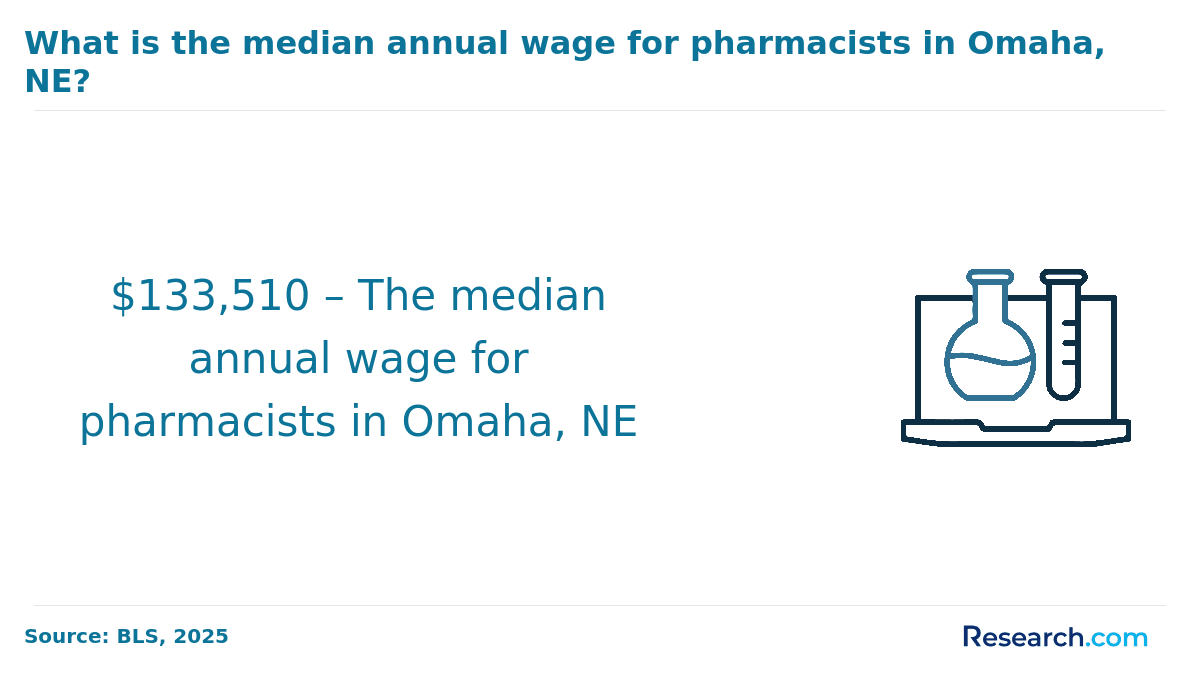
Pharmacist compensation in Omaha depends on practice setting, experience, credentials, schedule, leadership duties, and specialty area. The salary figures cited in this article include an average annual income around $120,000, entry-level earnings close to $100,000, and compensation exceeding $140,000 for some experienced or specialized pharmacists. Another cited local wage figure lists the median annual wage for licensed pharmacists in Omaha at $133,510.
Because these figures come from different salary snapshots and may use different methods, treat them as planning ranges rather than guarantees. A hospital clinical pharmacist, a community pharmacist, a pharmacy manager, and a specialty pharmacist may all have different pay structures even within the same city.
| Factor | How it may affect pay | Questions to ask before accepting a role |
| Practice setting | Retail, hospital, long-term care, and specialty pharmacies may use different compensation models. | Is pay hourly or salaried? Are evenings, weekends, or holidays required? |
| Experience | New pharmacists may start near the lower end, while experienced pharmacists may qualify for higher compensation. | How are raises determined, and when is performance reviewed? |
| Specialization | Clinical areas such as oncology, infectious diseases, and pharmacogenomics can support higher-value roles. | Does the employer support board certification or specialty training? |
| Leadership | Managers, directors, and supervisors may earn more but carry staffing, compliance, and operational responsibility. | What management duties are included, and is bonus pay available? |
| Benefits | Retirement plans, health insurance, loan repayment, paid time off, and continuing education support can materially change total compensation. | What is the full benefits package, not just the base salary? |
For return-on-investment planning, compare your expected debt, tuition, cost of living, residency plans, and likely starting salary. A higher salary is valuable only if it supports your financial goals after loan payments, taxes, relocation costs, and professional expenses.
Is there a demand for licensed pharmacists in Omaha, NE?
Omaha has ongoing pharmacist demand across community pharmacies, hospitals, clinics, long-term care, and specialized care environments. The article’s cited labor market outlook notes pharmacist job growth in Nebraska of around 3% over the next decade. That suggests steadier demand rather than explosive expansion, so applicants should plan to stand out through clinical rotations, residency experience, certifications, and strong employer references.
Demand is not equal across all pharmacy roles. Employers may be especially interested in pharmacists who can support medication therapy management, chronic disease care, oncology, infectious diseases, transitions of care, anticoagulation, immunization services, or specialty medication programs. Students comparing schools should look for programs that can help them build experience in the settings where they want to work. Research.com’s overview of the best pharmacy schools can also help applicants understand admissions options and program fit.
Current trends affecting pharmacists in Omaha
Pharmacy practice is changing. Pharmacists are still responsible for medication dispensing and safety, but many employers increasingly expect them to participate in patient counseling, immunizations, chronic disease support, medication reconciliation, health technology workflows, and team-based care.
- More clinical involvement: Pharmacists in hospitals and clinics often work directly with prescribers to optimize therapy and monitor complex medication regimens.
- Technology-heavy workflows: Electronic health records, automated dispensing systems, prescription verification platforms, and pharmacy management systems are now central to daily practice.
- Pressure on retail pharmacy staffing: Community pharmacy can offer accessible entry points, but workload, scheduling, and staffing models should be evaluated carefully.
- Specialty medication growth: Complex therapies require pharmacists who understand adherence, patient education, prior authorization, and adverse effect monitoring.
- Interprofessional care: Pharmacists increasingly collaborate with physicians, nurse practitioners, behavioral health professionals, and care coordinators.
Is Omaha, NE a good place to work as a licensed pharmacist?
Omaha can be a good fit for pharmacists who want a mid-sized healthcare market with hospital systems, retail employers, clinics, long-term care settings, and educational institutions. It may be especially attractive to students who train locally and use rotations to build relationships with employers before graduation.
The data discussed in this article indicates that nearly half of all pharmacist jobs nationwide are in healthcare settings, with 18% in retail and additional roles in pharmaceuticals, education, insurance, and government. Omaha’s market reflects many of these categories, giving pharmacists several possible directions beyond a traditional dispensing role.
| Omaha may be a strong fit if you want... | You may want to compare other markets if you need... |
| Access to hospitals, clinics, retail pharmacies, and long-term care employers | A very large metro area with more specialty subspecialty openings |
| A local education-to-employment pathway through Omaha-area institutions | A wider range of out-of-state residency or fellowship programs |
| A community-oriented practice environment | A faster-growing pharmacist labor market than the 3% Nebraska outlook cited here |
| Potential career stability in healthcare services | A role with minimal patient interaction or no licensing burden |
Before deciding, compare Omaha employers by schedule expectations, staffing ratios, residency availability, advancement paths, continuing education support, and whether the role matches your preferred practice style.
What opportunities exist for continuing education and career advancement in Omaha, NE?
Licensed pharmacists must keep learning after initial licensure. Continuing education helps pharmacists stay current on new therapies, law changes, safety practices, technology, and patient care standards. Omaha pharmacists can pursue professional development through employers, healthcare systems, pharmacy associations, conferences, workshops, online education, and specialty certifications.
Career advancement can take several forms: moving from staff pharmacist to pharmacy manager, completing residency training, specializing in clinical practice, entering ambulatory care, joining informatics or medication safety teams, teaching, consulting, or shifting into healthcare administration. Some pharmacists also add business, data, policy, or billing knowledge to broaden their options. For example, pharmacists who want to better understand administrative healthcare workflows may find it useful to explore how to become a medical biller & coder in Omaha.
| Advancement route | What it can lead to | Best for pharmacists who... |
| Residency or specialty training | Clinical pharmacist, specialist, or hospital-based roles | Want deeper patient care responsibility and competitive clinical credentials |
| Board certification | Recognition in a focused practice area | Plan to work in specialty, hospital, ambulatory, or complex care environments |
| Management experience | Pharmacy manager, director, or operations leadership roles | Enjoy staffing, compliance, workflow design, and team leadership |
| Informatics or medication safety | Technology, quality improvement, and systems-focused roles | Prefer data, workflow improvement, and patient safety initiatives |
| Teaching or precepting | Academic, adjunct, or clinical education roles | Enjoy mentoring students and developing future pharmacists |
How can pharmacists expand their scope to include behavioral health services?
Pharmacists can support behavioral health care by strengthening their knowledge of psychiatric medications, substance use treatment medications, adherence barriers, side effect management, patient counseling, and collaborative care models. In many settings, pharmacists do not replace behavioral health clinicians; instead, they help ensure that medication therapy is safe, effective, and coordinated with the broader treatment plan.
Pharmacists who want to move more directly into counseling or therapy should understand that those fields have separate licensure pathways. Reviewing Omaha LPC license requirements can help clarify how licensed professional counseling differs from pharmacy practice and what additional education and supervised experience would be required for that career shift.
What do licensed pharmacists in Omaha, NE say about their careers?
- My pharmacy education gave me the clinical base I needed, but working in an Omaha hospital showed me how much pharmacists contribute to day-to-day patient decisions. The local healthcare community is collaborative, and I have found stability here while still having room to grow professionally. Larry
- Training in Omaha prepared me for a wide range of patients and care settings. I value the mix of clinical challenge and community connection. The work can be demanding, but helping patients understand and manage their medications makes the responsibility worthwhile. Ana
- Starting locally helped me build relationships with mentors and employers. Omaha’s pharmacy community feels connected, but there are still opportunities to pursue certifications, leadership, and specialized practice. That combination has kept the career interesting. Diego
What Are the Alternative Career Paths for Licensed Pharmacists in Omaha, NE?
A pharmacist license can support more than traditional community or hospital dispensing. Omaha pharmacists may use their clinical training in research, medication safety, informatics, regulatory affairs, managed care, pharmaceutical industry roles, public health, academia, consulting, compounding, specialty pharmacy, and patient education.
Some pharmacists also explore adjacent healthcare careers when they want more direct counseling, behavioral health, administration, or social-service involvement. For those interested in substance use treatment and behavioral health systems, Research.com’s guide on how to become a substance abuse counselor in Omaha explains a related but separate professional pathway.
| Alternative path | How pharmacy experience helps | Important consideration |
| Clinical research | Drug knowledge supports trial protocols, safety monitoring, and patient education. | Research roles may require additional training in study design or regulatory compliance. |
| Regulatory affairs | Understanding medication rules and documentation can translate to compliance work. | These roles may involve less direct patient care. |
| Informatics | Pharmacists understand medication workflows and safety risks in electronic systems. | Technology skills and data literacy are important. |
| Managed care or insurance | Medication therapy knowledge supports formulary review and utilization management. | Work may focus on population-level decisions rather than individual dispensing. |
| Education | Experienced pharmacists can teach students, precept learners, or train healthcare staff. | Academic roles may require advanced credentials or teaching experience. |
How can pharmacists enhance team-based care with nurse practitioners in Omaha, NE?
Pharmacists and nurse practitioners can improve patient care when they communicate consistently, share medication updates, and define clear responsibilities. In Omaha clinics, hospitals, and community care settings, this collaboration may include medication reconciliation, chronic disease management, immunization planning, monitoring for interactions, and follow-up after hospital discharge.
Effective collaboration requires structured workflows: shared documentation, referral criteria, escalation plans, and regular case review. Pharmacists who want to understand how nurse practitioners are trained and licensed can review Research.com’s guide on how to become a nurse practitioner in Omaha.
How do evolving healthcare policies impact pharmacists in Omaha, NE?
Policy changes can affect what pharmacists are allowed to do, how services are reimbursed, how prescriptions are documented, and what compliance obligations pharmacies must meet. Omaha pharmacists should monitor Nebraska pharmacy law, federal controlled substance rules, insurance policies, immunization authority, scope-of-practice updates, and employer protocols.
Policy awareness is especially important for pharmacists in leadership, clinical programs, ambulatory care, and integrated care settings. Some pharmacists also study adjacent healthcare roles to better understand interprofessional care networks. For example, reviewing how to become an MFT in Omaha can help pharmacists understand how family and behavioral health professionals fit into coordinated patient care.
How to choose the right pharmacy path in Omaha
Before committing to a PharmD program or pharmacy career path, compare your options using practical criteria rather than reputation alone.
- Confirm accreditation. Make sure the PharmD program is ACPE-accredited and supports the licensing pathway you intend to follow.
- Compare total cost. Look beyond tuition. Include fees, books, transportation, housing, exam costs, licensure fees, and interest on loans.
- Evaluate rotation access. Ask where students complete clinical rotations and whether Omaha-area sites are available in your preferred practice setting.
- Ask about NAPLEX and MPJE preparation. A strong curriculum should prepare students for both clinical practice and Nebraska law requirements.
- Review residency and employment connections. If you want hospital or specialty pharmacy, ask how many graduates pursue residencies or clinical roles.
- Consider work-life fit. Retail, hospital, long-term care, and specialty roles can differ significantly in schedule, pace, and patient interaction.
- Calculate likely ROI. Compare expected debt with realistic Omaha salary ranges, not best-case salary examples.
Common mistakes to avoid
| Mistake | Why it can hurt you | Better approach |
| Choosing a program without checking accreditation | Licensure depends on completing an approved professional pathway. | Verify ACPE accreditation before applying or enrolling. |
| Looking only at tuition | Total cost may include fees, housing, transportation, supplies, exams, and licensing expenses. | Build a full cost estimate for each program. |
| Assuming all pharmacy jobs are the same | Retail, hospital, specialty, long-term care, and managed care roles differ in duties and schedules. | Shadow pharmacists in multiple settings before deciding. |
| Underestimating the MPJE | Strong clinical knowledge does not automatically mean strong law exam performance. | Study Nebraska pharmacy law separately and early. |
| Ignoring internship hour documentation | Missing or unverifiable hours can delay licensing. | Track supervised experience carefully throughout training. |
| Assuming salary outcomes are guaranteed | Pay varies by employer, role, experience, specialty, and schedule. | Compare multiple job postings and ask about total compensation. |
| Relying only on rankings or reputation | A highly regarded program may not be the best fit for your finances, location, or career goals. | Compare accreditation, cost, rotations, exam support, and outcomes together. |
Questions to ask before starting a pharmacy program
- Is the PharmD program ACPE-accredited?
- What prerequisite courses are required, and can I complete them locally?
- How much will the full program cost, including fees and living expenses?
- Where do students complete rotations in Omaha or Nebraska?
- How does the school prepare students for the NAPLEX and Nebraska MPJE?
- What support is available for residency applications or job placement?
- What percentage of graduates enter retail, hospital, residency, specialty, or other roles?
- Can I work while enrolled, and how demanding is the schedule?
- What loan repayment, scholarship, or employer support options may be available?
- Does the career path fit my preferred work style, stress tolerance, and patient-care interests?
Related Articles for Nearby Cities
- 2027 How to Become a Licensed Pharmacist in Lincoln, NE: License Requirements
- 2027 How to Become a Licensed Pharmacist in Kansas City, MO: License Requirements
- 2027 How to Become a Licensed Pharmacist in Wichita, KS: License Requirements
- 2027 How to Become a Licensed Pharmacist in Minneapolis, MN: License Requirements
- 2027 How to Become a Licensed Pharmacist in Saint Paul, MN: License Requirements
- 2027 How to Become a Licensed Pharmacist in Tulsa, OK: License Requirements
- 2027 How to Become a Licensed Pharmacist in St. Louis, MO: License Requirements
- 2027 How to Become a Licensed Pharmacist in Madison, WI: License Requirements
- 2027 How to Become a Licensed Pharmacist in Oklahoma City, OK: License Requirements
- 2027 How to Become a Licensed Pharmacist in Milwaukee, WI: License Requirements
References:
- Creighton University. School of Pharmacy and Health Professions.
- FreeCE. Nebraska Pharmacist and Pharmacy Technician CE Requirements.
- Harbor Compliance. Pharmacist Licensing Requirements and Service.
- iHirePharmacy. Pharmacist Jobs in Nebraska.
- My Next Move. Pharmacist License Information.
- Nebraska Legislature. Nebraska Statutes.
- Nebraska Medicine. Qualifications of Foreign Applicants and VISA Sponsorship.
- U.S. Language Services. How to Work in the U.S. as a Foreign-Educated Pharmacist.
- University of Nebraska Medical Center. Licensure | College of Pharmacy.
- Wyoming Department of Health. Pharmacist.
Key Insights
- Omaha pharmacists are licensed through Nebraska, so focus on state requirements: PharmD education, at least 1,500 internship hours, NAPLEX, Nebraska MPJE, background check, and board approval.
- The typical pathway is long. Plan for 2 years of pre-pharmacy coursework, 4 years in a PharmD program, and several months for exams and licensing steps.
- UNMC is the key Omaha-based PharmD option cited here, while Creighton University can support pre-pharmacy and health sciences preparation.
- Salary figures cited for Omaha include an average around $120,000, entry-level pay close to $100,000, earnings exceeding $140,000 for some experienced or specialized pharmacists, and a listed median annual wage of $133,510.
- Demand appears stable rather than unlimited. The cited Nebraska growth figure is around 3%, so students should build competitive clinical experience, law knowledge, technology skills, and professional references.
- A Nebraska pharmacist license does not automatically transfer nationwide. If you want to work elsewhere, check the destination state’s requirements and consider the PLTC process where applicable.
- The best pharmacy path is not simply the nearest or most familiar school. Compare accreditation, total cost, rotations, licensure support, residency options, employer connections, and long-term ROI before enrolling.
Other Things You Need to Know About Pharmacists in Omaha, NE
The Nebraska Board of Pharmacy issues pharmacist licenses for Omaha and the rest of the state. Applicants must submit proof of an accredited pharmacy degree, pass the NAPLEX and MPJE, and meet Nebraska’s age, background, and application requirements before licensure is granted.
In Omaha, NE, pharmacists must complete 30 hours of continuing education every two years to maintain their license. At least 15 of these hours must be in approved activities by the Accreditation Council for Pharmacy Education in 2027.


