
2027 How to Become a Licensed Pharmacist in New York

Co-Founder and Chief Data Scientist
To become a licensed pharmacist in New York, you need more than a pharmacy degree. You must complete an accredited Doctor of Pharmacy program, document supervised practical experience, pass required licensing exams, apply through the New York State Education Department, and keep your license active through renewal and continuing education.
This guide is for students comparing pharmacy schools, PharmD graduates preparing for licensure, internationally educated pharmacy graduates, and healthcare professionals considering pharmacy as a career path. It explains the required steps, how long the process takes, what it can cost, whether online study is possible, what pharmacists do, how much they earn in New York, and how to evaluate whether this path fits your goals.
The goal is simple: help you understand the New York pharmacist licensing process before you commit years of time and a major financial investment.
Quick Answer: How Do You Become a Licensed Pharmacist in New York?
In New York, the standard route is to earn a Doctor of Pharmacy degree from an accredited pharmacy school, obtain a Limited (Intern) Permit before supervised practice, complete the required internship experience, pass the North American Pharmacist Licensure Examination and the Multistate Pharmacy Jurisprudence Examination, and apply for licensure through the New York State Education Department.
Most candidates should plan for around 7 to 8 years from the start of undergraduate preparation through licensure, although the exact timeline depends on the pharmacy program, transfer credits, exam timing, and internship completion.
Key Things You Should Know about Becoming a Licensed Pharmacist in New York
- You need permission before supervised practice: New York requires candidates to obtain an intern permit before beginning supervised pharmacy practice that will count toward licensure.
- Internship setting matters: Internship experience must be completed in registered pharmacies and supervised appropriately to be accepted.
- International graduates may face additional requirements: Graduates of foreign pharmacy programs may need extra internship hours, and clerkship hours do not count toward this requirement.
- Out-of-state experience may count: Internship hours completed in another state can be credited if they meet New York standards and are verified by that state’s Board of Pharmacy.
- Screening is part of the process: Applicants should expect fingerprinting and background checks as part of licensing and professional eligibility.
- Costs extend beyond tuition: Budget for tuition, books, living expenses, exam fees, licensing fees, fingerprinting, and possible test preparation materials.
- What is a licensed pharmacist?
- How long does it take to become a licensed pharmacist in New York?
- How do I get a pharmacy degree in New York?
- What are the requirements to become a licensed pharmacist in New York?
- How much does it cost to become a licensed pharmacist in New York?
- Can I get my pharmacist’s license online in New York?
- What is the job description of a licensed pharmacist in New York?
- Are there alternative career paths for pharmacists in New York?
- What do I do if my pharmacist’s license expires in New York?
- How much do licensed pharmacists make in New York?
- What advanced certifications should licensed pharmacists pursue in New York?
- Can pharmacists contribute to substance abuse intervention in New York?
- How can continuing education programs boost career advancement for pharmacists in New York?
- Can collaboration with other healthcare professionals broaden a pharmacist’s career opportunities in New York?
- How can professional networking and mentorship empower pharmacists in New York?
- How are emerging technologies transforming pharmacy practice in New York?
- How can partnerships with nursing programs enhance pharmacy practice in New York?
- How do pharmacist licensure requirements compare with nursing licensure in New York?
- How can pharmacists collaborate with dietitians to improve patient outcomes?
- What is the job outlook for licensed pharmacists in New York?
- What are the options for pharmacists who want to transition into related careers, such as therapy?
- What is a licensed pharmacist’s career path in New York?
What is a licensed pharmacist?
A licensed pharmacist is a healthcare professional authorized by the state to prepare, dispense, verify, and manage medications. In New York, pharmacists also counsel patients, review prescriptions for safety, monitor drug interactions, support immunization and public health services where permitted, and collaborate with physicians, nurses, and other clinicians.
The license matters because pharmacy is a regulated healthcare profession. Employers, patients, and the state rely on licensing to confirm that a pharmacist has completed the required education, supervised experience, examinations, and professional standards needed to practice safely.
The basic New York path includes four major stages:
- Pharmacy education: Complete a Doctor of Pharmacy program from an accredited pharmacy school. If you are still exploring the field, a pharmacy technician route can be a lower-commitment way to understand pharmacy operations; Research.com’s guide to the best online pharmacy technician associate programs may help you compare that starting point.
- Supervised practice: Obtain the required intern permit and complete pharmacy practice experience under a licensed pharmacist.
- Licensing exams: Pass the North American Pharmacist Licensure Examination and the Multistate Pharmacy Jurisprudence Examination.
- State licensure and renewal: Apply through the New York State Education Department and maintain the license through renewal and continuing education.
Pharmacists are often associated with retail counters, but the profession is broader than dispensing. Many pharmacists work in hospitals, clinics, long-term care settings, managed care, research, industry, public health, informatics, and regulatory roles.
| Pharmacist function | What it means in practice | Why it matters to patients |
| Medication verification | Checks prescriptions for accuracy, dosage, contraindications, and interactions. | Reduces the risk of medication errors and unsafe combinations. |
| Patient counseling | Explains how and when to take medications, what side effects to watch for, and when to seek help. | Improves adherence and helps patients use prescriptions safely. |
| Clinical collaboration | Works with prescribers and care teams to optimize medication therapy. | Supports better treatment decisions, especially for complex or chronic conditions. |
| Regulatory compliance | Follows state and federal pharmacy laws, recordkeeping rules, and controlled substance requirements. | Protects patients and maintains public trust in medication distribution. |
How long does it take to become a licensed pharmacist in New York?
Becoming a pharmacist in New York typically takes around 7 to 8 years. That estimate includes undergraduate preparation, a Doctor of Pharmacy program, supervised internship experience, exam preparation, and the state licensing process.
The timeline is not identical for everyone. Students entering an accelerated pathway, transferring prerequisite credits efficiently, or completing internship hours during the PharmD program may move more quickly. Students who change majors, attend part time, retake prerequisites, delay exams, or need additional requirements may take longer.
| Stage | Typical requirement | Planning note |
| Undergraduate preparation | At least two years of prerequisite coursework is commonly required before pharmacy school. | Confirm each pharmacy school’s required courses before applying. |
| Doctor of Pharmacy program | A PharmD generally takes four years at an accredited pharmacy school. | Clinical rotations and experiential learning are built into most programs. |
| Internship experience | New York requires at least 1,500 hours of internship experience for PharmD graduates. | Students must secure a Limited (Intern) Permit before beginning qualifying supervised practice. |
| Licensing exams | Candidates must pass the North American Pharmacist Licensure Examination and the Multistate Pharmacy Jurisprudence Examination. | Exam preparation and scheduling can add several months depending on readiness and test availability. |
| Licensure application | Submit the required application and documentation to the state. | Processing time can vary, so prepare documents early. |
If you are comparing program formats, Research.com’s overview of online pharmacy degree programs can help you understand how online or hybrid pharmacy education differs from fully campus-based study.
How do I get a pharmacy degree in New York?
To get a pharmacy degree in New York, you need to complete a Doctor of Pharmacy program from an accredited institution. The PharmD is the professional degree required for pharmacist licensure, and it combines biomedical science, pharmacology, pharmacy law, patient care, clinical decision-making, and supervised practice experiences.
New York has several pharmacy schools that students commonly consider, including:
- St. John's University in Queens
- University at Buffalo (SUNY Buffalo)
- Long Island University in Brooklyn
Admission requirements vary by school, but applicants should expect prerequisite science and math coursework, a strong academic record, and program-specific application materials. Some programs may consider the Pharmacy College Admission Test, while others may have changed how they use standardized tests, so applicants should verify current requirements directly with each school.
How to choose a PharmD program in New York
Do not choose a pharmacy school based only on brand recognition or location. Your licensing eligibility, total cost, clinical training access, and student support services matter just as much.
| Factor to check | Why it matters | Question to ask the school |
| Accreditation | Licensure depends on completing an acceptable pharmacy education pathway. | Is the PharmD program accredited by the Accreditation Council for Pharmacy Education? |
| Experiential training | Rotations and internships prepare you for patient care and licensing requirements. | Where do students complete introductory and advanced pharmacy practice experiences? |
| NAPLEX and MPJE preparation | Graduation alone does not authorize practice; exams are required. | What academic support, review resources, or remediation options are available? |
| Total cost | Tuition is only one part of the investment. | What is the estimated total cost including fees, books, supplies, transportation, and living expenses? |
| Transfer and prerequisite policies | Accepted credits can affect both timeline and cost. | Which prerequisite courses will transfer, and how recently must they have been completed? |
| Career placement | Pharmacy graduates enter many settings, not only retail pharmacy. | Where do recent graduates work, and what residency or fellowship support is available? |
Before committing to a PharmD, some students compare the pharmacist path with pharmacy technician roles. If you want to understand the earning side of that alternative, see Research.com’s guide on how much do pharmacy technicians get paid?
What are the requirements to become a licensed pharmacist in New York?
The requirements to become a licensed pharmacist in New York include approved pharmacy education, supervised internship experience, licensing examinations, application documentation, and ongoing renewal obligations. Candidates should confirm all current requirements through the New York State Education Department because licensing rules and forms can change.
Core licensure requirements
- Complete a PharmD: Graduate from an appropriate Doctor of Pharmacy program.
- Obtain a Limited (Intern) Permit: Secure the permit before starting qualifying supervised pharmacy practice.
- Complete internship hours: PharmD graduates must complete at least 1,500 hours of acceptable internship experience.
- Pass required exams: Candidates must pass the North American Pharmacist Licensure Examination and the Multistate Pharmacy Jurisprudence Examination.
- Submit a state application: Provide required documents, fees, and any necessary verification to the licensing authority.
- Complete screening requirements: Fingerprinting and background checks may be required during the licensing process.
Initial licensure vs. renewal requirements
| Requirement area | Initial licensure | License renewal |
| Main purpose | Proves you are qualified to begin practicing as a pharmacist. | Confirms you remain eligible and professionally current. |
| Education | Requires completion of the professional pharmacy degree pathway. | Requires continuing education rather than another PharmD. |
| Experience | Requires qualifying supervised internship hours. | Does not repeat the original internship requirement. |
| Exams | Requires the licensing examinations. | Generally focuses on renewal application and continuing education compliance. |
| Timing | Completed before independent practice. | Pharmacists in New York must renew their licenses every three years. |
Pharmacy is one of several regulated healthcare professions with substantial education and licensing expectations. If you are comparing healthcare careers by pay and training length, Research.com’s guide to the most lucrative medical careers may help you evaluate alternatives.
How much does it cost to become a licensed pharmacist in New York?
The cost to become a licensed pharmacist in New York can exceed $100,000 when tuition, school fees, living costs, supplies, exams, and licensing expenses are included. The largest cost is usually the PharmD program, but applicants should not overlook smaller required costs that occur near graduation and licensure.
| Cost category | Amount stated | What to consider |
| PharmD tuition | Tuition can vary widely, typically falling between $30,000 and $60,000 annually. | Public, private, in-state, and out-of-state rates can differ significantly. |
| Total education-related cost | The overall cost can exceed $100,000 when educational and associated costs are included. | Books, lab supplies, housing, food, transportation, fees, and lost income can raise the total. |
| Licensing exams | Each exam typically costs between $200 and $300. | Budget separately for the North American Pharmacist Licensure Examination and the Multistate Pharmacy Jurisprudence Examination, plus study materials if needed. |
| Licensing fee | The final licensing fee generally ranges from $100 to $200. | Confirm the current fee with the licensing authority before applying. |
| Internship-related expenses | No single fixed amount is stated. | Transportation, parking, professional clothing, health requirements, or site-related costs may apply. |
| Additional licensing costs | Fingerprinting and background check costs may apply. | These costs are separate from tuition and exam preparation. |
It’s essential to budget for the pharmacist licensing fees in New York for 2027, because exam and application costs can change. Before enrolling, ask each school for a full cost of attendance, not just annual tuition.
How to reduce the cost of becoming a pharmacist
- Compare total cost, not only tuition: A lower tuition program may still be expensive if housing, commuting, fees, or rotation travel costs are high.
- Use transfer credits carefully: Accepted prerequisite credits can shorten your timeline, but only if they meet the pharmacy school’s rules.
- Apply early for aid: Scholarships, grants, assistantships, and employer tuition support can reduce borrowing.
- Avoid retaking courses when possible: Poor planning can add semesters and increase debt.
- Consider healthcare alternatives: If you want a faster healthcare entry point, compare pharmacy with quick healthcare certificates that pay well.
Can I get my pharmacist’s license online in New York?
You cannot complete the entire New York pharmacist licensing pathway fully online because licensure requires hands-on supervised pharmacy practice. However, some pharmacy education options may use hybrid delivery, combining online coursework with required in-person labs, rotations, internships, or clinical experiences.
Aspiring pharmacists must complete a Doctor of Pharmacy program accredited by the Accreditation Council for Pharmacy Education. Schools such as St. John's University and the University at Buffalo may offer technology-supported or hybrid learning components, but students should verify the exact format directly with the institution.
Online vs. hybrid vs. campus pharmacy education
| Format | What it usually includes | Best fit | Important limitation |
| Campus-based PharmD | In-person lectures, labs, advising, and clinical preparation. | Students who want face-to-face structure and easy access to campus resources. | Less flexible for students working full time or living far from campus. |
| Hybrid PharmD | Some online coursework plus required in-person training and rotations. | Students who need flexibility but can travel for required hands-on components. | Clinical and internship requirements still cannot be skipped. |
| Fully online coursework | May apply to some non-licensure courses, prerequisites, or continuing education. | Students completing prerequisites or pharmacists meeting renewal requirements. | A fully online-only path does not replace required supervised practice for initial licensure. |
Before enrolling in any online or hybrid pharmacy option, ask whether the program meets New York licensure expectations, how internships are arranged, whether out-of-state rotations are accepted, and whether students are supported in obtaining the Limited (Intern) Permit.
One common mistake is assuming that “online pharmacy program” means “online pharmacist license.” It does not. Online coursework may be convenient, but New York still requires documented practical training and successful completion of licensing exams.
What is the job description of a licensed pharmacist in New York?
A licensed pharmacist in New York is responsible for safe medication use, prescription review, patient counseling, medication therapy support, and compliance with pharmacy law. The exact job description depends on the practice setting.
| Work setting | Common pharmacist duties | Skills emphasized |
| Community pharmacy | Dispenses medications, counsels patients, checks interactions, supports adherence, and answers medication questions. | Communication, accuracy, patient education, time management. |
| Hospital pharmacy | Reviews medication orders, participates in care teams, monitors therapy, adjusts medication plans where appropriate, and supports inpatient safety. | Clinical judgment, collaboration, documentation, acute care knowledge. |
| Mail-order pharmacy | Verifies prescriptions, oversees dispensing workflows, manages patient questions remotely, and ensures accurate delivery. | Process control, remote communication, quality assurance. |
| Research organizations | Supports studies on drug safety, effectiveness, protocols, and medication outcomes. | Research literacy, ethics, evidence evaluation. |
Core responsibilities often include medication management, patient counseling, drug interaction review, regulatory compliance, and collaboration with other healthcare providers. In many settings, pharmacists also help patients understand complex treatment plans, manage chronic disease medications, and avoid preventable medication problems.
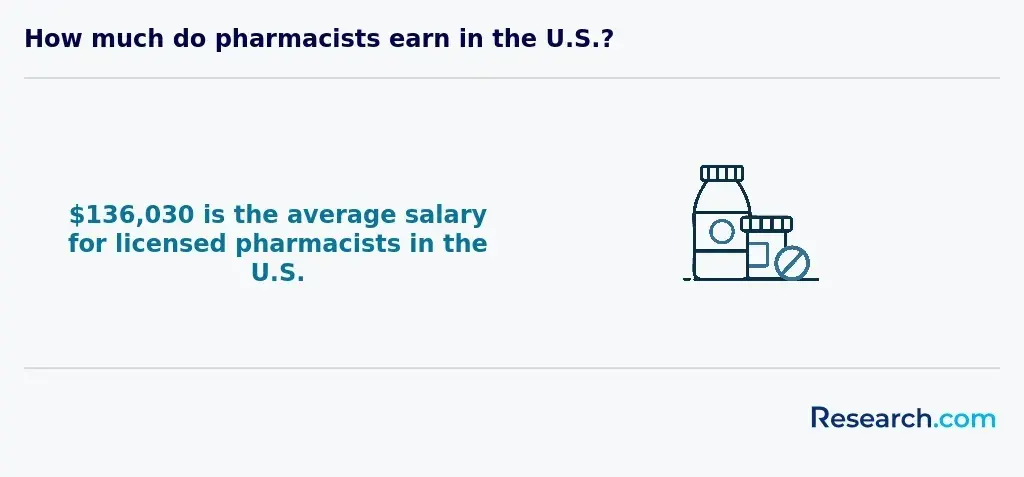
The role can be financially strong as well. One stated salary figure for pharmacists in New York is a median salary of approximately $135,722, although actual pay varies by employer, location, setting, experience, and specialization.
Are there alternative career paths for pharmacists in New York?
Yes. A pharmacy license can lead to careers beyond traditional retail or hospital dispensing. Pharmacists may move into clinical specialties, public health, industry, regulatory affairs, informatics, medication safety, academia, managed care, consulting, or related healthcare fields.
Some pharmacists also explore patient-centered counseling fields. Because pharmacists already understand medication effects, adherence barriers, chronic conditions, and patient communication, some may find mental health or substance use work compelling. If that direction interests you, Research.com explains how to become a mental health counselor in New York and what that separate licensure pathway involves.
| Alternative path | How pharmacy experience helps | When it may make sense |
| Medication safety | Pharmacists understand dispensing risks, drug interactions, and systems that prevent errors. | You enjoy quality improvement and patient safety work. |
| Regulatory affairs | Pharmacy training builds familiarity with drug approval, labeling, compliance, and documentation. | You prefer policy, industry, or compliance roles over direct dispensing. |
| Public health | Pharmacists can support vaccination, education, access, and population-level medication initiatives. | You want broader community impact. |
| Healthcare informatics | Medication data, electronic records, and clinical decision tools require pharmacy expertise. | You like technology, workflow design, and data-driven practice. |
| Counseling-related careers | Patient communication and medication knowledge can support a transition, but separate education and licensure are required. | You want to focus more heavily on behavioral health or therapy. |
What do I do if my pharmacist’s license expires in New York?
If your New York pharmacist license expires, you should stop and verify your status before practicing. Practicing on an expired license can lead to disciplinary consequences. The next step is to review the New York State Education Department’s renewal or reactivation instructions and submit the required materials.
For routine renewal, pharmacists in New York must renew their licenses every three years and complete continuing education. The stated continuing education requirement is 45 hours every three years, including required topic areas such as medication safety and pain management.
Steps to take when renewal is due or your license has expired
- Check your license status: Use the state verification system to confirm whether your license is active, expired, or otherwise restricted.
- Do not continue practicing if you are not authorized: Confirm your legal ability to work before providing pharmacist services.
- Complete the renewal application: Submit the required renewal materials through the New York State Education Department process.
- Document continuing education: Make sure you have completed the required 45 hours every three years and can provide proof if requested.
- Pay the required fee: A renewal fee is typically around $100, though applicants should verify the current amount.
- Confirm the renewal: After submitting materials, check that the state system reflects the correct license status.
| Common renewal mistake | Why it is risky | Better approach |
| Waiting until the last week | Processing delays can interrupt your ability to work. | Track renewal deadlines well before expiration. |
| Assuming all CE courses count | Non-approved or irrelevant courses may not satisfy requirements. | Use acceptable continuing education and keep completion records. |
| Ignoring license verification | You may think you are renewed before the system confirms it. | Verify your status after submitting the application. |
| Practicing after expiration | This can create professional and legal problems. | Pause practice until you confirm authorization. |
How much do licensed pharmacists in New York make?
Pharmacist pay in New York is competitive compared with many occupations, but salaries vary by setting, region, employer, schedule, specialization, union status, and experience. As of May 2023, the average annual income for pharmacists in the state is around $133,040, which equals an hourly wage of approximately $63.96.
Another stated salary figure in this article is a median salary of approximately $135,722. Readers should treat salary figures as reference points, not guarantees. Individual compensation can differ significantly between a community pharmacy, hospital, managed care organization, pharmaceutical company, or specialized clinical role.
Factors that can affect pharmacist earnings
- Practice setting: Hospital, retail, industry, managed care, and specialty pharmacy employers may use different pay structures.
- Specialization: Areas such as oncology, pediatrics, geriatrics, infectious disease, or ambulatory care may improve access to advanced roles.
- Advanced credentials: Board certification, immunization training, medication therapy management credentials, or residency training may strengthen competitiveness.
- Experience level: Pharmacists with stronger clinical judgment, leadership experience, and workflow expertise may qualify for higher-responsibility positions.
- Leadership responsibilities: Pharmacy manager, director, supervisor, or clinical coordinator roles can carry higher compensation.
| Career move | Potential benefit | Trade-off |
| Complete a residency | Can strengthen eligibility for clinical hospital or specialty positions. | Requires additional training time and may involve lower short-term earnings. |
| Pursue board certification | Signals advanced knowledge in a defined practice area. | Requires preparation, fees, and ongoing maintenance. |
| Move into management | Can increase pay and influence over pharmacy operations. | Adds staffing, compliance, budgeting, and performance responsibilities. |
| Enter industry or regulatory roles | May broaden career options beyond direct patient care. | May require networking, specialized experience, or additional training. |
What advanced certifications should licensed pharmacists pursue in New York?
Advanced certifications can help New York pharmacists document specialized expertise, compete for clinical or leadership roles, and keep pace with changing employer expectations. Common areas include medication therapy management, immunization delivery, pharmacotherapy, oncology, ambulatory care, geriatrics, informatics, and regulatory affairs.
The right certification depends on your intended practice setting. A community pharmacist may benefit from medication therapy management and immunization credentials, while a hospital pharmacist may prioritize board certification in a clinical specialty. Pharmacists considering a long-term education plan can also review Research.com’s guide on how long does it take to become a pharmacist to understand the broader training commitment.
Can pharmacists contribute to substance abuse intervention in New York?
Yes. Pharmacists are well positioned to support substance abuse intervention because they regularly review controlled substances, counsel patients on safe medication use, identify possible medication misuse patterns, and communicate with prescribers when concerns arise.
Pharmacists who want deeper involvement may pursue training related to substance use disorders, medication-assisted treatment support, harm reduction, controlled substance monitoring, and patient education. This does not make a pharmacist a substance abuse counselor by default; that is a separate professional pathway. For readers considering that transition, Research.com explains how to become a substance abuse counselor in New York.
How can continuing education programs boost career advancement for pharmacists in New York?
Continuing education is required for license renewal, but it can also be used strategically. Instead of treating CE as a last-minute compliance task, pharmacists can choose courses that support promotion, specialization, or career change.
High-value CE topics may include medication safety, pain management, pharmacovigilance, chronic disease management, healthcare informatics, immunization updates, opioid stewardship, and regulatory compliance. Pharmacists seeking affordable advanced education can compare options such as the cheapest online pharmacy school, while remembering that licensure-related clinical requirements still matter.
Can collaboration with other healthcare professionals broaden a pharmacist’s career opportunities in New York?
Interprofessional collaboration can expand a pharmacist’s role from dispensing-focused work to integrated patient care. Pharmacists who collaborate effectively with physicians, nurses, nurse practitioners, dietitians, social workers, and behavioral health professionals can contribute to medication reconciliation, chronic disease management, transitions of care, and patient education.
Understanding how other healthcare professionals are trained can also improve teamwork. For example, pharmacists who work closely with nursing teams may find it useful to review how to become a registered nurse in New York to better understand nursing education, licensing, and clinical responsibilities.
How can professional networking and mentorship empower pharmacists in New York?
Networking and mentorship help pharmacists discover roles that are not always obvious from job boards. A mentor can help with residency decisions, board certification planning, interview preparation, leadership development, and transitions into industry, informatics, public health, or academia.
Professional associations, alumni networks, local pharmacy organizations, clinical conferences, and employer mentorship programs can all be useful. Pharmacists interested in administrative or revenue-cycle knowledge may also explore related healthcare operations fields, such as medical billing and coding in New York, especially if they want to understand documentation, reimbursement, and compliance more deeply.
How are emerging technologies transforming pharmacy practice in New York?
Technology is changing pharmacy work by automating repetitive dispensing tasks, supporting electronic prescribing, improving medication histories, enabling data analytics, and expanding remote patient communication. These tools can reduce manual workload, but they also require pharmacists to develop stronger skills in verification, clinical interpretation, digital systems, privacy, and workflow oversight.
Automation does not remove the need for pharmacists. It shifts more value toward clinical judgment, patient counseling, safety review, and coordination with care teams. Pharmacists who want to work at a more advanced clinical level may also be interested in how other providers train for expanded patient care roles, including how to become a nurse practitioner in New York.
How can partnerships with nursing programs enhance pharmacy practice in New York?
Partnerships between pharmacy and nursing programs can improve team-based care training. Joint simulations, medication safety exercises, community outreach, chronic disease clinics, and clinical research projects can help future pharmacists and nurses understand each other’s roles before they enter practice.
Pharmacists who collaborate with nursing schools may improve communication around medication administration, discharge planning, patient education, and adverse event prevention. Research.com’s guide to the top nursing schools in New York can be useful for understanding the nursing education landscape and potential academic partners.
How do pharmacist licensure requirements compare with nursing licensure in New York?
Pharmacists and nurses both need state authorization to practice, but their licensing pathways differ because their roles differ. Pharmacists focus heavily on medication therapy, drug safety, dispensing systems, and pharmacology. Nurses focus on direct patient assessment, care planning, bedside care, health education, and clinical coordination.
| Requirement area | Pharmacist pathway | Nursing pathway |
| Professional education | Requires a Doctor of Pharmacy program. | Usually requires graduation from an approved nursing program. |
| Clinical training | Includes pharmacy practice experiences and required internship hours. | Includes supervised nursing clinical education. |
| Licensing exams | Requires pharmacy licensing examinations, including law-focused testing. | Requires nursing board examination requirements. |
| Practice focus | Medication expertise, dispensing, therapy management, and drug safety. | Patient assessment, direct care, care coordination, and health education. |
| Renewal | Requires periodic renewal and continuing education compliance. | Requires separate nursing renewal rules. |
If you are comparing healthcare licenses, Research.com’s overview of New York nursing licensure requirements can help you understand how nursing regulation differs from pharmacy regulation.
How can pharmacists collaborate with dietitians to improve patient outcomes?
Pharmacists and dietitians often support the same patients, especially those managing diabetes, cardiovascular disease, kidney disease, gastrointestinal conditions, weight-related concerns, or medication-nutrient interactions. Collaboration can help align medication plans with nutrition strategies.
For example, a pharmacist may identify a medication that affects appetite, blood sugar, electrolytes, or vitamin levels, while a dietitian helps the patient adjust diet safely. Together, they can improve counseling, reduce conflicting advice, and support chronic disease management. Pharmacists interested in nutrition-focused collaboration can explore how to become a registered dietician in New York.
What is the job outlook for licensed pharmacists in New York?
The job outlook for pharmacists is steady rather than explosive. The employment landscape includes a projected growth rate of 5% from 2023 to 2033, which is in line with the average for all occupations. Nationwide, approximately 14,200 job openings are expected each year.
For New York candidates, opportunities are shaped by the state’s large population, extensive healthcare system, retail pharmacy presence, hospitals, outpatient facilities, long-term care organizations, managed care employers, and pharmaceutical-related roles. Openings may come from growth, retirements, turnover, and movement into specialized or nontraditional pharmacy positions.
| Job outlook factor | What it means for applicants |
| 5% projected growth from 2023 to 2033 | Demand is expected to be steady, but applicants should still build strong clinical and communication skills. |
| Approximately 14,200 job openings nationwide each year | New graduates may find opportunities, especially if they are flexible about setting, schedule, and location. |
| Retirement and replacement needs | Some openings will come from experienced pharmacists leaving the workforce. |
| Varied work settings | Pharmacists can look beyond retail roles to hospitals, specialty pharmacy, managed care, industry, and public health. |
| Technology and automation | Routine tasks may become more automated, increasing the value of clinical, advisory, and patient-facing skills. |
Students should not assume that a PharmD automatically guarantees a specific job or salary. The strongest candidates usually combine licensure eligibility with internships, strong preceptor recommendations, exam readiness, patient communication skills, and a clear plan for their desired practice setting.
What are the options for pharmacists who want to transition into related careers, such as therapy?
Pharmacists who want to move into therapy or counseling can do so, but they should understand that these fields require separate education, supervised experience, and licensure. Pharmacy training may help with medication knowledge, patient counseling, and healthcare communication, but it does not replace the clinical preparation required for mental health practice.
A pharmacist interested in therapy may consider licensed counseling, mental health counseling, marriage and family therapy, substance abuse counseling, or behavioral health roles that combine medication literacy with patient support. To compare one possible route, review Research.com’s guide on How to become a therapist in New York.
What is a licensed pharmacist’s career path in New York?
A pharmacist’s career path in New York starts with education and licensure, then branches into different practice settings and advancement options. The early path is structured, but the long-term career can be flexible.
Typical career path
- Complete prerequisite coursework: Students usually complete at least two years of undergraduate coursework before the professional pharmacy program.
- Earn the PharmD: Complete four years of specialized pharmacy education through an appropriate program.
- Obtain the Limited (Intern) Permit: Secure the permit before beginning qualifying supervised practice.
- Complete internship experience: Work under a licensed pharmacist in acceptable settings and document required hours.
- Pass licensure examinations: Complete the North American Pharmacist Licensure Examination and the Multistate Pharmacy Jurisprudence Examination.
- Apply for licensure: Submit required documents and fees to the state.
- Begin practice: Enter community pharmacy, hospital pharmacy, long-term care, specialty pharmacy, industry, managed care, or another setting.
- Advance or specialize: Pursue residency, fellowship, board certification, management, informatics, regulatory, academic, or consulting roles.
| Career stage | Common role | Next move |
| Student | Pharmacy intern or rotation student | Build references, complete hours, prepare for exams. |
| New licensee | Staff pharmacist, community pharmacist, hospital pharmacist, or resident | Develop speed, accuracy, patient counseling, and clinical confidence. |
| Experienced pharmacist | Clinical pharmacist, specialty pharmacist, pharmacy manager, or consultant | Consider certification, management, or a specialty practice area. |
| Advanced professional | Director, preceptor, professor, industry specialist, informatics pharmacist, or regulatory expert | Lead teams, teach, publish, manage systems, or shape medication policy. |
International graduates and graduates from non-accredited programs should pay close attention to New York’s additional internship and documentation rules. Internships completed in other states may be accepted only if they align with New York’s standards and are verified appropriately.
What challenges do licensed pharmacists in New York face?
Pharmacists in New York work in a demanding environment. The profession requires accuracy under pressure, constant regulatory awareness, strong communication, and the ability to adapt to changing technology and patient needs.
| Challenge | Why it matters | How pharmacists can respond |
| Regulatory complexity | Pharmacy laws, controlled substance rules, and documentation expectations require careful compliance. | Use reliable regulatory updates, continuing education, and employer compliance resources. |
| Workload and staffing pressure | High prescription volume and patient expectations can increase stress and error risk. | Develop workflow systems, communicate boundaries, and pursue supportive work environments. |
| Technology changes | Automation, electronic records, and data tools change daily work processes. | Build informatics skills and stay comfortable with new platforms. |
| Patient communication demands | Patients may need help understanding complex medication plans, costs, or side effects. | Strengthen counseling, cultural competence, and plain-language communication. |
| Career fatigue | Some pharmacists reconsider their path after years of high-pressure practice. | Explore specialization, leadership, teaching, public health, or related fields such as how to become a marriage and family therapist in New York. |
Common Mistakes to Avoid When Pursuing Pharmacist Licensure in New York
- Choosing a program without checking accreditation: Licensure depends on completing an acceptable pharmacy education pathway.
- Starting supervised practice before securing the intern permit: Internship hours may not count if they are not completed under the correct rules.
- Budgeting only for tuition: Exams, licensing, books, supplies, transportation, living costs, fingerprinting, and preparation materials can add substantially to the total.
- Assuming online study means online licensure: Pharmacy licensure still requires hands-on training and exams.
- Ignoring MPJE preparation: Pharmacy law is a required competency, and New York-specific practice rules matter.
- Waiting too long to document internship hours: Keep records organized and verify requirements early.
- Letting renewal deadlines slip: Pharmacists must renew every three years and complete continuing education requirements.
- Assuming salary outcomes are guaranteed: Pay depends on setting, location, experience, specialization, and employer.
Questions to Ask Before Committing to Pharmacy School in New York
- Is the PharmD program accredited by the Accreditation Council for Pharmacy Education?
- What is the full cost of attendance, including fees, supplies, transportation, and living expenses?
- How does the school help students obtain internship placements and clinical rotations?
- What support is available for the North American Pharmacist Licensure Examination and the Multistate Pharmacy Jurisprudence Examination?
- How many internship hours can be completed during the PharmD program?
- What are the school’s transfer credit and prerequisite policies?
- Where do graduates work after completing the program?
- Does the program support residency, fellowship, industry, or clinical specialty preparation?
- If coursework is online or hybrid, which components must be completed in person?
- How much debt will you likely carry, and what salary range would make that debt manageable?
Here’s What Pharmacists Have to Say About Becoming a Licensed Pharmacist in New York
-
: "
“Becoming a licensed pharmacist in New York changed the direction of my professional life. The coursework was demanding, and the clinical rotations forced me to apply what I knew in real patient-care situations. During the pandemic, I saw how important pharmacists are to public health. My classmates, preceptors, and mentors helped me stay focused, and I believe New York gave me a strong environment to grow into the profession.” — Charles
"
-
: "
“The licensing process in New York was not easy, but it was worth it. Preparing for the exams required discipline, and passing them felt like the result of years of effort. I now work in a community pharmacy, where I speak with patients every day and help them understand their medications. That direct connection is one of the most rewarding parts of the job.” — David
"
-
: "
“Studying for my pharmacy license in New York helped me understand how closely pharmacy connects to public health and patient education. Training with a diverse patient population prepared me for the realities of practice. As a licensed pharmacist, I feel responsible for helping patients make safer, more informed decisions about their medications.” — Elle
"
Related Articles for Nearby States
- 2027 How to Become a Licensed Pharmacist in New Jersey
- 2027 How to Become a Licensed Pharmacist in Pennsylvania
- 2027 How to Become a Licensed Pharmacist in Connecticut
- 2027 How to Become a Licensed Pharmacist in Massachusetts
- 2027 How to Become a Licensed Pharmacist in Vermont
- 2027 How to Become a Licensed Pharmacist in Rhode Island
- 2027 How to Become a Licensed Pharmacist in Delaware
- 2027 How to Become a Licensed Pharmacist in Maryland
- 2027 How to Become a Licensed Pharmacist in New Hampshire
- 2027 How to Become a Licensed Pharmacist in Ohio
Key Insights
- The standard New York pathway is structured: Complete a PharmD, obtain an intern permit, finish required supervised experience, pass the licensing exams, and apply through the state.
- Expect a long timeline: The process typically takes around 7 to 8 years, including undergraduate preparation, pharmacy school, internship hours, exams, and licensing.
- Internship rules are important: New York requires at least 1,500 hours of internship experience for PharmD graduates, and the experience must meet state standards.
- Costs can be substantial: Tuition often falls between $30,000 and $60,000 annually, and the total investment can exceed $100,000 after related costs are included.
- Online coursework has limits: Hybrid study may be possible, but pharmacist licensure cannot be completed entirely online because supervised practical training is required.
- Pay is strong but not guaranteed: As of May 2023, pharmacists in New York had an average annual income of around $133,040, but earnings vary by role, employer, and specialization.
- Career options extend beyond retail pharmacy: Pharmacists can pursue hospitals, specialty pharmacy, managed care, public health, industry, informatics, regulatory affairs, academia, or related healthcare careers.
- Renewal is part of the profession: New York pharmacists renew every three years and must complete 45 hours every three years of continuing education.
- The best decision starts with verification: Before enrolling, confirm accreditation, total cost, internship support, licensure eligibility, and career outcomes with each school and the New York State Education Department.
References:
- op.nysed.gov (n.d.). Pharmacists. https://www.op.nysed.gov/pharmacist
- bls.gov (29 Aug 2024). Pharmacists. https://www.bls.gov/ooh/healthcare/pharmacists.htm
Other Things You Should Know About Becoming a Licensed Pharmacist in New York
Foreign-trained pharmacists must demonstrate English proficiency by passing the TOEFL iBT test with at least 25 in speaking, 22 in listening, 21 in reading, and 24 in writing to apply for a pharmacy license in New York in 2027.
The New York State Education Department’s Office of the Professions licenses pharmacists in New York. Applicants submit their licensure materials through that office and must meet state education, internship, examination, and moral character requirements before a pharmacist license is issued.


