2027 How to Become a Licensed Pharmacist in Texas

Co-Founder and Chief Data Scientist
Becoming a licensed pharmacist in Texas requires a specific sequence of education, supervised experience, exams, background screening, fees, and ongoing license renewal. The process is manageable, but it is not something to approach casually: pharmacy school is a major academic and financial commitment, and Texas pharmacists must meet both national competency standards and state-specific pharmacy law requirements.
This guide is for prospective pharmacy students, current PharmD candidates, career changers, foreign-trained pharmacists, and healthcare workers comparing pharmacy with other clinical careers. You will learn what a Texas pharmacist does, how long the path usually takes, what education and exams are required, what costs to expect, whether online pharmacy education can help, and how to evaluate whether this career is worth pursuing.
Quick Answer: How do you become a licensed pharmacist in Texas?
To become a licensed pharmacist in Texas, you generally need to be at least 18, graduate from an accredited pharmacy school or complete the required foreign pharmacy certification route, complete required internship experience, pass the NAPLEX and MPJE, submit a Texas pharmacist application, complete fingerprinting and a background check, and pay the required application and exam fees. You can start the application process up to six months before graduation, but you cannot practice independently until the Texas State Board of Pharmacy issues your license.
Key Things You Should Know About Becoming a Licensed Pharmacist in Texas
- Minimum age and education: Texas requires pharmacist applicants to be at least 18 and to hold a qualifying pharmacy degree from an accredited pharmacy school or meet the foreign pharmacy certification pathway.
- Internship requirement: Plan for supervised practical training. The licensing pathway includes at least 1,740 hours of internship experience; some descriptions of the pathway also refer to 1,500 internship hours, so applicants should confirm the exact current requirement with the Texas State Board of Pharmacy before applying.
- Required exams: You must pass the North American Pharmacist Licensure Examination, commonly called the NAPLEX, and the Multistate Pharmacy Jurisprudence Examination, or MPJE.
- Application timing: Texas allows candidates to begin the application process up to six months before graduation, which can help reduce delays after completing a PharmD program.
- Background screening: Fingerprinting and a background check are part of the licensing process.
- Budget planning: The pathway includes pharmacy school costs, exam fees, application fees, background check costs, and future renewal expenses.
- What is a licensed pharmacist?
- How long does it take to become a licensed pharmacist in Texas?
- How do I get a pharmacy degree in Texas?
- What are the requirements to become a licensed pharmacist in Texas?
- How much does it cost to become a licensed pharmacist in Texas?
- Can I get my pharmacist’s license online in Texas?
- What is the job description of a licensed pharmacist in Texas?
- What do I do if my pharmacist’s license expires in Texas?
- How much do licensed pharmacists in Texas make?
- What is the job outlook for licensed pharmacists in Texas?
- Can pharmacists broaden their patient care impact with therapeutic certifications?
- What other healthcare careers can licensed pharmacists pursue?
- What is a licensed pharmacist’s career path in Texas?
- Which PharmD Program Accelerates My Path to Becoming a Licensed Pharmacist in Texas?
- Can Licensed Pharmacists Expand into Healthcare Administration and Support Roles?
- Additional Opportunities in Healthcare Careers
- Can I pursue an online pharmacy career as a licensed pharmacist?
- Can Licensed Pharmacists Expand into Substance Abuse Counseling?
- Can Pharmacists Integrate Nutritional Expertise into Patient Care?
- What are the emerging trends in Texas pharmacy practice?
- What advanced certifications can elevate my clinical practice in Texas?
- How Can Texas Pharmacists Collaborate Effectively with Other Healthcare Professionals?
- How Do Pharmacy and Nursing Licensure Standards Complement Each Other in Texas?
What is a licensed pharmacist?
A licensed pharmacist is a healthcare professional legally authorized to prepare, dispense, verify, and manage medications for patients. In Texas, pharmacists also counsel patients, screen for drug interactions, support medication therapy management, administer immunizations when qualified, and work with prescribers to improve safe and effective medication use.
The standard academic route is the Doctor of Pharmacy, or PharmD. Students typically complete prerequisite undergraduate coursework before entering a professional pharmacy program. PharmD coursework usually covers pharmacology, medicinal chemistry, therapeutics, patient assessment, drug safety, ethics, and pharmacy law. Students who need more flexible study options can compare online doctorate in pharmacy program options, but they should verify accreditation and in-person clinical requirements before enrolling.
Licensure is what separates a pharmacy graduate from an independent practicing pharmacist. A degree alone is not enough. Texas applicants must also complete supervised practical experience, pass national and state law exams, satisfy background screening requirements, and receive approval from the Texas State Board of Pharmacy.
| Requirement area | What it means for Texas applicants | Why it matters |
| Education | Graduate from an accredited pharmacy school or complete the required foreign pharmacy certification pathway. | The Board must be able to verify that your academic preparation meets pharmacy practice standards. |
| Supervised experience | Complete required internship hours under approved supervision. | Internship training turns classroom knowledge into patient-care judgment. |
| Exams | Pass the NAPLEX and MPJE. | The exams test clinical competency and understanding of pharmacy law. |
| Background review | Submit fingerprinting and complete the required background check. | Texas evaluates applicant eligibility and professional fitness before granting a license. |
| Renewal | Keep the license active through renewal and continuing education. | A pharmacist must remain current on changing drug therapy, laws, and safety standards. |
How long does it take to become a licensed pharmacist in Texas?
The full path usually includes prerequisite college coursework, a professional pharmacy degree, supervised experience, exams, and state application processing. The licensing review itself can take around 90 days at a minimum, but the total career preparation timeline is much longer because applicants must first complete the required pharmacy education and experiential training.
The application timeline can vary. Delays are common when transcripts, internship records, exam results, fingerprints, or background information are incomplete. Applicants should not wait until the last minute, especially if they have a job offer that depends on an active pharmacist license.
| Stage | Typical issue to plan for | Practical advice |
| Application submission | Application fee processing usually takes about 3 to 5 business days. | Submit early and keep copies of confirmations and receipts. |
| Document review | Missing documents can place the application on hold. Applications can expire if not completed within a year. | Use a checklist for transcripts, internship documentation, exam registration, and identity requirements. |
| Enforcement review | The Enforcement division usually takes about 3 to 4 weeks, but issues involving criminal history or professional conduct can take several months. | Disclose required information accurately and respond quickly to Board requests. |
| Compliance review | The Compliance team may take another 4 to 6 weeks, and a pre-inspection may add time when applicable. | If your application involves a pharmacy operation, prepare for inspection-related documentation early. |
| Final approval | If approved, the license number may be issued within about 10 business days. | Do not begin independent practice until your license is active and verifiable. |
Students comparing educational timelines should also understand what degree is needed to become a pharmacist, because prerequisites, transfer credits, accelerated formats, and clinical rotations can affect total time to completion.
How do I get a pharmacy degree in Texas?
To earn a pharmacy degree in Texas, you first complete prerequisite college coursework and then apply to an accredited Doctor of Pharmacy program. Common prerequisites include biology, general chemistry, organic chemistry, anatomy or physiology, math, and related science courses. Exact prerequisites vary by school, so applicants should review each program’s admissions requirements before choosing where to apply.
Texas has multiple pharmacy schools, including The University of Texas at Austin College of Pharmacy, Texas A&M University Irma Lerma Rangel College of Pharmacy, and University of Houston College of Pharmacy. When comparing programs, do not rely only on reputation. The better choice is the school that fits your academic background, budget, location needs, experiential rotation access, graduation timeline, and licensure goals.
Applicants who are not ready for a PharmD may consider working first in a pharmacy support role. Researching online pharmacy technician associate degree options can help some students test their interest in the field before committing to a professional doctorate.
How to compare Texas pharmacy schools
- Confirm ACPE accreditation: Texas licensure depends on completing an acceptable pharmacy education pathway. Accreditation should be verified directly, not assumed.
- Review experiential training sites: Strong clinical rotations can expose you to hospitals, community pharmacies, ambulatory care, specialty pharmacy, and underserved patient settings.
- Ask about NAPLEX and MPJE preparation: A good program should prepare students for both clinical knowledge and Texas pharmacy law.
- Compare total cost, not just tuition: Include fees, books, transportation, housing, background checks, immunizations, exam fees, and lost income while enrolled.
- Check transfer and prerequisite policies: Some students lose time because courses do not transfer as expected.
- Consider fit: Class format, faculty access, advising quality, commuting demands, and rotation geography can all affect completion.
What are the requirements to become a licensed pharmacist in Texas?
Texas pharmacist licensure is based on eligibility, education, supervised practice, exams, character and background review, and payment of required fees. After initial licensure, pharmacists must also satisfy renewal and continuing education rules to keep practicing legally.
| Requirement | Texas pharmacist applicant should know |
| Age | Applicants must be at least 18. |
| Education | Applicants need a qualifying pharmacy degree from an accredited pharmacy school or an approved foreign pharmacy certification route. |
| Internship experience | The pathway includes supervised internship experience. Guidance in this article references at least 1,740 hours, while other pathway summaries reference 1,500 hours; verify the current Board requirement before applying. |
| Exams | Applicants must pass the NAPLEX and MPJE. |
| Background check | Fingerprinting and background screening are required. |
| Renewal | Texas pharmacists renew their licenses every two years and complete continuing education requirements. |
Renewal is not an afterthought. Once licensed, Texas pharmacists must complete continuing education, submit renewal information, and pay renewal fees. Letting a license lapse can create employment problems and may lead to penalties or added reinstatement requirements. Healthcare workers planning a long-term clinical career can also review broader guidance on requirements for a career in healthcare to understand how licensure, background checks, and professional standards work across regulated roles.
How much does it cost to become a licensed pharmacist in Texas?
The cost of becoming a licensed pharmacist in Texas includes both education expenses and licensing-related fees. Pharmacy school is typically the largest cost, but candidates should also budget for applications, exams, fingerprinting, renewals, and any required practice-related fees.
For the initial license application, the average cost described here is around $378. That amount may include several components, such as the application fee, a Texas Online Fee of $5, a PRN Surcharge of $18, an Office of Patient Protection Fee of $5, and a Prescription Monitoring Fee of $37. Applicants who file late may face a delinquent fee of $158, whether the filing is only a day late or nearly three months late.
Pharmacy ownership or operational applications can cost more. A pharmacy change-of-ownership application fee is listed at $504, and with additional online processing and monitoring fees, the total can be about $583. Renewal costs are also important: renewing a license is described as costing around $580. Additional operational fees may include an Automated Pharmacy Services Fee of $100 for both initial and renewal and a Telepharmacy Systems Fee of $150 for both initial and renewal.
| Cost category | Amount stated | What to remember |
| Initial application-related cost | Around $378 | This does not represent the full cost of pharmacy education. |
| Texas Online Fee | $5 | Small processing fees can add up when combined with other charges. |
| PRN Surcharge | $18 | Budget for required surcharges, not only the base application fee. |
| Office of Patient Protection Fee | $5 | Part of the listed initial application cost structure. |
| Prescription Monitoring Fee | $37 | Associated with monitoring obligations tied to pharmacy practice. |
| Delinquent fee | $158 | Avoidable if you submit required materials on time. |
| Change-of-ownership application fee | $504; about $583 with additional fees | Relevant for pharmacy ownership or business transitions, not every pharmacist applicant. |
| Typical renewal cost | Around $580 | Licensure costs continue after initial approval. |
| Automated Pharmacy Services Fee | $100 for both initial and renewal | Applies to certain pharmacy operations. |
| Telepharmacy Systems Fee | $150 for both initial and renewal | Relevant when telepharmacy systems are part of practice operations. |
Students trying to reduce upfront training costs may also compare shorter healthcare credentials before committing to pharmacy school. A guide to quick healthcare certifications that pay well can help prospective students evaluate lower-cost entry points into healthcare, although those credentials do not replace the PharmD requirement for pharmacist licensure.
Can I get my pharmacist’s license online in Texas?
You cannot complete the entire Texas pharmacist licensing process online because pharmacist training requires hands-on clinical experience, identity verification, exams, and Board approval. However, some pharmacy coursework may be available in online or hybrid formats, depending on the school.
Online pharmacy education can be helpful for students who need schedule flexibility, but it must be evaluated carefully. The most important question is whether the program is accredited by the Accreditation Council for Pharmacy Education and whether it meets Texas licensure expectations. Students should also ask how clinical rotations are arranged, where in-person experiences take place, and whether the school supports Texas-based placements.
| Online pharmacy option | What can be online | What usually still requires in-person participation |
| Hybrid PharmD program | Some lectures, assignments, discussions, and exam preparation may be delivered remotely. | Labs, skills assessments, clinical rotations, and practice experiences may require in-person attendance. |
| Fully online support coursework | Some prerequisite or nonclinical courses may be completed online if accepted by the pharmacy school. | Professional pharmacy training still requires supervised experiential learning. |
| Online continuing education | Licensed pharmacists may complete many renewal-focused learning activities online when accepted. | Some certifications or practice privileges may require live training or skills verification. |
A common mistake is assuming “online PharmD” means “online license.” It does not. The license is issued by the state after all education, experience, exam, and screening requirements are satisfied.
What is the job description of a licensed pharmacist in Texas?
A licensed pharmacist in Texas is responsible for safe medication use. The role includes checking prescriptions for accuracy, identifying drug interactions, counseling patients, monitoring therapy, communicating with prescribers, maintaining records, supervising pharmacy staff when appropriate, and complying with state and federal pharmacy laws.
- Medication dispensing: Pharmacists verify prescriptions, review dosage and safety concerns, and ensure medications are labeled and provided correctly.
- Patient counseling: Pharmacists explain how to take medication, what side effects to watch for, and when to contact a healthcare provider.
- Medication therapy management: Pharmacists help patients and providers evaluate whether medications are working as intended.
- Collaborative care: Under a physician’s written protocol, Texas pharmacists may participate in drug therapy management, including monitoring patient response and supporting dosage-related decisions.
- Immunizations: Pharmacists may administer immunizations and vaccinations when qualified and authorized.
- Compliance and documentation: Pharmacists maintain required records, follow dispensing regulations, and support safe pharmacy operations.
- Continuing education: Texas pharmacists must complete 30 hours of continuing education every two years, including required training such as opioid abuse education.
The day-to-day setting matters. A hospital pharmacist may spend more time on clinical rounds, medication reconciliation, and complex therapy decisions. A community pharmacist may focus more on prescription verification, patient education, vaccinations, insurance issues, and high-volume dispensing. Specialty, ambulatory care, long-term care, managed care, and telepharmacy roles can look different again.
What do I do if my pharmacist’s license expires in Texas?
If your Texas pharmacist license expires, do not continue practicing as though it is active. Practicing pharmacy without a valid license can lead to disciplinary action, fines, employment problems, and possible barriers to reinstatement. Your first step should be to review Texas State Board of Pharmacy instructions and begin the renewal or reinstatement process that applies to your status.
- Check your license status: Confirm whether your license is expired, inactive, delinquent, or otherwise restricted.
- Review renewal requirements: Texas pharmacist licenses must be renewed every two years.
- Complete continuing education: Make sure required CE is finished and properly documented.
- Address fingerprinting rules: If you were fingerprinted before June 2015, you may need to complete fingerprinting again.
- Consider inactive status only when appropriate: Inactive status may be useful if you are not practicing, but you cannot practice pharmacy while inactive.
- Ask about military-related options: Service members, veterans, and spouses may have renewal-related options that differ from the standard process.
The safest approach is to calendar your renewal deadline well in advance, track CE throughout the two-year cycle, and avoid waiting until the final week. Renewal problems are usually easier to prevent than to repair.
How much do licensed pharmacists in Texas make?
Pharmacist pay in Texas varies by setting, region, seniority, specialty, schedule, and employer type. As of May 2023, pharmacists in Texas earn an average annual salary of around $133,600, or about $64.23 per hour. Pharmacists in general medical and surgical hospitals average about $144,270 per year, while those in health and personal care retail settings average around $126,990.
Another salary figure cited for Texas pharmacists in 2023 is a median salary of around $136,030 per year, or about $65.40 per hour. These figures should be treated as labor-market reference points, not guarantees. Individual offers can be higher or lower depending on experience, location, shift requirements, clinical specialization, and demand.
Pharmacists seeking stronger earning potential often consider specialization, advanced certification, management responsibilities, or practice settings with more complex clinical duties. Urban areas such as Dallas-Fort Worth or Houston may have a higher demand for pharmacists, but cost of living, commute, workload, and competition should also be considered.
| Work setting or factor | Salary information stated | Decision point |
| Texas pharmacists overall | Around $133,600 per year; about $64.23 per hour as of May 2023 | Useful as a statewide average, but not a personal salary guarantee. |
| General medical and surgical hospitals | About $144,270 per year | May offer more clinical complexity and different scheduling demands. |
| Health and personal care retail settings | Around $126,990 per year | May involve high-volume patient interaction and retail workflow pressures. |
| Texas median salary figure | Around $136,030 per year; about $65.40 per hour in 2023 | Compare salary data by source, region, and employer type. |
What is the job outlook for licensed pharmacists in Texas?
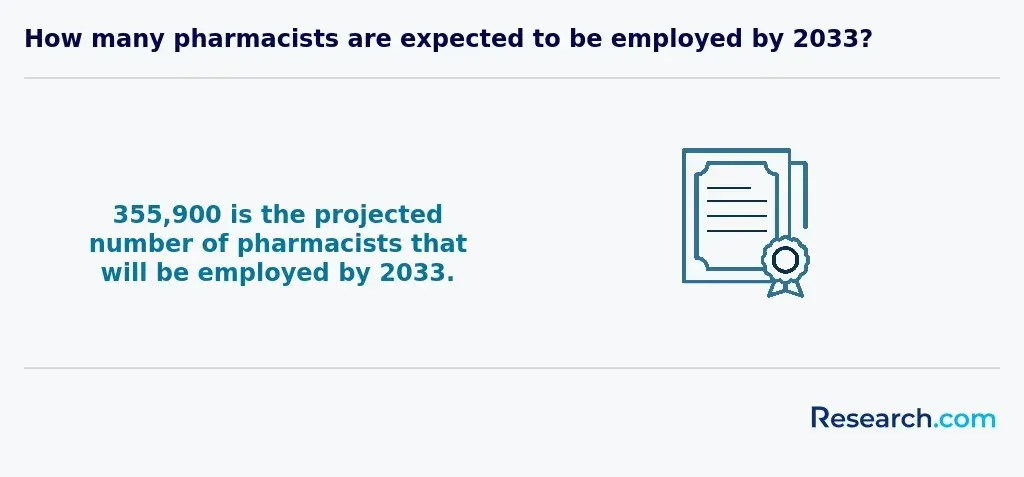
The pharmacist job outlook in Texas is supported by ongoing healthcare demand, medication complexity, chronic disease management, immunization services, and the need for safe medication use across retail, hospital, clinic, and long-term care settings. The forecast described here expects pharmacist demand to rise by about 5% over the next decade, with around 14,200 pharmacist positions anticipated to open nationwide each year.
At the same time, pharmacy is changing. Retail volume pressure, automation, mail-order pharmacy, telehealth, and healthcare consolidation are reshaping where pharmacists work and what employers expect. New pharmacists should prepare for a market that rewards clinical judgment, patient communication, technology fluency, immunization competence, data literacy, and the ability to work on interprofessional teams.
| Trend | How it affects Texas pharmacists | How to prepare |
| Telehealth and online pharmacy services | More patient interactions may happen remotely, especially for refills, counseling, and medication management. | Build comfort with remote communication, documentation, and digital pharmacy systems. |
| Electronic prescriptions | Digital workflows can reduce some errors but create new verification and system-management responsibilities. | Learn to identify electronic prescribing issues and workflow bottlenecks. |
| Medication therapy complexity | Patients often take multiple medications, increasing the need for interaction checks and adherence support. | Strengthen pharmacotherapy, patient counseling, and medication reconciliation skills. |
| Interprofessional care | Pharmacists are increasingly expected to coordinate with physicians, nurses, and behavioral health professionals. | Practice concise clinical communication and collaborative decision-making. |
| Automation and data tools | Technology may change dispensing tasks while increasing demand for oversight and clinical interpretation. | Develop both technical fluency and patient-facing clinical value. |
Can pharmacists broaden their patient care impact with therapeutic certifications?
Pharmacists who want a broader patient-care role can pursue additional training in areas related to behavioral health, chronic disease support, medication adherence, and therapeutic counseling. This does not mean a pharmacist automatically becomes a therapist; counseling professions have their own education, supervised practice, and licensure rules. However, understanding adjacent therapeutic fields can improve collaboration with behavioral health providers. Pharmacists interested in a separate counseling credential can review the pathway for becoming a marriage and family therapist in Texas.
What other healthcare careers can licensed pharmacists pursue?
A Texas pharmacist can remain in pharmacy while expanding into specialty practice, management, academia, clinical research, managed care, informatics, telepharmacy, public health, or healthcare administration. Some pharmacists also consider a second licensed healthcare profession, but they should evaluate the cost, time, and scope-of-practice differences before starting another degree or license track.
For example, pharmacists drawn to mental health care may explore how to become a therapist in Texas. This can help them understand what counseling professionals do, how behavioral health licensure differs from pharmacy licensure, and where interdisciplinary collaboration may be possible.
What is a licensed pharmacist’s career path in Texas?
The Texas pharmacist career path starts with academic preparation and licensure, but it can lead in many directions. Some pharmacists build long-term careers in community pharmacy. Others move into hospitals, clinical specialties, pharmacy management, informatics, industry, regulatory affairs, or education.
| Career stage | Typical focus | Decision to make |
| Pre-pharmacy student | Completing prerequisites, gaining exposure to pharmacy, and preparing applications. | Decide whether the PharmD investment matches your academic strengths and career goals. |
| PharmD student | Studying pharmacotherapy, patient care, pharmacy law, and completing clinical experiences. | Choose rotations and electives that support your preferred practice setting. |
| Intern | Completing supervised practical hours and learning real pharmacy workflows. | Use internship placements to test community, hospital, ambulatory, or specialty interests. |
| Licensure candidate | Passing the NAPLEX and MPJE and completing Board application requirements. | Submit materials early and monitor application status closely. |
| Entry-level pharmacist | Dispensing, counseling, medication review, immunizations, and workflow management. | Build strong patient communication and regulatory compliance habits. |
| Experienced pharmacist | Specialization, management, clinical leadership, teaching, telepharmacy, or administration. | Consider certifications, residencies, management training, or advanced practice opportunities. |
Historically, some descriptions reference a Bachelor of Science in Pharmacy that usually takes about five years or a Doctor of Pharmacy that typically requires around six years of study. Current applicants should confirm which degree pathway is accepted for licensure and how foreign pharmacy credentials are evaluated. After licensure, Texas pharmacists must complete 30 hours of continuing education every two years, including at least one hour focused on opioid abuse training.
Which PharmD Program Accelerates My Path to Becoming a Licensed Pharmacist in Texas?
An accelerated PharmD program may shorten the route to graduation by compressing coursework, integrating prerequisite study, or using a more intensive academic calendar. This can be attractive for students who want to enter the workforce sooner, but acceleration is not automatically better. Faster programs can be demanding, leave less room for outside work, and require careful planning for clinical rotations and licensure preparation.
Before choosing an accelerated option, confirm accreditation, Texas licensure alignment, rotation availability, academic support, exam preparation, total cost, and whether the pace fits your learning style. To compare structured options, review Research.com’s guide to the best PharmD accelerated degree program.
Here’s What Pharmacists Have to Say About Becoming a Licensed Pharmacist in Texas
-
: "
The most valuable part of my Texas licensing journey was the supervised experience. Classroom training gave me the science, but working with patients taught me how much communication, judgment, and accountability matter in daily pharmacy practice. Martha
"
-
: "
The exams were challenging, but they forced me to take both clinical knowledge and pharmacy law seriously. Receiving my license felt like the result of years of disciplined preparation, not just one application. Neil
"
-
: "
Practicing in Texas exposed me to many different patient needs and healthcare settings. That variety pushed me to keep learning and made collaboration with other healthcare professionals part of my everyday work. Rita
"
Can Licensed Pharmacists Expand into Healthcare Administration and Support Roles?
Yes. Pharmacists who enjoy systems, compliance, operations, and reimbursement may move toward healthcare administration or support roles. Pharmacy knowledge can be valuable in medication safety programs, formulary management, revenue cycle operations, compliance, quality improvement, and clinical documentation support.
Pharmacists considering administrative expansion should compare the return on investment of each credential. Training in medical billing and coding in Texas may be useful for professionals who want to understand claims, coding, reimbursement, and documentation processes, but it is a different skill set from pharmacist licensure.
Additional Opportunities in Healthcare Careers
Pharmacy is one of many regulated healthcare professions. Some students discover during pharmacy preparation that they are more interested in counseling, nursing, dietetics, public health, informatics, or administration. Others become pharmacists first and later add complementary expertise.
Mental health counseling is one adjacent field where pharmacists may collaborate, especially when patients need support for medication adherence, substance use concerns, anxiety, depression, or chronic disease self-management. Those considering a separate counseling profession can review how to become a mental health counselor in Texas to understand the required steps.
The key is to distinguish collaboration from licensure. A pharmacist can work closely with counselors, nurses, dietitians, and physicians, but each profession has its own legal scope of practice.
Can I pursue an online pharmacy career as a licensed pharmacist?
Licensed pharmacists can work in digital pharmacy roles, telepharmacy, medication therapy management, remote verification, online patient counseling, managed care, informatics, or virtual care support, depending on employer needs and regulatory limits. These roles may offer flexibility, but they still require an active pharmacist license and compliance with applicable pharmacy rules.
Pharmacists interested in remote work should understand telehealth documentation, patient privacy expectations, prescription verification workflows, and state-by-state practice limitations. Research.com’s guide to how to become an online pharmacist explains how this career direction differs from traditional in-person pharmacy practice.
Can Licensed Pharmacists Expand into Substance Abuse Counseling?
Pharmacists already play an important role in safe medication use, controlled substance monitoring, opioid risk education, and patient counseling. Some may want to go further by studying substance abuse counseling. This can be a meaningful path, but it requires separate training and credentialing beyond pharmacist licensure.
If your goal is to combine medication expertise with behavioral health support, first decide whether you want to collaborate with substance use counselors or become credentialed in that field yourself. The guide on how to become a substance abuse counselor in Texas can help clarify the training route.
Can Pharmacists Integrate Nutritional Expertise into Patient Care?
Pharmacists often counsel patients with diabetes, hypertension, cardiovascular disease, gastrointestinal conditions, and other medication-sensitive health issues. Nutritional knowledge can improve those conversations, especially when food, supplements, medication absorption, and lifestyle changes interact.
However, pharmacists should stay within their scope of practice and refer patients to nutrition professionals when individualized diet therapy is needed. Understanding how to become a registered dietician in Texas can help pharmacists know when and how to collaborate with dietitians.
What are the emerging trends in Texas pharmacy practice?
Texas pharmacy practice is being influenced by telehealth, electronic prescriptions, data analytics, collaborative practice models, immunization services, and medication therapy management. These developments are changing the pharmacist’s value from primarily dispensing medications to also improving medication outcomes, safety, adherence, and care coordination.
Pharmacists who want to remain competitive should strengthen clinical communication, technology use, documentation habits, cultural competence, and teamwork. Some professionals also study adjacent care pathways, such as how to become a registered nurse in Texas, to better understand how nursing and pharmacy roles coordinate in patient care.
What advanced certifications can elevate my clinical practice in Texas?
Advanced certifications can help pharmacists signal expertise in areas such as immunization management, pharmacotherapy, medication therapy management, pharmacogenomics, geriatrics, oncology, ambulatory care, or other specialized areas. The right credential depends on your practice setting and career goal.
Before paying for a certification, ask whether employers in your target setting value it, whether it qualifies you for new responsibilities, whether it requires renewal, and whether it aligns with Texas practice rules. Pharmacists interested in advanced clinical collaboration may also compare pharmacy practice with pathways such as how to become a nurse practitioner in Texas.
How Can Texas Pharmacists Collaborate Effectively with Other Healthcare Professionals?
Texas pharmacists collaborate most effectively when they communicate clearly, document interventions, understand each professional’s scope of practice, and focus on patient outcomes. Strong collaboration can include medication reconciliation, therapy monitoring, immunization coordination, chronic disease support, discharge planning, and adherence counseling.
Pharmacists often work with physicians, advanced practice nurses, registered nurses, physician assistants, counselors, dietitians, and social workers. Interprofessional education can help. Students and professionals who want to better understand nursing preparation can explore top nursing schools in Texas as part of learning how healthcare teams are trained.
How Do Pharmacy and Nursing Licensure Standards Complement Each Other in Texas?
Pharmacy and nursing licensure both exist to protect patients, but the professions regulate different scopes of practice. Pharmacists focus on medication expertise, dispensing, therapy management, drug safety, and pharmacy law. Nurses focus on patient assessment, bedside care, care coordination, treatment implementation, and nursing standards.
Understanding both frameworks can improve teamwork. For example, pharmacists who understand Texas nursing licensure requirements may communicate more effectively with nurses about medication administration, patient monitoring, documentation, and escalation of care.
Common Mistakes to Avoid When Becoming a Pharmacist in Texas
| Mistake | Why it causes problems | Better approach |
| Choosing a program without checking accreditation | An unrecognized program can create licensure barriers. | Verify accreditation before applying or paying deposits. |
| Looking only at tuition | Total cost includes fees, housing, commuting, books, background checks, exams, and lost work time. | Build a full cost-of-attendance estimate. |
| Assuming online coursework eliminates in-person training | Pharmacy licensure requires experiential practice and clinical competency. | Ask exactly where rotations and labs take place. |
| Waiting too long to apply for licensure | Application reviews, exam results, and background checks can delay employment. | Start the process as early as allowed and track every requirement. |
| Ignoring Texas pharmacy law preparation | Clinical knowledge alone is not enough to pass the MPJE or practice safely. | Study Texas-specific pharmacy law and Board rules carefully. |
| Letting continuing education pile up | Missing CE can delay renewal or create compliance issues. | Complete CE throughout the two-year renewal cycle. |
| Assuming salary averages apply to every job offer | Pay varies by employer, region, schedule, setting, and experience. | Compare offers using salary, benefits, workload, advancement, and location. |
Questions to Ask Before You Commit to a Pharmacy Career in Texas
- Am I prepared for several years of science-heavy coursework and clinical training?
- Have I compared PharmD tuition, fees, living costs, and expected debt?
- Is the pharmacy program accredited and acceptable for Texas licensure?
- Where will I complete clinical rotations, and are Texas placements available?
- Do I prefer community pharmacy, hospital pharmacy, ambulatory care, specialty pharmacy, managed care, or telepharmacy?
- How will I prepare for the NAPLEX and MPJE?
- Can I meet internship, fingerprinting, background check, and application requirements on time?
- What is my backup plan if I decide pharmacy is not the right fit?
- Will I pursue residency, certification, management, or another healthcare credential after licensure?
Key Insights
- Texas pharmacist licensure is a multi-step process: You need qualifying education, supervised experience, exams, background screening, fees, and Board approval.
- The PharmD is the central credential: Flexible or hybrid study may be available, but clinical rotations and licensure steps cannot be skipped.
- Plan early for timing: The licensing process can take around 90 days at a minimum, and delays are more likely when documents, fingerprints, exam results, or disclosures are incomplete.
- Budget beyond tuition: Application fees, exam costs, renewal fees, operational fees, transportation, and living expenses all affect the real cost of the pathway.
- Salary can be strong but varies: Texas pharmacist pay differs by setting, location, specialization, employer, and schedule; averages are useful benchmarks, not guarantees.
- The profession is evolving: Telehealth, electronic prescribing, data tools, collaborative care, immunization services, and medication therapy management are shaping pharmacist roles.
- Renewal matters after licensure: Texas pharmacists must renew every two years and complete continuing education, including required topic areas.
- The best pharmacy path is decision-based: Choose a program and career direction based on accreditation, licensure fit, clinical access, cost, learning format, and long-term practice goals.
Related Articles for Nearby States
- 2027 How to Become a Licensed Pharmacist in Louisiana
- 2027 How to Become a Licensed Pharmacist in Oklahoma
- 2027 How to Become a Licensed Pharmacist in Arkansas
- 2027 How to Become a Licensed Pharmacist in New Mexico
- 2027 How to Become a Licensed Pharmacist in Kansas
- 2027 How to Become a Licensed Pharmacist in Missouri
- 2027 How to Become a Licensed Pharmacist in Colorado
- 2027 How to Become a Licensed Pharmacist in Mississippi
- 2027 How to Become a Licensed Pharmacist in Tennessee
- 2027 How to Become a Licensed Pharmacist in Arizona
References:
- bls.gov (29 Aug 2024). Pharmacists. bls.gov https://www.bls.gov/ooh/healthcare/pharmacists.htm
- op.nysed.gov (n.d.). Consumer Information for Pharmacists. op.nysed.gov https://www.op.nysed.gov/professions/pharmacist/consumer-information
- Pharmacy Workforce Center. (2024). Pharmacy Demand Report (PDR) Executive Summary. https://www.aacp.org/sites/default/files/2024-05/pharmacy-demand-report-04292024.pdf
- pharmacy.texas.gov (n.d.). Pharmacists. pharmacy.texas.gov https://www.pharmacy.texas.gov/consumer/broch5.asp
Other Things You Should Know About Becomign a Licensed Pharmacist in Texas
To become a licensed pharmacist in Texas in 2027, you must earn a Doctor of Pharmacy (Pharm.D.) degree from an ACPE-accredited program. This typically involves four years of professional study, following at least two years of undergraduate education focusing on subjects like chemistry and biology.
In 2027, becoming a licensed pharmacist in Texas typically takes about 6-8 years. This includes completing a four-year Doctor of Pharmacy (Pharm.D.) program, preceded by at least two years of undergraduate coursework. Additional time may be needed for internship and residency, depending on individual circumstances.