2027 Online Pharmacist: What Is It? And How to Become One

Co-Founder and Chief Data Scientist
Working as an online pharmacist can mean reviewing prescriptions for a mail-order pharmacy, counseling patients through a secure telehealth platform, supporting medication therapy management remotely, or helping a hospital or clinic extend pharmacy services beyond its physical location. The opportunity is attractive because it can combine licensed clinical work with remote flexibility, but it is not an informal work-from-home healthcare job. Online pharmacists still need the same professional education, state licensure, patient-safety judgment, and regulatory awareness expected in traditional pharmacy practice.
This guide explains how online pharmacy and telepharmacy work, what education and licenses are required, what online pharmacists do each day, how salaries compare, what risks candidates should watch for, and how to evaluate whether this career path fits your goals. It is written for pharmacy students, licensed pharmacists considering remote roles, healthcare workers exploring digital pharmacy careers, and career changers who want a realistic view of the path.
Quick answer: How do you become an online pharmacist?
To become an online pharmacist in the United States, you generally need to complete a Doctor of Pharmacy degree from an ACPE-accredited program, pass required licensing exams such as the NAPLEX and, where applicable, the MPJE, obtain licensure in the state or states where you practice or dispense, and build competency in telehealth systems, prescription verification, patient counseling, privacy compliance, and digital pharmacy workflows. Employers may also prefer experience in community pharmacy, hospital pharmacy, medication therapy management, mail-order pharmacy, specialty pharmacy, or telepharmacy.
What to know before pursuing an online pharmacist career
Online pharmacy careers can be rewarding, but the requirements are substantial. Before choosing this path, focus on the essentials below.
- Education: Pharmacists need a Doctor of Pharmacy degree. The traditional pathway includes two to three years of pre-pharmacy coursework followed by four years of professional pharmacy study.
- Licensure: You must hold an active pharmacist license in the state where you practice, and online or mail-order work may require additional state licenses depending on where prescriptions are dispensed.
- Exams: Most candidates must pass the North American Pharmacist Licensure Examination and meet state pharmacy law requirements, often through the Multistate Pharmacy Jurisprudence Examination.
- Clinical experience: Internships, rotations, residencies, or work experience in medication counseling, prescription review, specialty medications, or medication therapy management can make you more competitive for remote roles.
- Technology fluency: Online pharmacists must be comfortable with telehealth platforms, e-prescribing systems, pharmacy management software, secure messaging, electronic health records, and drug-interaction screening tools.
- Continuing education: State boards require ongoing education for license renewal. Telepharmacy, privacy, controlled-substance rules, and digital health practices are especially important areas to track.
- Specialization: Some pharmacists strengthen their remote career prospects by developing expertise in pharmacogenomics, chronic disease management, specialty pharmacy, prior authorization, or medication therapy management.
- Regulatory awareness: Online pharmacy work is highly regulated. Candidates should understand state board rules, HIPAA expectations, prescription validity standards, and federal oversight involving the FDA and DEA.
- Online pharmacy vs. telepharmacy: what is the difference?
- Main benefits of online pharmacies for patients and care teams
- Education, training, and licensure requirements
- What online pharmacists do each day
- Licensing and regulatory requirements for online pharmacy
- Salary, employment settings, and career outlook
- Risks, limitations, and challenges in online pharmacy
- Using advanced credentials to move into higher-level pharmacy roles
- Data security and compliance in digital pharmacy operations
- Soft skills and digital competencies employers value
- Billing, coding, and reimbursement considerations
- Legal and ethical issues in online pharmacist practice
- Why interdisciplinary teamwork matters in telepharmacyEthics checklist for online pharmacy practice
- Health information technology in online pharmacy workflows
- How online pharmacies can earn patient trust
- Measuring clinical outcomes in remote pharmacy services
- Bioinformatics and data-driven innovation in pharmacy
- Healthcare management skills for online pharmacy leaders
- Patient safety and customer experience in telepharmacy
- Technology used by online pharmacists
- Future trends shaping online pharmacy and telepharmacyAdditional technology trends to watch
Online pharmacy vs. telepharmacy: what is the difference?
Online pharmacy and telepharmacy are related, but they are not identical. Online pharmacy usually refers to ordering, processing, filling, and shipping prescriptions through a digital or mail-order model. Telepharmacy is broader: it involves providing pharmacist services remotely, which may include counseling, medication review, clinical monitoring, remote dispensing supervision, and collaboration with other healthcare providers.
| Category | Online pharmacy | Telepharmacy |
| Main purpose | Digital prescription ordering, fulfillment, refill management, and medication delivery | Remote pharmacy care, counseling, medication review, and clinical support |
| Typical patient interaction | Website, app, phone, chat, refill portal, or mail-order support | Phone, secure messaging, video consultation, remote dispensing system, or clinical platform |
| Common work settings | Mail-order pharmacies, online retail pharmacies, specialty pharmacies, and pharmacy benefit organizations | Hospitals, clinics, rural health sites, correctional facilities, telehealth companies, and remote care programs |
| Key compliance concerns | Valid prescriptions, state pharmacy licensure, shipping rules, privacy, and medication authenticity | State telepharmacy rules, pharmacist supervision, documentation, patient counseling, privacy, and technology security |
| Career relevance | Best for pharmacists interested in high-volume prescription review, mail-order workflows, specialty medications, and patient support | Best for pharmacists interested in remote clinical care, underserved access, medication therapy management, and interdisciplinary teamwork |
What online pharmacies do
- Licensing: Legitimate online pharmacies operate under state board of pharmacy requirements.
- Prescription rules: Prescription medications require a valid prescription from a licensed prescriber.
- Refill support: Many services provide refill reminders or auto-refill options for ongoing medications.
- Pharmacist access: Reputable platforms offer phone, chat, or secure messaging support with licensed pharmacists.
- Privacy obligations: Patient information must be handled in accordance with HIPAA requirements.
- Medication selection: Some online pharmacies carry broad inventories, while others focus on specialty drugs or specific therapeutic areas.
- Access advantages: Home delivery can help patients who live far from a pharmacy, have mobility limitations, or need recurring medications.
- Price comparison: Patients may be able to compare pricing across services, although the lowest price is not always the safest option.
- Delivery model: Medications are usually shipped by mail or courier, with additional safeguards for temperature-sensitive products when needed.
What telepharmacy includes
- Access expansion: Telepharmacy can bring pharmacist services to rural, remote, or underserved communities.
- Remote dispensing: Some programs use automated dispensing machines or remotely supervised dispensing sites.
- Medication therapy management: Pharmacists may conduct medication reviews and identify drug-related problems.
- Virtual consultations: Patient counseling may happen through secure video, phone, or messaging systems.
- Adherence support: Digital tools can help pharmacists monitor refill patterns and support patients who struggle to take medications consistently.
- Chart review: Pharmacists may review medication profiles, lab values, allergies, and care plans remotely.
- Specialized services: Telepharmacy can support disease-specific counseling, specialty medication education, or transitions of care.
- Care settings: Hospitals, outpatient clinics, community health centers, and other healthcare organizations may use telepharmacy models.
- Provider collaboration: Remote pharmacists often coordinate with prescribers, nurses, medical assistants, and care managers.
- Outcome focus: Well-run telepharmacy programs aim to reduce medication errors, improve adherence, and support better care coordination.
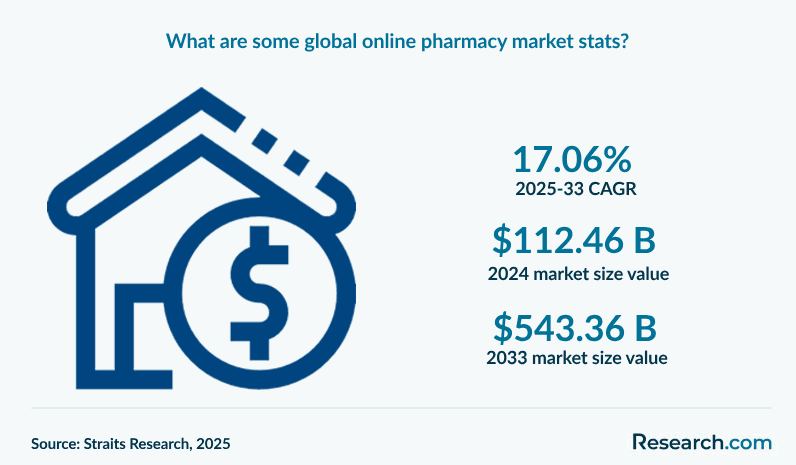
The market context helps explain why more pharmacists are exploring this career path. The global online pharmacy market is projected to grow at a compound annual growth rate of 17.06% between 2025 and 2033. In 2024, the market size was valued at $112.46 billion and is expected to reach $543.36 billion by 2033. The reported drivers include wider use of telemedicine and stronger consumer preference for home medication delivery.
Main benefits of online pharmacies for patients and healthcare systems
Online pharmacies are not simply a convenience feature. When properly licensed and integrated into care, they can improve access, continuity, and medication management. The benefits depend heavily on the quality of the pharmacy, the patient’s needs, and the safeguards in place.
| Benefit | Why it matters | What patients should verify |
| Convenience | Patients can request refills, ask questions, and receive medications without traveling to a physical pharmacy. | Delivery timelines, emergency refill policies, and pharmacist availability |
| Access | Remote or mail-order pharmacy services can help people in rural areas or patients with transportation or mobility barriers. | Whether the pharmacy is licensed to serve the patient’s state |
| Privacy | Discreet shipping and secure communication may make it easier for patients to manage sensitive medications. | HIPAA practices, packaging policies, and privacy notices |
| Medication management | Refill reminders, medication lists, and pharmacist counseling can support safer long-term use. | Whether a licensed pharmacist reviews prescriptions and answers patient questions |
| Potential cost comparison | Some services allow patients to compare pricing or use discounts. | Total cost, insurance compatibility, shipping fees, and legitimacy of unusually low prices |
For pharmacists, these benefits create demand for professionals who can combine clinical knowledge with remote communication, documentation, and technology skills.
Education, training, and licensure requirements for online pharmacists
Online pharmacist roles require the same professional foundation as other pharmacist positions. Remote work does not reduce the education or licensing standard. In many cases, it increases the need for careful documentation, secure communication, and multistate regulatory awareness.
Pharm.D. degree requirement
The Doctor of Pharmacy degree is the professional degree required for pharmacist licensure in the United States. Students typically complete two to three years of pre-pharmacy coursework before entering a four-year professional Pharm.D. program.
- Core curriculum: Pharm.D. programs cover pharmacology, pharmacokinetics, pharmacodynamics, medicinal chemistry, pharmacy law, patient counseling, therapeutics, and clinical decision-making.
- Prerequisite coursework: Applicants commonly complete biology, general chemistry, organic chemistry, physics, mathematics, and related science courses before pharmacy school admission.
- Accreditation: The Pharm.D. program should be accredited by the Accreditation Council for Pharmacy Education.
- Experiential learning: Pharmacy students complete clinical rotations in settings such as hospitals, community pharmacies, ambulatory care clinics, and other practice environments.
- Career preparation: The degree can lead to community, hospital, clinical, research, specialty, mail-order, or telepharmacy roles.
Career changers who are not ready for a Pharm.D. may explore adjacent healthcare and population-health fields first. For example, some students compare public health options such as the most affordable online public health degree programs before deciding whether to pursue the full pharmacist pathway.
Licensure exams and state requirements
Pharmacists must be licensed in the state where they practice. Online and mail-order employers may also require licensure in additional states depending on where patients are located and where prescriptions are dispensed.
| Requirement | What it means for online pharmacy candidates |
| NAPLEX | The North American Pharmacist Licensure Examination assesses pharmacy practice knowledge and is required for licensure in all U.S. states and territories. |
| MPJE | The Multistate Pharmacy Jurisprudence Examination tests knowledge of pharmacy law. Requirements vary by state. |
| Background checks | State boards commonly require background checks as part of the licensing process. |
| Reciprocity or license transfer | Some states allow licensed pharmacists to pursue licensure in another state without retaking the NAPLEX, but pharmacy law requirements may still apply. |
| Continuing education | License renewal requires ongoing continuing education, and the number of required credits varies by state. |
Continuing education and specialized training
Continuing education is especially important in online pharmacy because technology, telehealth practices, privacy expectations, and state rules can change. Useful topics include telepharmacy operations, secure patient communication, controlled-substance dispensing, medication therapy management, specialty drugs, and remote patient counseling.
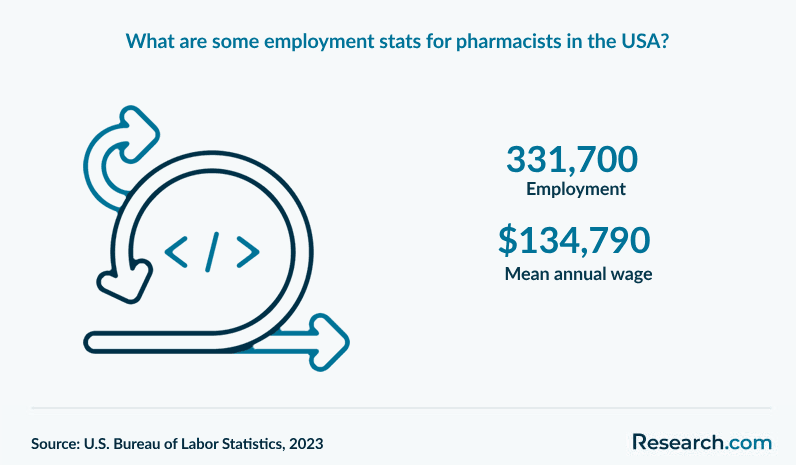
The workforce and wage data show why the profession remains economically significant. In 2023, the United States had 331,700 pharmacists, according to the U.S. Bureau of Labor Statistics, and these pharmacists earned a mean annual wage of $134,790.
What online pharmacists do each day
Online pharmacists are responsible for safe medication use in a digital or remote-care environment. Their daily work may include prescription verification, patient counseling, medication therapy management, clinical documentation, prescriber communication, drug information support, and quality checks. The specific mix depends on the employer: a mail-order pharmacy may emphasize volume and accuracy, while a telehealth organization may prioritize patient counseling and care coordination.
| Responsibility | Typical tasks | Why it matters |
| Prescription verification | Check prescriptions for completeness, dosage accuracy, clinical appropriateness, interactions, allergies, and prescriber legitimacy. | Prevents medication errors and unsafe dispensing. |
| Patient counseling | Explain how to take medications, what side effects to watch for, how to store medication, and when to contact a clinician. | Helps patients use medications safely and consistently. |
| Drug information | Answer medication questions from patients, prescribers, nurses, and other care team members. | Supports evidence-based decisions and safer therapy choices. |
| Medication therapy management | Review prescription drugs, over-the-counter medications, and supplements to identify interactions, duplications, adverse reactions, or non-adherence. | Improves medication effectiveness and reduces drug-related problems. |
| Care coordination | Communicate with prescribers and healthcare teams about clarification requests, therapy changes, and patient concerns. | Reduces fragmentation in remote care. |
Prescription verification
- Dose review: Confirm that the dose is appropriate for the patient’s age, weight, condition, and therapy goals.
- Interaction screening: Review prescription drugs, over-the-counter products, and supplements for potential interactions.
- Allergy review: Check documented allergies before dispensing medication.
- Completeness check: Ensure the prescription includes required information such as patient details, medication, dosage, quantity, directions, date, and prescriber information.
- Authenticity review: Verify the prescription and prescriber credentials when fraud or clinical concern is possible.
Patient counseling
- Use instructions: Explain timing, route of administration, food considerations, missed-dose guidance, and other practical details.
- Side-effect education: Help patients understand expected effects, warning signs, and when to seek medical attention.
- Interaction counseling: Discuss medication, supplement, food, or alcohol interactions when relevant.
- Storage guidance: Tell patients how to store medications to preserve safety and effectiveness.
- Refill support: Explain refill limits, renewal requirements, and how to avoid gaps in therapy.
- Language access: Use appropriate translation resources when patients need counseling in another language.
Drug information and medication therapy management
Online pharmacists also serve as medication experts for both patients and other healthcare professionals. They may interpret drug literature, consult clinical guidelines, review patient-specific factors, and help providers choose safer or more effective therapy options.
- Evidence-based guidance: Provide medication information grounded in clinical references and current guidelines.
- Patient-specific review: Consider age, medical history, allergies, renal or hepatic function, and concurrent medications.
- Medication review: Evaluate prescription drugs, over-the-counter products, vitamins, and supplements as a complete regimen.
- Problem identification: Look for duplications, adverse reactions, interactions, therapy gaps, incorrect doses, or adherence barriers.
- Care plan communication: Document recommendations and coordinate with prescribers and care teams.
Collaboration with healthcare providers
Remote pharmacy care works best when pharmacists can communicate clearly with prescribers, nurses, care coordinators, and other health professionals. Some clinicians who want to broaden their clinical scope compare options such as 1 year nurse practitioner programs online, while others choose pharmacy-focused residencies or certifications instead.
Pharmacists are employed across several industries. According to the Bureau of Labor Statistics data cited in this article, health and personal care retailers employ 134,050 pharmacists, general medical and surgical hospitals employ 86,810, food and beverage retailers employ 23,750, merchant wholesalers of nondurable goods in categories 4242 and 4246 employ 7,690, and specialty hospitals excluding psychiatric and substance abuse employ 4,470. Professionals interested in behavioral health-adjacent roles may also research an online substance abuse counseling degree, though that path is separate from pharmacist licensure.
Licensing and regulatory requirements for online pharmacies
Online pharmacy is heavily regulated because patients may never meet the pharmacist in person and medications may cross state lines. Both the individual pharmacist and the pharmacy organization must meet applicable rules.
- Pharmacy licensure: Online pharmacies must be licensed in the states where they dispense medications, and requirements can differ by state.
- Pharmacist licensure: Pharmacists working in remote settings must be licensed where they practice and may need additional licenses depending on where patients or dispensing operations are located.
- Federal oversight: Federal agencies, including the FDA and DEA, regulate important aspects of medication safety, drug distribution, and controlled substances.
- NABP accreditation: Accreditation or verification from the National Association of Boards of Pharmacy can help patients and employers identify pharmacies that meet recognized standards.
- Privacy compliance: Online pharmacies must protect patient information and use secure communication systems.
Questions candidates should ask employers
- Which states must I be licensed in before starting the role?
- Will the employer pay for additional state licenses, renewals, or continuing education?
- What platform is used for prescription review, patient counseling, and documentation?
- How are controlled substances handled, if the organization dispenses them?
- What quality assurance process is used to catch errors before dispensing?
- How does the company verify prescriptions and prescriber credentials?
- What escalation process exists for clinical concerns, adverse events, or suspected fraud?
Salary, employment settings, and career outlook for online pharmacists
Online pharmacist salaries vary by employer type, state, work schedule, licensure requirements, experience, and specialization. Remote work does not automatically mean higher or lower pay; compensation depends on role complexity, volume expectations, clinical responsibility, and market demand.
| Role or category | Reported salary figure |
| Graduate pharmacists in the U.S. | $80,308 to $100,498 annually |
| Graduate pharmacists in California | $88,580 - $110,849 annually |
| In-store pharmacists | Around $166,800 |
| Retail pharmacists | Around $166,726 |
| Clinical or hospital pharmacists | Average of $148,400 |
| Online pharmacists in the U.S. | Average of $146,404 |
| Online pharmacists in New York | $170,240 |
| Remote pharmacists | Average of $146,500 |
| National average pharmacist salary | $148,322 |
| Pharmacists in Washington state | $159,891 |
| Pharmacists in Washington, D.C. | $165,082 |
| Pharmacy graduate interns in the U.S. | Around $44,590 |
| Pharmacy graduate interns in New York | $52,081 |
| Pharmacy senior managers | Average annual salary of $187,062 |
Online pharmacists may work for mail-order pharmacies, online pharmacy platforms, telehealth companies, hospitals with telepharmacy programs, specialty pharmacies, pharmacy benefit organizations, or healthcare systems that manage remote medication services. Actual pay can differ from the averages shown above, so candidates should compare base salary, shift expectations, license reimbursement, workload, benefits, bonus structure, and remote-work policies before accepting an offer.
Risks, limitations, and challenges in online pharmacy
Online pharmacy can improve access, but it also introduces risks that patients, pharmacists, and employers must manage. The biggest concerns involve counterfeit medications, illegitimate websites, regulatory complexity, data security, and unequal access to technology.
Counterfeit or unsafe medications
- Unclear sourcing: Patients may have difficulty confirming where an online medication came from if the website is not legitimate.
- Clinical danger: Counterfeit medications may contain the wrong ingredient, the wrong dose, no active ingredient, or harmful contaminants.
- Illegal operations: Some websites sell medications without appropriate licensure or pharmacist oversight.
- Supply-chain complexity: Global drug distribution can make tracking and verification more difficult.
- Patient education gap: Many consumers do not know how to distinguish a licensed pharmacy from a fraudulent website.
Online pharmacy scams
- Phishing and spoofed websites: Criminals may use fake pharmacy sites or emails to steal personal information or payment details.
- Unlicensed sellers: Websites that operate without a valid pharmacy license may dispense unsafe, ineffective, or illegal products.
- Suspicious pricing: Prices that look dramatically lower than every other source can be a warning sign.
- Poor transparency: Scam sites often lack a physical address, pharmacist contact information, licensing details, or accreditation information.
- Identity theft risk: Patients who enter health, insurance, or payment information into fraudulent sites may expose themselves to financial and privacy harm.
Regulatory complexity
- Different state rules: Online pharmacies may need to meet the requirements of every state where they dispense medications.
- Federal requirements: FDA and DEA rules add additional layers, especially for drug safety and controlled substances.
- Interstate dispensing: Prescriptions crossing state lines can raise licensing, documentation, and compliance questions.
- Changing rules: Telehealth and pharmacy regulations can evolve, requiring constant monitoring.
- Variable enforcement: Compliance practices and enforcement approaches can differ across jurisdictions.
The digital divide
- Internet access: Patients in rural or low-income communities may lack reliable broadband service.
- Digital literacy: Some patients are uncomfortable with apps, portals, video calls, or secure messaging.
- Technology costs: Smartphones, computers, and internet service can be barriers.
- Accessibility: Online platforms may not fully meet the needs of patients with visual, hearing, cognitive, or motor impairments.
- Language access: Patient-facing materials and pharmacist counseling must be understandable to the patient.
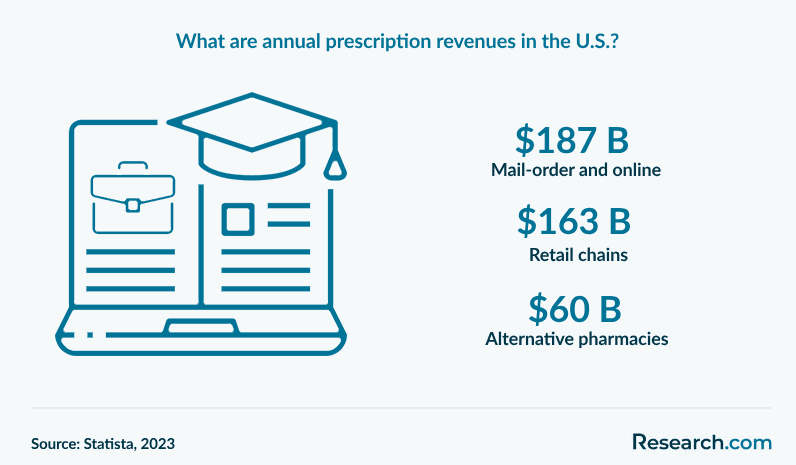
Revenue trends show the scale of the shift. In 2022, mail-order and online pharmacies generated an estimated $187 billion in prescription sales in the U.S. pharmacy market. Retail pharmacy chains followed with $163 billion, while regional pharmacies generated $75 billion and alternative pharmacies generated $60 billion.
How advanced credentials can strengthen an online pharmacy career
Advanced academic credentials can help pharmacists move into clinical leadership, specialty pharmacy, research, policy, informatics, or management roles. They are not a substitute for pharmacist licensure, but they can support advancement when aligned with a clear career goal. Pharmacists comparing doctoral or advanced professional options can review online PharmD programs and should verify accreditation, experiential requirements, state eligibility, and how the program fits their current license status.
Data security and compliance in digital pharmacy
Online pharmacies handle protected health information, payment data, prescription histories, and clinical documentation. Strong security practices usually include encryption, access controls, multifactor authentication, audit trails, staff training, and regular review of vendor systems. Pharmacists who want deeper academic preparation may compare options such as an affordable online pharmacy school pathway, but they should first confirm whether the program matches their professional stage and licensure goals.
Soft skills and digital competencies online pharmacists need
Remote pharmacy work requires more than clinical knowledge. Pharmacists must communicate clearly without relying on in-person cues, document decisions carefully, manage patient questions efficiently, and adapt to changing software and regulations. Digital literacy, empathy, active listening, attention to detail, privacy awareness, and calm problem-solving are all important. Students still exploring pharmacy admissions can use resources such as guides to accessible pharmacy school options, but admission ease should never outweigh accreditation, outcomes, licensure preparation, or academic fit.
Billing, coding, and reimbursement considerations
Online pharmacy organizations often interact with insurance claims, prior authorization workflows, medication therapy management reimbursement, and documentation requirements. Pharmacists do not need to become medical coders, but understanding how billing errors affect patients and organizations can improve collaboration. Those researching administrative career paths can compare pharmacy roles with coding careers and learn how much a medical coder makes.
Legal and ethical issues online pharmacists must manage
Online pharmacists must protect patients even when care happens through screens, portals, or mail delivery. Key ethical expectations include verifying prescriptions, documenting counseling, avoiding conflicts of interest, reporting errors appropriately, safeguarding patient information, and being transparent about medication sourcing and delays. Professionals who want broader administrative compliance training may also research accredited online medical billing and coding schools, especially if they are considering revenue-cycle or compliance roles outside direct dispensing.
Why interdisciplinary collaboration improves online pharmacy outcomes
Online pharmacy care is rarely a solo activity. Pharmacists often coordinate with prescribers, nurses, medical assistants, care managers, pharmacy technicians, billing staff, and information technology teams. Good collaboration reduces prescription delays, improves follow-up, strengthens documentation, and helps patients receive consistent messages from the care team. Organizations building support staff pipelines may evaluate options such as the most affordable online medical assistant programs.
Health information technology in online pharmacy workflows
Health information technology supports prescription processing, patient records, inventory visibility, quality checks, communication, and reporting. Strong systems reduce manual errors and help pharmacists identify interactions, allergies, refill gaps, and adherence issues. Pharmacists or administrators who want to work more deeply with records, data, and compliance can explore online health information management degree programs.
How online pharmacies can build patient trust
Trust depends on transparency. Patients should be able to verify licensure, contact a pharmacist, understand pricing, review privacy practices, confirm medication sourcing, and see how shipping problems or clinical questions are handled. Clear policies matter more than vague promises. Healthcare workers who want rapid exposure to patient-facing support roles may compare options such as a 6-week online medical assistant program, though this does not replace pharmacy training.
How online pharmacists can measure and improve outcomes
Remote pharmacy programs can improve quality by tracking medication adherence, refill completion, adverse-event reports, patient counseling documentation, response times, and patient satisfaction. Outcome measurement should lead to practical improvements, such as clearer counseling scripts, better refill reminders, more accurate escalation protocols, or improved coordination with prescribers. Professionals interested in records and analytics may also review a fast online HIM bachelor's degree.
How bioinformatics can influence online pharmacy innovation
Bioinformatics can support medication optimization, pharmacogenomics, adverse-reaction analysis, population-level medication research, and data-informed clinical decisions. It is most relevant for pharmacists interested in analytics-heavy roles, research, personalized medicine, or digital health product development. Those aiming for this direction can research online bioinformatics master's programs.
Healthcare management skills for online pharmacy leaders
Online pharmacy managers need to understand staffing, workflow design, compliance, quality assurance, vendor management, patient experience, and financial performance. Clinical expertise remains essential, but leadership roles also require operational judgment. Pharmacists who want to move into administration may consider whether a healthcare administration online degree fits their advancement plans.
How telepharmacy protects patient safety and service quality
Safe telepharmacy depends on layered checks: licensed pharmacist review, reliable technology, secure communication, clear documentation, and patient access to counseling. Convenience should never replace clinical oversight.
Prescription verification safeguards
- Pharmacist review: A licensed pharmacist checks each prescription before dispensing.
- Automated screening: Software may flag allergies, drug interactions, duplicate therapy, and other clinical concerns.
- Second checks: High-risk or complex prescriptions may require an additional pharmacist review.
- Prescriber clarification: Pharmacists contact prescribers when a prescription is unclear or clinically questionable.
- Tracking: Prescriptions are monitored through the dispensing process to reduce mistakes.
Pharmacists who want to better understand billing-related documentation can compare affordable online medical billing and coding courses, especially if they work in organizations where reimbursement workflows affect pharmacy operations.
Patient counseling safeguards
- Medication education: Patients should understand why they are taking the medication, how to take it, and what to monitor.
- Adherence support: Pharmacists can identify barriers such as side effects, cost, confusion, or refill delays.
- Communication options: Counseling may happen by phone, secure messaging, or video, depending on the platform and patient needs.
- Personalization: Counseling should be adapted to the patient’s health literacy, language, and clinical situation.
- Documentation: Counseling and clinical decisions should be recorded in the appropriate system.
Secure communication safeguards
- HIPAA alignment: Platforms used for telepharmacy must protect patient privacy.
- Encryption: Data should be protected during transmission and storage.
- Secure messaging: Confidential patient-pharmacist communication should not rely on unsecured channels.
- Video security: Video tools used for patient counseling need appropriate privacy and access controls.
Medication therapy management safeguards
- Comprehensive review: Pharmacists assess the patient’s full medication list, including prescription drugs, over-the-counter products, and supplements.
- Interaction checks: Pharmacists identify combinations that may create safety concerns.
- Adherence assessment: Refill patterns and patient conversations can reveal whether medications are being used as intended.
- Therapy optimization: Pharmacists work with patients and providers to improve safety and effectiveness.
- Patient education: Patients receive guidance that supports informed medication use.
Access and support
Some online pharmacies provide around-the-clock pharmacist access for questions and urgent medication concerns. Candidates evaluating employers should ask whether 24/7 coverage is pharmacist-led, technician-led, outsourced, or limited to certain issues.
Technology used by online pharmacists
Online pharmacy relies on integrated systems that support safety, speed, privacy, and documentation. Pharmacists should not only know how to use these tools but also understand their limits.
- Pharmacy management systems: These platforms support prescription processing, patient profiles, refill tracking, inventory, billing workflows, and documentation.
- Telehealth platforms: Secure video, phone, and messaging tools allow pharmacists to counsel patients and coordinate care. Professionals interested in the administrative side of healthcare technology may also compare affordable online healthcare management degree programs.
- Drug interaction checkers: Clinical decision-support software flags allergies, interactions, duplications, dosing concerns, and other potential problems.
- Electronic prescribing: E-prescribing allows prescribers to send prescriptions directly to pharmacies electronically.
- Mobile apps: Apps may let patients request refills, track deliveries, manage medication reminders, and contact pharmacy teams.
- Electronic health records: In clinical settings, EHR access can help pharmacists review diagnoses, lab values, allergies, and care plans.
- Analytics and reporting tools: Organizations may use dashboards to monitor volume, turnaround time, adherence, outcomes, and quality issues.
Future trends shaping online pharmacy and telepharmacy
Several trends are likely to influence how online pharmacists work. These trends do not eliminate the need for licensed judgment; they change the tools, workflows, and expectations around pharmacy practice.
- Artificial intelligence: AI may support workflow automation, risk flagging, patient segmentation, and medication-safety checks. Pharmacists interested in analytics can compare options such as the most affordable online master's in data science programs.
- Blockchain technology: Blockchain has been discussed as a way to improve traceability and transparency in parts of the medication supply chain.
- Expanded telepharmacy services: Remote pharmacy models may include more complex medication management, chronic disease support, and remote monitoring collaboration.
- Telehealth integration: Online pharmacy is increasingly connected with virtual physician visits, remote care teams, and digital patient portals.
- Personalized medicine: Pharmacogenomics and individualized therapy decisions may create new opportunities for pharmacists with specialized training.
How to decide whether online pharmacy is the right career path
Online pharmacy can be a strong fit for pharmacists who want remote or hybrid work, enjoy technology-enabled workflows, communicate well in writing and by phone or video, and can maintain focus during high-volume prescription review. It may be less appealing for pharmacists who prefer face-to-face patient relationships, hands-on acute care, compounding, or highly physical clinical environments.
| Choose online pharmacy if you want... | Consider another path if you prefer... |
| Remote or hybrid work with structured digital workflows | In-person patient interaction throughout the day |
| Mail-order, specialty, telehealth, or medication management roles | Emergency, inpatient, compounding, or direct clinical floor work |
| Technology-heavy practice with secure messaging and electronic documentation | Minimal screen time and more hands-on physical tasks |
| Potential multistate licensure and remote care coordination | A single-site practice model with local regulatory scope |
| Patient counseling through phone, video, or chat | Traditional counter-based or bedside counseling |
Practical steps to start an online pharmacist career
- Confirm the education pathway: If you are not yet a pharmacist, research ACPE-accredited Pharm.D. programs and admission requirements.
- Plan for licensure early: Identify the states where you may want to work and review their NAPLEX, MPJE, internship-hour, background-check, and continuing-education rules.
- Build relevant experience: Seek rotations or jobs in community pharmacy, mail-order pharmacy, specialty pharmacy, medication therapy management, ambulatory care, or telehealth.
- Develop digital competency: Become comfortable with e-prescribing, EHRs, telehealth platforms, secure messaging, pharmacy management systems, and clinical decision-support tools.
- Strengthen remote communication: Practice explaining medication instructions clearly without relying on in-person cues.
- Review job postings carefully: Verify the employer, required licenses, work schedule, productivity expectations, patient-contact model, and whether the job is truly remote.
- Check compliance culture: Ask about error reporting, quality assurance, pharmacist staffing, prescription verification, and data security.
- Compare compensation realistically: Look beyond salary and evaluate benefits, license reimbursement, continuing education support, shift differentials, workload, and advancement opportunities.
Common mistakes to avoid
- Assuming remote means less regulated: Online pharmacists remain accountable to state boards, federal rules, employer policies, and professional ethics.
- Ignoring multistate licensure: Some roles require several active licenses, and obtaining them can take time and money.
- Choosing a school without checking accreditation: Pharm.D. candidates should verify ACPE accreditation before enrolling.
- Focusing only on tuition: Program cost matters, but so do licensure outcomes, experiential placements, technology support, faculty access, and graduation requirements.
- Trusting every online pharmacy employer: Candidates should verify company legitimacy, licensing, pharmacist oversight, and compliance practices.
- Underestimating communication skills: Remote counseling requires clarity, patience, documentation discipline, and the ability to detect confusion through limited cues.
- Assuming salary averages are guarantees: Pay varies by state, employer, experience, schedule, specialization, and role scope.
- Overlooking cybersecurity: Protecting patient data is a core part of digital pharmacy practice, not just an IT department responsibility.
Sources
- Bureau of Labor Statistics. Pharmacists, May 2023 occupational employment and wage data. Bureau of Labor Statistics.
- National Institutes of Health. Trends in the Pharmacist Workforce and Pharmacy Education. National Institutes of Health.
- Pharmacy Staffing. Most Recent Pharmacist Job Statistics 2022 US Labor Stats. Pharmacy Staffing.
- Pharmacy Staffing. Pharmacist Jobs Statistics. Pharmacy Staffing.
- Salary.com. Pharmacy Senior Manager Salary in the United States. Salary.com.
- Salary.com. Clinical/Hospital Pharmacist Salary in the United States. Salary.com.
- Salary.com. Graduate Pharmacist Salary in California. Salary.com.
- Salary.com. Graduate Pharmacist Salary in the United States. Salary.com.
- Salary.com. Hourly Wage for Online Pharmacist Salary. Salary.com.
- Salary.com. In Store Pharmacist Salary in the United States. Salary.com.
- Salary.com. Online Pharmacist Salary in New York, NY. Salary.com.
- Salary.com. Online Pharmacist Salary in the United States. Salary.com.
- Salary.com. Pharmacist - Retail Salary in the United States. Salary.com.
- Salary.com. Pharmacist Salary in California. Salary.com.
- Salary.com. Pharmacist Salary in the United States. Salary.com.
- Salary.com. Pharmacist Salary in Washington, DC. Salary.com.
- Salary.com. Pharmacist Salary in Washington. Salary.com.
- Salary.com. Pharmacy Graduate Intern Salary. Salary.com.
- Salary.com. Pharmacy Graduate Intern Salary in New York, NY. Salary.com.
- Salary.com. Remote/Mail Order Pharmacist Salary in the United States. Salary.com.
- Statista. Prescription revenues in the United States in 2022, by pharmacy type. Statista.
- Straits Research. Online Pharmacy Market Size to Worth USD 543.36 Billion by 2033. Straits Research.
- Zion Market Research. Online Pharmacy Market Size, Share, Growth and Trends by 2030. Zion Market Research.
Key Insights
- Online pharmacist is a licensed pharmacist role, not a shortcut healthcare job. You generally need a Pharm.D., state licensure, required exams, and continuing education.
- Online pharmacy and telepharmacy are related but different. Online pharmacy often focuses on digital ordering and medication fulfillment, while telepharmacy emphasizes remote pharmacist care and clinical support.
- Licensure can be more complex in remote pharmacy. Because patients, pharmacists, and dispensing locations may be in different states, candidates should ask employers exactly which licenses are required.
- Salary can be competitive, but averages are not guarantees. Reported figures include an average of $146,404 for online pharmacists in the U.S. and $146,500 for remote pharmacists, but actual pay depends on employer, location, schedule, experience, and role scope.
- Technology skills are now part of pharmacy competence. Online pharmacists must work confidently with telehealth tools, pharmacy management systems, e-prescribing, secure messaging, and clinical decision-support software.
- Patient safety depends on verification, counseling, documentation, and privacy. Convenience is valuable only when licensed pharmacists and secure systems protect medication use.
- The biggest risks are illegitimate pharmacies, counterfeit medications, weak compliance, and poor transparency. Patients and job seekers should verify licensing, accreditation, pharmacist access, and data-security practices.
- The best next step depends on where you are now. Pharmacy students should focus on accredited education and rotations; licensed pharmacists should build telepharmacy and multistate compliance skills; career changers should decide whether they are ready for the full Pharm.D. pathway or an adjacent healthcare role.
Other Things You Should Know About Online Pharmacists
Online pharmacists must hold an active pharmacist license in each state where they provide pharmacy services, unless a state has a specific telepharmacy or reciprocity rule. Many employers also require registration with the state board of pharmacy and compliance with NABP licensure-transfer rules.
In 2027, aspiring online pharmacists must obtain a Doctor of Pharmacy (Pharm.D) degree from an accredited institution and pass the North American Pharmacist Licensure Examination (NAPLEX). Additional certification from the Pharmacy Technician Certification Board (PTCB) may enhance opportunities in online pharmacy.
Online pharmacists in 2027 should be proficient with telehealth platforms, e-prescription software, and secure communication tools. Familiarity with digital patient management systems and data analytics is also crucial for efficiently managing patient care and maintaining compliance with health regulations.