2027 Best Online Bioinformatics Master’s Degree Programs

Co-Founder and Chief Data Scientist
Selecting an online master’s program in bioinformatics is really a decision about skills, fit, cost, and career direction—not simply institutional reputation. The strongest programs help students connect molecular biology with programming, statistics, machine learning, database work, genomics, and applied research so they can analyze biological data in real professional settings.
This guide is for working scientists, recent STEM graduates, data professionals entering life sciences, and career changers comparing online bioinformatics master’s degrees. It explains what these programs cover, how online learning differs from campus study, what costs to expect, which careers may be available, and how to judge whether a program is likely to be worth the investment for your goals.
Quick answer: Should you consider an online master’s in bioinformatics?
An online master’s in bioinformatics is worth considering if you need graduate-level training in biological data analysis and want to keep working while studying. Look for a program with rigorous coursework in molecular biology, statistics, coding, genomics, databases, machine learning, and applied projects. Before applying, verify accreditation, prerequisites, tuition, software access, faculty expertise, capstone or thesis options, and whether graduates move into the kinds of roles you want.
Why students choose bioinformatics graduate study
- A bioinformatics degree helps students prepare for roles where biology, data analysis, computation, and statistical reasoning are used together.
- Online programs can make graduate study more realistic for adults who cannot relocate or pause full-time work.
- Graduates may work in biotechnology, pharmaceuticals, healthcare, universities, research centers, public agencies, and academic laboratories.
- The field can be a strong fit for students interested in genomics, computational biology, drug discovery, clinical data, precision medicine, or biological data science.
What does a bioinformatics degree teach?
A bioinformatics degree prepares students to use computational approaches to investigate biological questions. At the master’s level, students are expected to move across disciplines: they must understand the science behind the data, use or write code, evaluate statistical results, manage large datasets, and explain findings to researchers, clinicians, managers, or technical teams.
| Core learning area | Common topics | Why students need it |
| Life science foundations | Genetics, molecular biology, genomics, proteomics, and biological systems | Bioinformatics work is only useful when the analyst understands the biological problem being studied. |
| Programming and computing | Programming languages, algorithms, databases, scripting, and data structures | Professionals often build, automate, clean, and troubleshoot workflows for complex biological datasets. |
| Bioinformatics methods and software | Sequence alignment, genome annotation, gene prediction, phylogenetics, and specialized tools | Employers expect graduates to know established tools and to recognize where those tools can fail or mislead. |
| Statistics and data communication | Biostatistics, data mining, statistical modeling, and visualization | Accurate interpretation depends on sound statistical methods and clear presentation of results. |
| Research and applied practice | Project planning, experimental design, literature review, data interpretation, capstones, and thesis work | Applied work helps students prove they can use classroom knowledge on real scientific or industry problems. |
Where do bioinformatics graduates work?
Bioinformatics graduates are hired in settings where organizations need to interpret biological, clinical, genomic, or experimental data at scale. The right workplace depends on whether you prefer research, clinical applications, software, public health, regulatory work, or analytics.
- Research organizations: Bioinformatics professionals analyze data for genomics, proteomics, disease modeling, and discovery-focused science.
- Biotechnology and pharmaceutical companies: Graduates may support drug target discovery, biomarker analysis, clinical trial data review, or computational pipeline development.
- Government agencies: Roles may involve public health monitoring, agriculture, environmental research, or biological risk analysis.
- Colleges and universities: Graduates may contribute to research teams, manage data-intensive lab projects, support faculty research, or teach in some settings.
- Healthcare systems: Clinical and biomedical informatics work can involve genomic medicine, patient data, diagnostic support, treatment planning, or health information systems.
How much can bioinformatics graduates earn?
Bioinformatics salaries vary by title, employer, location, industry, technical specialization, education, and experience. The ranges below are broad estimates, so students should compare current salary sources for the exact role and region they plan to target.
| Job title | Estimated salary range | Common responsibilities |
| Bioinformatician | $50,000 - $100,000 per year | Analyzing biological datasets, using bioinformatics tools, writing scripts, and supporting research teams |
| Bioinformatics Scientist | $60,000 - $120,000 per year | Designing analyses, interpreting scientific results, and applying computational methods to research questions |
| Bioinformatics Analyst | $55,000 - $85,000 per year | Preparing datasets, running statistical analyses, producing reports, and maintaining workflows |
| Bioinformatics Engineer | $70,000 - $120,000 per year | Building pipelines, managing databases or cloud tools, developing software, and scaling reproducible workflows |
| Bioinformatics Director | $100,000 - $200,000+ per year | Leading teams, setting research strategy, managing platforms, and coordinating cross-functional projects |
For a realistic salary estimate, compare openings by city, employer type, required programming languages, domain specialization, and seniority. For example, a clinical genomics position may reward different experience than a pharmaceutical machine learning role.
- Best Online Bioinformatics Master’s Degree Programs for 2027
- How long does it take to complete a bioinformatics degree program?
- How does an online bioinformatics degree compare to an on-campus program?
- What is the average cost of a bioinformatics degree program?
- What are the financial aid options for students enrolling in a bioinformatics degree program?
- What are the prerequisites for enrolling in a bioinformatics degree program?
- What courses are typically in a bioinformatics degree program?
- What types of specializations are available in bioinformatics master’s degree programs?
- What is the return on investment for an online bioinformatics degree?
- Can I accelerate my entry into the field of bioinformatics?
- How can I secure financial aid for my online bioinformatics degree?
- What measures ensure curriculum relevance in a rapidly evolving field?
- Is pursuing a doctoral degree the next logical step in bioinformatics?
- How does one choose the best bioinformatics degree program?
- What career paths are available for graduates of bioinformatics master’s degree programs?
- Are additional certifications beneficial for advancing my bioinformatics career?
- What is the job market for graduates with a bioinformatics degree?
- Can Complementary Disciplines Boost My Bioinformatics Career?
- How can I balance quality and affordability in online bioinformatics programs?
- How are emerging technologies integrated into online bioinformatics education?
- What Student Support Services Enhance My Online Learning Experience?
Best Online Bioinformatics Master’s Degree Programs for 2027
How Research.com compares programs
A graduate degree can affect your finances, schedule, and career direction for years. Research.com evaluates programs with an emphasis on transparent education data rather than promotional language. You can read the complete Research.com ranking methodology. The evaluation process draws from recognized data sources, including:
- the IPEDS database
- Peterson's database, including the Distance Learning Licensed Data Set
- the College Scorecard database,
- and the National Center for Education Statistics.
The programs below are Research.com’s online bioinformatics master’s degree selections for 2027. Treat the list as a research starting point, then confirm admissions requirements, current tuition, accreditation, course availability, and program outcomes directly with each institution.
1. The University of Texas Health Sciences Center
The University of Texas Health Science Center at Houston provides an online Master of Science in Biomedical Informatics for students who want advanced preparation in health and biomedical informatics. Students can choose between the Applied Biomedical Informatics Track and the Research Track. The curriculum includes health data science, clinical informatics, and human factors engineering, and students complete a practicum for applied professional experience. The program is accredited by the Southern Association of Colleges and Schools Commission on Colleges (SACSCOC) and the Commission on Accreditation for Health Informatics and Information Management Education (CAHIIM), reaffirmed through 2026.
- Program Length: Approximately 5 semesters
- Tracks/Concentrations: Applied Biomedical Informatics, Research
- Tuition Cost: In-state: $10,140; Out-of-state: $34,320
- Required Credits to Graduate: 39 credits
- Accreditation: SACSCOC; CAHIIM
2. University of Maine
The University of Maine offers a Professional Science Masters (PSM) in Bioinformatics that combines molecular biology, computer science, and mathematics. The program is designed for students from either biological science or computational backgrounds and emphasizes applied learning. Requirements include 15 credits of bioinformatics coursework, 9 credits of enrichment coursework, and 6 credits of applied field experience. Graduates may apply the training in biotechnology, pharmaceutical, and environmental science settings. The program is accredited by the New England Commission of Higher Education (NECHE).
- Program Length: Approximately 30 credits total
- Tracks/Concentrations: None specified
- Tuition Cost: In-state: $12,540 per year; Out-of-state: $523 per credit
- Required Credits to Graduate: 30 credits
- Accreditation: New England Commission of Higher Education (NECHE)
3. University of Maryland Global Campus
The University of Maryland Global Campus offers a Master of Science in Biotechnology with a Bioinformatics specialization. The degree is intended for working professionals and may be completed online or in a hybrid format. Students learn to analyze biological datasets with programming languages such as Python and Java while also studying databases, algorithms, and bioinformatics research methods. The curriculum is developed with industry input to support relevance for healthcare, pharmaceutical, and research settings. The program is accredited by the Middle States Commission on Higher Education (MSCHE).
- Program Length: Not specified
- Tracks/Concentrations: Bioinformatics specialization
- Tuition Cost: In-state: $8,640/year; Out-of-state: $11,862/year
- Required Credits to Graduate: Not specified
- Accreditation: Middle States Commission on Higher Education (MSCHE)
4. George Mason University
George Mason University offers an online Master of Science in Bioinformatics and Computational Biology for students seeking both biotechnology knowledge and computational training. Learners can work with an advisor to shape coursework, which can be useful for professionals managing graduate study alongside employment. Courses cover molecular biology and computational bioinformatics methods, and projects emphasize practical applications. The degree prepares students for roles requiring current technical knowledge in bioinformatics. The university is accredited by the Southern Association of Colleges and Schools Commission on Colleges (SACSCOC).
- Program Length: Approximately 31 credits total
- Tracks/Concentrations: None specified; students can tailor their studies by choosing electives in areas such as genomics, proteomics, cheminformatics, and systems biology
- Tuition Cost: $793.25 per credit hour for Virginia residents /$1,681.25 per credit hour for non-Virginia residents
- Required Credits to Graduate: 31 credits
- Accreditation: Southern Association of Colleges and Schools Commission on Colleges (SACSCOC)
5. Lewis University
Lewis University offers an online Master of Science in Data Science with a concentration in Computational Biology and Bioinformatics. The program uses project-based learning to help students apply data science methods to life science problems. Core areas include data mining, statistical programming, and data systems for biological applications. Graduates may pursue roles such as bioinformatician or data analyst in healthcare, research, and related fields. Lewis University is accredited by the Higher Learning Commission (HLC).
- Program Length: Approximately 18-24 months
- Tracks/Concentrations: Computational Biology and Bioinformatics
- Tuition Cost: Total tuition: $25,920 ($810 per credit)
- Required Credits to Graduate: 32 credits
- Accreditation: Higher Learning Commission (HLC)
6. New York University
New York University Tandon School of Engineering offers an online Master of Science in Bioinformatics for professionals seeking advanced field-specific training. Students study topics such as statistics for bioinformatics and applied biostatistics. They may also choose concentration areas that match career interests, including laboratory science or translational science. The online format is designed for flexibility while maintaining coursework aligned with industry needs. NYU is accredited by the Middle States Commission on Higher Education (MSCHE).
- Program Length: Approximately 30 credits total
- Tracks/Concentrations: None specified
- Tuition Cost: Approximately $2,083 per credit hour
- Required Credits to Graduate: 30 credits
- Accreditation: Middle States Commission on Higher Education (MSCHE)
7. Brandeis University – Waltham, Massachusetts
Brandeis University offers online Master's Certificates in Bioinformatics for students who want targeted graduate-level preparation before committing to a full master’s degree. Coursework may include Python scripting and molecular biology foundations, and some credits may later apply toward a master’s program. The certificates emphasize hands-on work with real datasets. Brandeis University is accredited by the New England Commission of Higher Education (NECHE).
- Program Length: Each certificate consists of four courses totaling 12 credits.
- Tracks/Concentrations: Cheminformatics, Drug Discovery Informatics, Genomics (Certificates)
- Tuition Cost: Approximately $1,220 per credit hour
- Required Credits to Graduate: Certificates require 12 credits; Master's degree requirements not specified.
- Accreditation: New England Commission of Higher Education (NECHE)
8. Johns Hopkins University – Baltimore, Maryland
Johns Hopkins University offers an online master’s degree in Bioinformatics for professionals preparing for advanced work in research, healthcare, or data-driven life sciences. The curriculum blends theoretical foundations with applied projects that mirror professional bioinformatics problems. Students can study bioinformatics methods, choose electives, and connect with faculty and the broader Johns Hopkins academic network. The program is accredited by the Middle States Commission on Higher Education (MSCHE).
- Program Length: Must be completed within six years.
- Tracks/Concentrations: While not specified as distinct tracks, students can customize their learning experience by choosing electives in areas like genomics, proteomics, and translational bioinformatics.
- Tuition Cost: Approximately $57,415 per year
- Required Credits to Graduate: 36-42 credits depending on elective choices and whether a thesis is pursued.
- Accreditation: Middle States Commission on Higher Education (MSCHE)
9. Northeastern University – Boston, Massachusetts
Northeastern University offers an online master’s program in Bioinformatics with an interdisciplinary structure for students targeting healthcare, biotechnology, and related fields. Learners may study full time or part time, and co-op experiences may provide professional exposure during the degree. Concentration options such as Data Analytics and Health Informatics allow students to focus on job-relevant skill areas. Northeastern University is accredited by the New England Commission of Higher Education (NECHE).
- Program Length: Approximately two years
- Tracks/Concentrations: Various concentrations available
- Tuition Cost: Approximately $2,083 per credit hour
- Required Credits to Graduate: 40 credits
- Accreditation: New England Commission of Higher Education (NECHE)
10. Juniata College – Huntingdon, Pennsylvania
Juniata College offers an online master’s degree in bioinformatics with two track options: computational skills or biotechnology. This design helps students match coursework to their intended career direction. Every student completes a project-based capstone involving analysis of large bioinformatics datasets, which can help demonstrate practical capability to employers. Juniata College is accredited by the Middle States Commission on Higher Education (MSCHE).
- Program Length: Approximately two years
- Tracks/Concentrations: Computational Skills Track, Biotechnology Track
- Tuition Cost: Average graduate tuition: $24,294/year
- Required Credits to Graduate: Not specified
- Accreditation: Middle States Commission on Higher Education (MSCHE)
How long does it take to finish a bioinformatics degree?
Completion time depends on the credential level, course load, transfer credit rules, thesis or capstone requirements, and whether you study full time or part time.
| Program format | Typical completion time | Who it usually fits |
| Master’s Degree (Full-Time) | 1.5 to 2 years | Students who can commit to a demanding graduate course schedule |
| Master’s Degree (Part-Time) | 3 to 4 years | Professionals balancing school with work, caregiving, or other responsibilities |
| Ph.D. Programs | 4 to 7 years, depending on research requirements | Students aiming for academic research, advanced scientific leadership, or deep specialization |
Some accelerated options allow completion in as little as 12 months. Before choosing that pace, make sure the program still gives you time for programming practice, faculty feedback, applied projects, and portfolio-quality work.
Online vs. on-campus bioinformatics degrees: which format fits better?
Both online and campus-based programs can be academically strong. The better choice depends on your work schedule, learning preferences, need for in-person lab access, and interest in local networking or research assistantships.
| Decision factor | Online bioinformatics program | On-campus bioinformatics program |
| Schedule | Often works well for employed students who need more control over when they study | Often works best for students who can attend fixed class, lab, and meeting times |
| Total cost considerations | Can reduce or eliminate relocation, commuting, and housing costs | May involve housing, transportation, campus fees, and local cost-of-living expenses |
| Research access | May rely on virtual labs, remote software, datasets, and digital collaboration platforms | May offer more direct access to physical labs, faculty research groups, and campus facilities |
| Networking | Can connect students with classmates and instructors across geographic regions | May provide stronger in-person relationships with faculty, peers, and local employers |
| Best fit | Self-motivated students, working professionals, and learners who cannot relocate | Students who want regular in-person mentoring, laboratory exposure, or campus immersion |
Online does not mean less demanding. A serious online bioinformatics program still requires programming discipline, quantitative thinking, independent troubleshooting, and steady project work.
What does a bioinformatics degree cost?
Costs differ by institution, residency status, credits required, delivery format, and fees. Tuition is only one part of the budget; students should also account for books, technology, software, lab fees, and any required travel or campus visits.
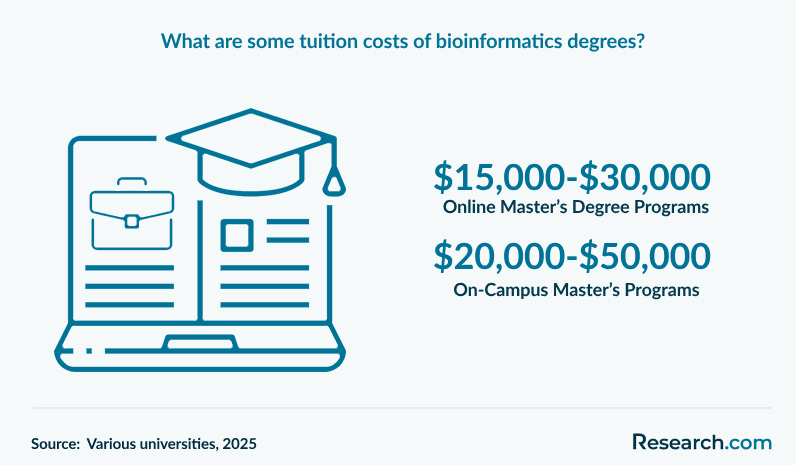
- Online Master’s Degree Programs: $15,000 to $30,000
- On-Campus Master’s Programs: $20,000 to $50,000 (tuition alone)
- Ph.D. Programs: Often include stipends and tuition waivers, especially for research-oriented students
Compare the full cost to finish, not only the price per credit. A lower per-credit rate can still lead to a higher total bill if the program requires more credits or adds substantial fees. The graphic below highlights key cost factors to review.
What financial aid can bioinformatics students use?
Students can lower out-of-pocket expenses by combining funding sources. Begin early because scholarship dates, employer reimbursement policies, FAFSA timelines, and program application deadlines may not match.
- Scholarships: Awards may come from universities, professional associations, private foundations, or government organizations and may be based on merit, field of study, or student background.
- Grants: Need-based funding may be available through FAFSA or other sources. Grants generally do not need to be repaid.
- Need-Based: Awarded according to the financial circumstances of the student and family.
- FAFSA: Submitting the Free Application for Federal Student Aid (FAFSA) is a key step for federal and state grant consideration.
- Pell Grant: A major federal grant available to eligible low-income undergraduate students.
- Institutional Grants: Colleges and universities may provide their own need-based awards to reduce tuition costs.
- Private Grants: Nonprofits, foundations, and organizations may fund students in specific populations or academic fields.
- Research Opportunities: Students should review several grant sources instead of relying on only one option.
- Assistantships: Teaching or research positions may include tuition support and stipends, though these opportunities may be less common in some online programs.
- Employer Tuition Reimbursement: Some employers help pay for degrees that relate to an employee’s current position or future advancement.
- Student Loans: Federal and private loans may help cover costs, but students should compare interest rates, borrowing limits, and repayment terms before taking on debt.
Request a complete aid estimate from each school before committing. The lowest tuition is not always the lowest net cost if another program offers stronger aid, a shorter path, or employer-aligned benefits.
What prerequisites do bioinformatics master’s programs require?
Most bioinformatics master’s programs expect applicants to have preparation in science, mathematics, and computing. Some programs welcome students from biology backgrounds and offer ways to strengthen coding, while others expect applicants to arrive with more substantial programming or quantitative experience.
- Bachelor’s Degree: Often in biology, computer science, mathematics, or a related discipline. Students who need stronger computing foundations may compare accelerated online computer science degree programs before applying to graduate school.
- Coursework: Common preparation includes programming experience in Python or R, statistics, and molecular biology.
- GPA Requirement: Typically 3.0 or higher
- GRE Scores: Some programs still require scores, although many have removed or waived this requirement.
- Professional Experience: Some programs recommend work experience, particularly those built for practicing professionals.
If you are strong in biology but new to coding, ask whether bridge courses or preparatory modules are available. If you come from computer science, confirm whether you need prior coursework in genetics, molecular biology, or related life sciences.
In Bioinformatics, the most common credential awarded is a Master's degree, earned by 605 graduates. Bachelor's degrees follow with 333 graduates, while 145 individuals complete a Research Doctorate. Certificate pathways are less common, with 51 students earning a Post-baccalaureate certificate and 5 earning a Post-master's certification. The graph below shows how students enter the field through different academic routes.
What courses are common in bioinformatics master’s programs?
Bioinformatics coursework should integrate biology, computing, statistics, and research practice. A strong curriculum does not teach these subjects in isolation; it gives students repeated chances to apply computational methods to biological questions.
Typical core courses
- Introduction to Bioinformatics: Covers fundamental concepts, databases, tools, and use cases in biological research.
- Computational Biology: Explores computational approaches to biological data, including sequence alignment algorithms and phylogenetic methods.
- Molecular Biology and Genetics: Builds the life science foundation needed to interpret genomic and molecular information.
- Biostatistics: Teaches statistical reasoning for experimental design, biological analysis, and interpretation.
- Data Structures and Algorithms: Provides computing fundamentals for bioinformatics programming, pipelines, and workflow design.
Advanced course options
- Machine Learning in Bioinformatics: Applies clustering, classification, prediction, and modeling techniques to biological datasets.
- Genomics and Proteomics: Examines genomic and proteomic data, including gene expression analysis and protein structure prediction.
- Systems Biology: Uses multiple data sources to model interactions in complex biological systems.
- Structural Bioinformatics: Focuses on molecular structures, protein folding, molecular docking, and biomolecular interactions.
- Big Data Analytics in Biology: Covers tools and methods for analyzing large biological datasets. Students interested in broader analytics careers may also review affordable online master’s in data analytics programs.
Electives and niche subjects
- Pharmacogenomics: Studies how genetic differences affect drug response and personalized medicine.
- Epidemiology and Public Health Informatics: Applies informatics methods to disease surveillance, public health data, and health systems.
- Advanced Programming for Bioinformatics: Develops deeper coding ability in languages such as Python or R for biological data analysis.
- Bioinformatics Law and Ethics: Addresses privacy, consent, intellectual property, data governance, and ethical use of genetic data.
- Artificial Intelligence in Drug Discovery: Introduces AI-supported workflows such as predictive modeling, virtual screening, and drug candidate optimization.
Capstone, practicum, or thesis
Many programs require a final capstone, thesis, practicum, or applied research project. This matters because employers often want proof that graduates can work with real datasets, explain methods, document results, and solve analysis problems independently.
Additional topics worth checking
- Data Visualization in Bioinformatics: Teaches students how to communicate complex biological findings clearly and defensibly.
- Computational Genomics: Covers sequencing data analysis, genome assembly, annotation, and interpretation of genomic variation.
When possible, review syllabi instead of relying only on course titles. Two programs may use similar titles while differing greatly in coding intensity, statistical depth, and hands-on analysis.
What bioinformatics specializations can students choose?
Specializations help students focus their training around a career direction. Your best option depends on whether you want to work in biotechnology, pharmaceuticals, healthcare, public health, agriculture, research, data science, or software development.
| Specialization category | Examples | Best career connection |
| Industry-oriented | Drug Discovery and Development, Healthcare Informatics, Agricultural Bioinformatics | Relevant for pharmaceutical, clinical, biotechnology, and agricultural roles |
| Research-oriented | Genomics and Proteomics, Structural Bioinformatics, Computational Biology | Useful for academic research, lab-based science, and computational method development |
| Public-sector and government applications | Epidemiology, Biodefense | Applicable to public health monitoring, disease tracking, and biological threat analysis |
| Interdisciplinary pathways | Bioinformatics and Law, Environmental Bioinformatics | Helpful for ethics, regulation, ecosystems, biodiversity, and data governance work |
Common specialization examples
- Computational Genomics: Emphasizes sequencing technologies, genomic variation, and large-scale genetic data analysis. Students prepare to use computational methods to investigate genetic disease and genome function.
- Structural Bioinformatics: Focuses on proteins, nucleic acids, macromolecular structure, molecular interactions, and mutation effects.
- Systems Biology: Combines computational modeling and bioinformatics to study interactions within biological networks.
- Pharmacogenomics: Examines how genetic variation influences medication response, an important area in personalized medicine.
- Data Science in Bioinformatics: Connects machine learning, large-scale analytics, statistical modeling, and biological research questions.
- Metabolomics: Studies metabolites in biological samples to examine pathways, disease states, and cellular processes.
- Clinical Bioinformatics: Applies computational analysis to healthcare, diagnostics, treatment planning, genomic medicine, and electronic health records.
- Bioinformatics Law and Ethics: Covers privacy, consent, intellectual property, regulation, and responsible use of genetic information.
- Artificial Intelligence in Drug Discovery: Uses AI and machine learning for virtual screening, predictive modeling, and drug candidate optimization.
- Evolutionary Genomics: Compares genomes across species to study phylogenetics, evolutionary relationships, and genetic variation.
Students interested in leadership or operational roles may also compare bioinformatics with adjacent healthcare management options, including affordable online healthcare management degree programs.
Bioinformatics compensation differs widely by title and experience. A Bioinformatics Scientist can expect to earn around $121,871, while a Bioinformatics Analyst earns approximately $92,000. A Bioinformatics Software Engineer averages $128,000, and Senior Bioinformatics Scientists earn around $145,000. Other related roles include Bioinformatics Data Scientist ($135,000), Bioinformatics Engineer ($109,899), Research Scientist ($107,000), and Computational Biologist ($115,000). Entry-level examples include Bioinformatics Technician ($75,000) and Bioinformatician ($86,034). These salary figures are presented in the graph below.
What ROI can you expect from an online bioinformatics degree?
Return on investment depends on total cost, career goals, salary potential, time to completion, employer tuition support, and whether you can continue earning while enrolled. Online programs may improve ROI for students who avoid relocation and keep working, but the degree’s value still depends on academic quality, applied training, and alignment with the jobs you want.
Programs with current software, applied projects, faculty mentoring, industry connections, and career support may help students move more efficiently into roles that require graduate-level skills. If speed is a priority, you can compare options such as a fast online degree that may lead to strong earnings, but a shorter timeline should not come at the expense of technical depth.
Can you move into bioinformatics more quickly?
Students who are not ready for a master’s degree can build toward the field in stages. A focused certificate, programming coursework, introductory biology classes, or a quick associate degree may help develop foundations for entry-level opportunities or later graduate study. This approach can work well for career changers, but credits and skills should be chosen with the long-term path in mind.
How can online bioinformatics students secure financial aid?
Begin by checking federal aid eligibility, then compare institutional scholarships, employer tuition reimbursement, graduate assistantships, and payment plans. Prioritize accredited institutions and confirm whether the online program participates in federal aid. A useful starting point is Research.com’s guide to online colleges that accept FAFSA, followed by program-specific questions about graduate bioinformatics funding.
How do bioinformatics programs keep coursework current?
Bioinformatics changes rapidly as sequencing tools, AI models, clinical applications, and data standards evolve. Ask how frequently courses are reviewed, whether faculty are active researchers or industry practitioners, and whether students use current datasets, software, and workflows. Industry partnerships, guest speakers, case-based assignments, and cloud or workflow tools can also indicate curriculum relevance. If you are considering a shorter format, compare whether a one-year online master’s degree still covers enough programming, statistics, and applied bioinformatics practice.
Should bioinformatics students pursue a doctorate?
A doctoral degree may be the right next step for students who want to lead independent research, teach at the university level, develop new computational methods, or pursue highly specialized scientific roles. It is not necessary for every bioinformatics career. Many industry, data analysis, software, and clinical informatics positions may be attainable with a master’s degree and strong technical ability.
Before applying to a Ph.D. program, consider faculty fit, research funding, mentorship, publication expectations, time commitment, and whether the degree supports your long-term goals. Students focused on cost can compare affordable online doctorate programs, while still checking research quality and institutional credibility.
How should you choose an online bioinformatics master’s program?
The best program is the one that fits your academic background, schedule, budget, and target career. A recognizable university name is useful only if the degree also provides the technical depth, applied practice, and support you need.
| Selection factor | What to verify | Why it affects your decision |
| Accreditation | Confirm institutional accreditation and any relevant programmatic accreditation. | Accreditation can influence federal aid, credit transfer, employer confidence, and academic legitimacy. |
| Curriculum depth | Look for programming, genomics, statistics, machine learning, databases, and applied project work. | Bioinformatics employers need graduates who can do technical work, not only describe concepts. |
| Faculty expertise | Review faculty research, publications, mentoring availability, and industry experience. | Faculty backgrounds can shape research opportunities, project quality, and career guidance. |
| Cost and funding | Compare full tuition, fees, aid, employer benefits, and expected time to completion. | The lowest advertised tuition may not produce the lowest total cost. |
| Flexibility | Ask about asynchronous coursework, live meetings, part-time pacing, and course sequencing. | Working students need a structure they can realistically complete. |
| Career services | Check capstones, internships, alumni outcomes, employer connections, and career coaching. | Career support can help turn graduate coursework into job opportunities. |
Even affordable accredited online bachelor’s degree programs need recognized standards to provide credible credentials. The same rule applies to graduate bioinformatics programs: cost savings should not come from sacrificing accreditation or academic quality.
Questions to ask schools before you apply
- Which programming languages, databases, and bioinformatics tools will I use throughout the program?
- Is there a capstone, thesis, practicum, internship, or portfolio requirement?
- Who teaches the courses: full-time faculty, industry professionals, or a mix of both?
- What support exists for students with strong biology backgrounds but limited coding experience?
- What support exists for students with computer science backgrounds who need more molecular biology?
- Are online graduate students eligible for the same career services as campus students?
- Can applicants speak with current students or recent alumni before enrolling?
What jobs can you pursue with a bioinformatics master’s degree?
A master’s degree in bioinformatics can lead to roles that combine biology, programming, statistics, and data interpretation. Job titles differ by employer, and responsibilities often overlap across research, software, clinical, and data-focused positions.
- Bioinformatics Scientist: Applies or develops computational tools for genomic, proteomic, systems biology, or other biological datasets.
- Data Analyst: Uses statistical methods and bioinformatics tools to interpret experimental, clinical, or biological data.
- Clinical Bioinformatician: Works in healthcare contexts, often using genomic data to support diagnosis, treatment planning, or personalized medicine.
- Software Developer: Builds algorithms, applications, interfaces, or pipelines for biological data analysis.
- Academic Researcher: Conducts computational biology, genomics, proteomics, or systems biology research and may teach or mentor students.
- Pharmaceutical/Biotech Research Scientist: Analyzes data to identify drug targets, evaluate therapeutic candidates, or support research and development.
- Biostatistician: Designs and applies statistical methods for biological studies and clinical trials.
- Genomic Data Analyst: Processes sequencing data, detects variants, annotates genomic features, and interprets biological meaning.
- Natural Science Manager: Manages research teams and projects across life sciences, statistics, mathematics, or physical sciences.
- Clinical Research Coordinator: Oversees protocols, documentation, compliance tasks, and stakeholder communication in clinical studies.
- Artificial Intelligence Specialist: Applies AI to drug discovery, biological prediction, and large-scale modeling problems. Many affordable online data science master’s programs now include AI-focused coursework.
- Bioinformatics Consultant: Advises organizations on tools, systems, workflows, and biological data analysis strategies.
- Regulatory Affairs Specialist: Supports biotechnology and pharmaceutical organizations with compliance requirements related to research, products, or therapies.
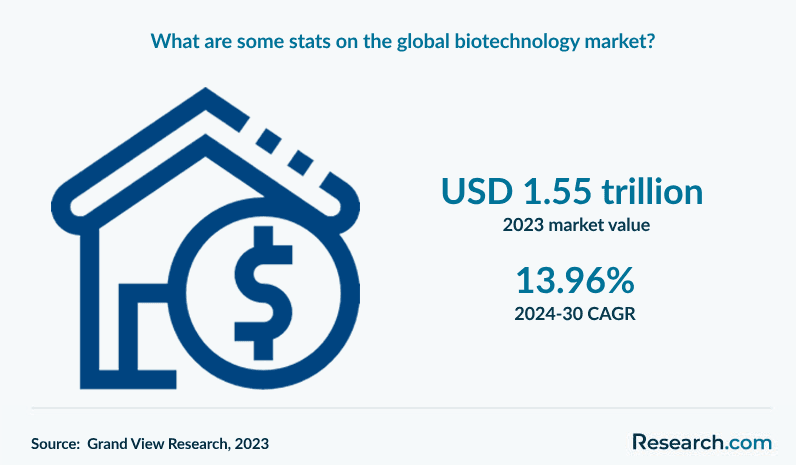
The global biotechnology market is growing substantially, with a market size valued at USD 1.55 trillion in 2023. It is projected to expand at a compound annual growth rate (CAGR) of 13.96% between 2024 and 2030. Growth factors include government support for modernized regulatory frameworks, streamlined approval processes, improved reimbursement policies, and standardized clinical studies. These factors are summarized in the graphic below.
Other career directions to consider
Bioinformatics graduates may also work in agriculture, ecology, environmental science, software engineering, education, computational modeling, or broader data science. Students handling sensitive health or genomic information may benefit from related technical training such as online cybersecurity courses.
Can certifications help a bioinformatics career?
Certifications can be useful when they close a clear skills gap, but they do not replace strong preparation in biology, statistics, and programming. Short credentials in Python, R, cloud computing, machine learning, data engineering, clinical data standards, or specific bioinformatics tools may strengthen a resume when supported by applied projects.
If you are comparing short credentials, review online certifications associated with strong earning potential, but choose based on the requirements in job postings for your target role rather than salary claims alone.
What is the job market like for bioinformatics graduates?
The bioinformatics job market is influenced by biotechnology growth, healthcare data expansion, genomic medicine, pharmaceutical research, and AI-supported analysis. Opportunities are not evenly distributed; many roles are concentrated near biotechnology, healthcare, and research hubs.
Market trends
- High Demand: Bioinformatics professionals are needed in drug discovery, agriculture, and healthcare.
- Diverse Opportunities: Graduates may find roles in academia, industry, and government.
- Competitive Salaries: Average salaries range from $70,000 to $120,000, depending on experience and specialization.
Job market overview
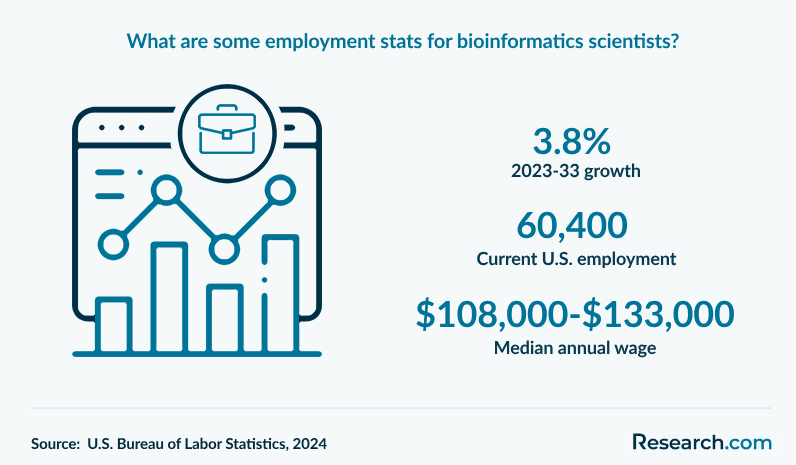
- Growth Rate: The bioinformatics scientist job market is expected to grow by 3.8% between 2022 and 2032, indicating steady demand for professionals in this field.
- Current Employment: There are approximately 60,400 bioinformatics scientists currently employed in the United States, with an estimated need for an additional 7,900 bioinformatics scientists over the next decade due to new positions and retirements.
- Industry Concentration: The majority of bioinformatics jobs are concentrated in states like California, Massachusetts, and Maryland, which are known for their strong biotechnology and healthcare sectors.
Employment statistics
- Unemployment Rate: The unemployment rate for bioinformatics scientists has been relatively low, historically averaging around 2%, with a notable drop to 1.42% in 2021.
- Company Size: Bioinformatics professionals work across various company sizes, with a significant proportion (49%) employed in private companies, followed by public institutions (39%) and educational settings (10%).
Salary expectations
- Average Salary: The annual salary for a bioinformatics scientist ranges from approximately $108,000 to $133,000, with experienced professionals in high-demand areas like the San Francisco Bay Area earning upwards of $135,000 to over $166,000 annually.
- High Demand Sectors: Healthcare, pharmaceutical, and biotechnology employers are major sources of bioinformatics roles.
The graphic below presents these figures visually.
Technology trends shaping bioinformatics work
- Artificial intelligence and machine learning: AI and ML are increasingly used for complex data analysis, prediction, drug discovery, and faster research workflows.
- Personalized medicine: Genomic and multi-omics data are becoming more important in treatment decisions and clinical planning.
- Data privacy and governance: Professionals working with health or genetic information need to understand privacy, ethics, consent, and regulatory expectations.
- Cloud and scalable computing: Large biological datasets require reproducible pipelines, efficient computing environments, and cloud-ready workflows.
What do online bioinformatics graduates say?
An online bioinformatics master’s allowed me to stay employed while building new technical skills. The program helped me connect data analysis with genomics research, and I now contribute to projects related to personalized cancer therapies. Maya
The online format gave me access to faculty and classmates from different regions. I became stronger in programming and bioinformatics software, which helped me transition into a biotech role soon after finishing the program. Daniel
I was hesitant about studying online, but virtual labs and faculty support made the experience more hands-on than I expected. The degree helped me move toward computational biology work focused on infectious disease research. Aisha
Can complementary disciplines strengthen your bioinformatics career?
Yes. Bioinformatics favors professionals who can connect multiple fields. Additional study in statistics, mathematics, computer science, data analytics, business, healthcare administration, ethics, or regulatory affairs can expand career options. Students exploring related academic routes can compare different college majors to see how adjacent fields support long-term goals.
How can you balance program quality and affordability?
The goal is not to choose the cheapest degree available. The better goal is to choose an accredited, credible program that teaches the right skills at a cost you can justify. Compare tuition with curriculum quality, faculty access, project requirements, student services, alumni outcomes, and financial aid.
Working adults may want to review schools designed around both flexibility and cost, including those covered in Research.com’s guide to affordable online colleges for working adults.
How do emerging technologies appear in online bioinformatics education?
Strong programs update coursework as AI, machine learning, genomic analysis, biological databases, and data-intensive research methods change. Look for real datasets, current tools, applied cases, cloud-based workflows, reproducible analysis practices, and faculty who remain active in research or industry.
Some students add shorter credentials in targeted technical areas. If you are evaluating those options, compare career-focused certification programs, but prioritize certificates aligned with the tools and methods used in your preferred job.
What support services matter most for online bioinformatics students?
Support can strongly affect success in an online technical graduate program. Ask about tutoring, advising, career coaching, faculty office hours, library resources, virtual labs, software access, writing support, and 24/7 technical help.
Financial support also matters. Students comparing lower-cost online options can review cheap online colleges that accept FAFSA, then verify whether the specific graduate bioinformatics program qualifies for the aid they plan to use.
Common mistakes when choosing a bioinformatics program
| Mistake | Why it creates risk | Smarter alternative |
| Choosing based only on school reputation | A famous institution may not offer the specialization, pacing, software, or applied work you need. | Evaluate curriculum, projects, tools, faculty fit, and career outcomes. |
| Failing to verify accreditation | Accreditation can affect aid eligibility, transfer options, and employer confidence. | Confirm institutional accreditation before submitting an application. |
| Comparing only tuition | Fees, extra credits, software, technology, and extended timelines can raise the true cost. | Calculate the full cost to complete the program. |
| Overlooking prerequisites | Students without enough programming, statistics, or biology preparation may struggle in graduate coursework. | Take bridge courses or foundational classes before enrolling. |
| Assuming online study is easier | Online technical programs require discipline, time management, and independent problem-solving. | Choose a format that matches your work schedule and learning habits. |
| Ignoring career services | Without capstones, advising, internships, or employer connections, the job transition may be harder. | Ask specifically about online student career support, alumni outcomes, and project opportunities. |
Key Insights
- Fit is more important than delivery format. An online bioinformatics master’s can be valuable if it provides serious training in molecular biology, programming, statistics, genomics, data analysis, and applied project work.
- Total cost matters more than tuition alone. Online Master's: $15,000-$30,000; On-campus Master's: $20,000-$50,000 (tuition only); Ph.D. programs may offer funding. Students should also budget for fees, books, software, and technology.
- Master’s degrees are a common bioinformatics pathway. Master's degrees are most common (605 graduates), followed by Bachelor's (333) and Research Doctorates (145); certificate completions include 51 post-bachelor's and 5 post-master's.
- Salary varies by role, sector, and technical depth. Bioinformatics Scientists earn around $121,871, Bioinformatics Analysts approximately $92,000, Bioinformatics Software Engineers average $128,000, and Senior Bioinformatics Scientists earn around $145,000. Related roles include Bioinformatics Data Scientist ($135,000), Bioinformatics Engineer ($109,899), Research Scientist ($107,000), Computational Biologist ($115,000), Bioinformatics Technician ($75,000), and Bioinformatician ($86,034).
- Biotechnology growth supports demand for bioinformatics skills. The global biotechnology market was valued at USD 1.55 trillion in 2023 and is projected to grow at a CAGR of 13.96% between 2024 and 2030.
- The job market is promising but not automatic. The bioinformatics scientist job market is expected to grow by 3.8% between 2022 and 2032, with approximately 60,400 bioinformatics scientists currently employed in the United States and an estimated need for an additional 7,900 over the next decade.
- Verify the details before enrolling. Confirm accreditation, prerequisites, curriculum depth, software access, capstone or thesis options, financial aid eligibility, and online student support before making a final decision.
References
- Bureau of Labor Statistics. (2023). Bioinformatics scientists. U.S. Department of Labor. Bureau of Labor Statistics.
- Data USA. (2022). Bioinformatics. Data USA.
- Glassdoor. (2023). Bioinformatics scientist salary. Glassdoor.
- Grand View Research. (2023). Biotechnology market size, share & trends analysis report by technology (nanobiotechnology, DNA sequencing, fermentation), by application (health, food & agriculture, bioinformatics), by region, and segment forecasts, 2024 - 2030. Grand View Research.
- National Center for ONET Development. (2023). ONET OnLine: Bioinformatics scientists. National Center for ONET Development.
- PayScale. (2023). Bioinformatics scientist salary. PayScale.
- Salary.com. (2025). Bioinformatician salary. Salary.com.
- Salary.com. (2025). Bioinformatics Analyst salary. Salary.com.
- Salary.com. (2025). Bioinformatics Data Scientist salary. Salary.com.
- Salary.com. (2025). Bioinformatics Engineer salary. Salary.com.
- Salary.com. (2025). Bioinformatics Scientist salary. Salary.com.
- Salary.com. (2025). Bioinformatics Software Engineer salary. Salary.com.
- Salary.com. (2025). Computational Biologist salary. Salary.com.
- Salary.com. (2025). Genomics Technician salary. Salary.com.
- Salary.com. (2025). Research Scientist salary. Salary.com.
- Salary.com. (2025). Senior Bioinformatics Scientist salary. Salary.com.
- Ziegler, J. (2023). The future of bioinformatics: Trends and job market outlook. Bioinformatics Journal, 39(4), 123-135.
Other Things You Should Know About Bioinformatics Master’s Degree Programs
Prospective students typically need a bachelor’s degree in a related field such as biology, computer science, or mathematics. Some programs may also require coursework in genetics and programming. Specific prerequisites vary by institution for 2027 online bioinformatics master's programs.
Most programs require an official transcript, a résumé, a statement of purpose, and two to three recommendation letters. Some also ask for GRE scores, although many programs waive them. International applicants may need TOEFL or IELTS scores, and application portals often require a nonrefundable fee.