2027 How to Become a Health Services Manager: Salary & Career Paths?

Co-Founder and Chief Data Scientist
Becoming a health services manager is a strong option if you want a leadership career in healthcare without providing direct patient care every day. These professionals keep hospitals, clinics, long-term care facilities, physician practices, and health information departments running safely, legally, and efficiently. The role matters more now because healthcare organizations are managing higher patient demand, technology changes, workforce shortages, rising costs, and an aging population. As 23% of the United States population is expected to be 65 or older by 2050, many experienced healthcare leaders are also moving toward retirement, creating opportunities for new managers who understand both care delivery and operations.
This guide explains what health services managers do, what education and licensing requirements apply, where they work, how much they earn, what the job outlook looks like, and how to decide whether this career path fits your background and goals. It also covers practical ways to prepare, common mistakes to avoid, and the credentials that can help you move into management roles.
Quick Answer: What should you know about becoming a health services manager?
- A health services manager plans, coordinates, and supervises the operations of a healthcare facility, department, medical practice, or specialized service area.
- Most employers expect at least a bachelor’s degree, often in healthcare administration, health services management, business, nursing, public health, or health information management.
- Licensure is not required for every healthcare management job, but nursing home administrators must be licensed in all states, and clinical leaders may need professional licenses tied to their discipline.
- The career outlook is strong: employment for medical and health services managers is projected to grow by 29% from 2023 to 2033, according to the U.S. Bureau of Labor Statistics.
- The best candidates combine healthcare knowledge, budgeting ability, communication skills, regulatory awareness, data literacy, and leadership experience.
- What does a health services manager do?
- What degree do you need to become a health services manager?
- Do health services managers need a license to practice?
- What are common career paths for health services managers?
- Where do health services managers typically work?
- How much does a health services manager make?
- What is the job outlook for health services managers beyond 2027?
- What are the biggest challenges health services managers face?
- Can Accelerated Degree Programs Enhance Career Advancement in Healthcare?
- How can professional certifications enhance career advancement?
- What are the emerging trends shaping health services management?
- How can networking and mentorship opportunities accelerate career advancement?
- Is prior healthcare experience necessary to become a health services manager?
- What skills are required to succeed in health services management?
- How can I access affordable training opportunities in healthcare?
What does a health services manager do?
A health services manager is responsible for making sure healthcare operations work as intended. The job may involve leading a full facility, managing one department, supervising a medical office, directing a health information team, or coordinating services across multiple care sites. Titles vary by employer, but common alternatives include healthcare administrator, medical services manager, practice manager, clinical manager, and healthcare executive.
The role sits between patient care, business operations, compliance, staffing, finance, and technology. A manager may not diagnose patients or provide hands-on care, but their decisions affect patient access, wait times, staff workload, safety procedures, billing processes, data privacy, and the quality of services delivered.
Core responsibilities
- Set operational goals for a department, clinic, facility, or service line.
- Create and monitor budgets, staffing plans, purchasing needs, and performance targets.
- Hire, train, supervise, and evaluate administrative or clinical support staff.
- Coordinate schedules so the organization has enough coverage without overspending.
- Improve workflows related to admissions, billing, patient records, referrals, discharge planning, or care coordination.
- Help departments communicate clearly with physicians, nurses, executives, insurers, patients, and governing boards.
- Track compliance with healthcare laws, accreditation standards, privacy rules, and internal policies.
- Use electronic health records, reports, dashboards, and analytics to identify problems and improve operations.
How the role changes by specialty
| Role | Main focus | Best fit for |
| Nursing home administrator | Oversees resident care, staffing, compliance, finances, maintenance, and facility operations in a long-term care setting. | Professionals who want full-facility responsibility and are prepared to meet state licensure requirements. |
| Clinical manager | Leads a specific clinical unit such as surgery, rehabilitation, emergency care, cardiology, or nursing services. | Clinicians or administrators who understand department-level care delivery and quality standards. |
| Practice manager | Runs the business side of a physician office, specialty clinic, or group practice. | Candidates who like scheduling, billing, patient flow, hiring, and small-to-mid-size team management. |
| Health information manager | Manages health records, privacy practices, data accuracy, coding workflows, and information systems. | Professionals interested in healthcare technology, compliance, analytics, and data governance. |
Health information leadership is becoming especially important as providers rely more heavily on digital records, analytics, and secure data exchange. A traditional or online MBA information systems degree can be useful for professionals who want to combine management training with deeper knowledge of information systems and healthcare data operations.
What degree do you need to become a health services manager?
Most health services managers enter the field with at least a bachelor’s degree. Employers commonly look for education in healthcare administration, health services management, business, nursing, health information management, public health, or a related field. Some smaller practices may consider candidates with an associate degree and substantial healthcare experience, while hospitals, health systems, and executive-track roles often prefer graduate education.
The right degree depends on the type of role you want. A future practice manager may benefit from business and healthcare administration coursework, while a health information manager needs stronger training in records systems, privacy, coding, and data quality. A nurse moving into leadership may build on clinical experience with management coursework or a graduate degree.
Common degree options for health services managers
| Degree path | What it prepares you for | When it makes sense |
| Bachelor’s in Health Administration or Health Services Management | Healthcare systems, policy, finance, compliance, leadership, and organizational operations. | A strong general route for students who already know they want healthcare management. A health administration degree is one of the most direct academic paths. |
| Bachelor’s in Nursing (BSN) | Clinical care knowledge combined with a pathway into nurse leadership, unit management, or clinical operations. | Best for registered nurses who want supervisory or department-level leadership roles. |
| Bachelor’s in Business Administration (BBA) | Budgeting, human resources, project management, organizational behavior, and strategy. | Useful for candidates entering healthcare from the business side, especially if paired with healthcare experience or coursework. |
| Master of Health Administration (MHA) or Master of Public Health (MPH) | Advanced leadership, healthcare law, ethics, informatics, finance, population health, and policy. | Often preferred for senior, executive, system-level, or specialized leadership roles. A master of public health degree may also support public health administrator roles; to understand that career path, see this guide on what a public health administrator does. |
| Health Information Management Degree | Electronic health records, privacy compliance, coding systems, data accuracy, and health informatics operations. | Best for students who want to manage medical records, data governance, compliance, or health IT workflows. |
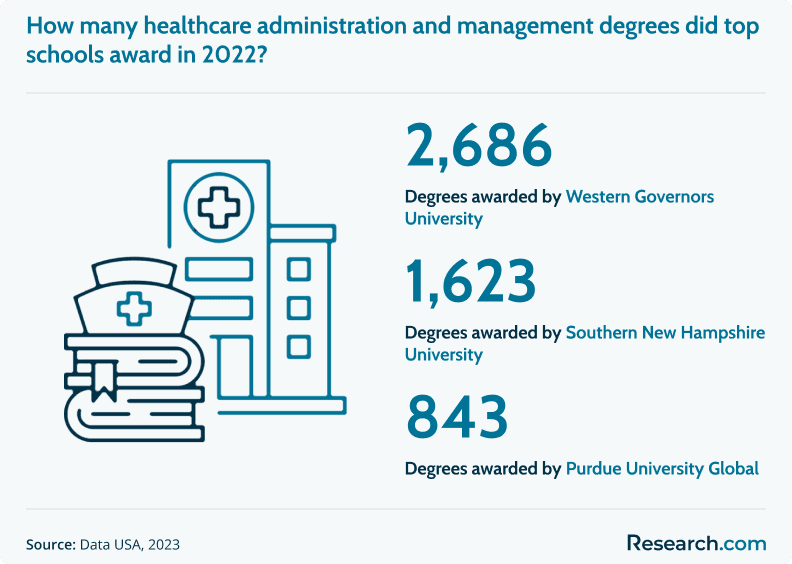
Although healthcare management and administration remains a relevant field of study, the number of degrees awarded has declined. In 2022, approximately 30,702 degrees were awarded—a 2.33% decrease from the previous year. The institutions awarding the most degrees in healthcare management and administration in 2022 are shown below.
How to choose the right degree level
- Choose an associate degree or certificate if you need a lower-cost entry point and plan to start in administrative support, billing, medical office work, or patient services before moving up.
- Choose a bachelor’s degree if you want the standard qualification for many coordinator, supervisor, assistant manager, and practice management roles.
- Choose a master’s degree if your goal is hospital leadership, system-level administration, consulting, policy leadership, or advancement beyond department management.
- Choose a clinical degree plus management training if you are already a nurse, therapist, social worker, or allied health professional and want to lead clinical teams.
Do health services managers need a license to practice?
Licensure depends on the job, work setting, and state. Many healthcare administration roles do not require a specific management license. However, some positions are tied to regulated facilities or clinical responsibilities, so candidates must confirm requirements before choosing a program or applying for jobs.
| Position or setting | Licensure expectation | What to verify |
| Nursing home administrator | All states require nursing home administrators to be licensed. | State rules for education, approved administrator-in-training programs, exams, background checks, and continuing education. |
| Clinical manager with a nursing background | An active RN license is typically required when the manager is functioning as a registered nurse or overseeing nursing practice. | Whether the role requires clinical decision-making, an active nursing license, specialty credentials, or state board approval. |
| Healthcare social services manager | Some roles may require licensure as a clinical social worker or equivalent credential. | Whether the position requires direct clinical social work supervision, behavioral health oversight, or an LCSW-type credential. This comparison of an MSW and an LCSW can help clarify the distinction. |
| General healthcare administrator or practice manager | A management license is often not required. | Employer preferences for degree level, experience, certifications, compliance knowledge, and EHR or billing system skills. |
Before enrolling in a program, check whether it satisfies licensure or certification requirements in the state where you plan to work. This is especially important for online programs, long-term care administration tracks, nursing leadership programs, and clinical management roles.
What are common career paths for health services managers?
Health services management is one of the better-known non clinical healthcare careers because it allows professionals to influence care delivery through operations rather than direct treatment. Career options vary widely by organization size, specialty, education level, and prior experience.
Common roles
- Hospital administrator: Oversees major operational areas in a hospital or health system, including staffing, budgeting, patient services, regulatory compliance, quality improvement, and strategic planning.
- Nursing home administrator: Leads long-term care facility operations, including resident services, staffing, financial performance, compliance, building operations, and family communication. Professionals without a nursing background who want a more clinical route may compare options such as direct entry MSN programs for non-nurses online, but licensure is required in all states for nursing home administrators.
- Clinical manager: Runs a defined department such as surgery, cardiology, emergency care, rehabilitation, or nursing services. This role requires strong communication with clinical staff and careful attention to quality and compliance metrics.
- Practice manager: Manages a physician practice, specialty office, outpatient clinic, or medical group. Responsibilities often include scheduling, billing, patient flow, vendor coordination, hiring, and staff supervision.
- Health information manager: Oversees patient records, coding accuracy, privacy, data access, and health information systems. For a related pathway, see this medical records manager career guide.
Typical career progression
| Career stage | Common job titles | What to build at this stage |
| Entry level | Administrative assistant, medical office coordinator, patient services representative, billing assistant, records technician | Healthcare terminology, scheduling, EHR use, billing basics, patient communication, and compliance awareness. |
| Early management | Department coordinator, practice supervisor, assistant manager, operations coordinator | Staff scheduling, reporting, workflow improvement, vendor communication, and basic budgeting. |
| Mid-level management | Practice manager, clinical department manager, health information manager, service line manager | Team leadership, performance metrics, quality improvement, regulatory compliance, hiring, and financial management. |
| Senior leadership | Director of operations, administrator, executive director, hospital administrator | Strategic planning, multi-site operations, policy implementation, executive communication, and system-level decision-making. |
Where do health services managers typically work?
Health services managers work anywhere healthcare services must be organized, financed, staffed, documented, and monitored. In 2023, they held over 500,000 jobs in the United States, showing how widely healthcare organizations rely on management professionals.
Hospitals are the largest employment setting. In 2023, 30% of health services managers worked in hospitals, where managers often handle complex staffing, high patient volume, strict compliance requirements, and coordination across many departments. However, the field is not limited to hospitals. Managers also work in outpatient care, physician offices, nursing and residential care facilities, government agencies, health IT companies, insurance-related organizations, and community health settings.
How work settings differ
| Work setting | What the manager often handles | Potential trade-off |
| Hospitals | Large teams, complex departments, compliance, budgets, emergency planning, patient flow, and quality metrics. | More advancement opportunities, but also higher pressure and less predictable schedules. |
| Physician practices and clinics | Scheduling, billing, front-office operations, staffing, patient experience, and vendor management. | Broader hands-on responsibility, but often fewer management layers and smaller budgets. |
| Nursing and long-term care facilities | Resident services, staffing, family communication, regulatory surveys, facility operations, and safety procedures. | Meaningful continuity-of-care work, but strict licensure and compliance demands. |
| Health information or health IT settings | Records accuracy, EHR workflows, privacy, reporting, data quality, and system implementation. | Good fit for technology-oriented professionals, but requires ongoing technical learning. |
| Public health and community organizations | Program operations, outreach, grants, population health initiatives, and community partnerships. | Mission-driven work, but funding and resources may be less predictable. |
How much does a health services manager make?
Health services management can offer strong earning potential, but pay depends heavily on employer type, location, experience, education, scope of responsibility, and whether the role involves executive leadership. In 2023, health services managers earned a median annual salary of $110,680. This was about 8% higher than the median pay for other management occupations, reflecting the complexity of healthcare operations and the specialized knowledge required.
Factors that influence pay
- Location: Pay is often higher in metropolitan areas and regions with a higher cost of living or stronger demand for healthcare leadership.
- Education: A bachelor’s degree may be enough for many management roles, but graduate training can support advancement into senior positions. Options such as an MHA, an MBA with a healthcare focus, or one of the easiest MPH programs to get into may help candidates qualify for broader leadership responsibilities.
- Industry and employer size: Hospitals, specialized care facilities, large health systems, and high-revenue service lines may pay more than small offices or narrower administrative roles.
- Experience: Management pay typically rises as professionals gain responsibility for larger teams, budgets, facilities, or strategic initiatives. More broadly, experience is also central to how to become a manager in many industries.
How to evaluate salary realistically
Do not judge a role by base salary alone. Ask about bonus eligibility, health insurance, retirement benefits, tuition assistance, paid time off, relocation support, continuing education funding, certification reimbursement, and workload expectations. A higher-paying role may also involve on-call responsibilities, longer hours, multiple sites, or heavier compliance pressure.
What is the job outlook for health services managers beyond 2027?
The employment outlook for health services managers remains strong beyond 2025. According to the latest data from the U.S. Bureau of Labor Statistics, employment in this occupation is projected to grow by 29% from 2023 to 2033, much faster than the average for all occupations.
Several forces support this demand: the expansion of healthcare services, the needs of an aging population, greater use of health data and technology, more complex regulations, and continued pressure to deliver care efficiently. The BLS also expects about 61,400 openings for medical and health services managers each year throughout the decade. These openings include both new jobs and replacements for workers who retire or move into other occupations.
What the outlook means for job seekers
- Healthcare experience still matters. A strong labor market does not mean every applicant will qualify for leadership roles immediately.
- Technology skills are becoming more valuable, especially experience with EHR systems, analytics, dashboards, privacy procedures, and workflow improvement.
- Specialized knowledge can help candidates stand out in areas such as long-term care, revenue cycle, quality improvement, compliance, population health, or health informatics.
- Graduate degrees and certifications may improve competitiveness for senior roles, but they should be chosen based on career goals and return on investment.
What are the biggest challenges health services managers face?
Health services management is rewarding, but it is not a low-stress career. Managers must balance patient needs, staff morale, budgets, regulations, technology, and executive expectations. The job often requires decisions under pressure, especially in hospitals, emergency departments, long-term care facilities, and understaffed settings.
Major challenges
- Changing regulations and policies: Healthcare laws, payer rules, quality standards, privacy requirements, and accreditation expectations can change frequently. Managers must keep operations compliant and train staff accordingly.
- Staffing shortages and retention: Recruiting, scheduling, and retaining qualified staff can be difficult, especially when employees face burnout or when experienced workers retire.
- Budget pressure: Managers may need to improve patient services while controlling labor costs, equipment spending, supply expenses, reimbursement issues, and administrative overhead.
- Technology adoption: EHR upgrades, telehealth platforms, analytics tools, and cybersecurity procedures can improve care but also require staff training and workflow redesign.
- Burnout and stress: Managers are accountable for people, processes, compliance, and outcomes. The work can be emotionally demanding when resources are limited or patient needs are urgent.
- Workplace injuries and illnesses: Even though the role is managerial, health services managers may work in fast-paced clinical environments. In 2020, there were 13,750 reported nonfatal injury and illness cases, placing them among the top 25 professions for such incidents. Common causes include slips, falls, and overexertion.
Can Accelerated Degree Programs Enhance Career Advancement in Healthcare?
Accelerated degree programs can help some healthcare professionals move into management faster, but they are not the right choice for every student. These programs compress coursework into a shorter schedule, which can be useful for motivated learners who already have transfer credits, healthcare experience, or a clear career goal. The trade-off is intensity: accelerated formats often require stronger time management and may leave less room for part-time work or personal obligations.
For health services management, an accelerated program may be most useful when it builds practical competencies in operations, finance, compliance, leadership, and healthcare data systems. Students interested in adjacent clinical or pharmaceutical leadership may also explore options such as the best accelerated PharmD online programs, particularly if they want deeper exposure to medication management, pharmacy operations, and regulatory issues.
When an accelerated program makes sense
- You already have college credits and want to finish a degree sooner.
- You can manage a heavier course load without sacrificing learning quality.
- The program is properly accredited and recognized by employers in your target field.
- The curriculum includes healthcare finance, law, quality improvement, leadership, and technology—not just general business courses.
- You have a realistic plan for internships, practicums, or job experience while studying.
How can professional certifications enhance career advancement?
Professional certifications can strengthen a health services manager’s resume by showing focused knowledge in areas such as compliance, finance, medical administration, health information, revenue cycle, or practice management. Certifications are most valuable when they match the job you want. A credential should not be chosen simply because it sounds impressive; it should connect to a clear career outcome.
For candidates building administrative or technical healthcare skills, lower-cost training can be a useful first step. For example, affordable online medical billing and coding courses may help learners understand claims, coding, reimbursement, and documentation workflows—knowledge that can be useful in practice management, revenue cycle, or health information roles.
Questions to ask before pursuing a certification
- Is this credential requested in job postings for the roles I want?
- Does the certifying body have a strong reputation in healthcare?
- What education, experience, exam, and renewal requirements apply?
- Will my employer pay for the exam, renewal, or continuing education?
- Does the certification teach skills I do not already have?
What are the emerging trends shaping health services management?
Health services managers are being asked to lead through rapid change. The biggest trends are not just technological; they also involve workforce expectations, care coordination, cost control, patient experience, and regulatory pressure.
- Digital health and telehealth: Healthcare organizations continue to use virtual care platforms, remote monitoring, patient portals, and digital scheduling tools, requiring managers to redesign workflows and train staff.
- Data-driven decision-making: Managers increasingly use dashboards, EHR reports, quality metrics, and financial data to evaluate performance and identify service gaps.
- Interdisciplinary care models: Better coordination among physicians, nurses, therapists, social workers, pharmacists, and community partners is becoming more important for patient outcomes and operational efficiency.
- Preventive and community-based care: Programs that emphasize wellness, movement, rehabilitation, and prevention are influencing how organizations design services. Educational options such as the best online kinesiology degree can support professionals interested in preventive care, human movement, and health promotion.
- Compliance and privacy pressure: As data sharing expands, managers must pay closer attention to privacy, cybersecurity, documentation, and staff training.
- Workforce burnout: Retention strategies, flexible scheduling, psychological safety, and leadership communication are now central management concerns.
How can networking and mentorship opportunities accelerate career advancement?
Networking and mentorship can shorten the learning curve for aspiring health services managers. A mentor can explain how hiring decisions are made, which credentials matter, how to handle difficult staff situations, and what leadership mistakes to avoid. Professional contacts can also alert you to internships, fellowships, internal promotions, and openings that may not be easy to find through job boards alone.
Networking is most effective when paired with real skill development. Some professionals combine workplace experience with additional education, such as an accelerated healthcare administration degree online, to prepare for more advanced leadership responsibilities while continuing to build industry relationships.
Practical networking steps
- Ask a current manager at your workplace for an informational interview about their career path.
- Join healthcare administration, public health, nursing leadership, long-term care, or health information management groups related to your target role.
- Volunteer for cross-department projects involving quality improvement, EHR implementation, patient access, compliance, or workflow redesign.
- Attend employer-sponsored leadership trainings and introduce yourself to department directors.
- Look for mentors who will give specific feedback, not just general encouragement.
Is prior healthcare experience necessary to become a health services manager?
Prior healthcare experience is not always mandatory, but it is a major advantage. Employers often prefer candidates who understand how healthcare settings actually function: patient flow, clinical communication, documentation, privacy rules, payer requirements, shift work, and the pressure on frontline staff. Experience helps managers make decisions that are practical, not just theoretically sound.
Many professionals start in clinical, administrative, or coordination roles before entering management. For example, a healthcare coordinator role can provide exposure to patient services, scheduling, care coordination, and cross-functional communication. The healthcare coordinator salary may be lower than management pay, but the role can help build experience that supports later advancement.
Common entry routes
- Clinical professionals, such as nurses or allied health workers, move into unit leadership or department management.
- Administrative employees in clinics, hospitals, or insurance-related settings advance into supervisor or practice manager roles.
- Business graduates enter healthcare through operations, finance, HR, revenue cycle, or project coordination jobs.
- Public health graduates move into program management, community health operations, or population health administration.
If you are entering from outside healthcare, build credibility through internships, residencies, entry-level healthcare operations roles, or targeted graduate education. An affordable online MBA healthcare management may be useful for professionals with business experience who need healthcare-specific training, but it should be paired with practical exposure to healthcare environments whenever possible.
What skills are required to succeed in health services management?
Health services managers need a blend of leadership, business judgment, healthcare knowledge, and emotional intelligence. The best managers can interpret data, communicate with clinicians, support staff, control costs, follow regulations, and improve patient services without losing sight of the human side of care.
Essential skills
- Leadership and people management: Managers must hire, coach, evaluate, motivate, and sometimes discipline staff. They also need to resolve conflict and build trust across departments.
- Communication: The role requires clear communication with physicians, nurses, executives, administrative employees, insurers, vendors, patients, and families.
- Analytical thinking: Managers use data to identify bottlenecks, staffing gaps, budget problems, safety concerns, and quality improvement opportunities.
- Financial management: Budgeting, revenue cycle awareness, expense tracking, staffing costs, and reimbursement models all affect operational decisions.
- Regulatory knowledge: Managers must understand privacy rules, healthcare documentation, Medicare and Medicaid procedures, safety standards, and other compliance expectations relevant to their setting.
- Technical competence: Familiarity with EHRs, scheduling platforms, reporting systems, dashboards, and data analytics tools is increasingly important.
- Adaptability: Healthcare changes quickly. Managers must lead staff through new systems, policy updates, staffing challenges, and service redesigns.
- Ethical judgment: Decisions often involve patient privacy, access to care, staff fairness, financial limits, and competing stakeholder needs.
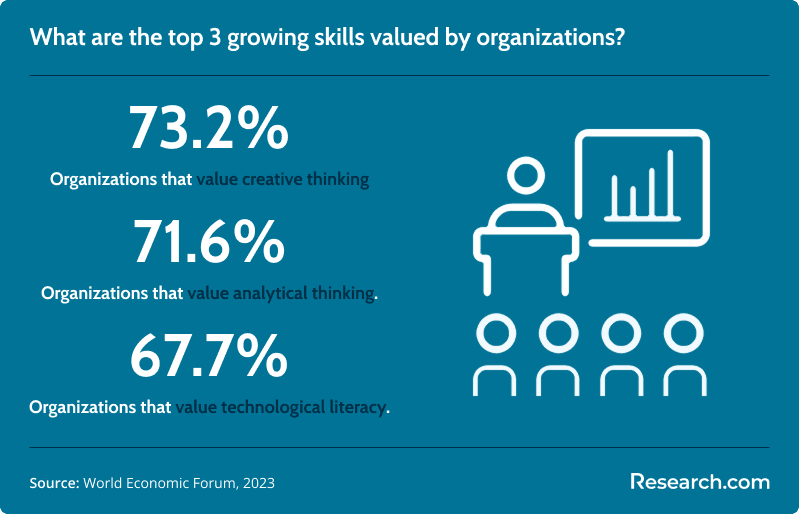
The World Economic Forum’s 2023 Future of Jobs report identified creative thinking and analytical thinking as the top two skills expected to grow in importance among business leaders worldwide. In healthcare management, both are critical: managers must solve operational problems while also interpreting data, regulations, and patient care needs.
Common mistakes to avoid when preparing for this career
| Mistake | Why it can hurt you | Better approach |
| Choosing a program without checking accreditation | Employers, graduate schools, financial aid rules, or licensure boards may not recognize weak or unaccredited programs. | Verify institutional accreditation and, when relevant, program-specific recognition before enrolling. |
| Looking only at tuition | Fees, books, technology costs, travel, lost work hours, and exam costs can change the real price of a program. | Compare total cost of attendance, financial aid, employer tuition support, and time to completion. |
| Assuming an online program meets licensure rules | Some roles, especially nursing home administration or clinical leadership, may have state-specific requirements. | Ask the school and state licensing board whether the program meets requirements where you plan to work. |
| Skipping healthcare experience | A degree alone may not prepare you for the realities of staffing, patient flow, compliance, or clinical communication. | Seek internships, administrative roles, clinical exposure, fellowships, or project experience in healthcare settings. |
| Relying only on rankings | A highly ranked school may not be the best fit for your budget, schedule, location, transfer credits, or career target. | Use rankings as one input, then compare curriculum, outcomes, support services, cost, and employer connections. |
| Assuming salary outcomes are guaranteed | Pay varies by location, employer, role scope, experience, and education. | Research local job postings and compare salary data by setting, not just national medians. |
What Do Graduates Say About Being a Health Services Manager
- Working in health services management changed how I think about healthcare. I learned that operational decisions can improve patient care just as much as direct clinical work, especially when teams have the resources and systems they need. Adaline
- This career gives me a mix of problem-solving, leadership, and community impact. Every day brings a new operational challenge, but the work feels meaningful because better systems help patients and staff. Timothy
- Health services management lets me combine structure with compassion. I enjoy improving processes, supporting teams, and seeing how strong leadership can raise morale and improve the patient experience. Chris
How can I access affordable training opportunities in healthcare?
Affordable training can be a smart way to enter healthcare before committing to a full degree. Shorter programs may help you build practical skills in medical office procedures, billing, coding, patient communication, records management, or basic clinical support. These roles can become stepping stones toward supervisory and management positions later.
For learners who need a lower-cost starting point, options such as cheap online medical assistant programs can provide foundational healthcare knowledge while keeping initial education expenses more manageable. This route is especially useful for career changers who want to confirm that healthcare is a good fit before pursuing a bachelor’s or master’s degree.
How to reduce training costs
- Ask your employer about tuition reimbursement, certification reimbursement, or internal training programs.
- Compare community colleges, public universities, and online programs before choosing a private option.
- Check whether prior credits, military training, healthcare certificates, or work experience can transfer.
- Use federal, state, institutional, and employer aid when eligible.
- Avoid borrowing for programs that do not clearly connect to your target job.
Key Insights
- Health services managers lead the business and operational side of healthcare, making decisions that affect staffing, budgets, compliance, patient access, data systems, and care quality.
- A bachelor’s degree is the common entry point, but graduate education may be useful for senior leadership, hospital administration, public health leadership, or specialized roles.
- Licensing rules vary by role. Nursing home administrators must be licensed in all states, while many general healthcare administration positions do not require a separate management license.
- Hospitals employed the largest share of health services managers in 2023, accounting for 30% of the workforce in this field.
- In 2023, the median annual salary for health services managers was $110,680, though earnings vary by location, employer, education, and experience. Entry-level health services managers can earn approximately $114,500 per year.
- The job outlook is strong: employment for medical and health services managers is expected to grow by 29% from 2023 to 2033.
- Health services managers face real pressure, including regulatory change, staffing shortages, technology integration, budget constraints, burnout, and workplace safety risks.
- In 2020, health services managers had 13,750 reported nonfatal injury and illness cases, placing them among the top 25 professions for such incidents.
- In 2022, 30,702 degrees were awarded in healthcare management or administration, a 2.33% decline compared to the previous year.
- The strongest candidates do more than earn a degree. They build healthcare experience, learn data and EHR systems, understand compliance, develop leadership skills, and choose credentials based on a clear career goal.
References:
- HRSA. (2024, November). State of the U.S. health care workforce, 2024. Bureau of Health Workforce - Health Resources and Services Administration. Retrieved April 12, 2025.
- Salary.com. (2025, April 1). Employee health services manager salary in the United States. Salary.com.. Retrieved April 11, 2025.
- U.S. BLS. (2024, April 3). Occupational employment and wages, May 2023: 11-9111 medical and health services managers. U.S. Bureau of Labor Statistics. Retrieved April 11, 2025.
- U.S. BLS. (2024, August 29). Occupational outlook handbook: Medical and health services managers. U.S. Bureau of Labor Statistics. Retrieved April 11, 2025.
- WE Forum. (2023, May 1). Future of jobs 2023: These are the most in-demand skills now and beyond. World Economic Forum. Retrieved April 12, 2025.
Other Things You Should Know About Becoming a Health Services Manager
To become a health services manager in 2027, a bachelor's degree in health administration or a related field is typically required. Many also pursue a master's degree for advanced positions. Some roles may also require certification from bodies like the American College of Healthcare Executives.
No federal license is required for health services managers, but the Certified Medical Manager credential from the Professional Association of Health Care Office Management can strengthen job prospects. Most employers still expect a bachelor’s degree, and many prefer a master’s in health administration, public health, or business administration.