
2027 Most Affordable Online MBA in Information Systems Degree Programs

Co-Founder and Chief Data Scientist
Choosing an affordable online MBA in Information Systems is usually a cost-versus-career-growth decision. The degree can help experienced professionals move from technical, analyst, or operations roles into management positions that require both business judgment and technology fluency. It can also be a practical option for working adults who need graduate business training without pausing their careers.
This guide explains what an online MBA in Information Systems includes, how much it can cost, which affordable programs are featured, what admissions requirements to expect, and how to compare programs based on accreditation, flexibility, curriculum, support, and return on investment. It is designed for professionals who want a budget-conscious MBA that connects technology strategy with business leadership.
Quick answer: Is an online MBA in Information Systems worth considering?
An online MBA in Information Systems can be worth considering if you already have business, IT, analytics, operations, or project experience and want to qualify for management roles that involve technology planning, cybersecurity, data systems, IT governance, or digital transformation. According to the U.S. Census Bureau, information systems managers had a median annual salary of $143,484 in 2022, ranking 17th among detailed occupations.
The degree is not the only route into IT leadership, and it is not automatically better than a specialized master’s degree. It is strongest for students who want broad MBA training plus a technology-management focus rather than a purely technical graduate curriculum.
What are the main benefits of an online MBA in Information Systems?
- It connects business and technology leadership. Students typically study finance, marketing, leadership, systems analysis, data management, cybersecurity, and IT project management in one program.
- It can support advancement into management roles. Graduates may pursue positions such as IT manager, systems analyst, IT consultant, chief information officer, or technology operations leader, depending on experience and employer needs.
- It can lead to strong earning potential. Professionals in this field often earn substantial salaries, with a median annual salary of nearly $169,510 as of 2023.
- It is built for working adults. Online delivery can make it easier to continue working while completing assignments, group projects, and virtual discussions.
- It may broaden career options. Information systems managers work across technology, finance, insurance, manufacturing, healthcare, higher education, and corporate management settings.
What can you expect from an online MBA in Information Systems degree?
An online MBA in Information Systems is a graduate business degree with a technology-management concentration. Instead of preparing students only for coding or technical specialist roles, it focuses on how organizations select, implement, secure, and manage information systems to meet business goals.
Most programs combine standard MBA subjects—such as accounting, economics, finance, marketing, operations, and organizational leadership—with courses in data management, cybersecurity, systems analysis, enterprise systems, analytics, IT project management, and technology strategy. The goal is to help students understand both the executive side of decision-making and the technical systems that support modern organizations.
Online students can expect a mix of recorded lectures, live or asynchronous discussions, digital simulations, group projects, exams, business cases, and applied assignments. Some programs are highly accelerated, while others are designed for part-time enrollment. The best fit depends on your work schedule, prior academic background, technical experience, and preferred learning style.
Who is this degree best for?
| Student profile | Why the degree may fit | What to check before enrolling |
| IT professionals seeking management roles | The MBA adds budgeting, leadership, strategy, and organizational decision-making skills. | Look for courses in IT governance, cybersecurity, project management, and enterprise systems. |
| Business professionals moving toward technology strategy | The concentration can build fluency in databases, systems analysis, analytics, and digital operations. | Confirm whether the program assumes prior technical knowledge. |
| Project managers and operations professionals | The degree can strengthen cross-functional leadership and systems-based problem solving. | Compare programs with IT project management, ERP, and analytics coursework. |
| Career changers with limited IT background | An MBA can provide a structured entry point into technology management concepts. | Ask whether foundation courses, tutoring, or technical bootstrapping resources are available. |
| Students seeking deep technical specialization | The MBA may be too broad if the goal is advanced engineering, software development, or research. | Compare it with a specialized master’s degree before committing. |
Where can you work with an online MBA in Information Systems?
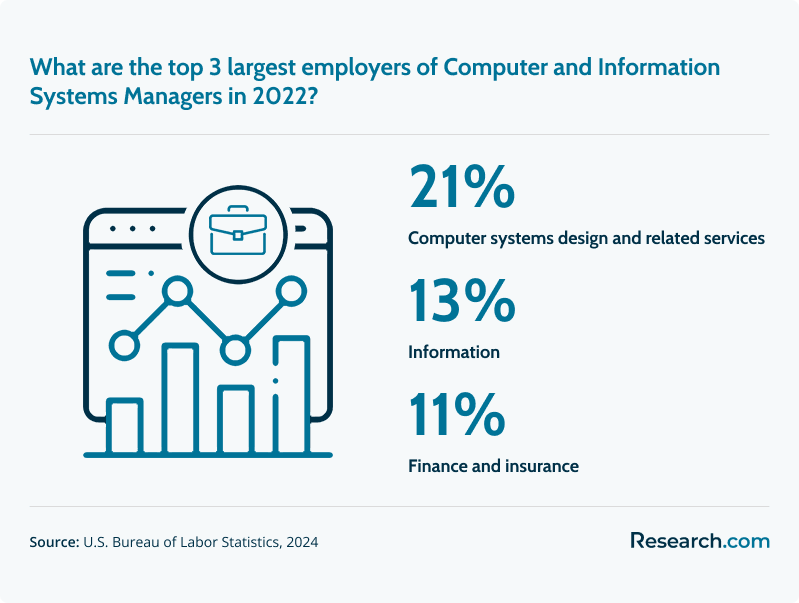
Graduates can work in organizations that rely on information systems for operations, customer service, analytics, compliance, cybersecurity, supply chains, and strategic planning. Notably, 21% of information systems managers are employed in computer systems design and related services. Finance and insurance employ 14%, while 11% work in information companies.
Other common employers include management of companies and enterprises, manufacturing firms, healthcare organizations, and higher education institutions such as universities and colleges. This spread across industries is one reason the degree can be useful: information systems leadership is not limited to technology companies.
How much can you make with an online MBA in Information Systems?
Salary depends on role, industry, location, experience, employer size, and scope of responsibility. In 2023, the median annual salary for information systems managers was nearly $170,000, approximately 25% higher than other operations specialties managers.
Industry also matters. Information systems managers earned an average of $183,370 in the information industry. Average salaries were $175,540 in manufacturing, $173,090 in finance and insurance, $171,460 in computer systems design and related services, and $170,190 in management of companies and enterprises.
- Affordable online MBA in Information Systems programs
- Program length and completion timelines
- Online versus on-campus MBA formats
- Average program cost
- Financial aid options
- Admissions requirements
- Common courses
- Specializations and concentration options
- How to choose the right program
- Why accreditation matters
- Challenges of online MBA study
- How certifications can strengthen the degree
- Student support and networking resourcesCertification planning
- Emerging trends in Information Systems MBA programs
- Industry partnerships
- Complementary disciplines
- Skills gained in the programProgram selection factors
- Career paths
- Job market outlook
- Preparation for tech-driven business challenges
- MBA versus specialized master’s degrees
- Long-term ROITechnology leadership preparation
List of the Most Affordable Online MBA in Information Systems Degree Programs
How the programs were ranked
Affordability matters because an MBA is a major financial commitment. This ranking was developed to help prospective students compare affordable online MBA in Information Systems options using transparent, education-focused criteria. Details about Research.com’s ranking process are available here.
The analysis used information from respected data sources, including the IPEDS database, Peterson’s database, including its Distance Learning Licensed Data Set, the College Scorecard database, and the National Center for Education Statistics. These sources help students evaluate program cost, institutional information, and distance-learning availability with a stronger evidence base.
| Rank | School | Concentration | Credits | Published cost information | Accreditation |
| 1 | Lamar University | Management Information Systems | 30 | $13,153 for the entire program | Association to Advance Collegiate Schools of Business (AACSB) |
| 2 | Delta State University | Information Systems Management | 30 | $533 per credit | Accreditation Council for Business Schools and Programs (ACBSP) |
| 3 | Southern Illinois University Edwardsville | Management Information Systems | 36 | $526.13 per credit | AACSB |
| 4 | University of North Alabama | Information Systems | N/A | $495 per credit | AACSB |
| 5 | University of North Carolina-Wilmington | Information Systems | 36 | $18,113.40 for the entire program in-state; $45,771.48 for the entire program out-of-state | AACSB |
| 6 | Wilmington University | Management Information Systems | 36 | $1,611 per course | International Accreditation Council for Business Education (IACBE) |
| 7 | West Texas A&M University | Computer Information Systems | 37 | $500 per credit | AACSB |
| 8 | Park University | Management Information Systems | 33 | $560 per credit | ACBSP |
| 9 | Bellevue University | Management Information Systems | 36-39 | $660 per credit | IACBE |
| 10 | Emporia State University | Information Systems | 33 | $11,979 for the entire program | AACSB |
1. Lamar University
Lamar University’s online MBA with a concentration in Management Information Systems is structured for working adults who want to solve organizational problems using both business and technology tools. The program includes MBA leadership areas such as marketing, economics, and finance while adding cybersecurity, IT project management, databases, and healthcare information systems. Students use SAS and SAP software compatible with Microsoft Windows, and the curriculum prepares graduates for the CompTIA Security+ certificate exam. Students should note that the software taught is not compatible with Mac OS.
- Program Length: 12
- Tracks/concentrations: Management Information Systems
- Cost: $13,153 for the entire program
- Required Credits to Graduate: 30
- Accreditation: Association to Advance Collegiate Schools of Business (AACSB)
2. Delta State University
Delta State University’s online MBA in Information Systems is offered as one of six concentrations in the Integrated MBA. The concentration emphasizes data warehousing, data mining, and information technologies used to address complex organizational data challenges. Students also study technology-supported supply chain design and decision-making in logistics, procurement, revenue management, and risk management. Enterprise resource planning concepts are included to help students connect data use with business strategy and execution.
- Program Length: 12 months
- Tracks/concentrations: Information Systems Management
- Cost per Credit: $533
- Required Credits to Graduate: 30
- Accreditation: Accreditation Council for Business Schools and Programs (ACBSP)
3. Southern Illinois University Edwardsville
Southern Illinois University Edwardsville’s online MBA in Management Information Systems focuses on designing and implementing MIS strategies that support organizational goals. The accelerated curriculum includes information systems analysis, decision process modeling, and the organizational, ethical, and socio-technical issues that influence system design. Core courses cover decision-making, accounting, and corporate finance, while MIS electives address ERP software, emerging technologies, and database management.
- Program Length: 12 months
- Tracks/concentrations: Management Information Systems
- Cost per Credit: $526.13
- Required Credits to Graduate: 36
- Accreditation: AACSB
4. University of North Alabama
The University of North Alabama’s MBA with a concentration in Information Systems is one of nine concentrations in the largest MBA program in Alabama. Students may complete the program 100% online or in a hybrid format. The program is designed for working professionals and offers part-time or full-time study with five start dates per year. The concentration focuses on analyzing and improving database structures and systems to support organizational performance. It is also one of the online MBA options with no GMAT requirement, which can help applicants who prefer a more streamlined admissions process.
- Program Length: 12-18 months (full-time); 18-24 months (part-time)
- Tracks/concentrations: Information Systems
- Cost per Credit: $495
- Required Credits to Graduate: N/A
- Accreditation: AACSB
5. University of North Carolina-Wilmington
The University of North Carolina-Wilmington’s online MBA with a Specialization in Information Systems teaches students how technology connects with business functions and corporate objectives. The program covers selecting, implementing, managing, and evaluating information systems to improve productivity, efficiency, and growth. Students complete core business management coursework and seven-week courses taught by full-time faculty with management experience. No prerequisites or foundation courses are required.
- Program Length: 12 months
- Tracks/concentrations: Information Systems
- Cost: $18,113.40 for the entire program (in-state students); $45,771.48 for the entire program (out-of-state students)
- Required Credits to Graduate: 36
- Accreditation: AACSB
6. Wilmington University
Wilmington University’s online MBA with a concentration in Information Systems is designed to strengthen both strategic technology management and business leadership. Coursework addresses database management, systems analysis, and information security. The program prepares students to use technology to improve processes, solve business problems, and support organizational goals. Flexible start options and no GMAT requirement can make the program more accessible for working professionals.
- Program Length: 12 months
- Tracks/concentrations: Management Information Systems
- Cost: $1,611 per course
- Required Credits to Graduate: 36
- Accreditation: International Accreditation Council for Business Education (IACBE)
7. West Texas A&M University
West Texas A&M University’s MBA in Computer Information Systems is a fully online program available to business and non-business applicants. Eligible students may receive a GMAT waiver. Asynchronous coursework gives working professionals more control over when they complete assignments. The program develops skills in database management, cybersecurity, and systems analysis for students who want to advance in information systems roles.
- Program Length: 12-18 months
- Tracks/concentrations: Computer Information Systems
- Cost per Credit: $500
- Required Credits to Graduate: 37
- Accreditation: AACSB
8. Park University
Park University’s MBA with a concentration in Management Information Systems blends business intelligence with applied, project-based instruction. Students examine modern IT systems, data analytics, security, privacy of big data, and project management. The curriculum emphasizes how management information system technologies support system architecture, strategic decision-making, and globally competitive business operations.
- Program Length: 12 months
- Tracks/concentrations: Management Information Systems
- Cost per Credit: $560
- Required Credits to Graduate: 33
- Accreditation: ACBSP
9. Bellevue University
Bellevue University’s MBA Management Information Systems concentration introduces students to topics within the Computer Information Systems field. It can be especially useful for students whose undergraduate degree was not in CIS but who want targeted exposure to information systems coursework. Students interested in the concentration should speak with a major professor in the MBA or CIS area, and some management information systems electives may be taken without completing the full concentration.
- Program Length: 12 months
- Tracks/concentrations: Management Information Systems
- Cost per Credit: $660
- Required Credits to Graduate: 36-39
- Accreditation: IACBE
10. Emporia State University
Emporia State University’s online MBA with an Information Systems concentration centers on practical business problems and IT project management methods used in software development. Students study the System Development Life Cycle, including how project leaders and systems analysts analyze, design, and document information systems. Coursework also explores managerial use of information systems and the role of complex technology in supporting organizations.
- Program Length: 1-2 years
- Tracks/concentrations: Information Systems
- Cost: $11,979 for the entire program
- Required Credits to Graduate: 33
- Accreditation: AACSB
Key findings for prospective students
- Information systems managers had a median annual salary of $143,484 in 2022, ranking 17th among detailed occupations.
- Employment for computer and information systems managers is projected to grow by 15% from 2022 to 2032, with an estimated 86,000 new jobs.
- Average salaries differ by industry: $183,370 in the information industry, $175,540 in manufacturing, $173,090 in finance and insurance, $171,460 in computer systems design, and $170,190 in management of companies.
- Information systems managers earn a median income of $152,387 with a master's degree compared to $142,073 with a bachelor's degree.
- The average cost of an MBA program from 1999 to 2022 was $52,763; for 2019-2020, the average cost was $56,850.
How long does it take to complete an online MBA in Information Systems degree program?
Most online MBA in Information Systems programs take 12 to 24 months to complete. Full-time students may finish near the 12-month mark, similar to some accelerated online MBA programs. Part-time students who are balancing work, family, or military responsibilities may need up to 24 months.
Completion time depends on several variables: the number of credits required, the number of courses taken each term, whether the program uses seven-week or traditional semesters, whether foundation courses are required, and whether transfer credits are accepted. Accelerated programs can reduce time in school, but they may require a heavier weekly workload.
| Enrollment option | Typical timeline | Best for | Trade-off |
| Accelerated full-time | 12 months | Students who can handle a concentrated workload | Less scheduling flexibility and more weekly pressure |
| Standard full-time | 12 to 18 months | Working adults with predictable schedules | Still requires consistent weekly study time |
| Part-time | 18 to 24 months | Students balancing demanding jobs or family duties | Longer time before graduation and potential promotion benefits |
How does an online MBA in Information Systems compare to an on-campus program?
Online and on-campus MBA programs in Information Systems often cover similar academic material. Both formats may include IT project management, systems analysis, data management, cybersecurity, leadership, finance, and technology strategy. In many cases, the diploma does not indicate whether the coursework was completed online or on campus, but students should verify this with each school.
The main difference is the learning experience. Online programs prioritize flexibility and access, while campus programs provide more in-person interaction and immediate access to physical facilities. Neither format is automatically better. The right choice depends on your schedule, location, networking goals, and ability to stay organized without a classroom routine.
| Factor | Online MBA in Information Systems | On-campus MBA in Information Systems |
| Schedule | Often asynchronous or hybrid, which can fit full-time work | Requires scheduled attendance and commuting or relocation |
| Networking | Virtual networking, online cohorts, alumni events, and group projects | More face-to-face interaction with classmates, faculty, and recruiters |
| Learning style | Best for self-directed students who manage deadlines well | Best for students who prefer classroom structure and in-person discussion |
| Cost considerations | May reduce relocation and commuting costs | May include higher living or transportation expenses |
| Access to resources | Digital advising, career services, libraries, and tech support | Physical campus resources plus in-person services |
What is the average cost of an online MBA in Information Systems degree program?
The average cost of an MBA, including Information Systems and other concentrations, varies widely. From 1999 to 2022, the average cost of an MBA degree was $52,763. For the academic year 2019-2020, the average cost was $56,850. Some Ivy League programs, including Harvard, exceed $230,000, while other colleges and universities offer programs for less than $15,000, putting them closer to the cost range students may seek when comparing the most affordable online business degree options.
Do not compare programs by tuition alone. Students should also review technology fees, graduation fees, books, software, residency requirements, exam preparation costs, travel requirements, and whether tuition differs for in-state and out-of-state students. A low per-credit price can become less affordable if the program requires more credits or additional fees.
What financial aid options are available for online MBA in Information Systems students?
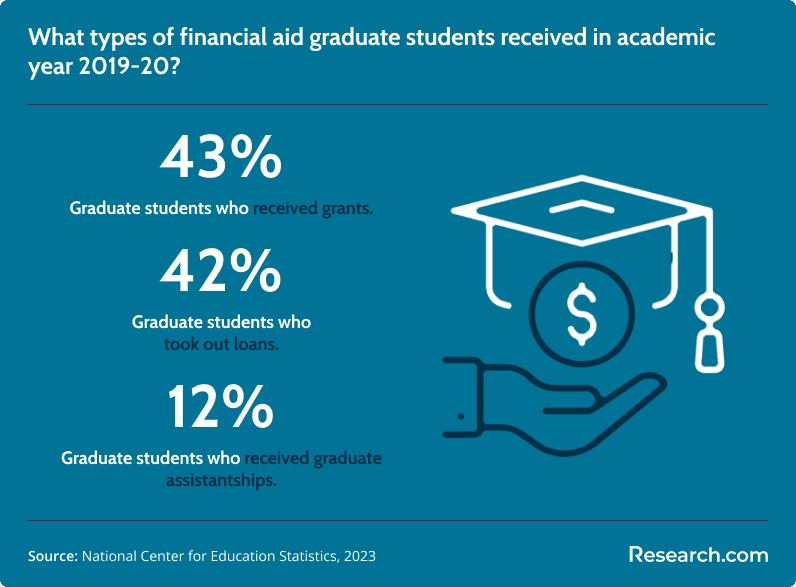
Among graduate students in 2019-20, 74% received some type of financial aid with an average amount of $25,300. Students considering an online MBA in Information Systems should compare several funding sources before relying on loans.
- Federal Student Aid: In 2019-20, 74% of graduate students received some type of federal financial aid. Eligible students may use the Free Application for Federal Student Aid (FAFSA) to be considered for federal loans and other aid options.
- Scholarships and Grants: Schools, private organizations, and professional associations may offer awards that do not need to be repaid. In 2019-20, 43% of graduate students received grants, with an average amount of $11,300.
- Employer Tuition Assistance: Some employers help pay for graduate education when the degree supports an employee’s current role or advancement path.
- Private Loans: Banks and other lenders may offer private graduate loans. Graduate borrowers took out an average of $26,000 in loans, so students should compare interest rates, repayment terms, and borrower protections carefully.
- Military Benefits: Active-duty service members, veterans, and eligible family members may qualify for education benefits that can reduce out-of-pocket costs.
- Graduate Assistantships: Some institutions offer assistantships or other institutional support. Graduate students who received any form of financial aid in 2019–20 received around $25,300 on average.
Ways to reduce the total cost
- Ask whether tuition is charged per credit, per course, or as a flat program cost.
- Confirm whether online students pay campus, technology, or distance-learning fees.
- Check whether employer reimbursement requires a minimum grade or continued employment.
- Compare total program cost, not just advertised tuition.
- Ask whether prior graduate credits can transfer into the MBA.
- Review whether the program requires software, certification exam fees, or travel.
What are the prerequisites for enrolling in an online MBA in Information Systems degree program?
Admissions requirements vary by university, but most online MBA in Information Systems programs ask applicants to show academic readiness, professional focus, and the ability to succeed in graduate-level business coursework.
- Bachelor's Degree: Applicants generally need a bachelor's degree from an accredited institution. Common backgrounds include business, information science, a computer science degree earned online or on campus, or another related field.
- Work Experience: Many MBA programs prefer or require professional experience, often ranging from two to five years.
- GMAT/GRE Scores: Some schools still require GMAT or GRE scores, while others offer waivers for applicants with significant work experience, strong undergraduate performance, or other qualifying credentials.
- Transcripts: Applicants usually submit official transcripts from every college or university previously attended.
- Letters of Recommendation: Programs commonly request two to three recommendations from supervisors, faculty members, or professional contacts who can speak to the applicant’s readiness.
- Personal Statement: A statement of purpose or admissions essay typically explains career goals, interest in information systems, and reasons for pursuing the MBA.
- Resume: A current resume should highlight work history, leadership experience, technical skills, project responsibilities, and measurable achievements.
- English Proficiency: Non-native English speakers may need TOEFL or IELTS scores, depending on university policy.
What courses are typically in an online MBA in Information Systems degree program?
Coursework is designed to help students translate technology knowledge into business value. While exact requirements differ by school, students commonly encounter the following subjects:
- Information Systems Analysis and Design: Students learn how organizations evaluate needs, document requirements, design systems, and manage the system development life cycle.
- Database Management Systems: This course covers database design, data modeling, SQL, database administration, and the role of data infrastructure in business decision-making.
- Cybersecurity and Risk Management: Students examine security principles, threat identification, risk assessment, and controls used to protect organizational systems and data.
- IT Project Management: Coursework focuses on planning, executing, monitoring, and closing technology projects. Programs may introduce Agile, Scrum, and other project management approaches.
- Data Analytics for Business: Students study data mining, statistical analysis, business intelligence, and analytics tools used to support strategic decisions.
What types of specializations are available in an online MBA in Information Systems degree program?
Information Systems is often offered as a concentration within a broader MBA rather than as a standalone degree. This structure allows students to keep the general management value of an MBA while adding focused coursework in technology strategy and systems management.
Some programs use related concentration names such as Management Information Systems, Computer Information Systems, Information Systems Management, or Information Technology. Although these labels overlap, they are not always identical. Students should compare course lists carefully to see whether the program leans more toward analytics, cybersecurity, databases, enterprise systems, IT project management, or general technology leadership.
| Concentration focus | Typical emphasis | Best fit |
| Management Information Systems | Business systems, databases, systems analysis, and IT strategy | Students seeking broad technology-management roles |
| Computer Information Systems | Technical systems, infrastructure, cybersecurity, and data management | Students with technical backgrounds or IT operations goals |
| Information Systems Management | Data, enterprise systems, supply chains, and managerial decision-making | Students interested in systems-enabled business strategy |
| Information Technology | IT operations, systems architecture, digital tools, and technology leadership | Students comparing information systems with broader IT management |
How do you choose the best online MBA in Information Systems degree program?
The best online MBA in Information Systems is not always the cheapest or fastest program. It is the program that matches your career target, budget, schedule, technical background, and tolerance for debt.
- Accreditation: Confirm that the institution and business program hold recognized accreditation. AACSB is widely viewed as the most prestigious business accreditation, with only 5.7% of business schools worldwide meeting its standards.
- Curriculum: Review required courses and electives. A strong fit should include both MBA fundamentals and information systems topics tied to your goals.
- Flexibility: Check whether courses are asynchronous, synchronous, part-time, full-time, accelerated, or cohort-based.
- Cost: Compare total program cost, fees, books, software, and financial aid—not only the per-credit tuition rate.
- Reputation: Look at faculty expertise, alumni outcomes, employer relationships, and student reviews, but do not rely on reputation alone.
- Support Services: Ask about career coaching, academic advising, technical support, online library access, and networking events.
- Technology Requirements: Confirm hardware, operating system, software, internet, and exam-proctoring requirements before enrolling.
According to a 2023 survey of online college students, graduate students are more attracted to schools that offer lower tuition, have more flexible tuition payment options, and provide free equipment and books.
Questions to ask before applying
| Question | Why it matters |
| Is the business school accredited, and by whom? | Accreditation can affect employer confidence, transfer options, and academic quality signals. |
| What is the full cost through graduation? | Fees, software, books, and extra credits can change the real price. |
| Are courses live, asynchronous, or mixed? | The format determines how well the program fits your work schedule. |
| Does the curriculum include cybersecurity, analytics, databases, or ERP? | Course content should match your target roles. |
| Are GMAT or GRE waivers available? | Waivers can reduce application time and testing costs. |
| What career support is available to online students? | Career coaching and networking matter, especially for students changing roles or industries. |
How important is accreditation for an online MBA in Information Systems?
Accreditation is one of the first items students should verify. It signals that a school or business program has been reviewed against recognized academic standards. For employers, accreditation can provide reassurance that the MBA came from a legitimate institution with structured curriculum oversight.
Students should distinguish institutional accreditation from business-school accreditation. Programmatic business accreditors can include AACSB, ACBSP, and IACBE. Accreditation may also matter if you plan to transfer credits, pursue another graduate credential, or compare the Information Systems track with the MBA concentrations associated with higher pay.
What challenges might you face during an online MBA in Information Systems program?
The biggest challenge is usually time management. Students must keep up with reading, discussion posts, exams, case analyses, technical assignments, and team projects while managing work and personal responsibilities. Accelerated programs can be especially demanding because the same graduate-level material is compressed into shorter terms.
Online learning also requires strong communication habits. Group projects may involve students in different time zones, and building relationships with classmates and faculty takes more effort than simply attending a campus class. If your priority is a streamlined admissions process and strong online support, it may help to compare programs described as the easiest MBA program options, while still checking academic quality and accreditation.
How do industry certifications complement an online MBA in Information Systems?
Certifications can make an MBA more marketable when they validate specific technical or management skills. An MBA shows broad business and leadership preparation, while credentials such as CompTIA Security+, CISSP, or PMP can demonstrate more targeted knowledge in cybersecurity, information security, or project management.
Some affordable programs integrate certification preparation into the curriculum. That can be useful if the certification aligns with your career plan. However, students should avoid collecting credentials without a strategy. Choose certifications based on the roles you want, such as security manager, IT project manager, systems analyst, or technology consultant. Students comparing budget-friendly MBA options can also review affordable online MBA programs to see how cost and credential preparation vary.
What student support and networking resources can improve your online MBA experience?
Support services can strongly affect whether an online MBA feels manageable or isolating. Helpful programs usually provide career advising, academic coaching, technology support, virtual office hours, online library access, writing support, and networking opportunities with alumni or industry professionals.
Students who want leadership development beyond a traditional MBA format may also compare online EMBA programs, especially if they already hold significant management experience. Executive-level programs may offer different peer networks and career support structures, although the cost, pace, and admissions expectations can differ.
What emerging trends are shaping online MBA in Information Systems programs?
Online MBA in Information Systems programs are adapting as organizations rely more heavily on data, cybersecurity, cloud-based systems, automation, and digital operations. Many curricula now include topics such as artificial intelligence applications, blockchain fundamentals, analytics tools, cybersecurity simulations, and agile project management techniques.
These trends do not mean every program is equally current. Students should review course descriptions, faculty backgrounds, and technology platforms. If speed is a priority, compare whether an online one year MBA provides enough depth in information systems or whether a longer program offers better technical and strategic preparation.
How do industry partnerships enhance your online MBA in Information Systems experience?
Industry partnerships can make online learning more practical. Programs that work with technology firms, business partners, or local employers may offer guest speakers, live case studies, applied projects, networking events, or exposure to current business problems.
These partnerships are most valuable when they connect directly to the curriculum and student career goals. Ask whether online students can participate in employer events, project-based courses, internships, or alumni networking. Students focused on rapid completion may also compare the fastest MBA program options, but speed should not replace meaningful employer engagement.
How can complementary disciplines strengthen an online MBA in Information Systems?
Information systems leadership often requires more than technical knowledge. Managers need to understand budgets, labor markets, operational constraints, customer behavior, compliance, and risk. Adding knowledge from economics, analytics, finance, healthcare, or operations can help graduates make better technology investment decisions.
For example, economic reasoning can help technology leaders evaluate market conditions, forecast demand, and allocate resources more effectively. Students who want additional cost and market-analysis skills may explore an affordable online economics degree as a separate or complementary academic path.
What skills do you gain from an online MBA in Information Systems degree program?
An online MBA in Information Systems develops a mix of management, analytical, technical, and communication skills. The strongest programs help students move beyond understanding technology to making decisions about how technology should be funded, governed, secured, and improved.
- Strategic decision-making: Students learn to evaluate business problems, interpret data, compare technology options, and recommend solutions that support organizational goals.
- Technical fluency: Coursework may include enterprise software, databases, analytics platforms, cybersecurity concepts, cloud computing, and emerging technologies.
- Leadership and team management: MBA courses in organizational behavior and leadership help students manage cross-functional teams and communicate with technical and nontechnical stakeholders.
- Adaptability: Because technology changes quickly, students practice evaluating new tools, assessing business impact, and leading change responsibly.
- Financial and business analysis: Students learn budgeting, risk assessment, value creation, and cost-benefit analysis for IT investments and digital transformation projects.
Students who want a balance of cost and recognized business accreditation can compare affordable AACSB-accredited online MBA programs before selecting a school.
What career paths are available for graduates of online MBA in Information Systems degree programs?
Career outcomes depend heavily on prior experience. An MBA alone rarely moves a new graduate directly into a senior executive role, but it can strengthen a candidate’s profile for management positions that require technology knowledge and business leadership.
- Chief Information Officer: Leads the organization’s overall technology strategy and aligns IT investments with business goals.
- Chief Technology Officer: Oversees technology direction, innovation, and development of new technical capabilities.
- IT Director: Manages IT operations, teams, infrastructure, budgets, and service delivery.
- IT Security Manager: Protects organizational systems and information assets from cyber threats and security risks.
- Network and Computer Systems Administrator: Supports and manages network infrastructure and computer systems, often as a step toward broader IT management.
As of 2022, computer and information systems managers held approximately 557,400 jobs. The largest employers of these managers include the following sectors:
An online MBA in Information Systems is not the right fit for everyone. Students who want a highly technical research degree, a clinical career, a creative writing path, or a different professional field should compare alternatives before enrolling. Related budget-focused graduate and professional options include:
- affordable online DNP programs for BSN holders
- low-cost online creative writing degree programs
- affordable online master's in higher education programs
- affordable online master's in engineering programshigher education graduate optionscreative writing graduate optionsBSN-to-DNP online options
What is the job market for graduates of online MBA in Information Systems degree programs?
The labor market outlook for computer and information systems managers is strong. Employment is projected to grow by 15% from 2022 to 2032, compared with 3% for all occupations.
Within that period, an estimated 86,000 new jobs are expected. Demand is tied to organizations’ continuing need for technology planning, cybersecurity, cloud systems, data infrastructure, analytics, and digital operations leadership.
How does an online MBA in Information Systems prepare you for tech-driven business challenges?
The degree prepares students to evaluate technology as a business asset, not just a technical tool. Graduates learn how systems, data, people, budgets, and organizational strategy interact.
- Understanding technology’s role in operations: Students study how systems can improve efficiency, support data-driven decisions, and connect business units. Topics may include ERP, cloud computing, and business process improvement.
- Managing IT functions: Programs teach students how to plan, deploy, monitor, and improve IT systems that support business goals. Cybersecurity, database management, and IT project management are often central topics.
- Using data for decisions: Students learn to interpret data, use business intelligence tools, and translate analysis into strategic recommendations.
- Leading technological change: The curriculum can help students assess emerging technologies, understand implementation risks, and guide teams through change.
- Choosing a focused path: Some programs offer tracks in cybersecurity, analytics, or IT management. Students comparing related programs can review the most affordable online MBA in information technology programs to decide whether information technology or information systems is the better concentration.
Can an online MBA in Information Systems offer advantages over specialized master’s degrees?
An online MBA in Information Systems may be a better choice than a specialized master’s degree if your goal is management mobility across industries. The MBA covers leadership, finance, strategy, operations, and technology management, which can help students qualify for roles that require broad business judgment.
A specialized master’s degree may be better if you want deeper preparation in one field, such as cybersecurity, data science, software engineering, or healthcare administration. For example, students focused specifically on healthcare leadership may want to compare the MBA with accelerated online healthcare administration master’s programs before deciding.
What is the long-term ROI of an online MBA in Information Systems?
The long-term ROI of an online MBA in Information Systems depends on tuition, debt, employer support, career stage, prior experience, and whether the degree helps you move into higher-responsibility roles. The salary data for information systems managers is strong, with a median annual income of nearly $170,000 in 2023, but no program can guarantee that outcome.
Students should calculate ROI before enrolling. Compare the total cost of attendance with realistic career benefits: promotion eligibility, salary growth, leadership opportunities, employer reimbursement, and the value of keeping your current income while studying online. The broader value of an online MBA is strongest when the program supports a clear career move and does not require unsustainable debt.
Common mistakes to avoid
| Mistake | Better approach |
| Choosing only by the lowest tuition | Compare total program cost, accreditation, support services, curriculum depth, and graduation requirements. |
| Ignoring accreditation | Verify institutional and business-school accreditation before applying. |
| Assuming online means easier | Review weekly workload, deadlines, live-session requirements, and group project expectations. |
| Overlooking technology requirements | Confirm hardware, software, operating system, proctoring, and internet requirements. |
| Expecting guaranteed salary gains | Use salary data as context, not a promise. Your outcome depends on experience, industry, location, and role. |
| Skipping employer benefits | Ask about tuition reimbursement, professional development funds, and certification support. |
References:
- Data USA. (2023). Computer & information systems managers. Data USA. Retrieved July 8, 2024.
- Hanson, M. (2022, February 15). Financial aid statistics [2023]: Average aid per student. Education Data Initiative. Retrieved July 8, 2024.
- U.S BLS. (2024, April 17). Computer and information systems managers: Work environment. U.S. Bureau of Labor Statistics. Retrieved July 8, 2024.
- U.S. BLS. (2024, April 17). Occupational outlook handbook: Computer and information systems managers. U.S. Bureau of Labor Statistics. Retrieved July 8, 2024.
- U.S. BLS. (2024, April 17). Computer and information systems managers: Pay. U.S. Bureau of Labor Statistics. Retrieved July 8, 2024.
- Zippia. (2024, April 5). Information systems manager demographics and statistics [2024]: Number of information systems managers in the U.S. Zippia.com. Retrieved July 9, 2024.
Key Insights
- An online MBA in Information Systems is best for professionals who want to manage technology as a business function, not simply gain deeper technical training.
- Affordable programs can vary widely in total cost, credit requirements, accreditation, software expectations, and pacing, so students should compare full program details before applying.
- Accreditation matters. AACSB, ACBSP, and IACBE accreditation can help students evaluate business-school quality and employer recognition.
- The field has strong labor-market data: employment for computer and information systems managers is projected to grow by 15% from 2022 to 2032, with an estimated 86,000 new jobs.
- Salary potential is high, but not guaranteed. Prior experience, industry, location, and leadership scope will strongly influence outcomes.
- The smartest program choice balances cost, flexibility, curriculum relevance, career support, and realistic ROI—not rankings or tuition alone.
Other Things You Should Know About the Most Affordable Online MBA in Information Systems Degree Programs
Yes, many AACSB- or regionally accredited MBA programs allow up to 9 graduate-level transfer credits from a completed certificate or previous coursework. Schools usually require a minimum grade of B and recent coursework, and the credits must fit the MBA curriculum approved for 2027.
In 2027, affordable online MBA programs in Information Systems are typically accredited by reputable organizations such as the Association to Advance Collegiate Schools of Business (AACSB) or the Accreditation Council for Business Schools and Programs (ACBSP). This ensures that the programs meet high academic and professional standards, enhancing their credibility and recognition.
The prerequisites typically include a bachelor's degree, preferably in a related field, a minimum 3.0 GPA, and possibly standardized test scores like the GMAT or GRE, although exemptions may be available for certain candidates based on professional experience.


