
2027 How to Become a Nutritionist in Mississippi

Co-Founder and Chief Data Scientist
Becoming a nutrition professional in Mississippi requires more than choosing a nutrition program. The key decision is whether you want to provide general wellness education or pursue the licensed dietitian route that allows broader clinical nutrition practice. Mississippi’s rules, education expectations, supervised practice requirements, and career options can affect how long the path takes, how much it costs, and what services you can legally offer.
This guide is for students, career changers, and health professionals who want a practical roadmap to nutrition careers in Mississippi. You will learn the difference between nutritionist and dietitian pathways, what education and credentials matter, how long the process may take, what costs to plan for, where jobs are available, and which mistakes to avoid before investing in a program.
Quick Answer: How do you become a nutritionist in Mississippi?
The safest route for clinical nutrition work in Mississippi is to become a licensed dietitian through the Mississippi State Board of Health. That pathway generally requires graduate-level nutrition education, supervised practice, and passing the Commission on Dietetic Registration exam. People who offer only general nutrition education or wellness coaching may have more flexibility, but they must avoid activities reserved for licensed professionals, such as diagnosing or treating medical conditions through medical nutrition therapy.
Key Things You Should Know About Becoming a Nutritionist in Mississippi
- Mississippi regulates dietetics and nutrition practice through the Mississippi State Board of Health, especially when services involve medical nutrition therapy or protected professional titles.
- The licensed dietitian pathway requires a master’s degree in nutrition or a closely related field, supervised practice, and a passing score on the Commission on Dietetic Registration exam.
- The Mississippi Academy of Nutrition and Dietetics can help students and professionals find continuing education, networking opportunities, and state-specific professional guidance.
- Applicants seeking dietitian licensure must provide documentation of education, supervised practice, and exam completion to the Mississippi State Board of Health.
- Continuing education is not optional for long-term practice. Dietitians must complete 75 hours every five years to maintain professional standing.
- Education requirements for Mississippi nutrition careers
- Mississippi licensing rules for nutritionists and dietitians
- Typical timeline to enter the field
- Certification options to compare
- Supervised practice and hands-on experience
- Cost of becoming a nutritionist in Mississippi
- Salary and job outlook in Mississippi
- Career growth options after entry-level roles
- Using allied health knowledge to strengthen practice
- How a master’s degree can change your career options
- Working with healthcare teams in Mississippi
- Research, AI, telehealth, and digital nutrition tools
- Specialization options for nutrition professionals
- Nutritionists and public health policy
- Financial aid and cost-reduction options
- Why licensing knowledge from other fields can help
- Complementary healthcare credentials to consider
- Major challenges nutritionists face in Mississippi
- Legal duties and scope-of-practice limits
- Continuing education and mentorship
- Administrative and coding skills for nutrition practice
- Professional registration steps in Mississippi
What are the educational requirements to become a nutritionist in Mississippi?
Your education should match the services you want to provide. A short certificate may be enough for limited wellness education in non-clinical settings, but it will not prepare you for licensed dietetics practice. If your goal is to assess patients, provide medical nutrition therapy, work in hospitals, or use regulated titles, you should plan for an accredited dietetics pathway.
| Education option | Best fit | What to consider before choosing it |
| Associate degree | Students seeking a faster introduction to applied nutrition or support roles | May help with entry-level wellness or food-related work, but it is not enough for RDN preparation by itself. |
| Bachelor’s degree | Students building a foundation in dietetics, food science, public health, or nutrition | A bachelor’s degree in nutrition, dietetics, or a related field is commonly the baseline academic credential for many nutrition roles. |
| Master’s degree | Future RDNs, advanced practitioners, program leaders, and students interested in research or clinical roles | A master’s degree is required for candidates pursuing the licensed dietitian pathway described in Mississippi requirements. |
| Accredited dietetics program | Students who want the most direct preparation for registered dietitian nutritionist eligibility | Accreditation matters because supervised practice and exam eligibility depend on completing the right type of program. |
- Bachelor’s degree: A nutrition, dietetics, food science, or health-related bachelor’s program gives students the scientific base needed for nutrition assessment, food systems, health promotion, and counseling. Mississippi State University offers a Bachelor of Science in Food Science, Nutrition, and Health Promotion with specialized tracks such as Culinology and Food Business. Students comparing campus and distance options can also review the best accredited online nutrition bachelor programs.
- Master’s degree: Graduate study is especially important for students seeking RDN eligibility, advanced clinical roles, leadership positions, or research-focused work. Online options, including nutrition master’s programs, may help working adults complete graduate coursework with more scheduling flexibility.
- Associate degree: An Associate of Science in Applied Nutrition, such as the online option offered by Huntington University of Health Sciences, can introduce students to the field more quickly. However, students should verify what jobs the degree supports before enrolling.
- Accredited programs: Mississippi State University’s Didactic Program in Dietetics is designed for students preparing for registered dietitian nutritionist certification. Students should confirm accreditation, supervised practice connections, and exam preparation before selecting any program.
Is there a licensing requirement to become a nutritionist in Mississippi?
Mississippi’s licensing rules make the distinction between general nutrition guidance and regulated dietetics practice important. The state does not treat every wellness conversation as licensed medical care, but it does regulate who can provide nutrition care that falls within protected professional practice. Anyone planning to use the titles “dietitian” or “nutritionist,” or to provide medical nutrition therapy, should review Mississippi’s rules before advertising services.
The RDN credential is the clearest pathway for those who want a recognized clinical nutrition credential. The Academy of Nutrition and Dietetics states that RDN candidates must complete a master’s program, finish supervised practice, and pass a national exam. Approximately 812 individuals hold this credential in Mississippi, which shows that many professionals in the state choose a regulated, evidence-based route.
Students should not assume that a nutrition certificate automatically authorizes clinical practice. A certificate may strengthen knowledge, but it does not replace state licensure when the work involves regulated nutrition care. Joining the Mississippi Academy of Nutrition and Dietetics can also help professionals track continuing education, policy updates, and networking opportunities. This is especially relevant in a state where public health concerns, including obesity, make nutrition expertise highly visible.
| Path | Can it support clinical nutrition work? | Best for |
| General nutrition education or wellness coaching | Limited; must avoid diagnosis, treatment, and medical nutrition therapy unless properly licensed | Community education, wellness programs, fitness settings, and prevention-focused coaching |
| Registered Dietitian Nutritionist pathway | Yes, when state licensure and credentialing requirements are met | Hospitals, long-term care, public health, schools, private practice, and medical nutrition therapy |
| Certified Nutrition Specialist pathway | Potentially useful, but students must verify how it fits Mississippi scope-of-practice rules | Advanced nutrition practice, integrative nutrition, consulting, and research-informed practice |
How long does it take to become a nutritionist in Mississippi?
The timeline depends on whether you want a limited non-clinical role or a regulated dietetics career. A short credential may let you begin nutrition education work sooner, while the RDN pathway requires several academic and supervised steps.
- Non-licensed nutrition education route: Some online certificates or associate-level programs can be completed in six months to one year. This may fit people who want to work in wellness education, food programming, or community outreach, but it does not replace the requirements for licensed clinical practice.
- Bachelor’s degree route: A Bachelor of Science in Dietetics and Nutrition generally takes four years. This option is a stronger foundation for students who may later enter an accredited supervised practice program or graduate nutrition pathway.
- Master’s degree route: Students pursuing advanced credentials may spend an additional two years in graduate study, bringing the full pathway to approximately seven years for those seeking the highest level of preparation. Flexible programs, including online master's degrees in nutrition, can help students balance school with work or family responsibilities.
| Goal | Estimated time | Decision point |
| Enter a limited wellness or nutrition education role | Six months to one year | Check whether the role avoids regulated medical nutrition therapy. |
| Earn a nutrition or dietetics bachelor’s degree | Four years | Confirm whether the program supports future RDN eligibility. |
| Prepare for advanced or licensed dietetics practice | Approximately seven years | Plan for graduate study, supervised practice, exam preparation, and licensure. |
What are the certification options for nutritionists in Mississippi?
Certification can improve credibility, but credentials are not interchangeable. The right choice depends on whether you want clinical authority, integrative nutrition expertise, research-based practice, or a wellness-focused career.
| Credential | Issuing organization | Core requirements stated | When it makes sense |
| Registered Dietitian Nutritionist | Commission on Dietetic Registration | Nutrition-related degree, accredited supervised practice, and national examination | Best for students seeking clinical roles, healthcare employment, medical nutrition therapy, and state licensure alignment. |
| Certified Nutrition Specialist | Certification Board for Nutrition Specialists | Master’s degree in nutrition or a related field and 1,000 hours of supervised practice | Useful for professionals interested in advanced nutrition science, integrative approaches, and consulting-oriented practice. |
| Short nutrition certificates | Varies by provider | Program-specific coursework; requirements differ widely | May help with general education or wellness knowledge but should not be treated as a substitute for licensure. |
The RDN remains the most widely recognized route for dietetics practice. Mississippi employers in hospitals, schools, public health agencies, and community programs often value the credential because it signals standardized preparation and national examination. The CNS credential may appeal to professionals who want an advanced, science-based nutrition credential outside the traditional dietetics route, but students should still verify Mississippi practice limitations before offering services.
One practical way to decide is to start with your desired job description. If the role involves patient nutrition care, disease-related diet planning, or healthcare reimbursement, the RDN route is usually the safer target. If the role is focused on wellness education, prevention, coaching, or program development, another credential may be useful, but scope-of-practice review remains essential.
What practical experience is required to become a nutritionist in Mississippi?
Classroom knowledge is not enough for effective nutrition practice. Students need supervised, applied experience with real food systems, clients, patients, communities, and health teams. Practical experience also helps you confirm which setting fits you before committing to a specialization.
- Clinical experience: Hospitals, outpatient clinics, and community health centers expose students to nutrition assessment, documentation, patient education, and care coordination. According to the BLS, over 20,000 nutritionists in the U.S. work in clinical environments.
- Community outreach: Public nutrition programs help students understand food access, income barriers, health literacy, and culturally appropriate education. The Mississippi Department of Human Services and programs such as the Supplemental Nutrition Assistance Program offer examples of how nutrition professionals support diverse populations.
- Food service management: Schools, hospitals, senior facilities, and institutional food programs teach menu planning, safety, compliance, and nutrition standards. The BLS notes that nearly 7,200 nutritionists and dietitians are involved in food service roles.
- Research projects: University-based or community-based nutrition research can strengthen data analysis, program evaluation, and evidence-based practice skills. Collaborations involving institutions such as the University of Mississippi can help students connect research questions with local health needs.
How to build experience before graduation
- Ask programs where students complete supervised practice, internships, labs, service learning, or clinical rotations.
- Volunteer with food banks, WIC-related programs, school wellness initiatives, community gardens, or public health campaigns.
- Seek part-time work in food service, health education, patient services, fitness centers, or community programming.
- Keep records of supervised hours, project outcomes, and populations served because documentation may matter for future credentials.
- Request mentorship from licensed dietitians or experienced public health nutrition professionals in Mississippi.
How much does it cost to become a nutritionist in Mississippi?
The cost depends on school type, residency status, degree level, delivery format, books, fees, transportation, exam costs, and supervised practice expenses. Students should compare the total cost of completion, not just tuition.
| Cost category | What the article reports | How to evaluate it |
| Tuition | Public university nutrition programs in Mississippi typically range from $6,000 to $10,000 per year. | Compare in-state and out-of-state rates, graduate tuition, online fees, and whether the program extends beyond four years. |
| Fees | Application, lab, and technology fees can add several hundred dollars during the program. | Ask the school for a full fee schedule before enrolling. |
| Books and supplies | Textbooks and required materials average around $1,000 annually. | Check whether courses require lab kits, software, uniforms, background checks, or clinical supplies. |
| Supervised experience | Candidates pursuing licensure must complete 900 hours of supervised experience. | Ask whether placements are included, whether travel is required, and whether unpaid hours will affect your budget. |
Students comparing online pathways should look closely at accreditation, supervised practice availability, and whether the program supports their intended credential. Resources such as the best online degrees in nutrition can help you compare flexible options, but you should still verify state eligibility before enrolling.
Ways to reduce the total cost
- Choose an accredited in-state public institution when it meets your career goal.
- Transfer eligible credits from community college or prior coursework when the program allows it.
- Ask whether supervised practice placements are built into tuition or billed separately.
- Compare online and campus fees instead of assuming online is always cheaper.
- Apply early for institutional scholarships, federal aid, assistantships, and professional association awards.
What is the job outlook and salary for nutritionists in Mississippi?
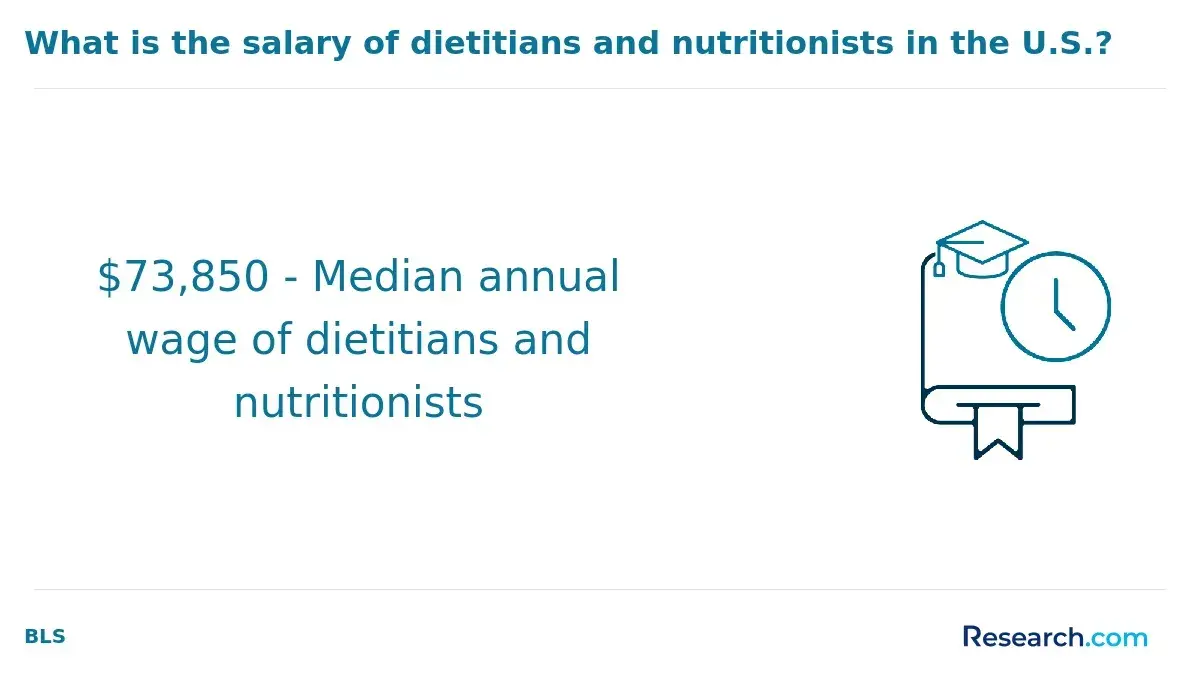
ONET OnLine reports a projected growth rate of 9% through 2032 for dietitians and nutritionists in Mississippi. The same source places median salaries around $61,890 annually in the state. These figures suggest steady demand, but individual outcomes vary by credential, employer, location, experience, specialization, and whether the role is clinical, public health, food service, or private practice.
- Preventive health demand: More patients and health systems are focusing on nutrition as part of disease prevention and chronic condition management.
- Healthcare team integration: Nutrition professionals are increasingly involved in coordinated care, especially where diet affects patient outcomes.
- Multiple employment settings: Opportunities may appear in hospitals, long-term care, schools, government agencies, nonprofit organizations, food service operations, wellness programs, and private practice.
- Public health need: Mississippi’s nutrition challenges create demand for professionals who can work with communities, not only individual clients.
The strongest candidates usually combine formal education, recognized credentials, supervised experience, communication skills, and an understanding of Mississippi’s community health needs. Salary should be viewed as a planning benchmark, not a guaranteed result.
What are the career advancement opportunities for nutritionists in Mississippi?
Advancement usually comes from combining credentials, experience, specialization, leadership ability, and a clear practice focus. Nutrition professionals can move from entry-level education or support roles into clinical care, program management, consulting, research, or private practice.
| Career direction | Common settings | How to prepare |
| Clinical dietetics | Hospitals, outpatient clinics, long-term care facilities | Pursue the RDN pathway, state licensure, clinical supervised practice, and disease-specific nutrition training. |
| Community nutrition | Public health departments, nonprofits, WIC-related programs, food access initiatives | Build skills in health education, grant-funded programs, community assessment, and culturally responsive outreach. |
| Food service management | Schools, hospitals, correctional facilities, senior care, institutional dining | Learn menu planning, compliance, procurement, staff supervision, and food safety systems. |
| Consulting or private practice | Independent practice, wellness programs, sports settings, corporate health | Clarify legal scope, develop business and documentation systems, and choose a marketable specialization. |
| Education and research | Universities, research organizations, extension programs | Consider graduate study, research experience, teaching opportunities, and program evaluation training. |
Mississippi employers include hospitals, educational institutions, and state health agencies. Professionals interested in integrative or whole-person care may also explore holistic nutrition jobs, while remembering that holistic services must still comply with Mississippi law.
How can nutritionists enhance their practice by integrating allied health roles?
Nutrition problems often overlap with behavioral health, substance use, chronic illness, medication management, and social needs. Nutritionists who understand allied health systems can communicate better with care teams, refer clients appropriately, and recognize when a client needs services beyond nutrition education.
This does not mean every nutritionist should pursue another license. Instead, it means nutrition professionals benefit from understanding adjacent roles and referral boundaries. For example, learning about how to become a substance abuse counselor in Mississippi can help nutrition practitioners understand how behavioral health training, ethics, and client support systems differ from nutrition practice.
How does pursuing a master’s degree influence a nutritionist’s career in Mississippi?
A master’s degree can expand a nutrition professional’s options in Mississippi by supporting advanced practice preparation, research literacy, leadership roles, and eligibility for more rigorous credentials. It can also help professionals design programs, interpret nutrition studies, evaluate outcomes, and manage complex client needs.
Graduate education is especially important for students targeting the RDN pathway or roles that require deeper clinical, public health, or research expertise. Students weighing the investment can compare career outcomes in what can you do with a master's in nutrition science.
How do nutritionists collaborate with other healthcare professionals in Mississippi?
Nutritionists and dietitians often work with physicians, nurses, pharmacists, social workers, therapists, and community health staff. In clinical settings, collaboration may include nutrition assessments, care planning, patient education, documentation, follow-up, and referrals. In public health, collaboration may involve school programs, food assistance initiatives, chronic disease prevention, and rural health outreach.
Understanding how other healthcare professions are regulated can improve communication and reduce scope-of-practice problems. For example, reviewing board of nursing program requirements in Mississippi can help nutrition professionals better understand the standards nurses follow in patient care environments.
How are emerging research and digital innovations shaping nutrition practice in Mississippi?
Nutrition practice is becoming more data-driven and more accessible through digital tools. Telehealth, remote monitoring, app-based food tracking, digital education materials, and outcome measurement can help nutrition professionals reach clients who face transportation, rural access, or scheduling barriers. These tools are useful, but they do not remove the need for evidence-based practice, privacy safeguards, documentation, and scope-of-practice compliance.
AI and digital nutrition tools can support meal analysis, client education, appointment preparation, and program evaluation. They should not replace professional judgment, clinical assessment, or licensed care when medical conditions are involved. Students who want programs that reflect modern practice can compare options through the best nutrition programs online.
What specialization options are available for nutritionists in Mississippi?
Specialization helps nutrition professionals focus their training and become more useful to employers or clients. In Mississippi, specializations that address chronic disease, child nutrition, food access, athletic performance, and community health may be especially relevant.
- Clinical nutrition: This path focuses on using diet to support treatment plans for medical conditions. It is particularly relevant where diabetes and other chronic diseases create ongoing nutrition needs.
- Pediatric nutrition: Children affected by food insecurity, growth concerns, or limited access to balanced meals need targeted nutrition education and family-centered support.
- Sports nutrition: Youth athletics, collegiate sports, and active adults create demand for guidance on fueling, hydration, recovery, and performance.
- Community nutrition: This specialization focuses on population-level problems such as rural food access, nutrition education, and public health programming.
A clinical nutrition example in Mississippi is a University of Mississippi Medical Center program designed to support diabetes management through dietary education. Participants reported improved blood sugar levels and overall health, showing how focused nutrition programs can connect education with measurable health goals.
Students interested in specialization can examine graduate options such as the University of Southern Mississippi’s master’s program in Nutrition and Dietetics, which includes coursework across multiple practice areas.
What role can nutritionists play in shaping public health policy in Mississippi?
Nutrition professionals can influence public health policy by translating food and health data into practical recommendations. Their work may support food assistance improvements, school nutrition initiatives, obesity prevention, chronic disease programs, and rural health outreach. Strong policy work requires evidence-based reasoning, program evaluation skills, and the ability to communicate with agencies, legislators, community partners, and the public.
Students interested in policy should build skills in research methods, ethics, data interpretation, grant writing, and regulatory analysis. Looking at structured professional pathways in other evidence-based fields, such as forensic scientist education requirements in Mississippi, can also illustrate how rigorous training supports credible public-facing recommendations.
What financial support options are available for aspiring nutritionists in Mississippi?
Students should search for funding before selecting a program, not after enrollment. Possible options include federal financial aid, institutional scholarships, state or university grants, work-study opportunities, graduate assistantships, employer tuition support, professional association awards, and payment plans. The best funding strategy depends on degree level, enrollment status, academic record, income, and whether the program is accredited.
Students comparing allied health careers may also find it helpful to review funding and education planning in related fields, including how to become a nurse practitioner in Mississippi. The details differ by profession, but the same cost-planning logic applies: confirm accreditation, estimate total cost, ask about clinical placement expenses, and compare expected career outcomes.
How can interdisciplinary licensing insights benefit nutritionists in Mississippi?
Nutrition professionals work more effectively when they understand how licensing, documentation, ethics, and scope of practice operate across healthcare. This knowledge helps prevent overstepping professional boundaries and improves coordination with providers who manage medication, diagnosis, treatment, and complex patient care.
Reviewing adjacent licensing frameworks, such as pharmacist licensure requirements in Mississippi, can help nutritionists appreciate how regulated professions document services, protect patients, and define professional responsibility.
Can nutritionists gain a competitive edge through complementary healthcare credentials in Mississippi?
Additional healthcare credentials may help some nutrition professionals expand their scope, but they require significant time, money, and licensure planning. A complementary credential makes the most sense when it directly supports your long-term role, such as clinical leadership, chronic disease management, patient education, or integrated care.
For example, students who want a broader clinical role may compare nutrition training with nurse practitioner pathways. Researching the best accredited NP programs in Mississippi can help them understand the commitment required for advanced clinical practice. However, a second credential should be pursued for a clear career reason, not simply to appear more competitive.
What are the biggest challenges faced by nutritionists in Mississippi?
Nutrition professionals in Mississippi often work with clients whose choices are shaped by income, transportation, food access, culture, health literacy, and chronic disease risk. The most effective practitioners understand these barriers instead of giving advice that assumes every client has the same resources.
- Limited access to healthy foods: The USDA reports that approximately 20% of Mississippians live in food deserts, where fresh produce and nutritious groceries may be difficult to obtain.
- Food insecurity: Mississippi has one of the highest food insecurity rates in the nation, with 18.5% of households experiencing food shortages.
- Public health funding constraints: Programs such as the “Healthy Mississippi” initiative aim to improve nutrition and physical activity, but limited funding can restrict reach and staffing.
These challenges change how nutritionists practice. Effective counseling may involve budget-conscious meal planning, local food resources, SNAP-aware guidance, community partnerships, and realistic behavior-change goals.
| Common challenge | Less effective response | Better professional response |
| Client cannot afford recommended foods | Repeat ideal meal plans without adjusting for cost | Build plans around affordable staples, local options, food assistance resources, and batch cooking. |
| Client lives far from grocery stores | Assume weekly access to fresh produce | Include shelf-stable, frozen, canned, and transportation-aware options. |
| Community program has limited funding | Design services that require expensive staffing or materials | Use partnerships, group education, train-the-trainer models, and measurable outcomes. |

What are the legal regulations and responsibilities for nutritionists in Mississippi?
Mississippi law reserves certain nutrition services for licensed professionals. Only qualified, licensed individuals may provide medical nutrition therapy and regulated nutrition care. Non-licensed practitioners may be able to offer limited nutrition-related education, but they must not diagnose disease, treat medical conditions, misrepresent credentials, or use protected titles improperly.
The Mississippi Dietetics Practice Act sets qualifications for licensure and protects the titles “dietitian” and “nutritionist.” Violations can lead to penalties, including fines and imprisonment. Anyone planning to open a practice, advertise nutrition services, work with medical conditions, or bill for care should review the law and seek official guidance before taking clients.
Students who want a broader foundation in movement, wellness, and health behavior may also consider related programs such as affordable exercise science programs online, but these programs do not replace nutrition licensure requirements.
Questions to ask before offering nutrition services
- Am I using a title that Mississippi protects by law?
- Does my service involve a disease, medical condition, diagnosis, or treatment plan?
- Do I have the credential, license, and supervision required for the service I am advertising?
- Am I documenting services in a way that protects the client and my practice?
- Do I know when to refer a client to a physician, licensed dietitian, mental health professional, or other provider?
What are the continuing education and mentorship opportunities for nutritionists in Mississippi?
Continuing education helps nutrition professionals maintain credentials, keep up with research, and improve service quality. Dietitians must complete 75 hours every five years, and professionals pursuing other credentials should follow the renewal rules of their certifying organizations.
Useful continuing education topics include diabetes nutrition, pediatric feeding, community nutrition, food insecurity, telehealth, motivational interviewing, cultural competence, documentation, ethics, and program evaluation. Mentorship is also valuable for new professionals because it provides real-world guidance on client communication, career planning, scope-of-practice boundaries, and job search strategy.
Nutritionists who work closely with nurses and other healthcare professionals may benefit from understanding allied health training pathways. Reviewing how to become a nurse in Mississippi can help nutrition professionals better understand nursing education, clinical roles, and interprofessional collaboration.
Can nutritionists benefit from developing administrative and coding skills in Mississippi?
Administrative skills can make a major difference for nutrition professionals who work in clinics, hospitals, public health programs, or private practice. Useful skills include scheduling, documentation, billing workflows, privacy compliance, referral management, outcome tracking, and basic reimbursement awareness.
Private practitioners especially need systems for intake forms, consent documents, client records, payment policies, and follow-up communication. Professionals who want stronger billing and documentation knowledge can review how to become a medical biller and coder in Mississippi.
What are the essential steps for navigating professional registration in Mississippi?
Professional registration requires a structured plan. Students should confirm the required degree, complete an accredited supervised practice program, pass the required national exam, and submit licensure documentation to the appropriate Mississippi authority. Because requirements can change, students should verify the current rules before choosing a program or accepting a job.
A practical first step is to map your intended job title to the credential it requires. If your target is registered dietitian practice, review the requirements to become a registered dietitian in Mississippi and compare them with your current education level.
Common mistakes to avoid when planning a Mississippi nutrition career
- Choosing a program without checking accreditation: Accreditation can affect supervised practice eligibility, exam eligibility, and employer acceptance.
- Assuming “nutritionist” always means the same thing: In Mississippi, titles and services can have legal implications.
- Looking only at tuition: Fees, books, supplies, supervised practice, travel, and exam preparation can change the real cost.
- Enrolling in an online program without checking placement support: Distance learning may be flexible, but students still need appropriate supervised experience for many credentials.
- Ignoring scope-of-practice rules: Offering medical nutrition therapy without proper authorization can create legal and ethical problems.
- Assuming salary outcomes are guaranteed: Pay depends on credential level, setting, experience, geography, and employer demand.
Questions to ask schools before enrolling
- Is the nutrition or dietetics program accredited for my intended credential?
- Does the program meet Mississippi requirements for the career path I want?
- How are supervised practice placements arranged?
- What are the total tuition, fees, books, supplies, exam, and placement costs?
- What percentage of students complete the program and move into supervised practice or nutrition-related employment?
- Does the program offer preparation for the Commission on Dietetic Registration exam?
- Can I complete requirements part time, online, or while working?
- Will transfer credits reduce my total time and cost?
What graduates often value about nutrition work in Mississippi
Many nutrition graduates are drawn to Mississippi because the work is closely connected to community needs. Professionals may help families build affordable meal routines, adapt traditional foods in healthier ways, support school nutrition education, or work with organizations addressing food insecurity. The work can be challenging, but it also offers visible community impact when guidance is realistic and culturally informed.
Related Articles for Nearby States
- 2027 How to Become a Nutritionist in Kansas
- 2027 How to Become a Nutritionist in Iowa
- 2027 How to Become a Nutritionist in Nebraska
- 2027 How to Become a Nutritionist in Arkansas
- 2027 How to Become a Nutritionist in Oklahoma
- 2027 How to Become a Nutritionist in Illinois
- 2027 How to Become a Nutritionist in Kentucky
- 2027 How to Become a Nutritionist in Tennessee
- 2027 How to Become a Nutritionist in Indiana
- 2027 How to Become a Nutritionist in South Dakota
Sources and further reading:
- Academy of Nutrition and Dietetics. (n.d.). Mississippi Statutes. EatRightPro.
- Become a Nutritionist. (n.d.). How Long Does It Take to Become a Nutritionist?. Become a Nutritionist.
- Feeding America. (2024). What Hunger Looks Like in Mississippi. Mississippi. Feeding America.
- Kikuchi, E., Pula, I., Tyson, A., & Yam, E. (2025, May 7). Americans on healthy food and eating. Pew Research Center.
- Mississippi State Personnel Board (MSPB). (n.d.). Nutritionist. Direct Health Services. MSPB.
- Mississippi State University. (n.d.). Nutrition. Students. MSU.
- ONET OnLine. (2025). Mississippi Employment Trends 29-1031.00 - Dietitians and Nutritionists. Retrieved February 2026, from ONET OnLine.
- University of Mississippi. (n.d.). Bachelor of Science in Dietetics and Nutrition. Undergraduate. University of Mississippi.
- University of Mississippi. (n.d.). Department of Nutrition and Hospitality Management. University of Mississippi.
- U.S. Bureau of Labor Statistics. (2024, May). Occupational Employment and Wage Statistics (OEWS) Profiles. Retrieved January 2026, from BLS.
- U.S. Bureau of Labor Statistics. (2024, May). Occupational Employment and Wage Statistics - Mississippi May 2024. Retrieved January 2026, from BLS.
- Witters, D., & James, M. P. (2025, October 28). Obesity rate declining in U.S. Gallup.
Key Insights
- The most important decision is whether you want general nutrition education work or licensed clinical dietetics practice. The education, legal authority, and career options are different.
- Mississippi regulates medical nutrition therapy and protected titles, so students should verify scope-of-practice rules before advertising services or choosing a credential.
- The RDN pathway is the strongest option for clinical roles and usually requires graduate education, supervised practice, the CDR exam, and state licensure.
- Shorter certificates may help with wellness knowledge, but they do not replace accredited education or licensure for regulated nutrition care.
- Costs go beyond tuition. Books, fees, supervised practice, travel, and exam preparation can affect the total investment.
- Mississippi’s reported 9% projected growth through 2032 and median salary around $61,890 make the field worth considering, but outcomes depend on credentials, setting, and experience.
- The best nutrition professionals in Mississippi combine science-based training with practical awareness of food insecurity, rural access, affordability, culture, and chronic disease prevention.
Other Things You Should Know about Becoming a Nutritionist in Mississippi
To become a licensed nutritionist in Mississippi in 2027, you need to complete a bachelor's degree in nutrition or a related field, followed by a master's degree. Additionally, you must pass the Commission on Dietetic Registration (CDR) exam and complete supervised practice hours.
The Mississippi State Department of Health oversees licensure for nutritionists in the state. Applicants must meet education and supervised practice requirements under Mississippi law before submitting an application and fee for review and approval.


