
2027 How to Become a Substance Abuse Counselor in Mississippi

Co-Founder and Chief Data Scientist
Mississippi needs addiction counseling professionals who can help people move from crisis to recovery, but the path into the field is not always obvious. Education level, supervised experience, certification type, ethics rules, and job setting all affect what you can do professionally. This guide explains how to become a substance abuse counselor in Mississippi, what credentials to compare, what the work actually involves, and how to evaluate whether this career fits your goals. It is written for students, career changers, human services workers, and counseling graduates who want a practical roadmap instead of a vague list of requirements.
Substance use disorders remain a serious concern in Mississippi, where over 10% of adults struggle with substance use disorders. At the same time, the state has a shortage of behavioral health professionals, which creates both opportunity and responsibility for new counselors. Programs at institutions such as the University of Southern Mississippi can help students begin preparing for this work, but choosing the right route requires careful planning.
Quick answer: Becoming a substance abuse counselor in Mississippi
The most direct route is to earn a relevant counseling, psychology, addiction studies, or human services degree; complete required addiction counseling coursework; gain supervised clinical experience; pass the appropriate certification exam; and maintain the credential through continuing education. Mississippi candidates commonly compare credentials offered through the Mississippi Department of Mental Health and the Mississippi Association of Addiction Professionals.
- Mississippi has a documented behavioral health workforce gap. The state ranks among the lowest in the nation for mental health professionals per capita, and the U.S. Department of Health and Human Services reports only 12.5 mental health professionals per 100,000 residents.
- Substance abuse counselors in Mississippi earn about $41,000 per year on average, according to Bureau of Labor Statistics data from 2023. The national average is about $48,000.
- The employment outlook is favorable. Mississippi substance abuse counseling roles are projected to grow by 22% from 2022 to 2032, compared with a national average of 17%.
- Mississippi’s cost of living index is 86.1, below the national benchmark of 100, which may help counseling salaries go further for housing, transportation, and everyday expenses.
- Certification is not only classroom-based. Candidates should expect supervised practice, with some pathways requiring a minimum of 3,000 hours of supervised clinical experience and a state-recognized certification exam.
Guide contents
- Steps to become a substance abuse counselor in Mississippi
- Minimum education requirements
- What substance abuse counselors do
- Certification and licensing process
- Legal and ethical responsibilities
- Salary expectations in Mississippi
- Job market and demand
- Career paths and advancement options
- Marriage counseling education requirements
- Telehealth and technology in addiction counseling
- Forensic science and counseling strategy
- Behavior analysis and treatment outcomes
- Mentorship and networking
- Fast-track counseling routes
- Criminal psychology and substance abuse treatment
- Additional certifications
- Continuing education and professional development
- Specialized education options
- Challenges to expect
- Burnout prevention and self-care
How can you become a substance abuse counselor in Mississippi?
To become a substance abuse counselor in Mississippi, you need to match your education and supervised experience to the credential and job setting you want. Some entry-level support roles may be available with less than a graduate degree, but independent, advanced, or state-recognized addiction counseling roles usually require more formal preparation. Demand for substance abuse counselors is projected to grow by 12 percent over the next decade, which makes early planning important for candidates who want to enter the field efficiently.
Step-by-step pathway
- Choose the right academic foundation. Common majors include addiction counseling, counseling, psychology, social work, behavioral health, human services, or healthcare administration. A master’s degree is typically important for advanced certification routes.
- Complete addiction-focused coursework. Look for classes in abnormal psychology, counseling theory, addiction treatment, assessment, ethics, group counseling, crisis response, and co-occurring disorders.
- Build supervised field experience. Certification boards expect candidates to demonstrate practical counseling competence, not just academic knowledge. Internships, practicums, and supervised employment are central to this process.
- Select the credential that matches your career goal. Mississippi candidates often compare the Provisional Certified Addiction Therapist (PCAT), Certified Addiction Therapist (CAT), Certified Alcohol and Drug Counselor (CADC), and Certified Advanced Alcohol and Drug Counselor (CAADC).
- Prepare for the certification exam. Candidates are assessed on the 12 core functions of addiction counseling, including screening, intake, assessment, treatment planning, counseling, referral, case management, documentation, and consultation.
- Apply for jobs strategically. Treatment centers, community mental health providers, hospitals, corrections programs, recovery organizations, and state agencies may hire substance abuse counseling professionals.
- Keep your credential active. Continuing education is required after certification. For example, the CAT credential requires 80 hours of continuing education every four years, including specified ethics and cultural competency content.
| Decision point | Why it matters | What to check before enrolling or applying |
| Degree level | Your education affects eligibility for certification and advancement. | Whether the role you want requires a bachelor’s degree, master’s degree, or specific counseling coursework. |
| Accreditation | Certification boards and employers may reject coursework from unsuitable institutions. | Whether the college is regionally accredited and whether the program aligns with Mississippi credential requirements. |
| Supervised hours | Field experience can delay certification if not planned early. | Who supervises the hours, how they are documented, and whether graduate fieldwork can count. |
| Credential type | Different credentials support different roles and scopes of practice. | Whether PCAT, CAT, CADC, or CAADC best matches your career target. |
| Work setting | Job duties vary widely between outpatient treatment, residential care, corrections, hospitals, and community agencies. | Client population, schedule, crisis exposure, supervision quality, and advancement options. |
If you are comparing counseling rules across states, the Delaware licensed counselor pathway can help you see how state requirements differ.
What is the minimum educational requirement to become a substance abuse counselor in Mississippi?
The minimum education depends on the job title and credential. Some entry-level addiction support positions may consider applicants with an associate or bachelor’s degree, especially when the role is closely supervised. However, candidates seeking Mississippi’s PCAT and CAT pathways should plan for a master’s degree in substance abuse counseling or a related field.
| Education level | Typical use in the field | Important limitation |
| Associate degree | May support entry-level behavioral health or human services roles. | Usually not enough for advanced certification or independent counseling duties. |
| Bachelor’s degree | Can help candidates qualify for some entry-level counseling support positions. | May still fall short for PCAT, CAT, or advanced clinical roles. |
| Master’s degree | Commonly needed for PCAT eligibility and progression toward CAT certification. | Must include relevant counseling and addiction coursework. |
- Core coursework: Strong programs cover addiction theory, counseling methods, human behavior, ethics, treatment planning, assessment, group counseling, and co-occurring disorders.
- Time to completion: A bachelor’s degree generally takes four years, and a master’s degree commonly adds about two more years. Students should expect approximately six years of higher education when pursuing the full graduate-level route.
- Program cost: A master’s program may cost between $20,000 and $40,000, depending on the school, residency status, format, and fees.
- Field training: Practical experience is not optional for serious career preparation. Practicum and internship placements help students learn assessment, documentation, counseling, referral, and crisis response skills under supervision.
- Accreditation: Choose a regionally accredited institution. Accreditation can affect certification eligibility, transfer credit, employer acceptance, and future graduate study.
The University of Southern Mississippi is one Mississippi institution students often consider because it offers a master’s degree in counseling with substance abuse-related preparation. Before enrolling anywhere, ask the program to confirm in writing how its curriculum maps to Mississippi certification requirements.
Students exploring counseling licensure in other states may also find the Nevada LPC guide useful for comparison.
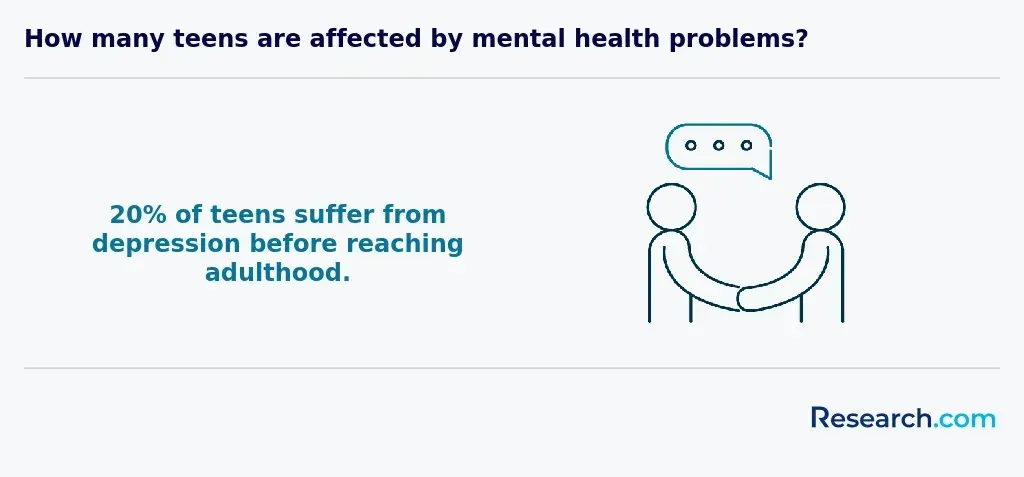
Teen mental health also shapes the addiction counseling workforce need. Surveys have found that about 20% of teens experience depression before adulthood, as shown below.
What does a substance abuse counselor do?
A substance abuse counselor helps people address harmful alcohol, drug, or substance use patterns and build a realistic recovery plan. The work combines clinical interviewing, behavior change strategies, relapse prevention, family education, documentation, and coordination with other professionals. In Mississippi, counselors may serve clients in outpatient clinics, residential treatment centers, correctional programs, hospitals, community mental health agencies, and nonprofit recovery programs.
Common responsibilities
- Screen clients and complete intake assessments to understand substance use history, mental health concerns, risk factors, and treatment needs.
- Create individualized treatment plans with measurable goals, referrals, and recovery supports.
- Provide individual counseling, group counseling, psychoeducation, and relapse prevention support.
- Track client progress and adjust the treatment plan when symptoms, motivation, or external stressors change.
- Educate families about addiction, boundaries, recovery expectations, and community resources.
- Coordinate care with physicians, social workers, probation officers, case managers, psychiatrists, and peer support specialists when appropriate.
- Maintain accurate clinical records that meet ethical, legal, and organizational standards.
Skills that matter most
- Clear communication: Counselors must explain difficult concepts without shame, jargon, or judgment.
- Active listening: Recovery work depends on understanding what the client says and what the client avoids saying.
- Clinical judgment: Counselors make ongoing decisions about risk, readiness for change, referral needs, and level of care.
- Emotional steadiness: Clients may relapse, miss appointments, experience trauma triggers, or arrive in crisis.
- Cultural humility: Effective counseling respects differences in race, faith, rural identity, family structure, income, and community stigma.
National need remains substantial. The Substance Abuse and Mental Health Services Administration reported that approximately 20.4 million adults in the U.S. had a substance use disorder in 2019. For Mississippi counselors, this demand is often felt most strongly in communities where treatment options are limited.
-
: "
“I graduated from the University of Southern Mississippi, and my work involves helping clients through some of the hardest periods of their lives. The most meaningful part is seeing recovery become possible for people who thought they had run out of options.”
"
What is the certification and licensing process for a substance abuse counselor in Mississippi?
Mississippi substance abuse counseling credentials are associated mainly with the Mississippi Department of Mental Health and the Mississippi Association of Addiction Professionals. Because requirements vary by credential, candidates should read the current application instructions from the credentialing body before choosing a degree program, practicum, or job.
| Credential or organization | Who it is generally for | Key requirements stated in this guide |
| Mississippi Department of Mental Health PCAT | Candidates beginning the addictions therapist pathway within the Mississippi Mental Health system. | Master’s degree, required coursework, employment within the system, and adherence to the DMH Code of Ethics. |
| Mississippi Department of Mental Health CAT | Candidates progressing from provisional status to full addictions therapist certification. | Two years of supervised professional addiction counseling experience, web-based training, and a comprehensive exam. |
| MAAP CADC | Addiction counseling professionals seeking alcohol and drug counselor certification. | 270 hours of addiction counseling education and 120 hours of supervised practical training. |
| MAAP CAADC | Advanced addiction counseling candidates with graduate preparation. | Master’s degree, similar education hours, and two years of counseling experience. |
The DMH route includes the Provisionally Certified Addictions Therapist credential as an entry point. Candidates working under this credential have a two-year window to move toward Certified Addictions Therapist status. Up to six months of relevant graduate field experience may count toward the two years of professional experience required for CAT.
MAAP offers additional routes, including the Certified Alcohol and Drug Counselor and Certified Advanced Alcohol and Drug Counselor credentials. These credentials can be useful for candidates whose job setting, employer, or professional goals align better with MAAP certification.
- Background checks: Applicants should expect fingerprinting and background checks as part of the process.
- Exams: Certification usually requires passing a recognized exam that measures addiction counseling knowledge and competency.
- Fees: Costs may include application charges, exam fees, training costs, transcripts, background checks, and renewal fees. Candidates should verify the latest fee schedule directly with the credentialing organization.
- Documentation: Keep copies of syllabi, transcripts, supervision forms, fieldwork logs, ethics training certificates, and continuing education records.
A frequent applicant mistake is treating supervised experience as an afterthought. Missing hours, unapproved supervision, or poor documentation can postpone certification even when the candidate has completed the degree. The need for substance abuse counselors in Mississippi is projected to increase by 17.3%, so finishing requirements efficiently can matter for entering the workforce on time.
For a broader view of counseling career structures, review the Pennsylvania LPC career pathway.
What legal and ethical considerations must a substance abuse counselor consider in Mississippi?
Substance abuse counselors handle sensitive information, high-risk situations, and clients whose legal, medical, family, and employment circumstances may be affected by treatment. Ethical practice is therefore central to the job, not a formality.
Legal responsibilities
- Credential compliance: Counselors must practice within the role, supervision level, and credential rules that apply to their position.
- Mandatory reporting: Mississippi counselors must understand when they are required to report suspected child abuse or neglect and when threats of harm to self or others require action.
- Documentation: Treatment notes, assessments, discharge summaries, and referrals must be accurate, timely, and professionally written.
Confidentiality practices
- HIPAA compliance: Counselors must protect client health information and disclose it only when legally permitted or required.
- Informed consent: Clients should understand the counseling process, limits of confidentiality, fees, record practices, and circumstances that may require disclosure.
- Family involvement: Counselors should not assume family members may receive information simply because they are concerned or involved in care.
Ethical issues
- Dual relationships: In smaller communities, counselors may encounter clients through church, school, business, recovery groups, or family networks. Boundaries must be handled carefully.
- Cultural competence: Treatment should be adapted to the client’s background, not forced into a one-size-fits-all model.
- Scope of practice: Substance abuse counselors should refer out when a client needs medical detox, psychiatric care, trauma treatment, or a service outside the counselor’s competence.
Compliance with laws
Mississippi counselors should follow state rules, employer policies, federal privacy requirements, and guidance from organizations such as the Substance Abuse and Mental Health Services Administration. Continuing education is one way counselors stay current as laws, ethics standards, telehealth practices, and documentation expectations evolve.
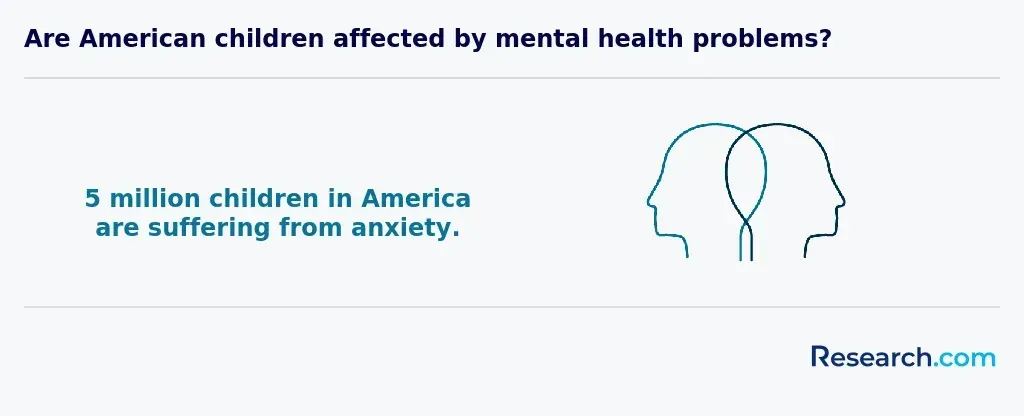
Children’s mental health is also part of the broader behavioral health context. Around 5 million American children are affected by mental health problems, as shown below.
How much can you earn as a substance abuse counselor in Mississippi?
Substance abuse counselor pay in Mississippi is modest compared with some healthcare and mental health occupations, but salaries can increase with graduate education, certification, supervisory responsibility, and work in higher-paying locations. The average salary is approximately $43,000 per year, while the median salary is around $41,000. The national average is about $48,000 annually.
| Salary measure or role | Amount stated | How to interpret it |
| Average salary in Mississippi | $43,000 | A broad estimate across experience levels and settings. |
| Median salary in Mississippi | $41,000 | A midpoint figure that may better reflect typical earnings. |
| National average salary | $48,000 | A comparison point showing Mississippi is slightly lower than the national level. |
| Clinical Director | Upwards of $70,000 | Usually requires leadership experience and oversight of treatment programs. |
| Substance Abuse Program Manager | Around $65,000 | Often involves facility, staff, compliance, and program management duties. |
| Licensed Professional Counselor | Between $55,000 and $75,000 | Typically depends on additional credentials, experience, employer, and location. |
Salary factors to evaluate
- Credential level: Advanced credentials can support broader responsibilities and better pay.
- Employer type: Hospitals, state agencies, nonprofit treatment centers, residential programs, and private providers may pay differently.
- Location: Salaries may vary between urban, suburban, and rural areas.
- Caseload and schedule: Crisis coverage, evenings, residential work, or correctional settings may affect compensation and burnout risk.
Higher-paying career directions in Mississippi
- Clinical Director: These leaders may supervise programs, manage clinical quality, oversee compliance, and earn upwards of $70,000 annually.
- Substance Abuse Program Manager: Professionals managing treatment operations may earn around $65,000.
- Licensed Professional Counselor: Counselors with additional licensure may earn between $55,000 and $75,000, depending on experience and work setting.
Locations with stronger salary potential
- Jackson: The state capital has a larger concentration of services, with salaries averaging around $45,000.
- Gulfport: Counselors in this coastal market may see salaries exceeding $42,000.
- Southaven: Demand near the Memphis area contributes to average salaries of $44,000.
Substance use trends help explain why addiction counseling remains a public health priority. Marijuana accounts for a large share of reported substance use in the U.S., with nearly one in five people using it in the past year. Opioids and prescription pain medication remain major concerns, and the use of prescription stimulants, sedatives, LSD, cocaine, methamphetamines, and heroin continues to affect communities, as shown below.
What is the job market like for a substance abuse counselor in Mississippi?
The Mississippi job market is shaped by two forces: growing demand for addiction treatment and uneven access to care. Urban areas such as Jackson and Gulfport may offer more treatment facilities and specialized roles, while rural communities may have fewer providers and more difficulty recruiting qualified counselors. The U.S. Bureau of Labor Statistics projected employment for substance abuse counselors to grow by 23% from 2020 to 2030, much faster than the average for all occupations.
- Demand: Treatment facilities, community mental health providers, and recovery programs need trained staff. Mississippi LPC job growth also reflects broader behavioral health demand in the state.
- Pay range: Average annual pay is approximately $40,000. Entry-level roles may start around $30,000, while experienced counselors can earn upwards of $50,000 in some supervisory positions.
- Competition: Larger cities may have more graduates competing for desirable jobs. Rural areas may have fewer applicants but more travel, resource, and caseload challenges.
- Advancement: Additional credentials, trauma-informed care training, dual diagnosis experience, and supervisory skills can improve promotion prospects.
- Cost of living: Mississippi’s lower living costs may make moderate salaries more manageable, though candidates should compare local rent, commuting, benefits, and loan obligations.
| Work setting | Best fit for | Potential trade-off |
| Outpatient treatment center | Counselors who want ongoing client relationships and structured appointments. | High caseloads and documentation demands can be common. |
| Residential treatment program | Counselors comfortable with intensive recovery environments. | Schedules may include evenings, weekends, or crisis coverage. |
| Community mental health agency | Professionals who want to serve high-need populations. | Funding limits and resource gaps may affect service options. |
| Correctional or court-connected program | Counselors interested in mandated treatment and justice-involved clients. | Motivation, relapse risk, and legal coordination can complicate care. |
| Hospital or integrated care setting | Candidates who want interdisciplinary healthcare collaboration. | May require stronger knowledge of medical referrals and co-occurring conditions. |
-
: "
“After graduating from the University of Southern Mississippi, I chose this work because my community needed more treatment support. The salary is not as high as in some states, but the lower cost of living helps. The hardest part is still stigma, especially when clients are afraid to ask for help.”
"
What career and advancement opportunities are available for a substance abuse counselor in Mississippi?
Substance abuse counseling can lead to direct client care, supervisory, program management, community outreach, and interdisciplinary behavioral health roles. Mississippi is projected to see 17.3% growth in the need for substance abuse and mental health counselors, partly because treatment facilities continue to expand. Around 1,930 professionals are currently employed in the state, with competitive salaries averaging around $45,770 annually.
| Career stage | Example role | Typical focus |
| Entry level | Substance Use Counselor I | Assessments, counseling groups, treatment plans, documentation, and supervised client care. |
| Mid-level | Substance Use Counselor II | More independent caseload management and involvement in treatment program operations. |
| Team leadership | Substance Use Counselor Team Lead | Planning services, directing treatment activities, supporting staff, and monitoring quality. |
| Management | Substance Use Counselor Manager | Program evaluation, contracts, compliance, staffing, budgets, and administrative oversight. |
| Related pathway | Health Education Specialist | Community wellness education, prevention programs, and public health outreach. |
| Related pathway | Community Health Worker | Client outreach, resource navigation, recovery support, and community engagement. |
Career advancement usually depends on a combination of education, credential level, documented experience, supervision skills, and comfort with complex cases. Counselors who can work with co-occurring disorders, trauma histories, family systems, court involvement, and relapse prevention often have more options.
What are the marriage counselor education requirements in Mississippi?
Marriage and family counseling follows a different educational and clinical route from addiction counseling. Mississippi candidates preparing for marriage counseling typically study family systems, couples therapy, conflict patterns, human development, assessment, ethics, and supervised clinical practice. If you are comparing addiction counseling with relationship-focused practice, review the marriage counselor education requirements in Mississippi before choosing a degree.
How can technology and telehealth improve service delivery for substance abuse counselors in Mississippi?
Telehealth can reduce travel barriers, support follow-up sessions, and help clients in rural areas stay connected to care. Technology can also improve scheduling, reminders, documentation, progress tracking, and coordination among providers. It does not replace clinical judgment, crisis planning, or confidentiality safeguards. For a broader explanation of counseling responsibilities, see what counselors do in daily practice.
How can forensic science enhance your counseling strategies in Mississippi?
Forensic knowledge can help addiction counselors better understand drug testing, evidence handling, overdose investigations, court-connected cases, and safety risks. Counselors do not need to become forensic scientists to benefit from this perspective, but interdisciplinary awareness can improve assessment and referral decisions. If this area interests you, explore how to become a forensic scientist in Mississippi.
How can integrated behavior analysis boost your counseling outcomes in Mississippi?
Behavior analysis can strengthen addiction treatment by helping counselors identify triggers, reinforcement patterns, avoidance behaviors, and measurable behavior-change goals. Techniques from applied behavior analysis may be especially useful when clients need structured interventions, progress tracking, and environmental support. To compare this related pathway, review how to become a behavior analyst in Mississippi.
How can mentorship and networking elevate your counseling career in Mississippi?
Mentorship helps new counselors learn what textbooks cannot fully teach: how to handle relapse conversations, manage boundaries, document effectively, respond to crisis, and avoid burnout. Networking through local employers, professional associations, supervision groups, conferences, and alumni networks can also lead to job openings and stronger referrals. Candidates interested in family-based treatment may also want to compare how to become an MFT in Mississippi.
How can fast-track programs expedite your entry into substance abuse counseling in Mississippi?
Fast-track options can shorten the time between coursework and supervised practice, especially for students who already have college credit or related work experience. The risk is choosing speed over eligibility. Before enrolling, confirm accreditation, practicum arrangements, certification alignment, transfer policies, and whether the schedule is realistic for working adults. For a focused overview, see the quickest way to become a counselor in Mississippi.
How can criminal psychology integration improve substance abuse treatment in Mississippi?
Many substance abuse counselors work with clients who have court orders, probation requirements, incarceration histories, or legal consequences related to substance use. Criminal psychology can improve understanding of risk factors, antisocial behavior patterns, motivation, accountability, and recidivism prevention. Counselors interested in justice-connected behavioral health can learn more through how to become a criminal psychologist in Mississippi.
Can additional certifications broaden your career opportunities?
Additional credentials can make sense when they match a clear career goal. For example, training in trauma-informed care, co-occurring disorders, school-based services, family systems, or behavioral intervention may help a counselor serve a more specific population. Avoid collecting credentials without checking whether employers value them. If you are interested in educational settings, compare the Mississippi school psychologist certification requirements.
What professional development and continuing education opportunities are available for substance abuse counselors in Mississippi?
Continuing education is required for credential maintenance and is also one of the best ways to stay effective in a field where treatment models, ethical expectations, telehealth practice, and client needs continue to evolve.
- Mississippi substance abuse counselors must complete 20 hours of continuing education every two years to maintain licensure.
- The Mississippi Department of Mental Health offers training and resources focused on evidence-based addiction treatment and professional practice.
- The Mississippi Association of Addiction Professionals provides workshops, seminars, and conferences where counselors can learn, network, and stay current.
- Online providers such as the National Association for Alcoholism and Drug Abuse Counselors offer webinars and courses in ethics, cultural competency, treatment techniques, and related topics that may support Mississippi LPC careers.
- Community colleges and universities in Mississippi may offer continuing education in trauma-informed care, motivational interviewing, assessment, and related clinical topics.
- The Substance Abuse and Mental Health Services Administration provides free training materials, webinars, and practice resources.
- Peer supervision groups can help counselors discuss difficult cases, receive feedback, and learn from experienced colleagues.
- The Mississippi Department of Mental Health also encourages participation in national conferences, including the American Society of Addiction Medicine annual conference, where counselors can review emerging addiction medicine research and treatment methods.
How can specialized education options enhance your counseling expertise in Mississippi?
Specialized education can be valuable when it expands your ability to serve a clearly defined population. Some counselors pursue faith-integrated practice, trauma work, family treatment, school-based services, or community prevention. A program such as an online Christian counseling degree may be relevant for counselors who want to work in faith-based or community ministry settings, provided they still meet state credential requirements for the role they intend to hold.
What challenges should you consider as a substance abuse counselor in Mississippi?
Substance abuse counseling can be meaningful, but it is emotionally demanding and often under-resourced. Candidates should understand the hardest parts of the work before committing to the field.
| Challenge | Why it matters | Better preparation strategy |
| Client resistance | Some clients enter treatment because of court, family, or employer pressure rather than personal readiness. | Learn motivational interviewing, stages of change, and nonjudgmental engagement strategies. |
| High relapse rates | Over 85% of individuals relapse within a year after treatment. | Treat relapse prevention as a core part of planning, not as a failure response. |
| Co-occurring disorders | Approximately 25% of clients have both substance abuse and mental health disorders. | Build competence in screening, referral, trauma-informed care, and integrated treatment teams. |
| Cultural stigma | Stigma can prevent people from seeking help, especially in some rural communities. | Use respectful language, community education, and confidentiality-centered practice. |
| Resource limitations | Some areas have fewer treatment beds, specialists, transportation options, and referral partners. | Maintain an updated referral network and understand local crisis resources. |
| Limited educational options | Fewer accredited programs can make training access harder for some students. | Compare online, hybrid, and transfer-friendly options while verifying certification alignment. |
Cost can also shape career decisions. Students comparing behavioral health programs should evaluate tuition, fees, clinical placement support, and financing rather than focusing only on convenience. For example, online marriage and family therapy degree affordability may be useful if you are weighing related counseling routes.
Public concern about substance use has remained high. In 2018, 43% of adults viewed prescription pain medications such as Oxycontin, Percocet, and Vicodin as major community problems; 42% identified other drugs such as cocaine and methamphetamines as serious concerns; 37% saw heroin use as a serious issue; 34% considered alcohol use problematic; and 26% viewed marijuana use as a serious concern, as shown below.
What self-care strategies help prevent burnout for substance abuse counselors in Mississippi?
Burnout prevention should be built into a counseling career from the beginning. Substance abuse counselors regularly encounter relapse, trauma, grief, family conflict, legal pressure, and crisis situations. Without boundaries and support, the work can become unsustainable.
- Use supervision consistently. Do not wait for a crisis to seek consultation.
- Set realistic caseload boundaries. High need does not mean one counselor can safely absorb every case.
- Develop transition rituals. A short end-of-day routine can help separate clinical work from home life.
- Maintain peer support. Trusted colleagues can help normalize stress and reduce isolation.
- Practice evidence-based self-care. Sleep, movement, therapy, mindfulness, and time off are professional safeguards, not luxuries.
- Monitor compassion fatigue. Irritability, numbness, dread before sessions, and chronic exhaustion are signs to address early.
If you are considering a related behavioral health path with broader mental health responsibilities, review how to become a mental health counselor in Mississippi.
What do substance abuse counselors say about their careers in Mississippi?
-
: "
“I see recovery change families, not just individuals. The work is hard, especially when resources are limited, but helping someone regain stability is deeply meaningful.” George
"
-
: "
“Mississippi needs more qualified addiction professionals. Local organizations and community partners make a difference when we coordinate care well.” Becky
"
-
: "
“Every client’s story is different. The challenges are real, but seeing people rebuild their lives keeps me committed to the profession.” Saul
"
Related Articles for Nearby States
- 2027 How to Become a Substance Abuse Counselor in Louisiana
- 2027 How to Become a Substance Abuse Counselor in Alabama
- 2027 How to Become a Substance Abuse Counselor in Arkansas
- 2027 How to Become a Substance Abuse Counselor in Tennessee
- 2027 How to Become a Substance Abuse Counselor in Florida
- 2027 How to Become a Substance Abuse Counselor in Missouri
- 2027 How to Become a Substance Abuse Counselor in Georgia
- 2027 How to Become a Substance Abuse Counselor in Kentucky
- 2027 How to Become a Substance Abuse Counselor in Texas
- 2027 How to Become a Substance Abuse Counselor in Indiana
References
- Addiction-Counselor.org. (2018, June 21). Mississippi education requirements and certification for substance abuse counselors. Addiction-Counselor.org.
- HumanServicesEdu.org. (n.d.). Substance abuse counseling certification in Mississippi. HumanServicesEdu.org.
- Mississippi Association of Addiction Professionals (MSAAP). (n.d.). How to get certified. MSAAP.net.
- Mississippi State Personnel Board (MSPB). (n.d.). Mississippi state personnel board. MSPB.ms.gov.
- OnlineU.com. (2023, December 1). 2024 online substance abuse counseling degrees in Mississippi. OnlineU.com.
- PublicHealthOnline.org. (2020, October 10). Mississippi substance abuse counselor certification. PublicHealthOnline.org.
- Talkspace.com. (2023, July 26). 11 common challenges that counselors and therapists face. Talkspace.com.
Key Insights
- Mississippi substance abuse counseling is a high-need career path, but the right credential depends on your degree, supervised experience, employer, and long-term goals.
- A master’s degree is typically the safest academic route for candidates pursuing PCAT, CAT, or advanced addiction counseling roles, even though some entry-level positions may accept lower degree levels.
- Do not choose a program until you verify accreditation, addiction counseling coursework, practicum support, and alignment with Mississippi certification requirements.
- Supervised experience is often the biggest timeline factor. Document hours carefully and confirm that your supervisor and setting meet credentialing rules.
- Mississippi salaries are below the national average, but advancement into LPC, program manager, clinical director, or specialized treatment roles can improve earning potential.
- The strongest candidates build skills in co-occurring disorders, relapse prevention, motivational interviewing, trauma-informed care, ethics, telehealth, and culturally responsive practice.
- Burnout prevention is essential. Effective substance abuse counselors protect their own mental health through supervision, boundaries, peer support, and realistic caseload management.
Other Things You Should Know About Becoming a Substance Abuse Counselor in Mississippi
The Mississippi State Board of Examiners for Licensed Professional Counselors regulates licensed substance abuse counselor credentials in 2027. Applicants must follow its application rules, supervision standards, and renewal requirements, and any credentialing changes must be approved through that board before practice.
In Mississippi, aspiring substance abuse counselors must complete a supervised practicum or internship of at least 300 hours for licensing in 2027. This experience must include direct patient contact and be verified by a licensed professional in the field.
To become a licensed substance abuse counselor in Mississippi in 2027, you'll need a relevant bachelor's degree, complete supervised clinical hours, and pass the state's required examinations. Licensure is managed by the Mississippi State Board of Examiners for Licensed Professional Counselors.


