2027 How to Become a Domestic Violence Counselor?

Co-Founder and Chief Data Scientist
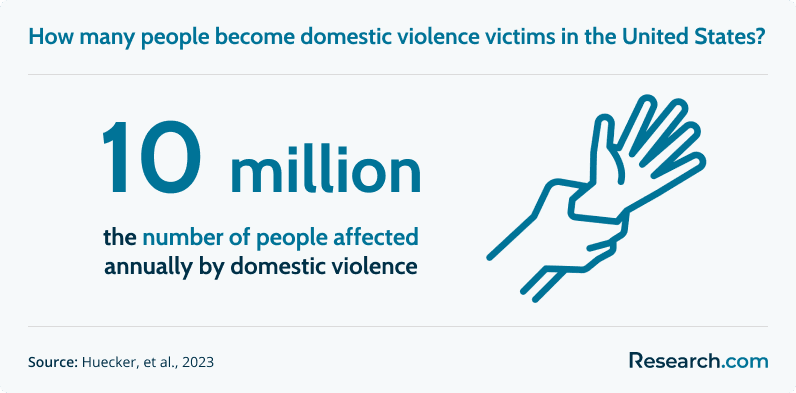
Becoming a domestic violence counselor is a career decision that requires more than compassion. Survivors may need crisis support, safety planning, trauma-informed counseling, legal advocacy, housing referrals, and long-term help rebuilding trust and stability. Because more than 10 million people experience domestic violence each year in the United States, trained professionals are needed in shelters, mental health agencies, hospitals, courts, schools, community organizations, and telehealth settings.
This guide explains how to become a domestic violence counselor in 2026, including education options, certification and licensure pathways, realistic timelines, work settings, career challenges, burnout prevention, and practical questions to ask before choosing a program or entering the field.
Quick answer: How do you become a domestic violence counselor?
The most direct path is to earn a bachelor’s degree in psychology, counseling, social work, or a related field; complete domestic violence advocacy or trauma-informed care training; gain supervised experience through shelters, hotlines, crisis centers, or internships; and pursue state licensure if you want to provide clinical counseling. Non-clinical advocacy roles may be available without a degree, but independent therapy roles generally require a master’s degree, supervised clinical hours, and a state license.
Key things to know before choosing this career
- Domestic violence is widespread and often underreported. More than 10 million people experience domestic violence annually in the US, and many survivors need both immediate safety support and long-term trauma recovery services.
- Children are deeply affected. Around 10% of children are exposed to domestic violence each year, and up to 90% directly witness it, which can contribute to emotional, behavioral, and developmental challenges.
- Pregnancy can increase vulnerability. About 30% of pregnant women experience emotional abuse, 15% experience physical abuse, and 8% experience sexual abuse, making specialized support for pregnant survivors especially important.
- Need varies by location. Kentucky (45.3%), Nevada (43.8%), and Alaska (43.3%) report some of the highest prevalence rates, which can influence local demand for trained counselors and advocates.
- There is more than one entry route. Clinical counseling usually requires graduate education and licensure, while advocacy, hotline, case management, and crisis response roles may be accessible through certification programs and supervised field experience.
- What domestic violence counselors do
- How common domestic violence is in the US and why counselors are needed
- Qualifications needed to become a domestic violence counselor in 2026
- Typical timeline for education, training, certification, and licensure
- Whether you can enter the field without a degree
- Certification and licensing requirements by role and state
- Where domestic violence counselors work and job outlook considerations
- How counselors reduce emotional strain and burnout risk
- Major career challenges in domestic violence counseling
- Building cultural competency with diverse survivor populations
- Finding affordable advanced clinical training
- Using academic research to improve counseling practice
- Working with interdisciplinary teams to support survivors
- Continuing education and professional development options
- Ethical and legal responsibilities in domestic violence counseling
- Choosing cost-effective, accredited counseling programs
- Supporting clients with co-occurring substance abuse concerns
- Planning long-term career growth in the field
- Reviewing confidentiality, reporting, and safety obligations
- Key insights for future domestic violence counselors
What does a domestic violence counselor do?
A domestic violence counselor supports people affected by intimate partner violence, family violence, coercive control, stalking, emotional abuse, physical violence, sexual abuse, financial abuse, or related trauma. The role can be clinical, advocacy-based, or a combination of both, depending on the counselor’s credentials and employer.
In a clinical role, the counselor may provide therapy, assess trauma symptoms, document treatment plans, and help clients process the psychological effects of abuse. In an advocacy or crisis role, the work may focus more on immediate safety, emergency shelter, legal referrals, resource navigation, and emotional stabilization.
Common responsibilities
- Crisis response and safety planning. Counselors help survivors assess risk, identify safe contacts, prepare emergency plans, and connect with shelters or hotlines when immediate danger exists.
- Trauma-informed counseling. Many use evidence-based approaches to help clients manage fear, shame, grief, hypervigilance, depression, anxiety, or post-traumatic stress symptoms.
- Legal and systems advocacy. Counselors may help survivors understand restraining orders, court processes, victim compensation programs, documentation needs, and available community resources.
- Education about abuse dynamics. Survivors often need help recognizing coercive control, cycles of abuse, manipulation, isolation, financial control, and boundary violations.
- Coordination with other professionals. Domestic violence counselors frequently collaborate with police, attorneys, child welfare workers, nurses, physicians, social workers, and advocates. Readers comparing helping professions may also want to understand adjacent healthcare support roles such as the licensed practical nurse career path.
Clinical counseling vs. survivor advocacy
| Path | Main focus | Typical requirements | Best fit for |
| Domestic violence advocate | Safety planning, crisis response, court accompaniment, referrals, hotline support | Employer training, domestic violence certification, supervised experience; degree may not always be required | People who want to support survivors directly without necessarily becoming licensed therapists |
| Clinical domestic violence counselor | Therapy, mental health assessment, trauma treatment, treatment planning | Usually a master’s degree, supervised clinical hours, exam, and state license | Students who want to diagnose and treat mental health conditions in a counseling role |
| Case manager or victim services specialist | Housing, benefits, safety resources, legal referrals, service coordination | Often a bachelor’s degree or relevant human services experience; requirements vary by employer | Professionals who prefer practical resource coordination and community-based support |
| Program coordinator or prevention educator | Training, outreach, prevention education, policy support, community partnerships | Experience in advocacy, public health, counseling, social work, or nonprofit services | People interested in prevention, education, and systems-level change |
How common is domestic violence in the US, and why is there a growing need for counselors?
Domestic violence remains a major public health, safety, and mental health issue in the United States. Approximately one in four women and one in nine men experience intimate partner violence in their lifetimes. Each year, over 10 million individuals in the US are subjected to domestic violence, which equals about 20 people per minute.
These figures likely do not capture the full scope of the problem because many incidents are not reported. Survivors may fear retaliation, lack financial independence, worry about children or immigration status, distrust legal systems, or feel shame and isolation. As a result, counselors must be prepared to support people who may have delayed seeking help for months or years.
Why demand for trained counselors is increasing
- Survivors often need more than short-term crisis support. Many clients require ongoing trauma care, housing assistance, legal guidance, parenting support, and help rebuilding social and financial stability.
- Public awareness has grown. More schools, courts, employers, healthcare systems, and community agencies now screen for abuse and refer survivors to trained professionals.
- Mental health needs are complex. Domestic violence may overlap with depression, anxiety, substance misuse, grief, child custody issues, homelessness, and chronic health problems.
- Telehealth has expanded access. Virtual services can help survivors in rural or underserved areas, though safety and privacy planning remain essential.
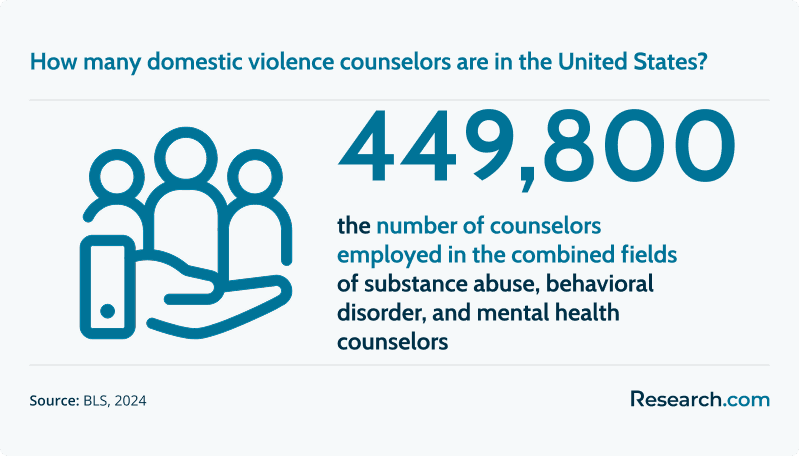
- Related counseling occupations show strong growth. The Bureau of Labor Statistics projects a 19% growth rate for domestic violence counselor positions from 2023 to 2033.
The need is especially visible in regions with high reported prevalence, including Kentucky (45.3%), Nevada (43.8%), and Alaska (43.3%). Local demand may also depend on shelter funding, court programs, nonprofit capacity, telehealth availability, and state-level victim services initiatives.
What qualifications do you need to become a domestic violence counselor in 2026?
The qualifications depend on whether you want to work as a licensed therapist, a non-clinical advocate, a case manager, a prevention educator, or a victim services professional. The term “domestic violence counselor” is used differently by employers, so the safest approach is to match your education and credentials to the duties you want to perform.
Common qualification requirements
- Relevant education. Many employers prefer a bachelor’s degree in psychology, social work, counseling, criminal justice, public health, human services, or a related field. Clinical counseling roles often require a master’s degree.
- Domestic violence-specific training. Courses in trauma-informed care, crisis intervention, lethality risk assessment, safety planning, advocacy, and survivor-centered practice are especially valuable.
- Supervised experience. Volunteer work, internships, hotline experience, shelter shifts, court advocacy, and supervised counseling hours help build practical competence.
- State licensure for clinical work. If you plan to diagnose or treat mental health conditions independently, you typically need graduate education, supervised clinical experience, an exam, and state licensure.
- Continuing education. Because laws, best practices, technology, and ethical standards change, counselors need ongoing training throughout their careers.
Students looking for a quicker route into helping roles may compare certification-based advocacy training with the fastest way to become a counselor, but it is important to separate non-clinical advocacy from licensed mental health practice.
Which path makes sense for your goal?
| Career goal | Recommended starting point | Likely degree level | Licensure needed? |
| Work on a hotline or in a shelter | Domestic violence advocate training, crisis intervention training, volunteer experience | May vary by employer | Usually not for non-clinical advocacy |
| Provide therapy to survivors | Counseling, psychology, or social work degree with trauma-focused training | Typically master’s level for independent practice | Yes, for clinical counseling |
| Support survivors through court systems | Victim advocacy, legal advocacy, case management training | Often bachelor’s level or equivalent experience | Usually not unless providing therapy |
| Move into leadership, research, or advanced clinical work | Graduate study, supervision, specialized trauma credentials, program evaluation experience | Master’s or doctoral study may be useful | Depends on role |
How long does it take to meet the education and certification requirements?
The timeline can range from a few months for some advocacy roles to several years for independent clinical practice. A bachelor’s degree often takes four years and may qualify graduates for entry-level advocacy, case management, or human services roles. Clinical counseling positions frequently require a master’s degree, which can add two to three years of graduate study. Licensure requirements, including supervised clinical hours, may extend the process by one to two years.
Shorter training routes exist for people who want to begin in crisis response or advocacy. Certification programs in crisis intervention, victim advocacy, trauma-informed care, and shelter work can sometimes be completed in weeks or months. People exploring related grief and trauma work may find overlap with training described in guides on how to become a grief counselor.
Estimated timeline by path
| Pathway | Approximate time commitment | What you can usually do | Important limitation |
| Advocate training or crisis certification | Weeks or months | Hotline support, shelter advocacy, referrals, safety planning under agency policies | Does not usually authorize independent therapy |
| Bachelor’s degree route | Typically four years | Case management, advocacy, prevention education, victim services roles | Clinical counseling roles may still require graduate study |
| Master’s degree plus licensure | Graduate study plus one to two years of supervised clinical requirements | Therapy, assessment, treatment planning, independent practice after licensure | State rules vary and must be verified before enrolling |
| Advanced clinical or research route | Longer-term graduate or doctoral preparation | Supervision, leadership, research, program evaluation, advanced trauma specialization | Higher cost and time commitment |
The best timeline is the one that matches your intended scope of practice. If your goal is immediate survivor advocacy, a certification-plus-experience route may be practical. If your goal is clinical therapy, plan for graduate education, supervised hours, and licensing exams.
Can you become a domestic violence counselor without a degree?
You can work in some domestic violence support roles without a degree, but you generally cannot provide independent clinical counseling without the required education and state license. Many shelters, crisis hotlines, and nonprofit victim services programs train advocates to provide emotional support, safety planning, resource referrals, and court accompaniment.
This route may appeal to people researching how to become a counselor without a degree. However, job titles can be confusing. Some organizations use “counselor” to mean advocate or support worker, while licensing boards use the term to describe regulated mental health professionals.
What you can and cannot typically do without a degree
| Activity | May be possible without a degree? | Notes |
| Answer hotline calls | Yes, depending on employer training | Usually requires crisis training, supervision, and agency protocols |
| Help with safety planning | Yes, in advocacy settings | Must follow organizational policies and local reporting laws |
| Provide court accompaniment | Yes, in many victim advocacy roles | Does not mean providing legal advice unless properly authorized |
| Diagnose mental health conditions | No, not independently | Clinical diagnosis generally requires licensure |
| Provide psychotherapy independently | No, not without appropriate credentials | Clinical practice usually requires a graduate degree and state license |
If you later decide to become a licensed clinician, you can build on advocacy experience by pursuing counseling, social work, psychology, or marriage and family therapy education. Students considering family systems work may also review what it takes to become a licensed provider in related fields, including how to become a licensed marriage and family therapist.
What certifications and licenses are required to practice in different states?
Requirements vary significantly by state and by job function. A person providing non-clinical advocacy inside a shelter may need employer-approved domestic violence training, while a person providing therapy independently must meet the state’s counseling, social work, psychology, or marriage and family therapy licensure requirements.
Licensure and certification basics
- Clinical licensure. Independent mental health counseling usually requires a graduate degree in counseling, psychology, social work, or a related field; supervised clinical hours; and a licensing exam such as the National Counselor Examination (NCE) or the National Clinical Mental Health Counseling Examination (NCMHCE).
- State-specific titles. Licensure titles differ by state and may include Licensed Professional Counselor (LPC), Licensed Mental Health Counselor (LMHC), or other regulated credentials.
- Specialized domestic violence credentials. Additional certifications can strengthen preparation for survivor-centered work. The National Association of Forensic Counselors offers credentials such as the Certified Domestic Violence Specialist (CDVS), which require additional training focused on domestic violence issues.
- State training programs. Some states have formal training standards. California, for example, offers a 75-hour Sexual Assault and Domestic Violence Certification Training accredited by the state for professionals working directly with survivors.
- Continuing education. Maintaining licensure and certification usually requires ongoing professional education within each renewal period.
How to check requirements before enrolling in a program
- Identify the exact role you want: advocate, case manager, therapist, social worker, prevention educator, or program leader.
- Look up your state licensing board if the role involves therapy, diagnosis, or independent counseling.
- Ask employers in your area which certifications they recognize for domestic violence advocacy roles.
- Confirm whether online coursework, internships, and supervised hours will meet your state’s requirements.
- Document all training hours, supervision hours, field placements, and continuing education certificates.
Because state rules change, students should verify licensing details directly with the appropriate state board before choosing a degree, certificate, internship, or online program.
Where do domestic violence counselors work, and what are their job prospects?
Domestic violence counselors and advocates work wherever survivors seek safety, healthcare, legal help, mental health treatment, or community support. Some roles are crisis-focused, while others involve long-term therapy, case management, prevention education, offender intervention, or policy work.
Common work settings
- Shelters and crisis centers. Counselors and advocates help survivors find immediate safety, plan next steps, access emergency resources, and connect with legal or housing support.
- Outpatient mental health and substance abuse centers. According to the Bureau of Labor Statistics, outpatient mental health and substance abuse centers account for 17% of related employment.
- Individual and family services. The Bureau of Labor Statistics reports 16% in individual and family services, where professionals may provide counseling, case coordination, parenting support, or family-centered services.
- Residential mental health facilities and hospitals. Domestic violence-related roles may also appear in residential mental health facilities (9%) and hospitals (9%).
- Courts, law enforcement partnerships, and victim services agencies. Some professionals help survivors navigate protective orders, court hearings, safety documentation, and victim compensation systems.
- Correctional and rehabilitation programs. Some counselors work with people who have used violence, often addressing anger, coercive behavior, accountability, substance abuse, and recidivism prevention.
- Telehealth and virtual advocacy services. Online services can reduce transportation barriers and improve access for rural or underserved clients, but counselors must carefully assess privacy and safety risks.
Job prospects are influenced by local funding, state policy, public awareness, and the broader demand for mental health and social service professionals. The positive job outlook for substance abuse counselors is relevant because domestic violence and substance misuse can overlap in clinical and community settings.
Salary considerations
Pay varies by credential, employer, location, funding source, experience, and whether the role is clinical or advocacy-based. Many prospective counselors ask, “how much do counselors make?” According to the Bureau of Labor Statistics, licensed counselors earn a median annual salary of $53,710, with higher wages possible in some urban areas and specialized trauma therapy roles.
How do domestic violence counselors manage emotional strain and avoid burnout?
Domestic violence counseling can be meaningful, but it is emotionally demanding. Counselors may hear repeated accounts of violence, coercion, stalking, child exposure, sexual abuse, homelessness, and legal intimidation. Studies indicate that burnout rates among mental health professionals range from 21% to 67%, depending on workload, support, and exposure to trauma.
Burnout prevention is not a personal luxury in this field. It is part of ethical practice. A counselor who is exhausted, unsupported, or emotionally overwhelmed is less able to make sound decisions, maintain boundaries, and provide stable care.
Burnout prevention strategies that matter
- Consistent clinical supervision. Supervision gives counselors a structured place to discuss difficult cases, ethical questions, personal reactions, and safety concerns.
- Realistic caseloads. Agencies should avoid expecting counselors to handle crisis-heavy workloads without adequate staffing, consultation, and recovery time.
- Peer consultation. Colleagues who understand domestic violence work can reduce isolation and help counselors process secondary traumatic stress.
- Professional boundaries. Clear limits around availability, after-hours contact, role expectations, and documentation protect both clients and counselors.
- Personal mental health support. Counselors may benefit from Employee Assistance Programs, therapy, wellness resources, and planned time away from trauma exposure.
- Cross-disciplinary learning. Professionals in other therapeutic fields also manage high-stakes communication and client vulnerability; for comparison, readers may review how clinicians approach communication disorders treated by SLPs.
Warning signs of burnout or secondary traumatic stress
- Feeling numb, detached, cynical, or unusually irritable
- Having intrusive thoughts about client stories or safety risks
- Overworking because it feels impossible to step away
- Avoiding supervision, paperwork, or client contact
- Experiencing sleep disruption, anxiety, exhaustion, or compassion fatigue
Organizations also carry responsibility. Training counselors in self-care is not enough if agencies do not address understaffing, unsafe workloads, poor supervision, and chronic resource shortages.
What are the biggest challenges domestic violence counselors face in their careers?
The hardest parts of domestic violence counseling often involve the gap between what survivors need and what systems can provide. Counselors may be helping a client create a safety plan while housing is unavailable, legal processes are slow, or child custody concerns create additional risk.
Major challenges in the field
- Secondary traumatic stress and vicarious trauma. Repeated exposure to trauma narratives can affect a counselor’s emotional health, worldview, and sense of safety.
- High burnout risk. A study on mental health professionals found that up to 67% report work-related stress linked to heavy caseloads and client trauma. Understanding the types of counselor degrees can help future professionals choose training that fits their intended role and resilience needs.
- Limited resources. Counselors may work in communities where shelters, affordable housing, legal aid, childcare, transportation, and mental health services are insufficient. In South Australia, two-thirds of families seeking assistance are turned away due to funding constraints, illustrating the pressure created by resource scarcity.
- Safety risks. Counselors must take threats seriously, especially when survivors are dealing with stalking, coercive control, or escalating violence. In Victoria, 70% of accused male stalkers also have records of assaulting women.
- Ethical and legal dilemmas. Counselors must balance confidentiality, informed consent, mandatory reporting, imminent danger, child safety, documentation, and client autonomy.
- Complex client needs. Survivors may be navigating trauma, substance misuse, immigration issues, disability, pregnancy, financial abuse, grief, custody disputes, or distrust of institutions.
Current trends shaping domestic violence counseling
The field is changing as agencies adopt trauma-informed care, expand telehealth, strengthen interdisciplinary response teams, and place greater emphasis on culturally responsive services. Evidence-based interventions such as cognitive-behavioral therapy (CBT) and eye movement desensitization and reprocessing (EMDR) are increasingly discussed in trauma-focused care, although the right approach depends on client readiness, counselor training, and clinical scope.
Telehealth has improved access for some survivors, especially those in rural areas or those facing transportation barriers. It also introduces safety questions: Can the client speak privately? Is the device being monitored? Does the abuser have access to passwords, location data, or call logs? Counselors must build digital safety planning into virtual care.
Professional development is also moving online. In adjacent care disciplines, online education has expanded access to graduate training, as seen in resources on online master’s in communication disorders top programs. Domestic violence counselors should evaluate online options carefully, especially when licensure, supervision, or field placement requirements apply.
What graduates have to say about domestic violence counselor programs
-
: "
“I did not originally plan to work in domestic violence counseling, but seeing a close friend remain silent through abuse changed my direction. My program went beyond theory and taught me how to advocate, document, and work with survivors involved in legal systems. Online study made it possible to keep my job while learning from classmates across the country. I now feel ready to do work that matters.” - Melissa
"
-
: "
“In the community where I grew up, domestic violence was rarely discussed openly. I wanted the training to respond instead of looking away. Studying online let me continue working at a nonprofit while strengthening my skills. Conversations with classmates already serving survivors made the coursework feel practical and real.” - Selena
"
-
: "
“After years in law enforcement, I saw how often survivors struggled to find the right support after reporting abuse. I pursued domestic violence counseling so I could help close that gap. Online coursework allowed me to stay in the field while preparing for a counseling-focused role. Today, I help victims move through legal systems while making sure they feel respected and heard.” - Randal
"
How can domestic violence counselors enhance cultural competency for diverse populations?
Cultural competency is essential because survivors do not experience abuse or help-seeking in the same way. Race, ethnicity, language, immigration status, disability, religion, gender identity, sexual orientation, poverty, rural location, and community stigma can all affect whether a person feels safe asking for help.
Practical ways to build culturally responsive practice
- Use trained interpreters instead of relying on children, relatives, or the alleged abuser to translate.
- Learn how cultural values, family expectations, and community pressures may shape disclosure and safety planning.
- Avoid assuming that leaving immediately is always the safest or most realistic option.
- Build referral networks with culturally specific organizations, legal aid groups, disability services, LGBTQ+ support organizations, immigrant services, and faith-aware providers.
- Ask clients what safety, healing, family, privacy, and support mean in their context.
Counselors who want broader grounding in human behavior and psychological diversity may explore affordable academic options such as the cheapest online degree in psychology, especially if they are comparing long-term education pathways.
How can domestic violence counselors access affordable advanced clinical training?
Advanced clinical training can help counselors strengthen skills in trauma assessment, complex case formulation, crisis stabilization, group counseling, family systems, supervision, and program evaluation. The challenge is finding training that is both affordable and appropriate for the counselor’s scope of practice.
Before enrolling, verify accreditation, faculty expertise, supervised practice opportunities, licensure alignment, and total cost. Some professionals compare doctoral-level routes, including cheap PsyD programs online, when they want deeper clinical preparation. However, a doctorate is not required for every domestic violence role, and students should weigh the time and cost against their career goals.
How can advanced academic research elevate domestic violence counseling practices?
Research helps domestic violence counselors move beyond good intentions and toward interventions that can be evaluated, improved, and adapted. Advanced study can prepare professionals to examine trauma outcomes, program effectiveness, survivor engagement, prevention strategies, and gaps in service delivery.
Professionals interested in teaching, research leadership, policy analysis, or advanced clinical scholarship may consider doctoral education such as a PhD in psychology online. This path can support deeper investigation into trauma dynamics, culturally responsive practice, long-term recovery, and interdisciplinary service models.
How can domestic violence counselors leverage interdisciplinary collaboration to enhance survivor support?
Domestic violence support is rarely effective when one professional works alone. Survivors may need healthcare, emergency shelter, legal protection, immigration support, child advocacy, substance abuse treatment, financial assistance, and trauma counseling at the same time.
Professionals who may be part of a coordinated response
- Domestic violence advocates and shelter staff
- Licensed counselors, social workers, psychologists, and psychiatrists
- Law enforcement and victim services units
- Legal aid attorneys and court advocates
- Primary care clinicians, nurses, emergency department teams, and reproductive health providers
- Child welfare workers and school counselors
- Housing, benefits, immigration, and disability service providers
Interdisciplinary work improves referrals, reduces duplication, and helps survivors avoid retelling traumatic experiences repeatedly. Counselors who want a broader psychology foundation may compare accelerated academic routes such as an online accelerated psychology degree, but they should still confirm that any program fits their licensure and career goals.
How can domestic violence counselors pursue ongoing professional development?
Professional development should be intentional, not random. Domestic violence counselors need training that strengthens both clinical skill and practical survivor support. Useful topics include trauma-informed care, risk assessment, ethics, cultural humility, child exposure to violence, stalking, sexual assault, substance misuse, documentation, telehealth safety, and supervision.
Professional development options
- Domestic violence advocacy certification or refresher training
- Continuing education required for state license renewal
- Peer consultation groups and clinical supervision
- Training in trauma-focused interventions such as CBT or EMDR, when appropriate to scope and credential
- Workshops on legal advocacy, mandated reporting, lethality assessment, and digital safety
- Cross-training in behavioral health areas, including options such as BCBA certificate programs online for professionals exploring behavior analysis-related skills
How can domestic violence counselors address co-occurring substance abuse issues?
Domestic violence and substance misuse can intersect in several ways. Some survivors use substances to cope with trauma. Some abusers use substance use as a tactic of control or blame. Some clients may need both safety support and addiction treatment referrals. Counselors should avoid simplistic assumptions and assess each case carefully.
Best practices for co-occurring concerns
- Screen for substance use in a nonjudgmental, trauma-informed manner.
- Distinguish between substance use as coping, substance use as coercion, and substance use by the person causing harm.
- Coordinate care with addiction specialists when appropriate.
- Build referral relationships with programs led by a substance abuse counselor or similarly trained professional.
- Do not require survivors to be substance-free before helping them plan for safety.
What ethical and legal considerations are crucial for domestic violence counselors?
Domestic violence counseling involves high-stakes ethical decisions. Counselors must protect confidentiality while also understanding mandatory reporting, duty to warn or protect, child safety laws, elder abuse reporting, informed consent, documentation standards, and state-specific rules.
Ethical and legal issues to review carefully
- Confidentiality limits. Clients should understand when information can remain private and when the counselor may be legally required to report.
- Informed consent. Survivors need clear information about services, risks, documentation, communication methods, and records.
- Mandatory reporting. Counselors must know state-specific rules involving children, vulnerable adults, imminent danger, and threats of harm.
- Documentation. Records should be accurate, objective, secure, and written with awareness that they may be subpoenaed or reviewed.
- Digital safety. Telehealth, email, texts, portals, and voicemail can create risk if an abuser monitors devices or accounts.
- Boundaries and dual relationships. Counselors should avoid conflicts of interest, overinvolvement, and blurred professional roles.
Students preparing for regulated counseling work should choose programs that teach ethics, legal compliance, and supervised practice. Comparing affordable online counseling programs can be useful, but only if the program also meets accreditation and licensure expectations.
How can I select cost-effective, accredited counseling programs?
Cost matters, but choosing the cheapest option without checking accreditation, field placement quality, licensure alignment, and graduate outcomes can be expensive later. A low-cost program is only a good value if it prepares you for the role you actually want.
Questions to ask before enrolling
- Is the program accredited by a recognized accreditor?
- Does the curriculum include trauma-informed care, crisis intervention, ethics, and domestic violence-related content?
- Will the program meet licensure requirements in the state where I plan to work?
- Are supervised field placements available in shelters, crisis centers, counseling agencies, or victim services programs?
- What are the total costs, including fees, books, technology, travel, background checks, and supervision?
- How does the program support online students with advising, practicum placement, and licensure planning?
- Are credits transferable if I later pursue a graduate degree?
Students who specifically need counseling accreditation may compare options such as the cheapest CACREP accredited programs online. However, CACREP accreditation alone does not replace checking state licensure requirements.
Common mistakes to avoid when entering this field
| Mistake | Why it can hurt you | Better approach |
| Assuming all “counselor” jobs require the same credential | Advocacy, case management, and clinical therapy roles have different requirements | Read job descriptions carefully and check state licensing rules |
| Choosing a program based only on tuition | A cheap program may not meet licensure or field placement needs | Compare accreditation, supervision, placement support, and total cost |
| Ignoring state-specific requirements | Licensure rules vary and may affect whether your degree qualifies | Contact the state board before enrolling |
| Underestimating emotional strain | Secondary trauma and burnout can shorten careers | Prioritize supervision, peer support, boundaries, and manageable workloads |
| Assuming telehealth is always safer or easier | Virtual sessions may expose survivors if devices are monitored | Include privacy checks and digital safety planning in every virtual service plan |
| Trying to handle every client need alone | Survivors often need legal, housing, medical, financial, and mental health support | Build interdisciplinary referral networks and coordinate care |
Key Insights
- Domestic violence counseling includes both clinical and non-clinical paths. You may enter through advocacy, hotline, shelter, or case management roles, but independent therapy generally requires graduate education and state licensure.
- The need for trained professionals is substantial. More than 10 million people in the US experience domestic violence each year, and many survivors require coordinated safety, legal, housing, and trauma support.
- Career timelines vary widely. Advocacy training may take weeks or months, a bachelor’s degree typically takes four years, and clinical licensure often requires a master’s degree plus supervised experience.
- Work settings are diverse. Domestic violence counselors may work in shelters, outpatient mental health and substance abuse centers (17%), individual and family services (16%), residential mental health facilities (9%), hospitals (9%), courts, nonprofits, telehealth, and rehabilitation programs.
- Burnout prevention is essential. Burnout rates among mental health professionals range from 21% to 67%, and up to 50% of domestic violence counselors experience secondary traumatic stress, making supervision, peer support, and boundaries critical.
- Program choice should be strategic. Before enrolling, verify accreditation, licensure alignment, field placement support, total cost, and whether the curriculum includes trauma-informed domestic violence training.
- The field is becoming more interdisciplinary and technology-enabled. Teletherapy, coordinated response teams, trauma-informed care, and culturally responsive practice are increasingly important for reaching survivors safely and effectively.
References:
- Banyan Treatment Centers. (2022). Burnout in mental health professionals. banyantreatmentcenter.com
- Data Pandas. (2025). Domestic violence by state 2025. datapandas.org
- Lin, L., Assefa, M., & Stamm, K. (1 Apr 2023). Practitioners are overworked and burned out, and they need our support. apa.org
- Substance Abuse and Mental Health Services Administration. (2022). Addressing burnout in the behavioral health workforce through organizational strategies. samhsa.gov
Other Things You Should Know About Domestic Violence Counselors
Training in 2027 usually includes trauma-informed assessment, crisis intervention, safety planning, and documentation. Many programs also require instruction on confidentiality, mandatory reporting, and culturally responsive practice. These skills are often taught in certificate courses or supervised field placements approved by a state board, employer, or professional association.
Yes, obtaining a license is typically required to become a domestic violence counselor in 2027. Licensing ensures professionals meet the necessary educational standards and ethical guidelines, often requiring a master's degree in counseling, psychology, or social work, along with supervised clinical experience and a passing score on a licensing exam.
A bachelor's degree in psychology, social work, or a related field is essential in 2027. Some positions may require a master's degree or certification in domestic violence counseling, depending on state regulations and specific job requirements.