Research.com is an editorially independent organization with a carefully engineered commission system that’s both transparent and fair. Our primary source of income stems from collaborating with affiliates who compensate us for advertising their services on our site, and we earn a referral fee when prospective clients decided to use those services. We ensure that no affiliates can influence our content or school rankings with their compensations. We also work together with Google AdSense which provides us with a base of revenue that runs independently from our affiliate partnerships. It’s important to us that you understand which content is sponsored and which isn’t, so we’ve implemented clear advertising disclosures throughout our site. Our intention is to make sure you never feel misled, and always know exactly what you’re viewing on our platform. We also maintain a steadfast editorial independence despite operating as a for-profit website. Our core objective is to provide accurate, unbiased, and comprehensive guides and resources to assist our readers in making informed decisions.
2026 Best Online Master’s in Communication Disorders Programs
An online master’s in communication disorders is usually designed for students who want to become speech-language pathologists, advance in communication sciences, or move into clinical work with children and adults who have speech, language, voice, fluency, cognitive-communication, or swallowing disorders. The online format can make graduate study more accessible, but it does not make the degree fully remote: accredited programs still require supervised clinical practice in person.
This guide explains how online master’s programs in communication disorders work, what they cost, how they compare with campus programs, what admissions and clinical requirements to expect, and how to judge whether a program is likely to support licensure, certification, and long-term career goals. It is written for prospective graduate students, career changers, working educators, speech-language pathology assistants, and anyone comparing online SLP pathways.
Quick answer: Is an online master’s in communication disorders worth it?
An online master’s in communication disorders can be worth it if the program is properly accredited, meets your state’s licensure requirements, provides reliable clinical placement support, and fits your budget. Graduates commonly pursue speech-language pathologist roles in schools, hospitals, rehabilitation centers, private practices, and early intervention settings. The online format is best for students who need scheduling flexibility but can still complete required in-person clinical hours.
It may not be the right choice if you cannot travel to clinical sites, need a fully self-paced program, or are considering audiology as your primary goal, since audiologists typically need additional education such as an AuD.
What are the benefits of getting an online master’s in communication disorders?
It can prepare students for clinical SLP roles. Earning an online master's in communication disorders primarily qualifies graduates for roles such as Speech-Language Pathologist or Speech/Hearing Therapist, provided they also satisfy certification and state licensure requirements.
The salary potential can be strong. Graduates in this field typically earn a median annual salary of approximately $79,060, with potential earnings exceeding $99,000 for those working in specialized settings like nursing care facilities.
The format can work for busy adults. Online coursework may help students continue working, manage family responsibilities, or remain in their local communities while completing graduate study.
Clinical learning is still built into the degree. Although classes may be online, students complete supervised clinical practicums, internships, or externships at approved sites.
What can I expect from an online master’s in communication disorders?
Online master’s programs in communication disorders combine graduate-level academic courses with supervised clinical training. Students usually study how speech, language, hearing, cognition, swallowing, and communication develop, how disorders are assessed, and how evidence-based treatment plans are created for different populations.
Typical programs include coursework, clinical practicums, and sometimes a final requirement such as a comprehensive exam, thesis, capstone, or portfolio. Clinical hours are not completed only on a computer. Students must work with clients in approved in-person settings, which may include schools, hospitals, university clinics, private practices, rehabilitation facilities, or community-based sites.
Program component
What it usually involves
Why it matters
Online coursework
Classes in language disorders, speech sound disorders, dysphagia, research methods, neurogenic disorders, AAC, and assessment
Builds the theoretical and evidence-based foundation needed for clinical decision-making
Clinical practicum
Supervised work with clients at approved sites
Helps students develop hands-on assessment, treatment, documentation, and professional communication skills
Observation hours
Documented observation of certified speech-language pathologists, often before or early in the program
Introduces students to clinical practice and may be required for admission or progression
Internship or externship
More intensive supervised placement, often in schools, medical settings, or community clinics
Prepares students for professional practice and post-graduation licensure steps
Final assessment
Comprehensive exam, thesis, capstone, or similar culminating requirement
Shows that the student can integrate research, clinical knowledge, and professional standards
Where can I work with an online master’s in communication disorders?
Most graduates use an online master’s in communication disorders to pursue speech-language pathology work. Common employment settings include public and private schools, early intervention programs, hospitals, rehabilitation centers, skilled nursing facilities, outpatient clinics, private practices, and community health organizations.
Work settings can affect the type of clients served. School-based SLPs often support students with language, articulation, fluency, literacy, social communication, and individualized education plan goals. Medical SLPs may work with adults recovering from stroke, traumatic brain injury, neurological disease, surgery, or swallowing disorders. Early intervention specialists may support infants and toddlers with developmental delays.
Before enrolling, students should confirm that the degree pathway aligns with state licensure rules where they plan to practice. Online delivery does not remove state-specific requirements for clinical hours, exams, supervised professional experience, or documentation.
How much can I make with an online master’s in communication disorders?
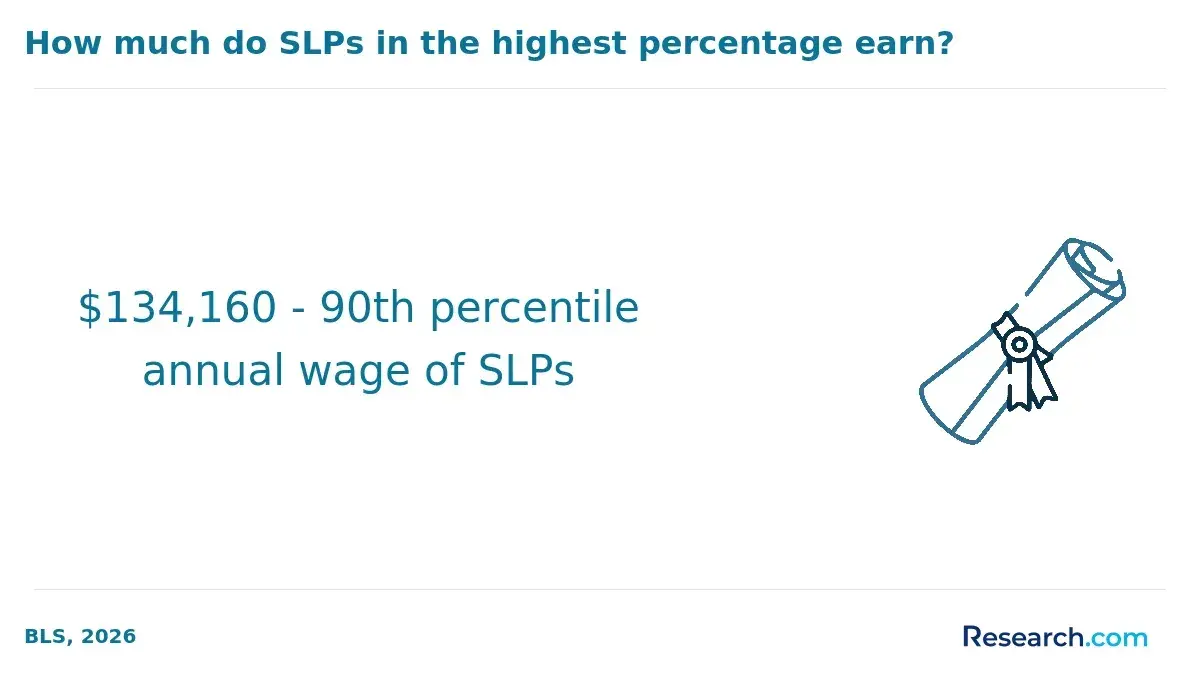
With an online master's in communication disorders, individuals can expect to earn a competitive salary in the field, but earnings vary by role, location, experience, and employer. The median annual salary for speech-language pathologists (SLPs) is approximately $89,290 as of 2023, or about $42.93 per hour. The top 10% of SLPs earned over $126,680.
Salary figures should be treated as labor-market benchmarks, not guarantees. A new graduate working in a school district may earn a different salary than an experienced clinician in a medical or specialized care setting.
Best online master’s in communication disorders programs for 2026
The best online master’s in communication disorders program is not simply the one with the lowest tuition or the most recognizable university name. For this degree, quality depends heavily on accreditation, clinical placement support, state licensure alignment, faculty expertise, student outcomes, and whether the program’s schedule is realistic for your life.
Use the program profiles below as a starting point. Before applying, verify tuition, fees, clinical site availability, licensure disclosures, admission requirements, and whether the program serves students in your state.
How do we rank schools?
When evaluating online master’s in communication disorders programs, the most useful criteria include curriculum depth, total cost, accreditation status, clinical training structure, graduate outcomes, and the availability of student support. Reliable public and licensed data sources can help students compare programs more objectively.
Integrated Postsecondary Education Data System (IPEDS database)
Master of Science in Education (MSE) degree in Speech-Language Pathology
2 years
56
$277
Council on Academic Accreditation in Audiology and Speech-Language Pathology (CAA)
University of Wisconsin-Eau Claire
Master of Science (MS) in Communication Sciences and Disorders
2 years
54
$592
Council on Academic Accreditation in Audiology and Speech-Language Pathology (CAA)
New York University
Master of Science in Communicative Sciences and Disorders
2 years
48
$2,185
Council on Academic Accreditation in Audiology and Speech-Language Pathology (CAA)
Northwestern University
MS in Speech, Language, and Learning program
2 years
45
$6,714
American Speech-Language-Hearing Association (ASHA)
California State University - Northridge
Master of Science in Communicative Disorders (CDS) program
3 years
63
$862
American Speech-Language-Hearing Association (ASHA)
Nova Southeastern University
Master of Science in Speech-Language Pathology
3 years
43
$1,274
Council on Academic Accreditation in Audiology and Speech-Language Pathology (CAA)
University of Northern Colorado
Master of Arts in Speech-Language Pathology program
2 years
61
$688
Council on Academic Accreditation in Audiology and Speech-Language Pathology (CAA)
Emerson College
Master of Science in Communication Disorders
2 years
54
$1,402
Council on Academic Accreditation in Audiology and Speech-Language Pathology (CAA)
Idaho State University
Master of Science in Speech-Language Pathology
2 years
60
$998
American Speech-Language-Hearing Association (ASHA)
University of Cincinnati
Master of Science in Speech-Language Pathology
Not listed in the provided profile
Program prepares graduates for ASHA certification and Ohio licensure
1. University of Nebraska at Kearney Master of Science in Education (MSE) degree in Speech-Language Pathology
The University of Nebraska at Kearney offers an online Master of Science in Education (MSE) degree in Speech-Language Pathology for students preparing for advanced work in the field. The curriculum addresses the nature, causes, assessment, and treatment of communication disorders, including articulation disorders, fluency disorders, voice disorders, and language disorders. Students also complete clinical experiences that connect academic study with practice in real-world settings.
Program Length: 2 years
Tracks/concentrations: Master’s in Communication Disorders
Estimated Cost per Credit: $277
Required Credits to Graduate: 56
Accreditation: Council on Academic Accreditation in Audiology and Speech-Language Pathology (CAA)
2. University of Wisconsin-Eau Claire Master of Science (MS) in Communication Sciences and Disorders
The University of Wisconsin-Eau Claire provides an online Master of Science (MS) in Communication Sciences and Disorders. The program is structured to prepare students for speech-language pathology practice while offering a format that may fit working professionals and students who need a more accessible graduate pathway. Students can expect instruction from faculty with research and clinical backgrounds.
Program Length: 2 years
Tracks/concentrations: Master’s in Communication Disorders
Estimated Cost per Credit: $592
Required Credits to Graduate: 54
Accreditation: Council on Academic Accreditation in Audiology and Speech-Language Pathology (CAA)
3. New York University Master of Science in Communicative Sciences and Disorders
The Master of Science in Communicative Sciences and Disorders at New York University (NYU) is designed to prepare students for professional licensure as speech-language pathologists. The program emphasizes prevention, assessment, and intervention for communication and swallowing disorders, with attention to evidence-based practice and research-informed clinical work. Students participate in supervised practicum experiences that apply classroom learning to client care.
Program Length: 2 years
Tracks/concentrations: Master’s in Communication Disorders
Estimated Cost per Credit: $2,185
Required Credits to Graduate: 48
Accreditation: Council on Academic Accreditation in Audiology and Speech-Language Pathology (CAA)
4. Northwestern University MS in Speech, Language, and Learning program
Northwestern University offers an MS in Speech, Language, and Learning program that welcomes applicants from varied academic backgrounds, including students who did not major in Communication Sciences and Disorders (CSD). Applicants must complete prerequisite coursework before starting the two-year program. Requirements include general coursework in biological, physical, statistical, and social/behavioral sciences, as well as CSD-focused preparation in areas such as vocal mechanism anatomy, phonetics, language development, audiology, and aural rehabilitation. Northwestern also offers CSD prerequisites online. Applicants must document 25 observation hours with a supervising SLP, ideally across medical, school, and other clinical environments.
Program Length: 2 years
Tracks/concentrations: Master’s in Communication Disorders
Estimated Cost per Credit: $6,714
Required Credits to Graduate: 45
Accreditation: American Speech-Language-Hearing Association (ASHA)
5. California State University - Northridge Master of Science in Communicative Disorders (CDS) program
California State University - Northridge (CSUN) offers a fully online Master of Science in Communicative Disorders (CDS) program for students preparing for speech-language pathology licensure and certification. The program covers topics such as language disorders, neurogenic disorders, and pediatric audiology. Students complete practicum experiences near their locations, study in a cohort-based format, and receive instruction from experienced faculty. CSUN states that the program meets academic requirements for licensure in all states, education credentials for public schools, and professional certification by ASHA.
Program Length: 3 years
Tracks/concentrations: Master’s in Communication Disorders
Estimated Cost per Credit: $862
Required Credits to Graduate: 63
Accreditation: American Speech-Language-Hearing Association (ASHA)
6. Nova Southeastern University Master of Science in Speech-Language Pathology
Nova Southeastern University's (NSU) online Master of Science in Speech-Language Pathology is an accredited program with multiple start dates, coursework across communication disorders, and clinical opportunities throughout the United States. The program highlights smaller classes, individualized support, clinical partnerships, and no GRE requirement. Applicants should expect prerequisite coursework, clinical observation hours, a personal statement, and other application materials. NSU also reports high PRAXIS pass rates.
Program Length: 3 years
Tracks/concentrations: Master’s in Communication Disorders
Estimated Cost per Credit: $1,274
Required Credits to Graduate: 43
Accreditation: Council on Academic Accreditation in Audiology and Speech-Language Pathology (CAA)
7. University of Northern Colorado Master of Arts in Speech-Language Pathology program
The University of Northern Colorado offers a Master of Arts in Speech-Language Pathology program for non-traditional students managing work or family responsibilities. The program uses web-based instruction, clinical seminars, evidence-based practice, and a 12-week medical internship in the final summer. Students need an undergraduate background in Speech-Language Pathology, Audiology, Communication Disorders, or equivalent coursework. They also must be employed as a Speech-Language Pathology Assistant (SLPA) or equivalent.
Program Length: 2 years
Tracks/concentrations: Master’s in Communication Disorders
Estimated Cost per Credit: $688
Required Credits to Graduate: 61
Accreditation: Council on Academic Accreditation in Audiology and Speech-Language Pathology (CAA)
8. Emerson College Master of Science in Communication Disorders
Emerson College offers an online Master of Science in Communication Disorders that follows an ASHA-accredited curriculum aligned with its campus-based option. Students complete coursework, virtual and community-based clinical experiences, and a weekend-long on-campus immersion. The program includes multiple start dates and flexible timelines. Graduates are prepared to pursue national certification and licensure for roles in schools, hospitals, private practices, and related settings. Emerson does not require the GRE.
Program Length: 2 years
Tracks/concentrations: Master’s in Communication Disorders
Estimated Cost per Credit: $1,402
Required Credits to Graduate: 54
Accreditation: Council on Academic Accreditation in Audiology and Speech-Language Pathology (CAA)
9. Idaho State University Master of Science in Speech-Language Pathology
Idaho State University's (ISU) online Master of Science in Speech-Language Pathology is a 36-month program aimed at students who need a flexible route to SLP preparation, including those in rural communities or with major responsibilities. The program combines asynchronous coursework with occasional synchronous meetings and community-based clinical practicum experiences. The curriculum emphasizes evidence-based practice and preparation for the Praxis exam. ISU notes that the program requires a significant time commitment, discourages full-time employment, and requires a bachelor’s degree in Communication Sciences and Disorders or a related field with required coursework. Students complete a full-time externship and receive advisor support. ISU’s SARA participation may affect licensure considerations outside Idaho.
Program Length: 2 years
Tracks/concentrations: Master’s in Communication Disorders
Estimated Cost per Credit: $998
Required Credits to Graduate: 60
Accreditation: American Speech-Language-Hearing Association (ASHA)
10. University of Cincinnati Master of Science in Speech-Language Pathology
The University of Cincinnati offers an online Master of Arts in Speech-Language Pathology that blends online coursework with required in-person clinical practicum experiences. Students must live within a four-hour driving distance of the University of Cincinnati. The curriculum includes areas such as language, literacy, phonology, and related communication disorders content. The program is designed to prepare graduates for ASHA certification and Ohio licensure and includes pathways for students with and without undergraduate backgrounds in speech and hearing, with prerequisite coursework available for those entering from other fields.
How does an online master’s in communication disorders compare to an on-campus program?
An online master’s in communication disorders can offer the same core academic preparation as an on-campus program, but the student experience is different. The biggest advantage is flexibility. Some online programs allow students to complete lectures, assignments, and discussions around work or family schedules, while still meeting firm clinical deadlines.
The biggest trade-off is clinical access. Online students usually need to complete practicums at local approved sites, which means placement coordination is critical. Campus students may have easier access to university clinics, faculty-led labs, and nearby clinical partners. For example, on-campus students at Emerson may interact more directly with facilities such as Emerson's Robbins Center, while online students use a different placement and support model.
Both formats may meet accreditation expectations when properly structured. The right choice depends on your learning style, location, ability to travel, need for peer interaction, and confidence that the program can help secure appropriate clinical placements. Students comparing graduate options beyond health fields can also review how online learning differs across disciplines, such as online degrees in writing, but communication disorders programs have stricter clinical requirements than many nonclinical degrees.
Factor
Online master’s
On-campus master’s
Course delivery
Mostly online, sometimes with live sessions, asynchronous modules, or short residencies
Primarily in-person classes, labs, and campus activities
Clinical training
Completed in person at approved local or regional sites
Often connected to university clinics and campus-affiliated partners
Flexibility
Usually stronger for working adults and students outside the campus region
Usually more structured around fixed class and clinic schedules
Networking
Depends on virtual cohorts, faculty access, clinical sites, and professional events
Often easier through campus clinics, labs, student groups, and faculty offices
Best for
Self-directed students who need geographic or scheduling flexibility
Students who want frequent in-person mentoring and campus-based clinical access
What is the average cost of an online master’s in communication disorders?
The cost of an online master’s in communication disorders varies widely by school, credit load, residency status, foundational coursework requirements, fees, and clinical placement expenses. Emerson College charges approximately $1,444 per credit for its Master of Science in Communication Disorders program, totaling around $77,976 for the entire program without foundational courses and up to $103,968 if foundational courses are required1. Maryville University lists its online Master of Science in Speech-Language Pathology at about $54,906 for the full program. The average cost for healthcare-related master's degrees, including speech-language pathology, was reported to be around $23,540 per year in tuition and fees as of 20202. The University of Nebraska at Kearney offers a master's degree at an annual tuition rate of approximately $9,7026.
When comparing programs, do not stop at tuition. Ask about technology fees, clinical placement fees, background checks, immunizations, liability insurance, travel to practicum sites, residency or immersion costs, textbooks, exam fees, and whether extra leveling courses are required. Some students researching lower-cost healthcare pathways also compare related affordability pages, such as cheapest online PMHNcertificate programs, but clinical requirements and licensure outcomes differ by profession.
Cost item
Why it can change your total price
Tuition per credit
The listed rate is only one part of the cost, especially when programs require 43 to 63 credits
Foundational or leveling courses
Students without a CSD background may need extra coursework before entering the main sequence
Clinical placement expenses
Travel, onboarding, background checks, and site requirements may add costs
Residency or immersion requirements
Some online programs require short in-person visits that may involve lodging and transportation
Licensure and exam costs
Graduates may need to pay for Praxis testing, state applications, and credentialing steps
What are the financial aid options for students enrolling in an online master’s in communication disorders?
Graduate study in communication disorders can be expensive, but students may be able to combine federal loans, scholarships, employer support, and program-specific aid. Start early because some awards require separate applications, recommendations, essays, or proof of enrollment.
FAFSA: The Free Application for Federal Student Aid is the starting point for federal aid eligibility. Graduate students commonly use federal student loans, and federal loans may offer repayment protections that private loans do not.
Scholarships and grants: The ASH Foundation offers awards for students in audiology and speech-language pathology. Universities may also provide graduate scholarships tied to academic merit, financial need, diversity initiatives, clinical service, or the communication disorders department.
External scholarships: Professional associations, foundations, state organizations, and community groups may fund students entering healthcare, education, disability services, or speech-language pathology.
Employer tuition assistance: School districts, hospitals, clinics, or other employers may reimburse part of tuition if the degree aligns with workforce needs. Ask human resources about eligibility, repayment obligations, and grade requirements.
Private student loans: Private loans may help cover remaining costs, but they often have less flexible repayment terms than federal loans. Compare interest rates, cosigner rules, deferment options, and total repayment cost.
Students comparing the cost of online master’s in communication disorders with other graduate options can review broader degree-planning resources, including entrepreneurship degrees, to understand how goals, credential requirements, and return on investment differ by field.
What are the prerequisites for enrolling in an online master’s in communication disorders?
Admissions requirements vary, but most online master’s programs in communication disorders expect applicants to show academic readiness, exposure to the field, and completion of science and communication-related prerequisites. Students who did not major in Communication Sciences and Disorders may need leveling courses before full graduate study.
Bachelor's degree: Applicants need a bachelor’s degree from an accredited institution. Some programs prefer a CSD major, while others accept related or unrelated majors if prerequisites are completed.
Official transcripts: Schools typically require transcripts from every college or university attended.
Letters of recommendation: Programs often ask for references from faculty, supervisors, or professionals who can speak to academic ability, communication skills, maturity, and clinical potential.
Prerequisite coursework: Common expectations include biological sciences, physical sciences, statistics, social/behavioral sciences, anatomy and physiology of speech mechanisms, phonetics, language development, audiology, and related foundational subjects.
Clinical observation hours: Many programs require documented observation hours, often 25, with a certified speech-language pathologist.
Application materials: Schools may request a resume, personal statement, interview, writing sample, or proof of relevant experience.
If your main interest is specialized clinical assessment rather than speech-language pathology, compare requirements carefully. Related graduate pathways, such as best online PsyD programs in neuropsychology, lead to different professional roles and licensure systems.
What courses are typically in an online master’s in communication disorders?
Courses in an online master's in communication disorders are designed to prepare students for clinical reasoning, assessment, intervention, documentation, and ethical practice. The curriculum usually moves from foundational science to disorder-specific courses and supervised practice.
Course area
What students study
Speech sound disorders
Articulation, phonological development, assessment, and treatment planning
Language development and disorders
Typical and atypical language development across childhood and adulthood
Neuroanatomy and neurophysiology
Brain, nervous system, and anatomical foundations related to communication and swallowing
Dysphagia
Swallowing disorders, assessment procedures, safety concerns, and intervention approaches
Aphasia
Language impairments associated with brain injury or neurological conditions
Voice disorders
Vocal function, assessment, prevention, and therapeutic strategies
Cognitive-linguistic disorders
Communication challenges connected to memory, attention, executive function, and cognition
Augmentative and alternative communication (AAC)
Communication systems and supports for individuals with complex communication needs
Research methods
How to evaluate evidence, interpret studies, and apply research to clinical practice
Clinical practicum
Supervised client contact, treatment planning, documentation, and professional feedback
What types of specializations are available in an online master’s in communication disorders?
Many master’s programs are built around speech-language pathology preparation rather than formal concentrations, but students may be able to focus clinical placements, electives, research projects, or capstone work on a specific population or disorder area. Unlike some nursing pathways, such as rn to bsn no clinicals, communication disorders programs require clinical practice because supervised client experience is central to SLP preparation.
Speech-Language Pathology: The most common pathway, focused on assessment and treatment of speech, language, fluency, voice, cognitive-communication, and swallowing disorders.
Neurogenic Communication Disorders: Preparation for working with clients whose communication problems are related to stroke, traumatic brain injury, degenerative disease, or other neurological conditions.
Voice and Swallowing Disorders: Study of vocal function and dysphagia, often relevant to medical, rehabilitation, and specialized clinic settings.
Fluency Disorders: Focus on stuttering and related fluency challenges, including assessment and intervention strategies.
Bilingual Communication Disorders: Preparation for culturally and linguistically responsive care with multilingual clients and families.
Autism Spectrum Disorders: Study of communication strategies, social communication support, AAC, and intervention planning for autistic individuals.
Hearing and Related Disorders: Some programs include hearing-related coursework, although audiology has generally moved toward the Doctor of Audiology degree for independent audiologist practice.
How to choose the best online master’s in communication disorders?
The best program is the one that can realistically get you from admission to licensure readiness without unexpected barriers. Because communication disorders is a regulated clinical field, the decision should start with accreditation and licensure alignment, not marketing language.
Confirm accreditation first: Look for accreditation by the Council on Academic Accreditation in Audiology and Speech-Language Pathology (CAA) and verify institutional accreditation.
Check state authorization and licensure disclosures: Make sure the program accepts students from your state and meets academic and clinical requirements where you plan to practice.
Evaluate clinical placement support: Ask whether the school secures placements, helps identify sites, or expects students to find their own supervisors.
Compare total cost, not just tuition: Include fees, leveling courses, travel, immersions, clinical expenses, exam costs, and lost work time.
Review admissions fit: Check prerequisite courses, GPA expectations, observation hours, GRE or MAT policies, interviews, and application deadlines.
Study outcome data: Ask about graduation rates, Praxis pass rates, employment outcomes, licensure results, and student attrition.
Assess schedule realism: A program may be online but still require synchronous classes, daytime clinical hours, full-time externships, or reduced work hours.
Match faculty and clinical strengths to your goals: If you want medical SLP work, look for dysphagia, neurogenic, and hospital placement strength. If you want school-based practice, examine pediatric language, literacy, autism, and IEP-related preparation.
Question to ask
Why it matters
Is the program CAA-accredited or otherwise aligned with ASHA certification requirements?
Accreditation can affect certification, licensure, and employer acceptance
Will this program meet licensure requirements in my state?
State rules differ, and online students may face location-specific restrictions
Who finds clinical placements?
Placement responsibility can determine whether you can progress on time
Are there required campus visits?
Residencies can add travel cost and scheduling constraints
What happens if a clinical site falls through?
A strong backup process reduces the risk of delayed graduation
What are recent Praxis pass rates and completion rates?
Outcomes help show whether students are being prepared effectively
Can I work while enrolled?
Some programs discourage full-time employment because clinical requirements are intensive
It can also be useful to compare degree value against unrelated professional master’s options, such as master of legal studies career opportunities, because the ROI logic differs when a field requires licensure, clinical hours, and supervised practice.
What career paths are available for graduates of an online master’s in communication disorders?
Graduates most often pursue speech-language pathology, but the degree can also support work in education, community services, research, advocacy, or preparation for further doctoral study. Career options depend on licensure, certification, state rules, and any additional education required.
Speech-Language Pathologist (SLP): SLPs assess and treat communication and swallowing disorders in schools, hospitals, private practices, rehabilitation centers, and other settings. The job market for SLPs is strong, with a projected growth rate of 19% from 2022 to 2032, and a median salary of $89,290 per year as of 2023.
Audiologist: This career usually requires additional education such as an AuD. Audiologists diagnose and treat hearing and balance disorders. Audiologists enjoy a projected job growth of 11% and a median salary of $87,740 per year.
Speech Therapist: This role overlaps with speech-language pathology and often involves supporting clients with speech and language challenges in educational or rehabilitation settings.
Teacher or Special Education Teacher: Some graduates work in school environments supporting students with communication disorders or broader special education needs, depending on state credential requirements.
Community Support Specialist: These professionals connect individuals with communication challenges to services, resources, advocacy, and support systems.
Researcher or Academic Roles: Graduates who continue to doctoral study may pursue research, teaching, and faculty roles in communication sciences and disorders programs.
What is the job market for graduates with an online master’s in communication disorders degree?
The job market for graduates with an online master’s in communication disorders is favorable, especially for those pursuing speech-language pathology. The U.S. Bureau of Labor Statistics projects approximately 14,000 job openings annually over the next decade for speech-language pathologists. Demand is connected to needs in schools, healthcare, rehabilitation, early intervention, aging populations, and services for people with speech, language, cognitive-communication, and swallowing disorders.
SLPs can work in schools, hospitals, private practices, or rehabilitation centers, earning a median annual salary of around $89,290 as of 2023. Graduates may also move into consulting, healthcare management, advocacy, education, or research. Related healthcare career guides, such as LPN career opportunities, can help students compare how licensing, salaries, and advancement differ across patient-care fields.
What do graduates say about online master’s in communication disorders programs?
: "
"Juggling work and family while pursuing my passion felt impossible until I discovered online learning. The flexibility allowed me to study at my own pace, and the interactive platform fostered a strong sense of community with peers, making the rigorous coursework both manageable and rewarding." - Karla
"
: "
"The online master's in communication Disorders opened doors I never thought possible. The advanced technology used in the virtual classrooms provided access to experts and resources from across the country, enhancing my knowledge and clinical skills while allowing me to stay in my hometown and support my local community." - Mitch
"
: "
"I was initially hesitant about online learning, but the program exceeded my expectations. The structured curriculum and consistent faculty support created an engaging and effective learning environment, and I now feel incredibly prepared to make a real difference in the lives of individuals with communication disorders." - Magda
"
Can I fast-track my online master’s in communication disorders?
Some programs offer accelerated options, but fast-tracking an online master’s in communication disorders is not as simple as taking extra online courses. Students must still complete required clinical experiences, meet competency standards, and prepare for certification and licensure steps.
An accelerated track may be a good fit if you already have prerequisite coursework, can reduce work hours, have strong academic preparation, and can travel or commit to clinical placements when required. It may not be realistic if you need a slower pace, lack foundational CSD courses, or cannot complete daytime clinical hours. To compare shorter pathways, review 5 year accelerated speech pathology programs.
How do online programs enhance student support and networking?
Strong online communication disorders programs do more than post lectures. They provide academic advising, clinical placement guidance, technical support, faculty office hours, peer cohorts, tutoring, mentoring, career counseling, and professional networking opportunities.
Look for programs that offer structured communication, predictable response times, clear practicum procedures, licensing guidance, and access to faculty with clinical expertise. Networking may happen through virtual events, cohort discussions, clinical supervisors, professional association participation, and alumni connections. Students seeking lower-cost options can also compare online SLP master's programs.
How can I transition from teaching to speech-language pathology?
Teachers often bring useful skills to speech-language pathology, including experience with children, lesson planning, communication support, collaboration with families, and familiarity with school systems. However, teaching experience does not replace clinical preparation. Career changers must verify prerequisite coursework, complete required observation and clinical hours, and meet state licensure requirements.
A practical transition plan starts with transcript evaluation, prerequisite mapping, observation hours, conversations with SLPs in schools and medical settings, and a realistic review of graduate program timelines. For a more focused transition plan, see how to make a career change from teaching to speech pathology.
How do online programs ensure effective clinical practicum experiences?
Effective online programs build clinical training around approved sites, qualified supervisors, structured competencies, consistent documentation, and regular feedback. They may partner with schools, hospitals, clinics, rehabilitation centers, and community providers to help students meet state and national requirements.
Some programs also use telepractice demonstrations, simulation labs, case-based learning, and virtual skill practice to prepare students before direct client work. These tools can support learning, but they do not eliminate the need for supervised in-person clinical practice. When comparing programs, review clinical standards and accreditation alignment through resources such as ASHA SLP programs.
What continuing education and professional development resources support career advancement?
After graduation, speech-language pathologists must keep skills current through continuing education, professional learning, and credential renewal. Professional development may include workshops, conferences, webinars, specialty courses, supervision training, research updates, and employer-sponsored clinical education.
Continuing education is especially important in areas such as dysphagia, AAC, telepractice, culturally responsive assessment, neurogenic disorders, autism support, and school-based service delivery. Students still deciding where to begin can compare online communication disorders degree programs before narrowing their graduate pathway.
What are the steps to secure certification and licensure after graduation?
Graduation is not the final step for most students who want to practice as speech-language pathologists. Candidates usually need to complete academic requirements, supervised clinical experiences, standardized exams, documentation, and state licensure applications. Requirements can differ by state, so students should start checking rules before enrollment, not after graduation.
Graduate from an appropriate program: Confirm that the program meets accreditation and state requirements for SLP preparation.
Complete required supervised clinical hours: Keep detailed records of settings, populations, hours, supervisors, and competencies.
Pass required examinations: Many candidates must pass a standardized exam such as the Praxis.
Apply for state licensure: Submit transcripts, exam results, clinical documentation, fees, background checks, and any state-specific forms.
Complete supervised professional experience if required: Some licensing and certification pathways require post-graduate supervised practice.
Pursue national certification when appropriate: National credentials, including the CCC-SLP, can strengthen professional mobility and employer recognition. Learn more in What is CCC SLP?.
What accreditation and quality factors should I look for in an online master’s in communication disorders program?
Accreditation is one of the most important quality checks for an online master’s in communication disorders. Prospective students should verify programmatic accreditation, institutional accreditation, state authorization, licensure disclosures, and clinical training standards.
Programmatic accreditation: Look for recognized accreditation connected to speech-language pathology preparation, such as CAA accreditation.
Institutional accreditation: Confirm that the college or university is accredited by a recognized institutional accreditor.
State licensure alignment: Ask whether the program meets requirements in your intended state of practice.
Clinical placement quality: Review how sites and supervisors are approved, monitored, and evaluated.
Faculty qualifications: Look for faculty with relevant clinical credentials, research experience, and active engagement in the field.
Admissions transparency: Programs should clearly explain prerequisites, deadlines, observation requirements, and leveling coursework.
Students comparing admissions accessibility and quality standards can also review easiest SLP grad schools to get into, while remembering that easier admission does not automatically mean a better fit.
What is the long-term speech language pathologist employment outlook?
The long-term outlook for speech-language pathologists is supported by demand in education, healthcare, rehabilitation, aging services, and early intervention. Demographic shifts, increased awareness of developmental and communication needs, and expanded use of technology in service delivery continue to shape the field.
Graduates who maintain licensure, pursue continuing education, and build specialized skills may be better positioned for advancement. Areas such as medical speech-language pathology, dysphagia, AAC, bilingual services, autism support, and telepractice may offer additional pathways depending on employer needs. For a deeper labor-market discussion, see the speech language pathologist employment outlook.
How do emerging technologies improve online learning outcomes in communication disorders?
Technology is changing how communication disorders students learn, practice, and receive feedback. Online programs may use video-based case analysis, simulation platforms, virtual labs, telepractice demonstrations, digital documentation tools, learning analytics, and recorded clinical skill reviews.
These tools can make online learning more interactive and help students prepare for supervised clinical work. However, technology should support—not replace—direct clinical training with qualified supervisors and real clients. Students should ask how a program uses simulation, telepractice, assessment software, and faculty feedback to build competence. Career-focused students can also compare location and employer trends through resources on highest paying industries for SLPs.
Common mistakes to avoid when choosing an online master’s in communication disorders
Mistake
Why it can hurt you
Better approach
Choosing a program before checking accreditation
You may face barriers to certification, licensure, or employment
Verify CAA status, institutional accreditation, and state licensure alignment
Looking only at tuition per credit
Fees, leveling courses, clinical costs, and travel can significantly change the total cost
Build a full cost estimate before applying
Assuming online means fully remote
Clinical practicum experiences are completed in person
Ask exactly where, when, and how clinical hours are arranged
Ignoring state licensure rules
An online program may not meet requirements in every state
Check licensure disclosures and contact your state board if needed
Underestimating the time commitment
Clinical placements may require weekday daytime availability
Ask whether full-time work is realistic during each term
Relying only on rankings
A highly ranked program may still be a poor fit for your location, budget, or clinical goals
Compare outcomes, placements, cost, support, and licensure fit
Key Insights
An online master’s in communication disorders can prepare students for speech-language pathology careers, but required clinical training still happens in person.
Accreditation, state licensure alignment, and clinical placement support are the most important factors to verify before applying.
SLPs can work in schools, hospitals, private practices, or rehabilitation centers, earning a median annual salary of around $89,290.
Some online programs offer flexible or accelerated formats; students can finish their Master of Science in Communication Disorders in as few as 20 months through a 5-term track or extend it to 36 months via a 9-term track.
Speech-language pathologists (SLPs) has 14,000 job openings annually over the next decade, while audiologists enjoy a projected job growth of 11%.
Costs vary widely. The University of Nebraska at Kearney offers a master's degree at an annual tuition rate of approximately $9,7026, while other programs may cost substantially more depending on credit price and added fees.
The best program is not automatically the fastest or cheapest one. It is the one that fits your licensure goal, clinical placement needs, learning style, budget, and career direction.
References:
UNESCO. (2023). Global education monitoring report 2023: Technology in education A tool on whose terms? https://gem-report-2023.unesco.org
U.S. Bureau of Labor Statistics. (2023a, April 25). Occupational employment and wages, May 2022 Speech-language pathologists. Occupational Employment and Wage Statistics. https://www.bls.gov/oes/current/oes291127.htm
U.S. Bureau of Labor Statistics. (2023c, April 25). Occupational employment and wages, May 2022 Audiologists. Occupational Employment and Wage Statistics. https://www.bls.gov/oes/current/oes291181.htm
U.S. Bureau of Labor Statistics. (2023d, April 25). Occupational employment and wages, May 2022 Physician assistants. Occupational Employment and Wage Statistics. https://www.bls.gov/oes/current/oes291071.htm
Other Things You Should Know About Online Master’s in Communication Disorders Programs
What factors should you consider when choosing an online Master's in Communication Disorders program in 2026?
When selecting an online Master's in Communication Disorders program in 2026, consider accreditation status, curriculum comprehensiveness, faculty expertise, clinical placement opportunities, and technology support. Evaluate flexibility in schedule, tuition costs, and graduation rates to ensure the program aligns with your career goals and personal needs.
What are the strengths of the best online Master's in Communication Disorders programs in 2026?
The best online Master's in Communication Disorders programs in 2026 offer flexibility, allowing students to balance studies with other commitments. They feature accredited curricula that cover the latest industry practices and provide clinical practicum opportunities through partnerships with local healthcare facilities, ensuring a comprehensive education that meets professional standards.