Research.com is an editorially independent organization with a carefully engineered commission system that’s both transparent and fair. Our primary source of income stems from collaborating with affiliates who compensate us for advertising their services on our site, and we earn a referral fee when prospective clients decided to use those services. We ensure that no affiliates can influence our content or school rankings with their compensations. We also work together with Google AdSense which provides us with a base of revenue that runs independently from our affiliate partnerships. It’s important to us that you understand which content is sponsored and which isn’t, so we’ve implemented clear advertising disclosures throughout our site. Our intention is to make sure you never feel misled, and always know exactly what you’re viewing on our platform. We also maintain a steadfast editorial independence despite operating as a for-profit website. Our core objective is to provide accurate, unbiased, and comprehensive guides and resources to assist our readers in making informed decisions.

2026 Best Master’s in Speech Language Pathology Programs

Imed Bouchrika, PhD

by Imed Bouchrika, PhD

Co-Founder and Chief Data Scientist

What can I expect from a Master’s in Speech-Language Pathology?

A Master’s in Speech-Language Pathology prepares students to assess, diagnose, and treat communication and swallowing disorders. Most graduates use the degree as part of the pathway toward professional practice as licensed speech-language pathologists, though exact licensure requirements depend on the state and employer.

SLP training covers multiple areas of human communication, including speech production, language development, social communication, cognitive-communication skills, fluency, voice, and swallowing. Students learn how to evaluate client needs, design treatment plans, document progress, and collaborate with families, educators, and healthcare teams.

Because clients can include children with developmental delays, adults recovering from stroke, people with cleft palate, patients with neurological disorders, individuals who are deaf or hard of hearing, and clients on the autism spectrum, strong programs combine academic coursework with supervised clinical practice across different populations and settings.

Program componentWhat it usually includesWhy it matters
Core courseworkSpeech, language, hearing, swallowing, assessment, intervention, and research-based practiceBuilds the clinical foundation needed for evidence-based treatment
Clinical practicumSupervised work with clients in schools, clinics, hospitals, rehabilitation centers, or community settingsDevelops direct patient-care competence and supports licensure preparation
Technology trainingTelepractice platforms, speech analysis tools, AAC devices, digital case materials, and online simulationsPrepares students for modern service delivery models
Professional preparationEthics, documentation, interprofessional collaboration, cultural competence, and exam preparationHelps students transition from graduate study to supervised professional practice

Where can I work with a Master’s in Speech-Language Pathology?

Graduates of SLP graduate programs can work in several environments, and each setting has different client populations, schedules, documentation expectations, and collaboration demands.

  1. In schools, SLPs often work with teachers, counselors, school psychologists, and families to support students with speech, language, literacy, and social communication needs.
  2. Some professionals build on their SLP background by taking additional education coursework to qualify for teaching-related roles or later move into university teaching and clinical supervision.
  3. Government labor sources show that SLPs also work in public therapy facilities and hospitals, where they collaborate with physicians, surgeons, social workers, audiologists, physical therapists, occupational therapists, and respiratory therapists.

Other options include private practice, outpatient clinics, skilled nursing facilities, assisted living centers, and residential care facilities. Private practice may appeal to professionals who want to specialize in a certain client group or disorder area, but it also requires business management, referral development, billing knowledge, and compliance planning.

How much can I make with a Master’s in Speech-Language Pathology?

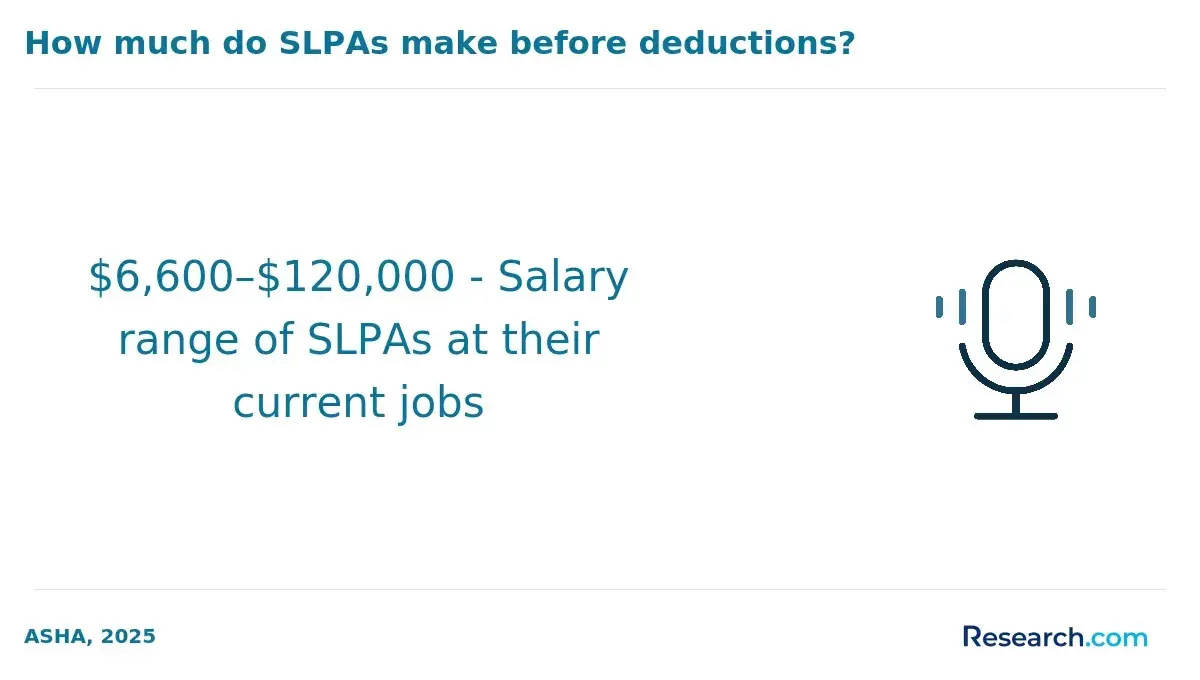
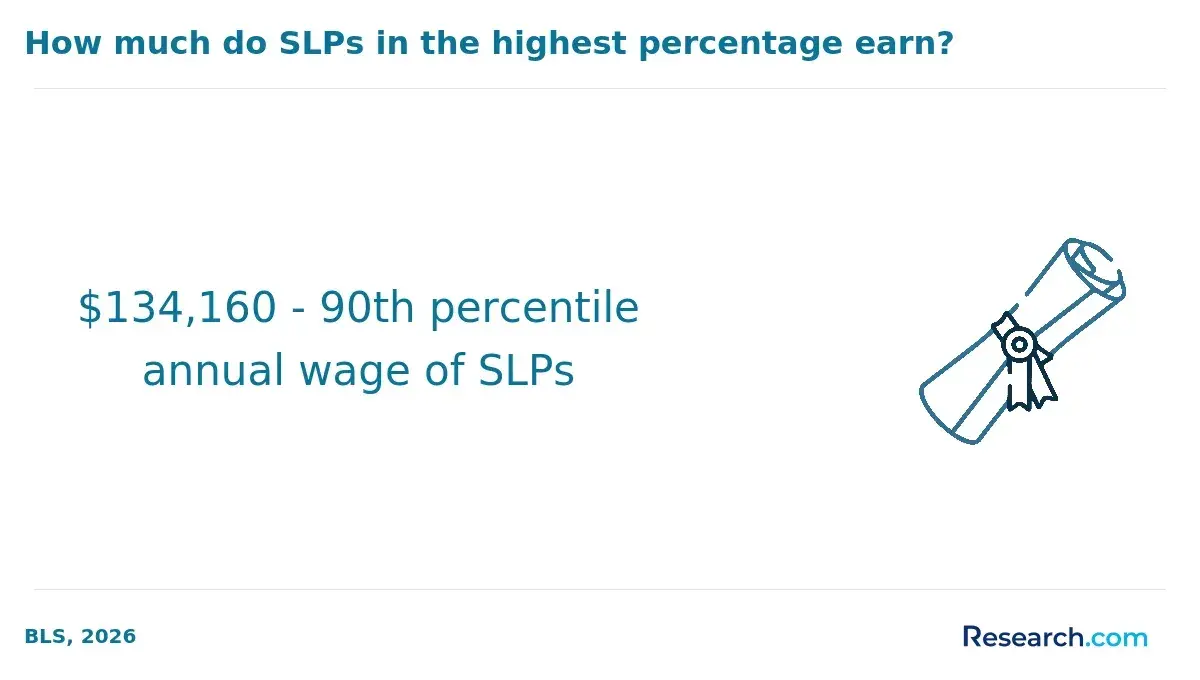
U.S. Bureau of Labor Statistics data cited in this guide reports that graduates working as speech-language pathologists can earn a mean annual wage of $89,460. The reported wage range spans from $56,370 at the 10% percentile to $126,680 at the 90% percentile. Actual pay varies by location, employer, experience, specialization, work schedule, and local cost of living.

Among the wage data reviewed, Hawaii is listed as the top-paying state for SLPs, with an annual income of $110,470. California recorded the highest employment level for SLPs, with around 17,100 professionals in 2022 (BLS, 2023a).

Salary factorHow it can affect earnings
Work settingSchools, hospitals, rehabilitation centers, private practices, and long-term care facilities may use different pay structures.
Geographic locationState and local labor markets influence wages, benefits, taxes, and cost of living.
Clinical specializationExperience in areas such as dysphagia, neurogenic communication disorders, bilingual services, or AAC may affect job options.
Credentialing and licensureEmployers may prefer or require specific state licenses, certifications, or supervised clinical experience.
Career stageEntry-level, clinical fellowship, experienced clinician, supervisor, director, and private practice roles can differ significantly.
Table of Contents
  1. Online Master’s in Speech-Language Pathology Programs for 2026
  2. How to choose the right speech-language pathology program
  3. Why faculty expertise matters in SLP graduate education
  4. Online vs. on-campus SLP curriculum: what changes and what does not
  5. Common SLP specializations and concentration areas
  6. Typical admission requirements for SLP master’s programs
  7. How long SLP master’s programs take
  8. What SLP graduate programs may cost
  9. Financial aid options for SLP graduate students
  10. Student support services to look for
  11. How program choice can affect career and earning options
  12. Core skills needed in speech-language pathology
  13. Ethical and legal issues in SLP practiceSLP skills overview
  14. Mentorship and networking in the SLP field
  15. Current and future trends in speech-language pathologyCareer earnings context
  16. Moving from teaching into speech-language pathology
  17. Whether an SLP master’s degree is a worthwhile investment
  18. Professional certifications for speech-language pathologists
  19. Alternative master’s degrees and SLP career planning
  20. How your undergraduate major affects SLP preparation
  21. Regulation, healthcare policy, and SLP practice
  22. Technology used in SLP education and practiceTechnology checklist

List of Master’s in Speech-Language Pathology Programs for 2026

How do we rank schools?

Because graduate education requires a major financial and time commitment, Research.com evaluates programs through a structured methodology that considers research capacity, student-to-faculty ratio, instructional quality, cost, accreditation, and other relevant indicators. The purpose of this list is to give prospective students a clearer starting point for comparing programs rather than a one-size-fits-all answer.

To support the review process, our team considered data from the IPEDS database, Peterson’s database and its Distance Learning Licensed Data Set, the College Scorecard database, and the National Center for Education Statistics.

SchoolCredit hoursEstimated tuitionAccreditationBest fit based on listed structure
Baylor University45$1,900/credit hourCAA/ASHAStudents who want evening online classes and either a standard or leveling track
Emerson College54$1,402/credit hourCAA/ASHALearners who can complete online coursework, two immersions, and at least 375 direct clinical contact hours
Florida State University61$444.26/credit hour (in-state), $1,075.66/credit hour (out-of-state)CAA/ASHAPart-time students seeking a three-year, nine-semester format
James Madison University45$23,085 (in-state), $57,240 (out-of-state)CAA/ASHAStudents who can plan around admission cycles and attend required orientation and clinical placements
New York University48$2,101/credit hourCAA/ASHAStudents comparing full- and part-time plans with required immersions
University of Cincinnati65$746/credit hour (in-state), $1,333/credit hour (out-of-state)CAA/ASHALearners within four hours of campus who want a two- to three-year structure
University of Nebraska56$776/credit hourCAA/ASHAStudents who need online prerequisite options and supervised clinical experience
University of South Carolina75$572.25/credit hour (in-state), $1,240/credit hour (out-of-state)CAA/ASHAPart-time students planning for three to four years of study
University of St. Augustine for Health Sciences5558$13,987/trimester full-time (TX campus)CAA/ASHAStudents seeking multiple admission cycles and virtual plus external practica
University of Wisconsin, Eau Claire54$715/credit hourCAA/ASHAStudents who can attend short summer residencies and some on-campus sessions

1. Baylor University

Baylor University’s online CSD graduate program combines evidence-based theory with clinical application. Students can finish in five semesters through full-time enrollment or in seven to 11 trimesters through part-time study. Coursework includes fluency disorders, voice pathology, motor speech disorders, and aphasiology. Most classes meet online in the evening, while clinical experiences generally occur in the morning. Applicants with a communication sciences and disorders background may enter the standard track, while students without the necessary introductory speech, language, and hearing coursework may need the leveling track.

  1. Credit Hours: 45
  2. Estimated Tuition: $1,900/credit hour
  3. Accreditation: Council on Academic Accreditation in Audiology and Speech-Language Pathology (CAA) of the American Speech-Language-Hearing Association (ASHA)

2. Emerson College

Emerson College’s online speech-language pathology program includes study in language development, fluency disorders, language and literacy disorders, and foundations of audiology. Students may select a five-term plan that takes 20 months or a nine-term plan that takes 36 months. In addition to online classes, the program requires two on-campus immersions for seminar coursework, at least 375 direct clinical contact hours, virtual practicum work, and simulations designed to build clinical reasoning and technology fluency.

  1. Credit Hours: 54
  2. Estimated Tuition: $1,402/credit hour
  3. Accreditation: CAA/ASHA

3. Florida State University

Florida State University’s distance learning program in communication science and disorders blends online instruction with required in-person activities. Students study articulation and phonological disorders, communicative disabilities, multicultural issues, dysphagia, and treatment for children and adults. The program is structured for part-time learners and can be completed in three years or nine semesters. Clinical training takes place in at least three settings, such as schools, hospitals, and community rehabilitation centers.

  1. Credit Hours: 61
  2. Estimated Tuition: $444.26/credit hour (in-state), $1,075.66/credit hour (out-of-state)
  3. Accreditation: CAA/ASHA

4. James Madison University

James Madison University’s online master’s program includes coursework in autism, pediatric speech sound disorders, literacy disorders, and neuromotor speech disorders. Students usually complete the degree in three years while taking two to three courses per semester. The program also includes required orientation at the start of the school year, on-campus clinical placements, and clinical experiences in healthcare settings. JMU admits students every two years, with the next admission cycle reopening in 2024, so applicants should plan well ahead.

  1. Credit Hours: 45
  2. Estimated Tuition: $23,085 (in-state), $57,240 (out-of-state)
  3. Accreditation: CAA/ASHA

5. New York University

New York University’s online SLP program pairs remote coursework with required in-person learning experiences. Students can choose full-time or part-time plans that range from six to 10 semesters, depending on prior academic preparation and preferred pace. Courses cover aural rehabilitation, child and adult disorders, therapeutic procedures, and phonetics. Beyond clinical placements, students complete mandatory immersions and may have an opportunity to participate in a cross-cultural study abroad experience.

  1. Credit Hours: 48
  2. Estimated Tuition: $2,101/credit hour
  3. Accreditation: CAA/ASHA

6. University of Cincinnati

The University of Cincinnati’s online SLP program can be completed in eight semesters, or about two to three years. Students study disfluency, clinical processes, syntax of language, voice disorders, and augmentative and alternative communication. Coursework uses both synchronous and asynchronous online formats, but students are encouraged to live within four hours of campus because some activities, including clinical placements or practica, may require travel. The program is offered in collaboration with the University of Akron, so students take courses through both universities.

  1. Credit Hours: 65
  2. Estimated Tuition: $746/credit hour (in-state), $1,333/credit hour (out-of-state)
  3. Accreditation: CAA/ASHA

7. University of Nebraska

The University of Nebraska’s online speech-language pathology program emphasizes evidence-based practice through courses in reading and writing strategies, diagnostic methods, phonological disorders, and voice and resonance disorders. The online master’s degree can be completed in three to three and a half years. Students complete supervised clinical experiences that may include individual therapy, group therapy, screenings, parent conferences, and diagnostic evaluations. Applicants without a CSD background can also complete undergraduate prerequisite courses online.

  1. Credit Hours: 56
  2. Estimated Tuition: $776/credit hour
  3. Accreditation: CAA/ASHA

8. University of South Carolina

The University of South Carolina’s online SLP master’s program is designed for part-time students. Depending on undergraduate preparation, learners can complete the degree in three to four years, or 10 to 12 terms. Courses include speech sound disorders, cognitive disorders, adult speech, counseling in speech-language pathology, and laryngectomy. Students generally take two courses in the fall and spring semesters through online delivery formats, while clinical practicum work is completed during the summer.

  1. Credit Hours: 75
  2. Estimated Tuition: $572.25/credit hour (in-state), $1,240/credit hour (out-of-state)
  3. Accreditation: CAA/ASHA

9. University of St. Augustine for Health Sciences

The University of St. Augustine for Health Sciences MS-SLP program includes coursework in research methods, interventions, professional issues, social communication, early language, and voice disorders. Students complete virtual clinical practica for two trimesters and external practica for three trimesters. The average program duration is one year and eight months, and the university offers three admission cycles. Students from different undergraduate backgrounds can complete six leveling courses to meet prerequisites.

  1. Credit Hours: 5558
  2. Estimated Tuition: $13,987/trimester full-time (TX campus)
  3. Accreditation: CAA/ASHA

10. University of Wisconsin, Eau Claire

The University of Wisconsin, Eau Claire’s communication sciences and disorders master’s program can be finished in three years. Coursework includes aphasia, cognitive-communicative disorders, counseling, rehabilitation methods, and sign language. Students attend a short summer residency to strengthen hands-on skills, and the program also requires several on-campus visits where learners use facilities such as therapy rooms, an audiology suite, and an assistive technology laboratory.

  1. Credit Hours: 54
  2. Estimated Tuition: $715/credit hour
  3. Accreditation: CAA/ASHA

Key Findings About SLP Master’s Programs and Careers

  1. Strong SLP candidates need clinical attention to detail, compassion, analytical thinking, and communication skills to serve people with speech, language, and swallowing needs, including more than 1.38 million Americans with speech or language disorders.
  2. In 2022, the U.S. had 171,400 speech-language pathologists, and the occupation is projected to grow 19% from 2022 to 2032.
  3. Audiology is one related career direction, with audiologists earning up to $89,490 each year according to the cited data.
  4. The American Speech-Language-Hearing Association offers resources such as scholarships, mentoring, and career support for students pursuing the field.
  5. Common specialization interests include pediatric speech-language pathology, adult neurogenic communication disorders, autism spectrum disorders, accent modification, and fluency disorders.

What are the factors to consider when choosing a Master’s speech-language pathology program?

Students comparing online SLP programs should look beyond brand recognition and ask whether the program fits their licensure needs, clinical placement access, schedule, and budget. The right program is not always the least expensive or the highest ranked; it is the one that prepares you for your intended state, setting, and client population.

  1. Accreditation. Master’s programs in SLP should be reviewed carefully for CAA-ASHA accreditation, which signals that the program is evaluated against professional education and practice standards.
  2. Curriculum and clinical structure. A strong program should connect classroom theory with supervised practice, current research, assessment training, and intervention planning.
  3. Clinical placement support. Online students should ask whether the school helps secure placements or expects students to identify sites independently.
  4. Technology and learning resources. Check whether online learners can access digital libraries, simulation tools, labs, faculty support, and clinical documentation resources.
  5. Schedule fit. Programs differ in synchronous class times, part-time pacing, residencies, and practicum schedules. This matters whether you are comparing SLP programs, online teaching degrees, or other professional degrees.
Question to askWhy it matters
Is the program CAA-ASHA accredited?Accreditation can affect licensure preparation, certification pathways, and employer recognition.
Will I need leveling courses?Students without a CSD background may need additional coursework before or during graduate study.
How are clinical placements arranged?Placement logistics can determine whether an online program is realistic for your location and schedule.
Are campus visits or residencies required?Travel costs, work schedules, and family responsibilities can make short in-person requirements important to plan for.
Does the curriculum align with my intended setting?School-based, medical, pediatric, adult, and private practice goals may require different practicum exposure.

How important is the expertise of faculty when selecting a Master’s speech-language pathology program?

Faculty expertise matters because SLP is a clinical profession that depends on evidence-based instruction, supervised practice, ethical decision-making, and accurate assessment. Experienced faculty can influence both the quality of the classroom experience and the quality of clinical feedback students receive.

  1. They can make theoretical coursework more clinically relevant.
  2. They can help keep the curriculum aligned with current practice expectations.
  3. They can improve the depth and consistency of clinical supervision.
  4. They can serve as mentors for research, externships, certification planning, and early career decisions.
  5. They can strengthen a program’s visibility through scholarship and professional engagement.
  6. They can model the habit of staying current as clinical evidence, technology, and service delivery models change.
  7. They can help students understand information and communication technologies (ICT) that increasingly affect education and clinical work.

The technology dimension is especially important as digital learning, telepractice, and remote collaboration become more common. A UNESCO (2023) report noted that half of countries worldwide have ICT standards for teachers, with Europe and North America leading at 84% of countries. For SLP students, faculty who understand both clinical practice and technology can help bridge academic learning with the digital realities of modern service delivery.

The chart below presents UNESCO data showing the share of countries by region where ICT standards for teachers are identified.

How does the curriculum of an online speech-language pathology program differ from that of an on-campus program?

Accredited online and on-campus SLP master’s programs generally aim for the same professional preparation outcomes. The major difference is delivery format, not the expectation that students master assessment, treatment planning, ethics, research, and supervised clinical practice.

FeatureOnline SLP programOn-campus SLP program
Course deliveryOften uses a mix of asynchronous work and live online sessionsUsually relies on scheduled in-person classroom meetings
Clinical trainingMay be arranged near the student, through campus clinics, or through approved placement sitesOften uses campus clinics and local partner sites
FlexibilityCan be better for students balancing work, caregiving, or location constraintsCan be better for students who prefer fixed schedules and face-to-face interaction
Access to facilitiesMay require residencies or scheduled visits for hands-on trainingUsually offers more immediate access to labs, clinics, and faculty offices
Best fitSelf-directed learners who can manage remote coursework and clinical logisticsStudents who want a traditional campus environment and daily peer interaction

Before choosing either format, compare your learning style, available study hours, travel flexibility, clinical placement needs, and state licensure plans. Online does not mean fully remote in every case; many programs still require internships, residencies, clinical practica, or campus-based skill checks.

What specializations or concentrations are offered within Master’s in Speech-Language Pathology programs?

SLP graduate programs may allow students to explore focused areas through electives, practica, research projects, or clinical placements. Common areas include:

  1. Pediatric speech-language pathology
  2. Adult neurogenic communication disorders
  3. Autism spectrum disorders
  4. Accent modifications
  5. Fluency disorders

Specializations are useful when they connect to your preferred work setting. For example, students interested in schools may value pediatric language, literacy, and autism-focused experiences, while students aiming for hospitals or rehabilitation settings may prioritize dysphagia, aphasia, and adult neurogenic communication disorders.

What are the typical admission requirements for Master’s in Speech-Language Pathology programs?

The SLP field is growing, but admission to graduate programs can still be selective. In 2022, there were 171,400 speech-language pathologists in the U.S., and the profession has a projected job outlook of 19% from 2022 to 2032 (BLS, 2023b). Before applying, review both academic prerequisites and readiness expectations.

Academic Requirements:

  1. Bachelor’s degree. A background in speech pathology, communication sciences and disorders, physical therapy assistant programs online, or a related field may make the transition smoother. Students also commonly need prerequisite coursework in speech, language, and hearing development, though many schools offer leveling options. Official transcripts or equivalent proof of degree completion are typically required.
  2. GPA standing. Many graduate schools look for at least a 3.0 GPA because SLP coursework is academically demanding. Many SLP schools are currently not requiring GRE scores as part of efforts to broaden access.
  3. On-campus attendance. Some online programs require students to travel for practica, internships, field placements, skills labs, or residencies. Applicants should confirm travel expectations before enrolling.
  4. Additional materials. Programs may ask for letters of recommendation, a resume or CV, a personal statement, and background or medical checks.

Skill Requirements:

  1. Attention to detail. SLPs must observe subtle communication patterns, document carefully, and respond to individual client needs.
  2. Analytical skills. Clinicians evaluate speech and language data, interpret results, and build treatment plans based on assessment findings.
  3. Communication skills. SLPs explain diagnoses, goals, progress, and treatment strategies to clients, families, educators, and healthcare providers.
  4. Compassion. Clients may be frustrated, anxious, or medically vulnerable, so empathy and trust-building are essential to effective care.

How long does it take to complete a Master’s speech-language pathology program?

A full-time master’s in speech-language pathology commonly takes around two years, while part-time students may need three or four years. Program length depends on course load, pacing options, leveling requirements, clinical practicum sequencing, and whether the school uses semesters, trimesters, or another academic calendar.

Students comparing SLP programs or related graduate options such as the best schools for master’s in child development should review each program’s plan of study, not just the advertised completion time. Clinical placements can affect pacing because students must complete supervised experiences in approved settings.

What is the average cost of a Master’s speech-language pathology program?

Based on the scholarly resources reviewed for this guide, SLP programs typically range from $25,000 to $80,000 or more per year. That range may include public in-state rates, public out-of-state rates, and private university tuition, but it does not automatically reflect every required fee or living expense.

Students should calculate total cost of attendance rather than tuition alone. Depending on program format, additional expenses can include books, laboratory equipment, clinical materials, meals, housing, transportation, e-books, IT fees, digital library fees, professional memberships, graduation fees, and travel for residencies or placements.

Cost itemWhy students often overlook it
Clinical placement travelOnline students may still need to commute to approved sites or campus activities.
Leveling courseworkStudents without a CSD background may need extra prerequisite classes.
University feesTechnology, library, academic materials, and graduation charges can add to tuition.
Reduced work hoursClinical practica may limit how much students can work while enrolled.
Licensure and certification costsPost-graduation requirements can create additional expenses beyond the degree.

What financial aid options are available for Master’s in Speech-Language Pathology students?

SLP graduate students may be able to use multiple funding sources, depending on eligibility and school policies. Options can include university scholarships, ASHA-related awards, external foundation support, nonprofit scholarships, federal grants, and federal loans.

Some universities also offer graduate assistantships that may include stipends or tuition support in exchange for teaching, research, administrative, or clinical assistance. Employer sponsorship may be available for some working students, particularly when the degree supports workforce needs. Build your funding plan early and compare award terms, loan obligations, renewal requirements, and whether aid applies to summer practica or leveling courses.

What support services are available to students throughout their Master’s in Speech-Language Pathology program?

Strong online SLP programs should provide more than video lectures. Look for support systems that help students succeed academically, clinically, technically, and professionally.

  1. IT support for learning platforms, telepractice tools, and digital assessments
  2. Faculty office hours or consultation time
  3. Peer tutoring groups, study communities, or cohort-based collaboration
  4. Digital library access, scholarly databases, clinical apps, and research tools
  5. Career services for internships, clinical fellowship planning, resumes, and interview preparation
  6. Mental health and wellness services to help manage graduate school stress

These resources matter because SLP students are preparing to serve people with real communication needs, including more than 1.38 million Americans aged three to 21 years old with speech or language impairments (Statista, 2023).

How does the choice of a speech-language pathology program influence earning potential?

Your program does not guarantee a particular salary, but it can influence your opportunities by shaping your clinical experiences, specialty exposure, licensure preparation, mentorship, and professional network. A student whose practica include hospitals and dysphagia experience may pursue different jobs than a student whose clinical training is concentrated in school-based pediatric services.

SLP training can also support related career exploration. For example, audiologists address hearing or balance concerns and earn a mean annual wage of $89,490 (BLS, 2023c). A physician assistant role could yield an annual income of $125,270 (BLS, 2023d), though that path requires separate education and credentialing.

Some graduates may connect their communication sciences background to a counseling career path, while others move toward recreational therapy, occupational therapy-adjacent work, or education roles. Similar to alternative jobs for school psychologists, SLP-related training can also support work with students who need individualized instruction and adaptive supports.

The chart below uses U.S. Bureau of Labor Statistics data to compare selected career options and earning potential for students considering a Master’s in Speech-Language Pathology.

What essential skills and competencies drive success in speech-language pathology?

Successful speech-language pathologists combine clinical accuracy with human-centered care. They need to evaluate speech, language, voice, fluency, cognition, and swallowing concerns while also communicating clearly with clients, families, teachers, physicians, and other professionals. Clinical reasoning, documentation, cultural responsiveness, and adaptability are just as important as technical knowledge.

Students should also build comfort with research and technology because modern practice increasingly includes telepractice, digital assessments, electronic documentation, AAC tools, and interdisciplinary collaboration. For readers comparing specialty directions, this guide to SLP specializations can help connect training choices with career development.

What are the ethical and legal considerations in speech-language pathology practice?

SLPs work with sensitive health, education, and communication information, so ethical practice is central to the profession. Clinicians must protect confidentiality, obtain informed consent, document services accurately, practice within their competence, and serve clients with cultural and linguistic respect.

Telepractice adds additional considerations, including data security, privacy, client location rules, technology access, and service quality. Students who want earlier preparation in communication sciences may explore a communication disorders degree online, but graduate-level clinical education and state-specific licensure planning remain essential for professional SLP practice.

How can mentorship and professional networking enhance success in speech-language pathology?

Mentorship can help students translate coursework into clinical judgment. Experienced practitioners can advise on externship choices, clinical fellowship planning, documentation habits, workplace culture, specialty training, and early career mistakes to avoid.

Networking also matters because many students learn about placements, research projects, continuing education, and job opportunities through faculty, supervisors, professional associations, and alumni. Staying connected can also help students monitor the SLP job outlook and understand how demand varies across schools, healthcare settings, and regions.

Speech-language pathology continues to evolve as technology, demographic needs, educational services, and healthcare delivery change. Students entering the field should prepare for a profession that requires lifelong learning, not a fixed set of techniques learned once in graduate school.

Telepractice remains an important service model because it can expand access to clients who face distance, mobility, or provider availability barriers. Many programs now incorporate teletherapy practice, digital assessment exposure, or remote case simulations so graduates are better prepared for hybrid service delivery.

Demand in educational and geriatric settings is also significant. In schools, SLPs support children with speech, language, literacy, fluency, and social communication needs. In medical and long-term care settings, they help adults with communication and swallowing difficulties related to dementia, stroke, and other conditions.

Emerging practice areas include accent modification, voice therapy for transgender clients, multilingual speech rehabilitation, AAC, and specialized dysphagia services. Students interested in compensation strategy can review speech pathology salary information to compare career paths while remembering that salary outcomes are never guaranteed.

How can I transition from teaching to a career in speech-language pathology?

Teachers often bring useful strengths to SLP training, including communication skills, classroom experience, child development awareness, family collaboration, and instructional planning. However, moving into SLP usually requires graduate-level coursework in communication sciences and supervised clinical training.

Career changers should identify prerequisite gaps, compare leveling options, speak with admissions advisors, and ask how teaching experience is evaluated. A more detailed transition plan is available in this guide on how to go from teacher to speech pathologist.

Is a Master’s in Speech-Language Pathology a worthwhile investment?

A Master’s in Speech-Language Pathology may be worthwhile for students who are committed to clinical service, can manage graduate costs, and choose a program aligned with licensure and employment goals. The degree can lead to meaningful work in schools, healthcare, rehabilitation, and private practice, but the return on investment depends on tuition, debt, living costs, clinical placement feasibility, state requirements, and local job opportunities.

Before enrolling, compare total program cost with expected earnings, time to completion, aid options, and the type of setting you want to enter. For a deeper career-value discussion, review SLP masters degree careers.

What professional certifications can enhance career prospects for speech-language pathologists?

Certifications can help SLPs signal advanced competence, meet employer expectations, or build expertise with specific client populations. Students should confirm which credentials are required, optional, or preferred for their target state and work setting.

  • Certificate of Clinical Competence in Speech-Language Pathology (CCC-SLP): ASHA awards this widely recognized credential. It requires passing the Praxis exam, completing a clinical fellowship, and meeting continuing education requirements. Many employers value it, and it is often connected to licensure pathways.
  • Board Certification in Child Language and Language Disorders: Offered through the American Board of Child Language and Language Disorders (ABCLLD), this credential supports SLPs focused on pediatric language disorders and complex child communication needs.
  • Certification in Bilingual Speech-Language Pathology: This type of credential can be useful for clinicians serving multilingual communities, especially in diverse school systems and clinical environments.
  • Swallowing and Swallowing Disorders (BCS-S): This specialty certification from the American Board of Swallowing and Swallowing Disorders is relevant for SLPs working with dysphagia in medical settings.
  • Neurogenic Communication Disorders Certification: This focus area is especially relevant for clinicians working with adults who have aphasia, motor speech disorders, traumatic brain injury, or related neurological conditions.

The importance of accreditation and program reputation

Accreditation should be one of the first items students verify. An accredited program is reviewed against professional standards for coursework, faculty qualifications, clinical preparation, and student outcomes. This is particularly important because licensure, certification, and employer expectations may depend on the program’s status.

Program reputation can also matter, but it should not replace practical fit. A respected program that cannot support your clinical placement needs or state requirements may not be the best option. Students who need a shorter route may compare accelerated speech pathology programs online, but they should confirm that speed does not come at the expense of clinical preparation.

Are there any alternative master’s degrees that can lead to a career in speech-language pathology?

A Master’s in Speech-Language Pathology is the most direct graduate route for students who want to become SLPs. Alternative master’s degrees may support related work in education, communication disorders, counseling, rehabilitation, or child development, but they may not meet SLP licensure or certification requirements.

Students exploring broader graduate options can research easy masters degrees, but they should be cautious. A less competitive or faster master’s degree is not automatically a valid substitute for an accredited SLP program. If your goal is to practice as an SLP, verify requirements before choosing any alternative path.

How does your undergraduate background impact your speech-language pathology career?

Your bachelor’s degree can affect how quickly you move into graduate-level SLP coursework. Students with communication sciences, linguistics, psychology, education, or related preparation may already understand some foundational concepts in language, cognition, development, and research methods.

Students from unrelated majors can still pursue SLP, but they may need leveling coursework to build the required foundation in speech, language, and hearing sciences. When comparing undergraduate preparation and long-term earning goals, students may also review options related to highest paying bachelor degrees, while remembering that SLP practice still requires graduate preparation.

How do regulatory changes and healthcare policies impact speech-language pathology practice?

SLPs must practice within rules that can affect licensure, telepractice, documentation, reimbursement, school-based services, and clinical protocols. Healthcare policy changes may influence service access, coverage rules, and the resources available to clients and providers.

Students should learn how professional standards, state requirements, and employer policies shape daily practice. Comparing best ASHA accredited speech language pathology programs can help applicants focus on programs designed around recognized quality benchmarks.

What technological tools and resources are used in speech-language pathology programs?

Technology is now part of both SLP education and clinical work. Students in easy SLP programs and more competitive programs alike should expect to use digital tools for assessment, therapy planning, research, documentation, and remote service delivery.

  • Speech analysis software: These tools help students examine speech patterns, phonetic details, and voice characteristics for assessment and treatment planning.
  • Telepractice platforms: Remote therapy systems support virtual assessment, intervention, consultation, and follow-up services when appropriate.
  • Virtual reality simulations: Simulated clinical scenarios can help students practice decision-making before working independently with clients.
  • Augmentative and Alternative Communication (AAC) devices: AAC technology supports people with significant speech or language limitations, and students learn how to select, program, and use these tools effectively.
  • Digital libraries and online resources: Research databases, case repositories, journals, and clinical evidence tools help students stay current and support evidence-based practice.

Common mistakes to avoid when choosing an SLP master’s program

  1. Choosing a program without checking accreditation. Always verify accreditation status before applying or enrolling.
  2. Looking only at tuition. Include fees, travel, residencies, clinical placement costs, lost work hours, and leveling coursework.
  3. Assuming online means no campus visits. Many online SLP programs still require in-person clinical work, residencies, or supervised practica.
  4. Ignoring state licensure requirements. Requirements can vary, so confirm that the program supports your intended practice state.
  5. Underestimating clinical placement logistics. Ask who finds placements, how far you may need to travel, and what happens if a site falls through.
  6. Relying only on rankings. Rankings can provide a useful starting point, but your best program depends on fit, accreditation, cost, schedule, and clinical goals.
  7. Assuming salary outcomes are guaranteed. Published wage data describes labor-market patterns, not guaranteed individual earnings.

How to choose the right online Master’s in Speech-Language Pathology

  1. Confirm your career goal. Decide whether you want school-based practice, medical practice, pediatric work, adult rehabilitation, private practice, or another setting.
  2. Verify accreditation. Use official program and accreditation sources before submitting applications.
  3. Map prerequisites. Identify whether your bachelor’s degree satisfies prerequisite coursework or whether you need leveling classes.
  4. Compare clinical placement models. Ask whether the school arranges placements, approves student-found sites, or requires campus-based training.
  5. Calculate full cost. Include tuition, fees, travel, equipment, materials, and reduced work capacity during clinical terms.
  6. Review scheduling demands. Note live class times, residency dates, practicum hours, and expected weekly workload.
  7. Ask about outcomes. Request information about Praxis preparation, clinical fellowship support, licensure advising, and graduate employment support.
  8. Speak with current students or alumni if possible. They can often explain workload, faculty accessibility, placement quality, and online learning realities more clearly than brochures.

References:

  1. UNESCO. (2023). Global education monitoring report 2023: Technology in education A tool on whose terms? https://gem-report-2023.unesco.org
  2. U.S. Bureau of Labor Statistics. (2023a, April 25). Occupational employment and wages, May 2022 Speech-language pathologists. Occupational Employment and Wage Statistics. https://www.bls.gov/oes/current/oes291127.htm
  3. U.S. Bureau of Labor Statistics. (2023b, September 6). Speech-language pathologists. Occupational Outlook Handbook. https://www.bls.gov/ooh/healthcare/speech-language-pathologists.htm
  4. U.S. Bureau of Labor Statistics. (2023c, April 25). Occupational employment and wages, May 2022 Audiologists. Occupational Employment and Wage Statistics. https://www.bls.gov/oes/current/oes291181.htm
  5. U.S. Bureau of Labor Statistics. (2023d, April 25). Occupational employment and wages, May 2022 Physician assistants. Occupational Employment and Wage Statistics. https://www.bls.gov/oes/current/oes291071.htm

Key Insights

  1. An online Master’s in Speech-Language Pathology can be a practical route into the field, but only if the program’s accreditation, clinical placements, and licensure preparation match your goals.
  2. SLP master’s programs are not fully theoretical degrees; supervised clinical training is central, and online students should plan for in-person requirements.
  3. Reported SLP wages include a mean annual wage of $89,460, but earnings vary by employer, geography, specialization, experience, and credentials.
  4. Program cost should be evaluated as total cost of attendance, not just tuition per credit or advertised annual tuition.
  5. Students from non-CSD backgrounds can still pursue SLP, but leveling coursework may add time and expense.
  6. The best program is the one that fits your state requirements, learning format, placement needs, budget, and intended client population—not necessarily the program with the most recognizable name.

Other things you should know about speech-language pathology programs

What are the best master’s programs in speech-language pathology for 2026?

The best master's programs in speech-language pathology for 2026 typically include those accredited by the Council on Academic Accreditation in Audiology and Speech-Language Pathology (CAA). Esteemed programs often offer extensive clinical practicum opportunities, cutting-edge research facilities, and highly-qualified faculty. Standout programs have emerged at universities like Northwestern, Vanderbilt, and the University of Iowa.

What types of clinical settings do students typically work in during their practicum?

In 2026, students enrolled in top Master’s in Speech Language Pathology programs typically complete their practicum in diverse clinical settings, including schools, hospitals, rehabilitation centers, and private practice. Each setting provides exposure to different patient populations and types of speech and language disorders, offering a comprehensive training experience.

Is speech pathology a medical field?

Speech pathology is considered a medical field because it involves diagnosing and treating speech, language, and communication disorders, often in medical settings such as hospitals and clinics. It requires knowledge of anatomy, physiology, and psychology to effectively assess and manage various communication and swallowing disorders.

Related Articles
2026 Best Accelerated Online Speech Pathology Degree Programs thumbnail
Degrees JUN 16, 2026

2026 Best Accelerated Online Speech Pathology Degree Programs

by Imed Bouchrika, PhD
2026 Best No GRE Required Master's in Speech Pathology (MSLP) Programs thumbnail
2026 Best CAA-Accredited Graduate Degrees in Speech-Language Pathology thumbnail
2026 Most Affordable Online Masters in Speech Pathology thumbnail
Degrees JUN 10, 2026

2026 Most Affordable Online Masters in Speech Pathology

by Imed Bouchrika, PhD
2026 What Is a CCC-SLP and Why It's Important thumbnail
Degrees JUN 17, 2026

2026 What Is a CCC-SLP and Why It's Important

by Imed Bouchrika, PhD
2026 Best Online Communication Disorders Degree Programs thumbnail
Degrees JUN 18, 2026

2026 Best Online Communication Disorders Degree Programs

by Imed Bouchrika, PhD

Recently Published Articles

Newsletter & Conference Alerts

Research.com uses the information to contact you about our relevant content.
For more information, check out our privacy policy.

Newsletter confirmation

Thank you for subscribing!

Confirmation email sent. Please click the link in the email to confirm your subscription.