2027 Cheapest Accredited Online Healthcare Innovation Degree Programs: Tuition, Fees, and Financial Aid

Co-Founder and Chief Data Scientist
Finding the cheapest accredited online healthcare innovation degree is harder than comparing tuition ads. College Board's 2024 pricing data shows average published tuition and fees at public four-year colleges reached $11,610 for in-state students and $30,780 for out-of-state students, making net price more important than sticker price.
This guide is for students comparing online healthcare innovation, health services innovation, and related healthcare leadership programs. You will learn how tuition, mandatory fees, transfer credits, accreditation, FAFSA, scholarships, and employer benefits affect the real cost before you enroll.
Key Things You Should Know
- Among clearly titled online healthcare innovation options, lower total tuition usually comes from shorter master's programs with about 30 to 36 credits, while bachelor's programs may require up to 120 credits before transfer savings.
- The cheapest advertised per-credit rate is not always the cheapest degree; mandatory online fees, residency rules, course materials, transfer-credit limits, and part-time pacing can change the final cost.
- For eligible students, FAFSA-based aid can reduce net price through grants, work-study, and federal loans; the maximum Federal Pell Grant is $7,395 for the 2025-2026 award year, but awards depend on financial need and enrollment status.
What Are the Cheapest Accredited Online Healthcare Innovation Degree Programs?
Healthcare innovation degrees are still a niche category, so the lowest-cost choices often appear under names such as health services innovation, health entrepreneurship, healthcare leadership, health administration, digital health, or healthcare transformation. For cost comparison, the most useful starting point is not the school's marketing claim but the full credential level, credit requirement, tuition model, accreditation status, and whether online students pay the same rate regardless of state residency.
The table below compares accredited online programs that either use healthcare innovation language directly or closely align with healthcare innovation through health services design, entrepreneurship, care delivery improvement, and healthcare leadership. Published tuition changes frequently, so use the figures as a decision shortlist and confirm the current fee sheet before applying.
| Program | Accreditation to verify | Degree level | Published tuition structure | Estimated tuition before aid | Affordability note |
| Arizona State University Online, Master of Healthcare Innovation | Institutional accreditation by the Higher Learning Commission | Master's | Per-credit online graduate tuition; 34-credit curriculum | Generally lower than longer bachelor's pathways because of the shorter credit load | Often a strong low-total-cost option for students who already hold a bachelor's degree |
| Ohio State University Online, Master of Healthcare Innovation | Institutional accreditation by the Higher Learning Commission | Master's | Per-credit online graduate tuition; program-specific distance fees may apply | Moderate graduate-level total cost, depending on residency and fees | Best compared against ASU on mandatory fees, employer reimbursement, and curriculum fit |
| University of Arizona Online, BAS in Health Services Innovation | Institutional accreditation by the Higher Learning Commission | Bachelor's completion or applied bachelor's | Per-credit online undergraduate tuition; transfer-friendly structure | Can be affordable for students entering with community college or associate degree credits | May be cheaper than a four-year start-to-finish bachelor's if transfer credits are accepted |
| Arizona State University Online, BS in Health Entrepreneurship and Innovation | Institutional accreditation by the Higher Learning Commission | Bachelor's | Per-credit online undergraduate tuition; 120-credit bachelor's pathway | Higher total tuition if few credits transfer | Good fit for students seeking entrepreneurship and innovation training at the undergraduate level |
| University of Pennsylvania, Master of Health Care Innovation | Institutional accreditation by the Middle States Commission on Higher Education | Master's | Per-course-unit graduate tuition | Usually positioned as a premium program rather than the cheapest option | May offer strong brand value, but students should compare net price and employer support carefully |
For students whose goal is healthcare advancement rather than a program with "innovation" in the title, a broader search may uncover cheaper adjacent pathways. For example, an online nursing degree may be more appropriate for clinical career mobility, while healthcare innovation programs are usually better for care redesign, operations, entrepreneurship, quality improvement, or digital health leadership.
The practical takeaway is simple: the cheapest option depends on your starting point. A working professional with a bachelor's degree may find a 34-credit master's program cheaper overall, while a student with many transfer credits may find a health services innovation bachelor's completion program more affordable than starting from zero credits.
How Were the Cheapest Online Healthcare Innovation Degree Programs Ranked?
The fairest ranking method starts with accredited online programs and then compares total cost drivers, not tuition alone. A program with a low per-credit rate can become expensive if it requires more credits, charges high distance-learning fees, limits transfer credits, or extends the time a student remains enrolled.
Use the following ranking sequence when building your own shortlist. It reflects the order in which cost differences usually affect the final amount paid.
- Confirm that the institution is accredited by an accreditor recognized by the U.S. Department of Education.
- Identify whether the program is a bachelor's, master's, certificate-to-degree pathway, or degree-completion program.
- Multiply the published tuition rate by the required credits or course units for the full program.
- Add mandatory online, technology, student service, graduation, clinical, portfolio, assessment, and proctoring fees.
- Subtract only aid that is confirmed, renewable, and applicable to online students in that program.
- Compare the net price against completion time, transfer-credit acceptance, student support, curriculum relevance, and career fit.
This method avoids a common mistake: ranking a 120-credit bachelor's program and a 34-credit master's program only by per-credit tuition. The master's may cost more per credit but less in total because it requires far fewer credits, while the bachelor's may become the better deal if a student transfers in 60 to 90 credits.
The table below shows how ranking factors change the affordability picture. It is designed to help readers interpret tuition pages more accurately.
| Ranking factor | Why it matters | What to verify |
| Accreditation | Federal aid, credit transfer, employer recognition, and graduate school eligibility often depend on it | Institutional accreditor and any relevant specialized accreditation |
| Total credits | A higher per-credit rate may still produce a lower total cost if the degree is shorter | Required credits after transfer evaluation |
| Mandatory fees | Online program fees can materially change the final bill | Per-credit, per-course, per-term, and one-time fees |
| Residency pricing | Some public universities charge online students different in-state and out-of-state rates | Whether the online rate is flat or residency-based |
| Net price | Grants, scholarships, employer aid, and tuition discounts can make a higher-tuition school cheaper | Personal aid estimate after FAFSA and institutional aid review |
How Can You Verify the Accreditation of an Online Healthcare Innovation Degree Program?
Accreditation is the first affordability test because an unrecognized program can limit federal aid, transfer credit, employer tuition reimbursement, and admission to future graduate study. For online healthcare innovation degrees, institutional accreditation is usually the key requirement; programmatic accreditation may matter more for clinical, nursing, public health, health informatics, or healthcare management pathways depending on the credential.
Before you compare prices, complete these accreditation checks. They help you avoid paying for a degree that may not be recognized by financial aid offices, employers, or licensing-related graduate programs.
- Search the institution in the U.S. Department of Education's Database of Accredited Postsecondary Institutions and Programs.
- Confirm that the accreditor listed is recognized by the U.S. Department of Education or the Council for Higher Education Accreditation.
- Check the exact campus or online division name, because some universities have multiple entities or separately administered online units.
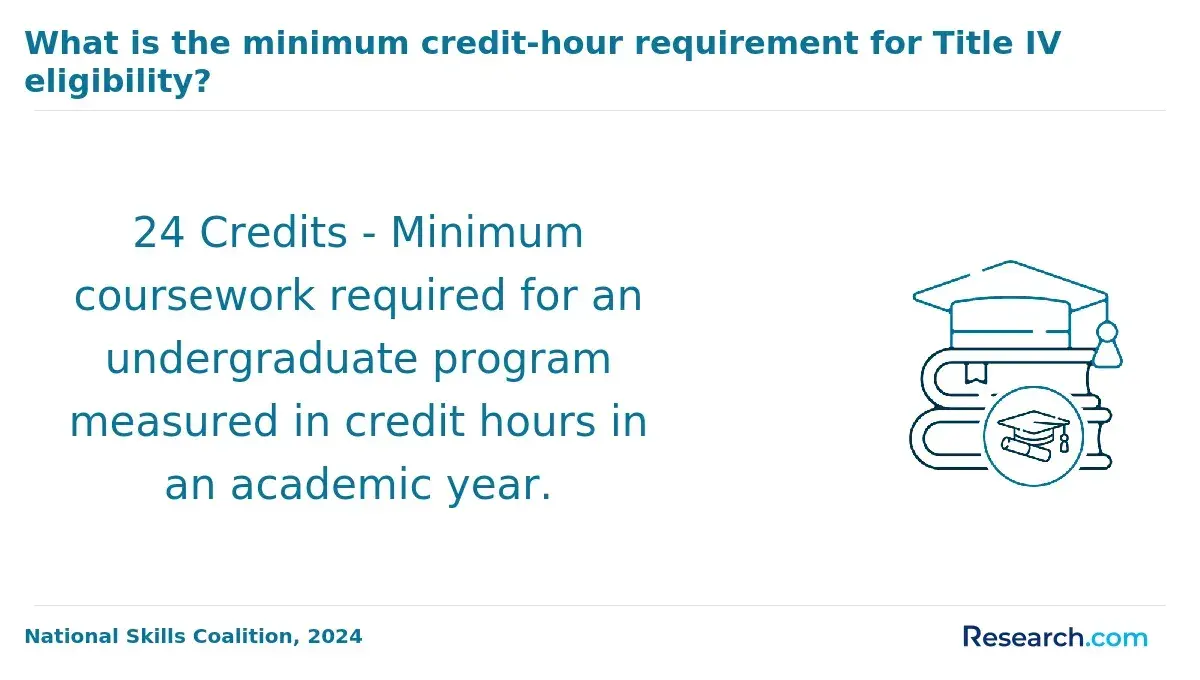
- Ask the admissions office whether the specific online healthcare innovation program is eligible for Title IV federal financial aid.
- If the program is connected to nursing, public health, health administration, or informatics, ask whether specialized accreditation or certification preparation is relevant.
- Save written confirmation of accreditation, aid eligibility, tuition, fees, and transfer-credit policies before paying a deposit.
A major red flag is vague wording such as "accredited curriculum" without naming the institution's recognized accreditor. Another red flag is pressure to enroll before you receive a complete cost-of-attendance estimate. A legitimate school should be able to explain accreditation, federal aid eligibility, transfer policies, and fee requirements in writing.
How Much Does an Accredited Online Healthcare Innovation Degree Really Cost?
The real cost of an online healthcare innovation degree includes tuition, mandatory fees, books and digital materials, technology requirements, exam proctoring, graduation fees, and the opportunity cost of time in school. For online students, housing may not be part of the school bill, but time away from work, childcare, and reduced work hours can still affect affordability.
The table below separates cost terms that are often blended together in tuition pages. Understanding these terms helps you compare schools without confusing sticker price with what you may actually pay.
| Cost term | What it means | Why it matters |
| Tuition | The instructional charge, usually per credit, per course, per term, or per competency period | This is only the starting point, not the full program cost |
| Mandatory fees | Required charges such as technology, online learning, student services, assessment, or graduation fees | These can make a low-tuition program more expensive than it first appears |
| Total program cost | Tuition plus required fees and expected education expenses for the full degree | This is the number to compare across schools before aid |
| Financial aid | Grants, scholarships, work-study, federal loans, employer benefits, or institutional discounts | Aid can reduce upfront cost but loans must be repaid with interest |
| Net price | The amount left after grants and scholarships are applied | This is often the best affordability measure for students who qualify for aid |
Use a simple formula when comparing programs: total required credits multiplied by tuition per credit, plus mandatory fees, minus confirmed grants and scholarships. Do not subtract loans when calculating net price; loans can help with cash flow, but they are still part of your long-term cost.
Healthcare innovation programs may also require software subscriptions, data tools, project platforms, or capstone expenses. These costs are usually smaller than tuition but should still be included when two programs appear close in price.
Which Tuition Models Make Online Healthcare Innovation Degree Programs More Affordable?
Online healthcare innovation programs use several pricing models. The cheapest model depends on how quickly you study, how many transfer credits you bring, and whether you can handle a heavier course load without withdrawing or repeating classes.
The table below explains common tuition models and the students they usually benefit. It can help you identify when a higher advertised rate may still lead to a lower total cost.
| Tuition model | How it works | Who may save the most | Main caution |
| Per-credit tuition | You pay for each credit attempted | Part-time students and students using transfer credits | Extra credits, repeats, and prerequisites increase cost |
| Flat-rate term tuition | You pay one rate for a full-time credit band | Students who can complete more credits per term | Dropping below full-time may reduce the value |
| Competency-based tuition | You pay by subscription term and progress by demonstrating mastery | Experienced professionals who can move quickly | Slow progress can make subscription pricing expensive |
| Program-based tuition | The school publishes one total tuition amount for the degree | Students who want predictable budgeting | Fees, materials, and retake policies may still be separate |
| Employer-partner tuition | The tuition rate is reduced through an employer agreement | Working adults at participating healthcare organizations | Benefits may require continued employment or minimum grades |
Students comparing graduate healthcare pathways should also consider time-to-completion. For example, someone exploring fast doctoral nursing options may compare a healthcare innovation master's with the shortest DNP program, but the better value depends on whether the goal is executive nursing practice, care delivery innovation, or nonclinical healthcare leadership.
The biggest mistake is choosing a tuition model that does not match your life. A flat-rate or competency-based program can be economical for a fast-moving student, but it can cost more if work, family, or clinical responsibilities slow your pace.
What Fees and Hidden Costs Should Online Healthcare Innovation Degree Students Expect?
Mandatory fees can change the affordability ranking of online healthcare innovation programs. Some schools bundle fees into tuition, while others list them separately by credit, course, term, or academic year.
Before enrolling, ask for a complete cost-of-attendance worksheet that includes the following categories. These are the most common costs that students miss when comparing online programs.
- Online learning or distance education fees charged per credit, course, or term.
- Technology fees for learning platforms, student systems, library access, or support services.
- Course materials, e-textbooks, digital access codes, case-study platforms, and simulation tools.
- Exam proctoring, identity verification, portfolio assessment, or competency assessment fees.
- Capstone, practicum, project, or residency costs if the program requires live presentations or campus visits.
- Graduation, transcript, application, enrollment deposit, and late payment fees.
- Hardware, webcam, broadband, spreadsheet software, data analytics tools, or other technology requirements.
A useful question to ask is: "What is the total amount I will be billed by the school if I complete the program on the standard plan?" Then ask a second question: "What costs are required but paid outside the school bill?" The first answer helps you compare institutional charges; the second helps you budget realistically.
Red flags include tuition pages that do not mention fees, admissions representatives who discuss only monthly payments, or program estimates that assume full transfer credit without reviewing your transcript. Always request a written estimate after your transfer evaluation, not before.
How Does FAFSA and Federal Financial Aid Work for Online Healthcare Innovation Degree Programs?
FAFSA can be used for eligible online healthcare innovation degrees when the institution participates in federal student aid programs and the specific program is Title IV eligible. Online delivery by itself does not disqualify a student, but non-degree certificates, continuing education programs, and some alternative credentials may not qualify.
Federal Student Aid lists the maximum Federal Pell Grant at $7,395 for the 2025-2026 award year. That figure matters most for eligible undergraduate students; graduate students generally do not receive Pell Grants but may qualify for federal loans and sometimes work-study, depending on school participation and financial need.
Follow these steps to evaluate aid eligibility before choosing a program. They will help you separate real aid from general promises about affordability.
- Complete the FAFSA using the school codes for every institution on your shortlist.
- Confirm that the online healthcare innovation degree, not just the university, is eligible for federal financial aid.
- Review the financial aid offer and separate grants and scholarships from loans.
- Ask whether aid changes if you enroll part time, take accelerated terms, stop out, or transfer in credits.
- Check the school's satisfactory academic progress policy so you understand how grades and completion pace affect aid renewal.
- Borrow only after comparing monthly repayment estimates and total interest cost.
Federal loans can be safer than private loans because they may offer income-driven repayment options, deferment, and federal borrower protections. However, loans are still debt. A low monthly payment plan should not replace a careful comparison of total borrowing, expected career benefit, and completion likelihood.
Which Scholarships, Grants, and Tuition Benefits Can Help Pay for an Online Healthcare Innovation Degree?
Scholarships and grants are the most valuable forms of education funding because they usually do not need to be repaid. Employer tuition assistance can also be powerful for healthcare innovation students because many are working adults in hospitals, clinics, health plans, public health agencies, startups, or nonprofit health organizations.
The table below compares major funding sources and the questions students should ask before counting the money in their budget.
| Funding source | Best fit | Key question to ask |
| Federal grants | Eligible undergraduate students with financial need | Does my enrollment level affect the award? |
| Institutional scholarships | Students admitted to a specific university or program | Is the scholarship renewable for online students? |
| Healthcare employer tuition assistance | Working adults employed by hospitals, insurers, clinics, or health systems | Do I need manager approval, minimum grades, or a post-completion work commitment? |
| Professional association scholarships | Students in healthcare management, health informatics, nursing leadership, or public health | Does my healthcare innovation program meet the field-of-study requirement? |
| Military and veteran education benefits | Eligible service members, veterans, and dependents | Is the program approved for the benefit I plan to use? |
| State grants | Residents attending eligible in-state or approved institutions | Can the grant be used for fully online enrollment? |
Students who want a lower-cost entry point into healthcare operations may also compare degree programs with career-focused credentials. For example, the best medical billing and coding schools can be relevant for learners who want shorter training before deciding whether to pursue a full healthcare innovation degree.
Do not assume a scholarship lowers your full degree cost unless it is renewable. A one-term award can reduce the first bill but leave later terms unchanged. Ask the financial aid office for a multi-term estimate that shows what you would pay if the award is renewed and what you would pay if it is not.
Can Transfer Credits, Prior Learning, and Competency-Based Study Lower the Cost of an Online Healthcare Innovation Degree?
Transfer credits can be the biggest cost saver for bachelor's-level healthcare innovation students. If a program accepts associate degree credits, general education courses, military training, professional certifications, or prior learning portfolios, the student may pay for far fewer credits at the four-year university rate.
Ask these questions before assuming your prior coursework will reduce your bill. Transfer policies vary widely by school and by major.
- How many total transfer credits can be applied to the degree?
- How many credits must be completed at the university because of residency requirements?
- Will my healthcare, business, biology, statistics, informatics, or public health courses satisfy major requirements or only electives?
- Is there a time limit for science, technology, data analytics, or healthcare compliance courses?
- Does the school award credit for certifications, military training, workplace learning, or portfolio assessment?
- Will transfer credits reduce both tuition and time to completion, or only elective requirements?
Students building a healthcare innovation pathway from prior science or movement-health coursework may find that related credits transfer into electives or prerequisites. For example, learners who have completed kinesiology courses online should ask whether those credits support population health, wellness innovation, or allied health electives.
Competency-based study can also reduce cost for experienced healthcare professionals, but only if the student can move quickly. Before choosing that model, ask for the average credits or competencies completed per term, the withdrawal policy, the subscription renewal rules, and whether financial aid is disbursed differently from a standard term program.
How Should Students Compare the Net Price, Quality, and Return on Investment of Online Healthcare Innovation Degree Programs?
The best-value online healthcare innovation degree is not automatically the one with the lowest tuition. A better decision weighs net price against accreditation, curriculum, transfer savings, faculty expertise, student support, completion likelihood, employer recognition, and the type of role the student wants after graduation.
Labor market context matters because healthcare innovation often connects to management, operations, quality improvement, digital health, and care delivery roles. The Bureau of Labor Statistics reported a median annual wage of $110,680 for medical and health services managers in May 2023 and projected much faster-than-average employment growth for 2023 to 2033 in its 2024 occupational outlook materials. This does not mean a healthcare innovation degree guarantees that role, but it does show why many students compare cost against leadership and management opportunities in healthcare.
The table below summarizes how to compare value beyond sticker price. Use it after you receive aid offers and transfer evaluations.
| Value factor | Low-value warning sign | Better alternative |
| Net price | The school discusses tuition but not grants, scholarships, or mandatory fees | Request a full cost estimate after FAFSA and transfer review |
| Curriculum fit | The program is called innovative but has little healthcare operations, data, finance, quality, or strategy content | Match courses to your target role before enrolling |
| Student outcomes | The school cannot explain completion support, career services, or alumni pathways | Ask for completion, retention, and career support information |
| Time to completion | The plan assumes an unrealistic course load for working adults | Compare full-time and part-time schedules with total cost |
| Career pathway | The degree does not align with clinical, administrative, informatics, or entrepreneurial goals | Choose a program that supports your specific healthcare direction |
Students interested in science-heavy healthcare innovation, biotechnology, or pre-professional pathways may need more foundational science than a healthcare leadership program provides. In that case, comparing a healthcare innovation degree with the best online biology degree can clarify whether the stronger return comes from healthcare operations training or a broader science credential.
Before committing, ask each school for the same five items: a total cost estimate, a transfer-credit evaluation, a financial aid offer, a program plan showing expected completion time, and written confirmation of accreditation and aid eligibility. When those documents are side by side, the true cheapest accredited online healthcare innovation degree becomes much easier to identify.
Other Things You Should Know About Healthcare Innovation
No. Healthcare administration usually focuses on managing healthcare organizations, budgets, staff, compliance, and operations. Healthcare innovation is broader and often emphasizes redesigning care delivery, improving patient experience, using data, launching health ventures, and solving system-level problems.
Usually not by itself. Most healthcare innovation degrees are nonclinical or leadership-focused. If your goal is nursing, therapy, medicine, counseling, or another licensed profession, confirm the exact licensure requirements with the state board before enrolling.
They can be, especially when the school is properly accredited and the curriculum fits the role. Employers are more likely to value programs that build practical skills in healthcare operations, quality improvement, data use, strategy, finance, and change management.
Common pathways may include healthcare project coordinator, innovation analyst, quality improvement specialist, patient experience manager, health program manager, digital health coordinator, or healthcare operations role. Job eligibility depends on prior experience, degree level, employer requirements, and whether the role is clinical or nonclinical.
References
- Financing Your Degree https://aspph.org/student-journey/financing-your-degree/
- Does College Pay Off? A Comprehensive Return On Investment Analysis - FREOPP https://freopp.org/whitepapers/does-college-pay-off-a-comprehensive-return-on-investment-analysis/
- Average Private vs Public College Tuition [2025]: Data Analysis https://educationdata.org/private-vs-public-college-tuition
- 2025 Most Affordable Online Master's Programs https://www.onlineu.com/most-affordable-colleges/masters-degrees
- Digital Health Graduate Programs — Massively Better Healthcare https://www.massivelybetterhealthcare.com/resources/digital-health-graduate-school-options
- Best Scholarships and Grants for Healthcare Management Students - Healthcare Management Degree Guide https://www.healthcare-management-degree.net/faq/best-scholarships-and-grants-for-healthcare-management-students/
- The importance of Accreditation in Medical Education https://aaa-accreditation.org/the-importance-of-accreditation-in-medical-education/
- Tuition and Other Fees https://www.ceu.edu/admissions/tuition-fees
- Who Accredits MHA Programs? https://www.mhaonline.com/faq/who-accredits-online-mha-programs
- 50 Top Scholarships for Students of Medical & Health Programs https://www.edumed.org/financial-aid/scholarships/