2027 Best Degrees For A Career In Sales: Which Sales Major Should You Choose

Co-Founder and Chief Data Scientist
Choosing the best degree for a sales career is not as simple as picking a “sales” major. Many successful sales professionals study professional selling, marketing, business administration, economics, analytics, communication, or an industry-specific field such as finance, technology, or healthcare. The right choice depends on the kind of sales role you want, how much you can spend, whether you need flexibility, and how quickly you want to enter the workforce.
This guide helps students, career changers, and working professionals compare degree options for sales careers. You will learn what sales programs typically teach, how long they take, what they cost, which schools and related majors are worth considering, how online and accelerated formats compare, and what career paths may be available after graduation.
Quick Answer: What Is the Best Degree for Sales?
The best degree for sales is usually a bachelor’s degree in professional sales, marketing, business administration, or a related business field. A specialized sales degree is strongest for students who want direct preparation in prospecting, negotiation, customer relationship management, and sales leadership. A broader business, marketing, economics, or analytics degree may be better for students who want flexibility across sales, consulting, entrepreneurship, finance, technology, or management roles.
| Degree Option | Best For | Main Advantage | Possible Limitation |
| Professional sales | Students focused on sales representative, account executive, or sales manager roles | Direct training in selling, negotiation, and client management | Less broad than a general business degree |
| Marketing | Students interested in sales strategy, consumer behavior, branding, and digital channels | Strong connection between customer insight and revenue generation | May include less direct sales practice unless the program has a sales concentration |
| Business administration | Students who want a broad foundation across management, finance, operations, and marketing | Flexible for many business careers beyond sales | May require electives or internships to build sales-specific skills |
| Economics or analytics | Students targeting consulting, enterprise sales, financial sales, or technical sales | Builds strong quantitative and market analysis skills | May not include much hands-on selling experience |
| Industry-specific degree | Students aiming for pharmaceutical, technology, finance, insurance, or manufacturing sales | Helps graduates understand the products, regulations, and buyers in a specific market | Can narrow early career options if the student changes industries |
Benefits of Earning a Sales-Related Degree
- More career options: A sales-focused education can prepare graduates for roles such as insurance agent, inside sales representative, wholesale representative, purchasing officer, and pharmaceutical sales representative.
- Competitive starting pay: Graduates with a sales degree have an average starting salary of between $60,310 and $65,852, with specialized roles and commission-based positions offering additional earning potential.
- Stronger access to advancement: Many employers use a bachelor’s degree as a screening factor for higher-level sales, account management, and leadership roles.
- Practical skill development: Strong programs teach prospecting, negotiation, buyer psychology, CRM tools, sales analytics, presentation skills, and territory planning.
What can I expect from a degree in sales?
A sales degree is designed to teach students how organizations generate revenue, identify buyers, build trust, manage client relationships, and close deals ethically. Most programs combine business fundamentals with applied sales training. Students commonly study professional selling, sales management, consumer behavior, marketing strategy, negotiation, business communication, and data-driven decision-making.
Many programs include capstone projects, sales simulations, role-playing exercises, competitions, or internship requirements. These experiences matter because sales hiring is often performance-focused: employers want evidence that graduates can communicate clearly, handle objections, use customer data, and manage a pipeline.
Costs vary widely by school and format. Traditional on-campus bachelor's programs can range from approximately $20,000 for in-state tuition to over $80,000 at private universities. Students should confirm the current tuition, fees, housing, technology charges, books, and internship-related costs directly with each institution before enrolling.
Where can I work with a degree in sales?
Sales graduates work in nearly every sector because most organizations need employees who can acquire customers, retain accounts, negotiate contracts, and grow revenue. According to the U.S. Bureau of Labor Statistics, as of May 2023, the industries with the highest levels of employment in sales and related occupations include:
- Retail Trade: Employs approximately 4.8 million sales workers, constituting about 10% of the industry's workforce.
- Wholesale Trade: Employs around 1.6 million sales representatives, accounting for about 7% of the industry's employment.
- Manufacturing: Employs over 1.1 million sales professionals, representing approximately 5% of the industry's workforce.
- Professional, Scientific, and Technical Services: Employs about 1.14 million sales representatives, making up roughly 6% of the industry's employment.
- Finance and Insurance: Employs over 500,000 sales agents, constituting about 4% of the industry's workforce.
How much can I make with a degree in sales?
Sales pay varies more than many other business careers because compensation may include base salary, commission, bonuses, territory performance, or account growth incentives. Degree level, industry, location, employer size, and experience all affect earnings.
| Salary Factor | What the Available Data Shows | How to Interpret It |
| Entry-level pay | Entry-level sales representatives with a bachelor's degree earn a median salary between $60,310 and $65,852. | This range is a useful benchmark, but actual compensation may differ by region, industry, and commission structure. |
| Industry differences | The wholesale trade sector offers a median annual wage of around $96,000. | Industries with complex products or business customers often pay more than low-margin retail sales roles. |
| Experience | Mid-career sales professionals with 3-7 years of experience earn an average base salary of $49,346, with potential total compensation up to $89,000. | Base salary alone does not always show full earning potential in commission-heavy roles. |
| Advanced education | Sales representatives holding a master's degree or MBA have a median salary range of $61,039 to $66,622, slightly higher than those with a bachelor's degree. | A graduate degree may help most when it supports leadership, analytics, strategy, or industry specialization. |
- List of the Best Degree in Sales Programs for 2027
- How long does it take to complete a degree in sales program?
- What is the average cost of a degree in sales program?
- What are the financial aid options for students enrolling in a degree in sales program?
- What are the prerequisites for enrolling in a degree in sales program?
- What courses are typically in a degree in sales program?
- What types of specializations are available in a degree in sales program?
- What role do flexible learning options play in enhancing a sales degree?
- Is a Sales Degree a Wise Investment for Your Future?
- How Can a One Year Online Masters Program Accelerate Your Sales Career?
- Can Online Sales Degree Programs Provide Comparable Value?
- What are the emerging trends in sales degree programs?
- Can I Earn a Recognized Sales Qualification in 6 Months?
- What Are the Common Challenges in a Sales Degree Program?
- How to Choose the Best Degree in Sales Program
- How Can Networking and Professional Development Amplify My Sales Career?
- What career paths are available for graduates of a degree in sales program?
- What is the job market for graduates with a degree in sales program?
- Can a Certification Enhance My Sales Career?
List of the Best Degree in Sales Programs for 2027
How do we rank schools?
A degree is a significant investment, so rankings should be used as a starting point rather than the only reason to choose a school. Research.com evaluates programs using data from established education sources, including the IPEDS database, Peterson's database, the College Scorecard database, and the National Center for Education Statistics. Students should also compare accreditation, curriculum fit, internship access, total cost, transfer policies, and career support before applying.
1. Stanford University - Management Science and Engineering
Stanford University can be a strong option for students who want a rigorous analytical foundation before entering sales, business development, consulting, or entrepreneurship. Its Management Science and Engineering (MS&E) and Economics pathways develop quantitative reasoning, management thinking, and market analysis skills that can transfer well to complex sales environments.
- Required Credits to Graduate: 180 units
- Cost: $78,898 per year
- Accreditation: Western Association of Schools and Colleges (WASC).
2. California Institute of Technology (Caltech) - Business, Economics, and Management
California Institute of Technology (Caltech) offers a Business, Economics, and Management (BEM) bachelor's program that blends finance, economics, political science, and psychology. This combination is especially relevant for students interested in analytical sales roles, technology commercialization, consulting, finance, or entrepreneurial ventures.
- Required Credits to Graduate: 40.5 units per term
- Cost: $65,898 per year
- Accreditation: Western Association of Schools and Colleges (WASC).
3. University of Wisconsin-Madison - Business Administration in Marketing
The University of Wisconsin–Madison offers a Bachelor of Business Administration (BBA) in Marketing through the Wisconsin School of Business. Students study areas such as product management, market research, and sales strategy, making the program useful for those who want both marketing depth and sales career flexibility.
- Required Credits to Graduate: 120
- Cost: $406,030 per year
- Accreditation: Higher Learning Commission (HLC)
4. Massachusetts Institute of Technology (MIT) - The Sloan School of Management
Massachusetts Institute of Technology (MIT) offers undergraduate learning opportunities connected to business, strategy, and entrepreneurship through the Sloan School of Management. Courses such as 15.809 Introduction to Marketing and Strategy and 15.387 Entrepreneurial Sales can help students understand market attractiveness, revenue generation, and scalable selling in innovation-driven environments.
- Required Credits to Graduate: MIT operates on a credit system; specific credit requirements vary by program.
- Cost: $60,156 per year
- Accreditation: New England Commission of Higher Education (NECHE).
5. Yale University - Bachelor's in Economics
Yale University does not provide a dedicated undergraduate sales major, but students can prepare for sales-related careers through Economics and business-oriented extracurricular experiences. This route may fit students who want strong analytical training and access to broad career options before moving into sales, consulting, finance, or management.
- Required Credits to Graduate: 36 courses for 8 semesters
- Cost: $64,825 per year
- Accreditation: New England Commission of Higher Education (NECHE).
6. University of Pennsylvania - Marketing (Wharton School)
The University of Pennsylvania Wharton School offers an undergraduate Marketing concentration that can support sales careers by emphasizing consumer behavior, market segmentation, positioning, and strategy. This pathway is well suited for students targeting competitive sales, brand, consulting, or business development roles.
- Required Credits to Graduate: 37 course units
- Cost: $66,104 per year
- Accreditation: Middle States Commission on Higher Education (MSCHE)
7. Cornell University - School of Applied Economics and Management
Cornell University offers several undergraduate paths that can support sales careers. The Charles H. Dyson School of Applied Economics and Management provides a Bachelor of Science in Applied Economics and Management with concentrations such as marketing and business analytics, while the Peter and Stephanie Nolan School of Hotel Administration offers a Bachelor of Science in Hotel Administration focused on hospitality management.
- Required Credits to Graduate: 120
- Cost: $69,314 per year
- Accreditation: Middle States Commission on Higher Education (MSCHE)
8. Washington University in St Louis - Olin Business School
Washington University in St. Louis offers a Bachelor of Science in Business Administration (BSBA) through the Olin Business School, where students can pursue marketing specialization. The program combines business fundamentals with marketing strategy, which can be useful for sales, account management, and business development careers.
- Required Credits to Graduate: 12 to 18 units per semester.
- Cost: $64,500, with additional student activities and health services fees.
- Accreditation: Washington University in St. Louis is accredited by the Higher Learning Commission (HLC).
9. University of Illinois Urbana-Champaign - Gies College of Business
The University of Illinois Urbana-Champaign offers a Bachelor of Science in Marketing through the Gies College of Business. Students build analytical and creative skills for understanding demand, customer behavior, and market conditions, all of which are useful in sales and revenue-focused roles.
- Required Credits to Graduate: 124
- Cost: $18,046 to $23,426 for Illinois residents and $38,398 to $46,498 for non-residents per academic year.
- Accreditation: Higher Learning Commission
10. Emory University - Goizueta Business School
Emory University Goizueta Business School offers undergraduate business pathways that emphasize marketing, management, strategy, communication, and leadership. Students can strengthen their sales readiness through internships, networking, experiential projects, and applied business learning.
- Required Credits to Graduate: 127
- Cost: $64,280 per academic year
- Accreditation: Southern Association of Colleges and Schools Commission on Colleges (SACSCOC)
How long does it take to complete a degree in sales program?
A bachelor’s degree in sales or a closely related business field typically takes four years of full-time study. Students who enroll in accelerated formats may finish in as little as 2.5 years, while part-time students usually need longer because they take fewer courses each term.
Transfer credit can make a major difference. Students who have already completed college-level business, communication, marketing, or general education courses may shorten their timeline if the new school accepts those credits. For example, students with previous coursework from a related area such as a bachelor degree in fashion business may be able to apply eligible credits toward a sales or business program.
| Program Format | Typical Timeline | Best For |
| Full-time bachelor’s program | Usually four years | Traditional students who can study on a standard schedule |
| Accelerated bachelor’s program | As little as 2.5 years | Motivated students who can handle heavier or more compressed coursework |
| Part-time program | Longer than four years in many cases | Working adults, parents, and students balancing other commitments |
| Transfer-friendly program | Varies based on accepted credits | Students with prior college coursework or an associate degree |
What is the average cost of a degree in sales program?
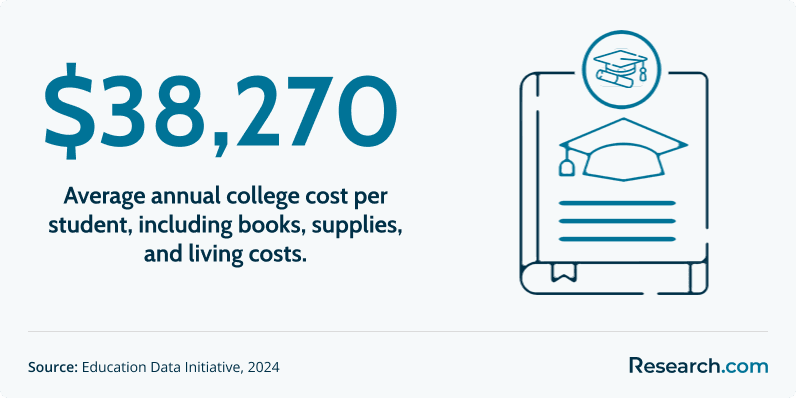
The average annual cost of a bachelor's degree in sales in the United States is approximately $38,270 per student, including tuition, fees, books, supplies, and living expenses. Public universities typically charge around $15,320 per year for in-state students, while private universities average $43,350 annually. Books are estimated at $1,450 per year, and course fees vary by institution.
When comparing cost, look beyond tuition. Housing, transportation, technology fees, required software, internship travel, and lost work hours can affect affordability. Students comparing sales to broader business pathways often ask, Is a business administration degree worth it? A business administration degree may be preferable for students who want wider career flexibility, while a sales-specific program may offer more targeted preparation for revenue-focused roles.
What are the financial aid options for students enrolling in a degree in sales program?
Sales and business students may qualify for scholarships, grants, loans, employer tuition assistance, and work-study opportunities. The first step for most U.S. students is completing the Free Application for Federal Student Aid (FAFSA), which is used to determine eligibility for federal and some state-based aid.
| Financial Aid Type | How It Helps | What to Check |
| Scholarships | May reduce costs without repayment | Eligibility rules, deadlines, GPA requirements, and whether awards are renewable |
| Grants | Typically need-based and usually do not require repayment | FAFSA requirements and enrollment status rules |
| Federal loans | Can help cover tuition and living expenses | Interest rates, borrowing limits, repayment terms, and total debt |
| Work-study | Provides part-time employment connected to financial need | Job availability, schedule fit, and whether earnings cover meaningful expenses |
| Employer tuition assistance | May help working adults pay for job-related education | Grade requirements, service commitments, annual caps, and reimbursement timing |
Sales and business students should also search for field-specific awards. For example, the Robert B. Trader Marketing Scholarship awards up to $750 to Sales and Business Marketing students who demonstrate academic excellence and campus involvement.
What are the prerequisites for enrolling in a degree in sales program?
Most bachelor’s programs in sales, marketing, or business require a high school diploma or equivalent. Schools may also review GPA, standardized test scores if required, prior coursework, essays, activities, and evidence of communication or leadership potential.
Academic Requirements
- High school diploma or equivalent: Applicants generally need proof of completed secondary education.
- Minimum GPA: GPA expectations vary by college and by business school admission policy.
- Standardized test scores: Some institutions require or consider SAT or ACT scores, while others follow test-optional policies.
Recommended Preparation Before Applying
- Relevant coursework: Classes in mathematics, English, economics, business, statistics, and communication can strengthen readiness.
- Customer-facing experience: Retail, hospitality, fundraising, call center, or service work can help applicants understand buyer needs and communication pressure.
- Extracurricular activities: Debate, student government, entrepreneurship clubs, business competitions, or school publications can show initiative and persuasive communication skills.
- Basic technology skills: Familiarity with spreadsheets, presentations, digital communication, and customer management tools can help students adapt faster.
Admissions standards differ by institution, so applicants should review each school’s official requirements and confirm whether they must apply separately to the business school after general university admission.
What courses are typically in a degree in sales program?
A strong sales degree blends business theory with repeated practice. Students should expect coursework in selling, buyer behavior, marketing, communication, analytics, ethics, and sales leadership. Programs connected to digital business may also overlap with topics taught by social media marketing degree schools, especially when courses cover social selling, digital campaigns, and customer engagement.
Core Courses
- Professional selling: Teaches prospecting, consultative selling, needs analysis, presentations, objection handling, and closing techniques.
- Sales management: Covers team leadership, quotas, forecasting, territory design, coaching, and performance evaluation.
- Consumer behavior: Explains how individuals and organizations make buying decisions.
- Marketing principles: Connects sales activity to segmentation, positioning, pricing, promotion, and customer value.
- Business communication: Builds written, verbal, presentation, and interpersonal skills needed for client-facing work.
Elective and Specialized Courses
- Digital marketing: Examines online channels, social platforms, content strategy, and digital customer acquisition.
- International marketing: Introduces global buyer behavior, cross-cultural selling, and international market entry.
- Promotional strategy: Focuses on advertising, brand messaging, and campaign planning.
- Sales analytics: Helps students interpret pipeline data, conversion rates, customer segments, and forecasting reports.
- Negotiation: Develops deal strategy, conflict resolution, and value-based bargaining skills.
Hands-On Learning Opportunities
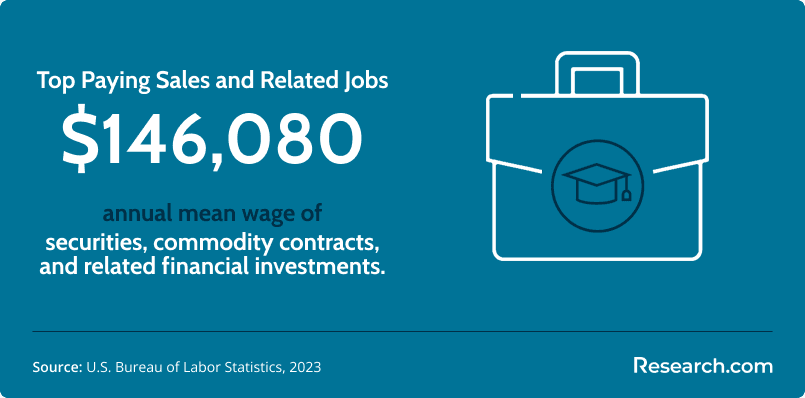
Internships, sales labs, role-play exercises, live client projects, case competitions, and CRM assignments can make a sales degree more career-ready. These experiences help students demonstrate practical ability, which is especially important for those exploring degree programs that lead to 100K salary potential.
What types of specializations are available in a degree in sales program?
Specializations help students align their education with a target market, buyer type, or career direction. Students comparing practical business majors may also review the easiest business major options, but the better question is whether the program builds the specific skills employers expect in the sales roles they want.
Common Sales Specializations
- Professional selling: Best for students who want direct preparation in consultative selling, prospecting, presentations, and account development.
- Sales management: Useful for students who want to move into leadership, coaching, forecasting, and revenue planning.
- Business-to-business (B2B) sales: Focuses on selling products and services to organizations, often through longer sales cycles and multiple decision-makers.
Industry-Specific Specializations
- Technology sales: Emphasizes software, hardware, IT services, digital transformation, and solution-based selling.
- Pharmaceutical and medical sales: Focuses on healthcare products, provider relationships, compliance awareness, and product knowledge.
- Financial services sales: Prepares students for customer acquisition and relationship management in banking, insurance, investment, and related settings.
Interdisciplinary Options
Some students combine sales with marketing, entrepreneurship, analytics, finance, or management. This can be useful for roles in sales operations, revenue strategy, customer success, or financial services sales. Students interested in finance-oriented paths can compare these options with the top paying careers finance degree pathways may support.
What role do flexible learning options play in enhancing a sales degree?
Flexible learning options can make a sales degree more realistic for working adults, parents, military-affiliated students, and learners who cannot relocate. Online, hybrid, evening, weekend, and accelerated formats allow students to continue earning income while completing coursework. For students with prior credits or professional experience, accelerated degree programs for working adults may reduce the time needed to finish a bachelor’s degree.
| Learning Format | Advantages | Questions to Ask Before Enrolling |
| Online | Maximum scheduling flexibility and no required commute | Are classes live or asynchronous? Are internships or sales labs available remotely? |
| Hybrid | Combines online convenience with some in-person networking and practice | How often must students visit campus, and are those dates predictable? |
| On campus | More direct access to faculty, classmates, recruiting events, and sales competitions | Does the added housing or commuting cost improve your career opportunities enough? |
| Accelerated | Can shorten the time to graduation | Can you manage compressed courses without hurting your work, grades, or internship search? |
Is a Sales Degree a Wise Investment for Your Future?
A sales degree can be worth it when the program is affordable, accredited, practical, and connected to employers in your target industry. It is less compelling if the program is expensive, lacks internships, offers little career support, or does not teach current tools such as CRM systems, sales analytics, virtual selling, and digital prospecting.
To evaluate return on investment, compare total program cost with likely starting roles, commission structure, internship access, alumni outcomes, and your ability to complete the degree without excessive debt. Students who want faster alternatives should also compare sales programs with best online degrees to get for career mobility and earning potential.
How Can a One Year Online Masters Program Accelerate Your Sales Career?
A master’s degree is not required for most entry-level sales jobs, but it may help professionals moving into sales leadership, revenue operations, analytics, strategy, or executive roles. Accelerated graduate programs may be useful for experienced sales professionals who already have field experience and want to strengthen their credentials quickly.
Before choosing an accelerated graduate option, review the curriculum carefully. Strong programs should cover market analytics, customer engagement, digital strategy, leadership, forecasting, and strategic decision-making. Students comparing advanced credentials can review options such as one year online masters programs.
Can Online Sales Degree Programs Provide Comparable Value?
Online sales degree programs can provide comparable value when they are properly accredited, academically rigorous, and designed with real-world practice. The most useful online programs include interactive assignments, recorded and live presentations, CRM exercises, faculty feedback, career coaching, internships, and employer connections.
Students should not assume every online program offers the same recognition or support. Confirm institutional accreditation, financial aid eligibility, faculty experience, transfer policies, and student services. Resources on accredited online colleges that accept FAFSA can help students evaluate whether an online school meets basic quality and aid-access expectations.
What are the emerging trends in sales degree programs?
Sales education is shifting because the way buyers research, compare, and purchase products has changed. Modern programs are adding more emphasis on digital communication, customer data, virtual presentations, CRM platforms, social selling, and artificial intelligence in customer relationship management. Students should look for curricula that teach both human selling skills and technology-enabled sales processes.
Remote and hybrid selling are also becoming more important. Graduates may need to run video meetings, personalize outreach, interpret buyer signals, coordinate with marketing teams, and manage long sales cycles across digital channels. Students comparing flexible business pathways can also review What is the easiest bachelor's degree to get online? while keeping career fit and employer recognition in mind.
Can I Earn a Recognized Sales Qualification in 6 Months?
Some short-term sales certificates, bootcamps, and continuing education programs can be completed in a condensed timeline, but a recognized bachelor’s degree in sales generally takes much longer. A six-month option may help students learn prospecting, CRM use, negotiation, or digital selling, but it should not be treated as equivalent to a full accredited degree unless the institution clearly states the credential level and accreditation status.
Before enrolling in any short program, ask whether employers recognize it, whether credits transfer, whether it includes practical projects, and whether career support is available. Students seeking fast academic pathways can compare options in what kind of degree can I get in 6 months.
What Are the Common Challenges in a Sales Degree Program?
Sales students often face a different type of difficulty than students in purely lecture-based majors. They may need to present frequently, role-play uncomfortable conversations, accept direct feedback, work in teams, complete internships, and use technology tools they have not used before. These experiences are valuable but can be challenging for students who are not used to public speaking or performance-based grading.
| Challenge | Why It Matters | Better Strategy |
| Balancing theory and practice | Sales success depends on doing, not just memorizing concepts | Choose programs with internships, simulations, and live projects |
| Keeping up with technology | Employers increasingly expect CRM, data, and digital outreach skills | Look for coursework in CRM systems, analytics, and virtual selling |
| Finding quality internships | Internships can lead to stronger resumes and job offers | Ask schools about employer partners, internship placement support, and sales competitions |
| Managing cost | Debt can reduce the financial benefit of a sales career | Compare net price, transfer credits, scholarships, work-study, and affordable online bachelors degree options |
How to Choose the Best Degree in Sales Program
The best sales degree program is the one that matches your target role, budget, schedule, and learning style while offering credible credentials and practical employer connections. Use rankings as one input, not the whole decision.
- Verify accreditation. Confirm that the school is properly recognized and, when relevant, review whether the business program is connected to accredited institutions. Accreditation affects credibility, credit transfer, graduate school options, and financial aid eligibility.
- Compare the curriculum. Look for professional selling, negotiation, sales management, marketing, analytics, CRM, business communication, and ethics.
- Check experiential learning. Prioritize programs with internships, sales labs, competitions, client projects, or employer-sponsored assignments.
- Review career outcomes carefully. Ask about job placement, common employers, internship conversion rates, alumni roles, and whether salary data includes commissions.
- Assess total cost, not just tuition. Include fees, books, housing, commuting, technology, and lost income.
- Consider format fit. Online programs may be ideal for working adults, while on-campus programs may offer more immediate networking and recruiting access.
- Ask about transfer credits. Students with previous coursework should confirm how many credits will count before committing.
Questions to Ask a School Before You Enroll
- Is the institution accredited, and is the business school separately accredited?
- Does the program include sales-specific coursework or only general marketing classes?
- Which CRM, analytics, or sales technology tools will students use?
- Are internships required, optional, or student-arranged?
- Which employers recruit from the program?
- What percentage of graduates enter sales, marketing, business development, or account management roles?
- Does reported salary include base pay only, or does it include commissions and bonuses?
- Can online students access the same career services as campus students?
How Can Networking and Professional Development Amplify My Sales Career?
Sales careers often grow through relationships, referrals, mentorship, and visible performance. Students should use college not only to earn credits but also to build a professional network. Sales clubs, business fraternities, employer panels, alumni events, pitch competitions, internships, and faculty connections can all help students find opportunities.
Professional development can also fill gaps that a degree does not cover. Short courses and certificates may help with negotiation, CRM platforms, leadership, industry knowledge, or digital prospecting. Students comparing add-on credentials can review highest paying certificate programs that align with their long-term goals.
What career paths are available for graduates of a degree in sales program?
Sales graduates can work in technology, pharmaceuticals, manufacturing, finance, insurance, retail, professional services, consumer goods, and many other industries. Career paths usually begin with direct customer or prospect interaction and may later move into management, strategy, operations, or executive leadership.
| Career Stage | Common Roles | Primary Responsibilities |
| Entry level | Sales Representative, Inside Sales Representative, Business Development Representative | Prospect for customers, qualify leads, make calls, send outreach, present products, and support pipeline growth |
| Early to mid-career | Account Executive, Account Manager, Territory Account Manager | Manage client relationships, negotiate deals, retain accounts, expand revenue, and coordinate with internal teams |
| Leadership | Sales Manager, Regional Sales Manager, Director of Sales | Coach teams, set goals, manage forecasts, design territories, and improve sales performance |
| Senior leadership | Vice President of Sales, Chief Sales Officer | Lead sales strategy, revenue planning, organizational growth, and executive-level customer relationships |
| Adjacent paths | Sales Operations Analyst, Customer Success Manager, Revenue Operations Specialist | Use data, systems, and process improvement to support sales performance and customer retention |
Some graduates move into roles that combine communication and analytics. For example, professionals who enjoy systems, data, and business problem-solving may later explore a systems analyst career path, especially in sales operations or CRM-focused environments.
Certifications That May Support Advancement
- Certified Professional Sales Leader (CPSL): Often suited to professionals building sales leadership and team management skills.
- Certified Sales Executive (CSE): A credential aimed at experienced sales professionals seeking recognition for advanced sales expertise.
What is the job market for graduates with a degree in sales program?
The sales job market is broad because revenue generation is essential across industries. Over 50% of college graduates start their careers in sales, making it a common entry point into business. Graduates can pursue roles in technology, pharmaceuticals, finance, consumer goods, manufacturing, wholesale trade, retail, and professional services.
Demand and pay vary by role. Sales management roles are expected to grow by 6% from 2023 to 2033, and experienced sales managers can make a median salary of $135,160 annually. Students should remember that sales compensation can be volatile: commission plans, territories, product-market fit, and economic conditions can affect earnings.
Can a Certification Enhance My Sales Career?
A certification can strengthen a sales career when it teaches a skill employers value and complements your degree or work experience. It is most useful for targeted areas such as CRM systems, digital selling, negotiation, sales leadership, customer success, revenue operations, or industry-specific product knowledge.
Certification is not a substitute for performance, experience, or an accredited degree, but it can help professionals show initiative and update their skills. Before paying for a credential, ask whether employers in your target industry recognize it, whether it includes practical assessments, and whether it aligns with your next role. Students comparing options can review highest earning certificate programs to identify credentials that fit their goals.
Common Mistakes to Avoid When Choosing a Sales Degree
- Choosing a program without checking accreditation: Accreditation affects financial aid, credit transfer, employer recognition, and graduate school options.
- Looking only at tuition: Fees, housing, transportation, books, technology, and lost income can change the real cost.
- Assuming every business degree teaches sales: Some marketing or business programs include little direct sales training, so review course lists carefully.
- Ignoring internships: Sales employers often value proof of communication, prospecting, resilience, and results.
- Relying only on rankings: A highly ranked school may not be the best fit if it lacks your target specialization or is unaffordable.
- Assuming salary outcomes are guaranteed: Sales pay depends on industry, territory, commission structure, performance, and market conditions.
- Overlooking online student support: Online learners should confirm access to advising, career services, networking, and internship assistance.
Here’s What Graduates Have to Say about Degree in Sales
My sales degree helped me practice negotiation, analyze buyer behavior, and build stronger client relationships before entering the workforce. Within six months of graduation, I moved into a sales manager role in the tech industry, and the applied projects made the transition easier. — Leif
The program gave me a clearer way to think about business development. Case studies, presentations, and practical training helped me compete in the job market and feel prepared for daily client conversations. — Sigrid
I wanted work that combined strategy, communication, and problem-solving. Courses in sales psychology, client management, and market analysis gave me skills I now use regularly as a pharmaceutical sales representative. — Eamon
Key Insights
- The best sales degree depends on your goal: Choose professional sales for direct selling preparation, marketing for customer strategy, business administration for flexibility, and analytics or economics for complex or technical sales paths.
- Cost matters: The average annual cost of a bachelor's degree in sales is approximately $38,270, so compare net price, transfer credits, aid, and likely career outcomes before enrolling.
- Hands-on experience is essential: Internships, sales simulations, CRM practice, competitions, and live projects can matter as much as the degree title.
- Sales offers broad industry access: Major employment areas include retail trade, wholesale trade, manufacturing, professional, scientific, and technical services, and finance and insurance.
- Pay can be strong but variable: Entry-level sales professionals with a bachelor's degree earn between $60,310 and $65,852, while experienced sales managers can make a median salary of $135,160 annually.
- Flexible programs can work well: Online, hybrid, part-time, and accelerated formats can help working adults finish a degree, but students should verify accreditation and career support.
- Technology is reshaping sales education: Programs that teach CRM, AI-supported customer relationship management, sales analytics, social selling, and virtual communication are better aligned with current employer expectations.
References:
- NASP. What are the best degrees for the sales industry? https://www.nasp.com/blog/what-are-the-best-degrees-for-the-sales-industry
- U.S. Bureau of Labor Statistics. Sales and Related Occupations: Occupational Employment and Wage Statistics. https://www.bls.gov/oes/2023/may/oes410000.htm
- Statista. U.S. number of employed sales people 2023, by occupation. https://www.statista.com/statistics/960853/number-employed-sales-people-us-occupation/
- Salary.com. Salaries for Entry Sales Representative with a Bachelor’s Degree. https://www1.salary.com/salaries-for-entry-sales-representative-with-a-bachelors-degree
- U.S. Bureau of Labor Statistics. Sales Managers: Occupational Outlook Handbook. https://www.bls.gov/ooh/management/sales-managers.htm
- Salary.com. Salaries for Sales Representative I with a Master’s Degree or MBA. https://www1.salary.com/Salaries-for-Sales-Representative-I-with-a-Masters-Degree-or-MBA
- UMass Global. How long does it take to get your business degree? https://www.umassglobal.edu/news-and-events/blog/how-long-does-it-take-to-get-a-business-degree
- Education Data Initiative. Average Cost of College. https://educationdata.org/average-cost-of-college
- Education Data Initiative. Cost of Online Education vs. Traditional Education. https://educationdata.org/cost-of-online-education-vs-traditional-education
- Alexandria Technical & Community College. Marketing & Sales Management tuition. https://www.alextech.edu/programs/marketing-sales-management/tuition
- Federal Student Aid. Types of financial aid. https://studentaid.gov/understand-aid/types
- College Scholarships. College scholarships for sales and marketing students. https://www.collegescholarships.org/scholarships/business/sales.htm
- Citizens. A comprehensive guide to types of financial aid for college students. https://www.citizensbank.com/learning/types-of-federal-financial-aid.aspx
- Arizona State University. Marketing (Professional Sales) - BS. https://degrees.apps.asu.edu/bachelors/major/ASU00/BAMKTPSBS/marketing-professional-sales
- University of Iowa. Tippie College of Business First-Year Admissions. https://admissions.uiowa.edu/tippie-college-business-first-year-admissions
- DeVry University. Sales and Marketing Degree Specialization Online. https://www.devry.edu/online-programs/bachelors-degrees/business/sales-and-marketing-specialization.html
- Grand Canyon University. Bachelor of Science in Professional Sales and Marketing. https://www.gcu.edu/degree-programs/bs-professional-sales-marketing
- Emory University Goizueta Business School. Internship Statistics. https://goizueta.emory.edu/undergraduate-business-degree/career/internships
- Monster. The Highest-Paying Sales Jobs: How to Pick Your Industry. https://www.monster.com/career-advice/article/highest-paying-sales-job
- ZipRecruiter. 25 of the Highest Paying Sales Jobs in 2025. https://www.ziprecruiter.com/g/Highest-Paying-Sales-Jobs
- Indeed. Career Guide: Top Certifications for Sales Professionals. https://www.indeed.com/career-advice/career-development/sales-certifications
- Sales Foundation. Key Statistics on Professional Sales Education (2023). https://salesfoundation.org/wp-content/uploads/2024/07/2023-key-stats-sales-education.pdf
- Pipedrive. Chief sales officer: Job description and requirements. https://www.pipedrive.com/en/blog/chief-sales-officer-job-description-salary
Other Things You Should Know About Degree in Sales Programs
In 2027, emerging fields in sales include digital sales transformation, AI-driven sales strategies, and sustainability-focused selling. A degree should cover these areas, emphasizing courses on digital platforms, data analytics, and sustainable sales practices to prepare students for future industry demands.
A strong sales major should include sales analytics, CRM systems, territory design, account management, negotiation, and business communication. Many bachelor’s programs require about 120 semester credits, with internships or capstone projects that build pipeline forecasting, customer retention, and quota-management skills.