2027 Best Online Bachelor's in Sociology With Monthly Start Options

Co-Founder and Chief Data Scientist
Choosing an online sociology bachelor's with monthly starts is really a timing, cost, and career-fit decision. The Bureau of Labor Statistics reported a $49,500 median annual wage for all U. S. occupations in May 2024, so choosing a degree that fits your budget and employment goals matters. This guide is for working adults, transfer students, military learners, and first-time students who want a flexible path into human services, research, policy, HR, advocacy, or graduate study. You'll learn how to compare programs, verify quality, estimate costs, and avoid enrollment mistakes.
Key Things You Should Know
- The strongest monthly-start sociology options are usually adult-focused online programs with 4- to 8-week courses, year-round calendars, institutional accreditation, and generous transfer credit policies.
- A bachelor's in sociology is typically a 120-credit degree; transfer credit, prior learning credit, and course load usually matter more than "accelerated" marketing claims.
- College Board's 2024 pricing data shows published tuition and fees averaged $11,610 for in-state public four-year colleges and $43,350 for private nonprofit four-year colleges, so total net cost should be checked before enrolling.
What are the best online bachelor's in sociology that offer monthly start dates?
The best online sociology bachelor's programs with monthly or near-monthly starts are typically regionally accredited institutions built for adult learners, not traditional semester-based campuses simply offering a few online classes. If you are comparing broader online sociology bachelor programs, prioritize start cadence only after confirming accreditation, major availability, transfer rules, and total cost.
The table below summarizes strong-fit options to research first. Start calendars can change by term, state authorization, and program capacity, so treat the "start format" column as a screening point to verify with admissions before applying.
| School | Online sociology degree option | Start format to verify | Best fit | Quality check |
| National University | Bachelor of Arts in Sociology | Monthly starts with short-course pacing | Students who want one-course-at-a-time scheduling and frequent entry points | Institutionally accredited by WSCUC |
| American Public University | Bachelor of Arts in Sociology | Monthly course starts | Military-affiliated learners, working adults, and students who want an asynchronous format | Institutionally accredited by the Higher Learning Commission |
| University of Arizona Global Campus | Bachelor of Arts in Sociology | Frequent year-round starts that may function like near-monthly enrollment | Transfer students and adults who want a fully online sociology major with continuous enrollment options | Institutionally accredited by WSCUC |
| Other accredited online universities with multiple annual terms | BA or BS in Sociology, Social Science, or related major | Often 6 to 8 starts per year rather than every month | Students willing to trade a slightly later start date for lower cost, a public university brand, or a stronger specialization | Must be verified through recognized institutional accreditation |
A monthly start date is useful, but it should not be the only reason to choose a school. A program that begins in four weeks but accepts few transfer credits may take longer and cost more than a program that starts later but applies more of your previous coursework.
Use this short checklist before treating any program as a "best" choice for you:
- Confirm the exact next available start date for the sociology major, not just the university's general online calendar.
- Ask for a written transfer credit evaluation before committing, especially if you have community college, military, CLEP, AP, or prior university credits.
- Compare total program cost after grants, employer tuition assistance, transfer credits, fees, textbooks, and technology charges.
- Review required courses to see whether the program leans toward social services, research methods, criminology, data analysis, or general liberal arts.
- Check whether the school is authorized to enroll online students in your state.
How do online sociology bachelor's programs with monthly starts work and who are they for?
An online bachelor's in sociology with monthly starts is a degree program that lets new students enter more often than a traditional fall-and-spring calendar. Instead of waiting for a semester, you may begin in the next monthly term, then take accelerated 4-, 5-, 6-, 7-, or 8-week courses. Most programs are asynchronous, meaning you can log in during the week rather than attending live classes at fixed times.
This format is especially useful for learners who cannot pause work, caregiving, or military obligations to match a campus calendar. It also helps students who missed a deadline but do not want to lose an entire semester.
Monthly-start sociology programs tend to work best for these learners:
- Working adults who need predictable weekly deadlines but cannot attend daytime classes.
- Transfer students who already have general education credits and want to finish the major faster.
- Military and veteran students who need rolling starts because of deployments, relocation, or benefit timing.
- Career changers who want a bachelor's degree connected to human services, nonprofit work, HR, research, public policy, or community programs.
- Students who are self-directed enough to manage compressed courses without frequent in-person reminders.
They may not be the best fit if you need daily structure, prefer face-to-face discussion, want a campus internship network, or struggle to complete reading-heavy courses quickly. Sociology is not just opinion-based discussion; strong programs require research methods, statistics, theory, writing, and evidence-based analysis.
How can you compare online vs campus sociology bachelor's degrees for flexibility and quality?
Online and campus sociology degrees can be academically comparable when the institution is properly accredited and the curriculum is rigorous. The bigger differences are usually schedule, interaction style, local networking, internship access, and how much self-management the format requires.
The table below compares the main decision points. Use it to decide whether monthly online starts are an advantage for your situation or whether a campus-based program would give you more support.
| Comparison point | Online sociology bachelor's with monthly starts | Campus sociology bachelor's | When it matters most |
| Start timing | Often allows entry every month or several times per year | Usually follows fall, spring, and sometimes summer terms | Important if you need to begin quickly for financial aid, employer benefits, or career timing |
| Schedule flexibility | Often asynchronous with weekly deadlines | Class meetings occur at set times and locations | Important for full-time workers and caregivers |
| Peer and faculty interaction | Discussion boards, video meetings, email, and online office hours | In-person discussion, student groups, and campus events | Important if you learn best through live conversation |
| Internship access | May require you to find local opportunities with remote advisor support | Often benefits from local agency partnerships | Important for human services, advocacy, and nonprofit roles |
| Quality signal | Depends on accreditation, faculty, course design, student support, and outcomes | Depends on the same factors, plus campus resources | Important because format alone does not prove quality |
The smartest choice depends on how you learn and what support you need. Online is usually better if you need timing flexibility and already have strong study habits. Campus may be better if you want daily structure, in-person mentoring, undergraduate research opportunities, or local field placement support.
A common mistake is assuming "online" automatically means easier. In compressed terms, reading, writing, statistics assignments, and discussion posts often move faster than in a semester course. Ask schools for a sample syllabus or weekly workload estimate before enrolling.
What accreditation should an online bachelor's in sociology have and how do you verify it?
An online bachelor's in sociology should have recognized institutional accreditation. In the U.S., this is the main quality marker that affects federal financial aid eligibility, credit transfer, graduate school recognition, and employer confidence. Sociology bachelor's programs generally do not require specialized programmatic accreditation the way some healthcare, education, counseling, or psychology pathways do.
That distinction matters. Sociology is different from fields such as school psychology, where program-level approval may be central to professional practice; students comparing those paths should separately review NASP approved online programs and state rules.
To verify accreditation, follow these steps before you apply:
- Find the school's accreditor on the university's official accreditation page.
- Confirm that the accreditor is recognized by the U.S. Department of Education or the Council for Higher Education Accreditation.
- Check that the accreditation applies to the institution, not only to one campus, certificate, or unrelated program.
- Ask whether the online sociology program is included under the institution's accreditation and state authorization approvals.
- Confirm that credits are likely to transfer if you later move to another accredited college or apply to graduate school.
Red flags include vague claims such as "fully recognized," pressure to enroll before you can verify accreditation, unclear ownership information, very high transfer-credit promises without transcript review, or a school that cannot explain whether its online programs are authorized in your state.
What courses and concentrations are typically offered in an online sociology bachelor's program?
A sociology bachelor's studies how groups, institutions, inequality, culture, family, crime, work, race, gender, health, migration, and social change shape human behavior. Strong online programs balance theory with practical research and writing skills because employers often value sociology graduates for their ability to interpret people, data, and systems.
The table below shows common courses and what they help you learn. Course titles vary, but these themes appear across many accredited sociology programs.
| Course area | What you study | Skill developed |
| Introduction to sociology | Core concepts such as socialization, institutions, norms, identity, and social structure | Understanding how social forces affect individual and group behavior |
| Sociological theory | Classical and contemporary explanations of power, inequality, conflict, community, and social order | Analytical reasoning and argument building |
| Research methods | Surveys, interviews, observation, ethics, sampling, and study design | Evidence-based problem solving |
| Social statistics | Descriptive statistics, basic inference, data interpretation, and research reporting | Quantitative literacy for policy, HR, nonprofit, and research roles |
| Race, class, gender, and inequality | How institutions distribute opportunity, risk, and resources | Equity analysis and cultural competence |
| Criminology or deviance | Crime, social control, justice systems, and community responses | Preparation for justice, advocacy, and reentry-related roles |
| Family, health, work, or urban sociology | Specialized institutions and lived experience in communities | Applied understanding for human services and policy settings |
Concentrations are less standardized than in business or nursing, but many programs let students shape electives around a career goal. Common focus areas include criminology, social services, community development, diversity and inequality, family studies, healthcare and society, global sociology, or applied research.
AI and data tools are also changing what "applied sociology" looks like. Students who can combine sociological thinking with survey software, spreadsheet analysis, data visualization, ethical AI awareness, and clear writing may be better prepared for research, program evaluation, HR analytics, and policy support roles. The degree is strongest when you pair it with technical evidence skills rather than treating it as a reading-only major.
What are typical admission requirements and transfer credit policies for online sociology degrees?
Admission requirements for online sociology bachelor's programs are usually accessible compared with selective campus programs. Most schools ask for a high school diploma or equivalent for first-time students, official transcripts, and sometimes a minimum GPA. Adult-focused programs may offer open or broad admission, but that does not remove the need to evaluate quality and cost.
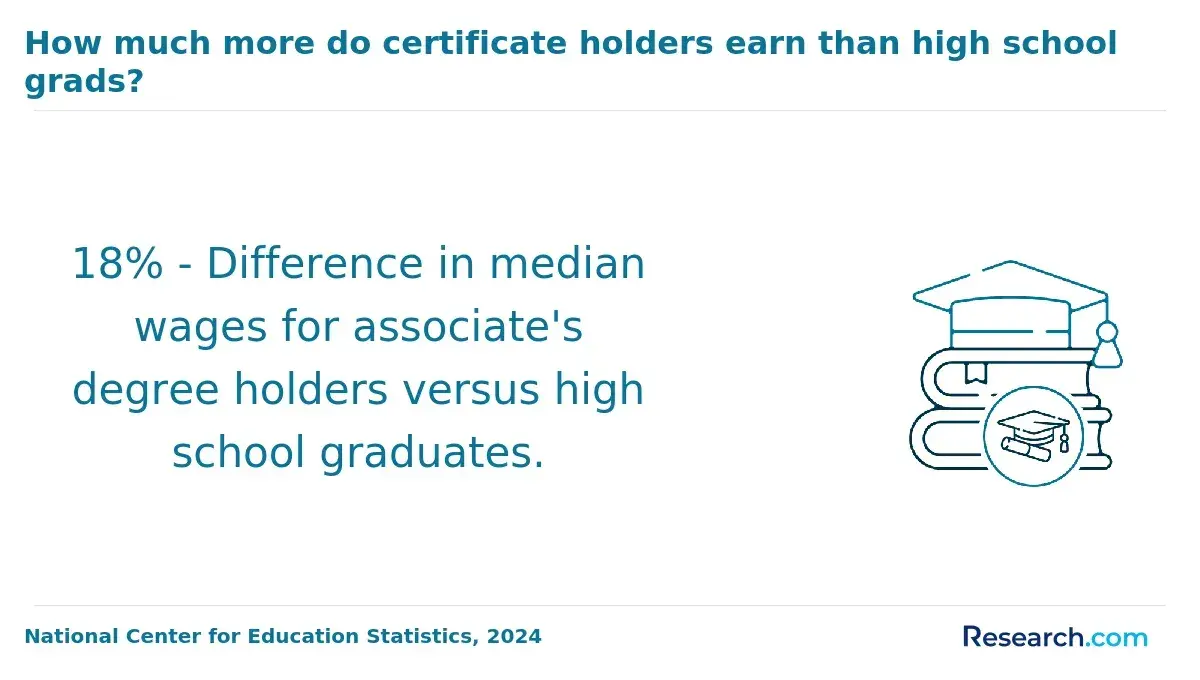
Transfer credit policies can make the largest difference in completion time. A 120-credit bachelor's may include general education, electives, major courses, and a capstone. If you already completed an associate degree, military coursework, standardized exams, or previous college credits, ask exactly how those credits apply to the degree plan rather than how many credits the school "accepts" in general.
Before you enroll, request these items in writing:
- A degree audit showing which credits apply to general education, electives, and sociology major requirements.
- The maximum number of transfer credits allowed toward the bachelor's degree.
- The minimum number of credits you must complete at the school, often called the residency requirement.
- Policies for military credit, CLEP, DSST, AP, IB, portfolio credit, and prior learning assessment.
- A list of courses that must be completed at the institution even if you have similar previous coursework.
- A projected graduation timeline based on your intended course load.
One common mistake is assuming an associate degree automatically cuts a bachelor's timeline in half. It often helps, but credits may transfer as electives instead of major requirements. Another mistake is enrolling before reviewing the final transfer evaluation; once you start, switching schools can become more expensive and time-consuming.
How long does it take to finish an online sociology bachelor's and what does it cost?
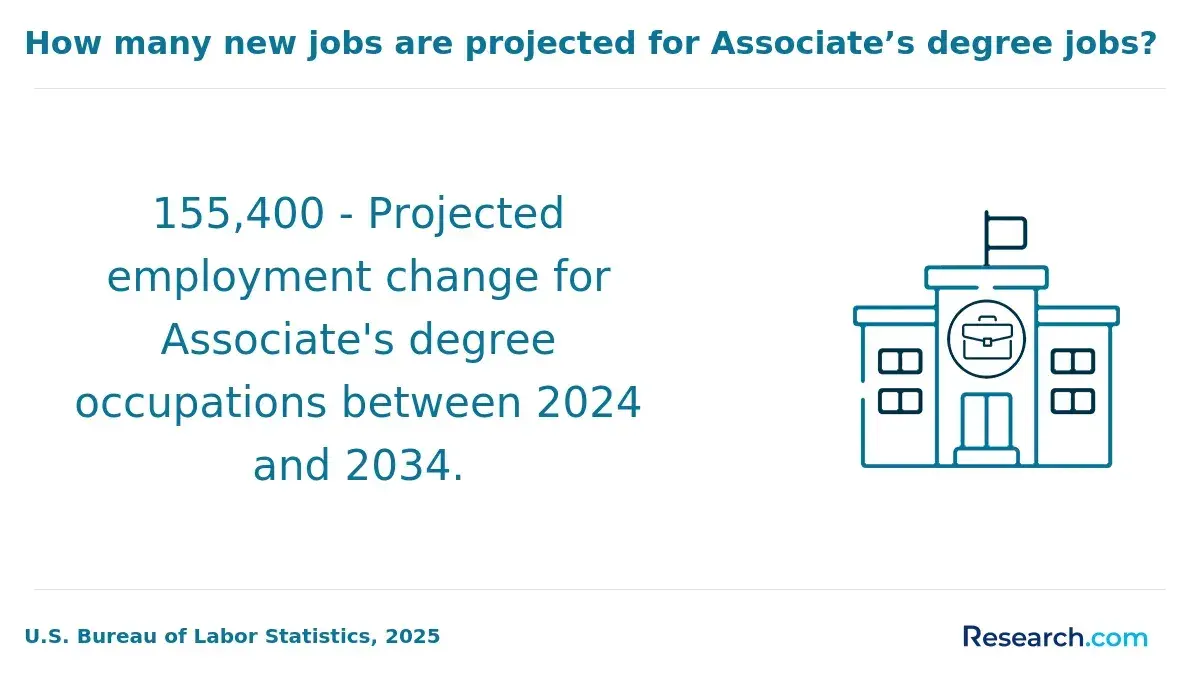
Most online sociology bachelor's degrees require about 120 credits. A first-time full-time student often needs around four years, while a part-time student may need longer. Transfer students with substantial accepted credits may finish faster, but monthly starts do not automatically shorten the degree; they mainly reduce waiting time between admission and the first course.
Published national tuition benchmarks show why a total-cost comparison matters. College Board's 2024 data reported these average published tuition and fee levels for the 2024-25 academic year:
- Public four-year in-state tuition and fees averaged $11,610.
- Public four-year out-of-state tuition and fees averaged $30,780.
- Private nonprofit four-year tuition and fees averaged $43,350.
Those figures are sticker-price benchmarks, not a prediction of what you will pay. Online tuition may be charged per credit, per term, or through a flat-rate model, and your net price can change after grants, scholarships, employer assistance, military benefits, and transfer credits.
The table below shows the cost factors that most often change the real price of an online sociology degree.
| Cost factor | Why it matters | Question to ask |
| Per-credit tuition | Small rate differences add up across 120 credits | What is the tuition rate for online sociology courses specifically? |
| Transfer credits | Accepted credits reduce the number of courses you must pay for | How many of my credits apply directly to this degree plan? |
| Fees | Technology, graduation, course, and transcript fees can raise the total cost | What mandatory fees will I pay each term? |
| Books and course materials | Some online programs include digital materials while others do not | Are textbooks included in tuition or billed separately? |
| Course load | Taking fewer courses can extend time to degree and affect aid eligibility | What course load keeps me eligible for my aid or benefits? |
| Withdrawal policy | Short terms can create faster refund deadlines | What happens financially if I drop after the first week? |
To estimate your ROI, compare the total net cost of finishing against the specific roles you want, not against broad claims about "social science careers." A lower-cost program with strong transfer acceptance may be a better investment than a higher-cost program that starts sooner but requires many repeated courses.
What jobs can you get with an online bachelor's in sociology and in which industries?
A bachelor's in sociology can prepare you for entry-level and early-career roles that involve people, organizations, communities, data, communication, and social systems. It is not a direct license to practice clinical counseling, social work, or psychology in most states, but it can be a strong foundation for human services, research support, HR, policy, advocacy, and nonprofit operations.
Many sociology-related jobs also fit hybrid or remote work environments when they involve research, writing, case documentation, outreach coordination, data review, or program administration. Students who want that flexibility can compare sociology with other degrees for work from home jobs and build digital collaboration skills while enrolled.
The table below connects common career paths to the industries where sociology graduates often apply their skills.
| Career path | Typical responsibilities | Common industries | Helpful add-ons |
| Human services coordinator | Client intake, referrals, documentation, community resource navigation, and program support | Nonprofits, social service agencies, local government, healthcare support organizations | Case management training, trauma-informed care, grant documentation skills |
| Community outreach specialist | Public education, stakeholder communication, event coordination, and community needs assessment | Public health, advocacy groups, universities, local agencies | Bilingual skills, public speaking, GIS or data visualization basics |
| Research assistant | Survey support, interview coding, literature review, data cleaning, and report preparation | Research firms, universities, policy institutes, market research organizations | Statistics, Excel, SPSS, R, Python, or qualitative analysis software |
| HR or employee relations assistant | Recruiting support, employee communication, compliance documentation, and workplace culture projects | Corporate HR, staffing firms, healthcare, education, government contractors | SHRM-aligned coursework, employment law basics, HRIS experience |
| Policy or program analyst assistant | Program tracking, community data review, report drafting, and evaluation support | Government, nonprofits, public policy organizations, foundations | Statistics, policy writing, grant evaluation, dashboard tools |
| Justice or reentry support specialist | Client support, case documentation, service coordination, and community reintegration assistance | Corrections-adjacent agencies, reentry nonprofits, victim services, courts support programs | Criminology electives, ethics training, local justice system knowledge |
The best career strategy is to choose electives and projects around a target industry before graduation. For example, a student interested in market research should prioritize statistics, survey design, and data tools, while a student interested in community services should seek internships, volunteer work, and case documentation experience.
What is the salary outlook for sociology-related careers requiring a bachelor's degree?
Sociology-related salaries vary widely because the bachelor's degree can lead into several occupational families rather than one licensed job title. Location, sector, experience, technical skills, union status, and graduate education can all change earnings. Use salary data as a planning tool, not as a guarantee.
The table below uses Bureau of Labor Statistics May 2024 median annual wage data for selected U.S. roles that commonly connect to sociology skills. Some roles may require additional experience, certification, graduate study, or state-specific credentials.
| Occupation | Typical entry connection to sociology | Median annual wage, May 2024 | Important limitation |
| Market research analysts and marketing specialists | Survey design, consumer behavior, data interpretation, and reporting | $76,950 | Quantitative and software skills are often important for competitiveness |
| Human resources specialists | Workplace behavior, organizations, diversity, communication, and policy | $72,910 | Some employers prefer HR internships or HR-specific coursework |
| Social and community service managers | Program management, community needs, nonprofit operations, and service evaluation | $78,240 | Management roles usually require experience beyond the bachelor's degree |
| Probation officers and correctional treatment specialists | Criminology, social behavior, case documentation, and justice system knowledge | $64,520 | Requirements vary by agency and may include background checks or academy training |
| Social and human service assistants | Client support, referrals, community resources, and case records | $44,240 | Often an entry-level pathway rather than a long-term salary ceiling |
The salary upside is usually strongest when sociology is paired with an applied skill set: statistics, HR systems, grant writing, program evaluation, data visualization, project coordination, bilingual communication, or industry-specific experience.
Students aiming for licensed clinical psychology or advanced therapy roles should understand that a sociology bachelor's is only an undergraduate foundation; doctoral pathways such as a PsyD involve separate admission standards, supervised training, and licensure rules.
Be cautious with programs that imply a sociology bachelor's alone leads directly to licensed counseling, clinical social work, or psychologist roles. Those careers usually require graduate education and state licensure.
How can you use a sociology bachelor's as a pathway to graduate study or licensure?
A sociology bachelor's can be a practical launchpad for graduate study because it develops research, writing, theory, and social analysis skills. It can support applications to master's programs in sociology, social work, public administration, public policy, criminal justice, counseling-related fields, student affairs, public health, law, urban planning, and education policy.
The degree can also help you clarify whether you want a practice-focused, research-focused, or policy-focused graduate route. These paths differ significantly in licensing, supervised experience, and career outcomes.
Use the following sequence if graduate school or licensure may be part of your plan:
- Identify the exact role you want, such as licensed clinical social worker, policy analyst, school counselor, researcher, nonprofit director, attorney, or professor.
- Check the graduate degree and licensing rules for that role in the state where you plan to work.
- Choose undergraduate electives that align with prerequisites, such as statistics, abnormal psychology, social welfare, criminology, or research methods.
- Build experience through internships, volunteer work, research assistantships, or community-based projects.
- Ask graduate programs whether an online sociology bachelor's from your chosen institution meets their admission expectations.
- Keep strong writing samples and research projects because they may support graduate applications.
The biggest red flag is assuming the bachelor's degree itself creates licensure eligibility. Sociology can be excellent preparation, but state boards set requirements for regulated professions. Always verify the required graduate degree, supervised hours, exams, and approved program types before choosing electives or internships.
Other Things You Should Know About Sociology
Some schools offer true monthly starts, while others offer frequent starts every 5 to 8 weeks. Always confirm the next start date for the sociology major specifically, because university-wide online calendars may not apply to every program.
A BA often includes more liberal arts, language, theory, and writing courses, while a BS may include more research, statistics, or applied electives. Employers usually care more about your skills, internships, projects, and accredited degree than the BA or BS label.
Some do, but many online programs make internships optional or include a capstone instead. If you want human services, policy, nonprofit, or justice-related work, an internship or field project can make the degree more useful.
The best online bachelor's programs in sociology with monthly start options in 2027 typically include those from institutions offering flexible scheduling. Such programs provide diverse coursework in social theory, research, and cultural studies, allowing students to start at any month that suits them without waiting for traditional semester start dates.
References
- Bachelor of Arts inSociology Online or On Campus https://www.albany.edu/sociology/programs/ba-sociology
- Real vs Fake Accreditation: How to Check If a College Is Legit? https://www.ieac.org.uk/86-Real-vs-Fake-Accreditation-How-to-Check-If-a-College-Is-Legit-blog.php
- 20 Great Value Online Colleges for a Sociology Degree (Bachelor’s) https://www.greatvaluecolleges.net/online-colleges-sociology-bachelors/
- Sociology https://www.careerpilot.org.uk/job-sectors/subject/sociology
- 2025 Most Affordable Online Sociology Degrees https://www.onlineu.com/most-affordable-colleges/sociology-degrees
- Best Sociology Degree Jobs: 12+ Career Paths for 2026 | Extern https://www.extern.com/post/sociology-degree-jobs-career-guide
- Online Degree vs. Traditional: Choosing the Right Path https://beal.edu/online-degree-vs-traditional/