2027 Sociology Roles With the Strongest Promotion Potential

Co-Founder and Chief Data Scientist
Choosing a sociology career is really a question of mobility: which roles let you move from frontline work into analysis, program leadership, policy, or management? The U.S. Bureau of Labor Statistics projects social and community service managers to grow 8% from 2024 to 2034, faster than the average for all occupations. That matters for sociology students, career changers, and working professionals who want human-centered work with advancement options.
This guide compares career paths, salaries, skills, credentials, and degree choices so you can choose a smarter route.
Key Things You Should Know
- Roles with the strongest promotion potential usually combine sociology knowledge with management, research, policy, data analysis, or healthcare operations skills.
- BLS 2024 wage data shows higher earning upside in management-adjacent roles, including human resources managers, medical and health services managers, and management analysts.
- A bachelor's degree can open entry-level doors, but long-term advancement is often stronger with a master's degree, applied research experience, supervisory responsibility, or field-specific credentials.
Which sociology career paths offer the strongest long-term promotion potential?
The sociology roles with the strongest promotion potential are usually not limited to the job title "sociologist." They are roles where understanding groups, institutions, inequality, behavior, policy, and social systems helps organizations make better decisions. Promotion potential tends to be strongest when sociology is paired with measurable business, research, clinical, nonprofit, or public-sector outcomes.
For most graduates, the best long-term paths fall into five broad lanes: social services leadership, research and data analysis, public policy and program evaluation, human resources and organizational development, and healthcare or community health administration. The table below compares these routes by their typical entry points and advancement ceiling.
| Career path | Common entry roles | Promotion targets | Why the path has strong mobility |
| Social and human services leadership | Case manager, community outreach worker, program assistant | Program manager, nonprofit director, social services administrator | Organizations need supervisors who understand clients, funding rules, service delivery, and outcomes reporting. |
| Research, survey, and data analysis | Research assistant, survey coordinator, data analyst | Senior researcher, insights manager, research director | Sociology graduates who can analyze behavior and data can move into decision-support roles across sectors. |
| Policy and program evaluation | Policy assistant, evaluation associate, advocacy coordinator | Policy analyst, evaluation manager, director of strategy | Advancement is tied to writing, evidence review, grant outcomes, and measurable social impact. |
| Human resources and organizational development | HR assistant, recruiting coordinator, employee relations associate | HR manager, DEI leader, training and development manager | Sociology is useful for workforce culture, conflict, organizational change, and employee experience. |
| Healthcare and community health administration | Patient navigator, health program coordinator, community health worker | Health program manager, operations director, medical and health services manager | Healthcare employers value professionals who can connect patient needs, systems, compliance, and community outcomes. |
For promotion, the key distinction is whether a role gives you responsibility for people, budgets, data, or programs. A sociology graduate who remains only in task-based support work may plateau, while one who builds evidence of supervision, reporting, grant writing, analytics, or cross-functional leadership becomes a stronger candidate for higher-level roles.
What are the highest-growth sociology roles and their typical job responsibilities?
High-growth sociology-related roles are often found where social problems, organizational change, population trends, or service demand create ongoing hiring needs. BLS projections for 2024 to 2034 show especially strong demand for several management, healthcare, and analytical occupations that can fit sociology graduates with the right preparation.
The table below summarizes selected sociology-aligned roles with current U.S. labor market indicators. These roles are not all "sociologist" jobs, but they use sociology-related training in research, systems thinking, communication, and population-level problem solving.
| Role | BLS 2024 median pay | Projected growth, 2024-2034 | Typical responsibilities |
| Social and community service manager | $78,240 | 8% | Oversee programs, supervise staff, manage budgets, evaluate community services, and report outcomes to funders. |
| Market research analyst | $76,950 | 7% | Study consumer groups, design surveys, analyze trends, and translate findings into business recommendations. |
| Management analyst | $101,190 | 9% | Evaluate organizational problems, interview stakeholders, analyze operations, and recommend process improvements. |
| Medical and health services manager | $117,960 | 23% | Coordinate healthcare departments, improve service delivery, manage compliance, and track operational performance. |
| Human resources manager | $140,030 | 6% | Lead staffing, employee relations, compensation, workplace policy, training, and organizational culture initiatives. |
The strongest growth does not always mean the easiest entry. For example, medical and health services management has a high projected growth rate, but advancement usually requires healthcare experience, knowledge of compliance, and operational leadership. Sociology graduates should use growth data as a direction signal, not as a guarantee of fast promotion.
What education and skills are required to advance in sociology-related careers?
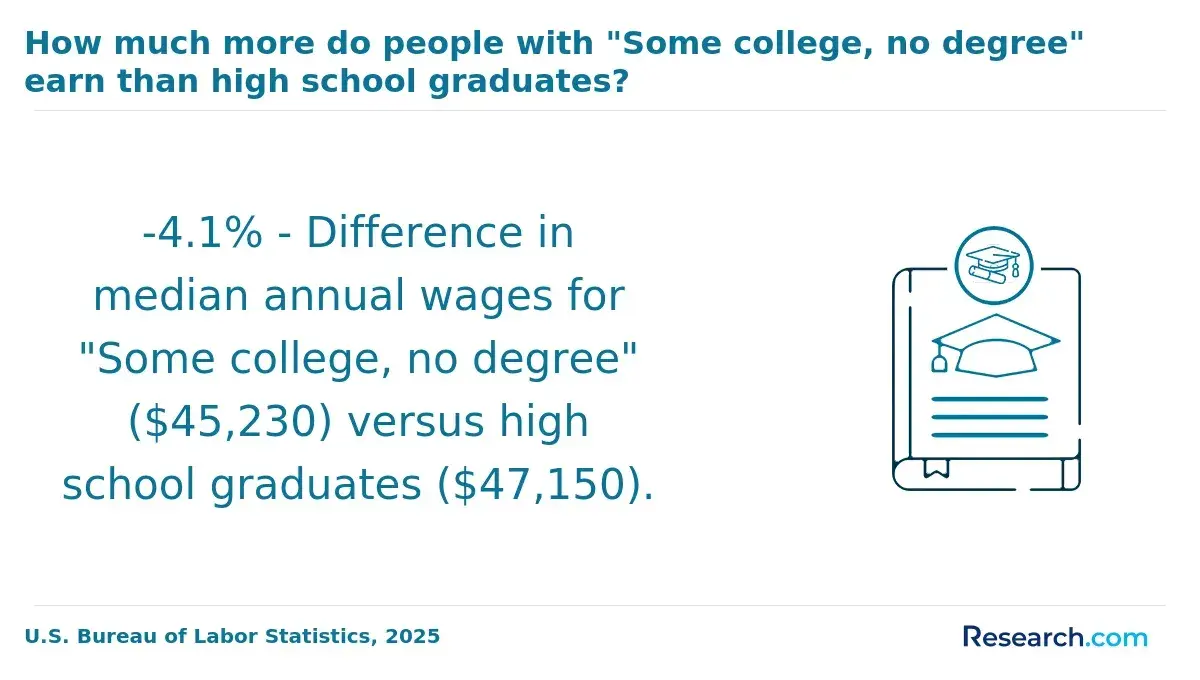
A bachelor's degree in sociology can qualify candidates for many entry-level roles in social services, research support, human resources, public administration, and community programs. However, promotion usually depends on applied skills that show an employer you can move beyond understanding social issues into solving organizational problems.
The most promotion-friendly sociology skill set blends human insight with technical and managerial ability. Students and early-career professionals should prioritize the skills below because they are portable across nonprofit, public-sector, healthcare, education, and corporate settings.
- Research design: Ability to create surveys, conduct interviews, review evidence, and interpret social patterns without overstating findings.
- Quantitative analysis: Comfort with spreadsheets, statistical software, dashboards, and basic data visualization for program or workforce decisions.
- Writing for decision-makers: Skill in writing memos, grant narratives, policy briefs, evaluation reports, and executive summaries.
- Program management: Ability to coordinate timelines, budgets, compliance requirements, staff responsibilities, and performance measures.
- Intercultural communication: Capacity to work effectively across communities, identities, institutions, and stakeholder groups.
- Ethics and confidentiality: Understanding of informed consent, client privacy, data handling, and professional boundaries.
Degree requirements vary by role. A bachelor's degree may be enough for coordinator or analyst roles, while a master's degree is often preferred for policy analysis, program evaluation, organizational leadership, and senior research roles. Licensure-based careers, such as clinical social work or counseling, usually require specific graduate programs and state approval, so sociology students should not assume any graduate degree will meet licensing requirements.
Which sociology roles provide the best salary growth and earning upside over time?
The best salary growth usually appears when sociology graduates move from direct service or support roles into management, analytics, consulting, or specialized administration. BLS 2024 data shows that management-oriented occupations can have much higher median pay than many entry-level social service roles, but reaching those roles generally takes experience and additional skill development.
The table below groups sociology-related careers by earning-upside pattern. This helps readers compare not just starting possibilities but the kind of advancement each route can support.
| Career route | Typical early-career roles | Higher-upside roles | Best fit for |
| Nonprofit and human services | Case manager, outreach specialist, program coordinator | Program director, executive director, grants manager | People who want mission-driven work and are willing to build funding, supervision, and compliance skills. |
| Research and insights | Research assistant, survey coordinator, junior analyst | Senior analyst, research manager, insights director | People who enjoy evidence, data, behavioral trends, and structured problem solving. |
| Corporate HR and workforce strategy | HR coordinator, recruiter, employee relations assistant | HR manager, training manager, organizational development leader | People interested in workplace systems, culture, labor issues, and employee experience. |
| Healthcare administration | Patient services coordinator, health program specialist | Operations manager, health services manager, community health director | People who want to combine social systems knowledge with healthcare operations and population health. |
| Policy and consulting | Policy assistant, evaluation associate, project analyst | Policy analyst, management analyst, strategy consultant | People who can translate research into recommendations for agencies, nonprofits, or businesses. |
A common mistake is comparing careers only by median salary. Median pay describes the middle of a broad occupation, not what a new graduate will receive. For career planning, it is more useful to ask whether the path provides access to measurable responsibility, such as managing a team, owning a budget, leading data reports, or advising executives.
How do sociology graduates move from entry-level jobs into leadership positions?
Sociology graduates typically advance by converting people-facing or research-support experience into evidence of leadership. Promotions usually come faster when workers document outcomes, volunteer for cross-functional projects, and learn the language of budgets, data, compliance, and strategy.
The sequence below shows a practical promotion path. It is not the only route, but it reflects how many sociology graduates move from generalist roles into higher-responsibility positions.
- Start with a role that exposes you to real systems: Good entry points include case management, community outreach, HR coordination, research assistance, program support, and public agency work.
- Track measurable accomplishments: Keep records of caseload improvements, survey response rates, grant deliverables, client outcomes, training participation, or process improvements.
- Add one technical skill at a time: Build competence in Excel, SQL basics, statistical software, data visualization, grant management platforms, or HR information systems depending on your target path.
- Ask for project ownership: Leading a small evaluation, onboarding process, community partnership, or reporting cycle can provide stronger promotion evidence than simply staying longer in a role.
- Move toward supervisory or analyst titles: Look for roles such as program lead, senior coordinator, research analyst, HR specialist, or evaluation associate before applying for manager-level positions.
- Consider graduate study when it removes a ceiling: A master's degree can be useful when job postings repeatedly require advanced training for the roles you want.
Red flags include staying in roles with no promotion ladder, accepting unpaid "leadership" duties without title or compensation review, and choosing graduate school before confirming that the degree matches your target job postings. A better approach is to collect postings for your desired roles and identify the credentials, software, and experience that appear repeatedly.
What degree levels and specializations most improve promotion prospects in sociology?
Degree level matters most when it aligns with a specific promotion target. A general sociology bachelor's degree can be valuable, but a specialization can make your career story clearer to employers. For example, criminology may support justice-related roles, while medical sociology or public health coursework may fit healthcare and community health positions.
The table below compares degree levels by career mobility. Use it to identify when more education is likely to help and when experience or a certificate may be the better next step.
| Degree level | Typical time investment | Promotion value | Best matched roles |
| Associate degree | About two years full time | Can support support-level roles or transfer into a bachelor's program. | Human services assistant, community support worker, administrative roles. |
| Bachelor's in sociology | About four years full time | Good baseline for entry-level research, public service, HR, nonprofit, and social service roles. | Program coordinator, research assistant, case manager, HR assistant. |
| Master's in sociology or applied sociology | Often one to two years after a bachelor's degree | Stronger for research, evaluation, policy, teaching at some institutions, and leadership roles. | Policy analyst, evaluation specialist, research manager, nonprofit administrator. |
| Related professional master's | Usually one to three years depending on format | Useful when the target field requires applied preparation beyond sociology. | Public health, public administration, social work, counseling, HR, healthcare administration. |
| Doctorate | Often several years beyond a bachelor's or master's degree | Most useful for university faculty, advanced research, or senior policy expertise. | Professor, principal investigator, senior researcher, think tank specialist. |
Students comparing adjacent paths should also consider psychology, social work, counseling, public administration, public health, and data analytics. If speed is a major factor, a fastest psychology degree pathway may be worth comparing with sociology, especially for students interested in behavior, research, or human services roles.
How do online sociology programs compare to campus programs for career advancement?
Online and campus sociology programs can both support career advancement if the school is properly accredited, the curriculum fits the target career, and students can access internships or applied projects. The biggest difference is usually not academic quality by format alone; it is access to networking, field placements, research opportunities, and schedule flexibility.
The comparison below highlights practical trade-offs. Online programs often help working adults keep earning while studying, while campus programs may offer more immediate access to faculty-led research and local internship pipelines.
| Factor | Online sociology program | Campus sociology program | Best choice when |
| Flexibility | Often better for working adults, caregivers, and students outside commuting range. | Usually more structured around fixed class times and campus availability. | Online fits students who need schedule control; campus fits students who prefer routine. |
| Networking | Can be strong if the program includes live sessions, alumni groups, and career support. | Often easier for informal faculty, peer, and local employer connections. | Campus may help students who need in-person mentoring; online can work for proactive networkers. |
| Applied experience | Depends heavily on whether the school helps arrange local internships or projects. | May have established local placements, research labs, or community partnerships. | Choose the format with the strongest fieldwork support for your career goal. |
| Career advancement | Can support promotion if accredited and aligned with employer expectations. | Can support promotion through campus resources and regional employer relationships. | The better option is the one with relevant outcomes, not simply the delivery format. |
Students drawn to direct service or nonprofit leadership should compare sociology with related human services options. For example, an accelerated human services degree online may fit learners who want a more practice-oriented path into community programs, case coordination, or social service administration.
Which industries most value sociology expertise for management and director-level roles?
Sociology expertise is especially valuable in industries that must understand people at scale: communities, patients, employees, consumers, students, families, and public populations. The more an organization depends on behavior, access, equity, compliance, service delivery, or stakeholder trust, the more useful sociology can become in leadership roles.
The table below identifies industries where sociology graduates can build toward management or director-level work. The strongest candidates usually combine sociology with industry-specific knowledge, such as healthcare policy, workforce law, grant funding, education systems, or market analytics.
| Industry | Why sociology matters | Possible leadership roles | Skills that improve promotion odds |
| Nonprofit and community services | Organizations need leaders who understand communities, service gaps, funding requirements, and outcome measurement. | Program director, community impact director, executive director. | Grant writing, staff supervision, evaluation, partnership management. |
| Healthcare and public health | Patient behavior, access barriers, social determinants of health, and community outreach are central to service improvement. | Population health manager, patient experience director, community health administrator. | Health equity, compliance basics, operations, data reporting. |
| Government and public administration | Public agencies use research, policy analysis, and program evaluation to allocate resources and improve services. | Policy manager, program administrator, evaluation director. | Policy writing, budgeting, public data, stakeholder communication. |
| Human resources and organizational development | Workplaces need leaders who understand culture, conflict, inclusion, hiring systems, and employee behavior. | HR manager, DEI director, training and development leader. | Employee relations, labor policy, analytics, facilitation. |
| Market research and consumer insights | Companies need to understand how groups make decisions and how social trends affect demand. | Insights manager, research director, customer experience strategist. | Survey design, segmentation, statistics, storytelling with data. |
AI and automation are changing these industries, but they do not eliminate the need for sociological judgment. Tools can help summarize surveys or analyze large datasets, but employers still need professionals who can ask valid questions, interpret context, identify bias, and make ethical recommendations.
What professional certifications or credentials strengthen promotion chances in sociology fields?
Certifications can strengthen promotion chances when they prove a job-relevant skill that a sociology degree alone may not show. The best credential depends on the target career path: research roles reward analytics and evaluation skills, HR roles reward workforce credentials, and counseling-adjacent fields may require state-approved education and supervised experience.
Before paying for a certification, compare it with real job postings. A useful credential should appear in postings, be recognized by employers, or clearly build a skill you need for promotion.
- Project management credentials: Useful for program coordinators moving toward manager roles, especially in nonprofits, healthcare, government, and consulting.
- HR credentials: Helpful for sociology graduates moving into recruiting, employee relations, organizational development, or workforce strategy.
- Data analytics certificates: Valuable for research, evaluation, policy, market insights, and operations roles that require dashboards or statistical analysis.
- Grant writing or nonprofit management credentials: Practical for professionals seeking program director or development leadership roles.
- Substance abuse or behavioral health credentials: Relevant only when they align with state rules and the student's intended scope of practice.
Students interested in addiction services should be especially careful about licensure and state requirements. A best online substance abuse counseling degree comparison can help identify programs designed for that field, but students should still verify whether a program meets requirements in the state where they plan to work.
How can students choose sociology programs that maximize long-term career mobility?
The best sociology program for promotion is not always the highest-ranked or most expensive option. It is the program that connects your coursework to the roles you actually want, gives you applied experience, and leaves you with manageable cost relative to your likely career path.
Use the following checklist before enrolling. These steps help prevent common mistakes, such as choosing a program without checking accreditation, ignoring internship access, or assuming a sociology degree automatically leads to a specific licensed profession.
- Confirm institutional accreditation: Make sure the college or university is accredited by a recognized accreditor, especially if you may transfer credits or pursue graduate school later.
- Match electives to your target role: Choose courses in criminology, social research, healthcare, policy, inequality, organizations, statistics, or family studies based on your career direction.
- Ask about applied experience: Look for internships, community-based research, capstone projects, service learning, labs, or employer partnerships.
- Review career outcomes carefully: Ask what graduates do after the program and whether the school tracks placement, graduate school entry, or employer partnerships.
- Calculate total cost, not just tuition: Include fees, books, technology, transportation, lost wages, and the time needed to complete the degree.
- Check transfer and credit policies: Adult learners should ask how prior credits, military training, exams, or workplace learning may shorten completion time.
- Compare adjacent degrees: If your goal is counseling, social work, HR, public health, or data analytics, a related degree may be more direct than sociology alone.
Students interested in family systems, counseling-related work, or relationship services should compare sociology with counseling pathways. For example, best online MFT programs may be more appropriate for learners seeking marriage and family therapy licensure, while sociology may be better for research, policy, community programs, or organizational roles.
Other Things You Should Know About Sociology
In 2027, the sociology roles with the strongest promotion potential include Human Resource Specialists, Social Researchers, Policy Analysts, and Community Service Managers. These positions are expected to grow due to increasing demand for data-driven decision-making, social policy development, and organizational management.
Most sociology programs include statistics and research methods rather than advanced mathematics. Students who want stronger promotion prospects should take quantitative coursework seriously because data skills can open doors in research, policy, HR analytics, and program evaluation.
Sociology can prepare students for law school by building skills in reading, writing, social analysis, inequality, institutions, and evidence-based argument. Students considering law should also focus on GPA, LSAT preparation, writing-intensive courses, and internships related to legal or policy work.
Useful minors include statistics, data analytics, public health, psychology, criminal justice, business, public administration, political science, communications, and human services. The best minor is the one that adds concrete skills or field knowledge connected to your target career.
References
- Program Details https://digicromeuniversity.com/program/ma-in-sociology-online
- 10 Job Opportunities for Sociology Majors (and How to Land One) | The Muse https://www.themuse.com/advice/sociology-degree-major-jobs-careers
- Social Work vs. Sociology https://socialworklicensemap.com/social-work-careers/social-work-vs-sociology/
- CourseCareers https://coursecareers.com/blog-posts/college-vs-online-career-training
- What Jobs Can You Get With Sociology? | Oxford Learning College https://www.oxfordcollege.ac/news/what-jobs-can-you-get-with-sociology/
- How to Apply Your Degree in Sociology to Any Career – Norton Learning Blog https://nortonlearningblog.com/2022/10/how-to-apply-your-degree-in-sociology-to-any-career/
- Sociology, BS https://www.ucmo.edu/academics/programs/majors/cahss/sociology-anthropology-and-social-studies/sociology-bs/
- Best Sociology Degree Jobs: 12+ Career Paths for 2026 | Extern https://www.extern.com/post/sociology-degree-jobs-career-guide