
2027 Cheapest Way to Get a Teaching Credential in Boston, MA: Degree Requirements & Certification

Co-Founder and Chief Data Scientist
Choosing the cheapest way to earn a teaching credential in Boston is not just a tuition question. You need a pathway that meets Massachusetts licensure rules, gives you supervised classroom experience, prepares you for the Massachusetts Tests for Educator Licensure, and does not leave you with unnecessary debt before you start teaching.
This guide is for aspiring teachers, career changers, paraprofessionals, recent graduates, and working adults comparing affordable teacher preparation options in Boston, MA. It explains the academic and certification requirements, realistic timelines, program costs, online versus campus trade-offs, financial aid options, alternative pathways, and practical ways to reduce total cost.
The need for qualified teachers remains significant. In the United States, an estimated 286,290 teachers who are not fully certified are working in education across 48 states. For Boston-area candidates, that makes the choice of a legitimate, affordable credential pathway especially important: the goal is not simply to find the lowest price, but to qualify for the right Massachusetts license without paying for credits, fees, or credentials you do not need.
Quick answer: What is the cheapest way to get a teaching credential in Boston?
The lowest-cost route depends on your current education level. If you already have a bachelor’s degree, the most affordable options are usually alternative certification pathways, residency programs, or focused post-baccalaureate educator preparation programs that lead to Massachusetts licensure. Boston Teacher Residency is especially cost-conscious because residents receive a $20,000 stipend, health coverage, and a $7,395 AmeriCorps Education Award while working toward a Massachusetts Initial Teacher License and a master’s degree through UMass Boston.
If you do not yet have a bachelor’s degree, you generally need to complete one first, then satisfy Massachusetts educator preparation, testing, student teaching, and background check requirements. Online programs can reduce commuting and housing costs, but candidates must verify that any program they choose is approved for Massachusetts licensure.
Key Points About The Cheapest Teaching Credential Programs in Boston, MA
- The average cost of completing a teaching credential in Boston hovers around $20,000, so affordability is possible if candidates compare total program costs instead of assuming every local option is out of reach.
- Boston education graduates often carry student debt averaging $30,000, which makes financial planning, transfer credits, stipends, and service-based scholarships important before enrolling.
- Funding sources such as the TEACH Grant and Massachusetts’ John and Abigail Adams Scholarship can reduce out-of-pocket costs, but many future teachers miss these options because they focus only on tuition.
- What are the academic requirements for teachers in Boston, MA?
- What are the certification requirements for teachers in Boston, MA?
- How much do teaching credential programs cost in Boston, MA?
- How long does it take to get a teaching certificate in Boston, MA?
- Are there schools in Boston, MA offering affordable teaching programs?
- What additional career opportunities are available for educators in Boston, MA?
- Can a teaching credential open pathways to specialized counseling roles in Boston, MA?
- What are the employment prospects for certified teachers in Boston, MA?
- What are the special education teacher requirements in Boston, MA?
- Are online teaching programs cheaper than traditional ones in Boston, MA?
- How can students lower the cost of attending teaching programs in Boston, MA?
- Are there organizations in Boston, MA that provide financial aid for teachers?
- Is investing in a teaching credential in Boston, MA worth it?
- Can pursuing BCBA certification supplement your teaching career in Boston, MA?
- Are there alternative pathways aspiring educators in Boston, MA can take to obtain credentials?
What are the academic requirements for teachers in Boston, MA?
Boston teachers are licensed through Massachusetts, not by the city itself. That means candidates must meet state academic, testing, and fieldwork requirements before they can qualify for the appropriate teaching license. The cheapest program is only useful if it satisfies these state rules.
Most aspiring teachers should expect four core academic requirements:
- Bachelor’s degree: A bachelor’s degree from an accredited institution is the baseline requirement. Massachusetts does not require every candidate to major in education, but a subject-area major can make MTEL preparation and classroom placement easier.
- Approved educator preparation: Candidates generally need a state-approved educator preparation program. This may be built into an undergraduate degree, completed after graduation, or pursued through an alternative pathway for career changers.
- Student teaching or supervised fieldwork: Teacher candidates must complete supervised classroom practice, often through a semester-long student teaching placement with a licensed teacher.
- Licensure exams: Candidates must pass the required Massachusetts Tests for Educator Licensure, which evaluate communication, literacy, pedagogy, and subject knowledge depending on the license area.
Working adults who already hold a bachelor’s degree may prefer accelerated or online graduate options. Research.com’s guide to the best 1 year online masters in education programs can help candidates compare shorter education programs that may fit around employment while limiting time away from paid work.
| Requirement | What it means for Boston candidates | Cost-control tip |
| Bachelor’s degree | You need an accredited undergraduate degree before most licensure routes are available. | Use transfer credits and public institutions when possible to avoid paying twice for general education coursework. |
| Educator preparation | Your program should be approved for the Massachusetts license you want. | Ask the school directly whether the program leads to Massachusetts licensure in your subject and grade level. |
| Student teaching | You need supervised classroom experience before becoming fully prepared for independent teaching. | Compare placement support, commuting requirements, and whether unpaid fieldwork will affect your income. |
| MTEL exams | Passing the required tests is part of the licensing process. | Budget for exam preparation and possible retakes before you enroll. |
What are the certification requirements for teachers in Boston, MA?
Massachusetts uses different license categories depending on a candidate’s education, exams, preparation program, and endorsements. Understanding these categories matters because the cheapest path for one person may not be the right path for another.
| License type | Main requirement | Validity | Important limitation |
| Temporary License | For candidates with a bachelor’s degree who have not yet passed all required Massachusetts Tests for Educator Licensure. | Valid for one year and cannot be renewed. | It is a short-term option, not a long-term teaching plan. |
| Provisional License | Requires a bachelor’s degree and passing scores on all required MTEL exams. | Valid for five years without renewal. | It does not include the SEI Endorsement, which can limit readiness for classrooms serving English learners. |
| Initial License | Requires a bachelor’s degree, approved educator preparation, MTEL passing scores, and the SEI Endorsement. | Valid for five years and can be extended once for another five years. | This is commonly the target license for candidates completing full teacher preparation. |
Applicants must also submit fingerprints for state and federal background checks. After initial licensure, teachers should plan for continuing professional development and, in many cases, advancement toward a professional license. This ongoing requirement is one reason candidates should choose a preparation route that supports long-term employability rather than only short-term eligibility.
If you are still comparing degree formats, Research.com’s resource on the best online teaching degree programs can help you evaluate accredited online options, licensure alignment, and program flexibility.
How much do teaching credential programs cost in Boston, MA?
Teaching credential costs in Boston vary widely because candidates enter through different routes: undergraduate education degrees, post-baccalaureate programs, master’s programs, residencies, and alternative certification options. Tuition is only one part of the final price. Candidates should also account for fees, exams, fingerprinting, books, commuting, housing, lost income during student teaching, and the cost of living in Boston.
At institutions such as UMass Boston, teaching credential coursework typically costs around $575 per credit hour. Boston Teacher Residency courses are priced near $600 each, but the program offsets costs through a $20,000 stipend, health coverage, and a $7,395 AmeriCorps Education Award. This is why the lowest sticker price is not always the lowest net cost.
| Cost item or program example | Amount stated | How to interpret it |
| Average teaching credential cost in Boston | Around $20,000 | A useful planning estimate, but your final cost depends on credits required, aid, and living expenses. |
| Average student debt for Boston education graduates | $30,000 | Debt can exceed program tuition if housing, transportation, and unpaid fieldwork are not planned carefully. |
| UMass Boston coursework | Around $575 per credit hour | Credit requirements determine the final tuition bill. |
| Boston Teacher Residency course pricing | Near $600 each | Course charges should be weighed against program-provided support. |
| Boston Teacher Residency support | $20,000 stipend, health coverage, and $7,395 AmeriCorps Education Award | These benefits can substantially reduce the net cost for eligible residents. |
| Lesley University M.Ed. in Elementary Education | Approximately $35,000 for 40 credits at $875 per credit | This is a graduate-level option that should be compared with aid, licensure fit, and career goals. |
| Fitchburg State University fully online Master of Education | Approximately $13,860 | Online delivery may reduce living and commuting expenses. |
| Urban College of Boston courses | As little as $317 per credit | Lower per-credit tuition can help candidates reduce total cost if the program fits their credential goals. |
| UMass Online Curriculum and Instruction pathway | $30 registration fee per semester beyond tuition | Small recurring fees still belong in your total budget. |
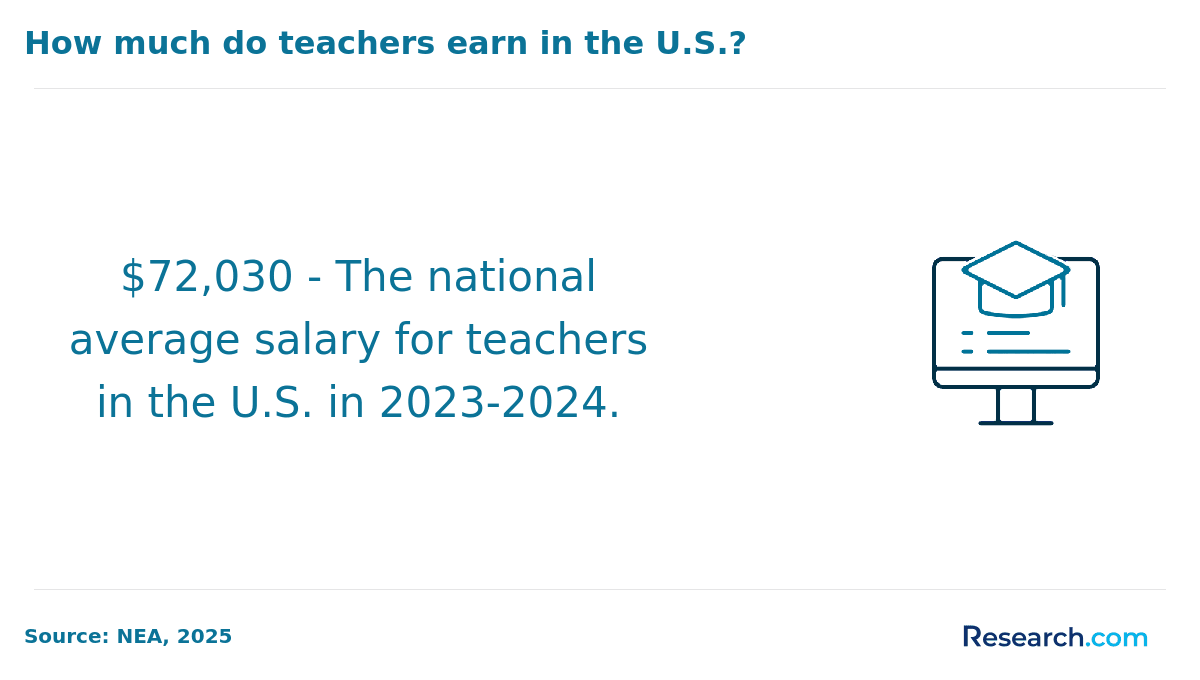
Public programs may charge different rates for in-state and out-of-state students. Residency-based models such as Boston Teacher Residency can be more affordable for candidates who are willing to commit to Boston Public Schools. Massachusetts is also one of the highest-paying states, as shown in the chart below, but salary potential should not be treated as a guarantee for any individual graduate.
How long does it take to get a teaching certificate in Boston, MA?
For candidates starting without a bachelor’s degree, the full process usually takes 5 to 7 years: four years for the bachelor’s degree and another one to two years for an approved educator preparation program. The timeline can lengthen if MTEL exams require multiple attempts, if student teaching must be delayed, or if candidates attend part time.
The licensing sequence may begin with temporary or provisional eligibility, move toward an initial license, and later progress to a professional license. Because the initial license is valid for five years, and professional advancement requires additional development and experience, the full path to long-term certification can take over a decade.
| Starting point | Likely route | Typical time consideration |
| No bachelor’s degree | Complete an accredited bachelor’s degree, then approved preparation and MTEL exams. | Often 5 to 7 years in total. |
| Bachelor’s degree in another field | Choose a post-baccalaureate, residency, alternative certification, or master’s pathway. | Often one to two years after the bachelor’s degree, depending on program format. |
| Already working in schools | Use district-supported or alternative routes when eligible. | May allow candidates to earn while completing requirements. |
| Seeking long-term professional status | Move from initial licensure toward professional licensure. | Can take over a decade when the full career progression is considered. |
Candidates interested in teaching younger students often compare online elementary education programs because they may reduce transportation and housing costs. Research.com’s guide to the most affordable online elementary education programs can help you identify lower-cost options and understand how financial aid may affect net price.
Are there schools in Boston, MA offering affordable teaching programs?
Yes. Boston and the surrounding Massachusetts higher education market include several teacher preparation options that may be affordable depending on your license area, prior credits, residency status, and eligibility for aid. The best choice is not always the cheapest advertised tuition; it is the program that leads to the license you need with the fewest unnecessary costs.
| Program or school | Affordability feature | Best fit |
| Boston Teacher Residency | Residents receive a $20,000 stipend for living expenses instead of paying traditional tuition, with health benefits and access to additional financial aid. | Career changers and recent graduates who want a Massachusetts Initial Teacher License, a master’s degree in education from UMass Boston, and a pathway into Boston Public Schools. |
| Lesley University | M.Ed. programs in Elementary Education cost approximately $35,000 for 40 credits at $875 per credit. | Candidates seeking a graduate program in elementary education with Massachusetts licensure alignment. |
| Boston College’s Lynch School of Education and Human Development | Boston College distributes over $11.4 million in financial aid annually. | Students preparing to teach grades 1-6 who want a program that meets Massachusetts state licensure requirements and may qualify for institutional aid. |
| Urban College of Boston | Courses can cost as little as $317 per credit. | Cost-conscious students who want to explore local, accessible coursework and support options. |
| Fitchburg State University | The fully online Master of Education program costs approximately $13,860, and the rate of $470 per credit is notably economical. | Working adults seeking an online graduate education option that can reduce commuting and housing expenses. |
Educators who want to expand into school libraries or information services may also compare the most affordable online masters degrees in library science, especially if they are evaluating accredited graduate options that can support a school-based career shift.
What additional career opportunities are available for educators in Boston, MA?
A teaching credential can support more than a classroom teaching role. Experienced educators may move into curriculum design, instructional coaching, department leadership, school administration, education nonprofit work, tutoring, assessment, or teacher training. Some also build careers in student support, behavioral services, or counseling-adjacent roles after earning additional credentials.
Teachers who are interested in family systems, student well-being, and community support may want to understand how to become a marriage and family therapist in Boston. That route is separate from teacher licensure, but education experience can help professionals decide whether a counseling-related career better matches their long-term goals.
Can a teaching credential open pathways to specialized counseling roles in Boston, MA?
A teaching credential alone does not qualify someone for licensed counseling roles. However, classroom experience can be a strong foundation for educators who later pursue additional training in student support, behavioral intervention, mental health education, or substance abuse prevention. The key is to distinguish between roles that require a teaching license and roles that require a separate counseling credential.
Educators considering a transition into addiction support or prevention work can review Research.com’s guide on how to become a substance abuse counselor in Boston. This can help teachers compare education, supervised experience, and credentialing requirements before investing in another pathway.
What are the employment prospects for certified teachers in Boston, MA?
Certified teachers in Boston may benefit from a large public school system, charter schools, private schools, education nonprofits, and nearby districts. Employers typically prioritize candidates who meet Massachusetts licensing standards, have strong classroom experience, and can support diverse learners. Certification can also make a candidate more competitive for benefits, advancement, and long-term school-based roles.
Because Boston is an expensive city, reducing the cost of preparation can improve the return on investment. Candidates comparing entry routes can use Research.com’s guide to the cheapest way to become a teacher in Boston as a next step for evaluating lower-cost options that still meet licensure expectations.
What are the special education teacher requirements in Boston, MA?
Special education teachers in Boston must meet Massachusetts teacher licensure standards and complete preparation specific to students with disabilities. This typically includes specialized coursework in developmental disabilities, behavior management, inclusive practices, assessment, and individualized instruction, along with field experiences in diverse learning environments.
Candidates should expect specialized assessment requirements in addition to general teacher preparation expectations. Because special education licensure can vary by grade span and student needs, prospective teachers should confirm the exact endorsement or license category before choosing a program. For a focused overview, review Research.com’s guide to special education teacher requirements in Boston.
Are online teaching programs cheaper than traditional ones in Boston, MA?
Online teaching programs can be cheaper, but not always. The main savings usually come from avoiding Boston housing costs, commuting, parking, and schedule disruption rather than from tuition alone. Some online programs charge similar tuition to campus programs, while others are meaningfully less expensive.
For example, Fitchburg State University’s fully online Master of Education program costs approximately $13,860. Comparable on-campus programs in the Boston area can surpass $20,000 once fees, housing, and transportation are included. Online formats may also help working adults keep their jobs while completing coursework.
| Option | Potential advantage | Potential drawback | Best for |
| Online teaching program | Can reduce commuting, housing, and scheduling costs. | May still require in-person fieldwork, student teaching, or local placements. | Working adults, caregivers, and students who do not need campus-based support every week. |
| Campus-based Boston program | May offer stronger local school placement networks and in-person faculty access. | Can be more expensive when transportation and housing are included. | Students who want face-to-face mentoring and direct access to Boston-area school partnerships. |
| Hybrid program | Combines online coursework with local field experiences. | May require careful scheduling around work. | Candidates who need flexibility but still want structured in-person practice. |
Before enrolling online, ask whether the program is approved for Massachusetts licensure, where student teaching will occur, and whether the school helps arrange placements in or near Boston.
How can students lower the cost of attending teaching programs in Boston, MA?
The most effective cost-saving strategy is to manage total cost, not just tuition. A program with slightly higher tuition may be cheaper overall if it offers stipends, strong placement support, fewer required credits, better transfer policies, or a schedule that lets you keep working.
Practical ways to reduce total credential cost
- Compare online programs such as those at Merrimack College or Fitchburg State University if they eliminate room and board; Fitchburg State’s rate of $470 per credit is notably economical.
- Look for scholarships, grants, and institutional aid before borrowing. Urban College of Boston may be appealing to cost-conscious students because courses can cost as little as $317 per credit.
- Use Massachusetts’ network of over seventy approved teacher preparation programs to compare transfer policies and avoid repeating coursework you already completed.
- Apply for state-specific support such as the Early Childhood Educators Scholarship Program if your teaching area and eligibility match the program rules.
- Ask whether multilingual education programs at Urban College may waive additional language course fees.
- Review UMass Online’s Curriculum and Instruction pathway carefully because it charges a $30 registration fee per semester beyond tuition.
- Consider a focused option such as Northeastern University’s Single Subject Credential Program if it helps you avoid unrelated coursework.
| Common mistake | Why it becomes expensive | Better approach |
| Choosing based only on advertised tuition | Fees, commuting, housing, and unpaid student teaching can change the true price. | Build a full budget that includes tuition, fees, exams, transportation, books, and lost income. |
| Ignoring accreditation and state approval | A cheap program that does not meet Massachusetts requirements may not lead to licensure. | Confirm state approval for your exact license area before applying. |
| Assuming online always means cheaper | Some online programs charge similar tuition and still require field placements. | Compare net cost, placement requirements, and time to completion. |
| Not checking transfer credit policies | You may pay for credits you have already earned elsewhere. | Request a formal transfer review before committing. |
| Waiting to plan for MTEL exams | Retakes and delays can extend your timeline. | Budget for preparation and schedule tests early enough to avoid delaying licensure. |
One Boston teacher described the cost-control process as time-consuming but worthwhile. She reduced her course load by getting previous credits reviewed, worked part time while enrolled, used local scholarships, and chose a commuter-friendly program so she could stay with family instead of paying for housing. Her main advice was to be persistent: the savings were not automatic, but they became significant once she asked detailed questions and tracked each requirement.
Are there organizations in Boston, MA that provide financial aid for teachers?
Yes. Boston-area teachers and teacher candidates can access grants, scholarships, residency support, and service-based funding, although eligibility rules vary. Some funding is for future teachers, while other grants support current educators who want professional development.
| Funding source | Amount stated | Who it may help | Important condition |
| Fund for Teachers in collaboration with the Boston Teachers Union | Grants up to $5,000 for individuals and $10,000 for teams | Current Boston Public Schools educators pursuing personalized professional development. | Funds are intended to strengthen teaching practice and bring new ideas into schools. |
| Tomorrow’s Teachers Scholarship Program through the Massachusetts Department of Higher Education | Up to $25,000 annually | Massachusetts residents enrolled in bachelor’s or post-bachelor’s programs who plan to teach in K-12 public schools. | Recipients must complete the FAFSA and teach in Massachusetts public schools for each year of support, or the funding converts into a loan. |
| The Boston Foundation’s Safety Net Grants | Operating support grants averaging $25,000 | Nonprofits serving marginalized communities in Greater Boston, including organizations that may support teacher recruitment and development. | These are organizational grants, not direct tuition awards to every teacher candidate. |
| Boston Teacher Residency | $20,000 stipend, health coverage, and $7,395 AmeriCorps Education Award | Eligible residents preparing for Boston Public Schools teaching roles. | Candidates should understand service expectations, placement requirements, and program commitments. |
Questions to ask before accepting aid
- Is the funding a grant, scholarship, stipend, loan, or forgivable loan?
- Does it require a service commitment in Massachusetts public schools or Boston Public Schools?
- What happens if I change programs, pause enrollment, fail to complete licensure, or move out of state?
- Can the aid be combined with federal financial aid, AmeriCorps benefits, institutional scholarships, or employer support?
- Will the funding cover fees, books, licensure exams, and living expenses, or tuition only?
Is investing in a teaching credential in Boston, MA worth it?
A teaching credential in Boston can be worth it for candidates who want long-term work in schools, understand the licensing process, and choose a pathway that keeps debt manageable. The credential can provide access to public school roles, benefits, advancement pathways, and specialized teaching opportunities. However, the return depends on your total cost, debt, license area, school placement, and ability to remain in the profession long enough to benefit from salary growth and stability.
- Salary context: Boston public school teachers earn an average annual salary of $66,549 as of June 2025. First-year teachers start around $50,615, median salaries are $58,374, and total compensation can reach as high as $74,916.
- Contract stability: The Boston Teachers Union has secured contracts through 2027, which provides a clearer planning horizon for educators considering long-term work in Massachusetts.
- Professional range: Boston includes public schools, charter programs, private schools, nonprofits, and higher education-adjacent opportunities that can support specialization and advancement.
- Cost offsets: Stipends, health benefits, education awards, scholarships, and transfer credits can make credentialing more affordable than the sticker price suggests.
For teachers considering graduate education as a career advancement tool, Research.com’s guide to what jobs you can get with an online masters degree in education can help connect degree choices with roles in leadership, curriculum, instruction, and specialized education settings.
The chart below summarizes what teachers want the public to understand about their profession.
Can pursuing BCBA certification supplement your teaching career in Boston, MA?
Yes, BCBA certification can complement a teaching career for educators who want deeper expertise in behavior analysis, special education support, autism services, intervention planning, or student behavior systems. It is not a substitute for teacher licensure, and it has its own education, supervised experience, and examination requirements.
Teachers considering this path should compare the time, cost, and career payoff before enrolling in another credential program. Research.com’s guide to BCBA education requirements in Boston can help educators understand how behavior analysis training may fit with classroom teaching or specialized student support roles.
Are there alternative pathways aspiring educators in Boston, MA can take to obtain credentials?
Yes. Alternative pathways can be practical for candidates who already have a bachelor’s degree, want to change careers, or need to earn income while preparing to teach. These routes can shorten the timeline and reduce upfront cost, but candidates must still meet Massachusetts testing, preparation, and licensure requirements.
| Alternative pathway | How it works | Cost or support stated | Best for |
| Massachusetts Institute for New Teachers | Condenses preparation into 200 hours of summer workshops and practical fieldwork, followed by mentorship during the first teaching year. | Fees typically between $3,000 and $7,000. | Career changers who want a faster and more affordable path than conventional private college routes. |
| Preliminary License Route | Candidates with a bachelor’s degree can become eligible after passing the MTEL, with limited coursework at the beginning. | Lower fees than many full degree programs. | Candidates who want immediate eligibility while working toward full licensure requirements over up to five years. |
| Teach for America | Participants teach in high-need Boston schools while receiving structured support and credentialing opportunities. | Not free, but financial burdens may be reduced through stipends and education awards. | Candidates committed to high-need school settings who want to earn while serving. |
| BPS Accelerated Community to Teacher Program | Supports community-based pathways into Boston Public Schools teaching roles. | Program details should be verified directly with TeachBoston.org. | Paraprofessionals, community members, and local candidates connected to Boston schools. |
When comparing alternative pathways, ask whether the route leads to the exact license you want, whether you will receive mentoring during your first year, whether you must commit to a specific district, and what happens if you do not pass required exams on the first attempt.
How to choose the right affordable teaching credential program in Boston
- Start with the license, not the school. Decide the grade level and subject area you want to teach, then find programs approved for that Massachusetts license.
- Calculate net cost. Add tuition, fees, MTEL costs, fingerprinting, books, transportation, housing, and unpaid fieldwork time. Then subtract confirmed grants, stipends, scholarships, employer aid, and transfer credits.
- Check approval and accreditation. Do not enroll until the school confirms in writing that the program aligns with Massachusetts licensure requirements.
- Compare field placement support. A cheap program can become stressful if you must find your own student teaching placement.
- Ask about MTEL preparation. Strong exam support can save time and money by reducing the risk of repeated test attempts.
- Review employment connections. Residency and district-linked programs may offer clearer pathways into Boston Public Schools or nearby districts.
- Understand service commitments. Scholarships, stipends, and forgivable aid may require teaching in specific schools or districts.
Common mistakes to avoid when pursuing a teaching credential in Boston
- Assuming Boston sets the credential rules: Massachusetts controls teacher licensure, so candidates must follow state requirements even if they plan to teach only in Boston.
- Choosing the cheapest program before checking licensure fit: A low-cost degree is not a bargain if it does not lead to the license you need.
- Forgetting living costs: Boston’s housing and transportation expenses can make a seemingly affordable campus program much more expensive.
- Overlooking alternative routes: Candidates with a bachelor’s degree may not need a second full undergraduate program.
- Borrowing before applying for aid: Stipends, scholarships, education awards, and service-based funding should be explored before taking on debt.
- Ignoring long-term career plans: Elementary, secondary, special education, bilingual education, counseling-related paths, and BCBA-related work have different requirements.
Related Articles for Nearby Cities
- 2027 Cheapest Way to Get a Teaching Credential in New York City: Degree Requirements & Certification
- 2027 Cheapest Way to Get a Teaching Credential in Jersey City, NJ: Degree Requirements & Certification
- 2027 Cheapest Way to Get a Teaching Credential in Newark, NJ: Degree Requirements & Certification
- 2027 Cheapest Way to Get a Teaching Credential in Philadelphia, PA: Degree Requirements & Certification
- 2027 Cheapest Way to Get a Teaching Credential in Baltimore, MD: Degree Requirements & Certification
- 2027 Cheapest Way to Get a Teaching Credential in Washington DC: Degree Requirements & Certification
- 2027 Cheapest Way to Get a Teaching Credential in Buffalo, NY: Degree Requirements & Certification
- 2027 Cheapest Way to Get a Teaching Credential in Virginia Beach, VA: Degree Requirements & Certification
- 2027 Cheapest Way to Get a Teaching Credential in Norfolk, VA: Degree Requirements & Certification
- 2027 Cheapest Way to Get a Teaching Credential in Chesapeake, VA: Degree Requirements & Certification
References:
- Alternative Education https://www.bostonpublicschools.org/schools-container/alternative-education
- Aspiring Educators Progam https://massteacher.org/events-and-conferences/aspiring-educators-progam
- BPS Accelerated Community to Teacher (ACTT) Program — TeachBoston.org https://www.teachboston.org/actt
- Cambridge College: Flexible & Affordable Degrees for Working Adults https://www.cambridgecollege.edu/
- Find Massachusetts Alternative Certification Programs – Education Degree https://www.educationdegree.com/programs/alternative-teacher-certification/massachusetts/
- How to Become a Licensed Teacher in Massachusetts: 5 Steps https://graduate.northeastern.edu/knowledge-hub/how-to-become-a-teacher-in-massachusetts/
- Massachusetts Establishes Alternative Tests for Educator Licensure to Strengthen K-12 Workforce | Mass.gov https://www.mass.gov/news/massachusetts-establishes-alternative-tests-for-educator-licensure-to-strengthen-k-12-workforce
- Online, Accredited & Alternative Massachusetts Teacher Certification Program https://moreland.edu/teacher-certification-program-online/massachusetts
- Urban College of Boston https://www.urbancollege.edu/
- Uteach - UMass Boston https://www.umb.edu/uteach/
Key Insights
- The cheapest teaching credential route in Boston is the one that leads to the correct Massachusetts license with the lowest net cost, not necessarily the program with the lowest tuition.
- Candidates who already have a bachelor’s degree should compare residency, post-baccalaureate, preliminary license, and alternative certification pathways before paying for another full degree.
- Boston Teacher Residency can be financially attractive because of its $20,000 stipend, health coverage, and $7,395 AmeriCorps Education Award, but candidates should understand the program’s commitments and school placement expectations.
- Online programs may reduce housing and commuting costs, especially in a high-cost city like Boston, but they must still satisfy Massachusetts licensure and fieldwork requirements.
- Before enrolling, confirm state approval, MTEL preparation, student teaching support, transfer credit policies, total fees, and whether aid comes with a service obligation.
- A teaching credential can be worth the investment for candidates who control debt, choose a high-fit license area, and plan for long-term work in Boston or Massachusetts schools.
Other Things You Should Know About the Cheapest Way to Get a Teaching Credential in Boston, MA
The Massachusetts Department of Elementary and Secondary Education (DESE) issues teaching licenses for Boston educators. Candidates apply through the state’s ELAR system and must meet subject-area, degree, and testing requirements before a license is approved. The Boston Public Schools system does not issue the credential itself.
In 2027, Boston offers alternative certification pathways, such as the Massachusetts Teaching License through programs like Teach For America or the Boston Teacher Residency, which enable aspiring teachers to earn credentials while working in schools and taking coursework simultaneously.





