2027 Online SLP Programs That Don’t Require Residency or On-Site Labs

Co-Founder and Chief Data Scientist

Reviewed by Rhea Paul, PhD
SLP Education & Research Expert
Choosing an online speech-language pathology program is not only about convenience. For many working adults, caregivers, and students who cannot relocate, the real question is whether they can complete a credible master’s program without required campus visits while still meeting the clinical training expectations for licensure.
No-residency online SLP programs are designed to solve that problem. They move didactic coursework online and arrange supervised clinical experiences in or near the student’s community. That distinction matters because the demand for SLPs is expected to grow by a significant 19% through 2032, but entry into the profession still requires a rigorous graduate education, supervised clinical practice, and state licensure.
This guide explains what “no residency required” actually means, how remote clinical placements work, why ASHA accreditation should be your first filter, and how to compare programs before applying. It is written for prospective graduate students who want flexibility without compromising professional credibility.
Key things you should know about online SLP programs that don't require residency or on-site labs
- Online programs offer the flexibility to complete coursework when it best fits your life, making it possible to balance education with professional and family commitments.
- By eliminating the need to travel to campus or relocate, you can save thousands of dollars on transportation, housing, and other costs associated with traditional on-site programs.
- Your geographic location no longer limits your educational options, allowing you to enroll in a premier, ASHA-accredited program from another state without moving.
What does "no residency required" truly mean for an SLP program?
“No residency required” means the program does not require you to travel to campus for orientations, weekend intensives, on-site labs, skills checkoffs, or other mandatory in-person university sessions. Your lectures, discussions, assignments, exams, and most faculty interactions are delivered online.
That does not mean the degree is entirely virtual. Speech-language pathology is a clinical profession, so every legitimate program must include supervised, hands-on clinical training. The difference is location: in a no-residency model, your clinical practicum is completed at approved sites in your local area rather than at a campus clinic or university-designated regional site.
This distinction is important when comparing programs. Some schools advertise “online” delivery but still require short campus visits. Others are fully online for coursework but expect students to be available for local placements during regular business hours. Before enrolling, ask the program to confirm in writing whether any campus travel is required and whether clinical placements can realistically be completed near your home.
How are clinical practicum hours completed remotely?
Clinical practicum hours are not completed “remotely” in the sense of replacing patient care with online simulations. Instead, online SLP students usually complete in-person clinical training at approved schools, hospitals, outpatient clinics, rehabilitation centers, early intervention programs, or private practices near where they live.
The online component is the university’s coordination, documentation, observation, and supervision support. A strong program should have a clear placement process rather than leaving students to navigate clinical requirements alone.
- Local clinical placement: You complete hands-on training at an approved site in your community or region. The site must provide appropriate client populations, clinical experiences, supervision, and documentation processes.
- On-site supervision: A qualified speech-language pathologist at the placement site observes your work, provides feedback, and helps you build clinical judgment in real situations.
- University oversight: Faculty or clinical education staff monitor your progress, review evaluations, communicate with site supervisors, and may use video technology or other tools to support assessment and feedback.
- Placement coordination: The best programs help identify and approve sites, explain deadlines, provide affiliation agreements, and guide students through requirements such as immunizations, background checks, or site onboarding.
When researching programs, ask how placements are secured in your state, what happens if a site falls through, and whether the school has previously placed students in your geographic area. Clinical placement quality can affect your schedule, stress level, and professional readiness as much as the online coursework itself.
Why is ASHA accreditation critical for online programs?
ASHA-CAA accreditation is the clearest signal that a speech-language pathology graduate program meets national standards for academic and clinical preparation. For an online program, accreditation is especially important because it helps confirm that the distance format is not a shortcut around professional training expectations.
Accreditation matters for three practical reasons. First, it supports eligibility for the ASHA Certificate of Clinical Competence in Speech-Language Pathology, commonly known as the CCC-SLP. Second, state licensing boards generally expect applicants to graduate from an appropriately accredited SLP program. Third, employers use accreditation, licensure eligibility, clinical experience, and certification status as key indicators that a graduate is prepared for practice.
Do not rely only on marketing language such as “aligned with ASHA standards” or “designed for licensure.” Confirm the program’s ASHA-CAA accreditation status directly before applying. Also verify that the program can support licensure preparation in the state where you plan to practice, since state requirements can vary.
What are the top benefits of choosing a no-residency online SLP program?
A no-residency online SLP program can make graduate study possible for students who would otherwise be blocked by relocation, commuting, or campus scheduling requirements. The strongest advantage is not that the program is easier; it is that the structure can fit around adult responsibilities while preserving the required clinical pathway.
- Greater geographic access: You can consider programs outside your immediate region instead of limiting your search to nearby universities.
- No required campus travel: Avoiding residencies can reduce disruption for students with jobs, family obligations, military commitments, or limited travel flexibility.
- Potential cost control: You may avoid relocation, campus housing, commuting, and repeated travel expenses. This can make it easier to compare tuition and fees among affordable online SLP master’s programs.
- Ability to maintain employment: Many students continue working while completing coursework, although clinical placements may still require daytime availability.
- Local professional networking: Completing practicum experiences near home can help you build relationships with employers, supervisors, and referral networks in the area where you may want to work after graduation.
The trade-off is that flexibility requires planning. Online students must manage deadlines, technology, clinical paperwork, and communication across multiple parties. A no-residency format is most valuable when the program combines flexibility with strong advising and placement support.
What are the potential challenges of a no-residency online SLP program and how can you prepare for them?
No-residency online SLP programs can be highly effective, but they are not passive or low-effort options. The main challenges are isolation, clinical placement logistics, time management, and the need to develop hands-on skills without routine campus-based labs.
Challenge 1: Limited face-to-face connection
Online students may have fewer informal opportunities to build relationships with classmates and faculty. To prepare, attend live sessions when available, participate actively in discussion boards, join virtual study groups, and schedule faculty office hours before problems become urgent.
Challenge 2: Clinical placement complexity
Placement timelines, site availability, supervisor credentials, and state requirements can create stress. Start planning early, often 12-18 months ahead, and ask the program what support it provides if local options are limited. Keep a professional list of possible clinics, schools, hospitals, or practices, but do not assume you can arrange a site independently without university approval.
Challenge 3: Balancing coursework with practicum schedules
Even if classes are online, clinical experiences often take place during normal school or healthcare hours. If you work full time, ask whether the program offers part-time pacing and how students typically manage employment during practicum terms.
Challenge 4: Building practical confidence
Hands-on skills develop through repeated observation, supervised practice, and feedback. Prepare by taking simulations seriously, reviewing assessment and treatment procedures before placements, asking supervisors for specific feedback, and documenting your growth areas after each clinical experience.
The students who do best are proactive. They communicate early, track deadlines carefully, and treat the online format as a professional training environment rather than a self-paced course library.
Is this online program structure the right choice for you?
A no-residency online SLP program is a strong fit if you need flexibility but can handle a structured, demanding graduate program without the daily routine of campus life. It is especially useful for students who cannot relocate, who live far from an accredited program, or who need to maintain some work or family responsibilities while studying.
This format may be right for you if you are comfortable with independent learning, written communication, video-based meetings, digital platforms, and long-range planning. You should also be prepared to advocate for yourself, ask questions, and manage competing deadlines across courses, clinical paperwork, and placement requirements.
It may be a poor fit if you need frequent in-person faculty access, prefer spontaneous peer interaction, have limited internet access, or cannot make time for daytime clinical placements. Before applying, compare your weekly schedule against the program’s expected workload and clinical availability requirements. Flexibility does not remove the intensity of SLP training; it changes where and how you complete it.
Which universities offer no-residency online SLP programs?
Several universities offer online SLP master’s programs that are designed for distance learners and local clinical placements. Program policies can change, so verify current ASHA-CAA accreditation status, campus visit requirements, state authorization, and clinical placement support directly with each school before applying.
These universities are commonly researched by students seeking online SLP options without traditional campus residency requirements:
- New York University (NYU) Steinhardt: NYU’s Speech@NYU program offers live online classes and clinical placements arranged in or near a student’s community.
- Baylor University: The Speech@Baylor program is delivered online and emphasizes evidence-based practice. Its placement team works with students to identify appropriate clinical sites nationwide.
- Pepperdine University: Pepperdine offers a fully online MS in Speech-Language Pathology that combines academic coursework with over 400 hours of hands-on clinical experience completed near students’ homes.
- Idaho State University: ISU’s distance learning master’s program is structured for working professionals. After a year of foundational online coursework, the university guides students in securing off-campus practicum placements.
- Calvin University: Calvin’s online MA in Speech-Language Pathology is built for flexibility and includes faculty support through virtual office hours. The program assists students in finding local clinical placements.
When contacting these or any other programs, ask the same questions in the same format so you can compare answers clearly: Is there any required campus visit? Who secures clinical sites? Has the program placed students in my state? What happens if a placement is delayed? Are there restrictions based on state authorization?
What are the key factors to compare when researching programs?
After confirming ASHA-CAA accreditation, compare programs on the factors that will affect your daily experience and long-term licensure pathway. Tuition matters, but it should not be the only deciding factor. A cheaper program with weak placement support or poor scheduling fit can become more expensive in time, stress, and delays.
Clinical placement support
Ask whether the school identifies placements for you, expects you to help locate options, or uses a shared model. Clarify how affiliation agreements are handled and whether the program has existing relationships in your region.
Residency and travel requirements
Confirm whether the program has any mandatory campus visits, intensives, in-person orientations, or lab weekends. “Online” does not always mean “no residency.”
Program pacing
Some students need part-time study to balance work or caregiving. Others may prefer accelerated SLP programs if they can handle a heavier course load and more compressed schedule.
Licensure alignment
Ask whether the program meets educational requirements for the state where you plan to practice. If you may move, ask how the school supports students seeking licensure in multiple states.
Faculty and student support
Look for accessible faculty, clear advising, tutoring or writing support, technology help, and transparent communication about clinical milestones.
Total cost
Compare tuition, fees, books, technology, background checks, travel to clinical sites, and possible lost income during practicum terms. A no-residency format may reduce travel costs, but clinical training can still affect your work schedule.
How does the application process work for online SLP programs?
The application process for online SLP programs is similar to the process for campus-based programs. Applicants typically need a bachelor’s degree, required prerequisite coursework, letters of recommendation, transcripts, and a personal statement. Many universities have also made GRE scores optional, but you should verify the current policy with each institution.
Online programs may also evaluate whether you are prepared for distance learning. You may be asked about technology access, time management, independent study habits, communication skills, and your ability to complete clinical requirements in your area.
To strengthen your application, show that you understand the profession and the demands of online graduate study. A strong personal statement should explain why speech-language pathology fits your goals, what experiences have prepared you for clinical work, and how you will manage the responsibilities of an online program. Avoid writing only about convenience; admissions committees want evidence of readiness, maturity, and commitment.
If your academic record is uneven or you are still completing prerequisites, broaden your research and compare multiple speech pathologist degree options. Admission standards vary, and the best match is not always the most recognizable school. Focus on programs where your academic profile, schedule, budget, and licensure goals align.
How do employers view graduates from online SLP programs?
Employers generally focus less on whether a program was online and more on whether the graduate is eligible for licensure, has completed appropriate clinical training, and can provide safe, effective services. For an ASHA-accredited online program, the degree should reflect the same professional preparation standards expected of accredited campus programs.
In hiring conversations, your strongest evidence will be your clinical experiences, supervisor feedback, documentation skills, interview performance, state license status, and progress toward or completion of the CCC-SLP. Employers may also care about whether your practicum background matches their setting, such as schools, hospitals, outpatient clinics, early intervention, or skilled nursing facilities.
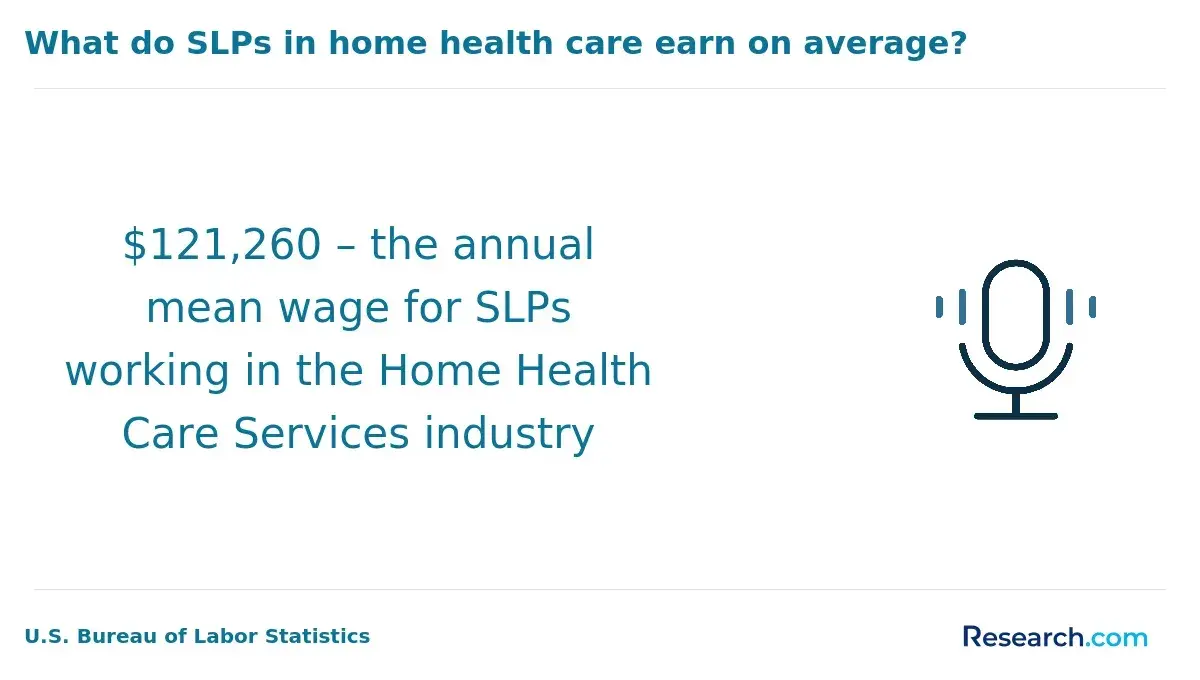
Online graduates can be competitive when they can clearly explain their clinical training and demonstrate readiness for the role. The field’s earning potential is tied to specialized training, licensure, setting, experience, and demand for services; students comparing career outcomes may also want to review factors that influence SLP salary.
What is the path to SLP state licensure after graduation?
The path to state SLP licensure begins with completing an appropriate master’s degree in speech-language pathology, but the exact requirements depend on the state where you plan to practice. Always check your state licensing board before and during enrollment, especially if you study online in one state and intend to work in another.
After graduation from an ASHA-accredited master’s program, candidates typically apply for an initial, provisional, or temporary license that allows them to begin a supervised Clinical Fellowship. This period helps new clinicians build independence in assessment, treatment planning, documentation, ethics, caseload management, and professional decision-making.
The Clinical Fellowship is completed under the supervision of a licensed SLP who meets ASHA’s supervision criteria. Most states and ASHA require at least 36 weeks of full-time or equivalent part-time work, with performance evaluations from your CF mentor.
Candidates must also pass the Praxis Examination in Speech-Language Pathology. The exam assesses knowledge across areas such as assessment, intervention, ethics, professional issues, and service delivery. Some states may require additional items, including background checks, fingerprinting, ethics training, child abuse recognition training, or other state-specific modules.
Once you complete the required supervised experience, pass the Praxis, and meet any state-specific requirements, you submit documentation to the licensing board. This commonly includes official transcripts, Praxis scores, supervisor verification, application forms, and fees.
You may also apply separately for the ASHA Certificate of Clinical Competence, or CCC-SLP. While state licensure is what legally allows you to practice, the CCC-SLP can support professional mobility and is required or preferred by many employers. Maintaining your license requires continuing education according to your state’s renewal rules.
How can you choose a no-residency online SLP program with confidence?
Choose a no-residency online SLP program by confirming the non-negotiables first, then comparing fit. The non-negotiables are ASHA-CAA accreditation, licensure alignment for your state, no mandatory campus residency if that is essential for you, and a credible plan for completing clinical placements.
After that, evaluate whether the program works for your life. Review tuition and fees, pacing options, weekly time expectations, clinical availability requirements, technology support, and advising quality. Ask admissions and clinical placement staff direct questions and pay attention to whether their answers are specific, consistent, and documented.
A confident decision should not be based on convenience alone. The right program should help you complete rigorous coursework, obtain supervised clinical experience, prepare for licensure, and enter the profession with a clear understanding of your responsibilities. Strong online SLP programs are transparent from the first conversation and realistic about what students must do to succeed.
Other Things You Should Know About Online SLP Programs That Don't Require Residency or On-Site Labs
2027 online SLP programs typically offer asynchronous course delivery, allowing students to access materials at any time. This flexibility caters to varied time zones and personal schedules, enabling students to balance professional commitments while pursuing their degree without the constraint of traditional class times.
Yes. Even without residency or on-site labs, ASHA-accredited speech-language pathology programs still require supervised clinical practicum hours. Many M.S. programs require at least 400 total clock hours, including a minimum of 325 in direct client contact and 25 in guided clinical observation.
2027 online SLP programs generally require a reliable high-speed internet connection, a computer with updated software, and access to specific virtual learning platforms and tools. Some programs might also require a webcam and microphone for interactive sessions and assessments.
References
- U.S. Bureau of Labor Statistics - Speech-Language Pathologists https://www.bls.gov/ooh/healthcare/speech-language-pathologists.htm
- ASHA EdFind - Accredited Speech-Language Pathology Programs https://find.asha.org/ed/
- Audiology and Speech-Language Pathology Interstate Compact https://aslpcompact.com/compact-map/
- West Virginia University - Speech-Language Pathology, M.S. - Online https://medicine.hsc.wvu.edu/communications-sciences-and-disorders/speech-language-pathology-ms/future-students/curriculum/online-slp-program/
- University of Wisconsin-Eau Claire - Master of Science in Speech-Language Pathology (Online) https://www.uwec.edu/speech-language-and-hearing-sciences-department/graduate-program/speech-language-pathology-online
- Pennsylvania Western University - Master of Science in Speech-Language Pathology https://online.pennwest.edu/programs/speech-language-pathology-grad/index.php
- California State University-East Bay - Online Master of Science in Speech-Language Pathology https://ce.csueastbay.edu/programs/speech-language-pathology/
- Delaware Valley University - Master of Science in Speech-Language Pathology (M.S.) https://delval.edu/programs/graduate-programs/speech-language-pathology