2027 Online vs On-Campus SLP Degrees: Which Delivers Better Outcomes?

Co-Founder and Chief Data Scientist

Reviewed by Rhea Paul, PhD
SLP Education & Research Expert
Choosing between an online and an on-campus speech-language pathology degree is not just a convenience question. It affects how you learn clinical skills, how you build professional relationships, how much you may spend, and how easily school fits around work, caregiving, relocation, or other responsibilities.
Speech-language pathology prepares clinicians to assess and treat communication and swallowing disorders across the lifespan, from children with language delays to adults recovering after illness or injury. Because the path to becoming a speech-language pathologist typically requires graduate-level preparation, supervised clinical experience, licensure, and professional certification, the program format you choose should support both academic success and clinical readiness.
This guide compares online and on-campus SLP degrees across the factors that matter most: delivery format, student fit, cost, financial aid, completion time, clinical training, employer perception, career opportunities, salary expectations, and overall value. The goal is to help you choose the format that matches your schedule, learning style, budget, and long-term career plans.
What are the benefits of knowing the difference between online and on-campus SLP degree programs?
- Informed Decision-Making: Understanding the differences helps you choose a program that matches your learning style, schedule, and career goals.
- Better Time and Cost Management: Knowing which format offers more flexibility or lower tuition can help you plan financially and balance personal commitments.
- Optimized Learning Experience: Each format provides unique benefits—online programs offer convenience, while on-campus options provide hands-on interaction—so knowing the trade-offs ensures you get the most from your education.
- Improved Career Readiness: Choosing the right setting can influence your access to clinical placements, networking opportunities, and professional mentorship, all of which impact your future success as an SLP.
How do online and on-campus SLP programs differ in format and delivery?
Online and on-campus speech-language pathology programs usually cover similar academic content, but they deliver that content in very different ways. The biggest difference is not the degree title; it is the day-to-day learning experience.
SLP programs online typically use a digital learning platform for lectures, readings, assignments, exams, discussion boards, and faculty communication. Some courses may be asynchronous, meaning students complete weekly work on their own schedule. Others may include live virtual classes, group projects, or scheduled meetings with instructors and classmates. This format can work well for students who need geographic flexibility or who are balancing school with employment or family responsibilities.
On-campus SLP programs follow a more traditional academic model. Students attend classes in person, interact directly with faculty and peers, and often have easier access to campus labs, faculty offices, student groups, and university clinics. This structure can be especially helpful in courses that require repeated practice, immediate correction, and close observation, such as assessment procedures, phonetics, counseling techniques, and therapy planning.
Clinical education is the key point to understand. Even when coursework is online, SLP preparation is not entirely virtual. Accredited programs still require supervised clinical training. Online students often complete those experiences at approved sites near where they live, while on-campus students may complete some clinical work through university-affiliated clinics or local partnerships.
| Factor | Online SLP programs | On-campus SLP programs |
| Course delivery | Virtual classes, recorded lectures, live sessions, online assignments, and digital discussion tools | In-person lectures, labs, seminars, and campus-based academic activities |
| Schedule | Often more flexible, though some programs still require live attendance | Usually follows set class times and a traditional academic calendar |
| Faculty access | Email, video meetings, online office hours, and learning platform communication | Face-to-face meetings, office hours, in-class interaction, and informal campus access |
| Peer interaction | Virtual group work, online cohorts, discussion boards, and occasional residencies if required | Daily or weekly in-person interaction, study groups, labs, and campus networking |
| Clinical preparation | Completed in person through approved placements, often near the student’s location | Completed in person through campus clinics, partner sites, or local field placements |
The better format depends on how you learn best. If you need flexibility and can stay organized without frequent in-person structure, online delivery may fit. If you learn best through immediate feedback, campus routines, and face-to-face collaboration, an on-campus program may be stronger.
Online vs. On-Campus SLP Degrees: What types of students are best suited for each learning environment?
Online and on-campus SLP degrees can both prepare students for the profession, but they reward different habits. The right choice depends less on which format sounds more convenient and more on which environment will help you stay consistent through demanding coursework and clinical requirements.
Students who are often a good fit for online SLP programs
- Working professionals: Online coursework may make it easier to continue working while completing lectures, assignments, and discussions around a less traditional schedule.
- Parents and caregivers: Students with family responsibilities may benefit from avoiding a daily commute and having more control over study time.
- Students who cannot relocate: Online options can make accredited study accessible to learners who live far from universities with SLP programs.
- Self-directed learners: Online students need strong time management, consistent study routines, and the ability to meet deadlines without daily in-person reminders.
- Students comfortable with technology: Virtual classes, online collaboration, digital assignments, and video-based meetings are central to the online experience.
Students who are often a good fit for on-campus SLP programs
- Students who prefer structure: Fixed class times, regular campus routines, and face-to-face expectations can help students stay accountable.
- Hands-on learners: In-person labs, demonstrations, and practice sessions may feel more natural for students who learn by observing and doing.
- Students seeking close faculty contact: Campus programs can make it easier to ask questions after class, visit office hours, and build mentoring relationships.
- Learners who value peer connection: Study groups, cohort bonding, campus events, and informal collaboration can be easier to develop in person.
- Students who want frequent access to campus resources: University clinics, libraries, labs, student services, and professional events may be more accessible on campus.
A common mistake is choosing online because it sounds easier. Online SLP programs can be rigorous because students must manage graduate coursework, clinical planning, technology, and independent study. Another mistake is choosing on-campus only because it feels more traditional. If commuting, relocation, or inflexible scheduling would create major stress, a campus program may be harder to complete successfully.
Choose the environment that matches your real habits, not your ideal habits. The strongest program format is the one that helps you complete the work, master clinical skills, and remain available for required supervised practice.
Online vs. On-Campus SLP Degrees: Which one is more affordable?
Online SLP degrees can be more affordable, but they are not automatically cheaper. The true cost depends on tuition, fees, relocation, commuting, housing, technology costs, required campus visits, and whether you can keep working while enrolled.
Tuition alone can be misleading. Some online programs charge the same tuition as campus programs, while others charge more. For example, at Idaho State University the online Master’s-level SLP program lists tuition at about $1,035 per credit hour compared to $824 per credit hour for the on-campus version. In that case, the online tuition rate is higher, even though the online student may save on relocation or commuting.
Total cost of attendance matters even more. On-campus students may need to pay for housing, transportation, food, parking, and campus-related expenses. Online students may avoid some of those costs, but they may still pay technology fees, distance-learning fees, clinical travel expenses, or costs connected to required in-person intensives. At New York Medical College, the on-campus cost for an SLP cohort is over $62,000 when factoring in tuition, housing, food, transportation, etc.
| Cost factor | Online SLP degree | On-campus SLP degree |
| Tuition | May be lower, equal, or higher depending on the university | May be lower per credit in some cases, but varies by institution |
| Housing | Often lower if the student can remain at home | Can increase total cost if relocation or campus-area housing is required |
| Transportation | Lower for coursework, but clinical sites may still require travel | Commuting, parking, and travel to clinical placements may add cost |
| Fees | May include technology or distance-learning fees | May include campus, lab, clinic, or student service fees |
| Work flexibility | May allow some students to keep working, depending on schedule and clinical demands | May be harder to combine with full-time work because of fixed class and clinic schedules |
| Required in-person components | Some programs may require travel for residencies or immersions | In-person attendance is built into the format |
Online may be the more affordable option if you can live at home, avoid relocating, reduce commuting costs, and maintain some income while studying. On-campus may offer better value if the tuition is lower, clinical placements are well supported, campus resources are important to you, or assistantship opportunities are available.
Before deciding, compare the full cost of attendance for each program, not just tuition. Ask each school for a breakdown of tuition, university fees, technology fees, clinical placement expenses, residency travel requirements, books and materials, and estimated living costs.
Students in both online and on-campus speech language pathology programs may have access to financial aid, but the mix of funding can differ by format and institution. The most important step is to confirm that the program and your enrollment status qualify for the aid you plan to use.
Financial aid options that may apply to online SLP programs
- Federal financial aid: Eligible students can submit the FAFSA and may qualify for federal loans, including Direct Unsubsidized and Graduate PLUS Loans.
- Institutional scholarships: Some universities offer scholarships to online graduate students, though eligibility rules vary by school, program, and enrollment status.
- Distance learner or working professional awards: Some institutions provide funding designed for online students, career changers, or students who continue working while enrolled.
- Employer tuition reimbursement: Students already employed in education, healthcare, or related settings may be able to use employer-sponsored tuition support.
- Payment plans: Many schools offer monthly or term-based payment plans that can spread costs across the academic year.
Financial aid options that may apply to on-campus SLP programs
- Graduate assistantships: Campus students may have access to teaching, research, clinical, or administrative assistantships that provide tuition support, stipends, or both.
- Institutional scholarships and grants: Universities may reserve some merit-based or need-based funding for students enrolled in campus-based programs.
- Federal work-study: Eligible students may earn income through approved part-time jobs, including some campus-based roles.
- Departmental awards: SLP departments may offer scholarships funded by alumni, donors, or program-specific endowments.
- Campus employment: Students may find paid roles in labs, clinics, academic offices, or student services, depending on availability.
Do not assume the lowest tuition program will be the cheapest after aid. A higher-priced program with strong scholarships or assistantships may cost less out of pocket than a lower-priced program with limited funding. Ask each program whether online students qualify for the same scholarships, assistantships, and departmental awards as campus students.
It is also wise to compare aid timing. Scholarships, assistantships, and payment plans often have earlier deadlines than admissions deposits. Start financial planning as soon as you create your school list.
Most full-time students pursuing a master’s degree in speech-language pathology complete the program in about two to three years. The exact timeline depends on the program structure, whether you attend full time or part time, your undergraduate preparation, the clinical placement schedule, and any prerequisite coursework you still need.
Online SLP programs often provide more scheduling flexibility. Some students enroll full time and move through a cohort-based sequence, while others choose a part-time option to balance school with work or family responsibilities. Part-time study can make the workload more manageable, but it may extend the program closer to three years.
Some universities offer accelerated SLP programs that allow students to complete coursework and clinical requirements in as little as 20 to 24 months. These options can be appealing if you want to enter the workforce sooner, but they usually require a heavier academic load, strong availability for clinical training, and careful time management.
On-campus SLP programs often follow a more fixed calendar with scheduled semesters, in-person classes, and assigned clinical sequences. This structure can make planning easier because students know when classes and placements occur. However, it may also provide less flexibility if you want to slow down, speed up, or work around outside obligations.
| Program path | Typical timeline described | Best suited for |
| Full-time online or on-campus master’s program | About two to three years | Students who can prioritize school and clinical training |
| Part-time online program | May be closer to three years | Students balancing work, caregiving, or other responsibilities |
| Accelerated program | As little as 20 to 24 months | Students who can manage a faster pace and heavier workload |
| Traditional on-campus sequence | Usually follows set semesters and clinical schedules | Students who prefer structure and predictable academic pacing |
When comparing timelines, look beyond the advertised completion time. Ask whether prerequisite courses are included, when clinical placements begin, whether summers are required, and what happens if a placement is delayed. A program that appears faster on paper may not be faster for every student.
Online SLP programs deliver academic coursework virtually, but clinical training remains in person. Students must complete supervised practice because speech-language pathology is a clinical profession that requires direct work with clients and patients.
Most online programs handle clinical training through approved placements in the student’s region. These placements may take place in schools, hospitals, rehabilitation centers, private practices, university clinics, skilled nursing facilities, or other approved settings. The goal is to help students build supervised experience while meeting required competencies.
Common clinical training models in online SLP programs
- Local clinical placements: Students complete supervised fieldwork at approved sites near where they live, reducing or eliminating the need to relocate.
- University placement support: Many programs have placement coordinators who help identify appropriate sites and confirm that supervisors meet program requirements.
- Student-assisted site searches: Some programs expect students to help locate potential sites, especially if they live far from the university’s established network.
- Short on-campus residencies: Some online programs require brief in-person intensives or immersion weekends for skills practice, simulation, assessment training, or faculty evaluation.
- Virtual simulations: Some programs use online simulations to prepare students before direct client contact, but simulations do not replace the need for supervised in-person clinical experience.
Before enrolling, ask detailed questions about placement responsibility. A strong online program should explain how sites are approved, how supervisors are vetted, what happens if a local placement falls through, whether travel is required, and whether students must complete placements during weekday business hours.
Clinical logistics can be the hardest part of an online SLP degree. Even if online coursework is flexible, clinical placements may require fixed daytime availability. Students who plan to work during the program should confirm how much scheduling flexibility they will actually have once clinical training begins.
Graduates of online and on-campus SLP degree programs generally pursue the same career opportunities when their program meets the required accreditation and clinical preparation standards. Employers are typically more concerned with whether a candidate is eligible for licensure, certification, and competent practice than with whether lectures were completed online or in a classroom.
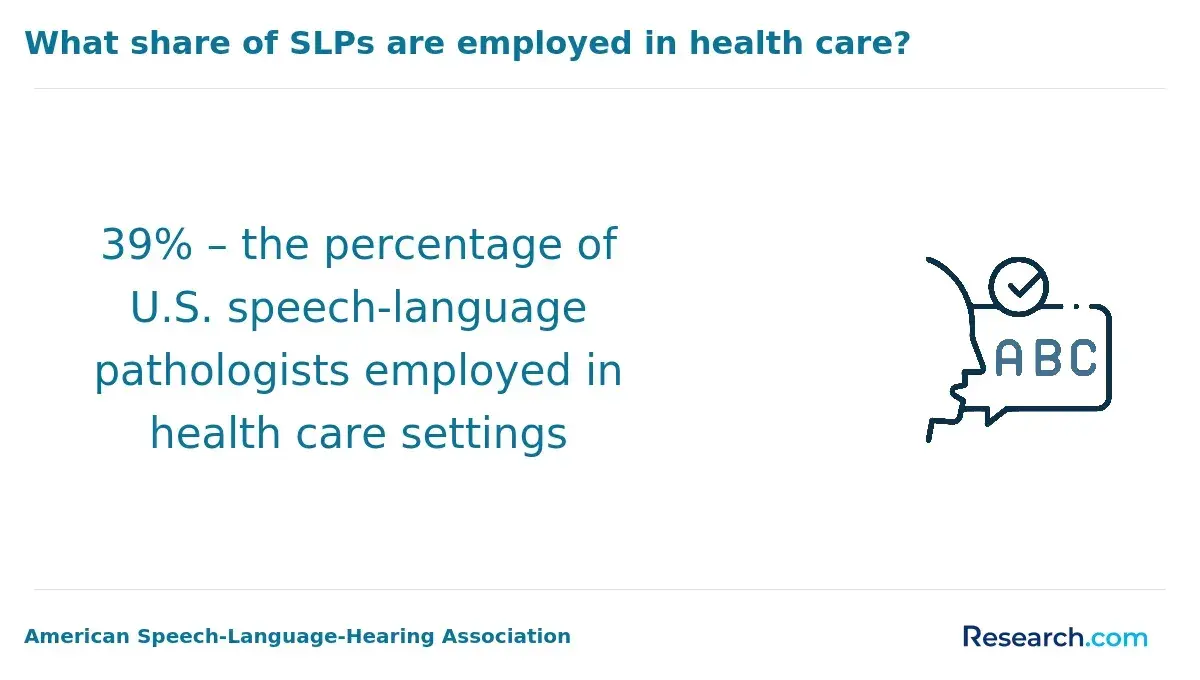
Both online and on-campus graduates may pursue Clinical Fellowship placements, state licensure, and ASHA certification such as the CCC-SLP, provided they meet the relevant academic, clinical, examination, and professional requirements. They may work in schools, hospitals, rehabilitation centers, private clinics, early intervention programs, skilled nursing facilities, and telepractice roles.
The main career difference is usually not the format of the degree but the strength of the student’s preparation. Clinical placements, supervisor evaluations, professional references, specialty interests, licensure readiness, and communication skills can all influence hiring outcomes.
What matters most for career readiness
- Accreditation and licensure eligibility: Confirm that the program supports the credentialing path required in the state where you plan to practice.
- Clinical breadth: Strong applicants often have exposure to varied age groups, disorders, and work settings.
- Supervisor feedback: Positive clinical evaluations can help demonstrate readiness for a Clinical Fellowship or entry-level role.
- Professional communication: SLPs must explain assessment results, collaborate with families and teams, and document care clearly.
- Technology competence: Comfort with digital tools can be useful, especially in telepractice or hybrid service models.
An online degree from a reputable program should not limit career options simply because it was delivered online. However, students should be careful to choose programs that provide strong clinical support and clear pathways to licensure and certification.
In 2027, many employers view online SLP degrees as credible when the program is properly accredited and the graduate meets licensure, certification, and clinical training requirements. The delivery format matters far less than whether the candidate can provide safe, effective, evidence-informed care.
Schools, healthcare systems, rehabilitation centers, and private practices increasingly recognize that online graduate education can be rigorous, especially when programs maintain strong admission standards, supervised clinical training, and faculty oversight. Online graduates may also bring skills that are useful in modern practice, including comfort with video platforms, digital documentation, remote collaboration, and telepractice tools.
That said, employers may still ask practical questions during hiring. They may want to know where you completed clinical placements, what populations you worked with, which supervisors can speak to your performance, and whether you are eligible for state licensure and ASHA certification. These questions are normal and apply to graduates from both online and on-campus programs.
How to present an online SLP degree confidently
- Lead with accreditation and licensure readiness: Make it clear that your program prepared you for the same professional pathway expected of SLP graduates.
- Highlight clinical sites, not just coursework: Employers want to know the populations, settings, and disorders you encountered during supervised practice.
- Use supervisor references strategically: Strong references can quickly address any concern about clinical preparation.
- Show readiness for the work setting: Tailor your resume to schools, hospitals, private practice, or telepractice depending on the role.
- Avoid apologizing for online study: Frame it as a rigorous format that required discipline, independence, and strong communication.
If an online program is accredited, clinically robust, and aligned with licensure requirements, the degree format should not be a major barrier. Your clinical competence, professionalism, and credentials will carry more weight in the hiring process.
Graduates of online and on-campus SLP programs typically have comparable earning potential because salary is driven more by role, setting, location, experience, licensure, specialization, and employment arrangement than by course delivery format. An employer generally does not pay more or less because a qualified SLP completed lectures online instead of on campus.
According to the U.S. Bureau of Labor Statistics (BLS), the median annual wage for speech-language pathologists was $97,870 in 2026, with the top 10% earning over $126,000. These figures are useful benchmarks for anyone researching how much SLPs make, but actual pay can vary widely by job market and work setting.
Healthcare facilities, hospitals, and private practice settings may offer higher salaries in some cases, while educational settings may offer different advantages, such as school-year schedules, predictable hours, or benefits tied to public education employment. Contract work, telepractice, and private clients may also affect income, but those arrangements can come with trade-offs in benefits, stability, administrative work, and workload.
Factors that can influence SLP earnings
- Work setting: Schools, hospitals, outpatient clinics, rehabilitation facilities, private practices, and telepractice roles may have different pay structures.
- Geographic location: Salaries often reflect local demand, cost of living, and employer budgets.
- Experience level: New graduates usually earn less than clinicians with advanced skills, leadership experience, or specialized expertise.
- Credentials and licensure: Meeting state and professional requirements is essential for many roles.
- Employment type: Full-time employee, contractor, per diem, and private practice arrangements can produce different compensation patterns.
The practical takeaway is simple: choose the program format that helps you become fully qualified and clinically prepared. Once you meet professional requirements, your earning potential will depend more on the career path you build than on whether your degree was online or on campus.
Online vs. On-Campus SLP Degrees: Which format is better overall?
Neither format is better for every student. Online and on-campus SLP degrees can both be strong choices when they meet accreditation standards, support clinical training, and prepare graduates for licensure and professional practice. The better option is the one that fits your learning style, schedule, finances, location, and clinical needs.
| Choose online if... | Choose on-campus if... |
| You need flexibility because of work, caregiving, or location | You want a fixed schedule and daily or weekly in-person structure |
| You are organized, self-motivated, and comfortable learning through technology | You learn best through face-to-face instruction and immediate feedback |
| You want to avoid relocating and hope to complete clinical placements locally | You want regular access to campus clinics, labs, faculty, and peer study groups |
| You can manage independent study and virtual collaboration | You value in-person networking, mentoring, and cohort interaction |
| You have confirmed that the program provides strong clinical placement support | You prefer a program where clinical and academic resources are physically nearby |
Online programs are often best for students who need access and flexibility. They can be especially useful for working professionals, parents, students in rural areas, or learners who cannot relocate. The trade-off is that online students must be highly disciplined and should investigate clinical placement support carefully.
On-campus programs are often best for students who want structure, frequent in-person interaction, and easier access to faculty, peers, labs, and campus clinics. The trade-off is that campus programs may require relocation, commuting, and less schedule flexibility.
Before choosing, compare programs using a practical checklist: accreditation status, licensure alignment in your state, clinical placement model, total cost of attendance, financial aid, completion timeline, faculty access, student support, and graduate outcomes. If those fundamentals are strong, either format can lead to a successful career in speech-language pathology.
- U.S. Bureau of Labor Statistics - Speech-Language Pathologists https://www.bls.gov/ooh/healthcare/speech-language-pathologists.htm
- ASHA EdFind - Accredited Speech-Language Pathology Programs https://find.asha.org/ed/
- ETS Praxis - Speech-Language Pathology (5331) https://praxis.ets.org/test/speech-language-pathology-5331.html
- Maryville University - Master of Science in Speech-Language Pathology https://www.maryville.edu/masters/speech-language-pathology/
- University of Nebraska at Kearney - Speech-Language Pathology, Master of Science in Education (Online Track) https://www.unk.edu/online/degrees-programs/speech-language-pathology-online.php
- University of Scranton - Master of Science (M.S.) in Speech-Language Pathology https://www.scranton.edu/academics/pcps/health-and-human-performance/programs/speech-language-pathology/index.shtml
- New England Institute of Technology - Master of Science in Speech Language Pathology https://www.neit.edu/academics/graduate-degrees/speech-language-pathology-ms
- Pennsylvania Western University - Master of Science in Speech-Language Pathology https://online.pennwest.edu/programs/speech-language-pathology-grad/index.php