2027 Where Speech Pathologists Work: Career Settings, Roles, and Demand

Co-Founder and Chief Data Scientist

Reviewed by Rhea Paul, PhD
SLP Education & Research Expert
Many professionals with unrelated undergraduate degrees face uncertainty when considering a career pivot into speech pathology. They often struggle to identify the types of work environments available and the roles they might assume. This uncertainty complicates decisions about returning to school and selecting programs that align with career goals.
Understanding where speech pathologists typically work, the diverse responsibilities they undertake, and the demand in various settings can clarify these choices. This article explores common career settings, job functions, and market demand to guide prospective students and career changers toward informed decisions in the speech pathology field.
Key Things You Should Know
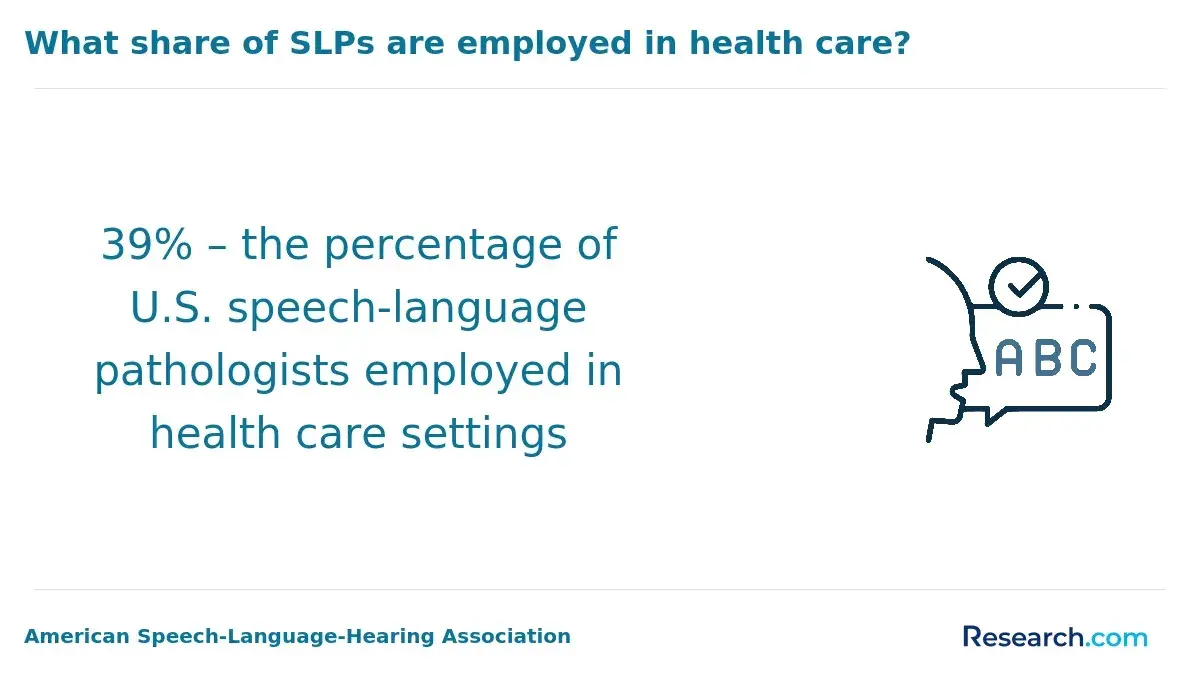
- Speech pathologists predominantly work in healthcare (41%), educational settings (35%), and private clinics, reflecting versatile career options.
- The U.S. Bureau of Labor Statistics projects a 17% employment growth for speech pathologists from 2025 to 2035, signaling strong demand.
- Common roles include diagnosis, therapy, and rehabilitation for speech, language, and swallowing disorders across diverse populations and age groups.
Where do speech pathologists work?
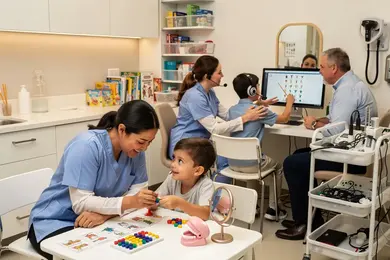
Speech pathologists work in diverse career settings for speech pathologists in American schools and clinics, addressing communication disorders across all ages.
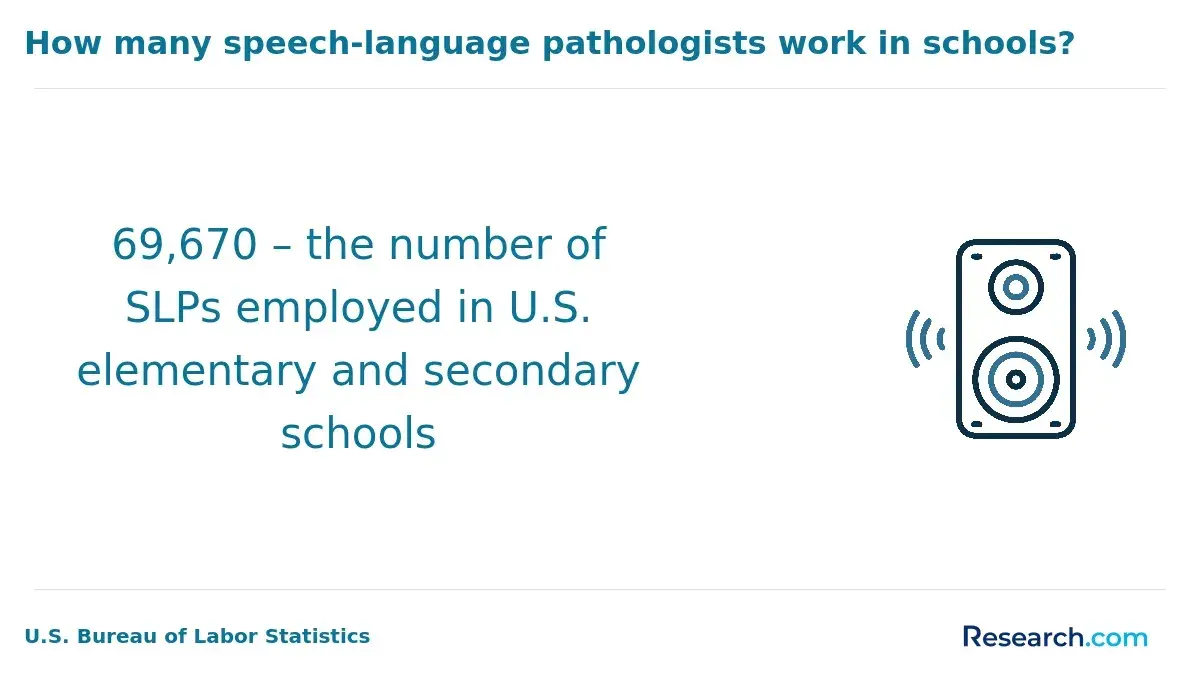
Schools remain the largest employment sector, where speech-language pathologists (SLPs) support children and adolescents facing learning, cognitive, or developmental challenges.
Statewide SLP-to-population ratios vary greatly, from 33.4 per 100,000 in Nevada to 101.0 in Arkansas, reflecting differences in school-based investments that affect job availability.
Hospitals and rehabilitation centers offer another key setting. SLPs in these environments conduct diagnostic evaluations and design therapy for patients recovering from strokes, brain injuries, and neurological conditions, with treatment intensity varying by whether acute or inpatient rehabilitation care is provided.
Outpatient clinics and private practices cater to diverse populations, including pediatric speech delays and adult voice or swallowing disorders. Practitioners often collaborate with occupational therapists and audiologists, broadening their treatment scope.
Other work environments include nursing homes, early intervention programs, and university clinics, each requiring specialized skills. Geographic factors influence job prospects, so thorough research is vital. Prospective students seeking flexible education options may consider a speech therapy masters online to prepare for these roles.
What roles do speech pathologists perform?
Speech pathologists play vital roles in diagnosing, treating, and preventing communication and swallowing disorders. Their responsibilities include assessing speech sound production, language comprehension, voice quality, fluency, and cognitive-communication skills.
Treatment plans often involve individualized therapy to enhance articulation, language development, social communication, and swallowing safety. These common roles and responsibilities of speech pathologists span diverse settings and patient needs.
In healthcare, speech pathologist job duties in healthcare settings focus on patients recovering from strokes, brain injuries, or surgeries affecting speech and swallowing. They perform bedside swallowing assessments and develop interventions to prevent complications like aspiration pneumonia.
According to the ASHA Supply and Demand Resource List, 55.5% of speech-language pathologists in health care reported more job openings than seekers, highlighting strong demand. For professionals interested in compensation details, resources such as NICU SLP salary provide useful salary insights.
Within schools, speech pathologists support children with language delays, articulation disorders, stuttering, and voice impairments through individualized education programs (IEPs) and classroom strategies.
Beyond direct therapy, their roles often include counseling families, training caregivers in communication techniques, and utilizing assistive technology like augmentative and alternative communication (AAC) devices. Speech pathologists collaborate with interdisciplinary teams to deliver holistic patient care.
The scope of a speech pathologist's work varies by setting and population but consistently involves assessment, intervention, progress monitoring, and education. Aspiring professionals should prepare for a dynamic career requiring clinical expertise and strong interpersonal skills across the lifespan.
What degree is required to become a speech pathologist?
To meet the required degree for speech pathologist licensure in 2026, candidates must earn a master's degree in speech-language pathology from a program accredited by the Council on Academic Accreditation in Audiology and Speech-Language Pathology (CAA).
A bachelor's degree alone is not sufficient for clinical practice or certification. Typically, master's programs expect applicants to have a bachelor's in communication sciences and disorders or a related field, although some offer prerequisite courses for other academic backgrounds.
The educational qualifications to become a speech pathologist include comprehensive coursework in anatomy, linguistics, speech and language development, and clinical practicum hours.
Following the master's degree, completing a supervised clinical fellowship-usually about nine months, is crucial before obtaining the Certificate of Clinical Competence in Speech-Language Pathology (CCC-SLP) from the American Speech-Language-Hearing Association (ASHA). Licensure varies by state but generally aligns with these requirements.
Those planning to work in specialized environments-such as hospitals, schools, or private practice-are trained to handle diverse communication disorders, from pediatric to adult neurological impairments.
With 44.8% of ASHA SLP Health Care Survey respondents in 2025 reporting funded but unfilled positions in private practice, proper credentials are key for employment. Prospective students seeking flexible pathways can explore accelerated SLP programs online.
In summary, a master's degree combined with clinical fellowship experience and certification forms the mandatory foundation for speech pathologists, ensuring qualification across various professional roles.
The Council on Academic Accreditation in Audiology and Speech-Language Pathology (CAA) primarily provides accreditation requirements for speech pathology programs in the US. Graduation from a CAA-accredited program is essential for certification, licensure, and entry into the profession as a speech-language pathologist (SLP).
This accreditation ensures compliance with approved speech pathology program accreditation standards, covering curriculum quality, qualified faculty, clinical practicum, and research opportunities.
CAA-accredited programs emphasize essential competencies such as assessment, diagnosis, and treatment of communication disorders across diverse populations. Many university master's degree programs include supervised clinical hours, which state licensure boards require for certification.
Prospective students often ask if online programs meet these standards. The answer is yes, but only if those SLP online programs hold explicit CAA accreditation; otherwise, graduates may face challenges in obtaining licensure or employment.
The demand for qualified SLPs is especially high in healthcare settings such as Skilled Nursing Facilities, with surveys showing the greatest shortages in New England and South Atlantic states.
Graduating from an accredited program improves employability in these competitive job markets. Meeting these standards ensures readiness for clinical roles in schools, hospitals, and specialized facilities.
Speech-language pathologists (SLPs) serve in diverse settings, tailoring care to patients' unique communication and swallowing needs. In healthcare environments like hospitals, outpatient clinics, and skilled nursing facilities, SLPs address disorders caused by stroke, injury, or neurological conditions.
Many work in educational settings, including public and private schools, where they assist children with developmental delays, learning disabilities, and speech sound disorders. Collaboration with educators and parents is key to improving communication outcomes. Early intervention programs focus on infants and toddlers who show speech challenges.
Home health services offer personalized treatment at patients' residences, especially valuable for individuals with mobility or transportation difficulties.
This area has expanded alongside growth in professionals holding the CCC-SLP credential, which increased by 3.3% from 206,126 to 212,864 clinicians. Home health emphasizes practical communication and swallowing safety in everyday environments.
Other specialized career paths include working with adults who are deaf or hard of hearing, voice therapy for performers, corporate consulting, telepractice, and clinical research to advance speech pathology methods. These varied roles allow professionals to focus their education and training toward preferred patient groups and settings.
The demand for speech pathologists is projected to grow about 17% from 2025 to 2035, significantly faster than the average for all careers. This growth reflects an aging population needing therapy for neurological conditions and increased recognition of communication disorders in children.
Early intervention is a major factor in job growth, with nearly 70% of speech-language pathologists reporting more referrals for children compared to 2020, according to a 2023 ASHA survey cited by SpeechPathologyGraduatePrograms.org. Better screening and awareness drive opportunities in schools, clinics, and private practices.
Career settings for speech pathologists are wide-ranging, including public schools, hospitals, outpatient centers, and rehab facilities.
Expansion of telepractice improves access in rural or underserved areas. Specialists in swallowing disorders, voice therapy, and cognitive-communication are increasingly in demand as multidisciplinary care advances.
Professionals enhance job prospects by updating certifications and gaining diverse clinical skills. Expertise in early childhood intervention or geriatric care often leads to specialized roles. Salary progression generally correlates with experience, with competitive wages and benefits common in education and healthcare.
The salary for speech pathologists varies widely depending on experience, work setting, and location, with typical annual earnings between $70,000 and $95,000. Entry-level roles start near $65,000, while seasoned clinicians in specialized or administrative positions may earn over $100,000.
Hospital-based speech pathologists often receive higher pay compared to those in schools or community clinics, reflecting case complexity and institutional budgets. For instance, public school speech pathologists generally earn between $60,000 and $80,000 due to education system salary scales.
Geographic differences significantly impact salary ranges, driven by population density and demand. The ASHA Supply and Demand Resource List reports regional speech-language pathologist (SLP) to population ratios from 48.2 in the Western U.S. to 84.2 in the Northeast.
Areas with fewer SLPs typically offer higher salaries or telepractice incentives to attract professionals. Telepractice, expanding in many underserved rural and remote regions, combines competitive pay with flexible work conditions.
Salary growth is linked to advanced degrees, certification, and specialized expertise such as pediatric dysphagia or augmentative communication. Prospective speech pathologists should consider work environment preferences, state funding, and telepractice options when assessing career paths and earning potential.
Becoming a licensed speech-language pathologist (SLP) in the United States involves completing a master's degree accredited by the Council on Academic Accreditation in Audiology and Speech-Language Pathology (CAA).
After graduation, candidates must finish a supervised clinical fellowship, usually lasting 9 to 12 months, which includes about 1,260 clinical hours depending on state requirements.
Most states require passing the Praxis Examination in Speech-Language Pathology, administered by the Educational Testing Service (ETS). This exam tests essential clinical knowledge and skills and is mandatory for licensing in nearly every jurisdiction.
Applicants must submit proof of academic credentials, clinical experience, and exam results to their state licensing board. Licenses must be periodically renewed-typically every 1 to 3 years-with continuing education hours required to keep skills current and maintain licensure.
The American Speech-Language-Hearing Association (ASHA) offers the voluntary Certificate of Clinical Competence in Speech-Language Pathology (CCC-SLP), which enhances career prospects. Among 247,000 ASHA professionals, 210,815 hold this certification, highlighting its importance in the profession.
Online speech pathology programs offer flexible learning options suited for working professionals and students with geographic constraints. Unlike campus-based education, online programs often include asynchronous lectures and virtual interactions, enabling students to balance coursework with work or family commitments.
Both formats adhere to the same rigorous accreditation standards outlined by the Council on Academic Accreditation in Audiology and Speech-Language Pathology (CAA), guaranteeing consistent educational quality regardless of delivery method.
Gaining hands-on clinical experience remains vital. Online programs typically arrange local practicum placements for supervised, in-person patient interaction. Campus students usually complete clinical hours at affiliated on-site facilities, benefiting from direct faculty supervision and peer collaboration. While these experiences differ, well-structured programs ensure comparable competency outcomes.
Cost and accessibility factors vary. Online learning can decrease expenses related to housing and commuting, although tuition often remains similar to campus programs.
Students should confirm availability of essential support services such as advising, library resources, and technical assistance. Key considerations when selecting a program include accreditation status, quality of clinical placements, and support systems rather than simply the learning modality.
Projected 17% job growth in speech-language pathology between 2025 and 2035, with an estimated 28,200 new jobs (ASHA Market Trends), highlights the importance of choosing programs that provide rigorous clinical training and relevant academic resources.
What should you consider when choosing a speech pathology program?
Choosing a speech pathology program involves evaluating several critical factors to align education with career goals and regional workforce needs.
Confirm the program's accreditation by the Council on Academic Accreditation in Audiology and Speech-Language Pathology (CAA), which ensures curriculum quality and eligibility for certification exams. Clinical practicum opportunities across diverse settings, such as hospitals, schools, and outpatient clinics, are essential for gaining broad practical experience.
Location plays a key role in job prospects. Some states and rural areas have significant demands due to aging populations and increased awareness of communication disorders.
Training near these high-demand regions can improve employment chances after graduation. Look for programs offering specialized tracks like pediatric, geriatric, or neurogenic speech disorders to tailor your expertise.
Evaluate faculty expertise and research involvement to enhance your clinical knowledge and resume. Consider class size and student-to-faculty ratios to ensure personalized mentorship.
Graduation and certification pass rates reflect program effectiveness and preparedness. Financial considerations include tuition costs, scholarships, and return on investment based on local salary data.
For working professionals, programs with flexible scheduling or part-time formats support career continuity. Post-graduation support such as job placement services and connections with healthcare facilities and schools can ease entry into areas facing SLP shortages. These factors help maximize your education's value and future success.
Other Things You Should Know About Speech Pathology
Schools and healthcare settings employ the largest numbers of speech pathologists. Public schools, hospitals, outpatient clinics, skilled nursing facilities, and home health agencies all hire them. The U.S. Bureau of Labor Statistics projects 19% employment growth from 2022 to 2032, far faster than average.
Yes, speech pathologists can specialize in areas such as pediatric speech and language disorders, adult neurogenic communication disorders, or voice therapy. They may also focus on swallowing disorders or work with specific populations like individuals with autism spectrum disorder. Specialization often requires additional training or certification beyond the standard degree.
Continuing education is critical for speech pathologists to maintain licensure and certification. It helps professionals stay current with evolving research, technologies, and treatment techniques. Engaging in ongoing learning can enhance career advancement opportunities and improve the quality of care provided to clients.
Speech pathologists often face challenges such as managing heavy caseloads and addressing diverse client needs within limited session times. They may also encounter emotional difficulties when working with clients who have severe communication impairments. Navigating insurance and funding constraints can further complicate treatment delivery.
- U.S. Bureau of Labor Statistics - Speech-Language Pathologists https://www.bls.gov/ooh/healthcare/speech-language-pathologists.htm
- ASHA EdFind - Accredited Speech-Language Pathology Programs https://find.asha.org/ed/
- O*NET OnLine - Speech-Language Pathologists https://www.onetonline.org/link/summary/29-1127.00
- University of Nebraska at Kearney - Speech-Language Pathology, Master of Science in Education (Online Track) https://www.unk.edu/online/degrees-programs/speech-language-pathology-online.php
- James Madison University - Master of Science (M.S.) in Speech-Language Pathology (Distance Education / Online) https://www.jmu.edu/chbs/csd/online_ms/index.shtml
- California State University-San Marcos - Online MS in Speech-Language Pathology https://www.csusm.edu/slp/programs/mastersonline/index.html
- Pepperdine University - Master of Science in Speech-Language Pathology https://healthscience.pepperdine.edu/online-masters-in-speech-language-pathology/
- Delaware Valley University - Master of Science in Speech-Language Pathology (M.S.) https://delval.edu/programs/graduate-programs/speech-language-pathology