2027 SLP Master's Scholarship Renewal Rules: GPA, Enrollment, and Service Conditions

Co-Founder and Chief Data Scientist

Reviewed by Rhea Paul, PhD
SLP Education & Research Expert
An SLP master's scholarship can reduce a major education expense, but renewal is rarely automatic. Most awards require students to maintain a stated GPA, meet enrollment standards, make satisfactory academic progress, and sometimes complete service or clinical commitments. This guide is for current and prospective speech-language pathology graduate students who need to protect funding while progressing toward licensure. It explains what to verify in your award letter, where policies commonly differ, and what to do quickly if a problem affects eligibility.
Key Things You Should Know
- Most renewable SLP graduate scholarships require a minimum cumulative GPA, often measured after every term; the exact threshold comes from the award agreement, not a general SLP standard.
- Full-time enrollment commonly means 9 graduate credits per term, but clinical practica, summer sessions, thesis credits, and final-semester schedules may be treated differently by each institution.
- Service awards can add obligations beyond grades, including work hours, post-graduation employment commitments, clinical participation, or repayment consequences if conditions are not met.
What scholarship renewal GPA standards apply specifically to SLP master's students this year?
There is no single GPA renewal rule for all speech-language pathology master's scholarships. A university merit scholarship, graduate assistantship, donor-funded award, federal aid package, and state workforce scholarship may all use different academic standards. The controlling document is usually the scholarship agreement or the financial aid office's renewal policy.
In practice, many graduate awards require students to maintain at least a 3.0 cumulative GPA, while competitive merit awards may set a higher benchmark. Programs may also require a minimum grade in clinical courses, prohibit grades below a specified level, or require students to remain in good academic standing under the graduate catalog. A student can meet a scholarship's stated GPA but still lose eligibility if the academic program places them on probation.
The comparison below separates common GPA concepts that students often confuse. Check which calculation your award uses before assuming a strong single semester restores eligibility.
| Standard | How it is usually measured | Why it matters for renewal |
| Cumulative GPA | All graduate coursework completed at the institution | Often the primary scholarship renewal measure. |
| Term GPA | Grades earned during one academic term | May trigger warning or probation even when cumulative GPA remains above the minimum. |
| Program good standing | Graduate-school and departmental academic rules | Can include course-grade, clinical-performance, or professionalism requirements beyond GPA. |
| Satisfactory academic progress | Grades, completion pace, and maximum time to degree | Usually affects federal aid and may also be incorporated into institutional scholarship rules. |
Ask whether the GPA is reviewed at the end of fall and spring, annually, or after summer coursework. Also ask whether grades from repeated courses, incompletes, withdrawals, and transferred credits are included. A scholarship that uses the cumulative institutional GPA may not recognize a higher GPA calculated by a student's prior institution.
A common mistake is treating a 3.0 GPA as the only academic line that matters. SLP curricula are sequenced and clinically intensive, so a low grade in a prerequisite course or unsuccessful practicum can delay progression even if the overall GPA remains acceptable. Review both the graduate catalog and the department's clinical education handbook.
How many credits and what type of enrollment are required to keep an SLP master's scholarship?
Enrollment rules determine whether a scholarship disburses and whether it can renew. For many graduate financial-aid purposes, 9 credits in a standard fall or spring term is considered full-time, but an institution may define scholarship eligibility differently. Some awards require full-time status; others permit part-time enrollment but reduce the award amount or extend it only for a limited number of terms.
SLP students should pay particular attention to clinical semesters. A practicum may carry fewer academic credits than the time it demands, and a final internship or externship may not meet a scholarship's published credit threshold unless the school has an approved exception.
This table highlights the enrollment questions that should be resolved before registration closes.
| Enrollment situation | Potential scholarship effect | What to confirm |
| 9 or more graduate credits | Often meets full-time status in fall and spring | Whether all registered credits are scholarship-eligible. |
| Less than full-time enrollment | May reduce, pause, or end an award | Whether a part-time exception or prorated payment is available. |
| Summer courses | May be optional, required, or excluded from renewal review | Whether summer enrollment counts toward annual progress. |
| Clinical practicum or externship | Credit count may not reflect hours worked | How the financial aid office certifies clinical enrollment. |
| Final-semester reduced load | May threaten eligibility despite being academically appropriate | Whether a final-term exception can be approved in writing. |
Before choosing a schedule, compare the award's required enrollment with your program sequence. Students considering fast track speech pathology programs should be especially careful: an accelerated calendar can change how credits are counted per session and may leave little room to repeat a course without affecting renewal.
Do not drop a class after aid has disbursed without first asking how the change affects the scholarship. A withdrawal can lower enrollment below the required threshold, reduce progress toward degree completion, and create a balance owed to the institution.
What service, practicum, or work commitments can affect renewal of SLP scholarships?
Some SLP scholarships are purely merit- or need-based, but others are workforce awards designed to address shortages in schools, rural communities, bilingual service settings, or medically underserved areas. Those awards may require service while enrolled, employment after graduation, or both. Graduate assistantships may also require work hours as a condition of receiving tuition support or a stipend.
Read service terms closely because they can affect both renewal and the cost of leaving the program. A commitment may require students to remain in a qualifying setting, meet professional standards, report employment, or repay funds if the obligation is not fulfilled.
Questions worth getting answered in writing include:
- Is the requirement a volunteer activity, paid assistantship, practicum placement, or post-graduation employment obligation?
- How many hours, semesters, or years of service are required, and what events pause the timeline?
- Does a clinical placement selected by the program satisfy the service condition, or must the student locate an approved site?
- What happens if disability, family leave, licensure delays, or a site cancellation prevents completion?
- Is repayment required after noncompletion, and how is the amount calculated?
Clinical participation is not automatically "service." A required practicum ordinarily supports degree and licensure progression, while a service scholarship may impose a separate obligation. Keep copies of supervisor evaluations, approved hours, timesheets, placement confirmations, and communications approving any change in duties.
Do SLP master's scholarship GPA and enrollment rules differ for online versus campus programs?
Scholarship rules generally follow the institution and the award, not simply whether classes are online or on campus. An online student can be subject to the same GPA, satisfactory academic progress, and full-time enrollment rules as a campus student. However, online delivery can create practical differences in clinical scheduling, residency requirements, state authorization, and how enrollment is certified.
Online SLP programs still require supervised clinical education. A remote lecture format does not mean that practicum can be completed entirely at home or on a student-selected timetable. Students evaluating online speech pathology programs masters should compare scholarship terms alongside the program's clinical placement process, required travel, live-class expectations, and state eligibility disclosures.
The following distinctions can affect a student's ability to meet renewal requirements without interruption.
| Issue | Online-format consideration | Campus-format consideration |
| Academic performance | Same course-grade and GPA standards may apply despite remote instruction. | Same standards apply, often with in-person advising access. |
| Enrollment certification | Session length and asynchronous courses can complicate term-based credit counts. | Traditional semester schedules may align more directly with aid calendars. |
| Clinical placement | May require travel or availability near an approved site; placement is not guaranteed in a preferred location. | May use regional partner sites but can still require commuting and schedule flexibility. |
| Residency or immersion | Required campus visits can add scheduling and travel costs not covered by a scholarship. | Attendance is typically integrated into the normal program location. |
Do not assume an online scholarship covers technology, travel, background checks, health requirements, clinical attire, or placement-related costs. These expenses can matter even when tuition aid renews successfully.
How do renewal rules vary among common SLP scholarship providers and institutional aid offices?
Different funding sources serve different purposes, so their renewal rules are not interchangeable. Institutional merit scholarships usually focus on GPA and enrollment. Need-based aid may also depend on annual financial-aid filing and satisfactory academic progress. Workforce or service awards may add employment commitments, while assistantships often depend on continued satisfactory work performance and departmental funding.
Use this comparison to identify which office should answer your question. The financial aid office can explain institutional disbursement and federal-aid interactions, but a department, graduate school, or external sponsor may control other conditions.
| Funding source | Typical renewal focus | Decision-support note |
| University merit scholarship | GPA, full-time enrollment, academic standing, renewal term limit | Confirm whether renewal is automatic after eligibility review or requires a separate application. |
| Departmental or donor-funded scholarship | Program progress, specialty interest, clinical participation, donor criteria | Criteria may be narrower than university-wide rules and can change with available funds. |
| Graduate assistantship | Enrollment, GPA, work performance, workload and budget availability | Verify tuition remission, stipend, health insurance, and workload separately. |
| State or service-obligation award | Academic progress plus qualifying service or employment | Review repayment and reporting obligations before accepting. |
| Federal financial aid | Satisfactory academic progress, enrollment, and annual eligibility | Federal aid rules do not guarantee renewal of a separate scholarship. |
When comparing awards, calculate the net value rather than focusing only on the headline amount. An award with a service obligation can be a strong fit for a student already committed to the required setting, but it may be less flexible for someone who expects to relocate, pursue a specialty fellowship, or need a variable clinical schedule.
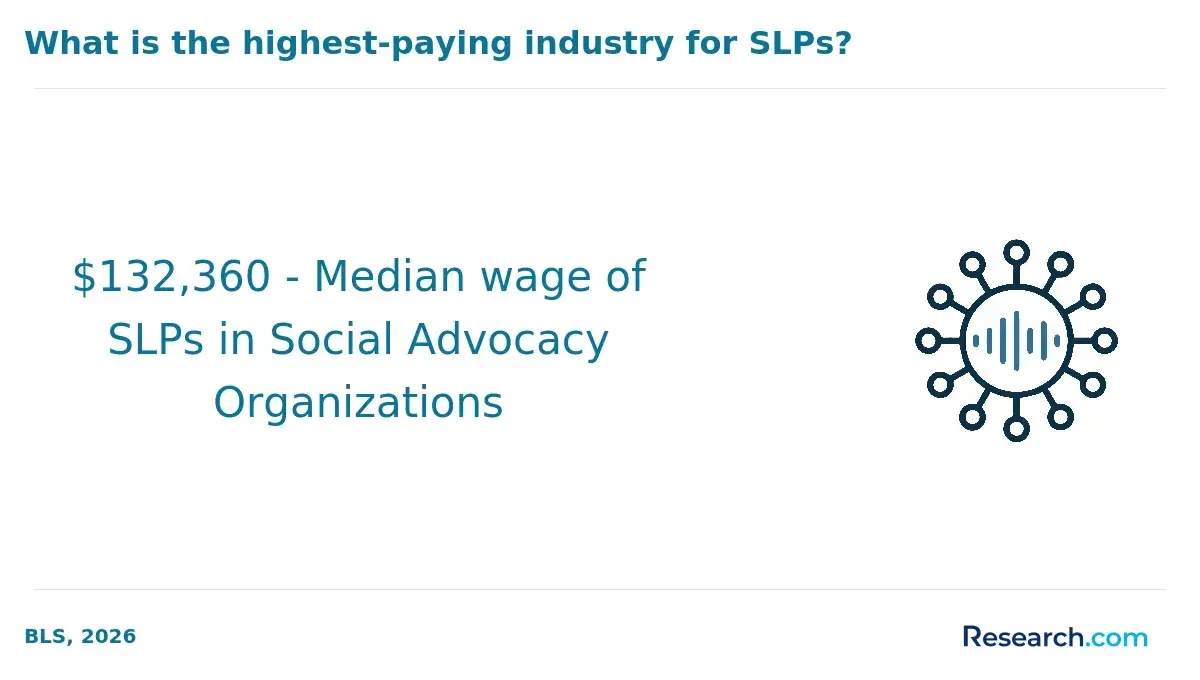
Career earnings may influence how much borrowing feels manageable, but they should not replace a funding plan. The U.S. Bureau of Labor Statistics reports a May 2025 median annual wage of $97,870 for speech-language pathologists; actual pay varies by employer, setting, experience, and location. Reviewing highest paying SLP jobs can help students understand setting differences, but no salary outcome should be assumed when accepting scholarship obligations.
What happens if an SLP student falls below the GPA or enrollment threshold mid-year?
The result depends on the award's written terms, the timing of the issue, and the institution's review cycle. A student who falls below a GPA requirement after fall term may receive a warning, be placed on scholarship probation, lose the spring disbursement, or become ineligible for the next academic year. If the issue is an enrollment drop, aid can be adjusted sooner because the student's current-term eligibility changed.
Act promptly rather than waiting for an automatic notice. The most useful first step is to determine whether the issue affects a scholarship, federal aid, assistantship, academic progression, or all four. These decisions may be made by different offices.
Use this sequence when a grade, withdrawal, or clinical disruption creates risk:
- Read the award letter, graduate catalog, and current financial-aid notice to identify the exact eligibility condition.
- Contact the financial aid office and the scholarship administrator before changing enrollment, withdrawing, or taking a leave.
- Ask whether a warning, probation term, reduced award, approved academic plan, or final-semester exception is available.
- Document the cause of the problem and retain supporting records, including medical, clinical-placement, or advisor documentation when relevant.
- Get the decision, deadlines, and any reinstatement conditions in writing.
A frequent mistake is assuming that improving grades next term automatically restores funding. Some awards permit reinstatement, while others have a one-time eligibility review or require a new application. If your GPA is near the threshold, ask whether the calculation uses posted grades, a rounded GPA, or the GPA after a repeated course is recorded.
How do leave of absence, part-time status, or clinical scheduling affect SLP scholarship eligibility?
A leave of absence, part-time schedule, or altered practicum timeline can be academically appropriate, but it can interrupt scholarship eligibility. Many renewable awards require continuous enrollment and use a fixed number of funded semesters. A leave may pause the award, require reapplication, or count against the original award period, depending on policy.
Part-time study can make sense for students managing work, caregiving, health needs, or extended clinical requirements. The trade-off is that it may reduce scholarship eligibility and increase the total time before graduation. Students who prioritize flexible pacing should assess whether the program's funding model supports that choice before enrolling. This is also important when comparing accelerated speech pathology programs online, because accessible admissions do not necessarily mean a schedule will accommodate reduced enrollment or a disrupted clinical sequence.
Before requesting a schedule change, confirm these points with the appropriate offices:
- Whether the scholarship pauses, terminates, or can be reinstated after an approved leave.
- Whether an approved reduced course load preserves full-time aid status for the specific scholarship.
- Whether clinical placements are available in the revised term and whether delayed placement changes degree completion timing.
- Whether tuition, fees, health coverage, assistantship duties, and loan repayment status change during the leave.
- Whether a return-from-leave form, new financial-aid application, or updated clinical compliance documents are required.
Do not rely on a verbal assurance from one office. A department may approve a leave academically while financial aid applies a separate renewal rule. Written confirmation from both offices is the safest approach.
What documentation and verification do schools use to confirm SLP scholarship renewal each term?
Schools usually verify renewal through institutional records rather than asking students to submit a full application every term. Typical checks include official grades, enrolled credits, program status, degree audit progress, and satisfactory academic progress. Awards with service, assistantship, or clinical conditions may require additional documentation from supervisors or departments.
Maintain your own renewal file even when the institution performs the review. It makes errors easier to correct and provides support if you need to appeal an adverse decision.
Documents commonly used in an SLP scholarship review include:
- The signed award agreement and any renewal notice listing GPA, enrollment, service, and term-limit conditions.
- Official or student-accessible academic records showing term grades, cumulative GPA, and registered credits.
- Degree audit, program plan, or advisor confirmation showing timely progression through required coursework and practica.
- Clinical placement approvals, attendance records, supervisor evaluations, and completed-hour documentation when the award references practicum participation.
- Assistantship contracts, timesheets, performance confirmations, or service-obligation reports when applicable.
- Approved leave, reduced-load, accommodation, or exception documentation.
Check your student account after each disbursement and before payment deadlines. Scholarship processing delays can occur when a clinical registration is pending, grades have not posted, or an enrollment record does not match the award's required status. A prompt inquiry is usually easier to resolve than an overdue account balance.
How do SLP scholarship renewal rules interact with state licensure progression and clinical hour requirements?
Scholarship renewal and professional licensure are related but separate systems. A scholarship may require full-time enrollment and satisfactory progress, while state licensure and the ASHA Clinical Fellowship pathway depend on completing an appropriately accredited graduate education, supervised clinical education, examinations, and other applicable requirements. Meeting scholarship conditions alone does not establish eligibility for licensure.
Clinical delays can affect both systems. If a student cannot begin or complete a practicum on schedule because of placement availability, compliance requirements, remediation, or a course sequence issue, graduation may move later. That delay can exhaust a scholarship's funded-term limit even when the student remains academically eligible.
The following comparison clarifies why students should track both timelines.
| Requirement area | Primary purpose | Potential renewal impact |
| Scholarship GPA rule | Maintains academic eligibility for funding | Can suspend or end an award after review. |
| Enrollment requirement | Defines active participation and award disbursement eligibility | Reduced credits may reduce or eliminate funding. |
| Clinical education sequence | Builds supervised competency and degree progress | Delays can extend enrollment beyond funded terms. |
| Accreditation and licensure pathway | Supports professional preparation and jurisdiction-specific eligibility | Does not usually determine scholarship renewal directly, but a program disruption can affect both timelines. |
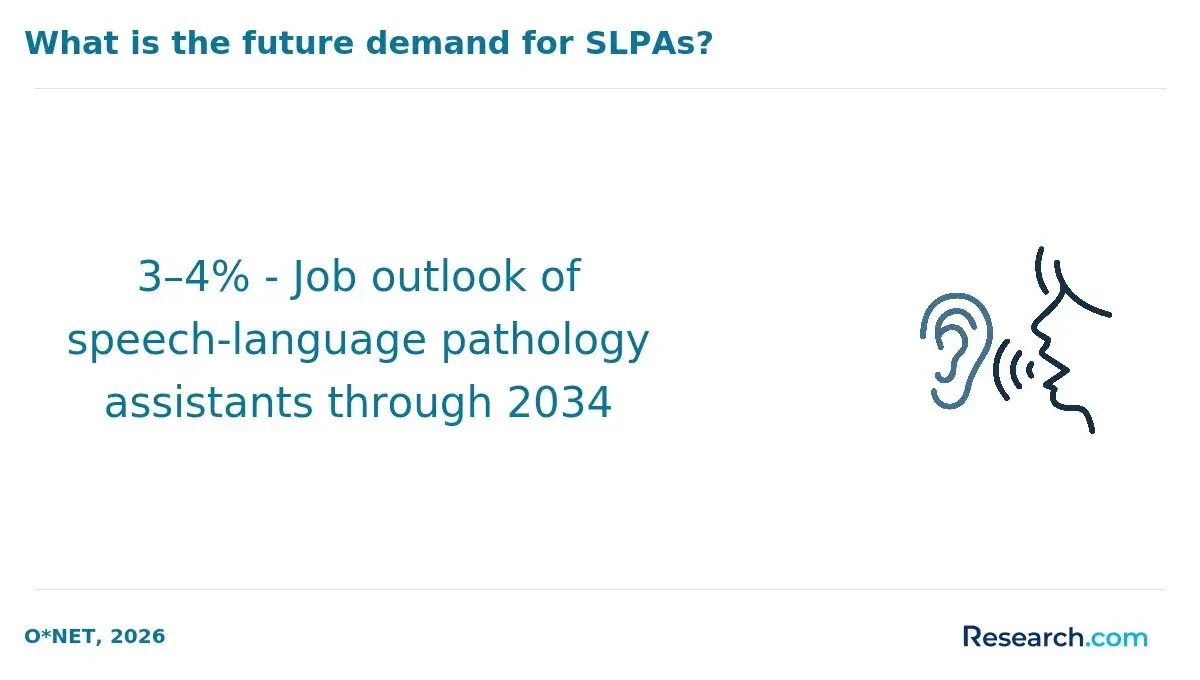
Before selecting a program or accepting funding, confirm the program's accreditation status, your state's licensure requirements, and whether the institution is authorized to enroll students in your state. The Bureau of Labor Statistics projects 17% employment growth for speech-language pathologists from 2025 to 2035, with about 12,500 openings annually on average. That demand supports careful planning, but it does not remove the need to complete every academic, clinical, and state-specific requirement.
What appeal, probation, or reinstatement options exist when an SLP master's scholarship is not renewed?
Many institutions offer an appeal process, but eligibility for an appeal is not a promise of reinstatement. The strongest appeals show that the student understands the requirement, can document an unusual or temporary circumstance, and has a realistic plan to regain eligibility. Examples may include a documented medical event, family emergency, unexpected clinical-placement disruption, or an institutional administrative error.
Probation is often more useful than an appeal after the fact because it may allow one additional term to improve GPA or complete an academic plan. Ask whether the scholarship has its own probation policy; federal satisfactory academic progress probation and a department scholarship probation are not necessarily the same.
A persuasive request should include the following information:
- The exact scholarship name, award period, and renewal condition that was not met.
- A concise explanation of what happened, supported by relevant documentation rather than unsupported general statements.
- Your current GPA, enrollment status, and program progression information.
- A concrete recovery plan, such as repeating an approved course, using tutoring, adjusting work commitments, or following an advisor-approved schedule.
- A clear request for the outcome allowed by policy, such as probation, reconsideration, reduced-load approval, or future reinstatement.
Submit before the stated deadline and retain a copy of every document. If an appeal is denied, ask whether the decision applies only to the current term, whether future reapplication is permitted, and what alternative funding or payment options are available. Avoid withdrawing from the program solely because funding is uncertain until you understand academic, billing, loan, and reentry consequences.
Other Things You Should Know About Speech Language Pathology
Possibly, but it depends on the award and graduate-school policies. Repeating a course may improve academic standing, yet it can delay the clinical sequence, affect enrollment, and use an additional funded term. Ask whether repeated credits count toward scholarship enrollment and whether the award has a maximum number of supported semesters.
Not always. An assistantship may include a stipend, tuition remission, health benefits, work obligations, or some combination of these. Its renewal can depend on work performance and departmental budget as well as GPA and enrollment. Review the assistantship contract separately from any scholarship notice.
Usually only if the award explicitly says it covers those expenses. Clinical placements can involve transportation, background checks, immunizations, drug screening, equipment, professional liability coverage, and other costs. Build these into your budget rather than assuming tuition support covers them.
Ask before accepting the award and again before each registration period. Request the written renewal criteria, required enrollment level, funded-term limit, treatment of summer and clinical credits, leave policy, and any service or repayment obligation. Those answers can materially change which SLP program and schedule best fit your financial plan.
References
- Admissions | School of Health Professions https://healthprofessions.stonybrookmedicine.edu/programs/speech-language-pathology/admissions
- Graduate Student Scholarship https://www.ashfoundation.org/apply/graduate-student-scholarship/
- CSD Student Scholarships https://www.nsslha.org/programs/csd-student-scholarships/
- Jose P. Graduate Scholarship Program - Teach NYC http://www.teachnycprograms.net/getpage.php