2027 Autism and Social Communication Training in Online SLP Graduate Programs

Co-Founder and Chief Data Scientist

Reviewed by Rhea Paul, PhD
SLP Education & Research Expert
Many prospective speech pathologists face challenges locating flexible graduate programs that emphasize autism and social communication training. These candidates often juggle full-time jobs and prior degrees unrelated to speech pathology. The demand for specialized skills in autism spectrum disorders grows, yet access to relevant, accredited online programs remains limited for those needing adaptable study schedules. Choosing the right program can determine career readiness and eligibility for certification. This article will explore the landscape of online SLP graduate programs focusing on autism and social communication, guiding readers to make informed decisions aligned with professional goals and scheduling needs.
Key Things You Should Know
- In 2026, over 65% of online slp graduate programs include specialized training on autism and social communication, reflecting heightened demand for skilled clinicians in these areas.
- Recent curriculum updates emphasize evidence-based interventions like naturalistic developmental behavioral interventions (NDBI), enhancing practical skills for diverse communication challenges.
- Graduates proficient in autism-focused social communication report 20% higher employment rates within six months post-graduation, highlighting market-driven program improvements.
What are online SLP graduate programs for autism and social communication training?
Online SLP graduate programs with autism communication specialization prepare clinicians to serve clients with autism spectrum disorder (ASD) and related social communication challenges. These programs integrate foundational coursework in speech-language pathology with specialized training in autism assessment, intervention strategies, and developing social communication skills. Students benefit from flexible, accessible learning formats that maintain clinical rigor.
Essential components include evidence-based practices such as applied behavior analysis (ABA), augmentative and alternative communication (AAC), and pragmatic language interventions. Graduates learn to create individualized treatment plans focusing on social skills, language pragmatics, and functional communication for clients with ASD. Typically, programs incorporate supervised clinical experiences-either virtual or in partnership with local facilities-to build hands-on competencies.
Given that 1 in 31 U.S. children aged 8 years has ASD, representing up to 20% of school-based SLP caseloads, social communication training in accredited online speech pathology programs addresses a critical workforce need. Prospective students should verify that their curriculum aligns with ASHA's autism guidelines to ensure comprehensive preparation, with some programs offering specialized certificates or tracks.
Online learners engage with interactive modules, video case studies, and peer discussions that replicate clinical decision-making. Range in practicum models and program lengths allow professionals to advance skills while balancing commitments. For those exploring options, a helpful resource for finding affordable programs is masters in speech pathology online.
How do online SLP programs address autism social communication training?
Online speech pathology graduate programs increasingly address autism social communication training by integrating curricula that balance traditional methods with neurodiversity-affirming approaches. They focus on understanding social communication challenges from the autistic individual's viewpoint instead of solely promoting neurotypical social skills. Despite evolving standards, a 2025 survey in the ASHA Journal of Speech-Language Pathology reported that 68% of practicing SLPs still emphasize neurotypical goals, highlighting a need for updated training.
Common coursework in these programs includes:
- Applied behavior analysis tailored for communication rather than compliance
- Pragmatic language interventions respecting autistic communication styles
- Training on the social model of disability and cultural humility
- Use of augmentative and alternative communication (AAC) technologies
Clinical practicum components often involve telepractice simulations or supervised placements with autistic clients, ensuring exposure to diverse communication profiles. Programs emphasize critical reflection on standardized assessments and encourage goal-setting aligned with client and family values. For example, instead of enforcing eye contact, curricula prioritize the functional purpose of communication.
Graduates learn to collaborate with multidisciplinary teams to support social communication across natural environments like schools and homes. Legislative frameworks such as IDEA are integral for advocating client rights. Prospective students should look for programs explicitly featuring neurodiversity-affirming content and evidence-based interventions to prepare for ethical and effective practice. Additionally, understanding autism social communication training in online speech pathology graduate programs can improve career readiness and impact.
For those curious about profession prospects, the speech and language therapist salary remains competitive when combined with specialized skills acquired through such training.
What accreditation is required for online SLP graduate programs?
Online speech pathology graduate programs in the U.S. must have accreditation from the Council on Academic Accreditation in Audiology and Speech-Language Pathology (CAA) to meet essential academic and clinical standards. This accreditation ensures eligibility for the American Speech-Language-Hearing Association (ASHA) Certification of Clinical Competence (CCC-SLP), a key requirement for national certification. Graduates from programs lacking CAA accreditation typically cannot obtain state licensure or ASHA certification, limiting their ability to practice professionally.
CAA accreditation applies to all formats-fully online, hybrid, or traditional on-campus. Students should verify that programs offering their preferred delivery method still maintain rigorous clinical training and supervision consistent with accreditation standards. While some online speech pathology programs also hold regional institutional accreditation, only CAA accreditation guarantees that the curriculum meets the specific requirements for certification.
Few online programs fully integrate neurodiversity-affirming approaches. According to the Council of Academic Programs in Communication Sciences & Disorders (2025), only 42% of these programs require neurodiversity-affirming social communication modules. This shortfall impacts program quality and preparation for addressing diverse communication needs effectively. Candidates should carefully evaluate curricular content related to neurodiversity and social communication when choosing programs, especially as inclusive and affirming practice continues to gain importance.
Those interested in accelerated options may explore fast track speech pathology programs for more efficient pathways. Proper accreditation and attention to evolving curricular content are crucial to meeting accreditation standards for online speech pathology graduate programs and satisfying national certification requirements for speech pathology master's degrees.
Admission requirements for online speech pathology master's programs generally include a bachelor's degree from an accredited institution, often in communication sciences and disorders or a related field. Applicants must submit official transcripts showing a minimum GPA, typically 3.0 or higher. Many programs require prerequisite courses in anatomy, physiology, linguistics, phonetics, and psychology, either prior to enrollment or concurrent with early graduate classes. These criteria for acceptance into online SLP graduate programs help ensure students are prepared for advanced study.
Standardized tests such as the GRE are commonly requested but have been waived by some schools recently. Most programs also require two or three letters of recommendation from academic or professional references familiar with the applicant's skills. A statement of purpose outlining career goals and motivations is typically needed. Relevant clinical or volunteer experience in speech pathology or healthcare can strengthen applications.
International students often must demonstrate English proficiency through exams like the TOEFL or IELTS. Certain programs may require background checks and health clearances before clinical placements. It's important to note that 76% of the top 50 online SLP master's programs reviewed mention social communication disorders, while only 28% include autism-focused training. Prospective students interested in autism should carefully evaluate program curricula during the admission process.
For those seeking the easiest online SLP programs to get into, exploring specific program requirements and preparation strategies can be helpful. Detailed insights are available at easiest online SLP programs to get into.
Autism-focused speech pathology graduate programs thoroughly prepare students to address the unique communication and social needs of individuals on the autism spectrum. The curriculum covers diagnostic criteria and assessment tools tailored for autism spectrum disorder (ASD), including culturally responsive and standardized evaluations. Students gain skills to develop personalized treatment plans that target communication challenges and social skills deficits commonly experienced by autistic learners.
Course content integrates evidence-based methods such as Applied Behavior Analysis (ABA), naturalistic developmental behavioral interventions, and social communication therapies. A notable focus is on augmentative and alternative communication (AAC) systems, with research showing AAC users with autism experience 35% more social engagement when training emphasizes neurodiverse interaction instead of masking (ASHA Perspectives, 2025). This approach encourages authentic social participation rather than conformity.
Practical training includes:
- Implementing AAC tools with peer-mediated social skills groups to improve real-world communication
- Analyzing pragmatic language development and customizing interventions for diverse needs
- Addressing sensory processing differences affecting communication behavior
- Collaborating with families, educators, and interdisciplinary teams to design holistic support plans
- Exploring ethical considerations, prioritizing respect for autistic identity and autonomy
Additionally, clinicians learn to use data-driven progress tracking to monitor treatment effectiveness and adapt strategies dynamically, enhancing outcomes in social communication across the lifespan.
Online SLP graduate programs focusing on autism and social communication typically span two to three years for full-time students, with part-time options lasting three to five years. These programs generally require 60 to 80 credit hours, combining coursework with clinical practicum centered on autism spectrum disorders and evidence-based social communication strategies.
Tuition costs vary significantly by institution and residency status. Public universities charge between $10,000 and $20,000 annually for in-state students, while private schools often range from $25,000 to $50,000 per year. Total program expenses commonly fall between $30,000 and $100,000, factoring in additional fees for clinical placements, textbooks, and technology needed for online learning.
- Financial aid, assistantships, and scholarships are commonly available, especially for those specializing in autism or neurodiversity.
- Program accreditation and state licensure preparation are critical for certification eligibility post-graduation.
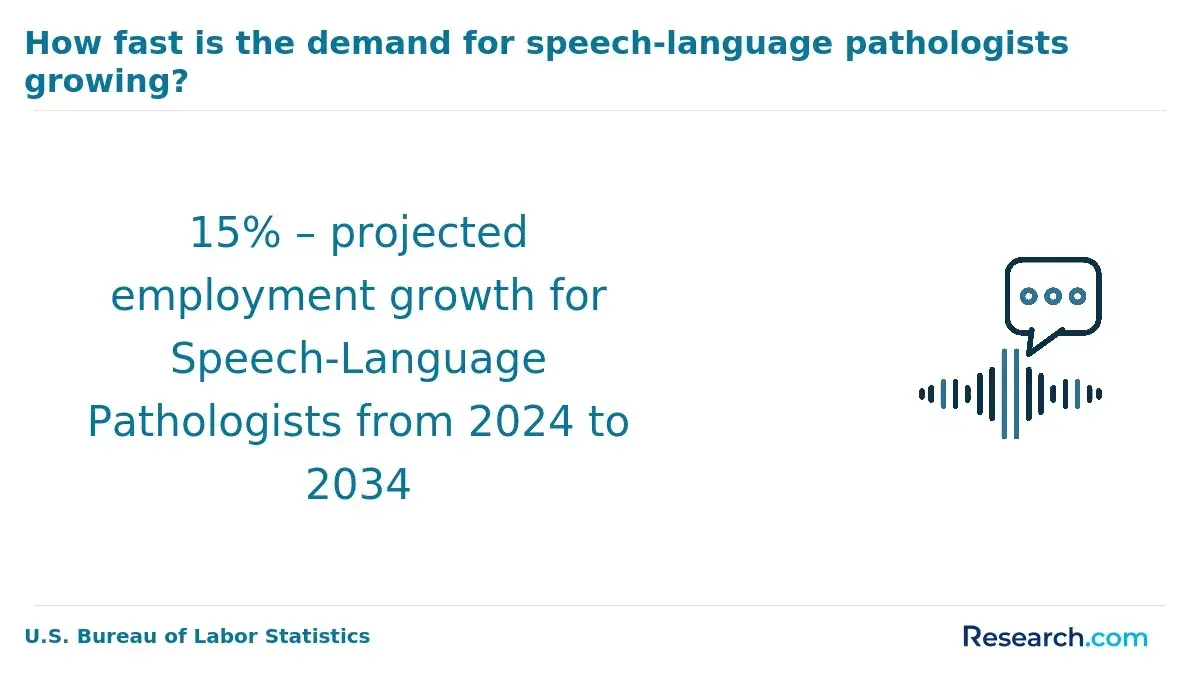
Demand for SLPs with autism social communication expertise is increasing sharply, with a projected 22% job growth in 2025, exceeding general SLP growth by 12%. Graduates completing quality, well-timed programs are well positioned to benefit from this expanding market.
An SLP degree with autism training offers varied career opportunities across clinical, educational, and research settings. Graduates often become certified speech-language pathologists working in pediatric clinics, where they create tailored therapy plans to address speech delays, pragmatic language challenges, and augmentative communication specific to children with autism spectrum disorder (ASD).
In schools, SLPs collaborate with special education teams to support students with autism. Their work includes communication strategy implementation, social communication development through Individualized Education Programs (IEPs), classroom consultation, and family education.
Early intervention programs also employ SLPs to help toddlers with ASD reach developmental milestones during critical brain development periods. Telepractice is expanding, enabling these professionals to provide services remotely, especially in underserved areas.
Other roles include autism program coordinators, behavior analyst assistants, and positions in healthcare or community agencies. Administrative and advocacy positions focused on improving autism services and access are additional pathways.
Financially, these careers are promising. According to the ASHA Salary Report (2025), graduates from online SLP programs specializing in autism communication earn a median starting salary of $92,000. They typically see a 15% higher return on investment than traditional program graduates, highlighting the growing demand and effectiveness of specialized training.
The U.S. Bureau of Labor Statistics projects a 17% growth in speech-language pathologist (SLP) jobs specializing in autism from 2025 to 2035. This increase is driven by greater awareness of autism spectrum disorder and expanded early intervention programs. Salaries range from $65,000 to over $100,000 annually, influenced by location, experience, and work setting. For instance, SLPs employed in healthcare facilities or specialized education programs tend to earn more, while those working in schools often benefit from stability and benefits in the mid-range salary bracket.
Careers in autism-focused speech pathology involve evolving clinical approaches. A 2025 Therapist Neurodiversity Collective Longitudinal Survey of 800 autistic adults reported that 62% experienced trauma related to SLP-led social masking during their education. This highlights a shift away from traditional masking toward authentic social communication, emphasizing trauma-informed care and neurodiversity-affirming practices. Training in these areas enhances employability and meets current ethical standards in graduate programs.
Job roles span direct therapy, consultation, program development, and advocacy. Autistic clients increasingly prefer clinicians who honor neurodivergent perspectives and tailor communication goals individually. Regulatory changes and insurance reimbursements also impact career stability and pay. Specialized certifications in autism communication or augmentative alternative communication (AAC) can boost job prospects and earnings.
Graduates of online speech pathology programs must secure state licensure and national certification to practice professionally. Licensure requirements vary but typically include a master's degree in speech pathology, completion of supervised clinical hours, and passing the Praxis Examination in Speech-Language Pathology. Many states also mandate background checks and ongoing education to maintain licensure.
National certification through the American Speech-Language-Hearing Association (ASHA), known as the Certificate of Clinical Competence in Speech-Language Pathology (CCC-SLP), is highly regarded. It requires completing a Clinical Fellowship Year (CFY), passing the Praxis exam, and engaging in continuous professional development.
Specialization in autism and social communication is becoming essential. By 2026, 55% of states will require neurodiversity-affirming training focused on autism for licensure, up from 12% in 2024. Prospective speech pathologists should pursue continuing education or certifications that address neurodiversity and autism-specific interventions to comply with evolving regulations.
Additional credentials, such as the Autism Spectrum Disorder (ASD) Specialty Certification from ASHA or board certification from the American Board of Speech-Language Pathology and Audiology (ABSLPA), may improve job prospects. Staying informed about state-specific licensure changes is critical as policies rapidly shift to support neurodiversity-affirming practices.
How to choose the best online SLP program for autism training?
When selecting an online slp program focused on autism training, prioritize those with specialized curricula emphasizing autism and social communication rather than general slp courses. Programs that combine theory with supervised clinical practica involving autistic populations and telepractice opportunities better equip students for professional demands.
Accreditation by the Council on Academic Accreditation in Audiology and Speech-Language Pathology (CAA) or similar organizations ensures quality and eligibility for certification. Faculty expertise is essential-look for instructors with experience or published research in autism spectrum disorders to enhance learning outcomes.
Successful programs balance applied learning with theory, often incorporating ABA techniques or evidence-based social communication frameworks. Flexibility is another key aspect, with asynchronous lectures, live sessions, and accessible mentorship supporting working professionals.
Financial considerations include tuition costs and availability of scholarships or assistantships, which affect accessibility. It also helps to review clinical opportunities relative to program pricing.
- Specialized autism-focused curriculum
- Accreditation by CAA or equivalent bodies
- Experienced faculty with autism expertise
- Supervised clinical practica using ABA or social communication methods
- Flexible format with mentorship
- Competitive tuition with financial aid options
Recent enrollment data shows a 28% rise in online slp program participation, with 40% of applicants seeking social communication specialization, reflecting clinical demand trends (CAPCSD Enrollment Data, 2025).
Other Things You Should Know About Speech Pathology
In 2027, online SLP graduate programs emphasize skills such as advanced understanding of autism spectrum disorders, proficiency in social communication intervention techniques, individualized assessment strategies, and the ability to implement evidence-based practices tailored to each individual's unique needs.
Yes, many speech pathologists offer telepractice services, which have become increasingly common for autism treatment. Telepractice allows therapists to conduct sessions remotely using video conferencing tools, expanding access for clients in rural or underserved areas. However, effective telepractice requires careful planning to engage clients and maintain progress.
Speech pathologists often work as part of interdisciplinary teams that include psychologists, occupational therapists, educators, and medical professionals. Collaboration ensures comprehensive care by integrating multiple perspectives and expertise. Regular communication helps align goals and strategies to support the overall development of individuals with autism.
Many online SLP graduate programs require supervised clinical hours in autism-related or social communication cases before graduation. CAPCSD-accredited programs must include at least 400 total clock hours, with 25 hours in guided clinical observation and the rest in supervised practice across client populations.
- U.S. Bureau of Labor Statistics - Speech-Language Pathologists https://www.bls.gov/ooh/healthcare/speech-language-pathologists.htm
- ASHA EdFind - Accredited Speech-Language Pathology Programs https://find.asha.org/ed/
- ETS Praxis - Speech-Language Pathology (5331) https://praxis.ets.org/test/speech-language-pathology-5331.html
- Emerson College - Master of Science (M.S.) in Communication Disorders (Speech@Emerson, online) https://speech.emerson.edu/
- Maryville University - Master of Science in Speech-Language Pathology https://www.maryville.edu/masters/speech-language-pathology/
- California State University-Northridge - Master of Science in Communicative Disorders (Online) https://tsengcollege.csun.edu/programs/CDS
- California State University-San Marcos - Online MS in Speech-Language Pathology https://www.csusm.edu/slp/programs/mastersonline/index.html
- Auburn University, Montgomery - Master of Science in Speech-Language Pathology https://www.aum.edu/degree/ms-speech-language-pathology/