2027 Online SLP Programs With Strong Student Mentorship Opportunities

Co-Founder and Chief Data Scientist

Reviewed by Rhea Paul, PhD
SLP Education & Research Expert
Many aspiring speech pathologists struggle to find online programs that offer meaningful mentorship alongside flexible learning. Without adequate guidance, students often face challenges in navigating clinical placements and professional development. This gap can hinder timely progress and reduce confidence entering the field. Recognizing these obstacles, it is essential to identify programs that integrate strong student mentorship to foster skills and career readiness. This article explores online slp programs known for providing robust mentorship opportunities, helping prospective students choose pathways that support their academic success and clinical growth effectively.
Key Things You Should Know
- Online slp programs in 2026 increasingly incorporate dedicated mentorship, with over 70% offering personalized faculty guidance to enhance clinical skill development and professional networking.
- Programs accredited by the American Speech-Language-Hearing Association ensure rigorous standards, often aligning mentorship opportunities with nationally required clinical practicum hours.
- Recent data shows students in online slp programs with strong mentorship report 15% higher satisfaction and improved job placement rates within six months post-graduation.
What qualifications and credentials do online SLP programs require for admission?
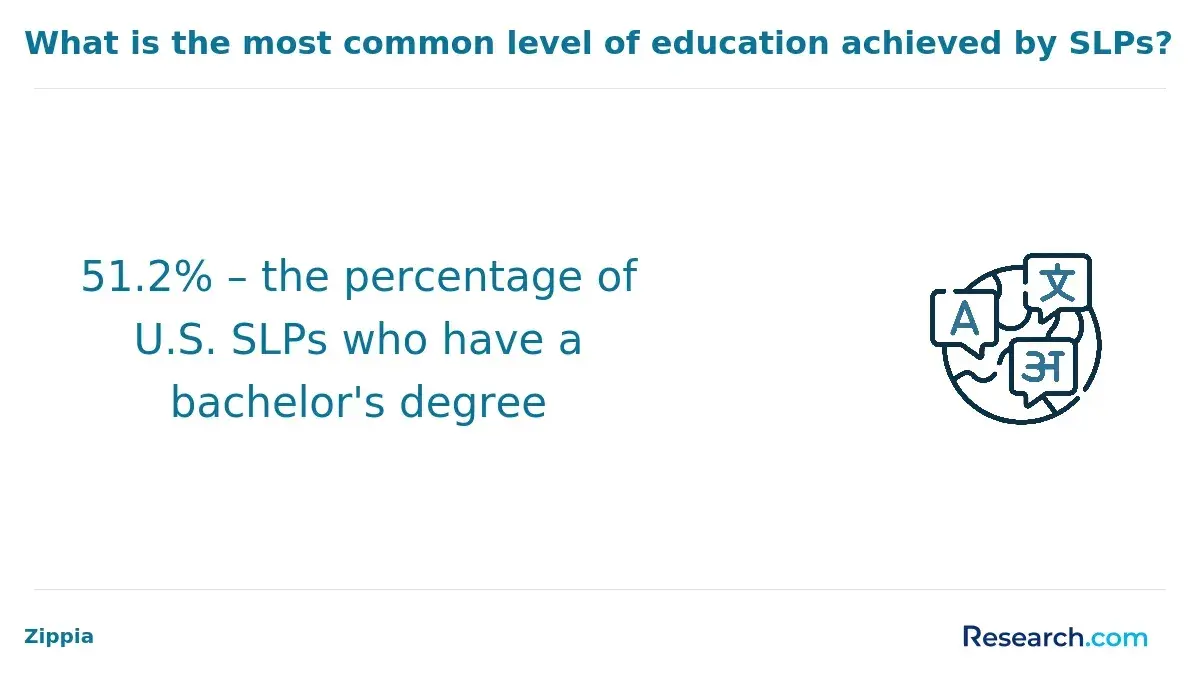
Applicants to online speech pathology programs generally need a bachelor's degree, often in communication sciences, speech pathology, or a related field. Degrees from other disciplines may be accepted if prerequisite courses in anatomy, linguistics, phonetics, and developmental psychology are completed. A minimum GPA of 3.0 on a 4.0 scale is standard, with more competitive programs sometimes requiring higher academic achievement.
Common admission requirements include official transcripts, two or three letters of recommendation from academic or professional sources, and a personal statement expressing motivation and commitment to the field. Relevant clinical or volunteer experience in speech-language pathology or related health areas strengthens applications and may be mandatory. Test scores such as the GRE are optional at many schools but required by some, so checking individual program policies is important.
Applicants must also demonstrate strong communication skills and cultural competence suited to diverse populations. For licensed professionals pursuing advanced certification or specialization, proof of current state licensure or completed clinical hours is often necessary. Understanding these credentials needed for enrollment in online speech pathology programs can help applicants prepare their materials effectively.
The demand for qualified speech language pathologists is growing, with employment projected to increase 17% from 2025 to 2035, adding approximately 13,000 new jobs annually according to the U.S. Bureau of Labor Statistics. This growth emphasizes the importance of rigorous admissions standards to prepare competent clinicians.
Prospective students interested in affordable education options can explore online masters speech pathology programs that align with their academic and professional goals.
How do accredited online speech pathology programs compare to campus-based options?
Accredited online speech pathology programs versus campus-based programs offer comparable educational quality, especially when institutions uphold CAEP or ASHA accreditation. Both require rigorous clinical practicum hours, ensuring essential hands-on experience under expert supervision. Online programs provide flexibility ideal for working professionals or those balancing personal commitments through asynchronous coursework paired with scheduled virtual mentorship sessions.
Student mentorship opportunities in online speech pathology degrees have grown stronger, integrating regular video conferencing, personalized feedback, and collaborative digital tools. Campus-based programs emphasize in-person mentorship and peer interaction, benefiting students who thrive in face-to-face environments, while online options replicate much of this guidance virtually.
The demand for speech pathologists is rising, with a 17% increase in online master's enrollment between 2035 and 2025. Prospective students should consider factors such as the availability of accredited clinical externships nearby, frequency and quality of mentor interactions, technological support, and alumni success in ASHA certification and job placement.
- Availability of accredited clinical externships near the student's location.
- Frequency and quality of mentor-mentee interactions.
- Technological support ensuring smooth virtual learning experiences.
- Alumni success in ASHA certification and job placement.
Choosing between online and campus-based speech pathology education depends on individual learning preferences and access to clinical settings. Both can prepare students well for certification and professional practice. Students should also explore the highest paying SLP jobs to align their educational choices with career goals.
What is the typical curriculum and coursework in an online SLP degree program?
Online slp coursework and program structure typically encompass foundational sciences, clinical concepts, and practical skills essential for certification and professional practice. Core courses include anatomy and physiology of the speech and hearing mechanism, phonetics, speech and language development, audiology, and neurological foundations of communication disorders. Students study evidence-based treatments for speech, language, fluency, voice, and swallowing disorders across all age groups.
Advanced coursework often targets specific populations such as pediatric speech disorders or adult neurogenic communication impairments. Programs emphasize research methods and critical evaluation of scientific literature, training students for informed clinical decision-making. Integral topics like professional ethics, cultural competence, and interprofessional collaboration prepare students to provide patient-centered care.
Hands-on clinical experience is gained through supervised practicums arranged locally to fulfill accreditation standards. Many programs also include synchronous mentoring and peer collaboration to support skill development despite the online format. The growth of mentorship models, highlighted by the American Speech-Language-Hearing Association's S.T.E.P. program, illustrates scalable support systems that online SLP programs increasingly adopt.
Prospective students should verify program accreditation by the Council on Academic Accreditation and confirm clinical practicum and mentorship arrangements before enrolling. Those interested in accelerated study options may explore 5 year SLP programs for efficient pathways. Typical curriculum for online speech pathology degrees balances academic rigor with practical experience to prepare graduates for diverse clinical settings.
Completing an online master's degree in speech pathology typically requires 2 to 3 years of full-time study. Accredited programs balance coursework, clinical practicum, and mentorship components essential for certification eligibility. Part-time study options can extend this timeline to 4 or more years, accommodating those with work or personal commitments.
The time to complete speech pathology master's program online depends on curriculum intensity, clinical hour requirements, and whether students enroll year-round or follow a traditional academic calendar. Some accelerated programs integrate summer sessions to allow finishing in roughly 24 months, while others follow a two-semester-per-year schedule closer to 3 years.
Quality mentorship greatly influences both duration and certification outcomes. Strong mentorship supports clinical skill development and helps students pass the Praxis exam. For instance, Speech@Emerson's online MS program boasts a 98% Praxis pass rate for its 2025 graduates, exceeding the national average (Emerson College, 2025 program outcomes report).
When choosing programs, students should inquire about supervisor-to-student ratios and clinical placement flexibility since completing required clinical hours with qualified mentorship is mandatory and often affects program length. Those researching may also find a useful comparison of the easiest SLP grad schools to get into.
To practice professionally as an SLP in the United States, graduates must obtain state licensure and national certification, primarily the Certificate of Clinical Competence in Speech-Language Pathology (CCC-SLP) awarded by the American Speech-Language-Hearing Association (ASHA). Licensing requirements vary by state but generally include graduation from an accredited master's or doctoral program, completion of a Clinical Fellowship Year (CFY), and passing the Praxis Examination in Speech-Language Pathology administered by ETS.
Key steps for licensure include:
- Graduation from an accredited graduate program in speech pathology.
- Completion of a supervised 36-week full-time clinical fellowship.
- Passing the national Praxis exam.
- Applying for state licensure, sometimes including jurisprudence exams or background checks.
ASHA's S.T.E.P. (Student Training and Experience Program) offers mentorship aligning students with experienced professionals based on clinical interests. This support is vital during the CFY and early career stages to meet licensure standards and ensure professional growth.
The CCC-SLP certification enhances employment opportunities and allows interstate practice where reciprocity exists. Graduates should familiarize themselves early with state licensing boards and seek mentorship through ASHA's virtual programs to navigate licensure challenges efficiently.
Online speech pathology programs offer mentorship and clinical practicum opportunities designed to meet accreditation requirements while supporting remote learners. Students are paired with licensed speech-language pathologists who provide career guidance, skill development, and feedback throughout the coursework. These mentorships typically involve virtual meetings, case discussions, and sometimes in-person networking events. Some programs collaborate with state professional associations to connect students with local clinicians.
Clinical practicum experiences are essential and arranged near students' geographic locations. Programs coordinate with approved clinics, schools, hospitals, or community centers for on-site supervised patient interactions. This hybrid approach ensures hands-on training under licensed professionals, a certification requirement. Students may also engage in telepractice clinics to provide services under supervision to remote clients.
Common challenges include securing practicum placements and accessing mentors with specialized expertise. To address this, programs utilize state and local initiatives like the Kansas Speech-Language-Hearing Association's informal mentorship matching, which connected over 150 students and professionals recently. Such community networks play a vital role in helping students integrate into the profession.
Prospective students should proactively consult program coordinators about available mentorships and practicum options, including telehealth practicums and local placement support, to clarify expectations and maximize their training outcomes.
Tuition for online speech pathology graduate programs generally ranges from $20,000 to $70,000, influenced by factors like school prestige, residency status, and program length. Public universities usually offer more affordable tuition, especially for in-state students, with costs between $20,000 and $40,000. Private institutions often exceed $60,000. Additional expenses such as fees, textbooks, and clinical placement can add $2,000 to $5,000 annually.
Financial aid options vary but often include federal loans and grants available for most accredited programs. Many schools also provide merit- and need-based scholarships tailored for speech pathology graduate students. Assistantships or tuition remission opportunities may be available for those involved in research or clinical training. Employer tuition reimbursement remains a practical option for working professionals, though it requires employer coordination.
According to the ASHA 2025 Member Salary Report, speech-language pathologists who graduate from programs offering structured mentorship earn median first-year salaries of $82,000-about 25% higher than the national median of $97,870. This highlights the value of choosing programs with strong mentorship and career support, which can significantly improve job placement and return on investment.
Prospective students should balance total costs with scholarship availability and institutional mentorship benefits. Early communication with financial aid offices helps optimize funding and plan effectively.
Speech-language pathologists (SLPs) build careers across healthcare, education, research, and private practice. In healthcare, they treat patients with communication, swallowing, and cognitive-communication disorders in settings like hospitals and rehabilitation centers, supporting stroke survivors, traumatic brain injury patients, and individuals with neurodegenerative diseases.
In schools, SLPs assess and assist children with speech or social communication challenges, often working with educators to create individualized education plans (IEPs). Early intervention programs focus on infants and toddlers with developmental delays. Private practice allows specialization in areas such as accent modification, voice therapy, or fluency disorders.
Telepractice expands access to services, especially in underserved or rural regions, an area growing alongside online Speech Pathology programs. Leadership roles in administration, policy, and advocacy also present options for professionals.
Mentorship programs are vital for success, particularly for online students. The National Black Association for Speech-Language and Hearing (NBASLH) observed a 17% rise in graduate school matriculation among Black communication sciences and disorders students involved in mentorship from 2035-2025, highlighting mentorship's role in career advancement.
Graduates should evaluate settings that match their skills and interests. Additional certifications can boost employability in competitive fields. Networking via mentorship programs aids in job placement and licensure navigation.
The employment outlook for speech-language pathologists (SLPs) is exceptionally strong, with the U.S. Bureau of Labor Statistics projecting a 17% growth from 2025 to 2035. This growth surpasses the average for all occupations and is fueled by an aging population and increased recognition of speech disorders in both children and adults.
Salary varies based on experience, location, and work environment. Entry-level SLPs typically start around $65,000 annually, while those with advanced expertise or specialization can earn $90,000 or more. Clinical settings, schools, and private practices offer different compensation levels, with specialized hospitals and urban centers often providing higher pay but sometimes requiring additional certifications.
Online speech pathology programs are increasingly integrating AI-driven virtual mentorship tools, with 65% of Communication Sciences and Disorders (CSD) programs adopting these technologies by 2035. This leads to a 17% increase in student-mentor interaction hours, enhancing job readiness and improving outcomes on state licensing exams.
Prospective students should prioritize programs with strong, technology-enabled mentorship. Graduates from these programs tend to report greater clinical confidence and stronger professional networks. Those focused on school-based roles may see more stable employment though typically with lower salaries. Factoring regional demand and mentorship quality helps make informed career decisions.
How should prospective students evaluate and choose a reputable online SLP program?
Mentorship quality plays a crucial role in online speech pathology programs, directly impacting career success and financial returns. According to Forbes Advisor's 2025 analysis, graduates who receive strong mentorship experience a 15% greater return on investment, recouping tuition costs in 2.1 years versus 2.5 years for those without mentorship. This advantage aligns with a median salary of $95,000, underscoring the importance of mentorship for advancing in this field.
Prospective students should evaluate programs based on mentorship-related factors such as:
- Access to dedicated faculty mentors who support clinical skill development and professional networking.
- One-on-one virtual sessions and personalized feedback beyond coursework.
- Structured programs connecting students with practicing clinicians in schools, healthcare settings, or other relevant environments.
- Engagement opportunities with alumni and peer mentors to share insights and experiences.
- Assistance securing clinical placements with supervisors who provide active, ongoing mentorship rather than passive observation.
It is important to inquire directly about the mentorship framework when researching programs-ask admissions or current students about mentor accessibility and interaction frequency. Additionally, assess whether mentorship extends to career advising, licensure preparation, and job placement support, all critical to long-term outcomes. Programs accredited by the Council on Academic Accreditation in Audiology and Speech-Language Pathology typically maintain strong mentorship standards consistent with certification requirements.
Prioritizing mentorship ensures stronger practical skills and professional growth, facilitating faster readiness for certification and employment while maximizing return on investment.
Other Things You Should Know About Speech Pathology
In 2027, speech pathologists can be found working in diverse settings including private practices, rehabilitation centers, research facilities, corporate offices for accent modification, and telepractice environments. These settings allow them to cater to a wide variety of clients and communication needs.
Yes, many speech pathologists pursue specialization through additional certifications or focused clinical experience. Common specialties include pediatric feeding and swallowing, fluency disorders, neurogenic communication disorders, and augmentative and alternative communication (AAC). Specialization often enhances clinical skills and can improve job prospects in particular settings.
Most programs expect a bachelor’s degree and prerequisite coursework in anatomy and physiology of speech, phonetics, language development, and statistics. ASHA requires a minimum of 25 hours of guided observation for the clinical practicum path, and many programs ask for a GPA of 3.0 or higher.
- U.S. Bureau of Labor Statistics - Speech-Language Pathologists https://www.bls.gov/ooh/healthcare/speech-language-pathologists.htm
- ASHA EdFind - Accredited Speech-Language Pathology Programs https://find.asha.org/ed/
- ETS Praxis - Speech-Language Pathology (5331) https://praxis.ets.org/test/speech-language-pathology-5331.html
- California State University-San Marcos - Online MS in Speech-Language Pathology https://www.csusm.edu/slp/programs/mastersonline/index.html
- University of Nebraska at Kearney - Speech-Language Pathology, Master of Science in Education (Online Track) https://www.unk.edu/online/degrees-programs/speech-language-pathology-online.php
- New England Institute of Technology - Master of Science in Speech Language Pathology https://www.neit.edu/academics/graduate-degrees/speech-language-pathology-ms
- Idaho State University - Master of Science in Speech-Language Pathology (Online/Distance Education) https://www.isu.edu/slp/programs-offered/slp-graduate-program/
- Pennsylvania Western University - Master of Science in Speech-Language Pathology https://online.pennwest.edu/programs/speech-language-pathology-grad/index.php