2027 SLP Master's Programs With Dysphagia Training: Comparing Labs and Clinical Exposure

Co-Founder and Chief Data Scientist

Reviewed by Rhea Paul, PhD
SLP Education & Research Expert
Dysphagia training can shape whether an SLP graduate feels prepared for medically complex work in hospitals, rehabilitation, skilled nursing, and outpatient settings. Yet "swallowing course included" does not necessarily mean a program offers hands-on labs, FEES or VFSS observation, or an acute-care placement. This guide helps prospective SLP students compare curriculum, simulation resources, supervised clinical exposure, and affiliation transparency so they can choose a master's program that fits their intended clinical path.
Key Things You Should Know
- CAA-accredited SLP master's programs must prepare students across communication and swallowing disorders, but neither CAA nor ASHA sets a minimum number of dysphagia-specific clinical hours, VFSS cases, or FEES experiences.
- ASHA certification standards require at least 400 supervised clinical clock hours, including 375 direct client or patient contact hours and 25 observation hours; a student may meet that total with limited adult dysphagia exposure unless the program and placement mix provide it.
- For hospital-focused goals, prioritize programs that can document a swallowing course with lab work, access to instrumental-assessment teaching or observation, and established adult medical affiliations rather than relying on a program's general reputation.
Which SLP master's programs include dysphagia labs and clinical training?
Many accredited residential SLP master's programs teach dysphagia, but the depth of practical training differs substantially. A strong candidate program generally combines a dedicated adult or pediatric swallowing course with case-based instruction, anatomy or simulation lab activities, and placements where dysphagia evaluation and treatment are part of routine care.
The programs below are examples of institutions prospective students may investigate because their public academic or clinical materials identify swallowing-related coursework, research, clinical services, or medical partnerships. They are not a ranking, and applicants should confirm the current catalog, faculty availability, placement options, and student access before treating any feature as guaranteed.
| Program to investigate | Publicly visible dysphagia-related indicator | What an applicant should verify | Best fit to explore |
| University of Washington | Medical speech-language pathology and swallowing expertise are represented within the university's health-sciences environment. | Whether master's students receive structured instrumental-assessment observation, the number of adult medical placements, and assignment procedures. | Students seeking a large academic-health-system setting. |
| Boston University | The university's Sargent College has clinical education infrastructure and faculty work spanning adult neurogenic communication and swallowing. | Which swallowing lab activities are required, how adult placements are allocated, and whether hospital experiences are available to every interested student. | Students who value integrated academic and clinical training in an urban health-care market. |
| MGH Institute of Health Professions | The institute operates in a health-professions setting with close connections to clinical education and adult rehabilitation practice. | Current affiliation mix, access to acute-care experiences, and whether specific instrumental learning is observation, simulation, or direct participation. | Students considering an interprofessional health-sciences environment. |
| University of Pittsburgh | The program sits within a university environment with extensive health-system and rehabilitation connections. | Current adult medical practicum capacity, swallowing-specific simulation, and how off-site placements are selected. | Students interested in medical SLP, rehabilitation, and research exposure. |
| University of Iowa | Its speech and hearing sciences environment includes faculty and clinical work relevant to voice, neurologic conditions, and swallowing. | Required swallowing curriculum, availability of instrumental observation, and the proportion of students placed in adult medical settings. | Students seeking a university-based program with clinical and research depth. |
Use this table as a screening tool, not proof of placement. Catalog titles can remain stable while clinical-site availability changes by term, supervisor capacity, contracts, and local health-system demand.
Applicants who need flexible delivery should compare speech pathology online masters programs especially carefully, because online academic instruction does not by itself establish access to local swallowing labs or hospital-based practica.
How do programs differ in hands on swallowing assessment exposure?
Hands-on swallowing training exists on a continuum. At one end, students may learn clinical swallowing evaluation through lectures, videos, standardized patients, and peer practice. At the other, they may observe or participate under supervision in bedside evaluations, modified barium swallow studies or videofluoroscopic swallowing studies (VFSS), fiberoptic endoscopic evaluation of swallowing (FEES), and treatment planning for medically complex patients.
These experiences are not interchangeable. Simulation can build clinical reasoning and familiarity with procedures, while supervised patient care develops the judgment needed to recognize risk, document findings, collaborate with medical teams, and know when an instrumental examination may be indicated.
| Training experience | What students commonly learn | What it cannot confirm on its own | Value for a medical-SLP goal |
| Lecture and case discussion | Swallowing physiology, etiologies, signs of concern, documentation concepts, and evidence-based treatment principles. | Ability to conduct an evaluation with an actual patient. | Essential foundation, but insufficient alone for students seeking high-acuity work. |
| Simulation or skills laboratory | Interviewing, oral-mechanism examination steps, clinical decision-making, team communication, and procedural workflows. | Routine exposure to variable patient presentations or imaging findings. | Useful preparation before placement; ask how often labs occur and who teaches them. |
| Bedside clinical swallowing evaluation | History review, patient interaction, clinical observation, safety considerations, and care-team communication. | Definitive visualization of pharyngeal swallowing physiology. | Highly relevant for hospital, rehabilitation, and skilled-nursing practice. |
| VFSS/modified barium swallow observation | How imaging informs physiologic interpretation and management recommendations. | Independent competence to perform or interpret studies after graduation. | Especially valuable when paired with guided case review and follow-up treatment planning. |
| FEES observation or supervised participation | Endoscopic workflow, anatomy, secretion management concepts, and interdisciplinary practice. | Automatic permission or competency to perform FEES in a future workplace. | Valuable exposure, though employer privileging, state rules, training, and supervision policies still apply. |
A program should be transparent about which experiences are required, optional, observational, simulated, or direct patient care. Be cautious if a school describes "instrumental training" without explaining whether students merely view recordings, observe procedures, or complete structured clinical work connected to those procedures.
What counts as dysphagia training in speech pathology master's curricula?
Dysphagia training is the formal education and supervised practice that prepares a future speech-language pathologist to understand swallowing disorders and contribute to evaluation, treatment, counseling, and interdisciplinary care. It is broader than one course titled "Dysphagia" and should connect anatomy, neurology, nutrition and hydration concerns, ethics, clinical reasoning, and documentation.
A well-rounded curriculum may distribute swallowing content across several courses and practica. The following components are worth identifying in the catalog and clinical handbook because each addresses a different part of clinical readiness.
- A dedicated course in adult, pediatric, or lifespan dysphagia that covers normal swallowing, pathophysiology, assessment, intervention, and referral decisions.
- Relevant anatomy and physiology instruction, including respiratory, neurologic, and aerodigestive structures that affect swallowing safety and efficiency.
- Case-based learning that requires students to interpret histories, recognize red flags, formulate differential considerations, and support recommendations with evidence.
- Instruction on clinical swallowing evaluation and the appropriate role, limits, and referral process for instrumental assessment.
- Exposure to VFSS, FEES, imaging review, or recorded instrumental cases, with clear explanation of whether experience is observational or hands-on.
- Adult medical, rehabilitation, long-term care, home-health, outpatient, or pediatric feeding practicum opportunities where dysphagia is within the site's caseload.
- Interprofessional education with physicians, dietitians, nurses, occupational therapists, respiratory therapists, or radiology personnel when available.
Do not assume that a course title reveals its depth. Ask for the syllabus or a current topical outline, then ask how the classroom content is reinforced during clinical education. A program with a robust course but little adult medical placement capacity may fit a student interested in schools or pediatric communication, but it may be a weaker match for a student whose primary goal is acute-care dysphagia work.
Which accreditation standards shape dysphagia education in SLP programs?
The Council on Academic Accreditation in Audiology and Speech-Language Pathology (CAA), ASHA's accrediting body for graduate programs, requires accredited programs to demonstrate that graduates achieve the knowledge and skills needed for professional practice. Swallowing disorders are within the professional scope of education because they are part of the communication and swallowing disorders domain.
CAA accreditation is consequential: graduation from a CAA-accredited program is typically central to meeting ASHA certification and state licensure education requirements. However, accreditation is a floor for broad professional preparation, not a promise that every graduate will complete a specified number of dysphagia cases or instrumental procedures.
ASHA's certification framework also requires programs to evaluate student competencies, document supervised clinical experiences, and ensure appropriate supervision. The standards do not prescribe a national quota for adult dysphagia patients, FEES examinations, VFSS studies, or hospital rotations. Therefore, two CAA-accredited programs can both meet standards while offering meaningfully different medical-training depth.
Before applying, confirm the program's current CAA status in ASHA's official directory and distinguish among accredited, candidate, and developing-program designations. Candidate status can still be relevant for a new program, but students should understand the school's disclosures, the timing of accreditation decisions, and how certification or licensure eligibility is addressed for their entering cohort.
How much supervised clinical practice do these programs require?
For ASHA certification, students need at least 400 supervised clinical clock hours. That total includes at least 375 hours of direct client or patient contact and 25 hours of guided clinical observation; at least 325 of the total hours must be completed at the graduate level. Programs may require more hours, but the way hours are distributed across settings and populations is often more important for a dysphagia-focused applicant than the total alone.
The requirement helps ensure broad clinical preparation, but it does not guarantee a medical specialization. A student could accumulate substantial experience with language, speech sound, voice, fluency, or school-age populations and still meet the overall clock-hour standard. Students targeting hospital practice should therefore ask how the program helps them secure adult medical or feeding/swallowing cases.
| Question about clinical hours | Why the answer matters | Useful answer to seek |
| How many direct patient-contact hours occur in adult medical settings? | Total hours do not show population or setting. | A range or historical pattern, with a clear statement that placement availability can vary. |
| Are dysphagia cases required, elective, or dependent on the assigned site? | This reveals whether exposure is designed into the curriculum. | Specific requirements, alternatives when cases are unavailable, and the role of simulation. |
| Can students observe VFSS or FEES? | Instrumental exposure may be limited by site policy and scheduling. | Whether observation is curricular, optional, common but not guaranteed, or unavailable. |
| Who supervises medical practicum? | Supervisor expertise affects feedback and case access. | Licensed, appropriately credentialed SLP supervisors with relevant dysphagia experience. |
Clinical-hour rules are also different from an employer's onboarding expectations. New graduates commonly need mentorship and facility-specific competency development, particularly for high-acuity dysphagia practice and instrumental procedures. The broader market remains favorable: the U.S. Bureau of Labor Statistics projects 17% employment growth for speech-language pathologists from 2025 to 2035, but demand does not eliminate the need for careful preparation and supervised transition into medical settings.
If speed is important, compare 5 year SLP programs with equal attention to their clinical sequencing. An accelerated academic pathway can be efficient, but it should not reduce the time available for meaningful supervised experiences.
Which programs offer hospital, rehabilitation, or acute care placements?
No program can responsibly promise every student an acute-care hospital placement unless it expressly guarantees one in writing. Hospital affiliations fluctuate with supervisor availability, patient volume, contract terms, and competition from other health-professions programs. Even programs located near major medical centers may assign some students to schools, outpatient clinics, early-intervention settings, or skilled-nursing facilities to meet broad competency needs.
Programs most likely to offer a range of medical experiences often have one or more of the following features: a university-affiliated health system, a longstanding network of regional health-care partners, faculty with medical SLP expertise, an on-campus clinic serving adults, or a clinical education office that publishes placement processes. These features improve the likelihood of opportunity but are not substitutes for a direct answer about student access.
Ask clinical education staff whether recent cohorts have had placements in acute care, inpatient rehabilitation, outpatient neurorehabilitation, skilled nursing, Veterans Health Administration facilities, pediatric feeding clinics, or home health. Then ask whether the site types are required, competitive, geographically limited, or available only during a final externship.
Students whose career goal is exclusively acute care should also consider a practical fallback plan. In many regions, a first clinical fellowship position may be in rehabilitation, skilled nursing, outpatient care, or a mixed caseload rather than a large hospital. That path can still build relevant adult-neurogenic and swallowing experience when supervision, mentoring, and continuing education are strong.
How do online, hybrid, and campus programs compare for dysphagia access?
Program format affects dysphagia access mainly through laboratory infrastructure, clinical-site networks, and travel requirements - not through the quality of online lectures alone. Online and hybrid programs can deliver strong anatomy, swallowing science, and case-based instruction, but they must still arrange supervised clinical education and may require students to travel for intensives, simulations, or placements.
| Format | Potential advantage | Potential dysphagia-training trade-off | Who should consider it |
| Campus-based | May provide recurring access to faculty, simulation space, university clinics, and local medical partners. | Relocation and local cost of living can be substantial; hospital placement is still not automatic. | Students able to relocate and seeking regular in-person skills instruction. |
| Hybrid | Can blend online coursework with planned campus immersions and regional clinical education. | Required travel, fixed lab dates, and placement geography can complicate work or caregiving schedules. | Students who need some flexibility but can attend required intensives. |
| Online | May reduce relocation needs and support students outside major university cities. | Local placement availability, state eligibility, supervisor capacity, and access to instrumental observation require especially close review. | Self-directed students with realistic travel and clinical-placement plans. |
An online program is not inherently less rigorous, and an on-campus program is not inherently more medically focused. The deciding question is whether the school can explain how students practice clinical skills, how sites are sourced, what travel is required, and what happens if an appropriate placement cannot be secured near the student.
Before enrolling in a distance pathway, compare its state-authorization and licensure disclosures with the requirements of the state where you expect to train and work. Also review speech language pathology programs for admissions context, but do not let perceived admissions accessibility outweigh accreditation and clinical-fit requirements.
Which programs publish the strongest evidence of lab resources and case volume?
The strongest public evidence is specific, current, and distinguishes resources from guaranteed student experiences. A program's statement that it has a swallowing lab, hospital affiliation, or expert faculty is helpful, but applicants need to know whether master's students actually use the resource, at what point in the curriculum, and under what supervision.
High-value evidence commonly includes a current course catalog with descriptions; a clinical handbook identifying placement procedures; a list of clinical partners or site categories; faculty biographies showing adult medical or dysphagia expertise; descriptions of simulation facilities; and clearly dated examples of clinical learning opportunities. Case-volume figures can be useful when published, but they should identify the timeframe, population, setting, and whether they represent a clinic's overall volume or student-level exposure.
Give more weight to a program that answers questions directly than one that relies on broad promotional language. For example, "students complete a swallowing evaluation lab and may request adult medical placements, subject to availability" is more decision-useful than "students receive exceptional dysphagia training." The first statement makes the limits visible; the second does not.
Do not penalize a program simply because it does not publish patient counts. Health privacy, changing contracts, and uneven caseloads can make public case-volume claims misleading. Instead, ask the clinical director for a realistic description of the prior year's site types and whether students commonly observed instrumental studies, while recognizing that past access is not a future guarantee.
How should students verify clinical affiliation sites and practicum quality?
Verification should happen before paying an enrollment deposit, not after coursework begins. Admissions representatives can explain general program features, but clinical education personnel are usually better positioned to explain placement policy, travel expectations, site selection, and the limits of what can be promised.
Use the following sequence to compare schools consistently. Keep each school's answers in writing so you can distinguish confirmed requirements from informal assurances.
- Confirm current CAA accreditation status and review the school's state-authorization and professional-licensure disclosures for the state where you intend to study and seek licensure.
- Read the current catalog for dedicated swallowing coursework, prerequisites, laboratory components, and the order in which coursework and practica occur.
- Request the clinical education handbook or equivalent written policy covering site assignment, student responsibility for transportation, relocation, background checks, health requirements, and remediation if placement plans change.
- Ask whether adult medical, rehabilitation, skilled-nursing, pediatric feeding, and hospital sites have been used recently, while asking the school not to identify protected patient or supervisor information.
- Ask what dysphagia exposure is required versus merely possible, including bedside evaluations, instrumental-study observation, simulation, and interprofessional case conferences.
- Ask how the program supports students who want medical practice but are assigned a different setting, such as through electives, simulations, case conferences, or a later externship request.
- Compare total educational cost, travel, housing for distant placements, health clearances, and unpaid practicum time alongside tuition.
A useful final question is: "What clinical experience can you document as required for every student, and what experience depends on site availability?" Clear answers help prevent a common mistake - mistaking an affiliation list for a guaranteed placement pathway.
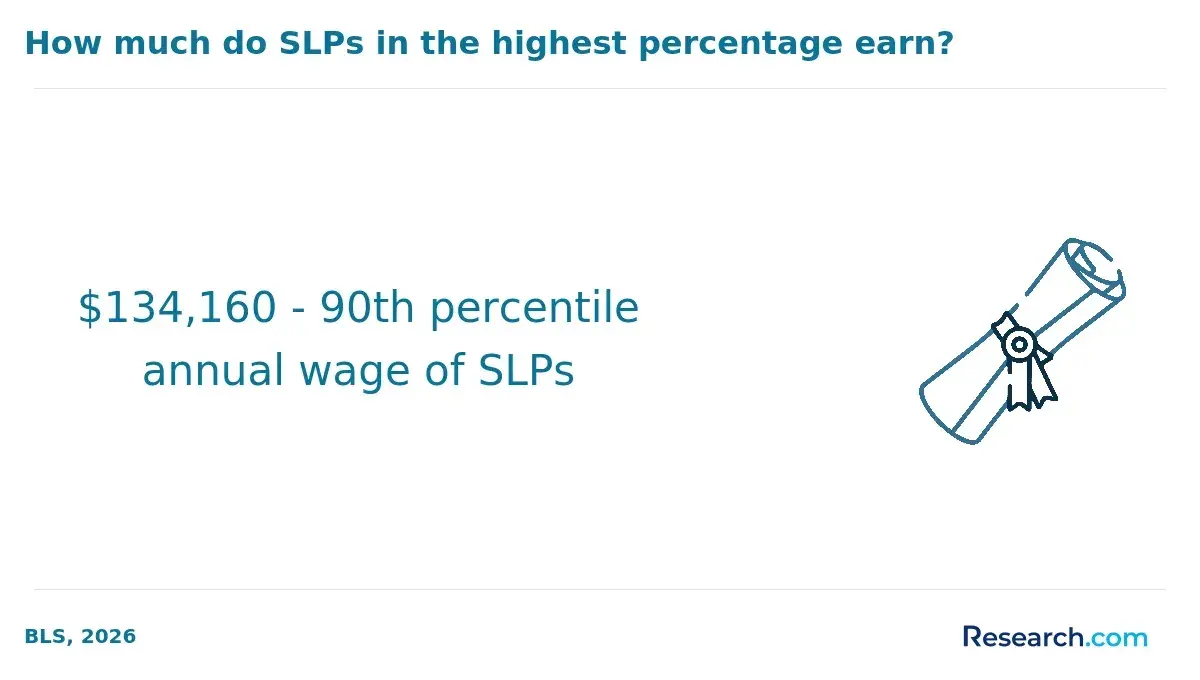
Career prospects should inform, not replace, this due diligence. The BLS reports a May 2025 median annual wage of $97,870 for speech-language pathologists, but pay varies by setting, location, experience, and employer. Review speech and language pathologist salary information alongside expected debt and the clinical settings you realistically want to enter.
What limitations should readers note when comparing dysphagia training programs?
Program comparisons have important limits. Clinical education changes more quickly than course titles: an affiliation may pause, a supervisor may become unavailable, an elective may not run, or patient caseloads may shift. A school's historical hospital placement pattern is useful evidence, but it is not a contractual promise to an incoming student.
Students should also avoid treating instrumental exposure as a single universal credential. Observing VFSS or FEES is valuable, but it does not itself establish independent practice privileges. Employer policies, medical-staff rules, supervisor training, facility credentialing, scope-of-practice interpretation, and state requirements can affect what an SLP may do in a particular workplace.
Other common comparison errors include choosing a program based solely on total clinical hours, assuming every CAA-accredited program has identical medical depth, or comparing tuition without counting relocation and practicum travel. The better approach is to match verified training experiences to your goals while preserving flexibility: many successful SLP careers begin in settings other than the student's first-choice medical environment.
Finally, dysphagia competence continues after graduation. The master's degree establishes entry-level preparation; clinical fellowship mentoring, employer onboarding, continuing education, evidence review, and collaboration with experienced clinicians remain important as an SLP's caseload becomes more complex.
Other Things You Should Know About Speech Language Pathology
No. Graduate programs prepare students for entry-level practice across the scope of speech-language pathology, and not every student will have extensive dysphagia cases. However, students who intend to pursue hospital, rehabilitation, long-term-care, or feeding-focused work should seek as much relevant coursework, supervised exposure, and mentorship as their program can reasonably provide.
Graduate students perform clinical activities only under appropriate supervision and within program, site, and institutional policies. Observation or participation during graduate school does not automatically authorize independent performance after graduation. Future practice depends on workplace privileges, training, supervision, state rules, and facility procedures.
It can be advantageous, but it is not the only route. Inpatient rehabilitation, skilled nursing, outpatient neurorehabilitation, home health, and medically oriented clinical fellowship positions can develop related skills. Applicants should prioritize strong supervision, adult-neurogenic and swallowing caseload exposure, and realistic opportunities for mentorship.
A school may have legitimate privacy or contract reasons not to publish every site. It should still be able to explain its placement process, typical setting categories, travel expectations, student responsibilities, and the difference between required and availability-dependent experiences. If it cannot provide that level of clarity, consider it a reason to compare other programs before committing.
References
- Speech-Language Pathology Program Details https://mercy.edu/academics/programs/masters-speech-language-pathology-details
- Master of Science in Speech-Language Pathology https://keck.usc.edu/speech-language-pathology-ms-program/
- #USAHS MS-SLP students recently participated in a... https://www.facebook.com/universityofstaugustine/posts/%EF%B8%8F-usahs-ms-slp-students-recently-participated-in-a-dysphagia-boot-camp-in-lemon-/1379978650895975/