2027 University of St. Augustine Hybrid MS-SLP Review: Tuition, Admissions, and Clinical Training

Co-Founder and Chief Data Scientist

Reviewed by Rhea Paul, PhD
SLP Education & Research Expert
The University of St. Augustine for Health Sciences (USAHS) hybrid MS-SLP can appeal to aspiring speech-language pathologists who need a program that combines online academic coursework with hands-on training. But "hybrid" does not mean fully remote: students should expect required in-person learning and clinical education. This review examines the program's cost, admissions, accreditation, clinical placement model, schedule, and licensure considerations so you can determine whether its structure fits your finances, location, and career goal.
Key Things You Should Know
- USAHS's MS-SLP is designed as a hybrid, entry-level graduate program: online coursework is paired with required in-person skills training and supervised clinical experiences, so it is not a location-independent online degree.
- Applicants should verify the current catalog's per-credit tuition, required fees, campus-session travel costs, and clinical expenses before enrolling; tuition alone does not represent the full cost of becoming eligible for SLP licensure.
- CAA accreditation, state authorization, clinical-placement logistics, and state-specific licensure rules matter more than convenience claims; confirm in writing that USAHS can enroll students in your state and support your intended licensure path.
How is the University of St. Augustine hybrid MS-SLP program structured across online and on-campus learning?
USAHS describes its Master of Science in Speech-Language Pathology as a hybrid program built for pre-professional SLP training. In practical terms, hybrid delivery generally means that academic instruction is delivered online while competency-based instruction, laboratory work, assessments, and clinical education require physical attendance. This distinction is important because speech-language pathology is a hands-on, licensure-oriented profession rather than a field that can be completed solely through asynchronous lectures.
The program has been advertised as a full-time, cohort-based curriculum that can be completed in roughly five trimesters, or about 20 months, assuming uninterrupted progression. The exact sequence, residency expectations, available campus locations, and term calendar can change, so applicants should use the catalog for their intended start term rather than relying on an older program page.
The following overview separates elements that are commonly online from elements that typically require in-person participation. It helps prospective students judge the travel and scheduling commitment behind the hybrid label.
| Program component | Typical delivery approach | What the student should confirm |
| Academic courses | Online course platform, readings, discussions, assignments, and assessments | Whether classes are live, recorded, or both; required attendance times; time-zone expectations |
| Clinical skills and labs | In-person instruction, simulation, or competency assessment | Campus location, number of visits, visit length, travel costs, and whether absences can be made up |
| Early clinical practicum | Supervised clinical work connected to program requirements | Site location, supervision model, transportation needs, and insurance or screening requirements |
| Externships | Full-time or substantial supervised placements in professional settings | Whether placement may require commuting, relocation, daytime availability, or reduced work hours |
For a student comparing formats, this model makes the most sense when online academic delivery reduces routine commuting but periodic travel and daytime clinical obligations remain realistic. Someone seeking a fully asynchronous degree, or who cannot travel to required in-person sessions, should compare other speech pathologist online masters degree options only after confirming that each program's "online" description includes an accredited clinical-training pathway.
What tuition, fees, and total cost of attendance should MS-SLP students expect at USAHS?
USAHS tuition is generally published on a per-credit basis, while the MS-SLP curriculum has been listed as a 55-credit program. Because private-university tuition schedules, fees, and program requirements can change by cohort and campus, applicants should obtain a written estimate for their specific start term before using any advertised figure for borrowing decisions.
A useful planning method is to calculate tuition separately from the other expenses that frequently affect hybrid clinical programs. The table identifies the cost categories that should appear in a realistic budget.
| Cost category | How it is commonly charged | Why it matters |
| Tuition | Per credit or per trimester | Multiply the current published rate by required credits; do not assume future cohorts use the same rate. |
| University fees | Per term, per course, or one-time | Technology, graduation, student-service, and similar fees can raise the amount beyond advertised tuition. |
| Required travel | Out of pocket | Flights, lodging, meals, local transportation, and lost work time can be material in a hybrid program. |
| Clinical readiness costs | Out of pocket | Background checks, drug screening, immunizations, health insurance, liability coverage, attire, and testing may be required. |
| Living expenses | Monthly household expenses | Full-time coursework and externships can restrict the ability to maintain a full-time job. |
Do not compare USAHS's tuition-only figure with another school's published cost of attendance as though they are identical measures. Ask financial aid for the program's current tuition, mandatory fees, estimated indirect expenses, financial-aid eligibility, refund policy, and the projected cost if tuition changes after enrollment.
Federal Direct Unsubsidized Loans and Graduate PLUS Loans may be available to eligible graduate students, but borrowing limits, credit requirements, and loan terms are set by federal rules and can change. Scholarships and employer assistance can reduce borrowing, yet neither should be assumed until awarded. For context, the Bureau of Labor Statistics reports a May 2025 median annual wage of $97,870 for speech-language pathologists. That national median is useful for broad career planning, but it is not a graduate salary guarantee and should not be treated as proof that a particular borrowing level is affordable.
Applicants exploring faster or lower-cost routes should also understand the distinction between a master's program and undergraduate-to-master's pathways. Speech pathology 5 year programs may reduce total time for students who are still completing a bachelor's degree, but they are not automatically interchangeable with a stand-alone MS-SLP for career changers.
How competitive are admissions to the USAHS hybrid MS-SLP and what are the key requirements?
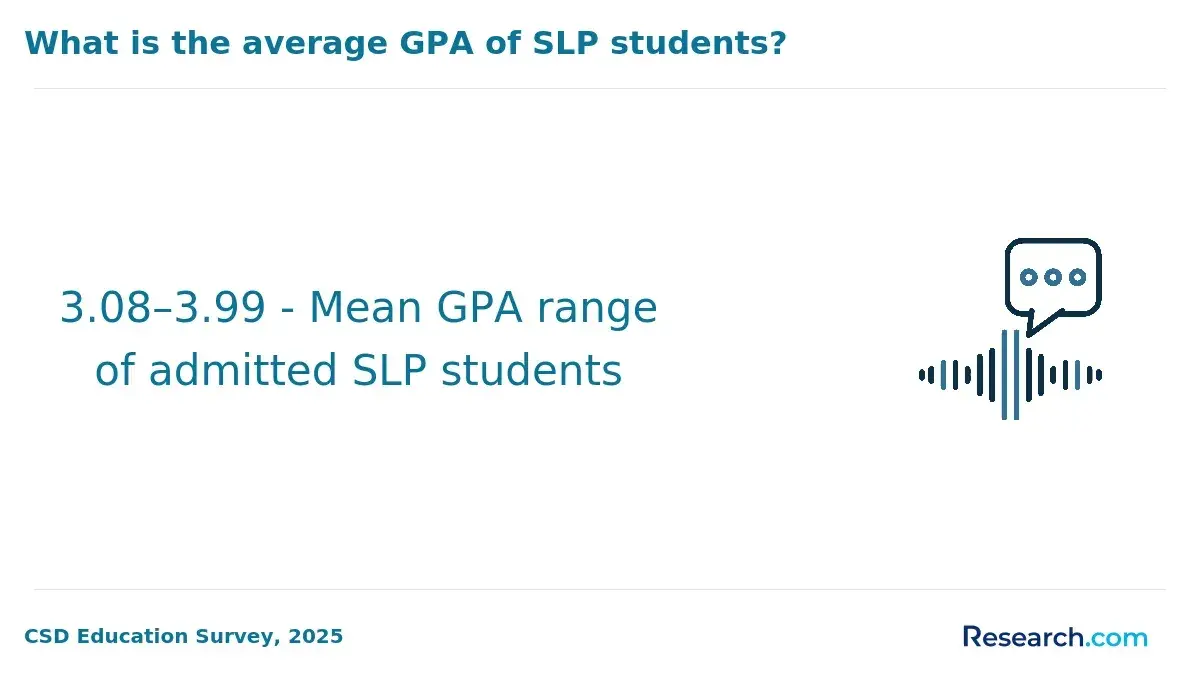
USAHS does not consistently publish an acceptance rate or a class-wide admitted GPA that would allow a reliable numerical assessment of selectivity. Applicants should therefore treat the program as selective by capacity and clinical-readiness standards rather than infer odds from general graduate-school statistics. A completed application that meets minimum requirements is not the same as an admission offer.
Entry-level MS-SLP programs normally require a bachelor's degree and academic preparation in communication sciences and disorders or specified prerequisite subjects. USAHS's current admissions materials should control for exact prerequisites, minimum GPA, transcript evaluation, observation-hour expectations, references, personal statement requirements, interview procedures, and whether GRE scores are required or optional for the intended cohort.
Before applying, use this checklist to identify gaps that can delay enrollment or weaken an application.
- Request official transcripts early and compare every completed course with the program's current prerequisite list.
- Ask admissions whether missing prerequisites may be completed before enrollment, during a designated leveling period, or must be finished before application review.
- Confirm whether the program accepts applicants from your state and whether your chosen campus or hybrid cohort is available for your start term.
- Prepare examples that show communication skills, cultural responsiveness, ethical judgment, academic resilience, and understanding of the SLP role.
- Submit health, background-check, and clinical-readiness documentation on time if admitted, since clinical sites may impose separate deadlines.
Applicants from non-CSD majors should pay particular attention to leveling coursework. A strong overall GPA does not replace required content in areas such as phonetics, language development, anatomy and physiology of speech and hearing, audiology, or speech and hearing science when those courses are required. Conversely, completing prerequisites does not by itself establish readiness for a compressed graduate clinical curriculum.
A practical admissions question is not merely "Can I get in?" but "Can I begin on time without adding expensive prerequisite semesters?" Prospective students seeking a broad view of admissions accessibility can review a speech language pathologist degree guide, then verify every program's current requirements directly with the institution.
What clinical practicum and externship experiences does the USAHS hybrid MS-SLP provide in speech-language pathology?
Clinical education is the part of the MS-SLP that converts academic study into supervised practice. Students typically develop skills in screening, assessment, treatment planning, documentation, counseling, interprofessional communication, and ethical decision-making with clients across ages and communication needs. Exact clinical rotations vary because they depend on site availability, client populations, student progress, and program requirements.
For ASHA certification planning, students generally need a graduate degree from a CAA-accredited program, required knowledge and skills, and at least 400 supervised clinical practicum hours, including at least 375 direct client contact hours and 25 guided observation hours. The graduate program should document how its clinical curriculum meets applicable standards, but students should keep their own accurate records and understand that state licensure may impose additional requirements.
Clinical education commonly progresses from structured learning toward more independent participation under supervision. The sequence below explains why externship logistics can be more demanding than online coursework.
| Stage | Primary purpose | Student planning implication |
| Guided observation and simulation | Learn professional behaviors, clinical procedures, and documentation expectations | May include scheduled activities that cannot be completed entirely at the student's convenience. |
| On-campus or university-linked practicum | Practice assessment and intervention under close faculty or approved-supervisor guidance | Expect competency checks, feedback, preparation time, and strict attendance expectations. |
| Community clinical placement | Serve clients in settings such as schools, medical facilities, outpatient practices, or other approved sites | Hours, commute, population, and schedule depend on site availability rather than student preference alone. |
| Externship | Build breadth and greater clinical independence under qualified supervision | Often requires substantial weekday availability and may conflict with full-time employment. |
Before committing, ask USAHS how it assures adult and pediatric exposure, what settings are commonly available near your home, whether placements may occur outside your immediate area, and how a delayed or unsuccessful placement affects progression. Students should also ask whether they are responsible for transportation, parking, professional attire, site onboarding, and any relocation costs.
Is the University of St. Augustine MS-SLP program properly accredited for ASHA certification and state licensure?
Accreditation is the first nonnegotiable check for an aspiring speech-language pathologist. The relevant specialized accreditor is the Council on Academic Accreditation in Audiology and Speech-Language Pathology (CAA), which is part of the American Speech-Language-Hearing Association (ASHA). USAHS lists its MS-SLP program as CAA-accredited; however, accreditation status, location coverage, and any conditions should always be confirmed in the current ASHA CAA program directory and in USAHS's current disclosure materials before depositing.
CAA accreditation supports the educational component of the pathway to ASHA's Certificate of Clinical Competence in Speech-Language Pathology, commonly called the CCC-SLP. It does not by itself issue a credential, guarantee certification, or grant a state license. Graduates must meet all applicable certification requirements, including supervised post-graduate clinical fellowship requirements and the Praxis examination, while state boards control licensure.
The distinction below prevents one of the most consequential enrollment mistakes: treating school accreditation as an automatic professional license.
| Requirement | Who controls it | What it means for a USAHS student |
| Program accreditation | CAA | Verify that the specific MS-SLP program and delivery location are currently accredited. |
| Graduate degree and practicum preparation | USAHS and CAA standards | Complete required academic and clinical components in good standing. |
| National professional certification | ASHA | Meet ASHA's current CCC-SLP standards after graduation, including applicable examination and fellowship requirements. |
| Authority to practice | State licensing board | Meet the rules of the state where you intend to work; requirements may differ from ASHA certification standards. |
Students who intend to work in schools may also need a state education credential, school-service credential, or educator certification that is separate from health-profession licensure. If you plan to move after graduation, check the destination state before enrolling rather than assuming your initial state's rules will transfer without additional steps.
How does USAHS hybrid MS-SLP placement support students in securing quality clinical sites and supervisors?
In a hybrid MS-SLP, clinical placement support is a core service, not a minor administrative feature. USAHS coordinates clinical education through its program processes and affiliation network, but a school's effort to assist does not mean a student can select any site, receive a placement close to home, or avoid travel. Affiliation agreements, supervisor availability, client mix, onboarding requirements, and state rules can all limit options.
Quality supervision matters because students need feedback from professionals who meet program and professional standards. The best way to evaluate USAHS's support is to ask for operational details rather than relying on a general statement that placements are arranged.
- Does USAHS secure every required placement, or must students identify potential sites and supervisors themselves?
- How far from a student's residence can an assigned clinical site reasonably be located?
- What happens if a preferred site cannot execute an affiliation agreement or loses supervisor capacity?
- How does the program verify supervisor qualifications and provide faculty oversight?
- How often do placements delay a student's planned graduation date, and what support is offered if that occurs?
A student with geographic limits should disclose them before enrolling and ask for a written explanation of what the program can and cannot accommodate. This is especially important for rural students, students who work full time, caregivers, and people living in states with a limited supply of SLP clinical sites. A placement model can be suitable even if it is not local, but only if the potential commute, housing, schedule, and financial effects are manageable.
What technology platforms, course delivery methods, and scheduling model define the "hybrid" MS-SLP experience at USAHS?
The hybrid experience depends on more than having a laptop. Students should expect a learning-management system for modules, assignments, announcements, assessments, and grades, along with video-conferencing tools for live meetings, virtual office hours, group work, or guest instruction. USAHS determines its current approved platforms, browser specifications, device standards, and technical-support procedures.
Do not assume that online coursework is self-paced. Cohort-based health-professions programs often use weekly deadlines, group projects, live sessions, proctored examinations, and fixed clinical schedules. Even when lectures can be viewed asynchronously, client care, labs, competency evaluations, and externships normally occur at scheduled times.
Before accepting admission, obtain answers to these scheduling questions in writing:
- Which courses require live attendance, and are meeting times set in Eastern, Central, or another time zone?
- How many campus visits are required, where are they held, and when are the dates released?
- Can students remain employed during didactic terms, and what work limitations become realistic during practicum and externship?
- What internet speed, camera, microphone, computer, and privacy setup are required for online participation?
- What is the policy if a clinical site schedule conflicts with a class, lab, or required campus event?
A hybrid MS-SLP is often strongest for organized students who can manage frequent deadlines independently but still value in-person skill development. It is less suitable for applicants whose work, caregiving, disability-access, military, or geographic circumstances make fixed travel and daytime placement demands infeasible without a documented accommodation or support plan.
How do student outcomes, Praxis pass rates, and employment results for USAHS MS-SLP compare with other programs?
The most meaningful outcome data for an MS-SLP are completion rate, Praxis pass rate, employment rate, and the time period and cohort size behind each measure. CAA-accredited programs are expected to make outcome information available, but results should be interpreted carefully: a small cohort, a short reporting window, and different definitions of employment can make direct comparisons misleading.
USAHS applicants should request the most recent published outcome report for the exact MS-SLP program and compare it with the same reporting period from other accredited programs. If a school reports a result without its cohort size, denominator, measurement date, or definition, ask for clarification before treating it as evidence of superior outcomes.
This comparison framework keeps outcome claims comparable rather than promotional.
| Measure | What to compare | How to use it |
| On-time completion | Number completing within the stated time frame and cohort size | Shows whether the advertised pace appears attainable under the program's actual requirements. |
| Praxis pass rate | First-time and overall pass rates, testing period, and number of test takers | Indicates exam readiness, but does not measure clinical fit or guarantee an individual result. |
| Employment rate | Definition of employment, reporting date, job type, and response rate | Helps assess transition to work, but does not establish salary, hours, location, or job satisfaction. |
| Program size and support | Faculty access, advising, remediation policies, and clinical-placement process | Provides context that outcome percentages alone cannot reveal. |
The career outlook supports careful program selection rather than a rushed enrollment decision. The U.S. Bureau of Labor Statistics projects 17% employment growth for speech-language pathologists from 2025 to 2035 and about 12,500 annual openings on average over that period. Demand can improve job prospects, but it does not eliminate state licensing requirements, hiring variation, or the importance of a successful clinical fellowship.
Compensation also differs sharply by setting, region, experience, and caseload. Readers evaluating settings and advancement options can explore highest paying SLP jobs, while recognizing that a national pay discussion cannot predict an individual graduate's offer.
What consumer-protection, complaint, and state authorization safeguards apply to USAHS MS-SLP students?
Students in hybrid and online programs are protected by several overlapping systems, but those systems do not replace personal verification. USAHS should provide consumer information on tuition, financial aid, refunds, academic policies, grievances, and professional licensure disclosures. The university's state-authorization status determines whether it may offer distance education to residents of particular states, while individual state licensing boards determine eligibility to practice.
Start with the university's internal complaint process. Keep copies of enrollment agreements, catalogs, financial-aid documents, emails about clinical placements, and any disclosures about your state. If an issue is not resolved through the institution's process, the appropriate external avenue may be the school's state regulator, the agency identified in the university's complaint disclosure, an accreditor for accreditation-related concerns, or a state licensing board for licensure questions.
These safeguards address different problems, so students should direct questions to the correct authority.
| Issue | Best first contact | Key document to retain |
| Billing, refunds, or financial aid | USAHS financial aid or student accounts office | Official cost estimate, aid offer, loan notices, and refund policy |
| Academic progression or grade dispute | Program director and formal university grievance channel | Course syllabus, grading records, and written communications |
| Clinical-site concern | Clinical education office and program leadership | Placement agreement, supervision records, and site communications |
| Licensure eligibility | Licensing board in the intended practice state | State board response and program licensure disclosure |
State authorization and professional licensure are related but separate. A school may be authorized to educate a resident of a state without making a blanket promise that every graduate meets every professional requirement in that state. Obtain the current USAHS disclosure for your residence state and contact the state board directly if your circumstances include prior convictions, a planned move, school-based practice, or another factor that could affect eligibility.
For whom is the University of St. Augustine hybrid MS-SLP a good fit, and what are key red flags to consider?
USAHS may be a good fit for a student who wants a structured cohort, can participate in required in-person experiences, values online access for academic coursework, and is prepared for an intensive full-time clinical curriculum. It can be particularly practical when the available campus and clinical-placement arrangements are geographically workable and the student has a realistic financial plan.
It may be a weaker fit for someone who needs a fully online, self-paced degree; cannot travel; requires guaranteed placement in one city; plans to work full time throughout clinical training; or has not confirmed state eligibility. A hybrid structure can reduce some commuting but cannot remove the direct-contact and supervision requirements built into entry-level SLP preparation.
The following red flags deserve resolution before a deposit is paid.
- The university cannot provide a clear written estimate of tuition, mandatory fees, travel expectations, and likely clinical-related expenses for your cohort.
- You have not confirmed CAA accreditation for the applicable program, current state authorization for your residence, and licensure compatibility for your intended practice state.
- You are relying on an assumption that practicum or externship will be near home, fit around a full-time job, or occur in a preferred medical or school setting.
- You do not know whether prerequisite deficiencies will add time or tuition before graduate coursework begins.
- The school provides outcome percentages but cannot explain the reporting period, cohort size, definitions, or placement-support process behind them.
The best next step is to compare USAHS with at least two other CAA-accredited programs using the same fields: total estimated cost, format, required travel, expected completion time, prerequisites, placement responsibility, published outcomes, and state disclosures. Choose the program that makes your path to graduation, certification, and state licensure most feasible - not simply the one with the most convenient marketing label.
Other Things You Should Know About Speech Language Pathology
Some students work during portions of the academic curriculum, but full-time employment can become difficult during labs, practicum, and externships because those obligations are often scheduled during standard business hours. Ask USAHS for a sample term schedule and clinical-hour expectations before depending on employment income.
State licensure is generally required to practice, while the CCC-SLP is a national professional certification that many employers value or require. Requirements vary by state and setting. School-based positions may also require a separate education credential.
Request a prerequisite evaluation from USAHS. You may need foundational coursework before beginning graduate study. Confirm which courses are missing, whether they must be completed before admission, and how they affect your budget and start date.
After graduation, many states require a supervised clinical fellowship or equivalent post-graduate experience and a passing Praxis score before full licensure. The timeline depends on state rules, employment availability, supervision, and when you complete each requirement.
References
- Guide to Speech-Language Pathologist Education | USAHS https://www.usa.edu/blog/speech-pathologist-schooling/
- University of St. Augustine for Health Sciences on Instagram... https://www.instagram.com/reel/DVMgw3_oKg3/