2027 Graduate Assistantships for SLP Students: Compare Funding and Work Requirements

Co-Founder and Chief Data Scientist

Reviewed by Rhea Paul, PhD
SLP Education & Research Expert
Graduate assistantships can reduce the cost of an SLP master's degree, but the best offer is not always the highest stipend. A role that conflicts with clinic, practicum, or coursework can delay progress or increase stress. This guide helps prospective and current speech-language pathology students compare funding packages, workload expectations, benefits, renewal rules, and alternatives so they can choose support that fits both their budget and clinical-training schedule.
Key Things You Should Know
- SLP assistantships commonly require 10 to 20 work hours per week; a tuition waiver may be worth more than a larger cash stipend, especially at higher-cost universities.
- Clinical clock-hour and practicum obligations can make a 20-hour assistantship difficult during placement-heavy terms, so students should compare the total weekly commitment before accepting.
- Get every funding term in writing, including stipend amount, tuition-remission percentage, fees excluded from the waiver, health insurance, appointment dates, performance standards, and renewal conditions.
How do SLP graduate assistantships work and what types of funding do they offer?
An SLP graduate assistantship is a paid university appointment in which a graduate student performs assigned work in exchange for compensation. The work may support a communication sciences and disorders department, faculty research lab, campus clinic, undergraduate course, administrative office, or another university unit. Assistantships are not automatic financial aid: availability, selection criteria, work expectations, and funding levels vary substantially by institution.
Most offers combine one or more forms of support. Students should separate cash compensation from reductions in billed educational costs, because a role with a modest stipend and substantial tuition remission can be financially stronger than a larger hourly job with no waiver.
| Funding component | How it typically works | What to verify |
| Stipend | A fixed payment for an academic term or year, often paid through payroll. | Total amount, payment schedule, taxes, summer funding, and whether the amount changes with appointment level. |
| Hourly wages | Pay is based on recorded hours worked, often for a research, clinic-support, or departmental role. | Hourly rate, maximum weekly hours, whether hours are guaranteed, and whether work continues during breaks. |
| Tuition waiver or remission | The university covers all or part of eligible tuition charges. | Percentage or credit limit, resident versus nonresident tuition treatment, and whether the award applies to summer. |
| Fee support | Some programs cover selected mandatory fees; many do not. | Which fees remain, including student services, technology, clinic, course, health, parking, and program fees. |
| Health insurance contribution | The university may subsidize or require enrollment in a student health plan. | Premium amount paid by the student, dependent coverage, deductibles, and eligibility during summer. |
| Professional-development support | Limited funding may be available for conferences, research travel, or required materials. | Whether funds are guaranteed, reimbursement rules, and whether clinical supplies are included. |
A tuition waiver is often taxable or subject to tax rules that differ by institution and circumstance. Students should ask the university payroll or tax office how the award is treated rather than assuming the full advertised value will be tax-free.
Assistantships can be especially useful for students comparing campus-based programs with online speech pathology programs. Online study may lower relocation costs for some learners, while a campus appointment may offset tuition more directly. The better choice depends on the complete cost of attendance, not tuition alone.
What are typical work hour and duty requirements for SLP graduate assistants?
Graduate assistant appointments are commonly expressed as a fraction of a full-time workload or as a weekly-hour expectation. A half-time appointment frequently means about 20 hours per week, while a quarter-time appointment may mean about 10 hours. However, universities define appointment percentages differently, so the written contract controls.
Before accepting, ask for a plain-language duty description and a realistic estimate of busy periods. The following comparison shows why the title "graduate assistant" alone is not enough to predict whether an assignment will fit an SLP schedule.
| Assistantship setting | Typical duties | Scheduling predictability | Potential conflict with SLP training |
| Teaching assistant | Grading, holding office hours, preparing course materials, leading review sessions, or supporting labs. | Moderate; deadlines can cluster around exams and grading periods. | Higher when required office hours or labs overlap with clinic assignments. |
| Research assistant | Recruiting participants, coding data, literature review, transcription, lab management, and study coordination. | Varies by project and principal investigator. | Moderate; participant appointments and study deadlines may be inflexible. |
| Clinical-support assistant | Preparing materials, supporting clinic operations, organizing records, or assisting with non-clinical administrative tasks. | Often tied to clinic hours. | Higher during in-house clinical practicum if assignments share the same time blocks. |
| Departmental or administrative assistant | Event support, communications, scheduling, reception, data entry, and student-services tasks. | Usually more predictable during business hours. | Moderate; daytime work can compete with classes and placements. |
Students should not treat an assistantship as a fixed "extra" block of time. Course preparation, readings, clinical documentation, travel, and patient preparation also consume time outside scheduled classes. A manageable 10-hour role can become unsustainable if it includes irregular evening work, unplanned grading surges, or vague availability expectations.
Common red flags include a supervisor who cannot identify expected hours, duties described as "as needed" without a cap, unpaid tasks beyond the appointment, or a promise of funding without a formal appointment letter. Ask whether the department tracks work hours, who approves additional work, and how conflicts with mandatory clinical obligations are resolved.
How can SLP students compare assistantship stipends, tuition waivers, and benefits across programs?
Compare assistantships as annual net-cost packages rather than as stipend headlines. First calculate what the university will bill after remission, then add unavoidable fees and living costs, and finally subtract the pre-tax stipend or expected wages. This approach prevents a partial waiver from looking equivalent to full tuition coverage.
Use the same worksheet for every offer. The fields below identify the information that makes packages comparable without pretending that every school prices tuition or benefits in the same way.
| Comparison field | Offer A | Offer B | Why it matters |
| Appointment period | Record start and end dates | Record start and end dates | A nine-month award may leave a summer funding gap. |
| Guaranteed pay | Record stipend or hourly earnings estimate | Record stipend or hourly earnings estimate | Distinguish fixed funding from hours that may not be available. |
| Tuition remission | Record covered credits and percentage | Record covered credits and percentage | Credit caps and excluded tuition categories can change value. |
| Required fees still owed | Record itemized estimate | Record itemized estimate | Fees can materially affect out-of-pocket cost. |
| Health insurance cost | Record student premium share | Record student premium share | Coverage is valuable only if premiums and eligibility work for the student. |
| Weekly work expectation | Record contracted hours | Record contracted hours | Time demand affects clinical scheduling and the need for outside income. |
| Renewal terms | Record criteria and duration | Record criteria and duration | First-year funding does not necessarily continue through graduation. |
For a practical comparison, request each program's current tuition-and-fee schedule and ask whether remission applies before or after any other institutional award. Also confirm whether accepting a scholarship reduces the waiver, whether the assistantship requires full-time enrollment, and whether a dropped course can end eligibility.
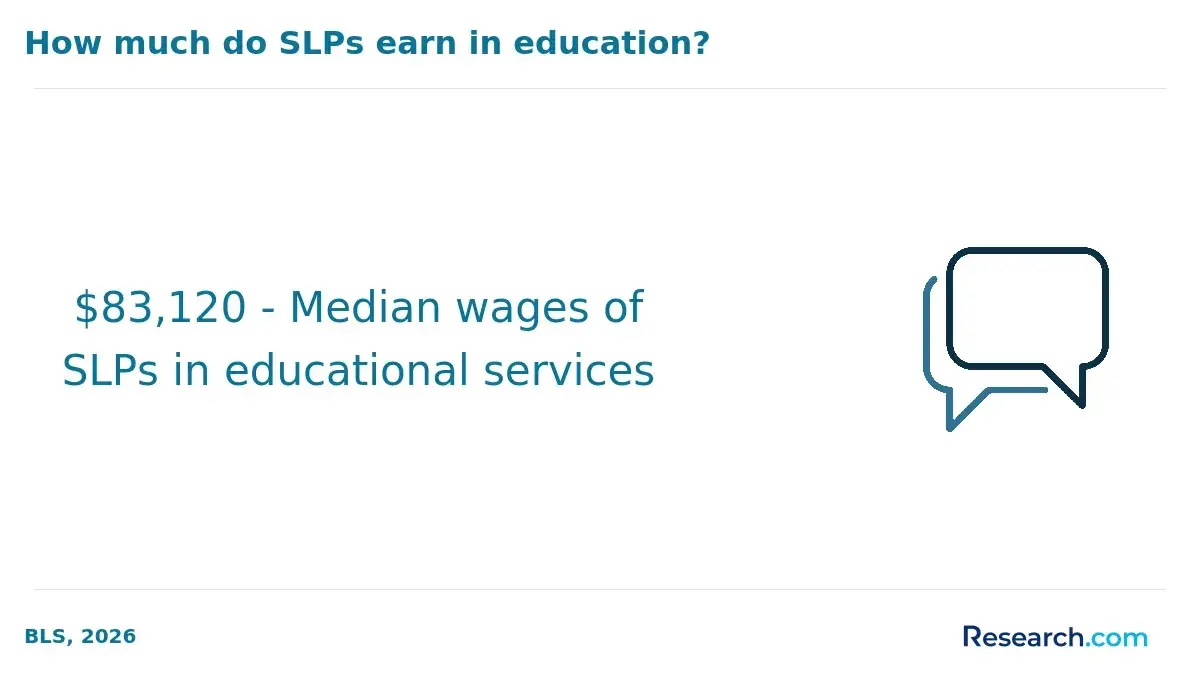
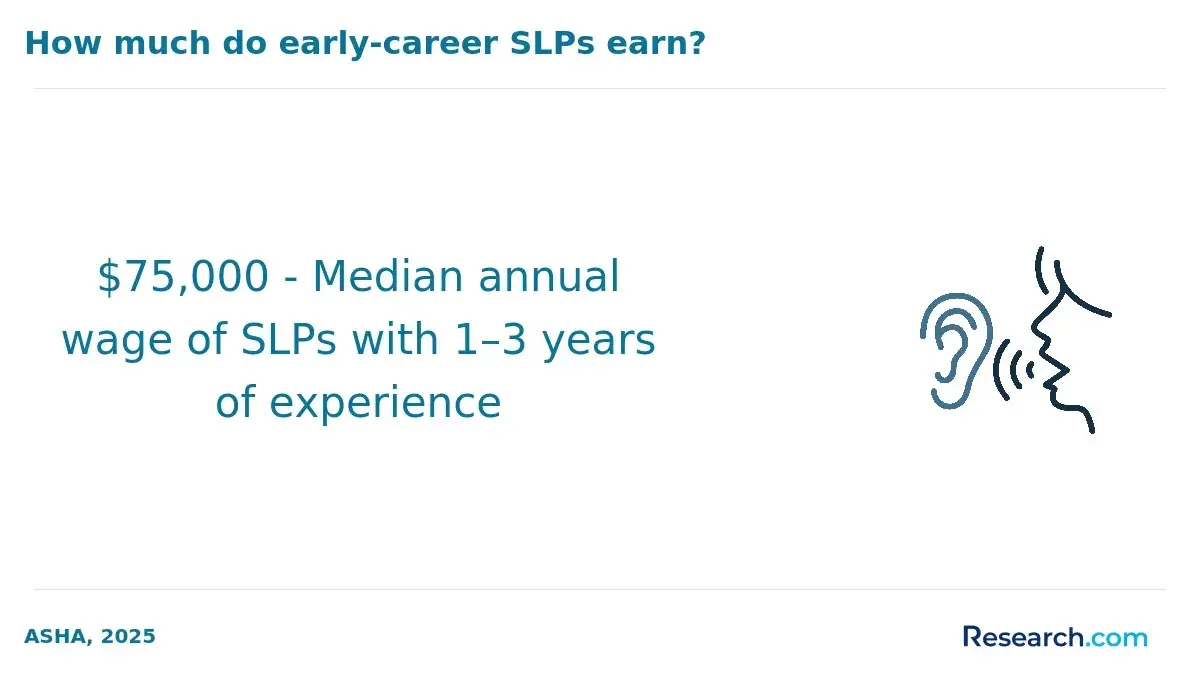
Do not compare a stipend to career earnings as though the stipend is a long-term salary. The Bureau of Labor Statistics reports a $97,870 median annual wage for speech-language pathologists in May 2025. That labor-market figure can support long-range planning, but it does not make a high-debt or overload-heavy graduate-school choice automatically worthwhile. Students can explore eventual practice settings through this overview of highest paying SLP jobs, while remembering that pay varies by employer, location, experience, and role.
Which SLP programs commonly offer fully funded assistantships versus partial funding or hourly roles?
There is no universal funding model for master's-level SLP education. Research-intensive universities with externally funded faculty projects may offer more research roles, while clinical master's programs may have limited assistantships because students spend extensive time in coursework and practica. "Fully funded" should mean that the written package covers eligible tuition and required fees to the stated extent while also providing enough living support for the student's circumstances; it should never be assumed from a promotional phrase.
The funding pattern below is a decision framework, not a guarantee about any individual program. Applicants should verify availability directly with the department and graduate school for their entering cohort.
| Funding pattern | What it may include | Who it may fit | Main caution |
| Comprehensive assistantship package | Stipend plus major tuition remission and, in some cases, health-insurance support. | Students able to meet a structured work commitment and potentially select from limited placements or roles. | May be competitive, limited to certain years, or exclude fees and summer enrollment. |
| Partial assistantship | Smaller stipend, limited tuition waiver, or appointment for a portion of the academic year. | Students with savings, family support, scholarships, or a lower local cost of living. | Can still leave substantial tuition, fee, and living expenses. |
| Hourly campus role | Pay for recorded work without tuition remission. | Students who need flexibility or who cannot obtain a formal assistantship appointment. | Hours may fluctuate and pay may not reduce billed tuition. |
| Scholarship-centered funding | Merit, need-based, donor, or diversity-focused awards with no employment requirement. | Students whose practicum schedule leaves little room for employment. | Award renewal, restrictions, and amounts can vary widely. |
Applicants seeking extensive funding should broaden their search beyond programs that advertise low tuition. Ask each department how many admitted master's students received an assistantship in the most recent entering class, whether awards are guaranteed or competitive after enrollment, and whether second-year students remain eligible. A program may be academically strong yet offer little funding for clinical master's students.
An accelerated format can reduce the number of terms in which tuition is charged, but it may also compress clinical and academic demands. Before choosing an accelerated SLP master's program, compare the pace against the likelihood that an assistantship will fit alongside required placements.
How do clinical, teaching, and research assistantships in SLP differ in responsibilities and time demands?
The best assistantship depends partly on what you want from graduate school beyond funding. Teaching roles can build instructional and communication skills, research roles can strengthen preparation for doctoral study or evidence-based practice, and clinic-related roles can deepen familiarity with operations. Yet none of these roles should be confused with supervised clinical practicum unless the program explicitly identifies the work as approved clinical education.
Consider both professional value and calendar fit when choosing among role types.
| Role type | Primary responsibilities | Potential professional value | Time-demand pattern |
| Teaching assistant | Support faculty instruction, student questions, grading, and learning activities. | Useful for students considering academic teaching, mentoring, or future faculty work. | Can spike around assignment due dates, examinations, and semester-end grading. |
| Research assistant | Contribute to faculty studies, data management, recruitment, analysis support, or dissemination. | Useful for doctoral exploration, research literacy, and exposure to specialty topics. | Can be flexible for desk-based tasks but less flexible during recruitment or data-collection phases. |
| Clinical-support assistant | Assist non-clinical clinic administration, materials, workflows, or service coordination. | Useful for understanding clinic systems and interdisciplinary practice settings. | Often follows daytime clinic operations and may overlap with practicum schedules. |
| Administrative assistant | Support departmental projects, events, communications, and student-facing services. | Useful for broadly transferable organization and professional communication skills. | Usually steady but may require presence during fixed business hours. |
A research assistantship is often the best fit for a student considering a PhD or seeking a faculty mentor, provided the work schedule is flexible. A teaching or administrative role can be more predictable for students who want defined responsibilities. A clinic-support assignment may be valuable but requires especially careful scheduling because clinic time is often fixed.
Students should ask whether duties can be completed remotely, whether meetings are mandatory, how responsibilities change during finals, and whether the supervisor will accommodate unavoidable practicum conflicts. The answer matters more than the role label.
How do graduate assistantship workloads interact with SLP clinic clock hours and practicum requirements?
SLP students usually complete a demanding combination of academic courses, clinical practicum, client preparation, documentation, supervision meetings, and required clinical hours. Assistantship work is separate unless the university specifically approves an activity for clinical credit. Students should never assume that paid clinic-related tasks count toward practicum requirements.
The American Speech-Language-Hearing Association's certification standards include supervised clinical practicum expectations, but each program determines how its curriculum, placements, supervision, and scheduling operate. External placements can add commute time, early starts, evening obligations, and schedule changes that are hard to reconcile with fixed assistantship shifts.
Use this sequence before committing to an appointment:
- Request the likely course and practicum schedule for the term, including anticipated days, start times, travel expectations, and intensive weeks.
- Map the assistantship's required hours against that schedule and reserve additional time for documentation, lesson planning, readings, and exam preparation.
- Ask the clinical education director and assistantship supervisor how a placement conflict is handled and obtain any agreed flexibility in writing.
- Revisit the arrangement before each semester because second-year externships may have different hours and locations than first-year campus clinic.
A manageable plan has contingency room. Students who need a predictable schedule may prefer a lower-hour assistantship, scholarship support, or an hourly job with shifts that can be changed around placements. A higher-paying role is not a net benefit if it causes delayed clinic completion, academic difficulty, or loss of eligibility for the appointment.
What assistantship options exist for first-year versus second-year SLP students, including CFY pathways?
First-year students may have more classroom-based time but also face the adjustment to graduate-level coursework and early clinical training. Second-year students often move into more intensive externships, which can reduce availability for fixed campus jobs. Funding can therefore shift by year even when a program advertises assistantship opportunities for master's students.
| Stage | Common funding considerations | Best questions to ask |
| Before enrollment | Offers may be tied to admission, faculty needs, or a separate application. | Is funding guaranteed, competitive, or awarded after students arrive? Is it renewable? |
| First year | Teaching, research, and departmental roles may align with more campus-based coursework. | Can the appointment be adjusted once clinic assignments are released? |
| Second year | Off-campus placements can limit availability for daytime work and increase travel demands. | Does the assistantship continue during externship terms, and can duties be remote or evening-based? |
| Clinical fellowship transition | A Clinical Fellowship is paid post-graduate professional employment, not a university assistantship. | What licensure and certification steps, supervision arrangements, and state-specific requirements apply after graduation? |
A Clinical Fellowship, often called a CF or CFY in informal conversation, should be evaluated as an employment decision. It is distinct from a graduate assistantship and should not be counted on to fund tuition already incurred. The Bureau of Labor Statistics projects 17% employment growth for speech-language pathologists from 2025 to 2035, with about 12,500 openings annually on average; this supports a favorable demand outlook but does not eliminate the need to compare specific fellowship wages, supervision quality, benefits, and state requirements.
Students who need funding beyond the first year should ask for historical patterns rather than relying on verbal reassurance. Ask how many current second-year students hold appointments, whether positions are re-posted annually, and whether satisfactory performance alone guarantees renewal.
How can SLP students verify assistantship offers, contracts, and labor protections at their university?
Verification protects students from misunderstandings about funding, workload, and eligibility. A reliable offer should identify the employing unit, supervisor, appointment dates, expected workload, compensation, waiver terms, and conditions for continuation. Admissions staff can explain an offer, but the graduate school, human resources office, payroll office, and applicable graduate employee union or labor office may control different parts of the arrangement.
Before accepting, request and retain the following records:
- A formal appointment or offer letter stating the job title, appointment percentage or weekly hours, pay, start and end dates, and employing department.
- Written tuition-remission terms identifying covered credits, excluded charges, enrollment requirements, and whether the waiver applies in summer.
- A duty description with the supervisor's name, expected schedule, performance standards, and procedure for approving workload changes.
- Current graduate assistant policies covering leave, health insurance, grievances, safety training, employment eligibility, and termination or nonrenewal.
- Any collective bargaining agreement or graduate employee handbook that applies to the appointment.
Confirm whether you are classified as an employee, a trainee, or both. That classification can affect payroll taxes, benefits, worker protections, eligibility for unemployment insurance, and grievance procedures. International students should also confirm work authorization and enrollment rules with the university's international student office before accepting additional employment.
A major mistake is treating a departmental email as a complete contract. If a material term is missing, ask for clarification before accepting. Another mistake is assuming an assistantship automatically confirms program quality or professional eligibility. Applicants should still verify accreditation status, state licensure disclosures, clinical placement structure, and whether the curriculum supports their intended path.
What strategies help SLP students negotiate workloads, renew funding, or switch assistantship roles?
Most graduate assistantship terms are constrained by university policy and department budgets, so negotiation usually works better when it focuses on clarity, schedule feasibility, and role fit rather than a demand for a higher stipend. Begin early, be specific, and document agreed changes.
These steps can help students protect their academic and clinical progress while remaining professional employees:
- Review the appointment letter before the semester begins and identify conflicts with known classes, clinic blocks, externship travel, or medical obligations.
- Meet with the supervisor promptly, explain the concrete conflict, and propose workable alternatives such as different office hours, remote tasks, redistributed shifts, or a lower appointment level.
- Track actual hours and duties for several weeks if workload exceeds the stated expectation; use factual records rather than general impressions in follow-up conversations.
- Ask about renewal dates, evaluation criteria, and available roles at least one term before the appointment ends.
- Build a transition plan if the role no longer fits, including scholarship applications, a different campus position, reduced borrowing needs, or a revised budget.
Renewal is strongest when students meet work expectations, communicate early about conflicts, and understand departmental timelines. Still, good performance may not overcome lost grant funding, a faculty member's leave, or a reduced department budget. Treat renewal as possible, not guaranteed, until it appears in a new written appointment.
Students considering a switch should compare the new role's actual schedule and waiver value rather than assuming that a more relevant title is better. A research role may improve mentorship opportunities, while a flexible administrative appointment may better protect time for clinic and coursework. Applicants who are still choosing programs can also review admissions accessibility through these online speech pathology programs, then evaluate each school's funding and licensure disclosures independently.
How do assistantships compare with scholarships, loans, and part-time work for funding SLP graduate school?
Assistantships are only one part of an SLP funding strategy. Their core advantage is that they may combine pay with tuition remission; their core trade-off is time. Scholarships preserve more schedule flexibility, loans provide immediate access to funds but increase repayment obligations, and outside work may offer higher wages but can be harder to coordinate with clinic requirements.
This comparison can help students match a funding source to their financial needs and available time.
| Funding option | Main advantage | Main trade-off | Often best for |
| Graduate assistantship | May provide income and tuition support in one package. | Requires work hours and may have rigid schedules or uncertain renewal. | Students who can integrate university work with clinical training. |
| Scholarship or grant | Generally does not require employment and does not need repayment when award conditions are met. | May be limited, competitive, restricted, or nonrenewable. | Students with placement-heavy schedules or strong eligibility for awards. |
| Federal student loans | Can cover eligible educational costs when other aid is insufficient. | Must be repaid with interest; borrowing can accumulate across graduate study. | Students with a documented repayment plan and limited work capacity. |
| Part-time off-campus work | May offer schedule choice or higher hourly compensation. | Usually does not reduce tuition and can conflict with placements or studying. | Students with flexible hours and manageable commute demands. |
| Family savings or employer support | May reduce borrowing and employment pressure. | Availability varies and may have personal or employment commitments. | Students with reliable external support and clear terms. |
A sensible plan often combines sources: for example, a modest assistantship, targeted scholarships, and limited borrowing for remaining required costs. Start with the school's official cost-of-attendance budget, then replace estimates with your likely housing, transportation, insurance, and clinical travel costs. Avoid relying on an outside job to cover an assumed shortfall until you know your practicum schedule.
The most costly mistake is accepting an assistantship based only on tuition remission while ignoring the cost of fees, living expenses, health insurance, and lost time. The best package is the one that makes degree completion financially realistic without jeopardizing academic performance, clinical competence, or well-being.
Other Things You Should Know About Speech Language Pathology
Usually no. Paid assistantship duties and supervised clinical practicum are separate unless your program formally approves an activity as clinical education. Ask the clinical education director, not only the assistantship supervisor, whether any work counts toward required hours.
Sometimes, but availability is more limited when students live away from campus or complete local placements. Ask whether remote work is permitted, whether the appointment requires campus presence, and whether tuition remission applies to the online program.
Not necessarily. A waiver may cover tuition while excluding mandatory university, clinic, technology, health, course, parking, or student-service fees. Request an itemized estimate of charges you will still owe.
Not automatically. A 20-hour appointment can work when duties are predictable and the clinical schedule is compatible. Consider declining or requesting a reduced appointment when fixed shifts conflict with practicum, the role lacks clear workload limits, or the package does not sufficiently reduce your net cost.
References
- How Are Fellowships Different from Assistantships? https://graduate.oregonstate.edu/finance/graduate-fellowships-and-scholarships/how-are-fellowships-different-assistantships
- Graduate Assistantship Application Form - Communication... https://cehs.unl.edu/secd/graduate-assistantship-application-form-communication-disorders/
- How to Pay for SLP Grad School: Funding Guide 2026 https://www.speechpathologygraduateprograms.org/blog/how-to-pay-for-slp-grad-school/