2027 Foreign-Trained Speech Therapists Seeking U.S. Graduate Education: Program Selection Guide

Co-Founder and Chief Data Scientist

Reviewed by Rhea Paul, PhD
SLP Education & Research Expert
Practicing speech therapy outside the United States does not automatically qualify someone to work as a U.S. speech-language pathologist (SLP). Most foreign-trained clinicians need a U.S.-aligned graduate degree, supervised clinical education, and state licensure. This guide helps internationally educated applicants determine whether to pursue a CAA-accredited master's program, complete prerequisite coursework first, or seek a state-specific credential review. It explains how to compare programs, protect eligibility for licensure, plan for clinical placements, and avoid expensive enrollment mistakes.
Key Things You Should Know
How should foreign-trained speech therapists evaluate U.S. graduate pathways in speech-language pathology?
Start by separating your professional goal from your current credential. A person who is fully licensed as a speech therapist abroad may still be treated as an applicant with a non-U.S. degree by American universities and licensing boards. The central question is not whether your overseas education was valuable; it is whether it maps to the education, clinical training, and documentation required for the U.S. state where you plan to practice.
For most applicants seeking independent clinical SLP practice in the United States, the practical route is a CAA-accredited master's degree in speech-language pathology or communication sciences and disorders. Programs review foreign degrees individually, so prior training may reduce prerequisite work but does not usually replace the graduate professional curriculum.
The following comparison can help you identify the pathway that matches your objective.
| Pathway | Best fit | Main advantage | Important limitation |
| CAA-accredited U.S. SLP master's degree | Applicants seeking broad U.S. licensure and ASHA certification eligibility | Most portable academic foundation for employment and licensing | Requires substantial time, tuition, clinical training, and competitive admission |
| Post-baccalaureate or leveling coursework, then a master's degree | Applicants missing U.S. prerequisite content | Builds academic eligibility before graduate admission | Usually adds time and cost; completion does not guarantee admission |
| State credential evaluation of foreign education | Applicants already licensed abroad who want to learn whether a state recognizes any education or experience | May clarify deficiencies before paying for a degree | Rules vary widely and may still require U.S. coursework, supervised practice, or a degree |
| Research, education, or support-role graduate study | Applicants not seeking independent clinical SLP practice | Can suit academic, research, or related-service interests | May not qualify the graduate for SLP licensure or clinical employment |
Use a written comparison file for every school. Record accreditation status, prerequisite gaps, total credits, clinical placement model, enrollment authorization in your intended state, international transcript process, estimated living costs, and visa support. A low tuition rate is not a meaningful bargain if the program cannot place you in a required practicum or does not support licensure where you intend to live.
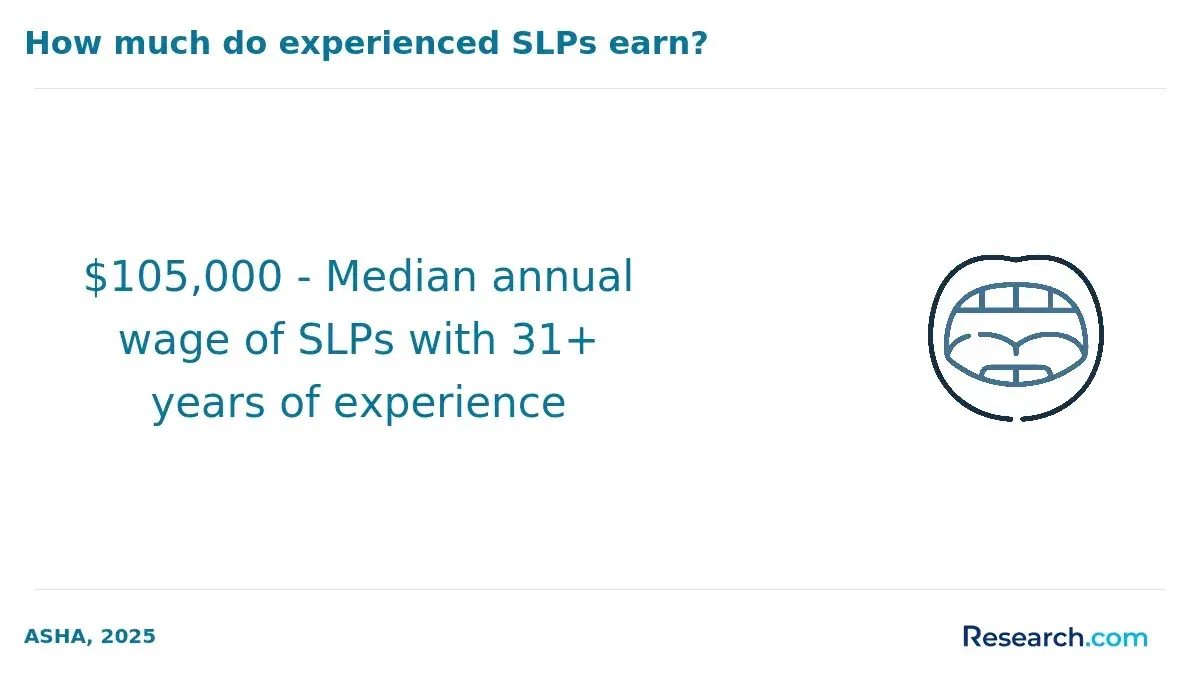
Applicants should also recognize the career opportunity without treating it as a guarantee. The U.S. Bureau of Labor Statistics reports a median annual wage of $97,870 for speech-language pathologists in May 2025. Actual earnings depend on setting, location, experience, caseload, payer mix, and whether the position requires a state license or additional credentials.
Which U.S. degrees and program types best match overseas speech therapy qualifications and goals?
The right degree depends on whether you need initial professional preparation or an academic supplement. For applicants who want to diagnose and treat communication or swallowing disorders as U.S. SLPs, a clinical master's degree from a CAA-accredited program is normally the appropriate target. A linguistics, special education, public health, or general communication degree may be intellectually useful, but it ordinarily does not substitute for professional SLP preparation.
These program types have distinctly different purposes.
| Degree or program type | Typical purpose | Appropriate for U.S. SLP licensure? | Who should consider it |
| MS or MA in speech-language pathology | Entry-to-practice clinical education with academic and practicum requirements | Usually, when the program is CAA-accredited and all state requirements are met | Foreign-trained therapists planning direct patient care in the United States |
| Post-baccalaureate CSD program | Completes foundational communication sciences and disorders coursework | No; it is preparatory rather than a qualifying clinical degree | Applicants whose transcript lacks required prerequisites |
| Second bachelor's degree in CSD | Provides a fuller undergraduate foundation | No; a qualifying master's degree is still needed | Applicants needing extensive academic rebuilding or structured advising |
| PhD in communication sciences and disorders | Research, teaching, and scholarly training | Not by itself | Applicants focused on research rather than initial clinical qualification |
| Certificate in a related topic | Focused professional development | Usually no | Licensed professionals adding a narrow skill area, subject to employer and state rules |
Applicants comparing SLP master's programs should treat admissions accessibility as only one factor. A program that is easier to enter may still be a poor choice if its schedule, prerequisite design, clinical placement requirements, or state disclosures do not fit your plan.
An accelerated curriculum can work for an applicant with all prerequisites completed, strong academic English, and the ability to study full time. It is usually a poor fit for someone who needs extensive leveling courses, must work full time, or needs extra time to adapt to U.S. clinical documentation and professional expectations.
What accreditation and state authorization checks must international SLP applicants perform before shortlisting programs?
Accreditation and authorization answer different questions. CAA accreditation evaluates whether a graduate SLP program meets professional education standards. State authorization concerns whether an institution may provide education to a student located in a particular state. Neither item alone confirms that you will qualify for licensure after graduation.
Before paying an application fee, complete the following checks in writing. They reduce the risk of selecting a program whose credentials cannot be used where you intend to practice.
- Confirm the program's current CAA status in ASHA's accreditation directory; distinguish accredited status from candidacy, applicant status, and non-accreditation.
- Read the school's professional licensure disclosure for the state where you will reside during the program and the state where you expect to seek a license.
- Ask whether the institution can enroll international students in your chosen format and whether it can issue the immigration documentation needed for on-campus attendance.
- Request a clear explanation of clinical practicum placement responsibilities, travel expectations, background checks, health requirements, and whether international students face placement restrictions.
- Review the intended state licensing board's current rules independently, including degree, examination, supervised fellowship, and English-language requirements where applicable.
Do not assume that a university's statement that its curriculum "meets educational requirements" means that every graduate will be licensed. Licensure boards may evaluate supervised experience, examination scores, criminal-history disclosures, clinical fellowship documentation, and application materials separately.
How do ASHA's CAA standards shape program selection and future licensure for foreign-trained therapists?
The Council on Academic Accreditation in Audiology and Speech-Language Pathology is ASHA's accrediting body for graduate professional programs. CAA accreditation matters because many employers, state boards, and the ASHA Certificate of Clinical Competence in Speech-Language Pathology (CCC-SLP) pathway rely on graduation from a CAA-accredited program or an equivalent route recognized under their rules.
CAA standards shape more than the program name. They require programs to demonstrate that students receive academic and clinical education across the scope of practice, are assessed for professional competencies, and have access to adequate clinical education. This is why an overseas degree that covered similar theory may not be deemed interchangeable with a CAA-accredited U.S. program.
For program selection, evaluate how each school operationalizes those standards. Strong questions include whether clinical education begins early or late in the curriculum, how adult and pediatric experiences are arranged, whether students are responsible for finding sites, what remediation support is available, and how faculty assess clinical readiness.
CAA accreditation is an essential risk-control factor, but it is not a promise of employment, CCC-SLP certification, immigration status, or a license in every jurisdiction. Use it as the baseline credential, then verify the licensing rules of your target state and the school's authorization to educate you there.
Which U.S. graduate programs offer structured pathways for internationally educated speech therapists and bridging students?
There is no single national "foreign-trained SLP bridge program" that automatically converts overseas qualifications into U.S. licensure. Instead, structured pathways usually combine individualized transcript review, prerequisite or leveling coursework, admission to a CAA-accredited clinical master's program, and support for practicum progression. The most useful programs are transparent about each part of that sequence.
Look for a school that can clearly identify which of the following supports it actually offers rather than relying on broad language about international students.
- Course-by-course evaluation procedures for international transcripts, including who must complete the evaluation and when it is due.
- A documented list of communication sciences and disorders prerequisites and a way to address missing courses before or after admission.
- Advising on academic English, clinical writing, cultural responsiveness, and U.S. healthcare documentation.
- Published clinical placement policies that explain whether placements are arranged, approved, or primarily sourced by students.
- International student services that can address immigration documentation, enrollment requirements, and practical training questions.
Programs may admit applicants with non-CSD undergraduate degrees if prerequisite requirements are met. That can benefit a foreign-trained therapist whose prior degree is difficult to classify in U.S. terms. However, "prerequisites may be completed after admission" can create a longer and more expensive plan, so request an individualized estimate of added coursework before accepting an offer.
A school is not necessarily unsuitable because it lacks a dedicated international bridge label. It is unsuitable when staff cannot explain, in writing, how your transcript will be reviewed, how prerequisite decisions are made, and whether its clinical education model can work for your immigration and residence situation.
How do states evaluate foreign speech therapy credentials for SLP licensure, and how should applicants plan?
U.S. SLP licensure is state-based. Each state board decides which education, examination, supervised clinical experience, clinical fellowship, and documentation requirements apply. Some boards may have procedures for evaluating foreign education; others may require an applicant to demonstrate equivalence or may effectively steer applicants toward a U.S. CAA-accredited degree.
State review is especially important because an applicant can meet a university's admission standard without meeting a board's licensing standard. Similarly, a credential evaluation agency's conclusion that a foreign degree is comparable to a U.S. degree does not compel a licensing board to grant a license.
Plan around the state where you expect to begin practice, not merely the state where a university is located. A careful planning sequence is below.
- Identify your first-choice state and one realistic backup state based on employment, family, and immigration plans.
- Read each board's current initial-licensure rules and locate any instructions for foreign-educated applicants.
- Ask the board whether it requires a particular credential evaluator, translated documents, original transcripts, proof of prior licensure, or an education-equivalency determination.
- Compare the board's answer with the degree pathway you are considering, especially clinical hours, examination, and post-graduate supervised fellowship requirements.
- Keep official translations, syllabi, course descriptions, practicum records, and proof of overseas licensure organized; boards may request documentation that universities did not need.
Do not rely solely on a recruiter, online discussion forum, or an employer's informal statement that your foreign license is "accepted." Only the relevant licensing authority can determine whether an application meets its current rules. Requirements can change, and a decision may depend on your individual documentation.
What admission policies and prerequisite evaluations do U.S. SLP programs use for international coursework and experience?
Graduate programs generally assess international applicants on two tracks: academic readiness and administrative eligibility. Academic review considers whether your degree and coursework meet prerequisites. Administrative review may include transcript translation, credential evaluation, English-proficiency evidence, financial documentation, and immigration-related enrollment requirements.
Common prerequisite areas include anatomy and physiology of speech and hearing mechanisms, phonetics, language development, speech and hearing science, audiology, statistics, research methods, and communication disorders. Programs may also require American Speech-Language-Hearing Association foundational coursework in biological science, behavioral or social science, statistics, and physical science. Requirements vary, so a course with a familiar title should not be assumed to transfer directly.
When comparing admissions policies, distinguish the items below because they affect both your timeline and your chances of receiving a usable offer.
| Admissions item | What the school may review | Why it matters for foreign-trained applicants |
| Credential evaluation | Degree level, credits, grading scale, and institutional recognition | May be required before the program can determine eligibility |
| Course equivalency review | Syllabi, contact hours, content, laboratory work, and grades | Determines whether prior courses meet specific prerequisites |
| English-language proficiency | Approved examination results or qualifying prior education | Clinical programs need evidence of advanced spoken and written communication ability |
| Clinical experience | Setting, supervision, patient population, and documentation | Can strengthen an application but may not replace required U.S. clinical education |
| Interviews and writing samples | Professional communication, ethical reasoning, and fit | May be especially important when transcripts do not fully show clinical readiness |
Apply only after understanding whether missing prerequisites can be completed before enrollment, during the program, or only through separate study. Applicants evaluating an accelerated SLP master's program should be particularly careful: compressed schedules generally leave little room for substantial prerequisite deficiencies.
A common mistake is submitting only a diploma and transcript when a program needs course descriptions or a certified translation. Request official records early, retain syllabi from your prior institution, and ask admissions staff for a preliminary prerequisite review whenever that option is available.
How can foreign-trained speech therapists compare on-campus, hybrid, and online SLP programs for clinical readiness?
Format affects access, but it does not eliminate clinical requirements. A CAA-accredited graduate SLP program must provide clinical education, and students should expect supervised practicum experiences even when academic courses are delivered online. The key comparison is not simply "online versus campus"; it is whether the format supports your location, visa status, clinical placement needs, learning style, and licensing plan.
This comparison highlights the trade-offs that matter most for internationally educated applicants.
| Format | Potential advantage | Primary concern | Best fit |
| On-campus | Regular access to faculty, campus clinics, peers, and student services | May require relocation and full-time in-person attendance | International students needing a traditional campus-based immigration and clinical support environment |
| Hybrid | Combines remote coursework with planned in-person learning or clinical requirements | Travel, residency, and synchronous attendance can be substantial | Students who can meet scheduled travel and local placement obligations |
| Online academic coursework with local placements | May reduce relocation for classes | Placement availability, state authorization, and immigration rules can limit feasibility | U.S.-based applicants in an approved state with reliable local clinical options |
For international students, fully online study may not provide the same immigration pathway as campus-based study. Confirm the school's current guidance with its designated school official before assuming that online enrollment supports your visa plan. Also ask who identifies clinical sites, whether a placement can be outside the university's home state, and what happens if a site falls through.
Readers exploring online masters speech pathology options should compare total travel, residency, placement, technology, health-clearance, and living costs - not tuition alone. An online program can be financially sensible for a U.S.-based student with a viable placement plan, but it may be less practical for someone who needs visa sponsorship or predictable local clinical access.
What funding, visa, and employment restrictions affect international students in accredited SLP graduate programs?
Financial planning should cover the full period from prerequisite study through graduation, not just the advertised master's tuition. Clinical programs often require reduced work availability during practicum and externship periods, while additional costs can include credential evaluations, translations, application fees, health insurance, immunizations, background checks, travel, licensing examinations, and professional memberships.
International students are generally not eligible for U.S. federal student aid unless they meet a qualifying citizenship or eligible noncitizen category. Some universities offer institutional scholarships, assistantships, payment plans, or private-loan options, but eligibility and funding levels vary. Do not count an assistantship as committed funding until it is offered in writing and confirmed to be compatible with your degree schedule and immigration status.
For F-1 students, employment is regulated. On-campus work, curricular practical training (CPT), optional practical training (OPT), and off-campus work each have separate conditions, approvals, and timing rules. Clinical placements can be education requirements, but they still need to align with the university's immigration guidance and program policies. Obtain advice from the school's international student office before accepting work, paid placements, or volunteer roles that could be treated as employment.
Career demand can inform your return-on-investment analysis, but it should not be used as a repayment promise. The national median wage and projected 17% employment growth indicate a favorable broad market, while local job availability and starting compensation vary. Review realistic speech pathologist salary information alongside tuition, likely borrowing, the cost of living, and your ability to work lawfully during and after the program.
How can foreign-trained speech therapists avoid unaccredited or misleading SLP programs and verify program quality?
The most serious enrollment risk is confusing a degree that sounds relevant with a program that supports the intended professional outcome. A school may offer communication disorders coursework, a speech therapy certificate, or an online master's degree without holding CAA accreditation for the clinical SLP program. Such study may have value in another context but can leave a student unable to meet licensing or employer requirements.
Use these red flags to pause, verify, and seek a written answer before enrolling.
- The school does not clearly state its current CAA accreditation status or uses vague wording such as "aligned with" professional standards.
- Staff promise that a foreign degree will "automatically transfer" without reviewing transcripts, syllabi, and state-specific rules.
- The program cannot explain who secures clinical placements, how supervision works, or whether placements are available for students in your location.
- Marketing focuses on speed or low tuition but omits total credits, travel requirements, fees, professional licensure disclosures, and completion conditions.
- The institution says it is accredited but cannot identify whether the accreditation applies to the specific graduate SLP program rather than the institution as a whole.
- Admissions representatives make assurances about visas, work authorization, certification, or state licensure that are not confirmed by the appropriate university office or government authority.
Verify quality through official channels: the CAA directory for program status, the university catalog for degree requirements, the school's licensure disclosure for state eligibility, the state licensing board for initial-license rules, and the international student office for visa questions. Save screenshots and written correspondence dated close to your enrollment decision because program status and state authorization can change.
Finally, distinguish a transparent limitation from a red flag. A reputable program may say that it cannot pre-evaluate your foreign transcript until you apply or that it cannot guarantee a local placement. That is more trustworthy than an unsupported promise. Your goal is not to find a program that guarantees every outcome; it is to find one whose documented pathway fits your legal, academic, clinical, and financial circumstances.
Other Things You Should Know About Speech Language Pathology
U.S. SLP programs typically accept the TOEFL or IELTS to demonstrate English proficiency for foreign-trained applicants. Required scores may vary, but a minimum TOEFL iBT score of 100 or an IELTS band score of 7.0 are commonly expected by many graduate schools.
Not always. Many programs accept applicants with degrees from other countries or other academic fields if they complete required prerequisite coursework. A second bachelor's degree may make sense only when you have numerous missing prerequisites or want a more structured academic foundation.
Possibly, but only if the program is authorized to educate students where you live and can approve an appropriate clinical placement. Ask the school for its current policy in writing, including whether it arranges sites, whether travel is required, and whether your state is excluded.
The timeline varies by state and program. In addition to graduate coursework and clinical education, many applicants must pass the required national examination and complete a post-graduate supervised clinical fellowship before independent licensure. Confirm the sequence with your target state board early because timing affects employment and immigration planning.
References
- Master's Program - UCF School of Communication Sciences... https://healthprofessions.ucf.edu/communication-sciences-disorders/masters/
- Admissions | UW Speech-Language Pathology Master's Degree https://www.speech-pathology-masters.uw.edu/admissions
- Over 300 Speech Pathology Degree Programs, Online Included https://www.speechpathologydegrees.com/
- Programs designed for Graduate Students https://www.therapyabroad.org/ta-program-cat/programs-designed-for-graduate-students/
- Navigating a Speech-Language Pathology Education as... https://blog.nsslha.org/2024/05/21/navigating-a-speech-language-pathology-education-as-an-international-student-insights-challenges-and-resources/
- Applying to Speech Pathology School - Our Updated Guide https://speechpathologymastersprograms.com/become-speech-pathologist/how-to-get-into-speech-pathology-school/