2027 SLP Licensing Exam, Praxis, and Certification Steps Explained

Co-Founder and Chief Data Scientist

Reviewed by Rhea Paul, PhD
SLP Education & Research Expert
Many aspiring professionals with undergraduate degrees outside of the field struggle to navigate the complex licensing and certification requirements for becoming a speech pathologist. Without clear guidance, the steps to pass the Praxis exam and fulfill state-specific licensing criteria can seem overwhelming and discouraging. This uncertainty often delays career transitions or hinders timely entry into the workforce. This article breaks down the essential licensing exam process, Praxis preparation strategies, and certification milestones required to practice. It aims to clarify these steps and provide a straightforward roadmap for prospective candidates seeking flexible, accredited pathways into the speech pathology profession.
Key Things You Should Know
- The 2026 SLP licensing exam requires passing the Praxis Exam with a minimum scaled score of 162, reflecting updated standards from the American Speech-Language-Hearing Association.
- Candidates must complete an ASHA-accredited master's program, a 36-week clinical fellowship, and meet state-specific certification requirements for full licensure.
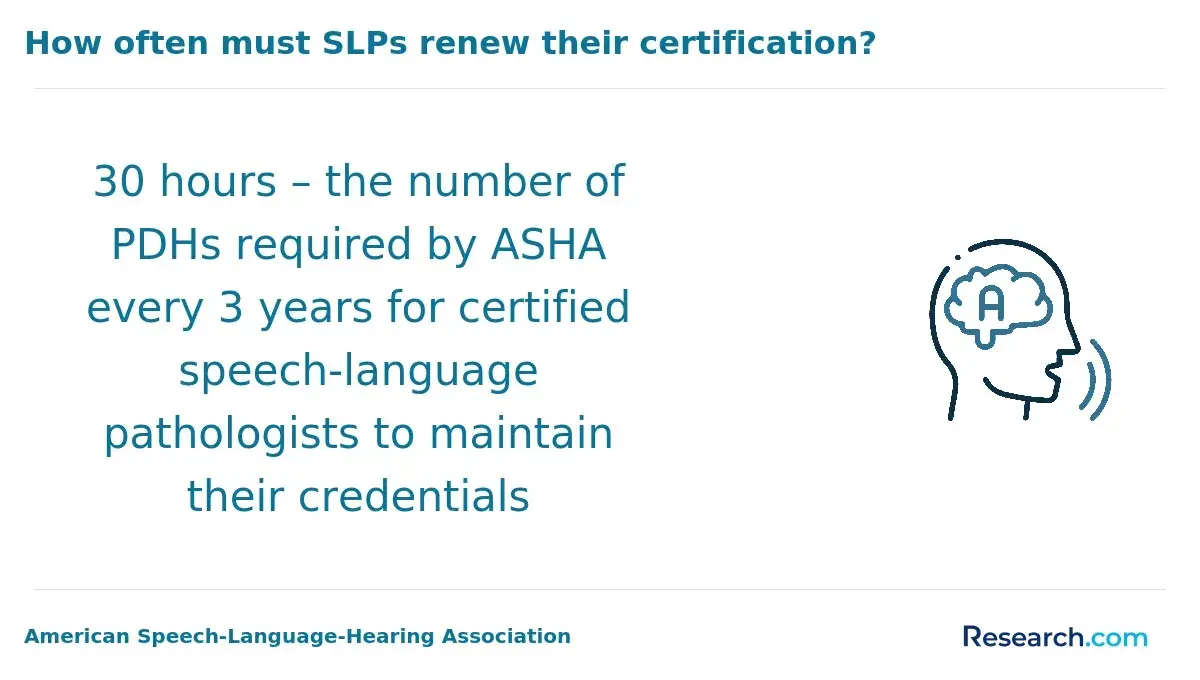
- Over 90% of exam takers pass on their first attempt, but continuous professional development and ASHA certification renewal every three years are mandatory for practice.
What is the SLP Praxis exam?
The SLP Praxis exam is a standardized test required for licensure as a speech-language pathologist in most U.S. states. Administered by ETS, it evaluates foundational knowledge and clinical skills including speech sound disorders, language development, neurogenic communication disorders, and professional issues. Passing this exam is essential before entering professional practice or applying for the Certificate of Clinical Competence (CCC) from the American Speech-Language-Hearing Association (ASHA).
The Praxis test for speech pathology certification primarily consists of multiple-choice questions that measure theoretical understanding and application of assessment and intervention strategies. Candidates may need to interpret speech sample data or select diagnoses in clinical scenarios. Effective preparation includes reviewing core concepts, using official ETS materials, and taking specialized practice exams.
Exam logistics include a fee of about $230, with retakes permitted upon full payment. Scheduling early and dedicating several months for study is recommended. Some academic programs incorporate Praxis exam requirements in the US within their curriculum or offer targeted review sessions to support students.
Data from Speech@NYU demonstrate strong outcomes, with their programs achieving a 100% average Praxis pass rate over several years. This highlights how rigorous training aligned with exam standards boosts success. Prospective students can also explore online SLP master programs as a flexible path to certification and career advancement.
How do you become a licensed SLP?
To become a licensed speech pathologist in the United States, candidates must follow specific steps to obtain speech pathology licensure and certification. The process begins with earning a master's degree from a program accredited by the Council on Academic Accreditation in Audiology and Speech-Language Pathology (CAA). This program includes supervised clinical practicum hours essential for licensure eligibility.
Next, candidates must pass the Praxis exam in speech-language pathology, administered by the Educational Testing Service (ETS). This test evaluates fundamental skills in diagnosis and treatment. For instance, UMass Amherst's program boasts a 100% Praxis pass rate over three years with 66 consecutive test takers passing, highlighting the importance of thorough preparation.
Following the exam, candidates complete a Clinical Fellowship Year (CFY) involving 1,260 hours of supervised professional experience, often required by state boards to bridge academic knowledge and practical skills.
Afterwards, candidates apply for state licensure by submitting proof of education, test results, and CFY completion. Since requirements vary, checking specific state licensing board criteria is vital. Many states also mandate continuing education to maintain licensure.
Certification from the American Speech-Language-Hearing Association (ASHA) through the Certificate of Clinical Competence (CCC-SLP) is strongly recommended, enhancing career credibility. This certification requires all licensure steps plus an ethics exam.
For those interested in financial outcomes, reviewing the speech-language pathologist salary is beneficial for career planning.
What are ASHA certification requirements for SLPs?
The American Speech-Language-Hearing Association (ASHA) requires candidates pursuing certification as speech-language pathologists (SLPs) in the United States to complete several key steps. First, candidates must graduate from a Council on Academic Accreditation (CAA)-accredited graduate program in speech pathology. Such programs meet ASHA's rigorous standards; for instance, the University of Cincinnati's graduate SLP program boasts a 99% on-time completion rate over three years. This requirement is essential for fulfilling ASHA certification requirements for speech-language pathologists in the United States.
After graduation, candidates must pass the Praxis Examination in Speech-Language Pathology administered by ETS, which evaluates their professional knowledge crucial for licensure. Following successful completion of the exam, applicants enter the Clinical Fellowship Year (CFY), consisting of 1,260 supervised clinical hours over a minimum of 36 weeks. This hands-on experience is necessary to demonstrate practical skills under mentorship.
The final step is applying for the Certificate of Clinical Competence in Speech-Language Pathology (CCC-SLP), confirming professional standards and ethical practice. The steps to obtain ASHA certification for SLP licensure and Praxis exam preparation are clear:
- Graduation from a CAA-accredited graduate program
- Passing the Praxis SLP exam
- Completion of at least 1,260 hours of supervised clinical fellowship
- Application and approval for the CCC-SLP credential
Prospective students can explore options such as accelerated SLP programs online to find flexible paths that fit their schedules while meeting certification requirements.
In the United States, licensure as a speech-language pathologist requires a master's degree in speech-language pathology from a program accredited by the Council on Academic Accreditation in Audiology and Speech-Language Pathology (CAA). This graduate degree ensures completion of essential coursework, supervised clinical experience, and practicum hours. While bachelor's degrees in related fields like communication sciences and disorders provide foundational knowledge, they do not meet the licensing criteria but often serve as prerequisites for these graduate programs.
State-specific speech pathology degree criteria vary, but all states mandate this graduate credential along with passing the Praxis Examination in Speech-Language Pathology. Postmaster's certificates and doctoral degrees (AuD, PhD, or clinical doctorates) also fulfill or surpass educational requirements; however, a doctorate without a CAA-accredited master's component is usually insufficient for licensure.
Additional professional requirements include completing a Clinical Fellowship Year (CFY) under licensed supervision and obtaining American Speech-Language-Hearing Association (ASHA) certification, though state licensure and national certification are separate credentials.
The trend toward rising demand for licensed professionals is evident in New York, where 1,245 licenses were issued in 2025-an 11.9% increase over the previous year, the highest volume in five years. Prospective students should consider exploring accessible speech pathology programs to launch their careers efficiently and align with rigorous licensure requirements.
SLP programs must be accredited by the Council on Academic Accreditation in Audiology and Speech-Language Pathology (CAA), a branch of the American Speech-Language-Hearing Association (ASHA). This ensures the curriculum, faculty, and clinical practicum meet rigorous standards crucial for professional readiness. Graduating from a CAA-accredited program is required to sit for the Praxis exam and obtain the Certificate of Clinical Competence in Speech-Language Pathology (CCC-SLP).
Accreditation evaluates key aspects including faculty qualifications, curriculum content, clinical practicum opportunities, and graduate outcomes. Accredited programs provide supervised clinical experiences that fulfill ASHA's minimum practicum hour requirements, giving students essential real-world training for licensure. Lack of CAA accreditation can create obstacles in obtaining state licensure or ASHA certification.
Many states also require program approval from state licensing boards, ensuring the curriculum aligns with local licensure rules. These additional approvals may involve specific clinical hour mandates or course emphases. Prospective students should confirm both CAA accreditation and any relevant state approvals before enrolling.
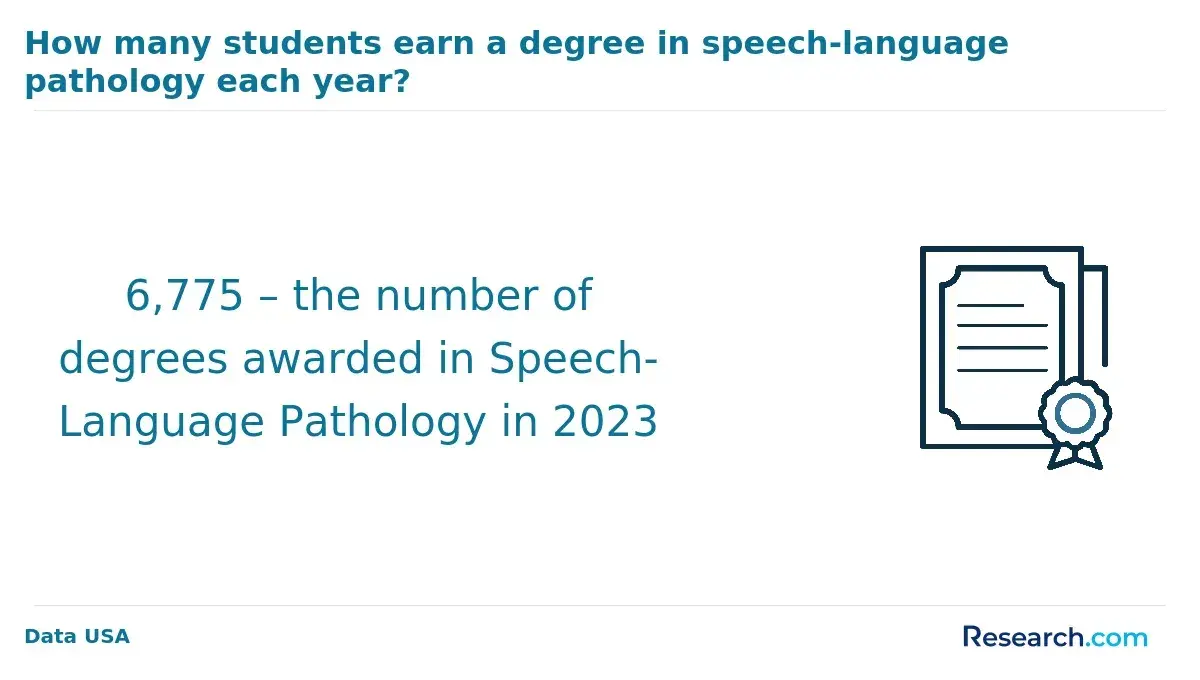
The U.S. Bureau of Labor Statistics reports a 17% job growth for speech-language pathologists from 2025 to 2035, with about 13,300 yearly openings. Choosing an accredited program supports educational quality and smooth progression toward national certification and state licensure, helping to enter this growing profession.
Full certification as a speech pathologist cannot be completed entirely online. Candidates must earn a graduate degree from a program accredited by the Council on Academic Accreditation in Audiology and Speech-Language Pathology (CAA). While many programs offer hybrid or fully online coursework, the clinical practicum requires in-person supervised hands-on experience. This clinical training is essential for licensure and certification.
After completing the degree, candidates must pass the Praxis examination in Speech-Language Pathology. The exam is held at authorized testing centers and is not available as a remote proctored test. Passing the Praxis is a crucial step toward state licensure and obtaining the Certificate of Clinical Competence (CCC) from the American Speech-Language-Hearing Association (ASHA).
Licensure requirements vary by state but generally include verified clinical experience and passing exams. Some states allow online application and renewal but do not permit full licensure processes to be completed remotely. Therefore, on-site clinical hours and exam attendance remain mandatory.
Programs with online components typically provide digital coursework and video lectures, while clinical residencies and internships are done onsite. Prospective students should carefully confirm program accreditation and state licensing requirements to ensure compliance.
The U.S. Bureau of Labor Statistics reports a median annual salary of $97,870 for speech pathologists, emphasizing the value of proper clinical training despite the availability of online academic resources.
The SLP Praxis exam pass rate typically ranges between 75% and 85%, varying by test version and candidate background. First-time test takers generally have a strong success rate, reflecting the exam's focus on core competencies essential for entry-level speech pathology practice. Passing this exam is a critical step required by licensing boards for certification and professional advancement.
Candidates who come from accredited programs with substantial supervised clinical experience tend to perform better, as hands-on knowledge supports mastering exam content. Strategic preparation is key to minimizing repeat attempts. Effective study approaches include using official Praxis study guides, concentrating on topics such as communication disorders, assessment, and intervention strategies, and engaging in practice tests to build confidence.
Regional differences also influence outcomes. For instance, Kings County, New York, has the highest number of licensed speech-language pathologists with 2,152 professionals, followed by Monroe County with 866, according to the New York State Education Department. These areas offer stronger local support networks and resources, potentially improving pass rates.
To enhance success, candidates should identify weak areas early, leverage clinical internships, and utilize available educational tools. Such preparation helps secure certification and supports career progression in speech pathology.
Speech pathology salaries in the U.S. differ widely by state, shaped by local demand, living costs, and funding. For instance, California and New York offer some of the highest average salaries, often surpassing $90,000 annually, while states like Mississippi and West Virginia show lower averages near $60,000.
Graduates from highly regarded programs, such as NYU's Speech@Steinhardt with an 88% on-time completion rate, may find stronger placement opportunities in these higher-paying regions. However, factors like job availability and lifestyle preferences also influence where candidates choose to build their careers.
Key state salary figures include:
- California: average around $95,000 due to strong demand and high living expenses.
- New York: approximately $90,000, supported by urban healthcare and educational institutions.
- Texas and Florida: mid-range salaries near $75,000, benefiting from growing populations.
- Midwest states like Ohio and Illinois: ranges between $70,000 and $80,000.
- Mississippi and West Virginia: lower averages near $60,000, reflecting fewer clinical options.
Candidates should weigh both salary trends and program quality when planning their careers. Employment settings such as schools, hospitals, or private clinics also affect earnings potential, emphasizing the value of graduating from reputable programs for career advancement in competitive states.
The job outlook for speech-language pathologists (SLPs) remains strong, with the U.S. Bureau of Labor Statistics projecting a 17% growth rate from 2025 to 2035. This demand is driven by an aging population affected by strokes and neurodegenerative diseases, alongside increasing recognition of speech and language disorders in children.
Employment settings range widely, including schools, hospitals, nursing care facilities, and private practices. Public schools are expected to continue hiring due to federal special education mandates, while hospitals focus on stroke rehabilitation and swallowing disorder treatments. Private clinics often provide flexibility and potentially higher earnings.
Graduates who successfully pass the Praxis exam and earn certification access this expanding job market more readily. For example, Touro's School of Health Sciences boasts a 94% three-year average Praxis pass rate and a 99.30% on-time completion rate, reflecting strong preparation and career readiness.
Key factors for job seekers include location, specialization, and willingness to work in underserved areas. Advanced certifications or bilingual skills boost salary prospects and job availability. Early career professionals benefit from promptly passing certification exams and gaining diverse clinical experiences to improve employability.
How to choose the best SLP program?
Evaluating an slp program involves several key factors to align with career goals and licensure requirements. Confirm the program's accreditation from the Council on Academic Accreditation (CAA) in Audiology and Speech-Language Pathology to ensure it meets certification standards. A strong clinical practicum component is essential since hands-on experience in varied settings like schools, hospitals, and rehabilitation centers prepares students for real-world challenges.
Faculty credentials and research opportunities enrich academic rigor and professional networks. Consider graduation rates and Praxis exam pass rates within a year as indicators of student success. Flexibility in program length, including part-time or online formats, along with affordable tuition, should match your personal circumstances.
The U.S. Bureau of Labor Statistics projects approximately 28,200 job openings for speech-language pathologists over the next decade. This demand highlights the importance of programs offering robust career support and job placement services. Investigate alumni success, especially in your preferred geographic or specialty area, such as pediatric or geriatric speech pathology, to gauge potential career outcomes.
Key points to consider include:
- CAA accreditation status
- Quality and variety of clinical practicum experiences
- Faculty expertise and research involvement
- Graduation and Praxis pass rates
- Program flexibility and cost
- Career services and alumni placement
Other Things You Should Know About Speech Pathology
The timeline varies by state but generally takes several months after passing the Praxis exam. Candidates usually need to complete a supervised clinical fellowship lasting about nine months, which must be approved by their state licensing board. Only after fulfilling these requirements can they obtain full licensure to practice independently.
In most states, practicing as a speech pathologist without full licensure or certification is not permitted. Some states allow limited or provisional licensure during the clinical fellowship period, but these have restrictions and require supervision. Working unlicensed beyond these periods risks legal consequences and professional discipline.
Most state licensing boards require a criminal background check before issuing an SLP license, and many use fingerprint-based screening through state police or the FBI. Applicants may also need to disclose prior disciplinary actions, convictions, or license denials on their application.
- U.S. Bureau of Labor Statistics - Speech-Language Pathologists https://www.bls.gov/ooh/healthcare/speech-language-pathologists.htm
- ASHA EdFind - Accredited Speech-Language Pathology Programs https://find.asha.org/ed/
- O*NET OnLine - Speech-Language Pathologists https://www.onetonline.org/link/summary/29-1127.00
- New York University - Online MS, Communicative Sciences and Disorders (Speech@NYU) https://steinhardt.nyu.edu/degree/online-ms-communicative-sciences-and-disorders
- University of North Carolina at Greensboro - Speech-Language Pathology, M.A. (Online) https://csd.uncg.edu/graduate/masters-of-arts-online/
- University of Nebraska at Kearney - Speech-Language Pathology, Master of Science in Education (Online Track) https://www.unk.edu/online/degrees-programs/speech-language-pathology-online.php
- University of Scranton - Master of Science (M.S.) in Speech-Language Pathology https://www.scranton.edu/academics/pcps/health-and-human-performance/programs/speech-language-pathology/index.shtml
- California State University-East Bay - Online Master of Science in Speech-Language Pathology https://ce.csueastbay.edu/programs/speech-language-pathology/