2027 Best AI Master's Degrees for AI Consulting

Co-Founder and Chief Data Scientist
Many professionals with non-technical backgrounds struggle to find flexible, accredited master's programs that enable a smooth transition into AI consulting. The complexity of AI concepts combined with a lack of relevant academic pathways often stalls career shifts. This challenge intensifies for those balancing work and study, seeking programs that offer both practical skills and industry recognition.
Understanding how to evaluate programs that cater to diverse backgrounds becomes essential. This article outlines the best AI master's degrees tailored for aspiring consultants, highlighting options that combine accessibility, academic rigor, and career-focused curricula to support a successful industry pivot.
Key Things You Should Know
- Master's degrees in artificial intelligence for AI consulting prioritize interdisciplinary skills, combining data science, business strategy, and ethics to meet industry demands projected to grow 35% by 2028.
- Top programs emphasize practical experience with AI tools and client-focused problem solving, reflecting a 2025 survey where 72% of employers prefer graduates with consulting-ready skills.
- Costs vary widely, but many U.S. institutions offer part-time or online formats, increasing accessibility for working professionals seeking to enter AI consulting careers.
What is an AI consulting career, and how does a master's degree prepare you?
An AI consulting career involves advising organizations on the strategic implementation and optimization of artificial intelligence technologies to enhance business functions such as operations, marketing, and customer service. With over half of organizations adopting AI in at least one area, the demand for skilled AI consultants is strong. Those pursuing AI consulting career paths and required skills benefit greatly from a master's degree that covers machine learning, data analytics, natural language processing, and ethical AI considerations.
Master's programs not only provide technical expertise but also emphasize communication, project management, and problem-solving skills essential for working with multidisciplinary teams and non-technical stakeholders. Practical experience gained through internships or capstone projects prepares graduates to diagnose organizational challenges and recommend actionable AI solutions. For example, AI consultants may improve supply chain logistics using predictive analytics or implement chatbots to enhance customer engagement.
Key competencies developed include:
- Designing AI models aligned with business objectives
- Interpreting AI insights to aid decision-making
- Managing risks such as bias and regulatory compliance
- Translating technical findings into clear executive reports
Such training ensures graduates meet the evolving demands of AI consulting, balancing technical depth with strategic vision. Prospective students should explore the artificial intelligence degree salary to align expectations with industry standards when planning their careers.
Which master's degree specializations best fit AI consulting roles?
Master's degree specializations tailored for AI consulting focus on machine learning, natural language processing (NLP), large language models (LLMs), and applied data science. These areas match the sharp rise in demand for generative AI skills, with job postings requesting such expertise nearly doubling year over year according to Lightcast (2024). Choosing the best AI master's programs for consulting careers means emphasizing practical experience with these technologies along with courses in ethics, AI policy, and human-computer interaction.
Specializations in machine learning cover predictive modeling, algorithm design, and optimization vital for AI-driven business solutions. NLP and LLM-focused curricula train students to develop language-based AI models used in customer service automation, market analysis, and decision-making support. Applied data science programs blend statistics, data engineering, and programming, enabling graduates to interpret complex data and create actionable insights across industries.
Examples of relevant degree titles include:
- Master of Science in Machine Learning
- Master of Science in Data Science with a focus on NLP
- Master of Science in Artificial Intelligence specializing in LLM development
- Master of Business Analytics with AI applications
These programs often feature real-world projects and partnerships with industry, preparing students to tackle consulting challenges such as model deployment, scalability, and interdisciplinary communication. Prospective students choosing master's degree specializations for AI consulting should also explore the top data science master's programs in the US for comprehensive training in these vital skills.
Which accredited U.S. schools offer strong AI master's programs for consulting?
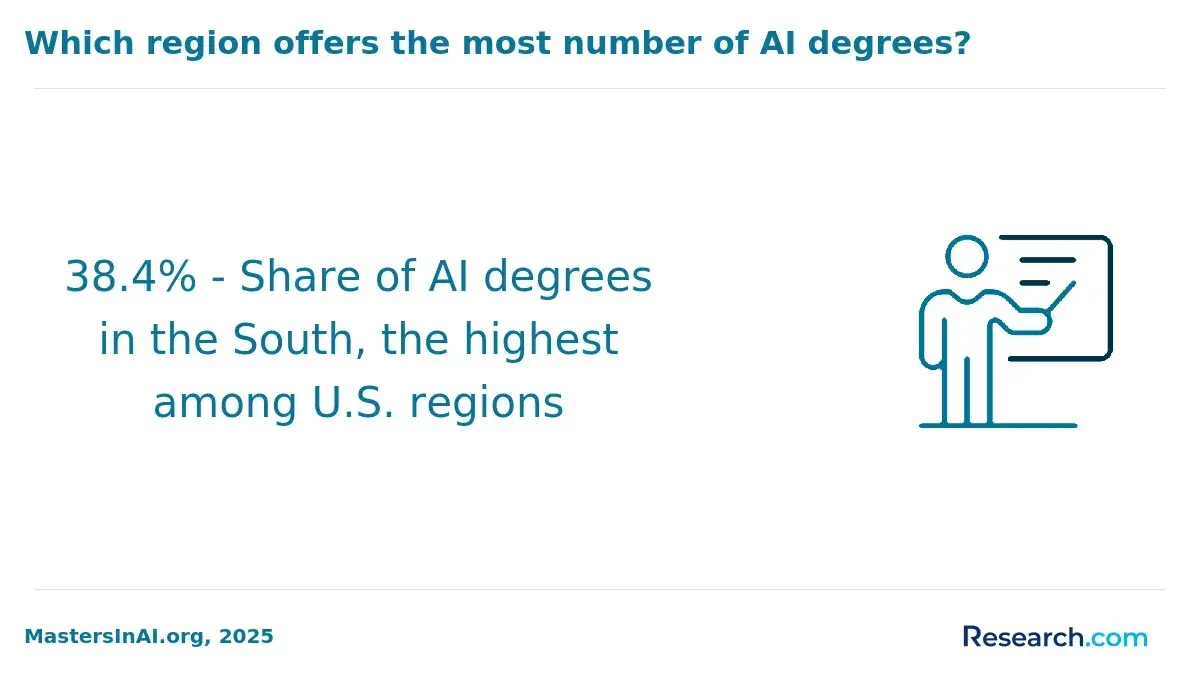
Several accredited U.S. universities with AI master's programs for consulting provide specialized education that blends strong technical foundations with real-world business applications. Carnegie Mellon's Master of Computational Data Science and Stanford's MS in Artificial Intelligence stand out for their rigorous focus on machine learning, data analytics, and AI ethics, preparing graduates for strategic roles in consulting.
The U.S. Department of Education College Scorecard highlights that earnings among STEM master's graduates differ significantly by institution, making it vital to choose accredited schools with demonstrated return on investment. Graduates of top programs at MIT and UC Berkeley often secure six-figure salaries soon after graduation, reflecting robust employer demand and extensive alumni networks.
Beyond traditional AI degrees, interdisciplinary options such as Georgia Tech's MS in Analytics and New York University's MS in Data Science appeal to those aiming to combine technical AI expertise with practical consulting insights. Factors like curriculum depth in AI algorithms, industry partnerships, and specialized career services are critical when selecting a program.
Students interested in technology-focused careers might also explore a game development degree for complementary skills in software and data design. Faculty expertise in AI ethics and governance is increasingly important for consultants guiding responsible AI implementation.
How do online AI master's programs compare with on-campus options for consultants?
Online AI master's programs provide flexibility that aligns well with the demanding schedules of consulting professionals. Eduventures reported that online graduate enrollment is growing faster than on-campus enrollment, reflecting a preference among working professionals to balance studies with client commitments. Consultants can access coursework anytime, minimizing disruptions caused by project deadlines or travel.
On-campus programs typically offer advantages such as hands-on lab work, face-to-face mentorship, and peer networking, which remain valuable for deeper collaboration. However, many of the best AI master's degrees for consulting professionals now incorporate live sessions, virtual labs, and digital networking events that offer similar interaction and support. Synchronous classes allow real-time engagement with faculty and peers, crucial for mastering complex machine learning concepts.
Choosing between online and on-campus often comes down to program rigor, accreditation, and practical application opportunities. Some online degrees partner with tech companies to provide capstone projects or internships, delivering consulting experience without relocation. In contrast, on-campus students benefit from direct access to university resources and research centers, which may be important for specialization.
Cost and time commitment also vary: online formats can reduce living expenses but may charge comparable tuition. Working consultants must weigh potential productivity loss during campus attendance against asynchronous learning flexibility. For those exploring options related to cybersecurity or data science, consulting resources like cybersecurity degrees offer valuable insights.
What courses and projects matter most in an AI consulting-focused master's program?
Master's programs focusing on AI consulting prioritize technical expertise alongside practical business skills. Core courses cover machine learning, neural networks, and natural language processing to build a solid technical foundation. Equally vital are classes on AI deployment, model evaluation, and data ethics, which prepare students to navigate real-world applications and societal impacts of AI models.
Hands-on projects are essential, reflecting the high demand for AI-savvy consultants as 75% of knowledge workers already use AI at work, according to the Microsoft Work Trend Index (2024). Practical experience includes:
- Designing AI-driven solutions tailored to industries like healthcare and finance
- Simulating AI workflows with real datasets to examine accuracy and scalability
- Conducting assessments on workflow changes and ethical implications
- Collaborating in teams to mirror client-consultant relationships
Additionally, case studies and company partnerships enhance students' ability to analyze AI's operational impacts and translate technical results into actionable business insights. Interdisciplinary coursework integrating data science, operations research, and organizational behavior equips graduates to solve complex challenges in AI consulting effectively.
Programs that combine rigorous technical training with applied projects in deployment and integration best prepare students for the demands of AI-enhanced workplaces.
What admissions requirements are common for AI master's programs for consultants?
Admission to master's programs specializing in artificial intelligence for consultants typically requires a strong background in computer science, mathematics, or engineering. Candidates should hold a bachelor's degree in relevant fields such as computer science, data science, or statistics. Proficiency in programming languages like Python or Java is expected, verified through coursework or work experience. Many programs set a minimum GPA around 3.0 on a 4.0 scale, though this varies.
GRE scores have become increasingly optional as many institutions adopt test-optional policies, reflecting a broader trend in graduate admissions. Despite this, some competitive programs may still recommend submitting scores, especially for applicants with unconventional academic backgrounds.
Letters of recommendation, usually two to three, are important and should come from academic or professional references capable of speaking to analytical skills and aptitude in artificial intelligence. Applicants must also submit a personal statement outlining their experience, goals, and reasons for pursuing AI consulting.
Additional materials often include a résumé showcasing AI, machine learning projects, or consulting experience, and certifications in frameworks like TensorFlow or PyTorch. International applicants usually need to demonstrate English proficiency with TOEFL or IELTS scores.
Since requirements can vary significantly, careful review of each program's official website is crucial to confirm current admissions criteria and any recent updates.
How long do AI master's programs take, and what do they cost?
AI master's programs usually take one to two years of full-time study, though part-time options can extend this to three or more years for working professionals. Accelerated tracks or combined bachelor's-to-master's programs may shorten the duration to about one year. Most require 30 to 36 credit hours, combining core AI subjects, electives, and a capstone project or thesis.
Costs differ widely by institution type and residency. Graduate tuition at public universities ranges from approximately $12,000 to $25,000 per year, while private nonprofit institutions often charge over $40,000 annually. Total expenses over two years can range from $24,000 to $80,000 or more. Added costs include textbooks, software, and technology fees.
Many programs offer online or hybrid formats, potentially reducing living expenses but not tuition fees. Financial aid, scholarships, and employer tuition assistance significantly lower the financial burden. It's important to compare in-state and out-of-state tuition rates at public schools, where out-of-state rates can be over 50% higher.
A full-time student at a state flagship university might expect to finish an AI master's in two years for roughly $30,000, while private options may exceed $80,000. Part-time study offers flexibility but requires budgeting for longer tuition payments. Prospective students should weigh university reputation, faculty expertise, and curriculum rigor alongside costs to maximize educational value.
What jobs can you get after an AI master's for consulting-focused careers?
Graduates with a master's degree in artificial intelligence focused on consulting have diverse career paths addressing both strategic and technical needs of organizations adopting AI solutions. Common roles include AI consultant, machine learning engineer, data scientist, and analytics consultant. These professionals assess client challenges, design AI models, and implement strategies to streamline business processes.
AI consultants advise on machine learning deployment, ethical AI use, and integration with existing IT systems. Machine learning engineers develop algorithms tailored to sectors like manufacturing for predictive maintenance or retail for customer segmentation. Additional roles include AI product manager, responsible for overseeing AI tool development lifecycle, and AI strategy analyst, who evaluates project ROI and institutional adoption readiness.
Specialized positions such as natural language processing (NLP) consultant and computer vision specialist provide expertise in healthcare, finance, and automotive industries, requiring strong communication skills for non-technical stakeholders. Growing demand also exists for AI risk managers and AI ethics advisors focusing on compliance and responsible AI use.
According to the World Economic Forum's Future of Jobs Report (2025), AI and machine learning specialists are among the fastest-growing roles worldwide through 2030, highlighting the strong market for consulting-related AI careers that combine technical skill with business insight to drive digital transformation.
What salary can AI consultants with a master's degree expect in the U.S.?
AI consultants in the U.S. with a master's degree often earn median salaries above $100,000 annually. Data from the U.S. Bureau of Labor Statistics (BLS) indicates that advanced AI and machine learning roles, such as computer and information research scientists, reflect earning potential at or beyond this level. Salaries are influenced by factors such as industry, location, experience, and employer size.
Starting salaries for entry-level AI consultants with master's degrees typically range from $90,000 to $120,000. With 3 to 5 years of experience, salaries often rise to between $120,000 and $150,000. Senior consultants in high-demand sectors like finance, technology, and healthcare frequently earn upwards of $160,000, with bonuses and profit sharing increasing total compensation.
Location is a significant factor. In tech hubs such as San Francisco, Seattle, and New York, salaries can be 15-30% higher than the national average. Smaller markets or academic roles usually offer salaries closer to the median.
Additional certifications, specialized expertise in niche AI technologies like natural language processing or computer vision, and strong project portfolios can push compensation beyond $180,000. Freelance consultants may command higher hourly rates, though income stability is less certain.
- Master's degree holders can expect starting salaries near six figures.
- Experience and specialization substantially boost earning potential.
- Geographic location and industry demand drive salary variations.
What certifications help AI consultants, and are any required to practice?
Certifications are essential for AI consultants aiming to build credibility and demonstrate expertise, especially in security-sensitive roles. Given the rising demand for secure AI deployment, qualifications focused on cybersecurity and cloud security greatly increase professional value. The ISC2 Cybersecurity Workforce Study highlighted a significant global shortage of cybersecurity experts, underscoring the importance of certifications in this area for AI professionals working in regulated industries.
Key certifications include:
- Certified Information Systems Security Professional (CISSP), which offers deep knowledge of cybersecurity frameworks critical for safeguarding AI systems.
- Certified Cloud Security Professional (CCSP), vital for ensuring cloud-hosted AI models meet security and compliance standards.
- Microsoft Certified: Azure AI Engineer Associate, a specialized credential validating secure AI solution deployment on Azure cloud infrastructure.
- Data science and machine learning certifications from reputable providers improve core technical skills but should be paired with security-focused credentials.
AI consultants working in heavily regulated sectors such as healthcare, finance, or government should emphasize certifications related to compliance standards like HIPAA or GDPR. Combining practical experience with these credentials empowers consultants to manage risks and implement AI responsibly. For U.S. professionals, aligning AI skills with cybersecurity certifications enhances job opportunities and project success in an environment where threats are increasingly sophisticated and pervasive.
Other Things You Should Know About Artificial Intelligence
AI master's programs in 2027 prepare students for AI consulting roles by emphasizing data analysis, machine learning, and ethical AI practices. Programs often include case studies, project management, and communication skills tailored to consulting.
Common capstones include building a client-style AI strategy, evaluating a machine-learning model for business value, and presenting an implementation roadmap. Many programs require a final project or thesis worth 3 to 6 credits, completed in the last term with faculty supervision and an industry or consulting case focus.
Many AI master's programs include internship opportunities, capstone projects, or industry collaborations for hands-on experience. Practical exposure helps students apply theoretical knowledge, build portfolios, and establish professional connections. These experiences are valuable for launching consulting careers in AI.
Applicants to AI master's degrees tailored for consulting in 2027 must often hold a bachelor's degree in a relevant field, such as computer science or engineering, and demonstrate proficiency in programming languages like Python or R. GRE scores may also be required for admission.
AI master's degrees generally take about two years to complete for students transitioning from non-CS backgrounds. Many programs, like the AI master’s for business majors, offer foundational courses to bridge knowledge gaps in computer science and AI basics.
References
- 15 Top Masters Degree in AI Programs: Entry Requirements & Costs - AI Degree Center https://aidegreecenter.org/masters/
- Top AI Graduate Programs To Kickstart Your Career in Artificial Intelligence Today https://www.investopedia.com/top-ai-graduate-programs-to-kickstart-your-career-in-artificial-intelligence-today-11916749
- Masters Artificial Intelligence https://www.udacity.com/masters-artificial-intelligence
- AI Consultant Salary Guide 2026 | Cereer, Trends & Earning https://passitexams.com/salaries/ai-consultant-salary/
- Top 15 paid AI certifications to boost your resume | Uxcel https://uxcel.com/blog/top-paid-ai-certifications
- M.SC. IN Artificial Intelligence https://put.poznan.pl/msc-artificial-intelligence
- Masters in AI: The Most Popular US Programs for 2024 https://globalcolliance.com/masters-in-ai-the-most-popular-us-programs-for-2024
- Exploring AI Specializations: Which Path is Right for You? https://www.ironhack.com/us/blog/exploring-ai-specializations-which-path-is-right-for-you
- Must-Have AI Consultant Skills in 2026 | Roles, Salary & Career https://www.tredence.com/blog/ai-consultant-skills