2027 Do Employers Prefer AI Degrees or Computer Science Degrees?

Co-Founder and Chief Data Scientist
Job seekers pivoting to tech face a tough dilemma: should they pursue a degree specifically in Artificial Intelligence or opt for a broader computer science degree? Employers often seek candidates who combine technical skills with practical problem-solving, but preferences vary widely across companies and roles. Understanding which degree better aligns with hiring trends can influence career outcomes and investment in education. This article analyzes employer demand and hiring patterns related to AI and computer science degrees, providing readers with clear insights to guide their educational decisions and improve their chances of success in the evolving tech landscape.
Key Things You Should Know
- By 2025, 62% of U.S. employers value broad computer science degrees more than specialized artificial intelligence degrees, citing strong foundational skills and adaptability.
- However, demand for artificial intelligence expertise rose by 38% in 2024, driven by growth in AI applications across industries like healthcare and finance.
- Employers often prefer candidates with hybrid skills-a computer science degree supplemented by artificial intelligence certifications or projects enhances job prospects significantly.
Do employers value artificial intelligence degrees differently than traditional computer science degrees?
Employers' preferences for artificial intelligence degrees versus traditional computer science degrees largely depend on the specific skills needed for the role. AI degrees provide specialized expertise in machine learning, neural networks, and data analytics, making them ideal for positions focused on AI development. Meanwhile, computer science degrees offer a broader foundation in algorithms, software engineering, and systems design, which supports a wider variety of tech careers.
Recent trends highlight a notable shift in student choices. Enrollment in computer and information science programs dropped 8.1%, the steepest decline tracked by the National Student Clearinghouse. This shift aligns with a growing interest in AI-focused majors, reflecting strong market demand for AI skills.
Employer preferences for artificial intelligence degrees are especially apparent in roles involving AI research, autonomous systems, and natural language processing. However, traditional computer science graduates remain preferred for cybersecurity, software engineering, and general programming roles due to their versatile skillset.
Students should evaluate their career goals carefully. An AI degree offers focused training for cutting-edge projects, while a computer science degree provides flexibility across numerous tech domains. Hiring managers prioritize demonstrated skills, project experience, and adaptability rather than degree titles alone. Combining a solid computer science background with AI coursework or certifications can greatly enhance employability.
For those interested in exploring specific career paths, the artificial intelligence major offers detailed insight into opportunities balancing these educational options.
Which degree is better for getting hired in AI and machine learning roles: AI or computer science?
A degree in computer science generally provides broader hiring advantages over a specialized artificial intelligence degree for those pursuing roles in AI and machine learning. Employers favor computer science graduates because they possess a strong foundation in core programming, algorithms, data structures, and systems knowledge, all essential for developing robust AI applications. AI degrees often focus more narrowly on specific machine learning techniques or neural networks, which can limit flexibility in a rapidly evolving industry.
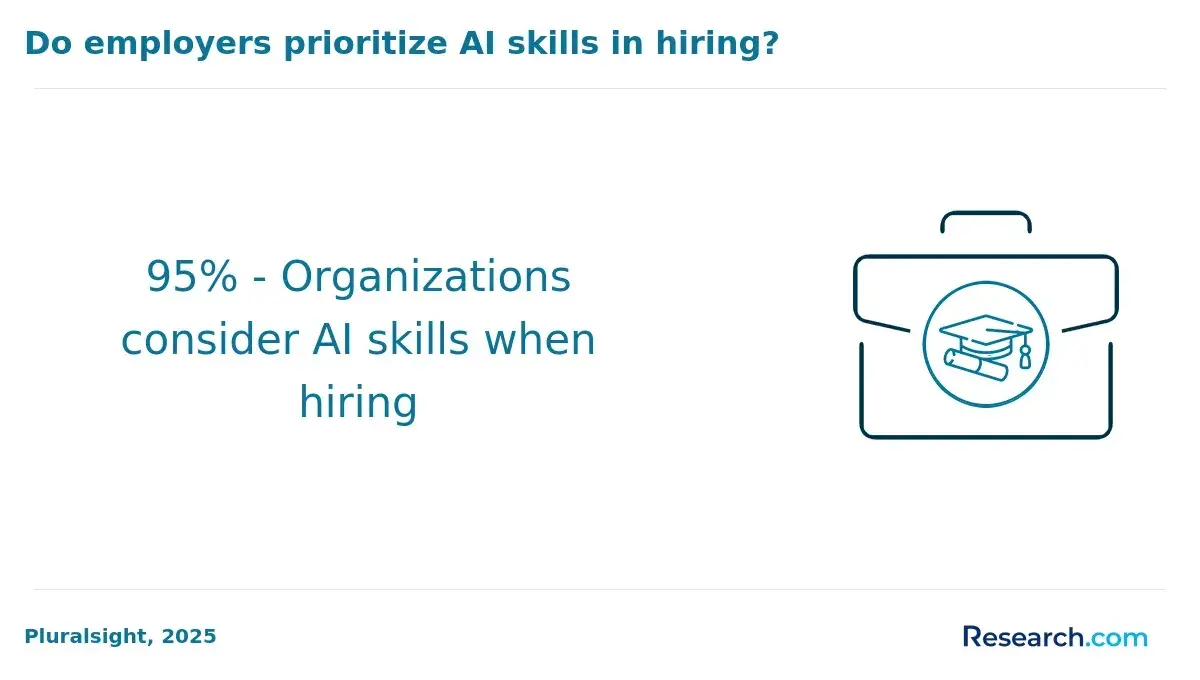
Between 2010 and 2024, job postings requiring AI-related skills increased nearly eightfold, from 1.6% to over 12%, according to the Federal Reserve Bank of Atlanta. This surge highlights that AI expertise is highly sought after but usually as a complement to comprehensive computer science competencies. Many employers emphasize candidates who combine general CS skills with AI knowledge gained through coursework, internships, or certifications.
Examples include companies seeking software engineers competent in both system architecture and AI model deployment. Candidates holding computer science degrees enhanced with AI electives or hands-on machine learning experience often stand out, whereas those with strictly AI-focused degrees may encounter challenges if foundational software engineering skills are underdeveloped.
Prospective students should carefully assess program curricula, favoring degrees that integrate AI topics within a broad computer science framework for versatility and stronger job prospects. This can include project-based learning in AI alongside traditional CS subjects. Certifications or bootcamps in AI can also complement a computer science degree for specialized roles, especially amid considerations of online engineering degree cost.
Employers prioritize adaptable candidates who can bridge software development and AI innovation, making computer science degrees that incorporate targeted AI training the most effective path to employment in AI and machine learning jobs.
What skills and competencies do employers look for in AI graduates versus computer science graduates?
Employers hiring AI graduates prioritize specialized skills in machine learning, data analysis, neural networks, and natural language processing. Practical experience with frameworks like TensorFlow or PyTorch is essential, along with a strong foundation in statistics and probability. Proficiency in Python and knowledge of big data tools are also highly valued. Key problem-solving abilities focus on algorithm optimization and model tuning. In addition to technical expertise, soft skills such as domain-specific knowledge-particularly in healthcare or finance-and the ability to interpret AI model outcomes for business applications are increasingly important. These AI graduate technical and soft skills comparison points highlight the specialized nature of the field.
In contrast, computer science graduates must demonstrate broad competencies in programming languages such as Java, C++, and Python, software development methodologies, algorithms, data structures, and systems design. Employers expect foundational knowledge in computer architecture, databases, and cybersecurity. Experience with full-stack development or cloud computing is frequently sought. Versatility and adaptability across diverse project types-from mobile apps to network systems-are key differentiators for computer science candidates. These key competencies employers seek in computer science versus AI graduates reflect the broader but less niche focus of the former.
Salary trends underscore these distinctions. AI engineers in the U.S. averaged $206,000 by early 2025, marking a significant increase of over $50,000 from 2024, according to Glassdoor. This premium highlights the value employers place on cutting-edge, specialized skills. Computer science roles typically offer strong pay but show less dramatic salary growth, emphasizing their versatile foundation.
To maintain a competitive edge, AI graduates should continuously update their knowledge on emerging models and ethical AI deployment. Computer science graduates benefit from mastering versatile software engineering skills and staying current with evolving technologies. Prospective students exploring career paths can find more information on affordable options by reviewing online data science programs that align with these evolving demands.
How do AI degree curricula compare to computer science programs in the United States?
In the United States, AI degree curricula prioritize machine learning, neural networks, natural language processing, and data analytics, emphasizing practical applications, ethical considerations, and interdisciplinary fields like cognitive science or robotics. In comparison, computer science programs provide broader foundational training in programming, algorithms, systems design, and software development. While both prepare students with essential coding skills, computer science offers a more comprehensive understanding of computing principles beyond AI specialization. This distinction highlights key AI degree versus computer science program differences in the United States.
Students pursuing AI degrees often take specialized courses such as deep learning architectures, computer vision, and reinforcement learning, frequently supported by projects that address real-world AI challenges, including autonomous systems and predictive modeling. On the other hand, computer science students study a diverse range of topics like operating systems, database management, and network security, which are essential for traditional software careers. This contrast marks a clear United States artificial intelligence and computer science curriculum comparison.
Career outcomes reflect these educational paths. Data scientist roles, commonly filled by AI-trained graduates, are projected to grow 34% from 2024 to 2034 by the U.S. Bureau of Labor Statistics, ranking as the fourth-fastest-growing occupation nationally. Software developer positions, typical for computer science graduates, are expected to grow by 17% over the same period. Prospective students should evaluate their goals carefully: AI degrees are a strong choice for those aiming for specialized data-driven and emerging technology sectors, while computer science offers versatility across industries. For those considering other engineering fields, exploring an online electrical engineering bachelor degree for veterans may also be beneficial.
Are AI degree programs as widely available and accredited as computer science degrees?
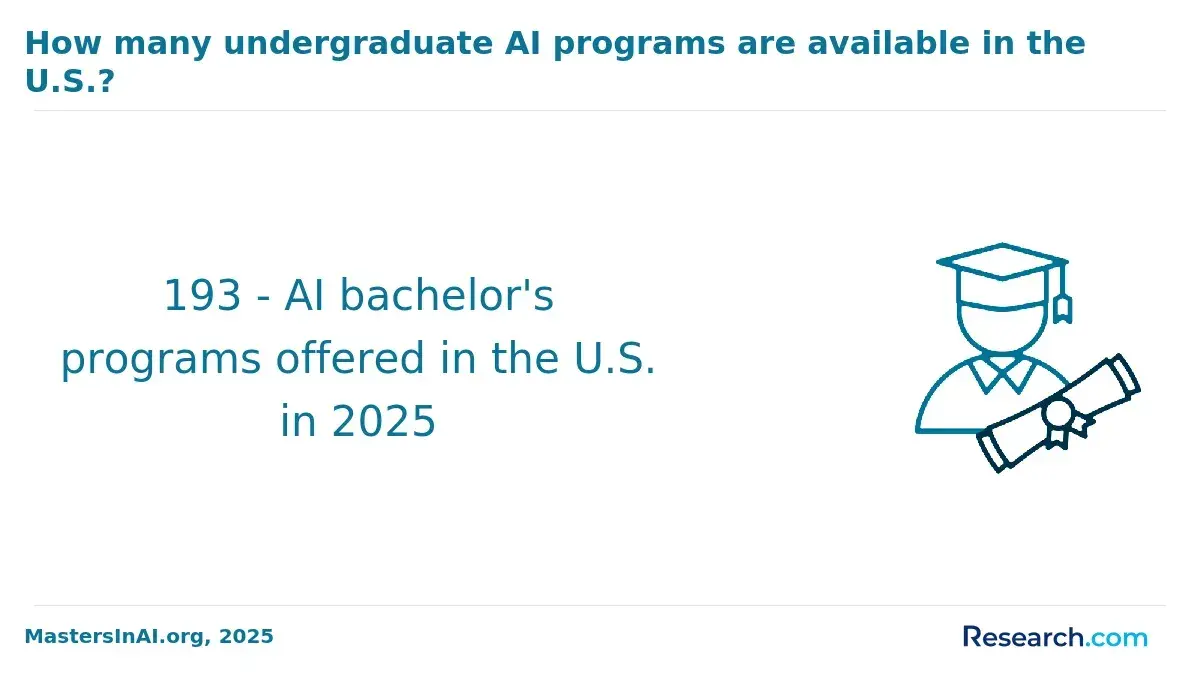
AI degree programs are still emerging and less common than traditional computer science degrees, which have long-established accreditation and broad recognition. Many universities currently offer AI as specialized tracks or certificates within computer science or engineering faculties rather than standalone degrees.
Workforce data shows that 63% of AI specialists hold a computer science bachelor's degree, underscoring that employers view CS as the primary foundation for AI careers. Computer science curricula cover essential skills like algorithms, programming, data structures, and mathematics that directly support AI development.
Students interested in AI should consider that:
- AI coursework is often embedded in computer science degrees rather than offered as separate AI degrees.
- Accredited computer science programs provide more consistent credibility and recognition.
- Dedicated AI degrees may focus narrowly on specialized topics and sometimes lack broad foundational training.
- Graduate AI programs are more common and typically require a prior CS or related background.
Evaluating accreditation, curriculum scope, and industry reputation is crucial. Pursuing a computer science degree with AI coursework currently remains the most reliable path toward an AI career.
What are the typical admission requirements for AI bachelor's and master's programs compared to computer science?
Admission to AI bachelor's and master's programs typically requires strong foundations in mathematics, computer science, and programming. High school applicants for bachelor's degrees must demonstrate proficiency in math and science, often providing SAT or ACT scores and letters of recommendation showcasing analytical skills. Master's applicants usually hold a bachelor's in computer science, engineering, or related fields, with prerequisite courses like algorithms, data structures, and introductory AI or machine learning. GRE scores, transcripts, and statements of purpose are common requirements to highlight interest and experience in AI technologies.
Computer science (CS) programs have broader admission criteria. Undergraduate CS programs also emphasize math and science achievements and standardized test scores. For master's CS applicants, a bachelor's degree in computer science or significant programming experience is essential. CS master's programs generally focus on foundational computer science knowledge rather than specific AI prerequisites, appealing to students from diverse technical backgrounds.
Additional application steps may include interviews or portfolio submissions. AI-focused programs demand more rigorous math and AI-related qualifications than general CS programs, reflecting their specialized nature. Employment data from the Federal Reserve Bank of New York and the New York Times indicates computer science graduates face a 6.1% unemployment rate compared to 4.8% overall, suggesting AI-related interdisciplinary skills may offer a competitive advantage in the job market.
How do online AI degrees compare to campus-based AI and computer science programs in employer perception?
Employers increasingly regard online AI degrees as comparable to campus-based programs when the curriculum is rigorous and current. Many hiring managers accept that online platforms can provide specialized AI training with skill relevance matching or surpassing traditional programs. Nevertheless, campus-based computer science degrees still carry more prestige for broader technical roles due to their comprehensive foundation in systems, software engineering, and theory.
Online AI degrees offer notable flexibility and often focus deeply on applied machine learning, data science, and neural networks. These areas align with the 56% wage premium highlighted in PwC's 2025 AI Jobs Barometer, reflecting strong industry demand for AI skills. Employers prioritize actual proficiency over the education delivery method.
Graduates from both online and campus programs should complement their degrees with portfolios, practical projects, and internships. Campus-based students may need AI-specific certificates to cover rapidly evolving tools, while online students must demonstrate hands-on competence to counter lingering doubts about online education.
Key factors influencing employer preference include:
- Program accreditation and reputation
- Real-world AI project experience
- Internship and industry collaborations
- Use of the latest AI tools and frameworks
Students aiming for AI-focused roles benefit most from accredited programs with strong employer connections. Emphasizing practical skills and industry relevance boosts hiring prospects regardless of where the degree is earned.
What entry-level and advanced career paths are open to AI majors versus computer science majors?
Careers in AI often focus on specialized roles such as machine learning engineer, natural language processing expert, robotics developer, and data scientist. Entry-level roles like AI/ML engineer, data analyst, and research assistant generally start with salaries between $85,000 and $125,000. Experienced professionals typically advance to senior AI engineer, AI architect, or lead research scientist positions, with median salaries exceeding $157,000 and senior salaries often above $170,000, based on Illinois Tech and Glassdoor data. These advanced roles emphasize designing AI models, optimizing algorithms, and developing innovative AI-driven solutions.
In contrast, computer science graduates have broader initial opportunities, including software developer, quality assurance tester, systems analyst, cybersecurity specialist, and database administrator roles. Starting salaries usually range from $70,000 to $110,000, depending on specialization and industry. Career growth for computer science majors often leads to senior software architect, engineering manager, or cybersecurity director positions. These roles demand a wide-ranging understanding of computing principles such as algorithm design, network architecture, and project leadership beyond AI.
Choosing between AI and computer science degrees depends on career goals. AI majors tend to reach high-paying, specialized jobs focused on intelligent systems and automation quickly. Computer science offers flexibility for diverse technology career paths with foundational skills. Prospective students targeting competitive pay through rapid specialization might prefer AI, while those seeking broad technology roles typically lean toward computer science.
How do salaries and long-term earning potential compare for AI graduates and computer science graduates?
Graduates with degrees in artificial intelligence (AI) tend to start with higher salaries than those holding traditional computer science (CS) degrees. Entry-level AI specialists in the U.S. typically earn between $95,000 to $120,000, compared to CS graduates whose starting pay usually ranges from $70,000 to $90,000. This reflects employers' increasing demand for skills in machine learning, neural networks, and data-driven decision systems.
Long-term earning potential also favors AI graduates due to the rapid expansion of AI applications across multiple industries. Forbes projects the global AI market will grow from $189 billion to $4.8 trillion by 2033, indicating continued strong job growth and salary increases for AI professionals. Faster career advancement and leadership roles are common among AI specialists compared to their general CS peers.
Meanwhile, computer science degrees offer greater career flexibility. CS graduates can later specialize or upskill in AI fields, which broadens job opportunities. In contrast, AI graduates without a solid foundation in CS may face challenges outside AI-specific positions.
Key considerations include:
- AI graduates command higher starting salaries and rapid mid-career growth.
- CS graduates benefit from broader job market options beyond AI.
- Industries like healthcare and finance are increasingly seeking AI expertise, which drives up compensation.
- Long-term job security may be stronger for AI specialists in growing sectors.
How should students choose between an AI degree and a computer science degree for their career goals?
Choosing between an AI degree and a computer science degree depends largely on your career goals and the current job market landscape. An AI degree is tailored for students interested in specialized fields such as machine learning, data science, natural language processing, or robotics. These areas demand deep understanding of algorithms, neural networks, and advanced data handling techniques. Conversely, a computer science degree offers a broad foundation in software development, programming basics, and systems architecture, making it versatile across many technology sectors.
Recent enrollment trends highlight shifts in student interest and employment. For instance, computer and information science enrollment declined by 8.1% in 2025-2026, reflecting automation's impact on routine coding jobs. This has led to unemployment rates for computer science graduates that are higher than the national average, according to data from the National Student Clearinghouse and Forbes. Such trends suggest that general computer science degrees might face increased competition in traditional software roles.
Prospective students should consider the following when deciding:
- Choose an AI degree if aiming for careers centered on data-driven technology and expertise in AI methodologies.
- Opt for computer science for broader technical skills but enhance credentials with AI or software engineering certifications.
- Select programs that blend AI components within computer science curricula to balance specialization and versatility.
- Assess your interests and skills in math, statistics, and data analysis, which are vital in AI-related jobs.
Aligning technical skills with evolving market demands is key, especially as the technology workforce adapts to AI-driven transformations.
Other Things You Should Know About Artificial Intelligence
The largest demand for artificial intelligence graduates comes from technology sectors like software development, autonomous vehicles, and robotics. Other key industries include healthcare, finance, and manufacturing, where AI is applied to data analysis, decision-making, and automation. As AI tools become more ubiquitous, sectors such as retail, energy, and even legal services increasingly seek AI expertise.
Mathematics is fundamental to artificial intelligence education, particularly areas like linear algebra, calculus, probability, and statistics. These mathematical concepts form the basis for understanding algorithms, modeling learning processes, and optimizing AI systems. Strong math skills enable students to work with complex datasets and construct accurate predictive models.
Internships are highly valuable for artificial intelligence students as they provide practical, real-world experience that complements academic knowledge. They allow students to apply AI theories, work with actual datasets, and collaborate on projects in professional settings. Employers often view internships as indicators of readiness and commitment, making them important for job placement after graduation.
In 2027, the rise of AI governance and ethical considerations is shaping employer preferences. More organizations value specialized knowledge, boosting demand for graduates with a master’s in AI ethics and governance. As both fields evolve, flexibility in interdisciplinary education becomes crucial.
References
- B.Tech Artificial Intelligence vs. Computer Science: Which Is Better for Your Future? https://www.sirtbhopal.ac.in/blogs/btech-artificial-intelligence-vs-computer-science-which-is-better-for-your-future
- The most future-proof IT degree programs that won’t be replaced by AI. https://itcompare.pl/en-us/articles/68/the-most-futureproof-it-degree-programs-that-won-t-be-replaced-by-ai
- Artificial Intelligence vs. Computer Science | University of Bridgeport https://www.bridgeport.edu/news/artificial-intelligence-ai-vs-computer-science-degree-whats-the-difference/
- How AI Is Transforming Computer Science Careers | Role of AI https://www.gisma.com/blog/how-ai-is-transforming-computer-science-careers
- AI Master’s Without a CS Degree: A Visual Roadmap https://aidegreeprograms.org/resources/ai-masters-without-cs-degree-map/
- Blog https://admissiongoals.com/post/ai-machine-learning-programs-europe-admission-guide-international-students
- University Degree vs AI Bootcamp: Which is Best Career Path? https://agilefever.com/university-degree-vs-ai-bootcamp-which-is-best/
- AI and graduate jobs: what students need to know https://www.bcu.ac.uk/student-info/university-courses-research/ai-and-graduate-jobs
- How an Online Master’s in AI Can Prepare You for the Future of Tech https://www.ucumberlands.edu/blog/how-online-masters-ai-can-prepare-you-future-tech
- Is a Computing and IT Degree Still Worth It in the Age of AI? https://sbmedu.com.tr/blog/is-a-computing-and-it-degree-still-worth-it-in-the-age-of-ai