2027 AI Bachelor's Degrees With Year-Round Enrollment

Co-Founder and Chief Data Scientist
Many working professionals with degrees outside STEM face challenges transitioning into the artificial intelligence field. Traditional programs often require fixed semester starts and rigid schedules, complicating career shifts for those balancing jobs or families. Delayed enrollment limits opportunities for timely skill upgrades, creating barriers to entering this rapidly evolving industry. The need for flexible, accessible bachelor's degrees that accommodate varied timelines and backgrounds is crucial for such learners. This article explores current AI bachelor's programs offering year-round enrollment, highlighting flexible paths for learners to gain credentials and pivot into artificial intelligence careers efficiently and with accreditation.
Key Things You Should Know
- In 2027, over 40 U.S. universities offer AI bachelor's degrees with year-round enrollment, enhancing flexibility for non-traditional and working students.
- Programs increasingly include interdisciplinary courses combining AI with ethics, data science, and cybersecurity to meet diverse industry demands.
- Recent data show a 35% growth in AI bachelor's enrollments from 2024 to 2025, reflecting rising job market opportunities in technology and automation sectors.
What are AI bachelor's degrees with year-round enrollment options?
AI bachelor's degree programs with year-round enrollment offer students the flexibility to start their studies during multiple points in the year, including winter, summer, or any midterm period. These programs often utilize online or hybrid formats, which support working adults and non-traditional students by allowing flexible pacing and accessibility. Many institutions structure their curricula with foundational courses in computer science, mathematics, and data science combined with specialized AI topics such as machine learning, natural language processing, and robotics.
Online AI bachelor's degrees admitting students every term reflect a growing trend toward continuous admission cycles that minimize wait times and accommodate diverse schedules. According to the National Center for Education Statistics, more than half of U.S. undergraduates take at least one distance-education course, and a significant portion enroll exclusively online, demonstrating the increasing quality and acceptance of digital AI education.
Year-round AI programs help students balance work and study while accelerating degree completion by reducing gaps between terms. Prospective students should examine admission deadlines, course availability, and support services tailored for continuous enrollment models. For those exploring career and educational opportunities in this field, AI degrees provide a credible pathway to enter this evolving industry.
Which accredited U.S. colleges offer year-round enrollment AI bachelor's programs?
Accredited U.S. colleges with year-round enrollment in artificial intelligence bachelor's programs include Arizona State University, Southern New Hampshire University, and the University of Maryland Global Campus. These schools offer flexible start dates to accommodate students seeking nontraditional schedules or accelerated learning paths. For example, Arizona State University allows continuous enrollment with multiple intakes annually, while Southern New Hampshire University provides rolling admissions each month, ideal for working professionals and transfer students. The University of Maryland Global Campus has quarterly start dates, supporting steady progress toward degree completion.
Year-round enrollment AI bachelor's degrees at accredited American universities increase accessibility for students who miss traditional admission cycles. Around 42% of first-time undergraduates at U.S. Title IV institutions are admitted under open-admissions policies, highlighting the need for flexible enrollment models to serve diverse populations.
Students balancing work or family should seek programs with asynchronous coursework and multiple start dates. Comparing AI bachelor's programs is essential, as some focus more deeply on machine learning fundamentals, while others incorporate broader computer science or data science skills. Selecting a program with year-round enrollment can shorten time to degree by leveraging continuous course availability, facilitating earlier entry into the AI workforce. Additionally, those interested in related fields might explore a mechanical engineering program online for alternative STEM career options.
Can you earn a year-round enrollment AI bachelor's degree fully online?
Several accredited universities now offer fully online bachelor's degree programs in artificial intelligence with year-round start dates, allowing students to enroll in winter, spring, summer, or fall terms. This flexibility supports working professionals and those seeking to accelerate graduation by starting their studies at convenient times.
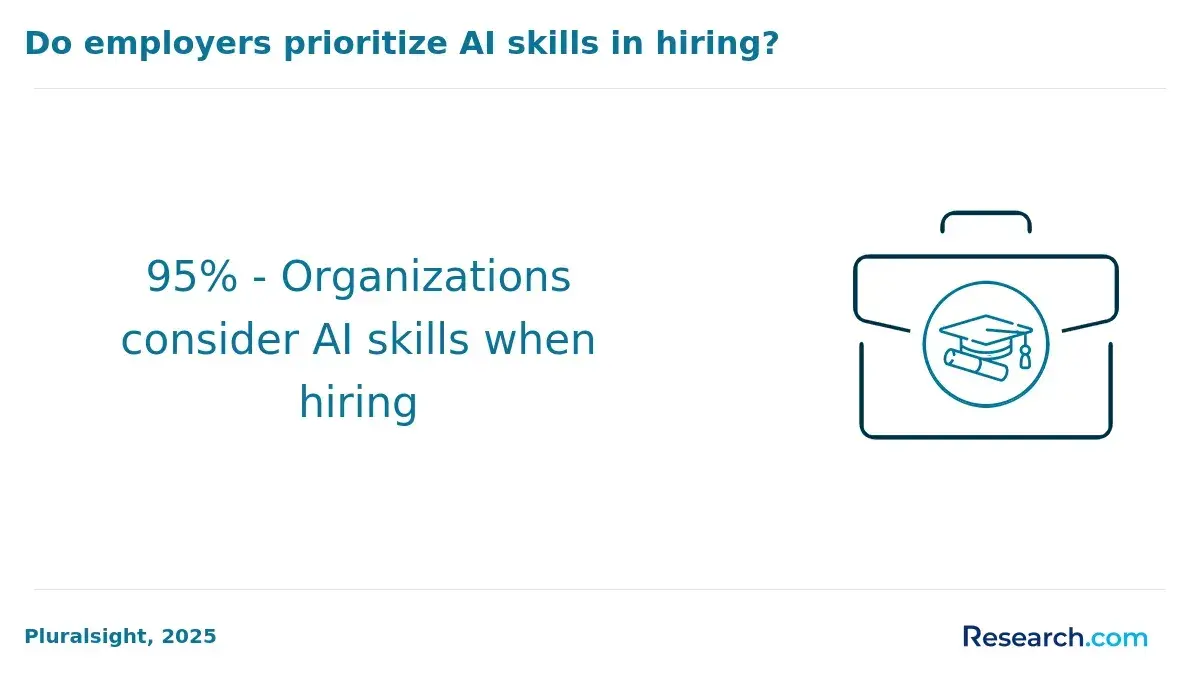
These online AI bachelor's degree programs combine coursework in machine learning, data science, programming, and ethics. Offering a mix of synchronous and asynchronous classes, programs enable self-paced learning and often use project-based assessments and digital credentials to showcase applied skills. Such approaches align well with the increasing use of skills-based hiring by employers, benefiting students aiming to build robust portfolios.
When selecting an online AI degree with year-round enrollment, consider factors such as curriculum focus on current AI tools, availability of hands-on projects or internships, multiple annual start dates, and recognition of digital credentials by employers.
Examples include accelerated 8-week courses and stackable certificates integrated within the bachelor's program. Some universities collaborate with tech companies for real-world project experiences.
For those interested in continued learning beyond the bachelor's, exploring an online masters in AI can be a valuable next step.
How do year-round enrollment terms work for AI bachelor's programs?
Year-round enrollment terms in AI bachelor's programs divide the academic calendar into shorter, accelerated sessions-commonly three or four terms annually, including summer. This flexible scheduling benefits students by allowing them to begin classes multiple times a year and maintain momentum through consecutive terms like winter, spring, summer, and fall. Each term usually lasts 8 to 12 weeks, enabling faster degree completion or easier balancing of work and personal commitments. This flexible system aligns well with the benefits of year-round enrollment in AI bachelor's degrees, as it supports diverse learning paces and personal schedules.
Many programs offer options for part-time study during specific terms or fully online and hybrid formats, increasing accessibility for working professionals. In fact, 42% of U.S. postsecondary students took summer courses, reflecting strong demand for these accelerated terms. Students exploring AI bachelor's degree course scheduling with year-round terms should verify how tuition is charged, since some schools bill per term rather than by academic year. Advisors can assist in tailoring a pace that fits individual goals.
For those interested in technology degrees, including AI, it's also valuable to compare options such as cyber security degrees, which often share similar flexible structures, helping students advance efficiently while managing their commitments.
What courses and specializations are common in AI bachelor's curricula?
Bachelor's degrees in AI encompass core subjects like programming, data structures, algorithms, and key mathematics areas such as linear algebra, probability, and statistics. Students build essential skills through courses in machine learning, neural networks, and natural language processing, forming the foundation for various AI applications.
Specializations often focus on fields like computer vision, robotics, and data science. For example, computer vision courses cover image recognition and processing techniques vital for applications in autonomous vehicles and healthcare diagnostics. Robotics emphasizes control systems and intelligent automation, preparing graduates for roles in manufacturing and service sectors.
Hands-on labs and projects using Python and SQL are commonly integrated within curricula, responding to practical employer demands. Data skills like these remain highly sought after in the U.S. job market according to Lightcast, 2024 skills demand/job-postings analytics. This practical experience ensures graduates are workplace-ready.
Additional subjects frequently addressed include ethics in AI, data privacy, cloud computing, and distributed systems. These help students tackle issues such as bias mitigation and scalable deployment. Courses in human-computer interaction and AI-driven software development may also be offered, facilitating the creation of intuitive and ethical AI applications.
Prospective students should verify that programs combine strong theoretical foundations with applied expertise in programming, data manipulation, and AI frameworks. A well-rounded curriculum equips graduates for diverse careers ranging from research and development to practical implementation across industries.
What admissions requirements apply to AI bachelor's programs with rolling starts?
Admissions for AI bachelor's programs with rolling start dates focus on flexibility and reducing barriers for applicants. Most U.S. colleges follow test-optional policies, so SAT or ACT scores are often not required. Over 80% of four-year institutions have embraced this approach, reflecting a trend aligned with rolling enrollment models that aim to simplify access.
Applicants generally must submit high school transcripts showing completion of college preparatory courses, including mathematics through precalculus or calculus, and relevant science classes such as physics or computer science. Letters of recommendation are commonly requested to assess academic readiness and motivation, though some programs waive them to streamline rolling admissions. Personal statements provide an opportunity to explain interest in artificial intelligence and career objectives.
International students need to demonstrate English proficiency via TOEFL or IELTS. Transfer applicants should provide transcripts from all previously attended colleges for evaluation. Some programs require foundational assessments in math or programming skills, conducted through placement tests or documented coursework. Rolling admissions allow applications up to one or two months before term start, emphasizing punctual submission of all materials.
These programs balance traditional academic requirements with reduced reliance on standardized testing, making AI education accessible to a wider range of candidates. Prospective students should check specific deadlines and documentation early to ensure smooth processing.
How long do year-round AI bachelor's programs take, and what do they cost?
Year-round bachelor's degree programs in artificial intelligence often allow students to finish faster by offering continuous enrollment throughout fall, spring, and summer semesters. Some schools use intensive trimester schedules that can reduce completion time to around 36 months if students maintain a full course load.
Tuition costs vary by institution and residency. The average published tuition and fees at U.S. public four-year in-state colleges are about $11,260 annually. Because the tuition is usually prorated per semester, total costs for year-round programs may be comparable to traditional timelines but could save on living expenses due to shorter duration.
Private colleges typically charge higher tuition, sometimes over $30,000 per year, but might provide more flexible year-round formats. Online programs in artificial intelligence also offer year-round options, often charging $400 to $1,200 per credit, with additional fees for technology and materials to consider.
Students should inquire about credit transfer policies and summer course availability, as limited options can impact timely graduation. Working professionals might find part-time year-round enrollment useful to balance studies and employment.
Careful review of tuition, fees, schedule flexibility, and total cost is vital before choosing a year-round artificial intelligence bachelor's degree path.
What career paths can an AI bachelor's degree prepare you for?
An AI bachelor's degree equips graduates for dynamic roles across fast-growing fields driven by advanced technology and data analysis. Common career paths include machine learning engineer, where professionals create algorithms enabling computers to learn from data. Data scientist positions involve interpreting complex datasets to support strategic business decisions.
Other opportunities exist as AI research analysts who help develop new AI models for industries such as healthcare, finance, and autonomous systems. Software developers with AI expertise build intelligent applications by integrating traditional coding with AI frameworks. AI product managers combine technical knowledge with project oversight to guide AI-based products through development.
Industries hiring AI graduates range from technology companies and manufacturing to robotics, marketing analytics, and government cybersecurity roles. The Stanford HAI AI Index Report 2025 highlights that U.S. job postings related to AI remain about three times higher than in 2018, reflecting strong demand despite market shifts.
Roles also include ethical AI compliance specialists who ensure fairness and regulatory adherence, and technical consultants delivering AI solutions tailored to specific business needs. Entry-level positions are available in natural language processing, computer vision, and robotics engineering.
Key skills for employability include proficiency in programming languages like Python, experience with AI frameworks such as TensorFlow, and solid understanding of data structures. A bachelor's degree offers a foundational blend of problem-solving, mathematical modeling, and software engineering essential for thriving in AI-related careers.
What salaries can AI bachelor's graduates expect in common AI-related roles?
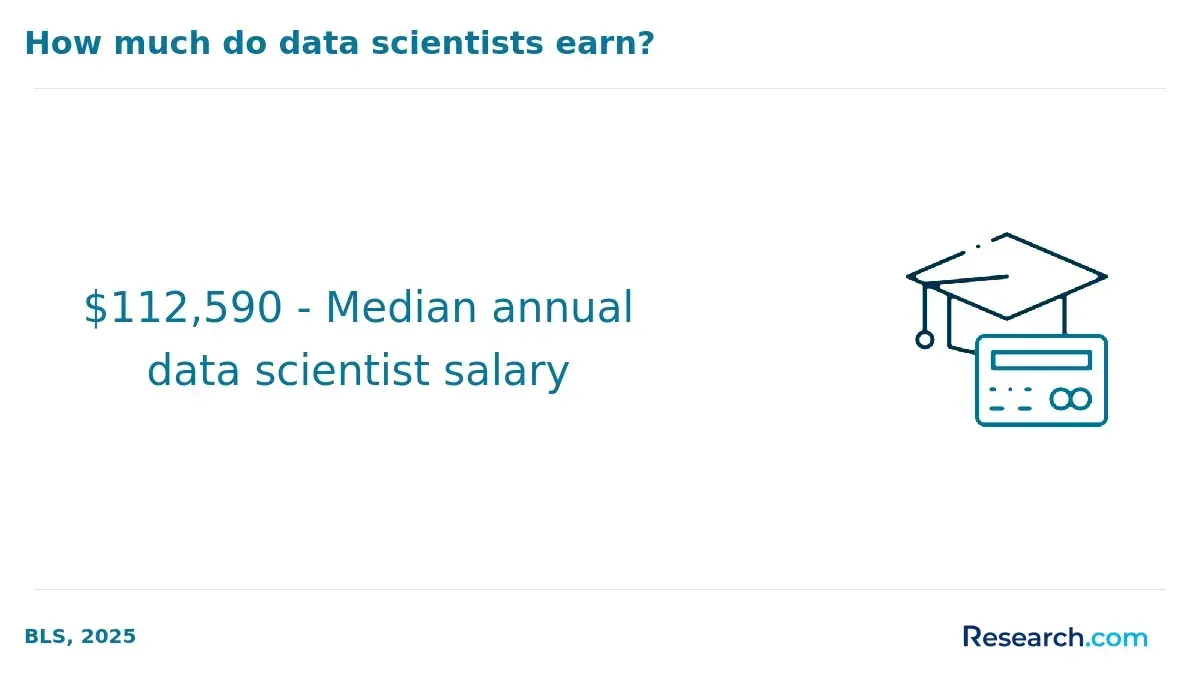
Graduates holding a bachelor's degree in artificial intelligence can expect varied salary ranges depending on their specific roles and industries. Data scientists, a representative AI-related profession, have a U.S. median annual wage of approximately $108,000, serving as a useful benchmark for those entering the field with some experience.
Entry-level positions such as AI software engineers and machine learning engineers typically start with salaries between $85,000 and $95,000, influenced by geographic location and company size. Roles focusing on data processing like data analysts or junior data scientists usually begin with salaries ranging from $65,000 to $80,000. Salaries generally grow quickly with experience and proficiency in key technical skills such as Python, TensorFlow, and cloud platforms.
More specialized roles, including natural language processing engineers and computer vision specialists, can command salaries from $100,000 to $130,000 after gaining professional experience. Industries with substantial AI integration, such as finance, healthcare, and autonomous vehicle technology, often provide enhanced compensation packages and bonuses.
Location significantly impacts earnings-tech hubs like San Francisco, Seattle, and New York offer salaries 10% to 25% higher than the national average. To boost earning potential, candidates should seek internships, certifications, and advanced projects demonstrating real-world AI application and problem-solving skills.
Which certifications complement an AI bachelor's degree for employers?
Certifications that complement an AI bachelor's degree significantly enhance employability by showcasing specialized skills beyond basic knowledge. Employers prioritize credentials in generative AI, machine learning, data science, and cloud computing, reflecting evolving industry demands.
Generative AI certifications have grown rapidly in popularity, with Coursera reporting it as the fastest-growing skill area in recent skill reports. Certifications like the Generative AI Professional Certificate validate expertise in advanced language models and content creation, vital for roles in natural language processing and creative AI applications.
Machine learning certificates from major providers such as Google, AWS, and Microsoft confirm practical skills in model development and deployment. These credentials cover key areas like data preprocessing, supervised and unsupervised learning, and real-world AI system operation.
Data science certificates enhance skills in Python, R, SQL, and data visualization, supporting roles in quantitative analysis and AI-driven data manipulation.
Cloud computing certifications, including AWS Certified Machine Learning and Microsoft Certified: Azure AI Engineer Associate, demonstrate ability to manage scalable AI services-essential as workloads shift towards cloud infrastructure.
Pairing an AI bachelor's degree with targeted certifications confirms both theoretical knowledge and applied skills, giving candidates a competitive edge aligned with industry needs.
Other Things You Should Know About Artificial Intelligence
Yes, programming knowledge is fundamental for students pursuing a bachelor's degree in artificial intelligence. Common programming languages used in AI include Python, Java, and R, which enable students to build algorithms and develop machine learning models. Most AI programs incorporate programming courses early in the curriculum to ensure students have practical coding skills.
Many artificial intelligence bachelor's programs encourage or require students to complete internships or practical projects. These experiences help students apply theoretical knowledge in real-world settings, improve problem-solving abilities, and build professional networks. Practical training significantly enhances job readiness upon graduation.
Yes, students can often choose specializations or elective tracks within an artificial intelligence bachelor's degree program. Common focus areas include machine learning, natural language processing, computer vision, robotics, and data analytics. Specializing allows students to tailor their education toward specific career goals or industry demands.
Year-round enrollment options allow students to begin courses at various times, potentially shortening the time needed to complete a degree. Additional summer sessions or accelerated courses can further expedite graduation. To complement studies, consider a master’s in AI ethics and governance.
References
- Best AI Certifications to Boost Your Career in 2026 – Dataquest https://www.dataquest.io/blog/best-ai-certifications/
- How to Choose the Right AI Degree Program https://humainelabs.com/blogs/agentic-ai-engineering/how-to-choose-the-right-ai-degree-program
- MH Cognition https://mhcognition.com/blogs/core-ai-ml-subjects-bsc-cs
- Frequently Asked Questions About AI Degree Programs - AI Degree Guide https://aidegreeguide.com/faq/frequently-asked-questions-about-ai-degree-programs/
- 40 Best Colleges in the U.S. for Artificial Intelligence (Undergraduate) https://www.greatvaluecolleges.net/artificial-intelligence-colleges/
- Students of All Ages Returning to College for AI https://www.govtech.com/education/higher-ed/students-of-all-ages-returning-to-school-for-ai
- Artificial Intelligence BEng (Hons) at Ulster University 2026/27 entry - Full-time Undergraduate Study https://www.ulster.ac.uk/courses/202627/artificial-intelligence-41372
- Top College Degrees for Securing the Highest-Paying AI Jobs in 2026 https://www.investopedia.com/top-college-degrees-for-securing-the-highest-paying-ai-jobs-in-2026-11946777
- Top AI Certifications for 2026: A Guide to Advancing Your Tech Career | DataCamp https://www.datacamp.com/blog/top-ai-certifications
- Top 5 AI Certifications That Employers Actually Value - Vacaturebank.ai https://vacaturebank.ai/en/articles/top-ai-certifications-employers-value